Search This Blog

Translate

Blog Archive

Middleboro Review 2

NEW CONTENT MOVED TO MIDDLEBORO REVIEW 2

Toyota

Since the Dilly, Dally, Delay & Stall Law Firms are adding their billable hours, the Toyota U.S.A. and Route 44 Toyota posts have been separated here:

Route 44 Toyota Sold Me A Lemon


Showing posts with label Brayton Point. Show all posts

Sunday, March 24, 2019

Gone in seconds: Crowds gather to watch Brayton Point chimneys fall


SOMERSET — Dozens stood at the water’s edge Sunday morning and gazed across Mount Hope Bay.
Standing in Fall River, you had a clear vantage point from which the doomed chimneys of Brayton Point’s now-defunct power plant could be viewed. The demolition was scheduled for 8 a.m. and people had come prepared. Tripods were erected and more than a few expensive-looking cameras were held in shivering hands. The rest made do with their smartphones.
There was a low rumble, a plume of dusty, and the chimneys fell. They were gone in a matter of seconds. Then nothing else happened.
“That’s it!” one spectator quipped before stomping back to his car.
Sunday’s demolition was just one phase of the large-scale demolition ongoing at Brayton Point’s former power plant and just an appetizer for things to come. The two larger, Simpsons-esque cooling towers are scheduled for demolition at the end of April. More than a few of Sunday’s spectators had thought the whole complex would be turning to dust that morning.
Springfield resident Donna Conlogue said she was just happy with the destruction that did take place.
“I was amazed by the boom after it fell. I thought it was cool,” she said.
Indeed, the “boom” was felt not just by the gawkers at Fall River’s marina but by residents in surrounding neighborhoods and towns. Herald News readers in Massachusetts and Rhode Island reported hearing or seeing the blast.
Originally built by New England Power in the early 1960s, the complex on Brayton Point closed in 2017 and was then purchased by the Missouri-based Commercial Development Co. with plans of converting the land into a facility that would serve the wind energy industry. The company’s executive vice president said during a February town hall meeting that Commercial Development Cop. envisions Brayton Point being used to construct components for offshore wind turbines and could possibly serve as an interconnect for the electricity generated by nearby wind farms.
More than half the complex has been demolished thus far. Community Development Co. has said it expects the rest of the work to be completed by September with the site being reopened in January 2020.
The site’s two 500-foot-tall cooling towers will be imploded on the morning of April 27. Those towers were built in 2009 at a cost of $600 million. Early estimates provided Commercial Development Co. indicated that it will only cost $2 million to demolish all of the structures on the property.
While some local residents have voiced concerns at how the demolitions may negatively impact properties on Brayton Point, state officials have assured that the implosions will have minimal effects on abutters. Representatives of the Massachusetts Environmental Protection have gone on record saying that it’s been determined that no contaminants are involved in the tower demolitions. EnviroAnayltics Group, one of the companies consulting on Brayton Point’s redevelopment, has stated that the demolitions will not cause and [sic] flying debris that could hit nearby homes.

https://www.southcoasttoday.com/news/20190324/gone-in-seconds-crowds-gather-to-watch-brayton-point-chimneys-fall?utm_source=SFMC&utm_medium=email&utm_campaign=The%20Standard-Times%20this-just-in%202019-03-24&utm_content=GTDT_NST&utm_term=032419


Saturday, March 5, 2016

After Brayton Point


Published on
by
Common Dreams

The Lobster Boat vs. The Coal Freighter as Climate Activists Blockade Power Plant

In a David vs. Goliath scenario the Henry David T. puts itself between Energy Enterprise and New England's largest coal plant


Brayton Point Power Station is featured in the film. From Conservation Law Foundation:
“On Monday, Conservation Law Foundation cheered the news that New England’s largest coal plant, Brayton Point Station in Somerset, Massachusetts, will shut down by 2017. Brayton Point has loomed over Somerset and neighboring environmental justice communities on the South Shore for nearly 50 years, belching pollution into the air and destroying wildlife in Mt. Hope Bay.
Many organizations have protested the plant over the years, and many are claiming victory as well as credit for its decision to shut down. We thought you would like to know the leading role CLF has played on the long path to this outcome.
  • For over 20 years, CLF has held Brayton Point’s owners accountable for cleaning up the air and water pollution it causes. CLF’s legal pressure forced Brayton Point to install modern pollution controls that significantly reduced toxic emissions into the air and their dire health impacts, and ended the dumping of billions of gallons of superheated water into Mt. Hope Bay every year.
  • In February 2013, CLF, along with our community organizing partners Toxics Action Center and Clean Water Action, sued its then owner Dominion for ongoing violations of the Clean Air Act. Despite the upgrades to the plant, it continues to pollute the air. A report issued last August estimated that even in 2012, Brayton Point’s emissions were responsible for a myriad of health problems from asthma attacks to as many as 39 premature deaths. The litigation is ongoing.
  • Also in February, 2013, CLF released a report exposing Brayton Point’s financial vulnerability. Entitled Dark Days Ahead, the report showed that a perfect storm of factors – including low natural gas prices – spelled imminent doom for the plant. The report sent a warning signal to prospective buyers of the plant, which was purchased by private equity firm Energy Capital Partners in March.
  • CLF, Toxics Action Center and Clean Water Action, have been working closely with members of the Somerset community to plan for a future without Brayton Point. No plant closing can be truly celebrated without a viable plan to ensure a just transition to a healthier future.
The End of Coal in New England
Brayton Point’s decision to shut down by 2017 is a harbinger of things to come in New England’s aging coal fleet. As the region’s biggest and most modern coal plant, with the lowest cost of production, it’s safe to say that if Brayton Point can’t survive, then none of its older, less efficient counterparts can.
One by one, our region’s oldest and biggest polluters are succumbing to the market and the march of technology:
Somerset Station, Somerset, MA, SHUT DOWN
AES Thames, Montville, CT, SHUT DOWN
Salem Harbor Station, Salem, MA, Will SHUT DOWN in 2014
Brayton Point, Somerset, MA, Will SHUT DOWN by 2017
Mt. Tom Station, Holyoke, MA, Expected to SHUT DOWN by 2016
Bridgeport Harbor Station, Bridgeport, CT, Running at 4% capacity
Schiller Station, Portsmouth, NH, Running at 12% capacity
Merrimack Station, Bow, NH, Running at 35% capacity*
CLF is on the case on all of New England’s remaining coal plants. Our advocacy calls upon a portfolio of highly effective strategies, from targeted litigation to hold coal plant owners’ feet to the fire to control illegal emissions, to robust participation in the Public Utilities Commissions’ decision-making processes, to a seat at the table in planning for the future of our electric grid. As we have for decades, CLF is applying pressure at the right times and in all the right places to achieve our goal of a Coal Free New England by 2020 – or sooner, with your help.
New England’s remaining coal plants are on the brink. Please consider making a gift today to continue our quest for a Coal Free New England as we pursue a clean energy future. Together, we can end coal’s dirty legacy for good.
Sincerely,
N. Jonathan Peress
N. Jonathan Peress
VP, Director, Clean Energy and Climate Change”
http://www.thedirtytruthaboutcoal.com/?p=458


What will the Brayton Point of the future look like? New study offers options


By Michael Holtzman
The Herald-News

Posted Mar. 4, 2016 at 6:18 PM 


SOMERSET — Any beliefs that the town could replace the Brayton Point power plant with another large plant to produce similar tax revenues and needed power for the region are “myths,” according to a report by an energy and environmental consulting firm released Thursday.
“We will show that cleaner, healthier alternatives for the waterfront Brayton Point site, such as a Clean Energy Hub scenario … are entirely feasible,” wrote Synapse Energy Economics Inc. in Cambridge.
A coalition of clean energy advocates hired Synapse with $55,000 available from a legal settlement with Brayton Point’s prior owner.
The 1,600-megawatt power plant — the largest and cleanest-burning coal-fired plant in New England — is slated to close by June 1, 2017.
The findings and impacts in the 31-page report were summarized by representatives of the Coalition for Clean Air South Coast, Clean Water Action, Toxics Action Center and the Coalition for Social Justice,.
Facing the power plant and cooling towers on a small beachy area, leaders and members told the gathered media and a few interested residents that the findings are an opportunity to attract clean energy developers aided by support from the public and officials to alter priorities for fossil fuel generation that pollutes the environment.
“Somerset is at a crossroads,” said Toxics Action’s Sylvia Broude. “Brayton Point can become a regional and national model for converting outdated, polluting facilities into a clean energy hub in ways that will benefit the community.”
The Synapse Energy report, titled “Reimaging Brayton Point,” describes a variety of uses for Brayton Point, including as an onshore transmission site for wind power generated far offshore and carried by underwater lines.
Accommodating up to 2,000 megawatts of offshore wind would require an estimated $20 million infrastructure cost. That would compare with potentially $1.3 billion to covert Brayton Point to a natural gas plant, the report says.
Examining and recommending “what’s next for Brayton Point,” the report says a Clean Energy Hub “should be at the top of any list of potential options” for the 234-acre site on Mount Hope Bay.
Such a site could also be used for solar photovoltaic systems, food waste digesters, battery storage and connections to large amounts of offshore wind, the report concludes.
Battery storage is being developed in Massachusetts as reserve power, Sarah Jackson, Synapse Energy lead author, said in a phone interview.
The concept is to store massive batteries in containers the size of tractor-trailers that could be paired as reserve energy with renewable resources like wind and solar power for when winds are gentle and the sun is not shining, Jackson said.
What’s key to its stance is that nationally, “climate change is at the forefront of our decision-making in planning for the future.” Coastal communities like Somerset are particularly affected, the report says.
Tapping a recent six-month effort by the Massachusetts Energy Center to provide town citizens and the region with the most feasible reuses of the privately held power plant and site, Synapse Energy refuted one key recommendation of the prior report.
“There is no immediate need — and certainly no overwhelming benefit — to rush to build a large new gas-fired unit in the place of the retiring coal plant,” it concluded.
It cited the “fraction” of revenues produced by a rebuilding of Salem Harbor’s retired coal plant in that small city for saying “there is no need for a large new power plant to replace the power being generated by Brayton Point.”
It also said that on a per-megawatt basis, renewable resources generating electricity creates more jobs than natural gas, which produces the fewest.
Somerset’s Pauline Rodrigues, representing the Coalition for Clean Air South Coast, addressed the Clean Energy Center feasibility study conducted over several months by Ninigret Partners in Providence.
“We were very disappointed in the results. We wanted something positive that the town and citizens can work with,” she said, and that would present attractive options for developers to work with the Brayton Point owners.
Options for development could be facilitated by legislation and grants, she said.
Rodrigues said she appreciates the CEC and state Rep. Patricia Haddad, D-Somerset, for procuring funding for that prior study done last year.
With pending omnibus bill energy legislation coordinated and filed by Haddad at a key juncture this month, Becky Smith’s Clean Water Action in Massachusetts has gathered some 1,500 signatures on postcards they plan to present to Gov. Charlie Baker this week.
The message calls on Baker to prioritize renewable energy over polluting power plants, not make the state “over-reliant on gas” and support communities and workers where power plants have closed, such as Brayton Point and Somerset Station (which closed six years ago).
While power plant tax revenues continuing to drop dramatically, potential future benefits could include the improved uses along 12 miles of shoreline along Mount Hope Bay and the Taunton River. With Somerset Station’s 40 acres, it totals more than 270 acres, according to Smith.
It’s also “an economic engine” for the town and the region, Smith said.
Ken Figuerado of Swansea, a real estate company owner who bought an investment home on the bay facing Brayton Point, said he thought helping workers about to lose their jobs from the plant closing should be top priority for town leaders.
Jackson, the lead Synapse Energy author among eight listed on the report, said they followed the CEC report “and built off of it to see what’s the potential.”
It’s “mainly an educational piece” to help local residents and others “understand what the options are.” She said her nonprofit, nonpartisan company established 20 years ago worked independently while knowing the coalition’s priorities.
The report also explained that far offshore wind developer Deepwater Wind has proposed a project near Block Island and would commit to a payment in lieu of taxes agreement with impacted communities.
The “best chance” of regaining “significant tax revenues” after Brayton Point closes in 15 months is to negotiate a strong tax agreement with owners of whatever new resources are built on the site, the report also concludes.
Synapse Energy Economics Inc. author Sarah Jackson will deliver a full-scale presentation of the “Reimagining Brayton Point” report on March 15 at 6:30 p.m. at the Amvets Hall, 659 Brayton Ave. The public is invited.

http://www.southcoasttoday.com/article/20160304/NEWS/160309661/101061/NEWSLETTER100

Wednesday, May 6, 2015

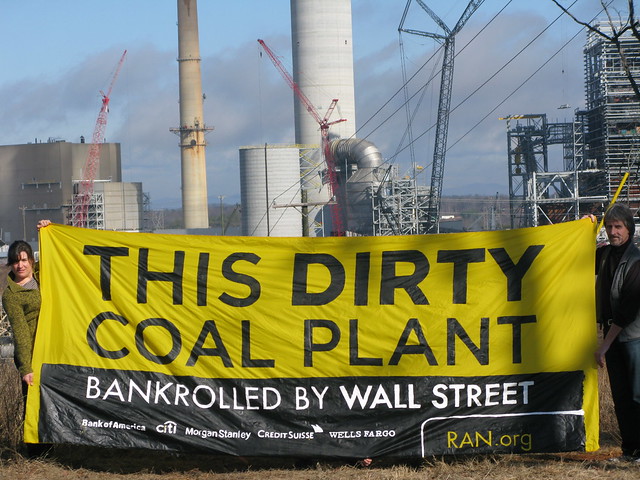
BRAVO! RAN: Translation: Bank of America is dumping coal mining!

BRAVO!


Massachusetts is DOWN WIND of the nation's Dirty Coal Power Plants.


Renewable Energy puts Americans to work!


Dirty Coal destroys the environment, leaves environmental destruction and contamination in its wake.


MOUNTAINTOP REMOVAL  contaminates drinking water, destroys communities. COAL
ASH PITS around the nation are unlined, jeopardizing drinking water. [We have some in Massachusetts.]


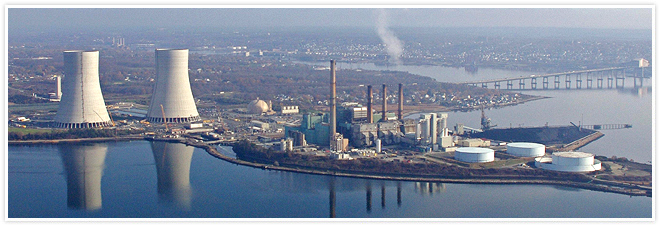
This is Brayton Point:


Coal fouls the air, increasing health costs.


Let's end Dirty Coal/Dirty Air for our kids.


Divestment makes sense.


Rainforest Action Network


After years of pressure on Bank of America, they just announced a new coal mining policy: “Our new policy … reflects our decision to continue to reduce our credit exposure over time to the coal mining sector globally.”1
Translation: Bank of America is dumping coal mining!

This is a huge moment. Bank of America has gone from being the worst bankroller of coal to having the strongest global coal mining policy of any major global bank. It’s the result of years of hard-hitting campaigning by RAN, our many front-line allies — and by you and all of RAN’s supporters in this fight. So, thank you for everything you’ve done.

BoA_Breaking_v6.png
 
 
Now, we have to hold Bank of America to its word by rigorously monitoring their implementation of this policy. And second, we have to push other banks to meet or exceed Bank of America’s coal mining policy. There are just a few short years left to meet the challenge of climate change. We need to build on this victory to stop the coal industry using big banks as ATMs.
 
 
I’m writing to you from the Bank of America shareholder meeting in Charlotte, NC, where I came to hear today’s announcement in person. RAN has been at this meeting every year since 2011 to make the case that the bank should divest from coal mining. I'm thinking about the many allies whom we have stood here with throughout this campaign. Allies like Paul Corbit Brown, whose stunning photographs and eloquent advocacy have made it impossible for Bank of America to ignore the destruction that mountaintop removal coal mining has done to his home state of West Virginia. Allies like Pat Moore, who was so outraged by Bank of America funding the coal-fired power plants in her community, while her granddaughter suffered through asthma attacks, that she led a civil disobedience action here in Charlotte. I’m thrilled to share this moment with them.
 
When we started this campaign in 2011, most banks were basing their wafer-thin “climate commitments” around efficient lightbulbs in their branches and green-certified headquarters. Other banks felt that modest investments in renewable energy allowed them to ignore their huge investments in fossil fuels. After four years of hard work, Bank of America's coal mining policy represents a sea change: it acknowledges that they're responsible for the fossil fuels that they bankroll. This is a huge paradigm shift.
 
When we first approached Bank of America about instituting a responsible coal policy, they told us they were “diametrically opposed to our position on coal”. They said they aspired to be “number one in every sector” — including the fossil fuel sector. We took on Bank of America because they were the hardest target: they were the most resistant to stopping doing business as usual.
 
Today, with Bank of America’s new coal policy, we’ve reached a huge milestone. Now we have to make sure they’re as good as their word. Will you help us do that by chipping in today?
 
This new policy is the strongest to date of any global private-sector bank — but it can’t be the only one. Across the financial sector, we don’t need big banks to change the lightbulbs at their corporate headquarters, we need them to stop bankrolling fossil fuels that are killing the climate. Coal, oil and gas need to be left in the ground.
 
We’re going to push other banks to own up to the climate consequences of their financing decisions, and meet or exceed Bank of America’s policy. Time is running out to stop catastrophic climate change. We can’t meet the challenge of our era unless the big banks profiting from fossil fuels drop their support. Along with our allies — and supporters like you — we’ll build on today’s success to turn this into a truly sector-wide change.
But we can’t do it without you. Support that work today!
In gratitude, for our communities and the climate,

Amanda
Amanda_400x400.jpg Amanda Starbuck
Climate and Energy Program Director
Rainforest Action Network
P.S. To celebrate the hard work of our allies and supporters in this fight, we’ve put together a timeline of key moments in the years-long campaign against Bank of America. Check it out!
Sources:

1. “BREAKING: Bank of America dumps coal mining in sweeping new policy”, Rainforest Action Network, http://www.ran.org/breaking_bank_of_america_dumps_coal_mining_in_sweeping_new_policy

Rainforest Action Network
425 Bush Street, Suite 300
San Francisco, CA 94108


Saturday, December 20, 2014

Offshore winds soon to power Cape Cod: Part 3


Great information!

Offshore winds soon to power Cape Cod: Part 3

Cape Wind has paved the way for a new American energy industry


John Nickerson's Salt Work's windmill in Chatham, MA. Courtesy: Chatham Historical Society.


Brayton Point made the news this year when criminal charges against Jay O'Hara and Ken Ward were dismissed by Bristol County's District Attorney. O'Hara and Ward used a lobster boat named the "Henry David T." to block a shipment of coal. At an early September press conference, District Attorney Sam Sutter announced that his office's decision was influenced by "the grave risk that climate change poses to society" and "the absence of broadly mandated policies to swiftly transition communities to sustainable power sources." Though Brayton Point is scheduled to close in 2017, and one other smaller Somerset coal plant has already been decommissioned, it's widely believed that the burning of coal at Brayton Point continues to place the densely populated communities across southeastern MA at risk.
Editor's note: This piece originally appeared on the "The Blog" at HuffingtonPost.com. It is reprinted here with the author's consent. The first and second parts are linked at the bottom.
By Stacy Clark, Environmental geologist, clean energy writer, and teacher

"The Cape and the Islands once had a thousand working windmills. The earliest were built in the 1600s and by the 1800s wind energy was powering the lives of early settlers. Imagine a landscape where windmills, not fossil fuel power plants, produced much of the nation's salt, which was a critically important commodity to preserve the fish and meat that the economy relied upon."

America's Offshore Wind Power Industry Launches from New Bedford, MA

Here, Part 3 explores how Cape Wind is catalyzing a new American energy industry that will generate clean electrical power, the jobs that support it, and the commercial businesses that organically grow around both. As New Bedford's city planners and businesses busily prepare to stage the assembly, construction, and installation of Cape Wind's 2015 "steel-in-the-water" deployment, public acceptance of renewable energy's economic significance has increased.

Cape Wind President Jim Gordon's vision for New Bedford's future was a welcome hit of adrenaline for all those in attendance at a Boston press conference in September:
 
"Cape Wind hopes to be the first of many offshore wind projects that will operate out of New Bedford's harbor, creating economic development and once again making New Bedford an energy capital of the world."

The region surrounding New Bedford will benefit too. Having relied largely on coal and nuclear power for electricity generation, scientific reports have linked both to the disproportionally higher rates of cancer found in southeastern, MA, where residents support clean energy initiatives.


(MA cancer rates by region. Courtesy: Cape Downwinders)

Southeastern Massachusetts's Energy Landscape

New Bedford, MA's storied harbor is located west of Cape Cod on Buzzards Bay, roughly twelve miles southeast (and downwind) of Somerset, MA, where the coal-fired Brayton Point power plant--one of the state's dirtiest electricity producers--is positioned at the mouth of the Taunton River.


In a phone interview, D. A. Sutter (who last week won election as the new Mayor of Fall River) punctuated his position:

"If we do not act to quickly forge the transition of our energy sector towards sustainability, I'm convinced that the consequences for us will be dire. Being the Bay State, our hundreds of miles of navigable shoreline provide the perfect opportunity to be national leaders in the production and distribution of offshore wind energy and I plan to continue to be a leader on this issue."
Rodgers agrees.
 
"Though one offshore wind farm is not going to by itself reverse a global climate phenomenon or eliminate air pollution, it is a step in the right direction and its location in Cape Cod will symbolize American ingenuity responding to a great challenge."
 
D.A. Sutter added that he has also called for the closure of the Pilgrim Nuclear Power station in Plymouth, MA, which is located 20 miles northeast of New Bedford. Pilgrim has been the subject of much public consternation as it was built with the same technology as Japan's Fukushima reactor.

Concerns over radiation leakage, contaminated shellfish beds, improper ventilation, mishandled nuclear fuel rods and myriad, often unresolved automatic shutdowns of the plant, leave many to wonder how long an aging nuclear plant should be allowed to operate. After touring the facility personally last year, U.S. Nuclear Power Commission Chairman Allison Macfarlane downgraded the plant's performance rating.


(10, 25, and 50-mile radii around the Pilgrim Nuclear Power station. Roughly five million people live within 50 miles of its location. Courtesy: Cape Downwinders)

With the risks of the Pilgrim station unresolved, with no new MA coal plants scheduled for development, and with public support for clean energy increasing across southeastern MA, reason dictates that sustainable new sources of electricity will not only remain in high demand, but will also accelerate the economic renaissance already emerging in New Bedford.

New Bedford's Mayor Jon Mitchell isn't shy about the transformation underway in his city since investments in clean power and energy efficiency were launched. In a telephone interview last week, Mayor Mitchell reported that roughly three-quarters of the electricity required by New Bedford's government buildings is already being produced by a combination of land-based wind and solar power projects:
 
"This is one way we have begun to successfully rebuild our economic base and rebrand New Bedford as a progressive and prosperous metropolitan center."
 
A combination of political will, thoughtful financial modeling, community partnerships, and real-world research explain much of New Bedford's recent turn-around. Mayor Mitchell reflected on the delegation he led in 2013 to identify how European wind power was recasting formerly vital industrial communities into coastal champions of the modern wind power industry:


"Bremerhaven, a leading offshore wind power port in Germany, was resurrected when it retrofitted its harbor to serve Germany's ambitious offshore wind power goals. The city now boasts a bustling energy bonanza consisting of 30,000 new jobs, a landmark hotel, and world-class museums. This economic momentum, powered by the offshore wind industry, is driving Germany closer to its 2025 goal of producing one-quarter of its electricity with offshore wind."

New Bedford's 21st Century Makeover

Just as Bremerhaven was purpose-built to serve Germany's modern offshore wind initiatives, New Bedford's Marine Commerce Terminal is being purpose-built to serve America's first utility-scale offshore wind installation. Here, where the Acushnet River meets Buzzards Bay, skilled workers will assemble 130 Siemens turbines and transport them roughly 25 miles southeast to Cape Wind's site in Nantucket Sound. The completed project will generate 468-megawatts of power, or two-thirds of the electricity required by Cape Cod, Martha's Vineyard and Nantucket.


(New Bedford, MA is 25-miles northwest of Cape Wind's project site in Nantucket Sound. Location highlights layered on top of Google Maps.)

The U.S. Department of Interior's Bureau of Ocean Energy Management (BOEM) is expected to issue a formal approval of Cape Wind's lease agreement with New Bedford's Marine Commerce Terminal soon, as momentum for additional offshore wind power is already well underway and because New Bedford's premier geographical location offers wind developers a critically important industrial port from which to stage and launch their projects.

BOEM recently approved an undersea transmission line that will, according to Herman K. Trabish's story in Utility Dive, deliver emissions-free electricity from a smaller 30-megawatt offshore wind project to mainland Rhode Island. And, just last week, the U.S. Department of the Interior issued the Final Sale Notice for a larger, already-approved offshore wind development zone. The area will enable Massachusetts to further expand its offshore wind resources and will drive additional clean energy investment and job creation throughout the region. It would appear that Massachusetts Governor Deval Patrick's early goal to make the Commonwealth "the hub of the offshore wind industry emerging along the east coast of the United States" is taking shape.

The 742,000-acre "Wind Energy Area" is located 12 miles off the MA coast and will be auctioned as four separate offshore leases. According to the BOEM site, the proposed area is "the largest in federal waters and will nearly double the federal offshore acreage available for commercial-scale wind energy projects." The bid sale for these four tracts will be auctioned on January 29, 2015.

All this is welcome news for the city of New Bedford, which was made famous during the mid-18th to mid-19th centuries for lighting the world with whale oil and which later endured the loss of a once vibrant textile industry to outsourcing. And though New Bedford's harbor remains the most productive seaport in the nation, overfishing of the world's oceans has led to a global decline of the industry and the jobs that accompany it.

Mayor Mitchell believes that New Bedford's coastal location remains its greatest asset:
 
"We're located near one of the windiest places on the planet and the inexhaustible energy of this renewable resource will augment our supply of electricity and launch new jobs, as aging industries like coal and nuclear power move offline."

Mayor Mitchell's Chief of Staff Neil Mello added that manufacturing of even the largest windmill components will inevitably emerge in MA, as the U.S. industry scales over time:
 
"The captains of America's offshore wind industry will quickly come to rely on New Bedford to assemble, deliver, erect and service their installations. And with 8,000 parts comprising a modern wind turbine, an entirely new American-based supply chain is expected to grow up here along the coast to support and strengthen our increasingly dynamic and diversified economy."

Goldman Sachs Energized by Renewable Energy

Institutional investment in renewable energy has grown in recent years, which is why Goldman Sachs committed $40 billion to clean energy in 2012. RenewEconomy Editor Giles Parkinson reported that Goldman Sachs believes "renewables will play a key role in U.S. GDP." In this video, Stuart Bernstein explains Goldman Sachs's view on the expanding clean energy sector and how the U.S. will likely transition to an energy grid predominantly powered by clean energy:

"The most important next step is to design long-term policies that companies, consumers, and investors can rely on. So, we need to find a clean transition from coal to natural gas to renewable base loads."

And that is exactly what Jim Gordon has achieved, according to New Bedford Wind Energy Center Managing Director Matthew Morrissey, who shared his perspective by phone:
 
"Having taken the initial risk and won the many legal challenges posed by opposing energy interests, Cape Wind has paved the way for a new American energy industry to deliver sustainable manufacturing jobs to communities like New Bedford. Our city is poised and primed to ensure that ocean wind energy becomes a vital commodity once again."
 

Gordon and Rodgers were honored to receive Mass Energy's 2012 Award for "Cape Wind's commitment to Massachusetts's clean energy future, trailblazing the path for the American offshore wind power industry, and for aligning its vision with the energy goals of Governor Patrick's administration."

Mayor Mitchell believes that Jim Gordon is a true American visionary:
 
"Over fourteen years, Jim and his team have shown how policy makers, investors, regulators, and practitioners can come together and move a landmark project to its final stages of implementation. On so many levels, New Bedford has benefited from the forward-thinking, persevering culture of Cape Wind. And this is just the beginning."

Author Note: Stacy Clark is grateful to information provided by journalist Ariel Wittenberg, who documented

Cape Wind's evolution over many years, while reporting for the New Bedford Standard Times.

Wednesday, September 10, 2014

DemocracyNOW!: Exclusive: DA Joins the 2 Climate Activists He Declined to Prosecute, Citing Climate Change Threat


Two climate activists were set to go on trial in Massachusetts on Monday for blocking the shipment of 40,000 tons of coal to the Brayton Point power plant, a 51-year-old facility that is one of the ... Read More →
 

Topics

Guests

Sam Sutter, district attorney in Bristol County, Massachusetts.
Ken Ward, Jr., longtime climate activist, co-founder of the National Environmental Law Center and a former deputy director of Greenpeace USA.


If your favorite website seems to load slowly today, take a closer look: You might be experiencing the Battle for the Net's "Internet Slowdown," a global day of action. The Internet won't actually be ... Read More →
 
We look at the growing movement for drug decriminalization that is moving ahead in the United States and being amplified by former heads of state from around the around. On Monday, ... Read More →


Tuesday, September 9, 2014

Bravo to Sam Sutter! Good Decision!


Bristol District Attorney Sam Sutter


The Brayton Point Power Station in Somerset, Mass., is shown in this Wednesday, Oct. 23, 1996 file photo. National Energy & Gas Transmission Inc., the company that owns the Brayton Point power plant, is appealing an order from the Environmental Protection Agency on water the plant takes in and releases back into Mount Hope Bay. "We regret that there is no choice but to challenge some of the conclusions and requirements of the EPA permit for Brayton Point," the company's spokeswoman, Natalie Wymer, said Wednesday, Nov. 5, 2003. (AP)
The Brayton Point Power Station in Somerset, Mass., is shown in this Wednesday, Oct. 23, 1996 file photo. National Energy & Gas Transmission Inc., the company that owns the Brayton Point power plant, is appealing an order from the Environmental Protection Agency on water the plant takes in and releases back into Mount Hope Bay. “We regret that there is no choice but to challenge some of the conclusions and requirements of the EPA permit for Brayton Point,” the company’s spokeswoman, Natalie Wymer, said Wednesday, Nov. 5, 2003. (AP)


Let’s take a closer look now at a very unusual turn of events that happened just yesterday in Bristol County Court. Defendants John O’Hara and Ken Ward were scheduled to go on trial for using a lobster boat to block freighter loaded with 40,000 tons of coal that was bound for the Brayton Point Power Station in Somerset, MA. It’s a charge the climate activists do not deny. They would argue that the threat of global warming is so great, the two men had to act.

That’s unusual enough. But then the bigger surprise. Bristol County District Attorney Sam Sutter dropped the most serious charges against O’Hara and Ward…and in front of a cheering crowd, Sutter declared that he agreed with the protesters.

Guest

Samuel Sutter, Bristol County District Attorney.


GMO, Food & American Healthcare Debate

Dirty Power Plants, Overfishing, Offshore Wind on the Agenda!

The End of Dirty Coal!

The end of coal power in Massachusetts

Brayton Point only operates when power demands are greatest, according to grid-operator ISO-New England.

Brayton Point is one of the biggest polluters for all of New England. According to the U.S. EPA in 2008, Brayton Point emitted more than 37,000 tons of toxic chemicals into the air Studies show this pollution doesn’t only affect Somerset: the majority spreads and settles in cities and towns across a 30-mile radius from the power plant. Mercury has always been a major concern because it is a neurotoxin, with no safe levels of exposure, and in 2010, Brayton Point was responsible for nearly half of all mercury emissions for the state of Massachusetts.

Massachusetts Dirty Coal Plant, Brayton Point, to Close

The announcement came just months after the plant was sold by Virginia-based Dominion to Energy Capital Partners, a private equity firm with offices in New Jersey and California. Dominion bought the plant in 2005.


Power Plant Carbon Emissions revealed

“Replacing these power plants with zero-emission energy sources such as wind and solar power, or eliminating the need for the power they produce through energy efficiency and conservation, would reduce U.S. greenhouse gas emissions to 11 percent below 1990 levels, even in the absence of other efforts to reduce emissions.”

The Bay State's worst offenders

In Massachusetts, the biggest carbon-polluting power plant is the Mystic Generating Station, a natural gas plant across the Mystic River from Charlestown, followed by Brayton Point, a coal plant on the shores of Mount Hope Bay across the water from Fall River.

Bravo! 70-mile walk backs clean energy


Bravo: Energy Exodus


Protesters target Dirty Somerset/Brayton Point power plant

Dirty Coal is Losing

Code Orange Alert Day for Southeastern counties

Welcome to "Cape Koch"

Ending Brayton Point's Pollution

Activists call on gov to close Somerset's Brayton Point plant, transition state away from coal

Brayton Point Station, the largest power station in New England, was purchased in 2005 by Dominion, a national company that produces gas, nuclear, LNG and coal power along the eastern seaboard.

In 2010, the power station was deemed by the EPA as the largest polluter in New England and responsible for nearly half of all mercury emissions in the state.

Westport resident David Dionne, of the Coalition for Clean Air, told about 25 supporters the state has one of the highest rates of childhood asthma in the country.

Group rallies against Fall River coal plant
Three reasons Cape Cod (and Middleboro) air sucks
As Ben Wright, an advocate at Environment Massachusetts said:

“The least polluting, cheapest energy is the energy we never have to produce in the first place”
Dominion owns Brayton Point and the Salem Harbor power station, also one of the top 10 sources of greenhouse gases in the state. The Salem plant is set to close in 2014.
The Massachusetts Coal Ash Myth
Chance that people who live near coal ash impoundments and drink from wells will get cancer due to water contamination: 1 in 50