Search This Blog

Translate

Blog Archive

Middleboro Review 2

NEW CONTENT MOVED TO MIDDLEBORO REVIEW 2

Toyota

Since the Dilly, Dally, Delay & Stall Law Firms are adding their billable hours, the Toyota U.S.A. and Route 44 Toyota posts have been separated here:

Route 44 Toyota Sold Me A Lemon


Showing posts with label Heritage Foundation. Show all posts

Thursday, March 31, 2022

The Wall Street Journal’s Editorial Page Is Back to Propping Up Bad Actors: This Time It’s the Wife of Clarence Thomas


THE WALL STREET JOURNAL is a MURDOCH TABLOID and sometimes the expose their slant!

There's always a KOCH CONNECTION!


The Wall Street Journal’s Editorial Page Is Back to Propping Up Bad Actors: This Time It’s the Wife of Clarence Thomas

By Pam Martens and Russ Martens: March 31, 2022 ~

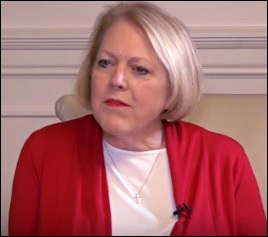
Virginia (Ginni) Thomas

While the vast majority of news outlets around the country are calling for Supreme Court Justice Clarence Thomas to recuse himself from cases involving the January 6 attack on the Capitol, the Wall Street Journal’s Editorial Board has penned this headline today over yet one more of its radical-right editorials: “Justice Thomas Shouldn’t Recuse.” (We’d link to the article but there’s a paywall.)

To support its position, the Wall Street Journal Editorial Board writes this about the wife of Clarence Thomas, Ginni (Virginia) Thomas, whose recently released emails to Trump-era White House Chief of Staff Mark Meadows have exposed her as attempting to steer the White House in how to overturn the election of Biden:

“The right answer is that Ginni Thomas is no threat to the Court, no matter how bizarre her views about the 2020 election. She doesn’t sit on the Court, and there is no reason to believe her personal political views influence the judicial impartiality of Justice Thomas.”

It’s not the “views” of Ginni Thomas that need to stand trial. It’s her decades of money-grubbing behind a dark curtain – money that has benefitted her husband as well – as he sat on the highest court in the land for the past three decades.

If you’ve been listening to TV news lately, you’ve heard that Ginni Thomas had received $680,000 from the right-wing Heritage Foundation and her husband had failed to report it on his financial disclosure forms at the Supreme Court. Wall Street On Parade got our hands on the public tax filings of the Heritage Foundation from 1999 through 2007 and the amount paid by the Foundation to Ginni Thomas was actually $1,051,214. Clarence Thomas was forced to amend years of his financial disclosure reports in 2011, which note in bold that falsification of the information on the report “may be subject to civil and criminal sanctions.”

The Heritage Foundation has been heavily funded over the years by the billionaire Koch brothers, Charles and David. (David Koch died in 2019.) Charles Koch and David’s heirs are the majority owners of the fossil fuels conglomerate, Koch Industries. Greenpeace calls the Heritage Foundation “Koch Industries’ Climate Denial Front Group” and reports that it has received $6,130,201 from Koch foundations from 1997 through 2017. That funding is just the tip of the iceberg, however. Tens of millions more have come from the Koch network, a group of super wealthy corporate heirs who meet semi-annually to strategize on how to put their sycophants in Congress and the White House.

Fourteen days after the attack on the Capitol, Wall Street On Parade documented that at least three of the front groups that fomented the Big Lie that the 2020 presidential election had been stolen from Trump and that actively solicited thousands of people to turn out for the January 6 event at the Capitol, were funded by Koch Industries or its front groups. Ginni Thomas was present on the grounds of the Capitol on January 6.

In the emails that Ginni Thomas sent to Trump’s Chief of Staff, Mark Meadows, one of the people that she told Meadows to listen to was attorney Cleta Mitchell – a woman who has both a longstanding association with Ginni Thomas as well as with Koch front groups. Trump’s phone log for January 6 shows that Cleta Mitchell was one of the people that Trump spoke with at 7 :53 p.m. on the evening of the attack on the Capitol.

Cleta Mitchell has been in the news previously as the lawyer who was on the January 2, 2021 call with Donald Trump when he phoned the Secretary of State of Georgia, Brad Raffensperger, and told him: “I only need 11,000 votes. Fellas, I need 11,000 votes. Give me a break.” That call took place two months after the presidential election. (Mitchell stepped down from her long-term employment at law firm Foley & Lardner after her presence on that call was made public.)

Cleta Mitchell is also the attorney who filed an amicus brief in the Citizens United case before the Supreme Court that was decided on January 21, 2010. That case would be the tipping point to allow unlimited sums from corporations – like Koch Industries — in U.S. elections.

Just eight days after Justice Thomas voted in favor of that decision to open the floodgates to corporate money in campaigns, Cleta Mitchell made a move that looked very much like a quid pro quo to Ginni Thomas. Mitchell, then still a partner at Foley & Lardner, filed an application with the Internal Revenue Service to set up a nonprofit called Liberty Central, Inc. on behalf of Ginni Thomas. According to IRS tax filings, Liberty Central received a combined $1.478 million from dark money donors in 2009 and 2010.

On the IRS tax filings for Liberty Central for 2009 and 2010, Ginni (Virginia) Thomas is listed as President and CEO. The 2010 tax filing shows that Ginni Thomas received $120,511 in compensation from Liberty Central that year. She eventually stepped down from an official post at the nonprofit, stating she would serve as a consultant.

Liberty Central had the fingerprints of Charles Koch all over it. Acting as General Counsel in 2010 for Liberty Central was a former lawyer for the Charles G. Koch Foundation, Sarah Field. A former Koch lobbyist, Matt Schlapp, served on the Board of Liberty Central at inception.

Mitchell’s law firm, Foley & Lardner, employed three attorneys working as lobbyists for a Koch Industries affiliate, Koch Companies Public Sector, LLC in Madison, Wisconsin in 2011. The Koch-related lobbyists were Ray Carey, Jason Childress and Kathleen Walby.

Mitchell was a former lobbyist at the federal level in years 2005 through 2008 for the Alliance for Charitable Reform, a project of The Philanthropy Roundtable, another tax-exempt organization. Donors Trust and Donors Capital Fund, two dark money groups which also have Charles Koch’s fingerprints all over them, were spun off from the Philanthropy Roundtable in 1999. (See our report: Koch Footprints Lead to Secret Slush Fund to Keep Fear Alive.)

The financial disclosure forms filed by Clarence Thomas show that from 2011 through 2017, Ginni Thomas received a “salary” from the Daily Caller, a right-wing spin organization founded in 2010 by Fox News commentator Tucker Carlson and former Dick Cheney aide Neil Patel. Its creation was announced at a gathering at the Heritage Foundation. The Daily Caller’s affiliated News Foundation has received funding from the Koch Family Foundations and the Charles Koch Institute.

Despite the previous scandal over Clarence Thomas failing to report that Ginni Thomas had received income from the Heritage Foundation, there are no dollar ranges listed on his financial disclosure forms to show the range of “salary” Ginni Thomas actually received from the Daily Caller from 2011 to 2017.

From 2011 through 2020, Clarence Thomas shows that his wife was receiving “salary and benefits” from Liberty Consulting. But again, there is no range of salary and benefits shown. Instead, Liberty Consulting is listed under “Investments” and shows a “book value” of $100,000 to $250,000 in 2019, which then drops to $15,000 to $50,000 in 2020.

Jane Mayer reported at the New Yorker in January of this year that one of Ginni Thomas’ financial backers was the anti-muslim group, Center for Security Policy. Mayer writes that “in 2017 and 2018 it paid Ginni Thomas a total of more than two hundred thousand dollars” through her Liberty Consulting business. No such income is reported on the financial disclosures filed by Clarence Thomas.

For other outrageous positions that the Wall Street Journal has taken in the past, see related articles below.

Related Articles:

Wall Street Journal Goes Bonkers In Effort to Defend JPMorgan

Wall Street Journal: Wealth Inequality Is Your Own Dumb Fault


Thursday, September 12, 2019

Charles Koch Is Funding a Campaign to Kill Food Stamps and Medicaid


Truthout
Hacked records show the extent of this powerful political operation.
Via Sludge


Last December, an innocuously named nonprofit, the Foundation for Government Accountability (FGA), wined and dined Republican politicians and White House staffers at a Walt Disney World resort, according to a new report from the Center for Public Integrity. The pitch: make it harder for poor Americans to access government programs meant to help them get on secure financial ground, especially the Supplemental Nutrition Assistance Program (SNAP), commonly known as food stamps, and Medicaid.
The group has already achieved some victories, as states including Kansas, Kentucky, Mississippi, and West Virginia have imposed work requirements on SNAP recipients, sometimes using FGA model legislation. A nationwide version of work requirements proposed by the Trump administration is expected to kick hundreds of thousands of poor Americans off of SNAP.
Sludge investigation has found that FGA is heavily financed by a powerful Wisconsin foundation birthed by the wealthy, conservative Bradley brothers, multiple nonprofits affiliated with rightwing billionaire industrialist Charles Koch, and two dark money vehicles funded by Koch and Bradley charitable nonprofits. A number of FGA executives and board members work or have worked for other connected Bradley- and Koch-funded think tanks and political groups.
FGA and its connected lobbying arm, the Opportunity Solutions Project, are employing a common tactic among conservative economists, policy writers, and free-market ideologues, recasting cuts to public welfare benefits as encouraging “the redeeming power of work.”
This PR approach to welfare cuts comes out of the playbook of some of FGA’s funders, including the libertarian Koch, CEO of manufacturing conglomerate Koch Industries and one of the richest men in the world. The Koch political and academic networks have adopted the phrases “human flourishing” and “well-being” to characterize harsh cuts to public assistance that many poor people depend on. Regardless of the Koch network’s claims, these kinds of welfare cuts mean more money that the billionaire class gets to keep from the Internal Revenue Service.
FGA represents one of many investments that wealthy American conservatives have made in order to weaken the American majority — working class Americans — and institutions meant to benefit them in favor of the private property ownership of a small but powerful minority.
The Lynde and Harry Bradley Foundation has donated nearly $2.3 million to FGA since 2013, according to its annual reports. Based in Wisconsin and named after two brothers, Lynde and Harry, whose factory automation business made them a fortune, the foundation is led in part by its president, Art Pope, a wealthy North Carolinian political donor and close Koch ally. On its board are current and former business executives including GOP megadonor Diane Hendricks, owner of building company ABC Supply. The Bradley Foundation was established in 1942, the year that Lynde Bradley died, and funded schools, hospitals, and other local initiatives in its early days. Harry Bradley, who was a “fierce anti-Communist” and supported the far-right John Birch Society, died in 1965. Twenty years later, the family business was sold to Rockwell International for nearly $1.7 billion, and with a huge influx of cash, the Bradley Foundation massively expanded its work to promote the conservative values of its namesakes.
The foundation is deeply committed to state political efforts around the country, and hacked records show the extent of its powerful political operation. The foundation finances think tanks, bill-writing groups, legal centers, and conservative media in states such as Colorado, North Carolina, Washington, and Wisconsin to promote stricter welfare work requirements, anti-union policies, school privatization, and climate change skepticism.
Its 2013 donation of $25,000 went towards FGA’s general operations, according to tax documents reviewed by Sludge. Then, in 2014, the Bradley Foundation donated $200,000 for “public education about Medicaid.” The following year, it upped its annual contribution to $350,000, and in 2016 it funded FGA’s “welfare and work” project. In 2017, it began funding FGA’s Restore the Working Class initiative, “a project which created a set of 21 model reforms for states to reduce the welfare state and restore the working class.” Last year, the foundation increased its donation to $500,000, which financed “reducing the welfare state and restoring the working class,” as did another half million dollars in 2019.
Koch’s foundations haven’t give much to FGA directly. In 2017, the Charles Koch Foundation gave $3,300 to the group, and the Freedom Partners Institute, an affiliate of the central funding operation of Koch’s political network, donated $30,000 in 2016. FGA has been a host organization for Charles G. Koch summer fellows. But dark money groups that Koch heavily funds via his foundations are FGA’s biggest benefactors. Donors Trust, a nonprofit popular with far-right millionaire and billionaire donors, gave over $2.8 million to FGA from 2015 to 2017. Its affiliate, Donors Capital Fund, gave FGA more than $2.3 million from 2015 to 2016. Both organizations are donor-advised fund sponsors, meaning they manage the money of individual donors who tell them where to contribute the funds, masking the donors’ names from the recipient organizations’ public records. (Donors Trust and Donors Capital Fund will be referred to as “the Donors groups” in this article.)
Several FGA executives and board members are closely linked to a host of conservative nonprofit political networks and think tanks that are also funded by the Koch and Bradley family foundations. This tight network of funders and nonprofits is an example of just one carefully organized wing of the Koch-backed political and educational network.
Tarren Bragden, CEO of FGA, was previously CEO of Donors Trust- and Donors Capital Fund-supported Maine Heritage Policy Center, which is a member of the State Policy Network (SPN), a web of conservative, state-based think tanks funded by the Koch and Bradley foundations. FGA is an SPN member, and SPN has donated to FGA.
SPN is an associate member of another umbrella group of conservative organizations, the Atlas Network, which has donated to network partner FGA. Atlas has promoted Bragden’s praise of Kansas’ SNAP work requirements.
Kristina Rasmussen, the top lobbyist at FGA’s Opportunity Solutions Project, was previously executive vice president of the Illinois Policy Institute, a think tank and SPN member that has received funding from the Atlas Network, the Bradley Foundation, the Charles Koch Institute, and the Donors groups. The Institute’s former director of health policy and pension reform, Jonathan Ingram, is now FGA’s vice president of policy and research.
FGA chief operating officer and general counsel Jonathan Bechtle was previously CEO of the Freedom Foundation, a nonprofit funded by the Charles Koch Foundation and Donors Capital Fund. The Freedom Foundation is an Atlas Network partner, an SPN affiliate, and a member of the American Legislative Exchange Council (ALEC), a corporate bill mill that produces conservative model legislation for state legislators and is funded in part by two Koch Foundations, the Bradley Foundation, and Donors Capital Fund. Koch Industries is a corporate board member of ALEC. ALEC promotes state bills to block Medicaid expansion and backs Medicaid work requirements.
FGA board member Robert Levy is chairman of the Cato Institute, a libertarian think tank co-founded by Koch and funded by multiple Bradley, Koch, and the Donors groups, as well as by the Atlas Network. Levy is also a board member of George Mason University’s Antonin Scalia Law School, which received its current name as part of a $10 million donation from the Charles Koch Foundation, which accompanied $20 million from an anonymous donor.
Bridgett Wagner, another FGA board member, is the Heritage Foundation’s vice president of policy promotion and a board member at SPN. Heritage is funded by the Bradley, Koch, and the Donors groups and is an SPN member.
Use the interactive graphic to explore these numerous connections between FGA, its officers, and Bradley- and Koch-funded organizations.


LINK


Bert Wolfe If the greedy, callous right wingers and their political toadies FROM BOTH POLITICAL PARTIES in elected office at all levels of American government have their way, after they get done stripping impoverished Americans of all forms of public assistance, they will come gunning for those favorites of middle class Americans, Social Security and Medicare.

Either America is a society with a healthy, robust social contract between all Americans, or America is a monster sacrificing its citizens when they become vulnerable in its relentless drive for global hegemony. But, as we are quickly finding out, America can’t be both!

America must choose the kind of society we want to have here at home. The price of world empire, even if it were obtainable — which it is NOT — is the sacrificing of the many vulnerable Americans on the altar of great wealth and world domination for the few.

Is this REALLY the world we want to live in? America must awaken from its consumerist, bread and circuses induced stupor and CHOOSE!

The purist essence of the American capitalist social philosophy is that if you have difficulty supporting yourself or can’t support yourself at all then you deserve to starve.

This heartless philosophy is presently mitigated in America only by very stingy, grudging measures such as unemployment insurance, Social Security disability, the SNAP program (food stamps), Section 8 housing vouchers, etc. the very requirements of which often work at cross purposes with each other and AGAINST people getting out of poverty and becoming self-sufficient.

Making things even worse for the American underclass is that many people, and many right wing politicians, believe the LIE that somehow life on any sort of public assistance program is far too plush and cushy, that the recipients of public assistance are all lazy, drug addicted lie about gaming the system to avoid getting a “real” job, and that the best way to end poverty in America is to severely cut, if not abolish, all forms of public assistance.

At the same time that this heartless, delusional social policy is pushed internally by the loud and powerful right wing media and politicians, a frankly PARANOID view of the world outside America is fostered by the same right wing media and politicians to justify ever increasing military expenditures, deeper involvement in senseless, endless wars overseas, and American interference in foreign elections and, where deemed necessary, American overthrow of foreign governments and their replacement with an American approved puppet government. All this justified by the specious notion that America must fight the foreign bogeymen of its collective imagination “over there” to avoid having to fight them here at home. It seems that for all too many paranoid Americans these phantasms of the American unconscious mind are marshaling their forces to pour across our borders and destroy our freedoms and put an end to the “American way of life.” That these figments of the terrified American imagination would promptly encounter the mightiest war machine the world has ever known seems to have escaped our frightened countrymen’s understanding.

In short, what drives American miserly heartlessness at home and America’s irrational view of the outside world is FEAR: fear that somehow impoverished Americans are living the life of Reilly on the public dime, and fear that outside of America’s borders are millions of sworn enemies of our country determined to destroy America. Both fears are rooted in delusional thinking, and only better understanding will root them out and allow America to have a social policy at home that cares for those who cannot care for themselves, while allowing those who can get ahead to do so, and a foreign policy based on rationality about our own internal strength and a realistic view of the world outside of America.


Image may contain: 8 people, people smiling

Sunday, June 30, 2019

CSPAN TESTIMONY - MUELLER REPORT


House Judiciary Hearing on Lessons from Mueller Report

Former Nixon White House Counsel John Dean as well as former U.S. attorneys and legal experts testified about lessons learned from Special Counsel Robert Mueller’s report on Russian interference in the 2016 presidential election. At the top of the hearing, House Judiciary Committee Chair Jerrold Nadler (D-NY) announced that he had reached a deal with the Department of Justice for access to evidence of possible obstruction by President Trump. Later, Mr. Dean described parallels between the Watergate scandal under President Nixon and the Trump administration, including comparing the firing of former FBI Director James Comey to the “Saturday Night Massacre” of 1973 in which then-special prosecutor Archibald Cox was fired. Several Republicans challenged the intent of the hearing. Representative Matt Gaetz (R-FL) told Mr. Dean he was invited as “a prop” by the Democrats.


JOYCE WHITE VANCE


BARBARA MCQUADE


WHITEWASH BY HERITAGE: DISAPPOINTING!


ADDITIONAL TESTIMONY: 

LINK

Saturday, June 22, 2019

The Shadow Cabinet: How a Group of Powerful Business Leaders Drove Trump’s Agenda


Image may contain: 1 person, standing


Image may contain: 1 person


About this website

The Shadow Cabinet: How a Group of Powerful Business Leaders Drove Trump’s Agenda

The full member list of the Trump Leadership Council, a group of corporate influencers who guided the president’s anti-regulatory policy blitz

Listen to an audio version of this story below: 
It could have been an episode of The Apprentice. On a summer day in 2016, a group of businessmen and women descended on Trump Tower in Manhattan. They exited their black SUVs and rode the golden elevators to the 26th floor, where they assembled in a boardroom and awaited the presumptive presidential nominee of the Republican Party.
A year earlier, surely no one in that meeting had the faintest notion that Donald Trump would make a credible run for president. But by the spring, he’d dispatched Low-Energy Jeb, Lyin’ Ted and the rest, and was well on his way to securing enough delegates to clinch the nomination. The corporate leaders who formed one of the GOP’s most reliable constituencies faced a dilemma: Get behind Trump or find yourself potentially frozen out of the next administration, in the unlikely event that he won.
Trump took his seat at the head of a long table and thanked his guests for coming. It was the inaugural meeting of the Trump Leadership Council, a kitchen Cabinet and sounding board featuring representatives from many of America’s biggest industries: energy, finance, transportation, pharmaceuticals, agriculture, defense, construction and health care. The men and women around him were told the meeting would be totally confidential. The handful of Fortune500 executives in attendance were outnumbered by leaders of privately held corporations and little-known companies that, under more normal circumstances, would never find themselves in a position to inform the thinking of the standard-bearer of a major political party. They weren’t the country-club, Chamber of Commerce types that had backed Bush and Rubio and Kasich; they were more on the fringe, including Obama-bashing coal barons, China-hating steel producers and modern-day oil-and-gas wildcatters. Both the largest potato producer and truck-stop operator were also there. “They weren’t conventional Republicans,” council member and Heritage Foundation economist Stephen Moore tells Rolling Stone. “They were more maverick business leaders.” Moore himself had carved out a position as the far right’s go-to economist, and has stirred up headlines saying things like “I’d get rid of a lot of these child-labor laws. I want people starting to work at 11, 12,” and that women shouldn’t be involved in sports unless they’re attractive.
In the three years since that inaugural meeting, the council’s impact has been seen across the administration. At the urging of coal and oil industry representatives, Trump’s EPA has systematically rolled back environmental protections and frozen new ones, affecting the air and water of thousands of people. The council’s trade hard-liners have advised Trump to embrace tariffs in the trade war with China — a move that has put farms out of business and cost every family in America hundreds of dollars a year, according to one analysis, as a result of higher-priced goods. The National Association of Manufacturers, a lobby group for big business whose leader, Jay Timmons, was a council member, sent the Trump administration a wish list of 132 regulations that NAM members took issue with, including Obama’s signature climate change legislation, the Clean Power Plan, and the FCC’s net neutrality rule. A recent report by the watchdog group Public Citizen found that the Trump administration has moved to implement 64 percent of NAM’s recommendations.

Jay Timmons, CEO, National Association of Manufacturers
Photo credit: National Association of Manufacturers


The creation of the Trump Leadership Council back in 2016 went almost entirely unnoticed at the time. Until now, the members of the council have not been made public. But Rolling Stone obtained a complete list of the members and interviewed half a dozen people who attended and organized the council (the full list is published at the bottom of this article). Together, they form a lost chapter in the story of how Trump’s pro-industry, anti-regulation America First agenda became a reality.
“With Trump, we’ve had a corporate takeover of government with no parallel in American history,” says Robert Weissman, president of Public Citizen. “Your research shows the seeds were planted early on in the campaign.”
The Trump Leadership Council was the brainchild of Harold Hamm. Hamm, who runs the Oklahoma City-based oil and gas company Continental Resources and is worth an estimated $11 billion, was one of the few business execs to back Trump early on. (He did not respond to requests for comment.) Hamm acted as an unofficial adviser to Trump’s campaign, and helped secure the final delegates needed to lock up the nomination in the final stretch of the 2016 Republican primary, according to one source familiar with Hamm’s role. (It was no coincidence, the source said, that Trump announced he’d crossed the delegate threshold before speaking at an oil-industry conference in North Dakota, and that the first person he thanked was his “very good friend” Harold Hamm.) The last of 13 children born to Oklahoma sharecroppers, Hamm was truly self-made and had little in common with Trump, yet the two men hit it off. Two of Hamm’s associates, Blu Hulsey and John McNabb, began assembling a list of corporate chiefs who would help shape Trump’s policies.
They discovered that much of Corporate America wasn’t jumping at the opportunity to associate with a candidate who demonized immigrants, mocked his opponents’ appearance and stoked conspiracy theories about their families. “Some people blanched,” one organizer recalls. “Some said they’d do it because he was the nominee.”
By June, they had pulled together a list of 48 people. Despite Trump’s campaign theme of draining the swamp in Washington, the list was stocked with industry representatives and registered lobbyists, including former Minnesota Gov. Tim Pawlenty, then-president and CEO of the Financial Services Roundtable, the banking industry’s lobbying group; John Lechleiter, then-CEO and chairman of pharmaceutical giant Eli Lilly; Jerry Howard, CEO of the National Association of Home Builders; and lobbyists for behemoth defense contractors Boeing, Raytheon and Lockheed Martin. Three of Trump’s economic advisers — Moore, then-CNBC commentator Larry Kudlow and economist Arthur Laffer — also joined.
Donald Trump, Scott Pruitt, James Hackett, Larry Kudlow. President Donald Trump speaks during a meeting with automotive executives in the Roosevelt Room of the White House, in Washington. From left, Environmental Protection Agency administrator Scott Pruitt, Ford CEO James Hackett, Trump, and White House chief economic adviser Larry KudlowTrump Fuel Economy, Washington, USA - 11 May 2018
Dealmaker: Trump and Leadership Council member Larry Kudlow (right) meet with auto executives in May 2018, a few months before the administration rolled back Obama-era fuel-efficiency standards, one of a number of giveaways to the fossil-fuel industry. Photo credit: Evan Vucci/AP/REX/Shutterstock
The industry best represented on the council was energy — a who’s who of fossil-fuel champions, including coal baron Bob Murray of Murray Energy, who’s called climate change a “hoax”; Joe Craft of Alliance Resources, one of the U.S.’s biggest coal companies; and Larry Nichols of Devon Energy, the $11 billion oil giant that has long been a fierce opponent of climate regulations. Leading the energy team was, of course, Harold Hamm. “The council mirrors Trump’s presidency in that even the mainstream polluters wouldn’t be found on this council,” says Michael Brune, executive director of the Sierra Club. “You instead find people who are more extreme, more radical, more dangerous in their views — and who have been shaping Trump’s agenda since before he took office.”
Hamm, who never went to college, started his own oil company and pioneered the drilling technique known as horizontal fracking. “Climate change isn’t our biggest problem,” he said during his prime-time speaking slot at the 2016 Republican Convention. “It’s Islamic terrorism.” A dean at the University of Oklahoma accused him of pressuring the school to dismiss scientists studying links between fracking and earthquakes. (Hamm denied this.) Hamm’s goal is to make America energy-independent from the rest of the world. “We can be the Saudi Arabia of oil and natural gas in the 21st century,” he told The Wall Street Journal in 2011. To do that, the federal government needed to get off the backs of energy producers like him — meaning less oversight by the EPA and the ability to drill on federal land controlled by the Department of the Interior. Hamm and an industry front group he co-founded, the Domestic Energy Producers Alliance, have led the fight to protect longstanding tax loopholes worth billions to the oil and gas industry.
After decades of steering clear of politics, Hamm began giving generously in the late 2000s and served as Mitt Romney’s top energy adviser in 2012. He gave $1 million to groups aligned with the Koch brothers. Back in Oklahoma, he donated the maximum to the industry-friendly 2014 attorney-general campaign for Scott Pruitt, who Trump later tapped to head the EPA. Hamm had first met the president four years earlier, when he visited Trump Tower and left with a collection of Trump ties. He wore one on the cover of Forbes, which pleased Trump so much that he sent Hamm a fawning letter (and more ties). Trump calls Hamm the “king of energy.”
The purpose of the Trump Leadership Council was not only to advise Trump but also to stump for his campaign and his policies in TV appearances, at the upcoming convention and more. “As you recall, there were few business leaders willing to go on the record in support of Trump’s campaign,” says Dan DiMicco, the former chairman of Nucor Corp., a North Carolina-based steel company, and a member of the council. “We were a group of his supporters willing to be out explaining and supporting his campaign.”
Harold Hamm is pictured at a watch party for current Oklahoma Attorney General and candidate for the post Mike Hunter in Oklahoma CityOklahoma Primary Runoff Governor, Oklahoma City, USA - 28 Aug 2018
Harold Hamm, CEO, Continental Resources.
Photo credit: Sue Ogrocki/AP/REX/Shutterstock
With Hamm seated to Trump’s right and McNabb to his left at that first meeting, Trump’s starting point, several attendees told me, was simple: What laws do you want to see repealed, what regulations unwound? This was typical fare coming from any presidential nominee, but Trump of course was different. His campaign was in many ways a blank slate. He didn’t run with a policy agenda in mind and had no overarching ideological framework. And because he had such a slim political network to tap, he was indebted to the people at Trump Tower that day offering to help. “Trump was very aware of who put their neck out on the line for him early,” one attendee told me.
Moore expected Trump to stick around the meeting for a brief period and then make his exit. Instead, he stayed the entire time, quizzing representatives from each sector and taking notes. “In my entire career of doing this — we do it every four years, every presidential cycle — I have not given a policy briefing directly to a candidate like that,” says Jerry Howard of the home-builders association. Mostly what Trump heard from the attendees was that Obama had gone crazy with regulation and was hurting their growth, if not running them out of business. They backed the idea of overhauling the tax code, but even more than that they wanted to see Trump take aim at Obama’s regulations.
“Whether it’s community banks or the coal industry or construction, it was pretty universal that the regulatory structure had become a deterrent to growth,” Moore says. “That had an impact on Trump’s thinking to prioritize deregulation if he got into office.”
The council’s influence on Trump was immediate. The word “regulation” hadn’t appeared once in his 2015 announcement speech, but in the summer of 2016, slashing regulations became one of Trump’s new rallying cries on the campaign trail. He called regulation “one of the greatest job killers of them all” and claimed excessive red tape cost the country $2 trillion a year — a figure produced by the National Association of Manufacturers. If elected, he went on to say, he would do away with 70 percent of all federal regulations. He was especially critical of the EPA and called for “complete American energy independence,” a favorite Hamm talking point.
Dan DiMicco Dan DiMicco, Executive Chairman of the Nucor Corporation discusses the role of home grown energy in meeting the needs of U.S. manufacturing during the Governor's Energy Summit, in Jackson, Miss. The summit was hosted by the Mississippi Energy Institute as a effort to maintain dialogue between energy providers, businesses and technology developersEnergy Summit, Jackson, USA
Dan DiMicco, Ex-CEO, Nucor Corp.
Photo credit: Rogelio V Solis/AP/REX/Shutterstock


The council met again at the Cleveland Browns’ football stadium, during the Republican Convention in July 2016, and went on to produce a series of issue-focused white papers on energy, taxes and banking, according to Moore. “They were blueprints for a lot of Trump’s agenda,” Moore says. “Those issues were highly discussed, and Trump ended up using a lot of that data for his whole agenda.” (Moore declined to share the documents.)
If joining the Leadership Council was a gamble, the executives saw their early bet on Trump pay off handsomely. (The White House declined to comment.) DiMicco, the former steel executive and longtime China critic, was put in charge of the transition team for the U.S. Trade Representative and later named to a trade advisory board by Trump. Rep. Tom Price (R-Ga.), who at the council’s first meeting had led a discussion about how to replace Obamacare, was picked to be secretary of the Department of Health and Human Services (and was later forced out over a spending scandal). Dr. Mark Esper, a vice president at defense contractor Raytheon, was named secretary of the Army in 2017. “It’s the best time that we’ve ever seen for the defense industry,” Raytheon CEO Thomas Kennedy gushed last year. (At the president’s urging, Congress increased the military’s already-bloated budget, and Trump has sped up the process for approving arms deals.) And Trump publicly weighed nominating Stephen Moore to the Federal Reserve Board this spring, but the idea was dropped after even Senate Republicans scoffed at Moore’s record.
DiMicco saw his pro-tariff position elevated inside the White House with the appointment of an ally named Peter Navarro. Navarro had written books critical of U.S. trade policy with China and received funding from DiMicco’s company, Nucor, for a documentary titled Death by China. After an internal battle pitting Navarro, DiMicco and the self-described America Firsters against National Economic Council director and former Goldman Sachs banker Gary Cohn and his allies, the America Firsters prevailed. In March 2018, Trump officially imposed nearly $3 billion in tariffs on steel and aluminum imports, and has been escalating the trade war ever since. As of June, Trump had approved tariffs on $250 billion of Chinese exports to the U.S. “It’s unprecedented,” says David Dollar, a senior fellow at the Brookings Institution. “This is, in modern times, quite extraordinary. It’s been decades since the U.S. has done anything like this.”
Robert Murray Robert Murray, chief executive of Ohio-based Murray Energy Corp., speaks during an interview with The Associated Press in Huntington, Utah. Murray Energy alleges in an Illinois lawsuit against rival Williamson Energy LLC that after it shared its confidential business plans with Williamson during a deal that later fizzled, Williamson used the proprietary details to buy up enough southern Illinois land to thwart the accuser's expansion plansCoal Mining Lawsuit, Huntington, USA
Bob Murray. CEO, Murray Energy
Photo credit: Jae C Hong/AP/REX/Shutterstock
But probably no industry got a president friendlier to its cause than fossil fuels. Trump’s first EPA director, Pruitt, was more than willing to do the industry’s bidding; while Oklahoma AG, he once copied-and-pasted a document written by Devon Energy onto his official letterhead and sent it to the EPA (which he sued more than a dozen times).
Craft, of Alliance Resources, met with Pruitt at least seven times during Pruitt’s first 14 months at the EPA, according to official calendars. Pruitt even traveled to Craft’s hometown of Hazard, Kentucky, to announce his plan to gut Obama’s Clean Power Plan, which would phase out the use of coal. Bob Murray of Murray Energy submitted to the administration a 16-point “action plan” on company letterhead to revive the coal industry; within a year, Trump officials had moved to implement more than half of them, including killing the Clean Power Plan and withdrawing from the Paris Agreement. EPA head Andrew Wheeler, Pruitt’s replacement and a former lobbyist for Murray Energy, has moved forward with weakening methane-emissions protections, mercury regulations and fuel-efficiency standards for cars. “They have attacked safeguards anchored in science that protect collectively tens of thousands of lives and prevent hundreds of thousands of asthma attacks,” says Vickie Patton, general counsel at Environmental Defense Fund, “and they’ve done it at the urging of the economic interests of the few.”
The Trump Leadership Council eventually went the way of most advisory boards, members told me, atrophying and going dormant as the new administration found its footing, but not before members and their companies gave just over $3 million to Trump’s inauguration. By late 2017, the council was rebranded the American Leadership Council, with Hamm as chairman and his oil-and-gas colleague John McNabb as vice chair, to pressure Congress to deliver on Trump’s America First agenda.
The council’s influence is felt to this day, with members serving in the administration — Larry Kudlow, the CNBC host, replaced Cohn as Trump’s top economic adviser — or guiding the president in an unofficial capacity, part of the crew of “outfluencers” the president frequently calls on for advice. One lobbyist recalled White House staffers complaining about Trump calling DiMicco to talk trade. Moore told me that Hamm, who in 2017 was named to the board of a dark-money group helping to re-elect Trump, visits the White House “often.”
Whatever happens in 2020, Trump’s all-out assault on regulations will long outlive his presidency, whether it’s four or eight years. At a time when the climate crisis threatens the future of humanity, Trump and his corporate backers have taken the country in the opposite direction. “This administration’s agenda was set well before Trump was elected,” says Brune of the Sierra Club. “Just about any safeguard to protect the country’s air, water and climate is up for sale. And if it makes Trump’s polluter friends happy, that’s what he’s promised to do and what he’s going to do.”
***
Trump Leadership Council list obtained by Rolling Stone:
Aerospace and Defense
Dave Melcher, President and Chief Executive Officer, Aerospace Industries Association
John Bonsell, Vice President, Government Affairs, SAIC
General Leo Brooks, Vice President, Government Operations, Boeing Company
Steven Cortese, Executive Vice President, Washington Operations, DRS Technologies
Dr. Mark Esper, Vice President, Government Relations, Raytheon
Blake Larson, Chief Operating Officer, Orbital ATK
David Manke, Vice President, International Government Relations, United Technologies
Robert Rangel, Senior Vice President, Washington Operations, Lockheed Martin
Michael Strianese, Chairman and Chief Executive Officer, L3
Mitch Waldman, Corporate Vice President, Government and Customer Relations, Huntington Ingalls
Banking, Tech, Trade, and Commerce
Tim Pawlenty, President and Chief Executive Officer, Financial Services Roundtable
Scott Asplundh, Chief Executive Officer, Asplundh Tree Expert
Ted Austell, Vice President, Government Operations, Boeing Company
Roy Bailey, Chief Executive Officer, Giuliani Deason Capital Interests
Steve Brooks, President and Chief Executive Officer, Phoenix American Insurance Group
Jerry Howard, Chief Executive Officer, National Association of Home Builders
Larry Kudlow, Senior Contributor, CNBC
Art Laffer, Founder and Chairman, Laffer Associates
Hu Meena, President and Chief Executive Officer, C Spire
Rob Stien, Vice President, Government Relations and Regulatory Affairs, InterDigital Transportation
Transportation
Jim Haslam, Founder, Pilot Corporation
David Grzebinski, President and Chief Executive Officer, Kirby Corporation
Christopher Lofgren, President and Chief Executive Officer, Schneider National
Tonn Ostergard, President and Chief Executive Officer, Crete Carriers
Manufacturing
Jay Timmons, President and Chief Executive Officer, National Association of Manufacturers
Dan Dimicco, Chairman Emeritus, Nucor Steel
Roddey Dowd, Chief Executive Officer, Charlotte Pipe & Foundry Company
Alan Landes, President and Chief Operating Officer, Herzog Contracting
Health Care
John Lechleiter, Chairman, President and Chief Executive Officer, Eli Lilly
Kathleen Harrington, Division Chair, Government Relations, Mayo Clinic
Kelby Krabbenhoft, President and Chief Executive Officer, Sanford Health
Kristen Morris, Chief Government and Community Relations Officer, Cleveland Clinic
Tom Price, U.S. House of Representatives, Georgia
Marshall Snipes, Managing Director, Triton Value Partners Southwest
Agriculture/Energy
Harold Hamm, Chairman and Chief Executive Officer, Continental Resources
Meredith Allen, President and Chief Executive Officer, Staplcotn Marketing Cooperative
Chuck Conner, President and Chief Executive Officer, National Council of Farmers Cooperatives
Joe Craft, President, Chief Executive Officer and Director, Alliance Resources
Martin Craighead, Chairman, President and Chief Executive Officer, Baker Hughes
Dr. Howard Hill, Veterinarian, National Pork Producers Council
Donald Hoffman, President and Chief Executive Officer, Excel Services
Steve Moore, Distinguished Visiting Fellow, The Heritage Foundation
Bob Murray, Chairman, President and Chief Executive Officer, Murray Energy Corporation
Gene Nicholas, Director, Northern Plains Capital
Larry Nichols, Co-Founder and Executive Chairman, Devon Energy
Ron Offutt, Founder and Chairman, R. D. Offutt Company
Ryan Weston, Executive Vice President, Florida, Texas and Hawaii Sugar Cane Growers
Bill Wilson, Distinguished University Professor, North Dakota State University