
Search This Blog

Translate

Blog Archive

Middleboro Review 2

NEW CONTENT MOVED TO MIDDLEBORO REVIEW 2

Toyota

Since the Dilly, Dally, Delay & Stall Law Firms are adding their billable hours, the Toyota U.S.A. and Route 44 Toyota posts have been separated here:

Route 44 Toyota Sold Me A Lemon


Showing posts with label MASHPEE. Show all posts

Saturday, October 19, 2019

Mashpee town meeting to weigh ban on plastic straws, Styrofoam


Mashpee town meeting to weigh ban on plastic straws, Styrofoam


By Geoff Spillane
Posted Oct 18, 2019

MASHPEE — Voters in Mashpee will take up a wide range of issues ranging from banning paper straws to regulating short-term rentals when annual town meeting convenes at 7 p.m. Monday at Mashpee High School.
“We have a lot of important issues,” Board of Selectmen Chairman Andrew Gottlieb said of the 31-article warrant. “We have spent a lot of time to develop creative ways to address affordable housing, environmental stewardship, short-term rentals and wastewater. It’s a fairly consequential warrant for the town.”
An article likely to generate a lot of attention is a proposed ban on the use of polystyrene-based products, commonly known as Styrofoam, by food or retail establishments on or after July 1, 2021. These products include food service containers, cutlery and packaging peanuts. Falmouth, Provincetown, Wellfleet, Orleans, Dennis and Nantucket already have such bylaws.
A companion article would also prohibit use of plastic straws by any food or retail establishment, or in any public venue in Mashpee, on or after July 1, 2021.
Three articles on the warrant focus on the creation and use of accessory apartments — or ADUs — to help ease the affordable housing shortage in the town and region. They include a proposal to allow accessory apartments in residentially zoned districts as a by-right use. The article would apply to existing homes, newly constructed homes and preexisting detached structures.
Short-term rentals, now subject to state and local taxes, are also highlighted in three articles. They include a proposed bylaw to establish regulations for the rental properties that protect the health and safety of occupants and preserve quality of life in residential areas; an article to hire a code compliance inspector at a salary of $61,000 to enforce the regulations; and an article requesting the allocation of $17,700 to hire a consulting agency to identify short-term rental properties and issue notifications regarding regulations governing them.
There is also an article requesting a $250,000 allocation for the town to participate in a feasibility study for a wastewater and collection facility on Joint Base Cape Cod. The article would allow the town manager to negotiate with neighboring towns to execute a memorandum of understanding to move the project ahead.
Falmouth has already banned the use of personal watercraft on Ashumet Pond, and Mashpee voters will be asked to do the same on their town’s side of the pond. Both towns must have the same bylaw in effect for the state to enforce it, since the town line goes through the pond.
The final article on the warrant, brought forth by petition, will ask voters to consider prohibiting town employees from serving on elected town boards.
Town meeting will have to compete with the Monday Night Football matchup between the New England Patriots and New York Jets for residents’ attention.
“They can set the DVR, come to town meeting and watch the game later,” Gottlieb said. “We have made an agreement that the score will not be announced.”


Saturday, September 14, 2019

Injunction to be filed to force Mashpee Wampanoag tribal recall election


Image result for WAMPALEAKS DIVORCE DECREE
Is the Genting Wampanoag Taunton casino ...


ADDITIONAL INFORMATION:

REEL WAMPS

WAMPALEAKS

GLADYS KRAVITZ

carverchick


Injunction to be filed to force Mashpee Wampanoag tribal recall election


By Christine Legere
Posted Sep 3, 2019


MASHPEE — The Mashpee Wampanoag Election Committee’s abrupt cancellation of Sunday’s recall election for two top Tribal Council officials was met with outrage by the Tribal Council member who is the driving force behind the effort
Council Chairman Cedric Cromwell and Treasurer Gordon Harris were the targets of the recall, which was prompted by petitions bearing the signatures of 100 registered voters of the tribe.
On Thursday, the election committee posted a notice canceling the upcoming recall election.
On Friday, Tribal Council member Aaron Tobey Jr. said he planned to file a complaint and request for injunctive relief with Tribal Court, saying the election committee exceeded its authority.
Tobey will ask the court to order the committee to schedule the recall election within the next 30 days.
To support the injunction request, Tobey said in his complaint that the recall petitions had been certified as sufficient by the election committee several months ago.
The committee had been slowly moving forward with election plans, providing packets to enrolled tribe members, as well as outlining reasons given by petitioners for the recall and Cromwell and Harris’ responses to the accusations.
Meanwhile, efforts to stop the recall, which was to be the tribe’s first such election, have been ongoing ever since the signatures on the petition were certified in April.
That includes a great deal of pressure from the tribal chairman himself to squelch the election, according to Tobey.
“Cedric Cromwell has done everything he could to stop the recall, and he has a large political machine,” Tobey said.
Cromwell could not be reached for comment.
Trish Keliinui, tribe spokeswoman and a member of the election committee, said the cancellation was “based on the language of the Aug. 22 court case.” She said she could not elaborate beyond that.
The case, filed by Tobey in May against the election committee chairman and dismissed by Tribal District Court Judge Amanda WhiteEagle on Aug. 22, was not related to the recall of Cromwell and Harris, Tobey’s attorney, Jonathan Polloni, said. Instead, he said it pertained to a petition to recall Tribal Council Vice-Chairwoman Jesse “Little Doe” Baird.
Tobey filed the complaint because he believed election committee Chairwoman Rita Lopez had overstepped her authority during her certification of signatures on a recall petition for Baird, Polloni said. Petitioners were short of the 100 signatures needed for a recall on Baird’s petition.
In the Aug. 22 decision, Judge Amanda WhiteEagle said that “the court finds the recall petitions insufficient as presented” and dismissed Tobey’s complaint.
The words “as presented” define the judge’s decision, Tobey said. The documents provided to the court did not contain the full petition with accompanying reasons for the recall, he said.
“It was an error,” Tobey said.
But the petitions to recall Cromwell and Harris were certified by the election committee long ago, Polloni said.
“They didn’t have a problem with them back then, and only have a problem now,” the attorney said of the election committee. “They just endlessly delay.”
“I think if they’re allowed to do this, it will set a dangerous precedent that you can never have a recall election because the election committee can do whatever it wants,” Polloni said.
Cromwell and Harris had been facing multiple allegations from a group of tribe members who accuse the two of malfeasance, or “wrongful conduct,” in connection with issues stemming from, among other things, the more than $500 million owed to the tribe’s financial backer, Genting Malaysia, and decisions to keep Tribal Council Vice Chairwoman Jessie “Little Doe” Baird in power after she resigned Jan. 25.
Cromwell responded to the allegations in a letter addressed to the tribe’s Election Committee dated May 15. In that letter, he denied that charge and noted that Tribal Council voted not to accept Baird’s resignation letter.
″... therefore, there was no vacancy for the Vice Chair position,” Cromwell wrote.
Cromwell also touted the economic growth that took place under his leadership as a result of Genting’s commitment to loan the tribe money to support its programs and services. Genting has since withdrawn its support after writing off its more than $440 million investment in the tribe as a loss in late 2018, forcing rounds of layoffs at the Mashpee Wampanoag headquarters.

Throughout Cromwell’s tenure, critics have attempted to rally tribe members to force open the administration’s books, including its casino records, and to protest the periodic silencing and shunning of members who’ve raised questions about its finances.

Related content


Thursday, September 5, 2019

Current, former Mashpee Wampanoag Tribe treasurers subpoenaed


REEL WAMPS

WAMPALEAKS

GLADYS KRAVITZ

carverchick

Current, former Mashpee Wampanoag Tribe treasurers subpoenaed


By Tanner Stening
Posted Sep 4, 2019

Tribal Council votes to hire lawyers for both in federal grand jury probe.
MASHPEE — The Mashpee Wampanoag Tribe’s chief financial officer and his predecessor have been subpoenaed in recent weeks, according to sources familiar with the matter and documentation provided to the Times.
Treasurer Gordon Harris and former Treasurer Robert Hendricks were issued subpoenas, prompting Tribal Council, the tribe’s executive decision-making body, to hire legal counsel for them, according to meeting minutes provided by council member Aaron Tobey Jr.
The minutes mention subpoenas without elaboration, and Tobey declined to discuss the nature of the court orders.
Another source, however, said the subpoenas were connected to a federal grand jury investigation. A spokeswoman for the U.S. Attorney’s Office in the District of Massachusetts said “we can neither confirm nor deny investigations” pertaining to the tribe.
Harris, council Secretary Ann Marie Askew, Vice Chairwoman Jessie “Little Doe” Baird and members Rita Pocknett Gonsalves, David Weeden and Yvonne Avant voted in favor of hiring legal counsel for Hendricks during a recent meeting, according to the minutes. Members Brian Weeden and Carlton Hendricks Jr. abstained, and Tobey was opposed.
Askew, Baird, Gonsalves, Tobey, Avant, David Weeden and Brian Weeden voted to approve legal counsel for Harris at a later meeting, according to the minutes. Carlton Hendricks Jr. opposed and Harris recused himself.
Tribal Council Chairman Cedric Cromwell votes only to break a tie.
Tobey said he voted to hire counsel for Harris and not Hendricks because Harris is a sitting official. Asked if he knew if anyone else currently or formerly in tribal government had been issued a subpoena, Tobey said, “I wouldn’t be surprised if there were.”
It is unclear if Harris or Hendricks have appeared in court in connection with the subpoenas. Robert Hendricks did not respond to questions about his court order, and Harris did not respond to a request for comment through a tribal spokeswoman.
Grand jury proceedings are largely secret. Roughly two dozen citizens serve as jurors, empowered to examine documents and hear testimony — usually presented only by government attorneys — to determine whether there is probable cause that someone committed a crime.
The legal probe comes amid growing political turmoil within tribal government in connection with a credibility crisis affecting the top leadership. Tribe members have tried to expel Cromwell, Baird and Harris for, among other reasons, the secrecy surrounding tribal finances, and the amount they receive in salaries. Several petitions that circulated within the tribal community earlier this year garnered enough signatures to set in motion a “recall” process — outlined in the tribe’s constitution — for Cromwell and Harris.
The tribe’s Election Committee certified 120 signatures on the petition to remove Harris and 104 signatures on a petition to remove Cromwell. The petition to remove Baird fell short of the 100 required.
The recall election is set for Sept. 15, according to the tribe’s website, although the notice does not mention Cromwell or Harris by name.
The tribe has paid Cromwell more than $1 million since he took office in 2009, that petition says. Since then, the tribe has incurred more than $500 million in debt with “very little to show for it; no casino, no jobs,” and a mortgaged property in Taunton, where the tribe’s $1 billion casino-resort would be located, according to the petition. The gaming project has been halted since a 2016 injunction granted as part of a lawsuit filed by neighbors of the project.
A robocall that circulated within the tribal community in June alleged that $250 million of the money handled by the Mashpee Wampanoag Tribal Gaming Authority is unaccounted for. The gaming authority is a five-member board governing the tribe’s long-stalled gaming operation. A 2016 financial audit of the tribe described the entity as a “discretely presented component of the tribe.” During that year, the authority transferred more than $17 million in cash and real estate to tribal operations.
“To date, we as tribal members do not know how this money is spent,” the robocall said. “Only Chairman Cromwell and Treasurer Gordon Harris have knowledge and access to how our $250 million has been spent.”
The Times could not confirm the source of the call.
In January, Cromwell was temporarily stripped of his fiduciary powers after news surfaced of the $37,000 he and his wife, Cheryl Frye-Cromwell, owe the IRS, and business interests that were subpoenaed during the course of their divorce proceeding. The Tribal Council has since reversed itself, voting to restore Cromwell’s fiduciary responsibilities and to rescind a vote of no confidence in his leadership.


Related content


Tuesday, July 23, 2019

Source: Mashpee Wampanoag end contract with former congressman


Image result for wampaleaks


REEL WAMPS

WAMPALEAKS

GLADYS KRAVITZ 


Waking Up In Vegas - Part One from Mary Tufts on Vimeo.


carverchick
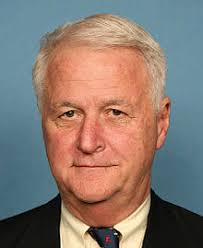


Image result for wampaleaks

Source: Mashpee Wampanoag end contract with former congressman

By Tanner Stening
Posted Jul 22, 2019

MASHPEE — The Mashpee Wampanoag Tribe is no longer paying The Delahunt Group LLC, but the longtime lobbyist will continue working for the tribe on a pro-bono basis, according to sources.
The Delahunt Group, which is led by former Cape and Islands congressman Bill Delahunt, D-Quincy, filed a termination report on July 3 as a lobbying disclosure. The group received $30,000 during the first quarter of 2019 for work connected to the tribe’s ongoing effort to pass federal legislation that would protect the tribe’s sovereignty status and off-Cape land claims.
Last year, the tribe paid the firm $120,000, according to the lobbying database filings.
The Lobbying Disclosure Act requires that lobbyists file quarterly reports with the government if a client’s spending exceeds $3,000.
The tribe hired The Delahunt Group in March 2011 after working closely with the congressman in the tribe’s bid for federal recognition a decade earlier. Delahunt did not return a message requesting comment on the firm’s relationship with the tribe.
Tribal Council Chairman Cedric Cromwell could not be reached Monday through a spokesperson. He told the Times previously that Delahunt originally helped the tribe pursue gaming and navigate the federal bureaucracies for health care, housing and education for tribe members.
“He supported us in our pursuit of federal recognition,” Cromwell said. “He understands the tribe’s sovereign rights and the fight we had for 30-plus years for federal recognition.”
At the time, Delahunt had decried a federal government “replete with bureaucracy, impasse, inertia, and sometimes outright hostility” to tribes.
Delahunt’s lobbying firm has helped to identify and facilitate grants, sources said.
The tribe still has an arsenal of high-powered lobbyists working for it, including Dentons US LLP, Gavel Resources LLC and Ballard Partners, among others.
Lobbying disclosures reflect a $50,000 payment from Genting Malasia, the tribe’s financial backer, to Ballard Partners during the second quarter of the year, according to a July 17 filing.
Ballard Partners is run by Brian Ballard, who was President Donald Trump’s Florida finance chairman for his 2016 campaign. Dubbed “the most powerful lobbyist in Trump’s Washington” by Politico, Ballard has given hundreds of thousands of dollars to Republican causes over the past two years, according to data from the Federal Election Commission’s website.
But because of the tribe’s ongoing financial woes — and because Genting has stopped providing the tribe with loans — it is unclear if the lobbying firms are being paid for the work.
The Malaysian-based casino developer had fulfilled its contractual obligations to the tribe, according to tribal leaders, but is still backing efforts to stop a legal effort threatening the tribe’s 151 acres of reservation land in Taunton, where the tribe is looking to build a $1 billion casino.


ONE OF THE FIRST THINGS DONE IN MASSACHUSETTS WAS THE PUSH TO EXPAND ALCOHOL SERVICE....IT WAS PREDICTED THAT BEFORE THE INK WAS DRY, LOBBYISTS WOULD SEEK TO AMEND THE LEGISLATION.....
JUST WAIT.....


Conn. ended push for 24-hour bars at casinos after crash

State had hoped to collect more slot machine profits

DRIVER CHARGED A sailor, Daniel E. Musser, 24, is charged with manslaughter and driving under the influence and faces up to 19 years in prison.DRIVER CHARGED
A sailor, Daniel E. Musser, 24, is charged with manslaughter and driving under the influence and faces up to 19 years in prison.
By Gregory B. Hladky
Globe Correspondent / March 22, 2009

HARTFORD - Officials looking to help solve Connecticut's multibillion-dollar deficit thought they had found an easy way to raise another $5 million a year: allow casinos to serve alcohol 24 hours a day.

A sailor, Daniel E. Musser, 24, is charged with manslaughter and driving under the influence and faces up to 19 years in prison.
DRIVER CHARGED
More hours of bar service would mean more gambling, they figured, which would mean the state could collect more slot machine profits.

But the proposal by Governor M. Jodi Rell's administration came to a sudden end at about 3:30 a.m. on March 7, when a car leaving the Mohegan Sun casino turned the wrong way down Interstate 395, headlights off, and slammed into a van full of college students on their way to Logan International Airport. They were scheduled for a flight to Uganda, where they had plans to help out at an orphan age over spring break.

Elizabeth Durante, a 20-year-old pre-med student at Connecticut College in New London, was killed.

The car's driver, Daniel E. Musser, 24, a sailor from the Naval Submarine Base in Groton, was charged with manslaughter and driving under the influence and faces up to 19 years in prison.

The next day, Rell called Durante's death "an unconscionable tragedy" and pulled back her budget proposal to make alcohol available 24 hours at the casinos.

"Even though this accident occurred under the laws as they have been for many years, the governor said it does give one pause to question the wisdom of extending liquor service hours at the casinos," Christopher Cooper, Rell spokesman, said recently. "We don't believe the bill is going to move forward this session."

Chuck Bunnell, chief of staff for the Mohegan Tribal Council, agreed.

"The Tribal Council in general has taken the position that it's time to pause and mourn the loss of this very bright light of humanity," Bunnell said, "that it's not appropriate to have those discussions right now."

Bunnell said the tribe was originally "approached on a bipartisan basis" by lawmakers looking for ways to increase state revenue.

Lori A. Potter, a spokeswoman for the Mashantucket Pequot Tribal Nation, said analysts at the tribe's Foxwoods Resort Casino stand by their prediction that extending casino bar hours would result in an increase in state revenue.

"It is important to note that it would be impossible to find a more heavily regulated serving establishment in the state of Connecticut than the two casinos," Potter said.

Connecticut law requires the casinos' bars to stop serving by 1 a.m. Sunday through Thursday and by 2 a.m. Fridays and Saturdays. One of the arguments originally used in favor of allowing longer serving hours was that their competitors in Atlantic City serve alcohol 24 hours a day.

Legal hours for bars to serve alcohol vary greatly across the United States, according to Steven Schmidt, vice president for public policy at the National Alcohol Beverage Control Association.

In Massachusetts, for example, state law allows service until 11 p.m., but local governing bodies can extend the hours to 2 a.m. In states such as New Jersey and Nevada, Schmidt said, local authorities are allowed to set bar closing hours.

Charles H. Gartman, one of the students with Durante in the van that night, has difficulty understanding why anyone thought round-the-clock liquor at the casinos was a good idea.

"Twenty-four-hour bar service is a little bit ridiculous," Gartman said last week in a phone interview from his New York City home. "You can't trust everyone to drink and drive safely."

Gartman, 19 and a sophomore at Connecticut College, has not yet recovered from injuries he suffered in the crash.

The five other passengers also suffered injuries, some minor.

"Both my legs were pretty banged up, and at first I couldn't walk," he said. "I have pretty severe lacerations on my chin."

Nor has he recovered from the loss of Durante, of West Islip, N.Y. Gartman said it was Durante who got him interested in going to Uganda to aid orphaned children. "It was her enthusiasm for helping people," he recalled.

Stephanie Hinman, who was Durante's roommate and one of the students on the Uganda trip, finds it ironic that her friend would die at the hands of an accused drunk driver.

"Neither Liz nor I ever drank," Hinman said from her home in Norfolk, Conn.

"We lived together in the substance-free dorm."

In a 2007 interview with a college publication, Durante said she wanted to become a surgeon and work in Africa with Doctors Without Borders.

For Janice Heggie Margolis, executive director of the Connecticut chapter of Mothers Against Drunk Driving, Durante's death provided tragic evidence of why casino liquor hours should never be expanded.

She said the potential price to society of more fatal crashes is simply too high, no matter how much money might flow to the state. "This is exactly the reason why," Heggie Margolis said.
"You can never put on paper the cost of a life."


http://archive.boston.com/news/local/connecticut/articles/2009/03/22/conn_ended_push_for_24_hour_bars_at_casinos_after_crash/