Search This Blog

Translate

Blog Archive

Middleboro Review 2

NEW CONTENT MOVED TO MIDDLEBORO REVIEW 2

Toyota

Since the Dilly, Dally, Delay & Stall Law Firms are adding their billable hours, the Toyota U.S.A. and Route 44 Toyota posts have been separated here:

Route 44 Toyota Sold Me A Lemon


Showing posts with label 'Panama Papers'. Show all posts

Monday, December 3, 2018

REPUBLICANS BOUGHT & PAID FOR


REPUBLICANS BOUGHT & PAID FOR ....first by the Dirty Energy Koch Brothers and their wealthy cabal....now by the RUSSIANS....

REPUBLICANS don't represent YOU!


INVESTIGATERUSSIA.ORG
Senator's PAC accepted $800,000 from donor closely connected with at least two Russian oligarchs


The Intellectualist, a left-leaning news aggregator, points out that Senator Lindsey Graham (R-SC) has received at least $800,000 in campaign donations from a man with ties to Putin-allied oligarchs, which could explain why the Senator has been increasingly supportive of President Trump lately. 
Ruth May, in a piece for the Dallas Morning News, details the donations from Len Blavatnik, "one of the largest donors to GOP political action committees in the 2015-16 election cycle." 
Data from the Federal Election Commission show that Blavatnik's campaign contributions dating back to 2009-10 were fairly balanced across party lines and relatively modest for a billionaire. During that season he contributed $53,400. His contributions increased to $135,552 in 2011-12 and to $273,600 in 2013-14, still bipartisan.
In 2015-16, everything changed. Blavatnik's political contributions soared and made a hard right turn as he pumped $6.35 million into GOP political action committees, with millions of dollars going to top Republican leaders including Sens. Mitch McConnell, Marco Rubio and Lindsey Graham.
In 2017, donations continued, with $41,000 going to both Republican and Democrat candidates, along with $1 million to McConnell's Senate Leadership Fund.
An infographic accompanying May's article notes the following: 
Blavatnik contributed $800,000 to the Security is Strength PAC, associated with Sen. Lindsey Graham, R-S.C., via Access Industries.
Blavatnik and oligarch Viktor Vekselberg met attending university in Russia years ago, and together they now own a 20.5% stake in Rusal, oligarch Oleg Deripaska's aluminum company. 
Further, nearly 4 percent of Deripaska's stake in Rusal is owned by Putin's state-controlled bank, VTB, which is currently under U.S. sanctions. VTB was exposed in the Panama Papers in 2016 for facilitating the flow of billions of dollars to offshore companies linked to Putin.
Earlier this year, The Associated Press reported that Paul Manafort, Trump's former campaign manager, began collecting $10 million a year in 2006 from Deripaska to advance Putin's interests with Western governments. Deripaska's name turned up again in an email handed over to Mueller's team by Manafort's attorneys ... 
(...)
Vekselberg has connections to at least two Americans who made significant GOP campaign contributions during the last cycle. They are among several Americans who also merit Mueller's scrutiny.
The first is his cousin Andrew Intrater, and the second is Alexander Shustorovich.
Intrater had no significant history of political contributions prior to the 2016 elections. But in January 2017 he contributed $250,000 to Trump's Inaugural Committee. His six-figure gift bought him special access to a dinner billed as "an intimate policy discussion with select cabinet appointees," ... 
(...)
Alexander Shustorovich, chief executive of IMG Artists, attempted to give the Republican Party $250,000 in 2000 to support the George W. Bush presidential campaign, but his money was rejected because of his ties to the Russian government, according to Quartz. So why didn't the Trump team reject Shustorovich's $1 million check to Trump's Inaugural Committee?
Oil magnate Simon Kukes, who once worked for Vekselberg and Blavatnik, also is of interest. 
In 2016, Kukes contributed a total of $283,000, much of it to the Trump Victory Fund. He had no significant donor history before last year's election.
(...)
There is no doubt that Kukes has close ties to the Putin government. When he left his job as CEO of TNK in June 2003, he joined the board of Yukos Oil, which at the time was the largest oil company in Russia owned by the richest man in Russia, Mikhail Khodorkovsky. Four months after Kukes joined the board, authorities arrested Khodorkovsky at gunpoint on his private plane in Siberia on trumped up charges of tax evasion and tapped Kukes to be CEO. 
(...)
In total, Blavatnik, Intrater, Shustorovich and Kukes made $10.4 million in political contributions from the start of the 2015-16 election cycle through September 2017, and 99 percent of their contributions went to Republicans. With the exception of Shustorovich, the common denominator that connects the men is their association with Vekselberg. Experts who follow the activities of Russian oligarchs told ABC News that they believe the contributions from Blavatnik, Intrater and Kukes warrant intense scrutiny because they have worked closely with Vekselberg.


https://investigaterussia.org/media/2018-09-11/russian-money-behind-grahams-growing-defense-trump?fbclid=IwAR0UmYoByhdibWy52wRuFDGxQzSAofmVPxpFnp9ODZJB6i5WfqDSujH9O8Y

Saturday, November 25, 2017

Wealthy Tax DEADBEATS!


Reader Supported News
25 November 17 AM
It's Live on the HomePage Now: 
Reader Supported News


Businessmen on Wall Street. (photo: AP)

How the Rich Stay Rich

By Doug Henwood, Jacobin
25 November 17

A peek inside the world of wealth managers, offshore tax havens, and the uber-wealthy.

n early November, over thirteen million documents from the Bermuda-based law firm Appleby were released to the public. Known as the Paradise Papers, these documents detail a vast effort to shield the wealth of some of the world’s richest people from the tax authorities, as well as creditors and estranged family members. This follows the leak last year of the Panama Papers, a similar set of documents revealing how assets are hidden offshore.
The use of offshore tax havens is facilitated by wealth managers, who tend to the assets of the ultra-wealthy and ensure they can register their wealth in the optimal offshore locations. Brooke Harrington, a professor at the Copenhagen Business School and author of Capital without Borders: Wealth Managers and the One Percent, spent nearly eight years studying wealth managers, interviewing dozens of them about their work.
In the following interview — which first appeared on Doug Henwood’s Behind the News and has been edited and condensed — Harrington explains who is taking advantage of these tax havens, and what the explosion in offshore accounts means for the global economy.
DH: Is there anything in these Paradise Papers that surprised you?
BH: I was a little surprised that Queen Elizabeth would take the risk of using offshore structures. I would have thought that patriotism and duty to country would have precluded that, but it does reinforce my observation since the Panama Papers that above a certain level of wealth, everybody does this.
DH: In your book, you quote a popular study of these offshore financial centers as saying that the characters involved are a peculiar mix of castle-owning members of European aristocracies, fanatical supporters of Ayn Rand, members of the world’s intelligence services, global criminals, British public school boys, and assorted lords and ladies and bankers galore. That’s the entire cast of characters of the very rich we’re talking about, right?
BH: Yeah. I was so struck after the Panama Papers by the photos, the images that the International Consortium of Investigative Journalists put up online, because it was Lionel Messi right next to Jackie Chan right next to Vladimir Putin and Assad of Syria and the prime minister of Iceland. What do those people actually have in common? Apparently what they have in common is that they’re part of this global class of people who are above the law.
DH: What part of the wealth distribution are we talking about? Where does this start? 99th percentile? Is this the 1 percent, is it the 1/10th of 1 percent? What’s the demographic here?
BH: Happily enough, there’s just been a new study from some economists, including a guy here in Copenhagen, at Copenhagen University. They say it’s the .01 percent who are the major users of these offshore facilities. So the 1 percent we would just call affluent, but it’s the .01 percent who really start to get into the kind of money where you can afford to pay a wealth manager, because it’s not cheap to have someone to create and manage offshore structures for you.
DH: I was struck, though, that in your chapter about who these wealth managers are, that their salaries are apparently rather low by the standards of finance: $200,000 or $300,000. This is not something that a big shot at Goldman Sachs would be impressed with. If this is so crucial to the maintenance of wealth of this .01 percent, why are they so modestly compensated?
BH: I asked this question to as many wealth managers as I could, and part of the answer I got is first of all, most of the people who do wealth management for a living live in places where there’s low to zero taxation, so those hundreds of thousands of dollars they’re getting in their salaries, that’s not just gross, it’s net.
Second of all, for a lot of people who do this for a living, it’s a lifestyle choice. They could be doubling their salary working in corporate law or corporate finance, but they’d be working eighty to hundred hour weeks, whereas a lot of them told me explicitly, “I make a really good living working a nine to five job. Plus I get taken on private planes. I get taken on vacation and leisure activities with my ultra-wealthy clients. I have many of the benefits of being an ultra-wealthy person, but I get to have a normal job that isn’t going to keep me away from my family and having fun in life. And I get to live in paradise, like the Cayman Islands.”
DH: But I was also impressed that some bankers look down on these folks because they’re not growing money, they’re just protecting it.
BH: That’s right. Compliance is very important to wealth managers. I have a hard time explaining this to some of my colleagues in sociology who say, “Well of course wealth managers are doing illegal things.” And I said, “Not if they have a brain in their head,” and for the most part, they’re extremely intelligent people because what they have to do is very complex technically and also from a socio-emotional intelligence point of view.
They would never willingly do something that they know to be illegal because that’s going to put them at huge risk. Not just of professional sanctions, but of losing their whole livelihood because no client wants to get dragged into court.
Even if they get off on whatever charges are laid against them, just the fact of being exposed by being charged with something is a disaster because the whole name of the game is secrecy. And as soon as you get charged with a crime, your name is in the paper and you’re faced with potential exposure of all your private financial dealings. That’s apocalyptic for many of these people.
DH: I would think, too, that they would almost be a matter of professional pride to do all these extravagant things fully within the law.
BH: It is. One of the people I interviewed, when I asked him what he liked best about his job, he said, “I love playing cat and mouse with the law.” It’s a game for him to spend 24/7, every day of the year, figuring out how to get right up to the edge of legality, but not cross the line.
DH: Give us an idea of how these things work. I’m a rich person with, I don’t know, a billion dollars I want to hide from the authorities, or maybe my creditors, or maybe a part of my family I don’t like. What do I do?
BH: If you live in, say, continental Europe, you’d probably be introduced by your banker to someone who can manage your affairs offshore. Most of the work that needs to be done would not be legal in continental Europe or the US, at least if you were a passport holder of any of the countries in that region. You’d have to get stuff offshore.
In all likelihood, your billion dollars of assets wouldn’t be just one thing. They’d be a bunch of different things, like vacation properties, yachts, financial instruments, a family business. And each of those would have to be treated separately because all these tax havens compete with each other to form a little niche. So Switzerland doesn’t go head-to-head with the Cayman Islands. Cayman creates its own special niche laws to, say, be the best place to put your family business, whereas, say, the Cook Islands is the place where you might want to put your art collection.
It might need to be said for people who don’t know, the business itself and the art collection don’t literally get migrated to those offshore centers. They’re just sort of booked there for legal purposes. It’s a little bit weird to think of having stuff booked almost in an imaginary way in an offshore center, but it’s perfectly legal to do that. What that gets you is that you can put the asset under the protection of the law that allows you the most freedom to do what you want with that asset.
For example, if you want to avoid the United Nations convention on trade in certain kinds of very precious and rare art, you’ll put your art collection in a Cook Islands trust because then you’re sort of immune to that United Nations convention. You can sell the art. You can rent it out to museums without being constrained by those international laws. You can also reap profits from trading in violation of international trade embargoes, and not get in trouble. You can hide money from relatives that you want to disinherit or divorce without giving them a penny. Certain jurisdictions specialize in allowing wealthy people to do that.
The wealth manager would have to have a long conversation with you in which you laid out a lot of very personal information about what your concerns were, what your goals were, and exactly what kinds of assets and liabilities you had.
DH: This is part of what you said earlier about a socio-emotional intelligence that’s required. It’s not just a matter of money and law, but it’s the entire client’s life.
BH: Right. And that is what makes this profession particularly fascinating. You can be a good surgeon technically, but a jerk as a person: no bedside manner, no empathy, no nothing. But people will still come to you because they trust you to be the best person to operate on their brain tumor.
But to be a good wealth manager, you not only have to be top of your game in terms of legal financial expertise, you have to have really extraordinary skills at understanding concerns of multiple cultures, often very different from your own. And you have to be a good psychologist. Several of the people I interviewed said, “I’m a social worker for the rich.” And they weren’t kidding.
DH: A lot of the money we’re talking about here are new fortunes that were created in the eighties with technological and financial revolutions, deregulations, and things like that. So there hasn’t been much of a generational transfer, maybe at most one. There’s a lot of new money that’s sloshing around at great quantities. Is this what’s behind the creation and the explosion of these offshore centers, these new fortunes that are really very phobic about being confiscated?
BH: No, I would say it’s not. And it’s important to realize that economic studies of all these, say, Silicon Valley entrepreneurs who’ve made new fortunes, reveal that the American belief that anybody can bootstrap themselves up and become the next Steve Jobs is actually not true. That the people who engage in entrepreneurial activity are doing so because they have inherited wealth behind them. They have a private safety net.
So that’s really what drives entrepreneurial activity, it’s inherited wealth. Not necessarily the level of wealth that would get you multiple offshore accounts, but enough so that if you fail multiple times as an entrepreneur, you’re not going to be living in a box on the street. You just get up and do it again. You have family resources to fall back on.
But to go back to the question of what spurred the growth of offshore, according to the sixty-five wealth managers that I interviewed all over the world, it had to do with a couple of things that happened simultaneously. Before I was born, there used to be things called currency controls. Some countries still have them, but what they mean is that you’re not allowed to take more than a certain fixed amount out of the country, and it’s usually rather a low amount.
One of the people who taught me in the wealth management training program was British and he said, “In the seventies, if you were in England and wanted to go on holiday, you couldn’t take more than fifty pounds sterling out of the country with you. It made going on holiday quite difficult.”
So imagine if you’re a company and you wanted to do business, because currency controls applied to you, too. Companies had to lobby for the creation of these legal financial no-man’s lands, which we now know as offshore financial centers, where currency controls didn’t apply. So, Channel Islands of Jersey and Guernsey: they’re technically still Great Britain, so you could get money there, but money could leave those places in much greater quantities than they could leave the main island, England. So people started using Jersey and Guernsey, and other crown dependencies of Great Britain, as conduits to plug into the global economy. That was one thing.
The other thing was that in the seventies, a lot of countries began to develop extensive welfare states, so taxes rose. And a lot of wealthy people didn’t want to pay those taxes. They saw the lifting of currency controls, or the availability of offshore financial centers and they said, “Ah ha. If corporations can use them, I can use them, too.” And they would employ bankers and lawyers to get their personal wealth offshore in the same way that corporations were doing.
That became this massive growth industry that multiplied on itself, like a snowball picking up snow as it rolled downhill, because wealth, as Thomas Piketty has shown, tends to multiply itself much more than other kinds of economic assets.
DH: As I was reading your book, I was thinking that this interest in protecting wealth, rather than creating it, seems symptomatic of a certain senescence creeping into capitalism. It reminds me of an older person moving out of growth stocks into municipal bonds, and it’s all about capital preservation. We haven’t mentioned how the bankers are somewhat contemptuous of this goal. But what does it say about the state of capitalism that these immense fortunes are sequestered; not so much engaged with expansion of the system but are being kept from the prying eyes of government or relatives?
BH: People who claim to love capitalism and care about capitalism thriving should be very worried about this, because what this concentration of capital in an increasingly small group of people’s hands means is that the economic system is ossifying. It’s going backwards towards feudalism, where wealth was tied up generation after generation among a very small group of families. That’s exactly what we see happening now.
You may have seen that every year, Oxfam produces a study in which they count the number of people whose wealth exceeds that of the poorest 50 percent of humanity. In 2010, that number was above three hundred. In 2017, as of January, it was eight. The number of people who could fit into an extra-large golf cart now own wealth equivalent to the bottom 50 percent of humanity. That’s neo-feudalism, and we’re already seeing the consequences in the extreme decline of upward mobility in the US.
Now when you get an inheritance in the US, that doesn’t just benefit children or grandchildren of the original rich people. It has a knock on effect to the fifth or sixth generation. Meanwhile, most Americans, especially African Americans, have nothing; nothing but debt when they die. Whereas a very tiny group of people at the very top of the socioeconomic scale have billions to distribute to their heirs when they die. We’ve essentially re-feudalized ourselves.
DH: You would think that the political class would have an interest in getting its hands on the vast amount of tax revenue that’s foregone in this age of constant budget cuts and austerity, but on the other hand, the political class is very dependent upon these folks for their funding. You mentioned, for example, the Pritzker family, with some 2,500 offshore trusts: they’re major funders to the Democratic Party, very close to Obama. Is there any way that you can imagine that we can actually get a hand on some of these fortunes? Or is it off limits at this point?
BH: Well, the pessimistic answer is given by a historian who recently published a book on what has happened in cases of extreme inequality in the past. He said, “When other societies have gotten to the point where we find ourselves now, the only thing that has ever turned around this level of inequality, and really redistributed wealth has been mass death, either through disease or war.”
I hope it doesn’t come to that, but the wealthy people of the world, especially in places like the US, know that this cannot go on. There was an article in the New Yorker recently about the boom in business for luxury underground bunkers. So people, billionaires like Peter Thiel, for example, are buying themselves these high-end bomb shelters, where they can survive the coming civil war or apocalypse.
DH: It seems very unlikely that would succeed.
BH: You can only hide underground for so long, I suppose. In addition, they’ve got their private jets and they bought passports for places like New Zealand. People don’t form escape plans like this without having a pretty good reason, because those things aren’t cheap.


Sunday, August 20, 2017

Trump-Linked Oligarch’s Company Goes Bust as Intrigue Grows


Reader Supported News
20 August 17 AM
It's Live on the HomePage Now: 
Reader Supported News

Sure, I'll make a donation!


Trump-Linked Oligarch’s Company Goes Bust as Intrigue Grows 
Kevin G. Hall and Ben Wieder, McClatchy 
Excerpt: "Two mysterious companies owned by the Russian oligarch who bought Donald Trump’s Palm Beach mansion filed for bankruptcy in North Carolina Friday, adding to the mystery about the firms and the rich Russian behind them." 
READ MORE
Alevo production line where the battery cells are manufactured before going into a Gridbank on the first floor in the old Philip Morris cigarette plant in Concord on Feb. 18,2016.  (photo: Robert Lahser/The Charlotte Observer)
Alevo production line where the battery cells are manufactured before going into a Gridbank on the first floor in the old Philip Morris cigarette plant in Concord on Feb. 18,2016. (photo: Robert Lahser/The Charlotte Observer)

wo mysterious companies owned by the Russian oligarch who bought Donald Trump’s Palm Beach mansion filed for bankruptcy in North Carolina Friday, adding to the mystery about the firms and the rich Russian behind them.
Dmitry Rybolovlev has drawn attention not just for his 2008 purchase of Trump’s palatial home for close to $100 million, but also for the fact that his tricked-out Airbus 319 intersected with Trump’s plane on U.S. airport tarmacs on multiple occasions last fall. McClatchy revealed in March that his plane had been in the Charlotte area twice during the 2016 presidentical campaign at the same time as Trump’s. Rybolovlev’s spokesman first called the crossings coincidental, later confirming McClatchy’s reporting that he was the main shareholder of a high-tech battery plant in Concord, N.C., just outside Charlotte. (Trump and Rybolovlev deny knowing each other.)
The battery plant is the most prominent physical manifestation of the companies that just filed for bankruptcy, Alevo USA Inc. and Alevo Manufacturing Inc. — U.S. arms of Alevo, which is based in Switzerland and is part of the Rybolovlev empire. The oligarch’s far-flung holdings include the storied Monaco soccer club, a Greek island, pricey New York real estate and Trump’s former West Palm Beach mansion.
The Charlotte Observer broke news of the impending bankruptcy Friday, and Alevo’s website was replaced with a single page saying the two U.S. subsidiaries sought “to achieve an orderly liquidation of their assets and maximize value to pay their creditors.” Alevo filed under Chapter 11 of the bankruptcy code, allowing the company’s Alevo's new predominantly Russian management a say on which assets are sold off and how.
Very little about Alevo was ordinary, including its top shareholder and management team. Alevo Inc. was first established in Boca Raton, Fla., in January 2009. Later, Alevo USA Inc. and Alevo Manufacturing Inc. were registererd in Delaware, which requires little public disclosure about privately held companies.
In Concord, Alevo promised to make 40-foot lithium ion batteries that resembled shipping containers and stored solar-generated power. The company bought an old Philip Morris cigarette plant for $68.5 million and quickly sold it, then leased it back. But its production was far from the mid-Atlantic states where it was trying to sell.
Alevo’s management team had a few American energy veterans but was dominated by Russian cronies of Rybolovlev with no background in power generation, electricity markets or the grid. Few of the large batteries were delivered to clients: The Maryland city of Hagerstown is the only publicly acknowledged recipient of a GridBanks battery.
The Delaware coastal city of Lewes has been waiting for months to receive its battery, which it planned to use to fill in power supply during times of peak usage or outages.
“Our contract is such that we don’t have a lot of financial harm coming to us,” Darrin Gordon, who heads the public works department in Lewes, told McClatchy in a recent interview.
Last April, the U.S. Trade and Development Agency announced a $1.6 million grant to Alevo and a little-known British firm, Xago Africa, to study the feasibility of exporting its technology to a remote corner of Kenya. McClatchy has learned that the grant had been pursued by Xago Africa through the U.S. Embassy in Kenya. But no money had actually been provided as the proposal was held up by the agency in a secondary process.
McClatchy tried unsuccessfully to reach Xago Africa at its listed numbers and by email.
Rybolovlev remade Alevo’s corporate board with top executives of his former fertilizer company, Uralkali, which at its height controlled about a fifth of the world’s production of potash, which is mostly used as a fertilizer and in soap products. Rybolovlev sold it in 2010 for a reported $10 billion; some news reports have said Russian leader Vladimir Putin forced the sale.
But some of the individuals named to be officers and directors of Alevo had been in the news for all the wrong reasons. The new CEO, Vladislav Baumgertner, was CEO of Uralkali from 2003 to 2013, and was involved in an international scandal when arrested in Belarus for abuse of office. He was later extradited to Russia, where he was put under house arrest but eventually exonerated in a murky case. Uralkali’s chief financial officer, Kuzma Marchuk, who also recently joined the Alevo team, helped take Uralkali public on the London Stock Exchange, but later was the subject of controversy when it was revealed he received an outsized payout after Uralkali was sold.
Also brought into Alevo as a director was Mikhail Sazonov, Rybolovlev’s longtime aide who attended to affairs with the family business that controls the oligarch’s empire. Sazonov made international headlines during last year’s publication of the Panama Papers, which showed him as a co-director on some of Rybolovlev’s offshore companies. They were listed together in the Panama Papers on Xitrans Finance Ltd., a holding entity for Rybolovlev’s pricy art collection that includes works by Degas, Van Gogh and Monet.
(Rybolovlev’s ex-wife Elena, who won what is still considered the world’s largest divorce settlement at $4.5 billion — though it was reduced to about $600 million after a seven-year court battle accused Rybolovlev of moving his wealth to offshore tax havens to hide it from her and others.)
Then there is the diamond connection. Alevo’s recently named new chief commercial officer, Oleg Petrov, had worked with Rybolovlev and Baumgertner at Uralkali, but in 2015 also led the acquisition arm of Alrosa, Russia’s state-owned diamond company. That company featured in secret State Department cables from the U.S. embassy in Kenya, published on the Wikileaks website, voicing concern about Alrosa.
One Jan. 9, 2009, confidential cable from then-Ambassador James D. McGree warned that the Zimbabwean military was cutting deals for diamonds smuggled into neighboring Mozambique. It also noted that Alrosa sought an exclusive deal with Zimbabwe’s longtime kleptocratic leader Robert Mugabe, who later traveled to Moscow to negotiate. A deal followed a year later giving Russia rights to a sought-after mining area.
When Petrov was at Alrosa he headed the United Selling Organization, the division that sorts and values diamonds at a state-run Russian agency in a country where such agencies are notorious for corruption.
http://readersupportednews.org/news-section2/318-66/45328-trump-linked-oligarchs-company-goes-bust-as-intrigue-grows

Contribute to RSN
Become a Fan of RSN on Facebook and Twitter
Update My Monthly Donation

Monday, January 2, 2017

2016's hacks, attacks and security blunders


2016's hacks, attacks and security blunders

End 2016 on a high note: Put all your personal information in a pile and set it on fire.


Hulton Archive/Getty Images
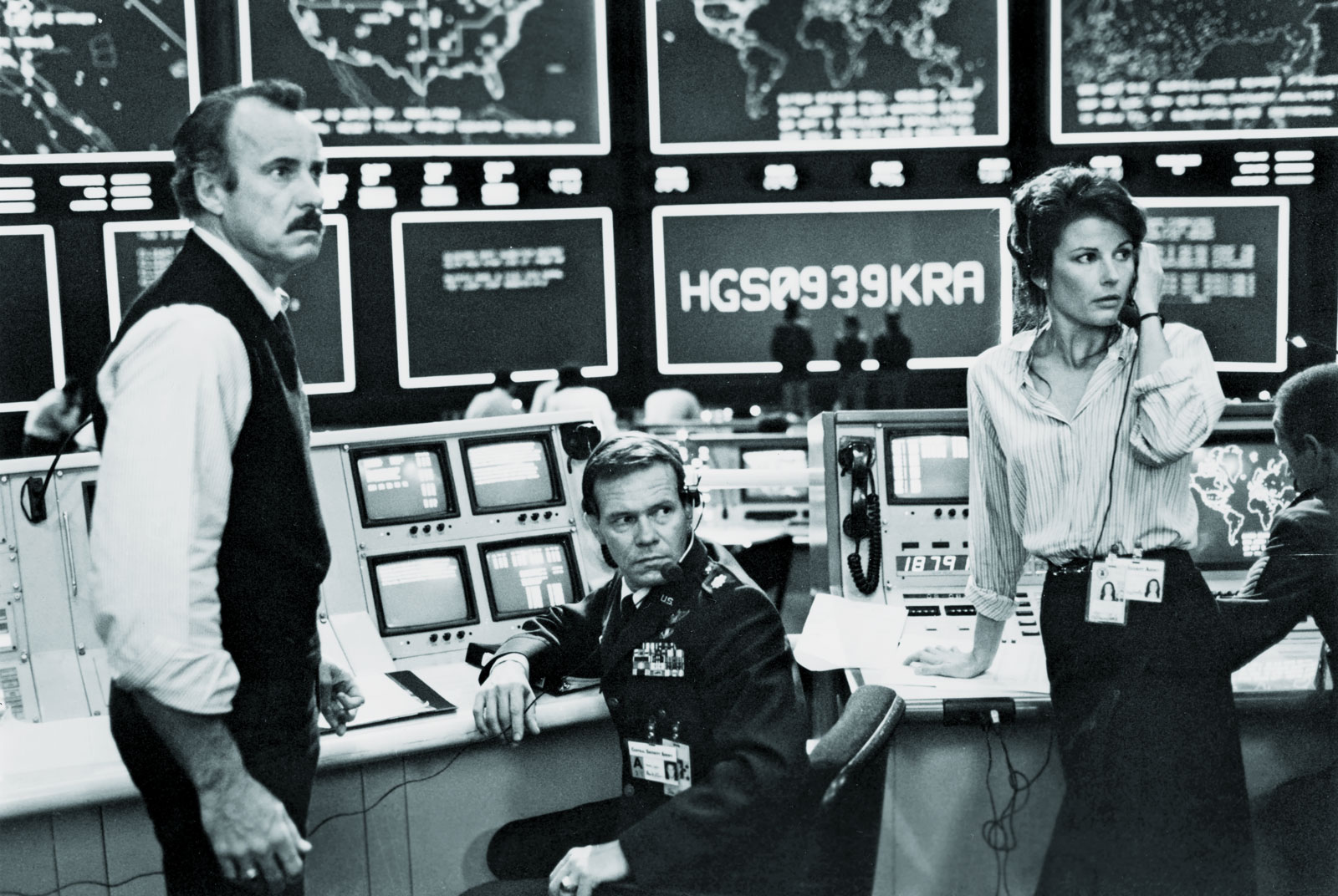
Just when we thought things couldn't get worse than 2015's security and privacy disasters, the asshole known as 2016 came along to trample and pee on any hope we had left for a hack-free, secure future. This was the year Hollywood hacking scare-fantasies like War Games started to feel uncomfortably real. Yay...
This lovely year, our government used Tor exploits, the UK passed its terrible Snooper's Charter, our TSA failed at cyber, the FBI got its hacking powers expanded and the Shadow Brokers tried to sell NSA secrets. But it's the stories below that shaped this year in hacking and cybersecurity. They may have even had a hand in changing the course of history for the free world.

All for nothing

All it takes to get the FBI's panties in a bunch is for someone to say "no" -- and bunched they became when the agency wanted to get into an encrypted iPhone related to the San Bernardino shootings. The FBI wanted Apple to build a custom version of iOS with a backdoor. Apple said it not only wouldn't, but couldn't break the phone's encryption for the case, because it would essentially break encryption on every other iPhone. This turned into a knock-down-drag-out fight both in congressional testimony and in the press. Everyone had an opinion, and the encryption debate became a vitriolic and emotional squabble. Eventually, the FBI picked itself up, dusted itself off, and ponied up $1.3 million for an exploit that allowed it into the phone.

An unhealthy diagnosis

When the Hollywood Presbyterian Hospital had its files held hostage in February by malware demanding payment, the digital plague known as ransomware finally got everyone's attention. While not the first emergency service organization to fall victim to these extortion schemes, the hospital's predicament highlighted the direness of the situation. The hospital was at a standstill with its systems responsible for CT scans, documentation, lab work, pharmacy functions and electronic communications all out of commission. Staff relied on pencil and paper; it was reported that radiation and oncology were temporarily shut down. The hospital eventually paid the ransom and got its files unlocked, and no one was harmed as a result of the disruption (that we know of). Still, it demonstrated just how fragile the systems our lives depend on have become.

Ocean's 15 is going to be boring

The SWIFT bank heists are the stuff blockbuster films are made of. That is, if we wanted to watch George Clooney sit at a computer mashing keys for about 1,000 hours. In April, hackers swiped $81 million from Bangladesh Bank thanks to a flaw in SWIFT international banking software. A bank in Vietnam was also hit with the same technique, to the tune of $1 million. Then May saw another round of SWIFT-related bank robberies, in which hackers snatched $12 million from an Ecuadorian bank. Most of the attacks targeted Australia, Hong Kong, the UK, the Ukraine and the US, and they probably won't stop anytime soon. It's now believed a second group is targeting banks using the same methods, again using malware to cover its tracks via SWIFT.

Offshoring accountability

There was one big hack and dump that actually felt like it wasn't done with completely evil intentions. That was the Panama Papers leak, in which a boatload of offshore-tax-haven records was released to the public via a handful of global news organizations. The offshore money-laundering firm Mossack Fonesca provided tax-avoidance services mostly to the rich and despotic, who wanted to stay technically within the law but needed to cover their unethical tracks. The resulting scandals prompted the prime minister of Iceland and FIFA ethics-committee member Juan Pedro Damiani to resign. Former UK Prime Minister David Cameron had somefessing up to do; leaders of Sudan and Azerbaijan, Pakistan Prime Minister Nawaz Sharif and Ukraine President Petro Poroshenko were also named in the papers. China's government went on damage control and demanded reporting on the Papers be stopped after the family members of eight Communist Party elites were shown to have dealings with offshore companies.

Leave Britney alone

Throughout the year, one group managed to ruin the day of many CEOs, companies, and celebrities: social media extortionists extraordinaire OurMine. Grabbing usernames and passwords from breach dumps, finding famous names and seeing if the credentials still work isn't exactly the work of hacking masterminds. But OurMine has made headlines time and again with this very simple formula. Big names on the "hacked by OurMine" list include Katy Perry, Marvel, Mark Zuckerberg, Google's Sundar Pichai, Yahoo's Marissa Mayer, AOL's Steve Case and Twitter CEO Jack Dorsey. They proved that even the people who should know better reuse passwords, and companies aren't doing a good enough job at telling users to change their passwords after a breach. Though, we can note with a small amount of dark amusement that one of its recent victims is Sony ... which you'd think would know all about password and security hygiene by now.

What's the opposite of security?

If there was a contest for getting embarrassingly hacked and being the worst at user security, Yahoo surely became the reigning queen of 2016. In fact, they won the race to the bottom so hard this year, the company may be hanging onto the crown for years to come. When Yahoo revealed in September it had been hacked in 2014, just after its sale began to Verizon, the truth started coming out. That incident affected a jaw-dropping 500 million Yahoo users. Turns out this was only one of the intrusions Yahoo failed to tell us about, because this month it revealed that it was hacked again, in 2013. This time, it took the crown for the biggest exposure of customer records and credentials, ever -- with over 1 billion accounts coming up pwned in a years-long compromise. Yahoo always had a tough slog when it came to staying afloat, but this year we found out that it really sucked at everything. But most especially security.

When your DVR is a honeypot

There was only one way this year could get worse when it came to hacking, and of course, it happened. Insecure IoT devices were leveraged via the Mirai Botnet to take out about half the internet when PayPal, The New York Times, Pinterest, Spotify, Twitter and many more sites went offline in October. WikiLeaks said it was all about them, everyone blamed Russia, and IoT hackers pretty much just rolled their eyes. The attackers did all this by exploiting the stupid decisions of "smart" appliance companies who left backdoors and default passwords in things like connected cameras and DVRs. The Mirai Botnet incident was only a partial use of the gigantic implanted malware bot-army, so that's just great. It certainly served as a warning -- albeit too late -- about security neglect in manufacturing, and just how fragile our internet economy and communications really are.

Like D-Day, but for drama

In July, President-elect Donald Trump invited the Russians to hack us in a very specific way... and they did. So weird, right? They even went the extra mile for him by taking down his Democratic opponent with a series of hacks (and subsequent leaks, via WikiLeaks) that may have swayed the election in the bad hombre's favor. It was the world's most painful lesson in cybersecurity. John Podesta got owned through bad advice encouraging him to click a phishing link, and every US state panicked about the vulnerability and hackability of its voting machines. The result has been an ugly, rolling-downhill cyberwar with Russia, pitting the incoming president against the White House and most governmental organizations who believe Russia fucked us over -- while Trump defends the 400-lb hackers who made him look good. And not just by physical comparison.
Images: Jaap Arriens/NurPhoto via Getty Images (iPhone); Shutterstock (Yahoo); REUTERS/Dado Ruvic/Illustration (Mossack Fonseca)

https://www.engadget.com/2016/12/30/2016s-hacks-attacks-and-security-blunders/