Search This Blog

Translate

Blog Archive

Middleboro Review 2

NEW CONTENT MOVED TO MIDDLEBORO REVIEW 2

Toyota

Since the Dilly, Dally, Delay & Stall Law Firms are adding their billable hours, the Toyota U.S.A. and Route 44 Toyota posts have been separated here:

Route 44 Toyota Sold Me A Lemon


Wednesday, January 1, 2014

This & That

Oh, and 3.9 million Americans are also eligible for expanded Medicaid.


Buddhism's photo.


Occupy Democrats's photo.
 
Tell your friends! Image by Occupy Democrats.


Share the story of the Tarnick family and other Nebraskans in the path of Keystone XL by sending these postcards to Barack Obama and other key decision makers. Click here to get a set of 4: http://boldnebraska.org/postcard

Jim Tarnick is a young farmer and rancher who owns and runs a 1000-acre crop farm and a 75-head cow/calf operation in Nance County. Between the farm and cows, he manages 1580 acres that he owns or rents. Much of the owned land has been in his family for 13...0 years. The proposed route will traverse ground that has been in the family for 75 years and is slated to run as close as 150 feet from his farmhouse. Jim farms on a porous sandy and corrosive alkali soil with a water table that runs 3-5 feet from the surface of the ground. Tarnick was arrested in Washington, DC, in February 2013, as part of a civil disobedience action leading up to the Forward on Climate rally.

(Photo by Mary Anne Andrei / Bold Nebraska)
See More

Horrifying scientific ignorance that imperils our future!

Alan Grayson
Republicans don’t believe in evolution. Maybe because evolution doesn’t believe in them.


Poll: Republican belief in evolution on the decline
 
 
By Danny Matteson

Partisan splits among Democrats and Republicans aren’t exactly out of the ordinary — but a new poll shows one that’s widened in recent years.

According to a Pew survey released Monday, some 67 percent of Democrats believe in the theory of evolution — compared to 43 percent who believe the theory on the Republican side of the aisle.

If you’re doing the math, that’s a 24-point gap between the parties — and an increase from the 10-point difference the poll found in 2009, and the 13-point difference found in 2005. (Via Wikimedia Commons / Jose-manuel Benitos)

According to one of the pollsters, the results were a bit of a surprise. CNN quotes her saying: "I didn't expect to see that kind of shift. I think it basically fits with a pattern of growing polarization. And we see that on some other science issues."

The poll asked specifically if respondents agreed with the statement "humans and other living things have evolved over time," or "humans and other living things have existed in their present form since the beginning of time." (Via The Huffington Post)

Poll respondents were then asked to self-identify with a political party. Sixty-five percent of Independents said they believed in evolution, by the way. (Via Fox News)

On a broader level, 60 percent of Americans in general say they believe Darwin’s theory, compared to 33 percent who reject the idea. (Via About.com)

While those who believe the more than 150-year-old theory are a solid majority, recent polls have shown American belief in evolution still ranks fairly low in the global community. (Via PBS)

According to a 2005 study of surveys on evolution, the United States ranked second to last in evolution acceptance among 34 Western countries. The only country the U.S. beat out was Turkey. (Via National Geographic)

But the issue of believing or not believing in evolution isn’t as cut and dry as the numbers would have you believe.

The poll also found that of those who believed in evolution, about a quarter said they also believed it was caused by a creator. Meaning they believed a supreme being set the wheels of evolution in motion at some point in the past. (Via NASA)

Interestingly, differences weren't just found when comparing political affiliations. Gender also played a role, with men 10 percent more likely to believe in evolution than women.





Ignoring failures by the Feds.....

It's predictable that folks demand PIPELINES that leak and rupture as solution for the failures of the federal government to adequately fund oversight and regulation - the Bogey Man:
 
DEREGULATION!

Putting Corporate Profits above PUBLIC SAFETY explains a great deal.

We won't know the cause for ~ one year, but innocent communities have no way of knowing what's traveling in those freight cars and the threat they pose.


Mayor in N.D. seeks change in how oil is shipped


Ring in the new by recycling the old

Posted on facebook:

Ring in the new by recycling the old:

 The holidays are upon us which is a time of gift giving. The old saying comes to mind “in with the new and out with the old” What then do you do with your old sweaters, jeans or bathroom towels? The answer is RECYCLE!

The Middleborough Public Schools have partnered with Bay State Textiles with an ongoing fundraiser and solution to the problem of textile waste. More than 520 MILLION pounds of usable textiles - including clothing, ...footwear, towels, bedding and other fabric-based products - are sent to landfills and incinerators in Massachusetts each year of which 95% could be recycled. Bay State Textiles has placed a donation box outside of each school in Middleborough.

The focus of the program is to spread awareness to the problem of textile waste, educate on acceptable items for textile recycling while generating revenue for the schools. Bay State Textiles pays a rebate of $100 per ton for the textiles collected. Not only do the PTO’s generate needed revenue, the program also helps to keep the trash tipping fees down in town. Textile recycling needs to become as familiar and as easy to perform as bottle, can, and paper recycling. Having the boxes outside of the schools allows for 24/7 access to the community.

 Bay State Textiles will take it all: the good, the bad and the ugly, clothing, shoes, pocketbooks, household linens, stuffed animals and accessories. They only ask that items be dry and reasonably clean. Place your unwanted items in a plastic bag to keep the textiles clean and dry on their journey to a new life.

 Give your throw outs a second life. 85% of reclaimed textiles will be reused and what can’t be will be broken down into wiping rags or fibers for insulation, carpet padding, etc. Your unwanted clothes, shoes and household linens are too good for the trash! For more information visit:
 
 baystatetextiles.com. Happy Holidays to all and remember to Reduce, Reuse, Recycle.

Goose-stepping against your best interests


It is truly baffling that so many goosestep to the propaganda of the Welfare Wealthy they are subsidizing, vote against their best interests and continue to put clowns in office that undermine protections for themselves.


About all one needs to know is who is funding the Obamacare opposition.

It would seem discovering the Dirty Energy Kochs, who brought you the Tea Party, would be convincing enough. And they're not the only ones. 


The advantages of poor public education is creating a willingness of too many Americans to blindly seize. Combine that with too much Faux news viewing and it defines the destruction of critical thinking skills.

Yup! Obamacare isn't perfect. It's not the solution that single-payer is, but until folks stop supporting Plutocracy, where are we?


GOP Governors like Scott Walker refused funds to expand Medicaid. (photo: AP)

5 Million Without Insurance, Thanks to GOP Refusal

By Ryan Cooper, The Washington Post
01 January 14

ecause of the decision on Obamacare by the Supreme Court, which left the decision to expand Medicaid (a key part of Obamacare) up to the individual states, most Republican-controlled states refused said expansion, leaving substantial portions of the citizenry in the lurch.

Ed Kilgore has been calling this the "wingnut hole," and many have been speculating about its size.
 
How many Americans will go without health insurance simply because the GOP dislikes the president? Well, happy 2014, dear readers: initial estimates are in, and we have 5 million lucky winners!
About 5 million people will be without health care next year that they would have gotten simply if they lived somewhere else in America. . . . The court effectively left it up to states to decide whether to open Medicaid, the federal-state program for the poor and disabled, to more people, primarily poor working adults without children. . . .

Twenty-five states declined. That leaves 4.8 million people in those states without the health care coverage that their peers elsewhere are getting through the expansion of Medicaid, according to a Kaiser Family Foundation estimate. More than one-fifth of them live in Texas alone, Kaiser's analysis found.
That's approximately the combined population of Delaware, Vermont, the District of Columbia, North Dakota, South Dakota, Wyoming and Alaska. Or alternatively, either Alabama, South Carolina, Colorado or the whole of Norway alone.
 
The Supreme Court decision was doubly unfortunate, because Republican states tend to be poorer than average and contain a disproportionate number of potential beneficiaries who are losing out.
 
Obamacare, by virtue of distributing benefits downward, was aimed at those very people; it never occurred to the law's architects that the vagaries of politics and law might give states a way out, and so they didn't design a backup coverage mechanism.
 
Some refusenik states, like Iowa, might go forward with an Obamacare-instead-of-Medicaid expansion, but most probably will do nothing. Prospects are bad enough that health-care industry groups have basically given up trying to push through the expansion by lobbying and are just biding their time until conditions are more favorable.
 
It's worth remembering that the federal government will pay 100 percent of the cost of the Medicaid expansion through 2016 and 90 percent of the cost afterward. It could very well work out that refusenik states will not even save money because of additional spending on the uninsured in emergency rooms and elsewhere.
 
But regardless of the pitiful sums involved, make no mistake: This action is utterly gratuitous.
 
Combined with the probable coming Republican refusal to extend unemployment benefits that George wrote about this morning, this is a particularly stiff kick in the teeth to the United States' most vulnerable citizens to usher in the new year.
 
 
The rest from RSN:
 
Michael Moore | The Obamacare We Deserve
Portrait, Michael Moore, 04/03/09. (photo: Ann-Christine Poujoulat/Getty Images)
Michael Moore, The New York Times
Moore writes: "Now that the individual mandate is officially here, let me begin with an admission: Obamacare is awful."
READ MORE
The 9 Biggest Privacy and Security Breaches That Rocked 2013
Lauren C. Williams, ThinkProgress
Williams reports: "If you've been paying attention, you know that 2013 has been a terrible year for data security and privacy."
READ MORE
Fireworks and Fear as Latvia Joins Eurozone
Mike Collier, Agence France-Presse
Collier reports: "There is widespread unease in the country about joining a currency union that has seen five of its members forced into painful bailouts since a crippling debt crisis erupted in 2009."
READ MORE
Obamacare: Catholic Groups Get Temporary Reprieve on Contraception
Reuters
Excerpt: "The US supreme court Justice Sonia Sotomayor on Tuesday night granted Roman Catholic-affiliated groups a temporary exemption from a part of the Obamacare healthcare law that requires employers to provide insurance policies covering contraception."
READ MORE
South Sudan Rebels Seize Regional Capitol Ahead of Peace Talks
Reuters
Excerpt: "South Sudanese rebels loyal to former vice-president Riek Machar have seized control of Bor, the capital of restive Jonglei state."
READ MORE

The Obamacare We Deserve

The greatest disappointment is the failure of Americans to actually THINK about the surrounding issues, instead rallying to propaganda.


Occupy Democrats's photo.
 

"As an Australian I am fascinated by those idiots protesting ObamaCare. Well I guess those people would dismiss my country as socialist, I think it's more like a caring humanity. I'm no spring chicken, paid taxes all my adult life and never been to hospital. Those taxes pay for our free health system, among other things. 

So for years I was paying but rarely using. But recently I developed a serious condition. Without question I was admitted to hospital, subjected to a barrage of tests on expensive machines, given quality care for a week and tended by top doctors.
Out of pocket cost? About $7 for a prescription on discharge. 

My taxes have been doing that for people now for over forty years. Not only have I never complained, I now have real reason to be thankful. Any modern economy rejecting universal healthcare is not only insane, it's anti humanity. The system focus must be about people and not greed for money. Australia has a healthy economy by any standards, despite its caring ways."

- Angus FB

Thanks to Americans Against The Republican Party for sharing.

"As an Australian I am fascinated by those idiots protesting ObamaCare. Well I guess those people would dismiss my country as socialist, I think it's more like ...a caring humanity. I'm no spring chicken, paid taxes all my adult life and never been to hospital. Those taxes pay for our free health system, among other things. So for years I was paying but rarely using. But recently I developed a serious condition. Without question I was admitted to hospital, subjected to a barrage of tests on expensive machines, given quality care for a week and tended by top doctors. Out of pocket cost?
About $7 for a prescription on discharge. My taxes have been doing that for people now for over forty years. Not only have I never complained, I now have real reason to be thankful. Any modern economy rejecting universal healthcare is not only insane, it's anti humanity. The system focus must be about people and not greed for money. Australia has a healthy economy by any standards, despite its caring ways."- Angus FB Thanks to Americans Against The Republican Party for sharing.


My New Year's Day Op-Ed in the New York Times ...from Michael Moore

Wednesday, January 1st, 2014

Friends,

Happy New Year! Once you've recovered from last night's party, I hope you can read my op-ed in today's New York Times. In it I admit the forbidden truth that liberals have dared not speak: that Obamacare isn't the fix we needed. Why? Because it's a right-wing concept dedicated to keeping the private insurance industry (and its profits) intact.

That's not to say it's not an improvement on the status quo. It is, as I say in the column, a godsend for many of us, like Donna Smith from 'Sicko.' But it doesn't get us what we need and deserve: universal, high-quality healthcare, not just health insurance.

The good news is that whether you live in a red, blue or purple state, there are important new ways for you to fight on a local level to move us toward that goal – ways that you may not have heard anywhere before now. So I hope you can read my piece and get involved. We can't leave this in the hands of President Obama or Nancy Pelosi or any other politician. Universal healthcare didn't get on the agenda because of them, and the day it finally happens, it won't be thanks to them either. It'll be because of us. So let's get to work in 2014!

After an Alka-Seltzer or two.


Op-Ed Contributor

The Obamacare We Deserve


I believe Obamacare’s rocky start — clueless planning, a lousy website, insurance companies raising rates, and the president’s telling people they could keep their coverage when, in fact, not all could — is a result of one fatal flaw: The Affordable Care Act is a pro-insurance-industry plan implemented by a president who knew in his heart that a single-payer, Medicare-for-all model was the true way to go. When right-wing critics “expose” the fact that President Obama endorsed a single-payer system before 2004, they’re actually telling the truth.
 
What we now call Obamacare was conceived at the Heritage Foundation, a conservative think tank, and birthed in Massachusetts by Mitt Romney, then the governor. The president took Romneycare, a program designed to keep the private insurance industry intact, and just improved some of its provisions. In effect, the president was simply trying to put lipstick on the dog in the carrier on top of Mitt Romney’s car. And we knew it.
 
By 2017, we will be funneling over $100 billion annually to private insurance companies. You can be sure they’ll use some of that to try to privatize Medicare.
      
For many people, the “affordable” part of the Affordable Care Act risks being a cruel joke. The cheapest plan available to a 60-year-old couple making $65,000 a year in Hartford, Conn., will cost $11,800 in annual premiums. And their deductible will be $12,600. If both become seriously ill, they might have to pay almost $25,000 in a single year. (Pre-Obamacare, they could have bought insurance that was cheaper but much worse, potentially with unlimited out-of-pocket costs.)
 
And yet — I would be remiss if I didn’t say this — Obamacare is a godsend. My friend Donna Smith, who was forced to move into her daughter’s spare room at age 52 because health problems bankrupted her and her husband, Larry, now has cancer again. As she undergoes treatment, at least she won’t be in terror of losing coverage and becoming uninsurable. Under Obamacare, her premium has been cut in half, to $456 per month.
 
Let’s not take a victory lap yet, but build on what there is to get what we deserve: universal quality health care.
      
Those who live in red states need the benefit of Medicaid expansion. It may have seemed like smart politics in the short term for Republican governors to grab the opportunity offered by the Supreme Court rulings that made Medicaid expansion optional for states, but it was long-term stupid: If those 20 states hold out, they will eventually lose an estimated total of $20 billion in federal funds per year — money that would be going to hospitals and treatment.
      
In blue states, let’s lobby for a public option on the insurance exchange — a health plan run by the state government, rather than a private insurer. In Massachusetts, State Senator James B. Eldridge is trying to pass a law that would set one up. Some counties in California are also trying it. Montana came up with another creative solution. Gov. Brian Schweitzer, a Democrat who just completed two terms, set up several health clinics to treat state workers, with no co-pays and no deductibles. The doctors there are salaried employees of the state of Montana; their only goal is their patients’ health.
 
(If this sounds too much like big government to you, you might like to know that Google, Cisco and Pepsi do exactly the same.)
 
All eyes are on Vermont’s plan for a single-payer system, starting in 2017. If it flies, it will change everything, with many states sure to follow suit by setting up their own versions. That’s why corporate money will soon flood into Vermont to crush it. The legislators who’ll go to the mat for this will need all the support they can get: If you live east of the Mississippi, look up the bus schedule to Montpelier.
      
So let’s get started. Obamacare can’t be fixed by its namesake. It’s up to us to make it happen.
Michael Moore is a documentary filmmaker whose 2007 film “Sicko” examined the American health care industry.


http://www.nytimes.com/2014/01/01/opinion/moore-the-obamacare-we-deserve.html?_r=0

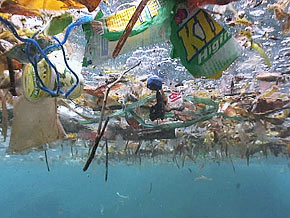
....it felt as if the ocean itself was dead....

Below is a particularly damning article of the ocean destruction caused by garbage dumping...


Ivan Macfadyen aboard the Funnel Web. (photo: Max Mason-Hubers)

The Ocean Is Broken

By Greg Ray, The Herald
31 December 13

T was the silence that made this voyage different from all of those before it. See your ad here
Not the absence of sound, exactly.
 
The wind still whipped the sails and whistled in the rigging. The waves still sloshed against the fibreglass hull.
 
And there were plenty of other noises: muffled thuds and bumps and scrapes as the boat knocked against pieces of debris.
 
What was missing was the cries of the seabirds which, on all previous similar voyages, had surrounded the boat.
 
The birds were missing because the fish were missing.
 
Exactly 10 years before, when Newcastle yachtsman Ivan Macfadyen had sailed exactly the same course from Melbourne to Osaka, all he'd had to do to catch a fish from the ocean between Brisbane and Japan was throw out a baited line.
 
"There was not one of the 28 days on that portion of the trip when we didn't catch a good-sized fish to cook up and eat with some rice," Macfadyen recalled.
 
But this time, on that whole long leg of sea journey, the total catch was two.
 
No fish. No birds. Hardly a sign of life at all.
 
"In years gone by I'd gotten used to all the birds and their noises," he said.
 
"They'd be following the boat, sometimes resting on the mast before taking off again. You'd see flocks of them wheeling over the surface of the sea in the distance, feeding on pilchards."
 
But in March and April this year, only silence and desolation surrounded his boat, Funnel Web, as it sped across the surface of a haunted ocean.
 
North of the equator, up above New Guinea, the ocean-racers saw a big fishing boat working a reef in the distance.
 
"All day it was there, trawling back and forth. It was a big ship, like a mother-ship," he said.
 
And all night it worked too, under bright floodlights. And in the morning Macfadyen was awoken by his crewman calling out, urgently, that the ship had launched a speedboat.
 
"Obviously I was worried. We were unarmed and pirates are a real worry in those waters. I thought, if these guys had weapons then we were in deep trouble."
 
But they weren't pirates, not in the conventional sense, at least. The speedboat came alongside and the Melanesian men aboard offered gifts of fruit and jars of jam and preserves.
 
"And they gave us five big sugar-bags full of fish," he said.
 
"They were good, big fish, of all kinds. Some were fresh, but others had obviously been in the sun for a while.
 
"We told them there was no way we could possibly use all those fish. There were just two of us, with no real place to store or keep them. They just shrugged and told us to tip them overboard. That's what they would have done with them anyway, they said.
 
"They told us that his was just a small fraction of one day's by-catch. That they were only interested in tuna and to them, everything else was rubbish. It was all killed, all dumped. They just trawled that reef day and night and stripped it of every living thing."
 
Macfadyen felt sick to his heart. That was one fishing boat among countless more working unseen beyond the horizon, many of them doing exactly the same thing.
 
No wonder the sea was dead. No wonder his baited lines caught nothing. There was nothing to catch.
 
If that sounds depressing, it only got worse.
 
The next leg of the long voyage was from Osaka to San Francisco and for most of that trip the desolation was tinged with nauseous horror and a degree of fear.
 
"After we left Japan, it felt as if the ocean itself was dead," Macfadyen said.
 
"We hardly saw any living things. We saw one whale, sort of rolling helplessly on the surface with what looked like a big tumour on its head. It was pretty sickening.
 
"I've done a lot of miles on the ocean in my life and I'm used to seeing turtles, dolphins, sharks and big flurries of feeding birds. But this time, for 3000 nautical miles there was nothing alive to be seen."
 
In place of the missing life was garbage in astounding volumes.
 
"Part of it was the aftermath of the tsunami that hit Japan a couple of years ago. The wave came in over the land, picked up an unbelievable load of stuff and carried it out to sea. And it's still out there, everywhere you look."
 
Ivan's brother, Glenn, who boarded at Hawaii for the run into the United States, marvelled at the "thousands on thousands" of yellow plastic buoys. The huge tangles of synthetic rope, fishing lines and nets. Pieces of polystyrene foam by the million. And slicks of oil and petrol, everywhere.
 
Countless hundreds of wooden power poles are out there, snapped off by the killer wave and still trailing their wires in the middle of the sea.
 
"In years gone by, when you were becalmed by lack of wind, you'd just start your engine and motor on," Ivan said.
 
Not this time.
 
"In a lot of places we couldn't start our motor for fear of entangling the propeller in the mass of pieces of rope and cable. That's an unheard of situation, out in the ocean.
 
"If we did decide to motor we couldn't do it at night, only in the daytime with a lookout on the bow, watching for rubbish.
 
"On the bow, in the waters above Hawaii, you could see right down into the depths. I could see that the debris isn't just on the surface, it's all the way down. And it's all sizes, from a soft-drink bottle to pieces the size of a big car or truck.
 
"We saw a factory chimney sticking out of the water, with some kind of boiler thing still attached below the surface. We saw a big container-type thing, just rolling over and over on the waves.
 
"We were weaving around these pieces of debris. It was like sailing through a garbage tip.
 
"Below decks you were constantly hearing things hitting against the hull, and you were constantly afraid of hitting something really big. As it was, the hull was scratched and dented all over the place from bits and pieces we never saw."
 
Plastic was ubiquitous. Bottles, bags and every kind of throwaway domestic item you can imagine, from broken chairs to dustpans, toys and utensils.
 
And something else. The boat's vivid yellow paint job, never faded by sun or sea in years gone past, reacted with something in the water off Japan, losing its sheen in a strange and unprecedented way.
 
BACK in Newcastle, Ivan Macfadyen is still coming to terms with the shock and horror of the voyage.
 
"The ocean is broken," he said, shaking his head in stunned disbelief.
 
Recognising the problem is vast, and that no organisations or governments appear to have a particular interest in doing anything about it, Macfadyen is looking for ideas.
 
He plans to lobby government ministers, hoping they might help.
 
More immediately, he will approach the organisers of Australia's major ocean races, trying to enlist yachties into an international scheme that uses volunteer yachtsmen to monitor debris and marine life.
 
Macfadyen signed up to this scheme while he was in the US, responding to an approach by US academics who asked yachties to fill in daily survey forms and collect samples for radiation testing - a significant concern in the wake of the tsunami and consequent nuclear power station failure in Japan.
 
"I asked them why don't we push for a fleet to go and clean up the mess," he said.
 
"But they said they'd calculated that the environmental damage from burning the fuel to do that job would be worse than just leaving the debris there."
 
 
The rest of RSN:
 
Andy Borowitz | People Who Can Still Afford to Live in New York Praise Bloomberg
Mayor Bloomberg. (photo: Andrew Burton/Getty Images)
Andy Borowitz, The New Yorker
Borowitz writes: "As the curtain comes down on the Michael Bloomberg era, the three-term mayor of New York received fulsome praise last night from his most appreciative constituency: the people who can still afford to live there."
READ MORE
Robert Reich | A New Years Message
Robert Reich, Robert Reich's Blog
Reich writes: "Despite do-nothing congressional Republicans, we ARE making progress around the country because Americans are organizing and mobilizing. Together we can make 2014 the year we turn the tide on economic inequality."
READ MORE
The Most Important Surveillance Order We Know Almost Nothing About
Alex Abdo, ACLU
Abdo writes: "Over the last seven months, we have learned an incredible amount about the government's post-9/11 surveillance efforts. But there is a crucial gap in our basic understanding."
READ MORE
Uighur Detainees Held for 12 Years Leave Guantanamo
Spencer Ackerman, Guardian UK
Ackerman reports: "Twelve years of detention without trial have ended for three Uighur men who have left Guantanamo Bay for Slovakia, the US Department of Defense announced on Tuesday, ending a clear mistake of the 9/11 era."
READ MORE
Kathy Kelly | Afghan Street Children Beg for Change
Kathy Kelly, Voices for Creative Nonviolence
"Kabul, Afghanistan is 'home' to hundreds of thousands of children who have no home. Many of them live in squalid refugee camps with families that have been displaced by violence and war."
READ MORE


Drone Testing: Where is Martha Coakley?

Texas has been pro-active and passed 'privacy laws' to protect its citizens.

Where is Massachusetts? Oh, yes! Massachusetts AG Martha Coakley is running for higher office. Let's not distract and expect her to do her job.


Drone testing coming to Cape Cod
Air space to be restricted over 22,000 acres on Upper Cape


Drones over Cape Cod by Joe Quigley.

Role for Cape as FAA picks NY site for drone research

Area around Joint Base Cape Cod effected until February 13, 2017

The Federal Aviation Administration has chosen Griffiss International Airport in northern New York as one of six unmanned aircraft systems research and test sites, a choice with ramifications for Massachusetts researchers and the airspace over Cape Cod.

As a partner with Griffiss, MassDevelopment will manage testing facilities at Joint Base Cape Cod, with test site areas for what are commonly called drones including restricted airspace over the base and in "warning areas" off the Massachusetts coast. The base covers 22,000 acres on Upper Cape Cod.

"Lately, we have been engaged with multiple in-state and federal agencies who have taken advantage of our offer to 'host' them for different projects," Colonel Jim LeFavor, commander of the 102nd Intelligence Wing at Otis Air National Guard Base, on Cape Cod, said in a statement. "One of our main commodities is plenty of space and willingness to assist."

MassDevelopment reported Monday that "in anticipation of Massachusetts' potential selection," the agency and the Massachusetts National Guard established the MA UAS Test Center on Camp Edwards and "began to host active UAS use in the restricted airspace over the Army Guard's training area." Under current law, test site operations may continue until February 13, 2017.

One of six test sites nationally

The FAA announced its six test sites Monday following a ten-month process involving 25 proposals from 24 states - a MassDevelopment official said Massachusetts did not submit its own proposal and partnered with New York through the Northeast UAS Airspace Integration Research Alliance, a consortium of more than 40 public and private entities.

Other organizations in the partnership include Saab Sensis, SRC, Raytheon, Lockheed Martin, Rochester Institute of Technology, Massachusetts Institute of Technology, Syracuse University, Clarkson University, and Northeastern University.

The other five test site operators chosen by the FAA are the University of Alaska, the State of Nevada, the North Dakota Department of Commerce, Texas A&M University - Corpus Christi, and Virginia Polytechnic Institute and State University (Virginia Tech).

While the advent of drones brings with it privacy concerns, Congress has required the FAA to develop rules to integrate unmanned aircraft systems into the national airspace system by 2015, according to MassDevelopment, the state's finance and development agency, which cites potential civil and commercial uses such as agriculture, disaster relief, environmental research and pipeline surveillance.

Amazon's Jeff Bezos this month told 60 Minutes about his company's plans to someday deploy drones as part of its distribution network, and there are myriad commercial and recreational possibilities for drones.

Griffiss, which is in Rome, N.Y., plans to work on developing test and evaluation and verification and validation processes under FAA safety oversight, to focus research on "sense and avoid capabilities" for unmanned aircraft systems, and to "aid in researching the complexities of integrating UAS into the congested, northeast airspace," according to the FAA.

A thousand new jobs

MassDevelopment on Monday cited the potential for 70,000 new jobs nationwide in the unmanned aircraft system industry by 2017 and 100,000 by 2025. The industry's economic impact in the U.S. could reach $82 billion by 2025, according to the Association for Unmanned Vehicle Systems International, and Massachusetts can expect an increase of 985 jobs, an economic impact of $386 million and tax revenues of $3.8 million between 2015 and 2017. UAS test sites will stimulate job growth, with the association estimating Massachusetts will receive nearly 3 percent of all manufacturing growth tied to the industry.

Along with Sen. Edward Markey, Congressman William Keating, National Guard Adjutant General Scott Rice, and state Transportation Secretary Richard Davey, Wendy Northcross, CEO of the Cape Cod Chamber of Commerce, welcomed the development.

"We are looking forward to the introduction of new firms and the high-tech jobs associated with UAS development here, which is enabled by the new high-speed broadband network proved through Cape Net and the OpenCape backbone," Northcross said in a statement. "We can also envision a great future with UAS supporting increased efficiency in the fishing industry of the Cape and new ways to support the conservation and protection of marine mammals as they move through Cape waters."

The reported use of drones in U.S. military operations overseas has drawn criticism from around the world.

In his statement applauding the selection, Markey said Massachusetts "will be well positioned to be a national leader in development of the highest operational standards and strongest privacy protections for drones as they prepare to take flight in U.S. airspace."


http://www.capecodtoday.com/article/2013/12/31/23397-drone-testing-coming-cape-cod


Drones spur privacy concerns

 
Political and business leaders tout the potential jobs and revenue from the Federal Aviation Administration's pick of Joint Base Cape Cod as a test site for unmanned aircraft, but some are worried drones will be used to snoop.
 
"Just the loss of more privacy," wrote Jan Olson Gilman on the Times' Facebook page.
 
Those comments were echoed by others reacting to the announcement that a coalition of colleges, businesses and government agencies in Massachusetts and New York had been selected by the FAA as among six test sites across the country. The mission of each site is to research ways to safely integrate commercial use of drones into the national airspace.
 
Kade Crockford, director of the American Civil Liberties Union of Massachusetts' Technology for Liberty Program, said privacy concerns are legitimate and need to be addressed through legislation already filed on Beacon Hill.
 
"As we've seen with the Edward Snowden revelations, when government agencies have the power to spy in the dark, they will do it," Crockford said, referring to surveillance conducted by the National Security Agency.
 
"The critical issue is that (drone testing) be done in a responsible manner that protects privacy and civil liberties of everyone in Massachusetts."
 
The ACLU is making a national push for legislation to regulate drones. Eight states have passed laws, according to information provided by Crockford. The Massachusetts bill, introduced by state Sen. Robert Hedlund, R-Weymouth, and state Rep. Colleen Garry, D-Dracut, would ban the use of drones equipped with weapons and set limits for how they are used by law enforcement, she said.
 
"With word that drones are being tested here, hopefully that will encourage the Legislature to act," Crockford said.
 
Even before Monday's announcement, the FAA had responded to privacy concerns by seeking public comment and issuing guidelines for the test sites, Michael Huerta, administrator of the FAA, said in a conference call with reporters Monday.
 
"We are also sensitive to privacy involving unmanned aircraft," Huerta said. "We issued a privacy policy that will apply to these test sites. It requires operators to comply with all local, state and federal laws concerning privacy and civil liberties. We are also requiring test site operators to create a privacy policy that is available to the public and they must require anyone operating unmanned aircraft at test sites to have a written plan for how they will use and retain any test data that might be acquired."
 
Although Joint Base Cape Cod will be one of the test sites, the military is not involved directly in its operation. The test site will be overseen locally by MassDevelopment, a state agency that seeks economic development opportunities for state land.
 
MassDevelopment spokesman Kelsey Abburrezze issued a statement saying the testing would follow FAA protocols.
 
"The same controls that currently apply to U.S. military and civilian aircraft will be in place for all (unmanned aircraft) operations at the test sites," she said. "Initial tests will determine how to integrate the platform into airspace with other traffic safely. The cameras and sensors used in these tests will tell the (unmanned aircraft) and its operator where other aircraft are in the airspace so that they can avoid one another and must strictly adhere to the privacy protocols establish by the test sites in coordination with the FAA."
 
As with any new technology, unmanned aircraft will have to be introduced while protecting individual freedoms, state Rep. David Vieira, R-Falmouth, said Tuesday.
 
"We're still learning about Internet issues," he said.
 
Vieira, who has advocated for the base as part of the Joint Base Cape Cod Homeland Security Steering Committee, said he was excited about the possibilities the testing site would bring with it.
 
Cape Cod Community College already has gotten involved by holding a workshop for students on smaller drones earlier this year, he said.
 
Vieira sees potential similar to the way Hydroid, a Bourne manufacturer of underwater robotic vehicles, spun off from research vehicles at Woods Hole Oceanographic Institution. There is potential not just for research, but for manufacturing on the Cape, he said.
 
"It's exciting that this could be another model," Vieira said.
 
The testing site is expected to generate as many as 1,000 new jobs in Massachusetts and $385 million in economic impact between 2015 and 2017, according to a study done as part of the application process.
 
"The announcement by the FAA will put Massachusetts and the Cape region on the forefront of the developing (unmanned vehicle) industry," Vieira said.