Search This Blog

Translate

Blog Archive

Middleboro Review 2

NEW CONTENT MOVED TO MIDDLEBORO REVIEW 2

Toyota

Since the Dilly, Dally, Delay & Stall Law Firms are adding their billable hours, the Toyota U.S.A. and Route 44 Toyota posts have been separated here:

Route 44 Toyota Sold Me A Lemon


Showing posts sorted by relevance for query energy efficiency. Sort by date Show all posts

Monday, February 25, 2013

The Cheapest, Cleanest Energy Available.....

Recently, WBUR had a blurb about Boston mandating improved energy efficiency.


Stuck in heavy traffic, the link was not easily written for retrieval, but the reaction was amusingly predictable:

The Sky Will Fall! Business Will Be Destroyed! Jobs will be lost! It's a Communist Plot....Blah! Blah! Blah!

One might wonder: How do you know? We can comfortably label those folks dinosaurs for their intransigence.


Elsewhere, reducing wasted energy has created more comfortable buildings, better lighting, more even heating/cooling, healthier buildings and actually made buildings less expensive to occupy - increasing their marketability.

Rocky Mountain Institute has been involved with efforts to increase energy efficiency in cost effective ways that make sense and what business doesn't want to save money? Sensible investment to reduce energy consumption is permanent and just common sense.

Anyone who has driven through Boston at night has observed buildings fully lighted against the night sky with no occupants.


Why?

Doesn't this define our waste and why it is imperative to amend it, dinosaurs or not ---


More than two-thirds of electric energy in the U.S. is wasted before it ever lights a bulb, or powers an appliance. And 50 to 80 percent of energy used to heat and cool buildings — homes, offices, factories, warehouses and store — is wasted, warming the surrounding atmosphere.

We don’t have a global energy supply problem. We have a massive energy waste problem.

At the Jordan Institute, where I work, we focus on energy conservation in buildings. Why? About 48 percent of the country’s energy — electric and thermal — is expended in buildings. Consider that percentage against the roughly 300 billion-square-feet of building stock currently in the U.S. Needless to say, that’s a lot of waste.

Climate Change Series: Energy Efficiency

  • by Dick Henry and Douglas Foy


The cheapest, cleanest energy available is the energy you don't have to use: it's always available, it never varies in price, and it doesn't add to global warming. (ReillyButler/flickr)

http://cognoscenti.wbur.org/2013/02/14/climate-energy-efficiency-henry-foy

Boston City Council Considers Raising Energy Efficiency Requirements

BOSTON — The Boston City Council will consider a plan Friday to raise the energy efficiency requirements for all new buildings in the city. But the plan is catching flak from some area developers.

James Kirby, with Commercial Construction Consulting, says the plan will hurt business.

“It will only put a further burden in the short [term] on development — both commercial and residential — at a time when we desperately need things to get started and people to get back to work,” Kirby says.

The measure would raise city energy efficiency requirements by 20 percent.

http://www.wbur.org/2010/11/12/energy-efficiency

Thursday, April 23, 2009

The Unsexy Solution

Before considering that sleek, sexy wind turbine with gently gliding blades churning out kilowatts or that photovoltaic array on the roof to awe neighbors and friends, comes that dull and boring assessment of reducing energy consumption through a variety of means.
.
Maybe it begins with an energy audit.
.
Maybe it also involves calculating actual energy costs and assessing where those costs can be reduced.
.
It also includes assessing some bad energy habits and working to change them - leaving lights on, eliminating the energy vampires, changing to those curly light bulbs or LEDs, replacing the outdated energy chugging appliance that still works but lives on borrowed time spinning the meter.
.
New England is blessed with a magnificent and elderly housing stock that includes uninsulated homes with single pane windows and lovely features that leak heated air like a sieve.
.
Efficiency Is Our Best Untapped Energy Source included Amory Lovins comment -
.
... for example, in the United States we could save at least half the oil and gas and three-quarters of the electricity we use, and that efficiency investment would cost only about an eighth [of] what we’re now paying for those forms of energy. …
.
The experts in the field, Steven Chu, Amory Lovins and others, have all spoken of the ability of the US to reduce our energy consumption by .... are you ready for this? ... the politically incorrect concept of conservation! We can no longer call it that because the word engenders visions of sitting in the dark and shivering, so must now be called "EFFICIENCY" ! Those experts tell us that we waste 30%, 40% and according to the new Energy Secretary, a recent report says we can reduce building consumption 80%.
.
So, before considering PhotoVoltaics, consider --
.
One of the most common complaints about "going solar" is that the upfront cost is just too high. The primary reason a solar power system can be a high ticket purchase for many solar power shoppers is because of the customers’ bad energy usage habits. The majority of solar power shoppers don't realize they are energy hogs until they start shopping for solar power, when they are forced to understand and analyze their electric consumption.
.
So how can solar power shoppers instantly get a deep discount on their solar power system? The answer is simple, "reduce then produce." Focusing on energy efficiency, and implementing lifestyle and product changes can greatly reduce the upfront cost of a solar power system. It is always more cost-effective to reduce your consumption through efficiency than it is to produce your own power.
.
Think of it this way, the more you can save through energy efficiency, the fewer solar panels you need to cover your electric usage. It’s that simple. But most solar power consumers get frustrated seeing high upfront costs of going solar and think there are no alternatives to bring the cost down.

Find out how to reduce your energy consumption, continue reading this article at
http://www.intent.com/blog/2009/04/22/want-go-solar-cut-your-energy-use-first.
.
Not surprisingly, it includes the basics [LINK] --
.
Think of it this way, the more you can save through energy efficiency, the fewer solar panels you need to cover your electric usage. It’s that simple. But most solar power consumers get frustrated seeing high upfront costs of going solar and think there are no alternatives to bring the cost down.
.
How do you reduce your energy consumption?
.
1.) Change all your light bulbs to LEDs. Lighting can contribute up to 10 to 20 percent of your electrical load. Want to minimize that load? LEDs (light emitting diodes) consume a fraction of the electricity that incandescent bulbs and even CFL light bulbs consume. While LED bulbs cost more than their counterparts, they last over 11 years, and LEDs differ from CFLs in that they contain no mercury, a very toxic element. LED bulbs can fit in standard lighting sockets and only cost a dollar or two per year to run a standard household light bulb. Since LED bulbs operate cooler, the decrease in temperature can also keep your home cooler during summer months.
.
2.) Invest in insulation. Drafty windows and gaps under doors can significantly raise your heating and cooling costs. These costs usually comprise over half of all energy outlays made by homeowners. By investing in insulation, you can lower your energy costs by as much as 30%.
.
3.) Get rid of old appliances. These tend to be less energy efficient. For example, an old coffee maker can consume power equivalent to the output of four solar panels! Purchase Energy Star appliances.
.
4.) If you’re not using it, turn it off! Unplug unused items (they draw energy even if they are plugged in, but not in use). These sneaky loads are called “vampire loads”, and they cost U.S. consumers 3 billion dollars per year! How much are these loads costing you? Smart power strips can help you fight vampire loads by shutting off power draw when the appliance is not in use. Remember to set your computers to automatically hibernate (power saving mode) when they are idle for more than 5 minutes. And most importantly, turn off the lights when you leave a room!
.
Changing the way you consume energy can have a significant impact on the overall price of a solar energy system. Reducing energy consumption can shave off thousands, if not tens of thousands of dollars from the final cost of a system.
.
It seems like today, everyone wants to produce their own watts through solar panels and wind turbines. But we need to first produce “negawatts.” Negawatt power is a term promoted and introduced by Amory Lovins of The Rocky Mountain Institute; essentially, the term means that by saving energy, we create a "virtual power plant," thus not having to create a new power plant to increase electrical supply. The direct reduction in electrical demand through energy efficiency is called a Negawatt.
.
Energy efficiency and solar power fit very well with each other. When considering solar power, think about easy ways you can reduce your consumption first – that way you'll save tons of cash, making the solar investment that much more attainable.
.

Tuesday, July 1, 2008

Massachusetts' Green Communities Act

MMA had this to say about the recently passed legislation:


Legislature enacts energy reform bill
Thursday, June 26 2008
The House and Senate have approved and sent to the governor a ground-breaking energy reform bill, the Green Communities Act.
The bill’s intent is to increase energy efficiency, update the renewable energy portfolio standard, increase public oversight of utilities, increase service quality of power companies, assist low-income energy customers, and increase the use of renewable generation and energy efficiency products.
After several months of negotiations over differences in House and Senate versions of the bill, the Senate approved a compromise bill (S. 2768) Tuesday, and the House approved it today.
House and Senate leaders struck language that would have preempted Home Rule authority with respect to the siting of certain clean energy facilities. Instead, the bill would establish a study commission that may make recommendations on the siting of such facilities.
The bill would establish a Green Communities program. A city or town that qualifies as a “green community” would be eligible for grants and loans to advance energy efficiency activities. Such assistance would be capped at $10 million per year and would principally be derived from funds generated by cap and trade pollution control programs, a mandatory kilowatt-hour charge on consumer bills, and the Massachusetts Renewable Energy Trust Fund.
In order to qualify as a “green community,” a city or town would have to:
• Provide as-of-right siting for renewable or alternative energy facilities in self-designated areas
• Adopt a streamlined permitting process to site such facilities
• Establish an energy use baseline inventory for municipal buildings and vehicles and reduce the baseline by 20 percent over five years
• Purchase fuel-efficient vehicles when available and practicable
• Require new residential and commercial construction to minimize, to the extent feasible, the life-cycle cost of the facility through energy efficiency and renewable and alternative energy technologies
The Green Communities program would be administered by the Division of Green Communities within a new Department of Energy Resources under the Executive Office of Environmental Affairs.
The division would serve as the principal contact between the state and municipalities on all energy-related matters under the jurisdiction of the Department of Energy Resources.The energy bill would also:
• Allow municipalities to construct, own and operate small renewable generation facilities to help control their energy bills
• Establish a Regional Greenhouse Gas Initiative Trust Fund to provide funds for the Green Communities program, to provide interest-free loans for for energy efficiency projects in municipalities that do not qualify as a “green community,” and to reimburse communities for property tax losses due to mandates of the Greenhouse Gas Initiative or the regulation of carbon dioxide emissions for electric generating stations
• Authorize municipal light plants to establish a “renewable energy charge” and enter into the Massachusetts Renewable Energy Trust Fund so customers may be eligible for grants from the fund for renewable energy projects
• Require local building inspectors to have a general knowledge of the energy requirements as part of the International Energy Conservation Code
• Establish several new processes for state and local entities to pursue solar energy and to procure energy management services for projects less than $100,000
• Allow communities to consider areas designated for Class I renewable energy facilities as a factor in designating a Economic Target Area
• Requires the Division of Green Communities to develop a competitive bidding process for the procurement of renewable or alternative electric generation for “green communities”
• Revise processes for state and local entities to procure energy management services
• Extend the financing term for municipalities for efficiency, alternative, or renewable improvements from 10 to 20 years
• Establish a special commission (with participation by the MMA) to investigate the development of “green building initiatives”
• Establish a special commission (with participation by the MMA) to make recommendations to improve the process by which a city or town may establish and operate a municipal-owned electric utility.

By MMA Senior Legislative Analyst Matthew G. Feher

Tuesday, January 25, 2011

Energy Efficiency and Retrofitting

What better use of a snowy day in Massachusetts, awaiting the next snowstorm than to putter around the Rocky Mountain Institute web site to discover their retrofitting projects and information.

40% of carbon production originates from buildings and energy reductions in most cases are permanent.

It's not sexy like the graceful moving blades of a wind turbine, but it's sensible --

RetroFit Depot

Energy efficiency is the key to reducing fossil fuel use and carbon emissions in the built environment; mitigating fossil fuel consumption in this sector offers a huge, yet-to-be exploited economic opportunity.

These "true stories" that stem from Rocky Mountain Institute's project engagements and other exemplary projects across key building types demonstrate how barriers to deep energy savings can be surmounted using integrative, whole-building design. By recognizing how efficiency gains in one system can affect other building systems and attributes, many small improvements can be combined to create substantially larger benefits.

Browse the case studies to get an inside look at how these real-world deep retrofits markedly improved the economics of energy efficiency, achieving bigger energy savings (and other important benefits) at equal or lower capital cost.


RetroFit Tools


Giving GSA Retrofits More Bang for the Buck

It’s no secret that the federal government owns a lot of buildings that are in need of renovation. But the good news is while buildings are updated for greater comfort, aesthetics and function, efficiency upgrades can be added to the list.

Recently, energy efficiency has been elevated to top priority for government-owned buildings, due to both ambitious federal goals and mandates (e.g., the Energy Independence and Security Act of 2007, the Energy Policy Act of 2005, and the National Energy Conservation Policy Act) requiring facility energy intensity reduction and renewable energy use increase.

This represents an enormous opportunity to implement sustainable technologies and practices on a large scale and help transform the marketplace. The federal government oversees approximately 500,000 buildings, and the General Services Administration (GSA) owns or leases 350-plus million square feet of space in which one million federal employees work. Energy costs alone in these buildings are approximately $7 billion each year.

Rocky Mountain Institute is currently helping GSA meet its mandates, and get more bang for its American Recovery and Reinvestment Act (ARRA) buck by developing a renovation program for buildings so they use substantially less energy, cost less to operate and maintain, and offer greater occupant satisfaction. RMI and GSA are starting with the modernization of the Byron G. Rogers Federal Office Building in Denver, CO.

The 18-story, 494,156-square-foot office tower is currently home to 11 federal agencies. The high-performance green building project will include upgrades to the structural elements and to all major building systems; it is projected to reduce energy use by more than 70 percent over current levels, pushing the building closer to its NetZero by 2030 target.

Part of RMI’s RetroFit initiative, this project aims to serve as a pilot for the GSA’s entire building portfolio. “Amplification is a core goal of RetroFit,” said Eric Siwy from RMI’s Building Practice, “so, if this building is shown to do well, we can provide a replicable model for how to not only meet but exceed the government goals and mandates.”

What They Need to Exceed
With ambitious efficiency goals laid out for the Byron Rogers facility, the design team has quickly solicited the help of an often-ignored, but necessary component of a high-performance building—the occupants.

“GSA is only required to get a LEED Silver rating, but they are shooting for a platinum,” said Siwy. “If the goal is to be one of the most efficient office buildings in the country, we need active participation from the tenants in the design of their individual spaces.”

Tenants play an integral role in a building’s life cycle energy consumption. For a typical office building of this size, plug loads account for approximately 16 percent of total building energy use.

“In prior efficiency retrofit projects, about 30 percent of the energy reduction achieved was due to things directly affected by the building’s tenants,” said Siwy. “So we cant’ ignore energy management of tenant spaces. Even if you design the core and shell of a building with the best intentions with state-of-the-art equipment, if the tenant spaces and equipment are not used and operated properly, profound energy savings will never be realized.”

Last week, RMI and project partners held a tenant workshop at the Byron Rogers Federal Office Building to educate all occupants on the role they can play in the GSA’s ambitious energy-reduction goals.

For the design team, this offered an opportunity to clear up some common misconceptions about green buildings.

“Learning how to interact with their building in a new way requires a cultural change,” said Siwy. “ When some people hear LEED or efficiency, they immediately think ‘energy reduction,’ and don’t get the big picture that we are looking at air quality, sustainable materials, and thermal comfort as well.”

For tenants, the workshop provided a forum for questions and answers, and included information on government requirements and mandates, how the project intended to meet them, and what elements (e.g., Energy Star equipment, daylighting, or sub-metering) are necessary for tenants to consider in order to achieve the project’s sustainability goals.

A Model for Future Collaboration
Lines of communications will stay open, and the design team will continue to work with tenants on specific requirements and incorporate feedback into the design phase of the project.

Addressing these barriers on a single project will enable more sustainable solutions to be employed on future GSA retrofits.

“If we can create a good test case and prove that large-scale energy reduction is possible in a federal facility—use sub-metering to track tenant usage, potentially bill the tenants based on the actual energy they consume rather than the amount of square footage they occupy, and communicate to them which measures can lead to specific energy reductions—then this approach is more likely to be implemented elsewhere, more rapidly than otherwise,” said Siwy.

With $7 billion in annual utility bills and 350-plus million square feet of building space at stake, we can’t afford to wait.

Kelly Vaughn is a public relations specialist at Rocky Mountain Institute.

Tuesday, June 13, 2017

AG HEALEY SUES TRUMP ADMINISTRATION FOR BLOCKING CRITICAL ENERGY EFFICIENCY STANDARDS


Good afternoon, here is a press release from the Attorney General’s Office we think you may be interested in!
Please continue to keep in contact with the Attorney General’s Office through this e-mail address, or via our social media accounts (FacebookTwitter, and Instagram). Thank you again for all your work and support.

Sincerely,

Community Engagement Division
Office of Attorney General Maura Healey
One Ashburton Place
Boston, MA 02108


FOR IMMEDIATE RELEASE                                                      
June 13, 2017  
MEDIA CONTACT:
Chloe Gotsis                                                                                                            
(617) 727-2543

AG HEALEY SUES TRUMP ADMINISTRATION FOR BLOCKING CRITICAL ENERGY EFFICIENCY STANDARDS
Multistate Coalition Files Lawsuit Against Department of Energy for Obstructing Energy Efficiency Standards That Will Save Consumers Nearly $12 Billion
BOSTON – Attorney General Maura Healey today joined a coalition of 11 state attorneys general and the City of New York in filing a lawsuit against the Trump Administration for violating federal law by failing to implement critical energy efficiency standards that would save consumers and businesses an estimated $11.6 billion over a 30-year period.
In today’s lawsuit, the coalition alleges that the Department of Energy (DOE) is violating the federal Energy Policy and Conservation Act (EPCA), the Federal Register Act (FRA), and the Administrative Procedure Act (APA) by stalling the final standards for portable air conditioners, uninterruptible power supplies, walk-in coolers and freezers, commercial boilers, and air compressors.
 “These standards will save consumers money on their energy bills, significantly reduce air pollution, and promote a clean energy economy,” said AG Healey. “I will not hesitate to go to court to ensure that the Trump Administration cannot block common-sense standards like these from going into effect, as the law requires.”
In the complaint filed today in the United States District Court for the Northern District of California, the attorneys general of Massachusetts, California, New York, Washington, Maine, Connecticut, Illinois, Vermont, Oregon, Maryland and Pennsylvania and the City of New York assert that the DOE’s failure to publish final energy efficiency standards for these appliances harms consumers, the environment, public health, natural resources, and the economy. According to federal estimates, these standards would save consumers and businesses an estimated $11.6 billion, reduce greenhouse gas emissions by more than 159 million tons, and conserve over 242 billion kilowatt-hours of electricity – the equivalent of the annual electricity consumption of more than 19.3 million households – over a 30-year period.
DOE issued a “prepublication notice” of a final rule for compressors on Dec. 5, 2016 and for the four other products on Dec. 28, 2016. The posting of these five rules triggered a limited “error correction” period for the public to identify any typographical or numbering errors for correction by the agency.  By law, DOE was then required to publish final energy efficiency standards for compressors by Feb. 21, 2017 and for the four other products by March 15, 2017. To date, the DOE has not published any of these final standards.  
Today’s lawsuit follows a lawsuit filed in April in the United States Court of Appeals for the Second Circuit by AG Healey and a coalition of states including New York, California, Connecticut, Illinois, Maine, Oregon, Vermont, and Washington, as well as the Pennsylvania Department of Environmental Protection and the City of New York against the DOE challenging a similar delay in finalizing energy efficiency standards for ceiling fans.
Following the lawsuit in April, the Trump Administration published notice in the Federal Register on May 24, reversing course and finalizing the ceiling fan efficiency standards as written. 
This matter is being handled on behalf of Massachusetts by Assistant Attorney General Andrew Goldberg of AG Healey’s Environmental Protection Division and Assistant Attorney General Joseph Dorfler of AG Healey’s Energy and Telecommunications Division.


Wednesday, October 8, 2008

Presidential Debates and Energy Efficiency

During the Presidential debates ENERGY was briefly mentioned. Kate Galbraith expanded the subject in the NYT --
.
“Each and every one of us can start thinking about how can we save energy in our homes, in our buildings,” Mr. Obama said. His administration, he said, would incentivize Detroit to make more fuel-efficient cars, and would also be “making sure that you are able to weatherize your home or make your business more fuel efficient”.
.
Mr. Obama was responding to a question about what sacrifices his administration would ask American to make during tough economic times. It is a clever answer, because the trick to energy efficiency, of course, is that it is not actually a sacrifice. Unlike more expensive green investments like a Prius or solar panels, adding insulation to your house or sealing leaky windows can actually save money in the near term.
.
In Single Sentences, I comment on
.
Mohler-Faria noted that
conservation efforts at Bridgewater State College
have reduced the school’s energy consumption by
28 percent
proving that green environmental initiatives, are “also a
major economic engine for the state of Massachusetts.”
.
Potentially, that's 30% IN YOUR POCKET. That's like a tax cut, if you just reduce your energy expenses.
.
Unfortunately, Ms. Galbraith links to an article promoting NUCLEAR energy which destroys her credibility on the topic and clearly indicates her lack of research.
.
It might also be suggested that the NYT consider some of the current reports about the industry.
.
I'm wondering how the radioactive shipment from Pilgrim in Plymouth to Yankee in Vermont magically increased in radioactivity. Is this the fishes and loaves again or just that Entergy owns both plants?
.
Federal nuclear inspectors are looking into why a shipment of lead shielding from the Pilgrim nuclear station in Plymouth to the Vermont Yankee nuclear power plant had higher than allowed radiation levels.
.
The lead shielding is used to protect workers during refueling outages. Both Pilgrim and Yankee are owned by Entergy.
.
“(Workers) checked it thoroughly before it left Pilgrim,” said Neil Sheehan, spokesman for the Nuclear Regulatory Commission. In Plymouth, radiation levels were below federal limits, he said.
.
It can only be suggested that she read Forget Nuclear or Nuclear Illusion.
.
Clearly, the issue deserves more than sound bytes, but CONSERVATION and ENERGY EFFICIENCY are dirty words to Republicans and the right wing media who poo pooed their efficacy.
.
If energy costs were removed from your household budget, isn't that like a raise in pay or a tax cut?
.
It can only be suggested that RMI (Rocky Mountain Institute) has long been promoting the concept and includes a wealth of information.
.
Energy efficiency has often been seen as the ugly sister to renewable energy, but there is nothing ugly or unglamorous about saving money, reducing energy costs and lowering emissions. While the market tends to focus on investment in renewables as a means of cutting carbon, there is growing evidence that investing in ‘negawatts’, a term coined to describe a megawatt of power avoided or saved from use on the energy grid, will provide a better return.
.
The opportunity for energy efficiency investment is immense - the International Energy Agency calls it the ‘fifth fuel’ after oil, coal, gas and nuclear. Energy Efficiency News
.
As a footnote: the energy issue ranks so far down the list of important issues, that the Middleboro Bored of Selectmen couldn't include a Green Committee on the Warrant for the Special Town Meeting scheduled for October 20th. They did manage to include sick leave buy back for a deceased employee that was voted at the ATM. So much for leadership, transparency and competence. Just leave it all to a new town manager.

Thursday, October 16, 2008

Regional Energy Roundtables #4 Dedham

At a recent Energy Summit, produced by the Worcester Business Journal in cooperation with National Grid, Philip Giudice [commissioner of the state Department of Energy Resources] commented:
.
... there are steps businesses, individuals and municipal governments can take to help the cause. He said those entities should collect all data on their own energy consumption, compare and "benchmark" that data against others, establish a specific action plan for driving down energy consumption and lowering energy spending and hold each other accountable "to very high standards."
.
"All of us have been far too comfortable with the status quo," Giudice said. "We all need to move up to another level of commitment and action to make this happen."
.
At the Regional Energy Roundtable, held in Plymouth, Virginia LeClair, Environmental Coordinator from the Town of Dedham presented the formula Dedham has followed with their Renewal Energy Committee, including educating residents by creating a brochure explaining how to increase the energy efficiency of residents' homes.
.
Of Dedham's efforts, the following was reported:

Dedham is wise for wanting to go green with the new senior center and the state is doing the right thing by giving the town some money to do so.

Included in the brochure published by the Dedham Renewable Energy Committee entitled Energy Efficient Tips For Homeowners, is the following:

Why should I care about increasing the energy efficiency of my home?

  • Lower utility bills
  • Less pollution related to electricity generation
  • Economic stimulus
  • Reduced national dependence on fossil fuels
  • Lower greenhouse gas emission which are associated with global warming

By following these simple tips you can save energy and money at home. The typical U.S. family spends $1,300 a year on home energy bills. These low cost energy efficiency improvements can save you 20-30% on your household energy bill.

Reduce Your Electricity Use

  • Appliances and home electronics are responsible for 20% of your home energy bill.
  • Reduce your energy consumption by having a FREE energy audit conducted on your home. Contact NSTAR (www.nstar.com) or MassSave (www.masssave.com) or call (866) 527-7283) for ways to improve your energy efficiency.
  • Beware of Phantom Power - electronics that remain plugged in consume power at all times. Save money and energy by plugging multiple electronics into a power strip with a shut off switch.

Compact Fluorescent Bulbs (CFLs)

If every U.S. household purchased 1 CFL, the U.S. would prevent greenhouse gas emissions equal to 800,000 cars.

  • A Compact Fluorescent bulb will save you $30 over the life of the bulb compared to an incandescent bulb.
  • CFLs use 75% less energy than incandescent bulbs and last ten times longer. A 4 pack can be purchased for $7.00.
  • Look for an ENERGY STAR label when purchasing CFLs to assure that you are buying the most energy efficient bulb.
  • CFLs contain a small amount of mercury and should be disposed of porperly. CFLs can be recycled at Dedham's Household Hazardous Collection Day in May or dropped of at IKEA in Stoughton, MA.

ENERGY STAR Appliances

Look for the ENERGY STAR label when purchasing appliances.

  • ENERGY STAR has over 50 qualified products and offers numerous rebates on appliances.
  • A conventional refrigerator alone consumes 8% of your energy use. In contrast an ENERGY STAR refrigerator is highly efficient and will pay for itself in 2-4 years.

HEATING AND COOLING

As much as half of the energy used in your home goes to heating and cooling. So making smart decisions about your home's heating and cooling is critical to your wallet and the environment.

  • Start by installing programmable thermostats. A programmable thermostat can save you $150 per year on your heating and cooling bills.
  • Programmable thermostats allow you to program different settings for you when you are home or away, sleeping or awake.
  • An ENERGY STAR qualified thermostat costs anywhere from $25-73, but for every degree you lower your thermostat you are saving 2% off your heating bill.
  • NSTAR Gas is offering until April 2008 a $25 rebate. To order call 1-800-285-2778.

Water Heating/Conservation

Water heating is the third largest expense in your home, after heating and cooling. So make sure you have the most energy efficient water heater.

  • If your tank feels warm to the touch then you would benefit from wrapping it with an insulating blanket to prevent heat loss.
  • Set the temperature of your water heater to 120 degrees F.
  • The average household uses 350 gallons of water per day. Low flow showerheads and faucet aerators can reduce your water consumption by half and will cost you approximately $6.00.
  • Receive a $100 rebate from the Dedham Westwood Water District when you purchase any model of front loading washers or a $50 rebate when you purchase any model of high efficiency toilets (limit 2 per household). For more information contact 781-329-7090 or visit www.dwwd.org.

RECYCLING

Recycling saves energy too!

  • Recycling two aluminum cans saves the equivalent amount of energy it takes to power a computer for one workday.
  • Next time you go to Roche Bros. be sure to bring your canvas tote to receive a refund of $.05 per papr/plastic bag not used.

According to a Boston Globe article, Dedham was among -- Fourteen area communities - Brockton, Canton, Cohasset, Dedham, Easton, Hanson, Hull, Mansfield, Milton, Plymouth, Quincy, Raynham, Sharon, and Westwood - have signed on to the federal Environmental Protection Agency program called the Community Energy Challenge. The towns agree to compile data to benchmark their current energy use and commit to 10 percent reductions.

Their approach has been consistent with others: 1. Collect and evaluate the energy consumption by building 2. Tackle the 'low hanging fruit' first - CFLs, motion sensors, programmable thermostats, and so on. In one new school building that received a Green School Grant, a solar array sits on the roof, daylight controls have been installed and a 50,000 gallon tank collects rainwater for toilet flushing.

There have been ideas other communities have adopted that are striking, for instance - Hanson took advantage of information from the Community Energy Challenge program to change its street lights to LED lights, saving 68 percent of its annual street lighting cost, according to Selectman Jim Armstrong.

In these tough economic times, we need to save every energy dollar both in our homes and in our towns. If your town is not on the list, maybe you should ask why.

Since only silence has been heard from the Middleborough Gas & Electric and the Board of Selectmen, should we ask why? Since the Middleboro Board of Selectmen act as Water Commissioners, by Town Charter, should we question why they haven't promoted front loading washers and low flush toilets as Dedham has? Is Middleboro missing out on Grant Funding that was available because of its lack of vision?

Saturday, February 15, 2014

Energy Efficiency in a High Demand Home

While the Energy Efficient home described below may not conform to New England sensibilities, Jetson offers some great ideas that can be incorporated.

An investment in efficiency is a permanent reduction in energy consumption. That's $$$ in your pocket or to invest in further reducing your energy costs.   


[Jetson Daily] Energy Efficiency in a High Demand Home


Energy Efficiency in a High Demand Home
Posted: 14 Feb 2014 04:59 PM PST
koipond1
Ray Armstrong’s mountain home in Colorado Springs is a sprawling 5,500 square foot structure, with the living space extending outdoors where the owner’s fish ponds and water gardens are located. Armstrong is an award-winning koi fish enthusiast, and his home uses even more energy since the ponds and tanks, where his fish are, require precise temperature and water regulation. Since such a large home also consumes vast amounts of energy, Armstrong enlisted the help of David Bednarski, owner of Bestway Mechanical in Colorado Springs, to help him install the necessary solar and other technologies to reduce this footprint.

The home is comprised of a lower level and a ground floor. Bednarski commenced his work by first removing the existing forced-air heating system and replacing it with a radiant heating system. The house has a mechanical system that is completely integrated, which means that it heats as well as controls the temperature in all of the 12 indoor zones of the home, as well as the 7 outdoor zones comprised of the ponds, gardens, hot tub and koi fish tanks.

The first stage heating of all the 19 zones and the needed domestic hot water is provided by 10 Apricus AP-30 evacuated tube solar thermal collectors. Seven of these are roof-mounted, while three are wall-mounted. The system also includes a 659-gallon solar storage tank.

For second-stage heating, Bednarski installed a HTP Versa Hydro, which is a 199,000 Btuh high-efficiency boiler that includes a 119-gallon solar heat exchanging storage tank. Once the Versa Hydro senses that solar energy is running low, it slowly starts burning gas to supply the needed energy. According to Bednarski the Versa has, so far, only fired up on low-fire for a few hours during very cold days or overnight. Emergency, third stage heating is provided via a Munchkin MC99, high-efficiency wall-hung boiler, though this one has not yet been needed.

All told, the solar PV array is able to handle 75% of the energy load of the home and the garden. Since the home’s driveway goes uphill, Bednarski installed an 11.5kW SunPower, dual-axis solar PV electric system with onsite and remote Web monitoring capabilities. The dual-axis solar trackers swivel and rotate up and down and from east to west. According to Bednarski, this setup provides 35% to 40% more energy as would be provided by stationary solar panels.

Still in the works is finding a way to decrease the remaining 25% of the energy load of the home. The team is considering installing LED lighting, upgrading the pumps, power factor adjustments, and so on. As for the mechanical system, it now has temporary Caleffi and Taco controls in place, while they plan to install a more permanent Rehau Smart Controls system soon.


Friday, October 26, 2012

Mitt Romney's energy policy is a relic of the 19th century.


I remember this ---


The words of Senator Sanders are below, yet omit what might be considered the most significant issue. The rest of the world is LEADING!

Article after article proclaims the increased usage of CLEAN ENERGY around the world, the reductions in carbon emissions, the increased efficiency.

It is truly baffling the Romney is so regressive, except that Dirty Energy, the Koch Brothers and other relics from the past have bee major Romney/Ryan contributors.

Why would we support turning back the clock?


Mitt Romney holds a rally with coal miners in West Virginia. (photo: Reuters)

Romney's Energy Policy Is a Relic of the 19th Century

By Bernie Sanders, Reader Supported News
25 October 12

t the second presidential debate, Mitt Romney talked about how a president should be "Mr. Oil, or Mr. Gas, or Mr. Coal." Romney supports continuing the massive $113 billion in federal subsidies for oil, gas and coal over the next 10 years. He has previously referred to sustainable energy as "imaginary." If elected, Romney is promising an end to key federal policies supporting sustainable energy like the production tax credit for wind.

While I may not agree with all of President Obama's energy policies, I strongly supported his successful effort to double fuel economy standards for cars and trucks to 54.5 miles per gallon by 2025. This will cut our reliance on imports from OPEC by half. I also support his investments in energy efficiency and the sustainable energy industries. Frankly, I think he may be too modest about his accomplishments in this area. The fact is, over the last four years we have begun to transform our energy system, cut greenhouse gas emissions and create new jobs through energy innovation.
The truth is that we're off to a strong start, but given the crisis of global warming much, much more has to be done.
 
Energy efficiency is the low-hanging fruit. Every day we are paying more for energy than we should due to poor insulation, inefficient lights, appliances, and heating and cooling equipment -- money we could save by investing in energy efficiency. Since Obama took office and we passed the stimulus, we have weatherized over 1 million homes. In Vermont, families whose homes are weatherized save on average $916 a year on their fuel bills while making significant cuts in carbon emissions. Given the fact that over 90 percent of the products used in weatherization are manufactured in the United States, we are creating jobs not only in construction but also in manufacturing. This is a win-win-win situation.
 
In the last several years we have also made significant progress in local energy innovation. The Energy Efficiency and Conservation Block Grant program I wrote with Sen. Robert Menendez (D-N.J.) helped Carmel, Ind., switch 800 of their 1,300 street lights to LEDs, reducing their energy use by nearly 50 percent and saving the city $70,000 a year. In Raleigh, N.C., block grant funds helped install solar hot water systems at fire stations across the city, reducing fossil fuel use for water heating by up to 50 percent. In Miami-Dade County, Fla., block grant funds went to construct a new power plant that recycles gas from a wastewater treatment plant and a landfill to make electricity.
 
Contrary to Romney's claims, we are making significant progress on solar. At the end of 2008, we had about 1,500 megawatts of solar and less than 50,000 solar jobs in America. The cost of solar was $7.50 per watt installed. Today, less than four years later, largely thanks to federal investments, we have more than tripled solar energy to 5,700 megawatts installed. We now have more than 100,000 solar energy jobs at 5,600 companies in the United States, double the number of jobs from four years ago. And, very significantly, the cost of solar has been cut by more than half, down to $3.45 per watt installed. There is nothing "imaginary" about the growth of solar energy.
 
In fact, the Department of Defense, the largest single energy consumer in America, is bullish on solar. Whether it is the 1.45-megawatt solar project at the Burlington, Vt., Air National Guard Base or the 14-megawatt project at Nellis Air Force Base, Nev., the military recognizes the value of solar.
 
Thanks to the stimulus, America is now home to the largest operating solar photovoltaic plant in the world, the 250 megawatt thin-film plant in Yuma County, Ariz. That plant can provide electricity to 100,000 homes.
 
Photovoltaic technology is not the only significant solar development. In California, construction is underway for the largest concentrated solar thermal plant of its kind in the world, the 392-megawatt Ivanpah project in California that created 2,100 construction jobs. When completed in 2013, this concentrated solar plant will power 140,000 homes. And a 280 megawatt concentrated solar plant in Gila Bend, Ariz., will be the first in the U.S. with energy storage, providing power even when the sun goes down. That project created 1,600 jobs.
 
The story is much the same with wind energy, thanks to the federal production tax credit and the stimulus bill. At the end of 2008 we had about 25,000 megawatts of wind energy, but today we have doubled wind energy capacity to over 50,000 megawatts. We have added more new wind energy capacity over the last five years than nuclear and coal combined. We now have 75,000 Americans working in wind and over 470 plants in America manufacturing wind products. The upshot: the cost of wind energy dropped from 8.4 cents per kilowatt hour in 2008 to about 5 to 7 cents per kilowatt hour today.
 
States like Iowa and South Dakota have achieved the milestone of getting 20 percent of their electricity from wind. And the Shepherds Flat wind farm in Oregon, one of the largest in the world at 845 megawatts, created 400 construction jobs and is powering 235,000 homes. Wind energy is real, not "imaginary."
 
We are seeing great progress on geothermal. Ball State University in Indiana is constructing the largest closed-loop geothermal heating and cooling system in the country, creating 2,300 jobs as they replace aging coal-fired boilers. As a result, they will save $2 million annually in energy costs. In Oklahoma, a state with over 4,000 people working in geothermal, the Oklahoma Gas and Electric utility is helping customers switch to geothermal in order to cut peak energy demand by 27 megawatts in the next decade. This will avoid the need for costly new fossil fuel plants. Geothermal technology is creating jobs for well drillers, and 99 percent of the geothermal heat pumps sold in America are made in America.
 
Likewise, with biomass, we are seeing innovation. In Kansas, a cellulosic ethanol refinery is under construction that will produce 25 million gallons a year of fuel from sources such as wood and agricultural waste, instead of corn. That plant, supported by the stimulus, created 65 jobs and will generate 22 megawatts of biomass electricity as well. The Navy is using algae and advanced biofuels in its fleet, and the Air Force has flown fighter jets using a 50 percent advanced biofuel mixture.
 
As a nation, we should all be proud of the progress we have made in the movement toward energy efficiency and sustainable energy, but much more needs to be done. The scientists tell us that if we do not reverse global warming, more and more damage will be done to our planet in terms of floods, drought and extreme weather disturbances. The United States today has not only the opportunity to lead the world in cutting carbon emissions, but also in creating millions of good paying jobs as we transform our energy system away from fossil fuels.
 
Mitt Romney's energy policy is a relic of the 19th century. We need a 21st century plan. The fate of the planet is at stake.

http://readersupportednews.org/opinion2/277-75/14184-romneys-energy-policy-is-a-relic-of-the-19th-century

Tuesday, December 13, 2011

AG Coakley ignores environmental costs

What a disappointment from AG Martha Coakley!

Oh, sure! Dirty Coal-Fired plants are so much cheaper!

Somerset, MA: Pauline vs. Dirty Coal

This is your Ash - your Coal Ash in Massachusetts.

BRAYTON POINT 190,000,000 POUNDS

SOMERSET 60,100,000 POUNDS

SALEM HARBOR 140,800,00 POUNDS

WEST SPRINGFIELD 40,000,000 POUNDS

MOUNT TOM 75,200,000 POUNDS


Is this what the AG is supporting?

One single accident, one single Coal Ash spill at one of these sites, similar to what occurred in Harriman, TN, will destroy a community.

‎~ 50% of our electric energy in the US comes from Dirty Coal Energy.

It is extremely cheap because they don't have to pay the environmental costs from coal ash spills or mountaintop removal.

+ 500 Mountains have been leveled for coal removal.

For the AG to arrive at this preposterous statement makes one wonder how uninformed she is and how selective in her cost assessment.

And Fracking? Yet another environmentally toxic solution that has destroyed drinking water and environments.

This is about sustainability. Our current path is totally unsustainable.


Green alert on Coakley
BY: Bruce Mohl

Attorney General Martha Coakley insists she is as green as ever, but environmental activists aren’t so sure after her recent testimony on the state’s three-year-old Green Communities Act.

Coakley warned lawmakers on Beacon Hill that the cost of implementing the law over the next four years will be $4 billion, resulting in a 7 percent increase in electricity rates at a time when the state’s economy is struggling to emerge from recession. “We need to fully consider these costs and work to reduce them,” she said in her prepared remarks.

The attorney general’s stark presentation set off alarm bells in the state’s environmental community. “She seemed to be taking aim at our green energy policies across the board,” said Sue Reid, director of the Conservation Law Foundation Massachusetts. Reid says she is arranging a meeting with Coakley to discuss her position.

Jeremy McDiarmid, Massachusetts director of Environment Northeast, said Coakley’s presentation emphasized the cost of the state’s green policies and largely ignored the benefits. “We need to be looking at both the costs and the benefits on an equal footing,” McDiarmid said. “We need a balance.”

Mark Sylvia, commissioner of the state’s Division of Energy Resources, disputed Coakley’s numbers. He predicted electricity rates will rise 2 to 3 percent over the next three years and consumers who take advantage of the state’s energy efficiency programs to reduce their consumption may actually see their electric bills drop. “It’s a great story,” he said of the Green Communities Act.

The attorney general says she remains a big supporter of the Green Communities Act, but she believes parts of the law need to be overhauled. She pulled her cost estimates from a chart buried in a strongly positive Patrick administration report on electricity market reforms. The chart indicates the cost of the state’s electricity initiatives will be roughly $1 billion a year for each of the next four years.

Coakley didn’t mention in her remarks that the same chart also estimated the benefits of electricity market reforms -- in the form of energy efficiency, renewable energy development, and energy innovation -- will hover around $2.5 billion a year. Coakley left that information out of her speech because those benefits accrue over a long time while the costs will be felt immediately.

“Going green, in the short run, is going to cost us,” Coakley said after a bill-signing this week.

To reduce those costs, Coakley is calling for increased competition and transparency, more cost efficiency, and fewer sweetheart incentives for utility companies. She said long-term renewable energy contracts should be bid competitively, an apparent dig at National Grid’s deal to buy Cape Wind power. She criticized financial incentives given to utilities to meet energy efficiency goals and to sign long-term renewable power contracts.

“We are also concerned with policies that favor more costly technologies and would like to see technology-neutral policies that ensure that the least expensive alternatives are implemented first,” she said.

Her comments on technology-neutral policies mimicked those of the Massachusetts Competitive Partnership, a group of the state’s top business executives. The group says Massachusetts can reach its green emission goals and save $10 billion by adopting a technology-neutral approach with renewable energy.

Under current law, many renewable power generators are subsidized by ratepayers. They are issued one renewable energy certificate, or REC, for each kilowatt hour of electricity they produce. They then sell their RECs to power sellers, who buy them in order to prove that they are meeting the state’s renewable portfolio standard, which currently requires that 10 percent of the electricity they sell come from renewables by 2015.

Under current law, power from wind, solar, small hydro, and biomass projects can be used to meet the renewable portfolio standard. The Massachusetts Competitive Partnership would like to add energy efficiency and big hydro to the mix, but exclude them from the REC subsidy program. In essence, the business officials would let utilities meet their renewable energy targets using energy efficiency projects and large-scale hydro power imports from Canada, which are substantially cheaper than wind and solar. “We think you should go to the lowest-cost alternative,” said Dan O’Connell, CEO of the partnership.

Sylvia, the DOER commissioner, doesn’t think the partnership’s plan would work. He indicated he would keep the existing regulatory system in place to support wind and solar power development while separately encouraging energy efficiency and the importation of large-scale hydro power from Canada.

The green debate is on.

Sunday, June 15, 2008

Energy Tips #1

A number of people have asked about links and energy saving solutions and it might make sense to begin with our own municipal power company, Middleborough Gas & Electric. The links are on the left side of the site and pretty basic fare, including government links.
.
Because homes and lifestyles vary so widely, it's often difficult to offer blanket solutions, but by paying attention to where energy is being wasted, it's often possible to reduce usage without sacrifice, like shutting off the computer and tv/vcr/dvd at a power strip when not in use. Even junk mail impacts energy consumption: 41pounds.org
.
A basic book, published in 1995 and now somewhat outdated, is:
Homemade Money: How to Save Energy and Dollars in Your Home
by
Richard Heede, H Richard Heede, Rocky Mountain Institute
About this title: The Rocky Mountain Institute, the nation's most prominent energy think-tank, estimates that there are $50 billion dollars of energy bills to be saved annually in America. This book helps homeowners and renters sort through the bewildering array of new and old technology and explains how to save money and the environment.
.
From Rocky Mountain Institute:
Energy Efficiency
First Things First
The average American family spends nearly $1,500 per year on utility bills. This expense can be reduced by 10–90 percent (depending on how inefficient you are and how aggressive you want to be about getting efficient). Saving energy can be a good way to lessen the strain on family finances and free up money for better uses.There are hundreds of things you can do to make your home more efficient, ranging from simple, free adjustments to major, long-term investments. Which ones you should do in your home will depend on a number of factors — where you live, the size and style of your house, how efficient it already is, which direction it faces, and so on.
Nevertheless, let one principle be your guide: go for the best buys first. Often it will be the cheapest, easiest projects that make the biggest dents in your utility bills. Then, with the money you're saving each month on energy and water, you can tackle further projects. Some utilities and state energy offices offer great information and financing programs to encourage their customers to invest in energy efficiency and renewables. Ask yours about rebate programs and energy-saving technologies. The following tips are excerpted from the RMI book Homemade Money: How to Save Energy and Dollars in Your Home.
.
.
NESEA offers some solid information on their site.
.
.
Their 45 page pdf report includes:
K-12 Schools & College
Residence Halls-
Energy costs are second only
to salaries for many school
districts-
About 30% of energy used is
“waste” energy, from system
inefficiencies-
Low-cost measures can reduce energy bills by 10% or more;
other investments can yield 25-30% savings
Government Office Buildings &
Courthouses-10% of a government agency’s
operating budget is spent on energy(source: DOE)-
About 30% of energy used is “waste”energy,
from system inefficiencies
.
Home Energy provides some solutions, but the subscription is somewhat pricey at $75 per year.
One of their earlier articles (1993) offers a breakdown of energy consumption by appliance at the bottom of the page, as a basic guideline HERE.
.

Friday, June 21, 2013

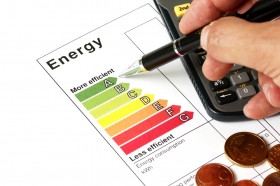
Energy Efficiency Increases House Prices?

Environmental News Network
or
http://www.enn.com/makepage/template5.html

always offers thought-provoking articles.

The potential of increasing a home's value by improving its energy efficiency appears not yet reflected in the U.S.......

The article below addresses the deforestation for palm oil plantation and the environmental havoc wrought.


From: Editor, ClickGreen, More from this Affiliate
Published June 17, 2013 08:49 AM

Energy saving measures boost house prices, new research reveals

Energy saving improvements made to a property could increase its value by 14 percent on average - and up to 38 percent in some parts of England - new research has shown.


From: Rhett Butler
Published June 18, 2013 08:58 AM

For an average home in the country, improving its EPC (Energy Performance Certificate) from band G to E, or from band D to B, could mean adding more than £16,000 ($25,000 USD) to the sale price of the property.

In the North East, improved energy efficiency from band G to E could increase this value by over £25,000 ($39,000 USD) and the average home in the North West could see £23,000 ($36,000 USD) added to its value. In the South West the value increases by £16,300.

The research, released today by the Department of Energy and Climate Change (DECC), takes into account over 300,000 property sales in England between 1995 and 2011 and is the most comprehensive research in this area to date.

It indicates that energy efficiency is now a key factor influencing the sale price of most residential dwellings in England.

Energy and Climate Change Minister Greg Barker said: "We have long known the benefits of making energy saving improvements to the home, but this study is real evidence of the huge potential rewards.

"Not only can energy efficient improvements help protect you against rising energy prices, but they can also add real value to your property. This Coalition is committed to helping hardworking families with the cost of living. The Green Deal is designed to do exactly that.

"The Green Deal is helping more people make these types of home improvements, reducing high upfront costs and letting people pay for some the cost through the savings on their bills. The Green Deal is a great option for anyone wanting to improve the look, feel and potentially the value of their home."

Kevin McCloud, broadcaster and co-founder of the Grand Designs Future Living home retrofit company, said: "There are some 26 million homes in Britain, most of them about as well insulated as a rabbit hutch, and they need immediate help to be made less wasteful.

"This timely report tells us what we suspected all along: that people really value the well-insulated, energy-efficient home; that modest investment in measures to make our homes more comfortable , healthier and cheaper-to-run really pays off.

"The Green Deal is now maturing into a helpful way of financing a lot of the retrofit solutions around. Homeowners can now start to make these changes, alleviate the burden of high energy bills and improve the value of their prime asset."

Continue reading at ClickGreen.
Energy efficiency image via Shutterstock.

Singapore chokes on haze from deforestation fires


Singapore and Malaysian officials have asked Indonesia to take "urgent measures" to address forest fires in Sumatra that are sending choking haze northward, reports AFP.


Singapore's air pollution index is at the worst level since 2006, when Sumatra last experienced severe fires. The city-state's Pollutant Standards Index on Monday topped 150, well above the "unhealthy" threshold of 100, according to the National Environment Agency (NEA) web site.

"NEA has alerted the Indonesian Ministry of Environment on the haze situation experienced in Singapore, and urged the Indonesian authorities to look into urgent measures to mitigate the transboundary haze occurrence," said the agency in a statement. "NEA will continue to monitor the situation closely and provide further updates when necessary."

Malaysian Prime Minister Najib Razak complained about the fires on his Facebook page: "The haze situation in Malaysia is going to worsen in the coming days with winds carrying smoke from hot spots in Sumatra."

But Indonesian officials attempted to deflect some of the blame for the fires, which are typically used by companies to clear forests and peatlands for oil palm plantations. Many of these companies are owned by firms based in Singapore and Malaysia.

"We hope the governments of Malaysia and Singapore will tell their investors to adopt proper measures so we can solve this problem together," said Hadi Daryanto, the second-in-command at Indonesia's Ministry of Forestry.

Forest fires and haze have become an annual problem in the region over the past 30 years as vast swathes of forest have been degraded by logging and converted to plantations. While the use of fire for land-clearing is illegal, the practice in nonetheless widespread, with satellites picking up hundreds of hotspots in a daily basis during the dry season, which typically runs through October.

Haze in the region has been associated with a number of ills, including increased incidence of respiratory problems. Severe haze can affect transportation networks, navigation, and tourism. The cost of the 1997-1998 haze — triggered by large-scale fires across Sumatra and Borneo that were exacerbated by dry El Nino conditions — was estimated in the billions of dollars to regional economies.

In response to the 1997-1998 crisis, ASEAN members set up the Agreement on Transboundary Haze Pollution, which called for collective action to tackle forest fires. Yet Indonesia never ratified the agreement and other members have been slow to enact reforms that would hinder conversion of forests for plantation development.

Continue reading at MONGABAY.COM.
Forest fire image via Shutterstock.

http://www.enn.com/top_stories/article/46111