FOCUS: Telling the Truth About ISIS and Raqqa
 David Remnick, The New Yorker
Remnick writes: "On Saturday night, five young Syrians slouched into a dive bar in New York and ordered drinks. When the bartender asked if off-brand vodka was O.K., they had to smile. They were all exiles from Raqqa, the provincial city in northern Syria that ISIS has made its operational center and the de-facto capital of the Islamic State. No one needed the good stuff. Just a drink would do."
READ MORE
David Remnick, The New Yorker
Remnick writes: "On Saturday night, five young Syrians slouched into a dive bar in New York and ordered drinks. When the bartender asked if off-brand vodka was O.K., they had to smile. They were all exiles from Raqqa, the provincial city in northern Syria that ISIS has made its operational center and the de-facto capital of the Islamic State. No one needed the good stuff. Just a drink would do."
READ MORE

n Saturday night, five young Syrians slouched into a dive bar in New York and ordered drinks. When the bartender asked if off-brand vodka was O.K., they had to smile. They were all exiles from Raqqa, the provincial city in northern Syria that
ISIS has made its operational center and the de-facto capital of the Islamic State. No one needed the good stuff. Just a drink would do.
Everyone in the group works for
Raqqa Is Being Slaughtered Silently (R.B.S.S.), a kind of underground journalistic-activist enterprise that, under the threat of grisly execution, smuggles images and reports on ISIS from Raqqa to its allies abroad. The group’s comrades, in turn, post them on
social media and its
Web site.
ISIS has controlled Raqqa for nearly two years and much of the foreign press looks to R.B.S.S. for first-hand reports about the daily life—and depredations—in Raqqa. And because they have dared to post reports of crucifixions, beheadings, sexual abuse, and other crimes, members of R.B.S.S., both inside the city and abroad, have been
murdered by ISIS for their work.
Abdel Aziz al-Hamza, a slender man of twenty-four, acts as spokesperson. As recently as a few years ago, he was a biology student at Raqqa University who dreamed of studying pharmacology in Jordan or Turkey and returning home to start his career and a family.
“I was a normal guy,” he said, after taking a first sip of his vodka-and-Sprite. “I hung out with friends at cafés and bars. None of us were political. In Syria, before the revolution, it was a crime to be political in any way.” Raqqa was a relatively prosperous city with energy resources and an agricultural base. Major dams in the area are an important source of power in Syria.
When anti-regime demonstrations broke out in March, 2011, in Dara’a, a city in the south, and reports spread throughout Syria that Bashar al-Assad’s security forces were firing on civilians, Hamza and many others joined in protests, in Raqqa. “We wanted to be free,” he said. “It seemed simple.”
As the uprising against Assad spread throughout Syria and the casualty counts rose, tens of thousands of people left Aleppo, Homs, Idlib, and other embattled cities and towns and arrived in Raqqa, which is on the northern bank of the Euphrates River. The city swelled and became known for a while as “the hotel of the revolution.”
By March, 2013, Free Syrian Army (F.S.A.) troops, as well as Islamist rebel forces, including al-Nusra, controlled the city and tore down a statue of Assad’s father, Hafez al-Assad, to celebrate. “Raqqa was the first liberated city in Syria,” Hamza said.
But at around the same time, members of ISIS, or the Islamic State, bearing black flags, began accumulating in the nearby town of Slouk. “At first, there were only around fifteen people,” Hamza said. “None of us knew about it” until fighters from al-Nusra began switching over to ISIS, which had its origin in Iraq. “Over time, around ninety per cent of the Nusra fighters in the area became ISIS, and only ten per cent of them refused,” Hamza said.
In May, 2013, ISIS fighters started making kidnapping runs and attacking F.S.A. leaders, and, by late summer, there were full-scale battles with F.S.A. troops. As the F.S.A. began to suffer defeats, car bombings, kidnappings, and executions, one of the journalists at the table said, some F.S.A. soldiers “out of complete fear” also joined ISIS. People in Raqqa could see that ISIS was growing stronger, as they brought in heavy weapons from Iraq and seasoned soldiers who had fought in the Iraqi Army under Saddam Hussein. By the beginning of 2014, ISIS had absolute control of the city. They now overran the mosques, drove out Christians from the city, and turned major municipal buildings into their various headquarters. The propaganda campaign that ISIS mustered following the capture of Raqqa brought on a wave of foreigners.
“No one thought about the caliphate until 2014 when they declared Raqqa the capital of the caliphate and then these guys started coming in from all around the world,” one of the R.B.S.S. journalists told me. “It was like New York! A second New York! People from Australia! From Belgium! From Germany! From France! A global tide!”
“Maybe the next World Cup will be in Raqqa!” another of the journalists said, sarcastically.
The young foreign fighters were, and remain, privileged characters in the city. There are thousands of them in Raqqa, one of the R.B.S.S. journalists said: “When you are on the street you see them everywhere. They love fast-food places and Internet cafés. They love Nutella and they’ve got cans of Red Bull. Chocolates! Cheesecake! People are poor and see these expensive things! But ISIS wants to keep these Western recruits happy.”
The first crucifixion came early that spring—a horrific event to recall even now. Everyone at the table remembered the shock of it. Then came more: two people, shot in the head by ISIS executioners, crucified, and left for days for all to witness in the city’s main traffic roundabout.
“This was something new that we had never seen, this kind of violence,” Hamza said. “They started cutting heads off, crucifixions. They spread panic everywhere.” There were edicts against drinking and smoking. Enforced by an all-female morality police called the Khansaa Brigade, women were made to wear the veil and, eventually, black shoes only. They are beaten if their niqab is somehow too revealing, a veil too flimsy, or if they are caught walking on the street alone.
“I can say that women are the people suffering the most under
ISIS,” one R.B.S.S. member said. “They can’t show their faces.
ISIS bothers them a lot. They take sticks and slash them on the street if the veil shows the eyes. They say, ‘Hey, hey, do you want to marry me?’ People have become so poor, the families so weak, that some give up their daughters to
ISIS. They accept it. Sometimes
ISIS forces them to do this. The
Yazidis—
ISIS says these people believe in Satan. And because of that their women are just traded from man to man in
ISIS, sold, raped, abandoned.”
Schools were closed down. ISIS’s imams dominated the mosques. Many children were sent off toISIS’s religious institutions, where they were taught the most fanatical form of the faith, and then to military camps, the R.B.S.S. activists said.
“Not everyone who joined ISIS did it because they believe the ideology,” Hamza said. “I have a friend who is with ISIS but doesn’t like ISIS at all. … I called him and said, ‘Why did you join? You hate them!’ He said, ‘I am a doctor and they did not let me work. They told me, ‘If you wanted to work, you have to join us.’ I couldn’t live otherwise. I have children…’ ”
In their recruiting, ISIS targets the local youth, according to members of R.B.S.S. With schools closed down, kids play aimlessly in the street. ISIS members befriend them, give them gifts, sometimes candy, sometimes a mobile phone. They ask the kids to join ISIS, one R.B.S.S. member said, “But they say, ‘Don’t tell your parents.’ I know about one child who went missing for months. His parents looked and looked. Thirteen years old, a boy. Finally, the father said to an ISIS leader, ‘Where is my son, I’ll give you money.’ Turns out the child was in a training camp for ISIS. They kidnap these children. They are sent to a mosque for education, so they are brainwashed with an extremist form of Islam. After this, they are sent to army camp to teach them how to fight, how to make and carry bombs. At their graduation, they have orders to execute someone––sometimes a beheading, sometimes they just cut off the head of a sheep.”
There is no easy way to check every assertion made by R.B.S.S., but the accounts of extreme cruelty that they provided consistently square with the reporting done by such journalists as
Rukmini Callimachi and
Azadeh Moaveni, in the
Times,
Ben Taub in The New Yorker, and many others who have extensively interviewed
ISIS members and victims in Iraq, in Europe, and along the Turkish-Syrian border.
The most powerful instrument of indoctrination for ISIS is the Internet. ISIS glorifies both the sanctity of its moral, historical, and political goals and its acts of vengeance against all whom it brands infidels. And it advertises it all without shame. “If you Googled ‘Raqqa’ in those early days you got their material first and only,” one of the R.B.S.S. members told me. “So that was one reason why a lot of foreign fighters emigrated. And this is why we began.”
In mid-April, 2014, just a month after the first crucifixions in the city, a group of six like-minded young people started to talk to each other on Facebook. The group expanded only a little before ISIS discovered it. Within two or three weeks a local imam declared that anyone who worked with R.B.S.S. would be tracked down and executed. Some civilians were arrested simply because they “liked” a post on social media.
Undaunted, R.B.S.S. activists posted on social-media sites photographs and reports of daily life in Raqqa; the whole idea was to fight ISIS propaganda on the digital battlefield.
In May, 2014, R.B.S.S. suffered its first casualty. One of the men at the bar told me: “One of our reporters was stopped at a checkpoint and his equipment was confiscated and searched.” He was held for three weeks, then executed in a public square in Raqqa.
“In the beginning we didn’t think it was that dangerous,” Hamza said. “We didn’t think they would execute us. All of us had been arrested by the Assad regime more than once during the revolution. But after this execution we met and started to talk that we don’t want to lose anyone more and we started to think about whether we should stop. But in the end we decided that our lives were not more important than the life of our friend who had been killed.”
Some of the R.B.S.S. activists devised what they hoped would be a safer, less traceable means of communication. Some left the city, and Syria itself, to help “from the other side.” Hamza, for one, took a bus out of Raqqa and headed for Turkey; he now lives, as do most of the others at the table, in Europe. Others left after the first execution of their comrade. They remained active, receiving photographs, video, and reports from their undercover comrades in Raqqa that they post on social media.
The members of R.B.S.S. are utterly frustrated with the efforts of the West to defeat both Assad, who has fended off the opposition so far, and
ISIS, which has suffered recent losses in Iraq and Syria, but which has proved capable of
exacting suffering from Sinai to Beirut to Paris.
“The problem the Syrian people have with the United States is that we are suffering for five years with barrel bombs,” one R.B.S.S. journalist said. “Assad has killed so many innocents, and many people have lost hope. After Assad’s chemical attack, when he crossed the
so-called ‘red line,’ the U.S. just took the weapons. It made America look like a liar and weak.
“When you say ‘Raqqa,’ the first thing people think of is ISIS,” he continued. “They forget hundreds of thousands of civilians, normal people like us. I am not a terrorist. There are so many people, normal people, who want to live in a free, democratic Syria. We want to rebuild Syria, and the only way we can do it is through our civil-society group and others like it. If the United States government and other governments want to fight ISIS on social media, their Twitter accounts are seen as propaganda. But when real life is shown through us, and you see what life is like, normal people believe it.”
Talking over the jukebox din and the raucous Saturday night conversations at the bar, Hamza asked that Americans try to imagine a city in which “the 9/11s keep happening month after month, year after year.”
“Daily life is twenty-four-seven warplanes over your head,” another member said. “People now feel more afraid about the idea that all over the world they want to bomb this small city. People are afraid. The city of Kubani is completely destroyed. The people of Raqqa don’t want that. We love our city. The West says, ‘Let’s get the people out and bomb ISIS.’ They can’t. It’s a big prison. Women under forty-five can’t leave without special permission. It’s a tribal area, and females can’t leave without men. ISIS uses the people of Raqqa as a human shield.”
The R.B.S.S. members said the American fighter planes have dropped most of their bombs on targets on the outskirts of the city or they use drones to target leaders of ISIS. They claim that Russian planes, however, have hit a hospital, two critical bridges, and a university. “The problem we have with the air strikes,” one said, “is that their planes are very stupid. They’re not smart bombs.”
The peril for the group is unceasing. When ISIS arrests or executes a member of R.B.S.S.—or someone that they believe might be sympathetic to the group—they make a show of it on social media. One video, a member told me, showed “two friends of ours accused of working for us. And they don’t. ISIS tied them to a tree and shot them. A second video shows the execution of another friend of ours accused of working for us. They strung them up in a tree in an abandoned place and shot them in the head; they made the video to say they died ‘silently.’ They are sending us messages like this all the time.”
Hamza will soon accept an award from the Committee to Protect Journalists in the name of his comrades, living and dead. (I’m on the board of C.P.J., which arranged our meeting.) He will dedicate the award “to our martyrs,” to the “anonymous heroes” of the campaign, and to the people of Raqqa.
“All of us get several threats daily,” Hamza said, finishing his drink. “The last threat against me was from someone in Germany. He said I would be the next one killed. But when I think about our reporters inside Raqqa, and I am outside … I live a normal life, doing normal things. Somehow, I don’t care what will happen to me. Compared to them, I am doing nothing.”
http://readersupportednews.org/opinion2/277-75/33669-focus-telling-the-truth-about-isis-and-raqqa


 very year, just before Thanksgiving, hundreds of reporters, editors, and producers gather at a ballroom of the Waldorf-Astoria Hotel to raise money for The Committee to Project Journalists and to honor a handful of exemplary men and women who have been imprisoned, flayed, beaten, harassed, censored, or, in some other way, oppressed for the sin of doing their jobs—the application of pressure on power. We lift our heads from our salmon and our table gossip and applaud those who have suffered most deeply for daring the truth.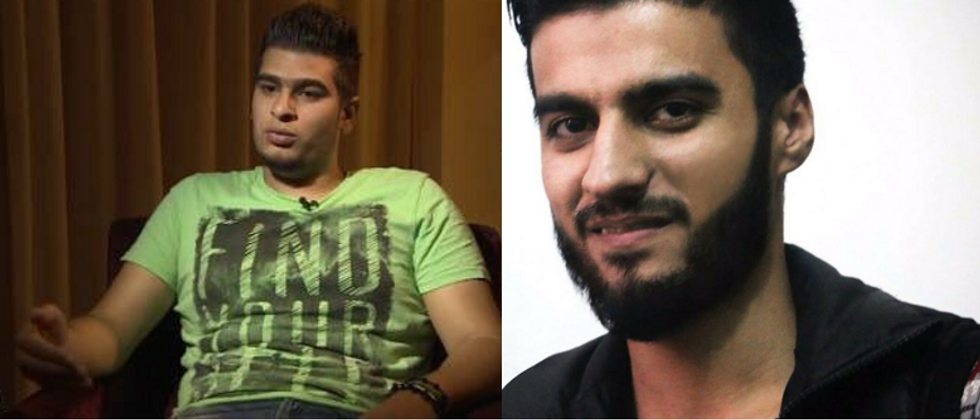


 n 1960, James Baldwin, the American Orwell, wrote “Fifth Avenue, Uptown: A Letter from Harlem,” an essay that portrayed the ugly dynamic between white police officers and young black men in the neighborhood where he grew up:


