Search This Blog

Translate

Blog Archive

Middleboro Review 2

NEW CONTENT MOVED TO MIDDLEBORO REVIEW 2

Toyota

Since the Dilly, Dally, Delay & Stall Law Firms are adding their billable hours, the Toyota U.S.A. and Route 44 Toyota posts have been separated here:

Route 44 Toyota Sold Me A Lemon


Showing posts with label Dominion. Show all posts

Saturday, March 5, 2016

After Brayton Point


Published on
by
Common Dreams

The Lobster Boat vs. The Coal Freighter as Climate Activists Blockade Power Plant

In a David vs. Goliath scenario the Henry David T. puts itself between Energy Enterprise and New England's largest coal plant


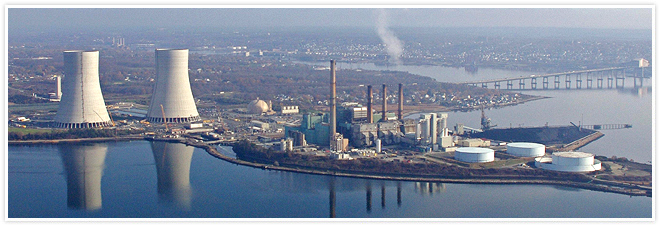
Brayton Point Power Station is featured in the film. From Conservation Law Foundation:
“On Monday, Conservation Law Foundation cheered the news that New England’s largest coal plant, Brayton Point Station in Somerset, Massachusetts, will shut down by 2017. Brayton Point has loomed over Somerset and neighboring environmental justice communities on the South Shore for nearly 50 years, belching pollution into the air and destroying wildlife in Mt. Hope Bay.
Many organizations have protested the plant over the years, and many are claiming victory as well as credit for its decision to shut down. We thought you would like to know the leading role CLF has played on the long path to this outcome.
  • For over 20 years, CLF has held Brayton Point’s owners accountable for cleaning up the air and water pollution it causes. CLF’s legal pressure forced Brayton Point to install modern pollution controls that significantly reduced toxic emissions into the air and their dire health impacts, and ended the dumping of billions of gallons of superheated water into Mt. Hope Bay every year.
  • In February 2013, CLF, along with our community organizing partners Toxics Action Center and Clean Water Action, sued its then owner Dominion for ongoing violations of the Clean Air Act. Despite the upgrades to the plant, it continues to pollute the air. A report issued last August estimated that even in 2012, Brayton Point’s emissions were responsible for a myriad of health problems from asthma attacks to as many as 39 premature deaths. The litigation is ongoing.
  • Also in February, 2013, CLF released a report exposing Brayton Point’s financial vulnerability. Entitled Dark Days Ahead, the report showed that a perfect storm of factors – including low natural gas prices – spelled imminent doom for the plant. The report sent a warning signal to prospective buyers of the plant, which was purchased by private equity firm Energy Capital Partners in March.
  • CLF, Toxics Action Center and Clean Water Action, have been working closely with members of the Somerset community to plan for a future without Brayton Point. No plant closing can be truly celebrated without a viable plan to ensure a just transition to a healthier future.
The End of Coal in New England
Brayton Point’s decision to shut down by 2017 is a harbinger of things to come in New England’s aging coal fleet. As the region’s biggest and most modern coal plant, with the lowest cost of production, it’s safe to say that if Brayton Point can’t survive, then none of its older, less efficient counterparts can.
One by one, our region’s oldest and biggest polluters are succumbing to the market and the march of technology:
Somerset Station, Somerset, MA, SHUT DOWN
AES Thames, Montville, CT, SHUT DOWN
Salem Harbor Station, Salem, MA, Will SHUT DOWN in 2014
Brayton Point, Somerset, MA, Will SHUT DOWN by 2017
Mt. Tom Station, Holyoke, MA, Expected to SHUT DOWN by 2016
Bridgeport Harbor Station, Bridgeport, CT, Running at 4% capacity
Schiller Station, Portsmouth, NH, Running at 12% capacity
Merrimack Station, Bow, NH, Running at 35% capacity*
CLF is on the case on all of New England’s remaining coal plants. Our advocacy calls upon a portfolio of highly effective strategies, from targeted litigation to hold coal plant owners’ feet to the fire to control illegal emissions, to robust participation in the Public Utilities Commissions’ decision-making processes, to a seat at the table in planning for the future of our electric grid. As we have for decades, CLF is applying pressure at the right times and in all the right places to achieve our goal of a Coal Free New England by 2020 – or sooner, with your help.
New England’s remaining coal plants are on the brink. Please consider making a gift today to continue our quest for a Coal Free New England as we pursue a clean energy future. Together, we can end coal’s dirty legacy for good.
Sincerely,
N. Jonathan Peress
N. Jonathan Peress
VP, Director, Clean Energy and Climate Change”
http://www.thedirtytruthaboutcoal.com/?p=458


What will the Brayton Point of the future look like? New study offers options


By Michael Holtzman
The Herald-News

Posted Mar. 4, 2016 at 6:18 PM 


SOMERSET — Any beliefs that the town could replace the Brayton Point power plant with another large plant to produce similar tax revenues and needed power for the region are “myths,” according to a report by an energy and environmental consulting firm released Thursday.
“We will show that cleaner, healthier alternatives for the waterfront Brayton Point site, such as a Clean Energy Hub scenario … are entirely feasible,” wrote Synapse Energy Economics Inc. in Cambridge.
A coalition of clean energy advocates hired Synapse with $55,000 available from a legal settlement with Brayton Point’s prior owner.
The 1,600-megawatt power plant — the largest and cleanest-burning coal-fired plant in New England — is slated to close by June 1, 2017.
The findings and impacts in the 31-page report were summarized by representatives of the Coalition for Clean Air South Coast, Clean Water Action, Toxics Action Center and the Coalition for Social Justice,.
Facing the power plant and cooling towers on a small beachy area, leaders and members told the gathered media and a few interested residents that the findings are an opportunity to attract clean energy developers aided by support from the public and officials to alter priorities for fossil fuel generation that pollutes the environment.
“Somerset is at a crossroads,” said Toxics Action’s Sylvia Broude. “Brayton Point can become a regional and national model for converting outdated, polluting facilities into a clean energy hub in ways that will benefit the community.”
The Synapse Energy report, titled “Reimaging Brayton Point,” describes a variety of uses for Brayton Point, including as an onshore transmission site for wind power generated far offshore and carried by underwater lines.
Accommodating up to 2,000 megawatts of offshore wind would require an estimated $20 million infrastructure cost. That would compare with potentially $1.3 billion to covert Brayton Point to a natural gas plant, the report says.
Examining and recommending “what’s next for Brayton Point,” the report says a Clean Energy Hub “should be at the top of any list of potential options” for the 234-acre site on Mount Hope Bay.
Such a site could also be used for solar photovoltaic systems, food waste digesters, battery storage and connections to large amounts of offshore wind, the report concludes.
Battery storage is being developed in Massachusetts as reserve power, Sarah Jackson, Synapse Energy lead author, said in a phone interview.
The concept is to store massive batteries in containers the size of tractor-trailers that could be paired as reserve energy with renewable resources like wind and solar power for when winds are gentle and the sun is not shining, Jackson said.
What’s key to its stance is that nationally, “climate change is at the forefront of our decision-making in planning for the future.” Coastal communities like Somerset are particularly affected, the report says.
Tapping a recent six-month effort by the Massachusetts Energy Center to provide town citizens and the region with the most feasible reuses of the privately held power plant and site, Synapse Energy refuted one key recommendation of the prior report.
“There is no immediate need — and certainly no overwhelming benefit — to rush to build a large new gas-fired unit in the place of the retiring coal plant,” it concluded.
It cited the “fraction” of revenues produced by a rebuilding of Salem Harbor’s retired coal plant in that small city for saying “there is no need for a large new power plant to replace the power being generated by Brayton Point.”
It also said that on a per-megawatt basis, renewable resources generating electricity creates more jobs than natural gas, which produces the fewest.
Somerset’s Pauline Rodrigues, representing the Coalition for Clean Air South Coast, addressed the Clean Energy Center feasibility study conducted over several months by Ninigret Partners in Providence.
“We were very disappointed in the results. We wanted something positive that the town and citizens can work with,” she said, and that would present attractive options for developers to work with the Brayton Point owners.
Options for development could be facilitated by legislation and grants, she said.
Rodrigues said she appreciates the CEC and state Rep. Patricia Haddad, D-Somerset, for procuring funding for that prior study done last year.
With pending omnibus bill energy legislation coordinated and filed by Haddad at a key juncture this month, Becky Smith’s Clean Water Action in Massachusetts has gathered some 1,500 signatures on postcards they plan to present to Gov. Charlie Baker this week.
The message calls on Baker to prioritize renewable energy over polluting power plants, not make the state “over-reliant on gas” and support communities and workers where power plants have closed, such as Brayton Point and Somerset Station (which closed six years ago).
While power plant tax revenues continuing to drop dramatically, potential future benefits could include the improved uses along 12 miles of shoreline along Mount Hope Bay and the Taunton River. With Somerset Station’s 40 acres, it totals more than 270 acres, according to Smith.
It’s also “an economic engine” for the town and the region, Smith said.
Ken Figuerado of Swansea, a real estate company owner who bought an investment home on the bay facing Brayton Point, said he thought helping workers about to lose their jobs from the plant closing should be top priority for town leaders.
Jackson, the lead Synapse Energy author among eight listed on the report, said they followed the CEC report “and built off of it to see what’s the potential.”
It’s “mainly an educational piece” to help local residents and others “understand what the options are.” She said her nonprofit, nonpartisan company established 20 years ago worked independently while knowing the coalition’s priorities.
The report also explained that far offshore wind developer Deepwater Wind has proposed a project near Block Island and would commit to a payment in lieu of taxes agreement with impacted communities.
The “best chance” of regaining “significant tax revenues” after Brayton Point closes in 15 months is to negotiate a strong tax agreement with owners of whatever new resources are built on the site, the report also concludes.
Synapse Energy Economics Inc. author Sarah Jackson will deliver a full-scale presentation of the “Reimagining Brayton Point” report on March 15 at 6:30 p.m. at the Amvets Hall, 659 Brayton Ave. The public is invited.

http://www.southcoasttoday.com/article/20160304/NEWS/160309661/101061/NEWSLETTER100

Wednesday, October 9, 2013

The end of coal power in Massachusetts


One of "Dirty Dozen" power plants to close

Brayton Point is second biggest carbon polluter in the state

The end of coal power in Massachusetts

 
Brayton Point is one of the biggest polluters for all of New England


The end of coal power in Massachusetts

By Sylvia Broude, Executive Director,Toxics Action Center.

Yesterday, the new owners of the Brayton Point power plant, New England's largest coal-fired power plant, notified ISO-New England, the operator of the New England electricity grid, that they are closing down in 2017. Sold to Energy Capital Partners, a New Jersey-based energy investment company, barely one month ago, and only a year after completing a $1 billion upgrade of the plant to install pollution controls, Brayton Point Energy, LLC filed a “Non-Price Retirement Request” indicating that the plant will be retired by no later than June 2017.

This is big news for local residents who have been working for years for cleaner air and a healthier environment for Somerset and the rest of Southeastern Massachusetts. Brayton Point is one of the biggest polluters for all of New England. According to the U.S. EPA in 2008, Brayton Point emitted more than 37,000 tons of toxic chemicals into the air Studies show this pollution doesn’t only affect Somerset: the majority spreads and settles in cities and towns across a 30-mile radius from the power plant. Mercury has always been a major concern because it is a neurotoxin, with no safe levels of exposure, and in 2010, Brayton Point was responsible for nearly half of all mercury emissions for the state of Massachusetts.

But Brayton Point hasn’t been the only source of pollution for Southeastern Massachusetts: for more than 50 years, Somerset hosted two coal-burning power plants, including a power plant called Somerset Station LLC that operated for much of the 20th century and closed its doors in 2010. With an economy based around coal power generation, Somerset needs all the help it can get to work towards a new, healthier and thriving economy. Now the real fight begins in transitioning this former coal community towards a 21st century innovation economy.

Toxics Action Center, Clean Water Action, and other members of Coal Free Massachusetts, has organized side by side with local community group Coalition for Clean Air South Coast for years to plan ahead for a transition away from coal at Brayton Point. The community made it clear that they wanted a healthier economy for Somerset, and the new owner listened. We hope Energy Capital Partners will join local residents at the table to discuss cleanup and reuse and negotiate a transition plan with power plant workers. Somerset can be a model for other coal communities in New England to shift away from archaic dirty energy and towards clean industry, renewable energy, and the innovation economy.

We hope Energy Capital Partners will take responsibility for decommissioning and cleanup when Brayton Point closes, and work with local and state leaders to attract new development. We’ve seen communities across the country successfully redevelop coal plant sites, and we need to make that vision a reality here. Because Somerset and other coal host communities deserve to remain whole.

Sylvia Broude, Executive Director,

Toxics Action Center - A New England-wide public health and environmental non-profit that organizes with communities to clean up and prevent pollution


http://www.capecodtoday.com/article/2013/10/08/22088-end-coal-power-massachusetts

Tuesday, October 8, 2013

Massachusetts Dirty Coal Plant, Brayton Point, to Close


Mass. Coal-Fired Plant To Close By 2017


BOSTON — A Massachusetts power plant recently cited by federal regulators as one of the state’s heaviest polluters is planning to shut down.

Owners of the coal-fired Brayton Point Power Station in Somerset filed papers Monday indicating the plant will no longer provide power to the region’s electricity grid when it is retired as of May 2017.

The announcement came just months after the plant was sold by Virginia-based Dominion to Energy Capital Partners, a private equity firm with offices in New Jersey and California. Dominion bought the plant in 2005.

The plant’s new owners pointed to a number of reasons for the planned shutdown, including low electricity prices from a surplus of natural gas and the need to invest “significant capital to meet environmental regulations and to operate and maintain an aging plant.”

“We understand the impacts that this decision to retire Brayton Point Station will have on the employees of Brayton Point, local community and other stakeholders,” Curt Morgan, CEO and President of Brayton Point Energy, LLC., said in a written statement Monday.

Morgan said the company will work to ease those impacts. Brayton Point Station, the largest of six coal-fired plants in New England, employs approximately 240 workers.

Environmental groups had long sought to close the plant, which topped the Environmental Protection Agency’s list for most toxic emissions in Massachusetts in 2011.

“It’s a very clear indication that coal-fired power is no longer economically viable,” said Jonathan Peress of the Conservation Law Foundation.

Pauline Rodrigues, a longtime resident of Somerset, said she’s pleased the plant will no longer be burning coal, but is worried about the loss of jobs and the financial hit to the town.

“It feels like a big hole in the town because there is no plan in place to help the economy of our town,” she said. “We didn’t want anything to happen until the town planned for it.”

Marcia Blomberg, spokeswoman for ISO-New England, the region’s electric grid operator, said the retirement of older fossil-fuel powered plants has been considered as part of the grid’s strategic planning process. She said there are a lot of economic forces working against coal-fired plants, which are often older facilities that need anti-pollution upgrades to meet tougher environmental standards.

Coal’s decreasing competitiveness prompted Dominion in 2011 to ask for permission to shut down the 60-year-old coal- and oil-fired Salem Harbor Power Station. It was later purchased by a company that planned to build a natural gas plant on the site.

Dominion had spent about $1.1 billion to modernize the five-decade-old Brayton Point station, which also burns oil and natural gas.

But despite the effort, the estimated earnings had been bleak. A report last year by USB Investment Research projected Brayton Point would lose $3 million in 2014.

Coal accounts for 3 percent of electricity production in the region compared to 52 percent for natural gas. Its small supporting role in New England’s energy production is at odds to its role in the nation as a whole. In 2010 coal accounted for nearly 45 percent of all power produced in the country, according to the U.S. Energy Information Administration.

http://www.wbur.org/2013/10/07/brayton-point-to-shut-down


Tuesday, July 30, 2013

Protesters target Dirty Somerset/Brayton Point power plant

At the bottom are links to previously posted articles and excerpts that tell the story of DIRTY COAL and AIR POLLUTION that elevates childhood asthma rates.

 Coal Ash storage in unlined ponds jeopardizes drinking water.

Time to end DIRTY COAL and protect children. 

Protesters target Somerset power plant

Hundreds show, 44 are arrested


Wednesday, March 13, 2013

Nuclear Industry Welfare

At the top of this page is a 'search' feature that allows review of previous posts.
A search for nuclear, nuclear energy, alternative energy reveals some interesting information some of which is posted below.

Safety concerns aside, Nuclear Energy is too expensive and unfeasible without taxpayer-funded guarantees and exemptions.


The Nuclear Industry is yet one more example of Democracy Bought and Sold with generous campaign contributions and a battalion of lobbyists not serving the public or national interests.


Because Solar and Wind lack the profitability to buy necessary support [translation: politicians], the nation remains paralyzed by archaic energy sources that jeopardize our future.

As the Washington Post article below highlights, ratepayers will be forced to bear the high costs of these dumb decisions.


From Nuclear:

Consider this -- Nuclear Energy costs

$7,500 per kilowatt to buildThat’s more than double the capital costs for solar power and three and a half times the cost for wind.

the most heavily subsidized industry in the energy sector.

In 2005, Congress handed the nuclear power industry $13 billion in federal aid, and two years later went on to approve an additional $20.5 billion in loan guarantees, making U.S. taxpayers the cosigners on loans for new nuclear projects -- half of which are expected to end in defaults.

Wind is already more competitive than electricity generated from new nuclear and coal-fired power plants.


In U.S., nuclear energy loses momentum amid economic head winds, safety issues

Mark Ralston/AFP/Getty Images - Fishermen beside the San Onofre Nuclear Power Plant in north San Diego
County in 2011.


By ,
Published: March 11

Two years after the tsunami that crippled Japan’s Fukushima power complex, the U.S. nuclear industry is facing fundamental and far-reaching challenges to its own future.

Only five years ago, industry executives and leading politicians were talking about an American nuclear renaissance, hoping to add 20 or more reactors to the 104-unit U.S. nuclear fleet.

But today those companies are holding back in the face of falling natural gas prices and sluggish and uncertain electricity demand. Only five new plants are under construction, while at least that many are slated for permanent closure or shut down indefinitely over safety issues.

On Monday, the Nuclear Regulatory Commission (NRC) reiterated its refusal to issue a license for a new unit at Calvert Cliffs, Md., that a French company had hoped to make the model for a fleet of reactors. A pair of reactors in Southern California are under scrutiny over whether a major contractor and a utility there concealed concerns about potential cracks in the tubes of a steam generator. And nuclear plants in Wisconsin and Florida are closing down because their owners said they cannot compete with less expensive natural-gas-fired electricity.

Industry officials still make the case for nuclear as a domestic source of energy that does not emit greenhouse gases. “Anyone concerned about global warming should acknowledge that if society seriously aspires to be anti-carbon, it also needs to be seriously pro-nuclear,” Thomas F. Farrell, chief executive of Dominion Resources, said at a recent conference in Washington sponsored by the industry newsletter Platts. 

Outrageous and Untrue! This disingenuous comment ignores that Solar and Wind are already CHEAPER than Nuclear. Anyone concerned about Global Warming will work to reduce their consumption first - the best form of Energy available.

But Caren Byrd, executive director of Morgan Stanley’s global power group, said at the same conference that, on an economic basis, “it is hard to make the case for nuclear.”

One illustration of that is a joint venture called UniStar, formed to build half a dozen identical nuclear units modeled on a new reactor planned at the existing Calvert Cliffs site. But the Atomic Energy Act bars foreign companies from having “ownership, control or domination” of U.S. nuclear plants, which became a problem in late 2010 when Constellation Energy gave up its 51 percent stake in the joint venture and left UniStar wholly owned by Electricite de France.

Since then, UniStar has been unable to find another U.S. partner. On Monday, the NRC reiterated that it would not issue a license to UniStar, which had asked the NRC to overturn the prohibition on foreign ownership.

Low natural gas prices are discouraging other nuclear investors and utilities. “The natural gas issue is terrific for the U.S. economy and energy mix,” John J. Reed, chairman of Concentric Energy Advisors, said at a Platts meeting of nuclear executives. “It just isn’t so good for those of you sitting out there today.”

Dominion, the owner of the Kewaunee nuclear plant in Wisconsin, and Duke Energy, owner of Crystal River Unit 3 in Florida, recently announced plans to permanently close these reactors because of economic factors, even though the plants have licenses extending well into the future. Wind and natural gas are cheaper.


The Nuclear Industry consistently has cost overruns that make it no longer competitive, such as these --


The NRC has also been keeping an eye on a pair of new reactors the Southern Co. has been building at its Vogtle complex in Georgia. Financing costs were lowered sharply by a promise of a federal loan guarantee by the Obama administration and by a Georgia state law that allows Southern’s subsidiary, Georgia Power, to pass much of the cost along to ratepayers while the plant is under construction. Most states require a power plant to go online before customers have to pay for it.

Within months, however, Southern said that as much as $900 million could be added to its subsidiary’s share of the $14 billion cost. An industry consultant, who requested anonymity to preserve his business relationships, said that the contractor put too much space between steel rebar in the foundations at the heart of the new reactors. To resolve the problem, Southern said it created a 1,000-cubic-yard “mock-up” of the site where concrete would be poured.


Worth reading in its entirety:
http://www.washingtonpost.com/business/economy/2013/03/11/fb6d61c2-715e-11e2-ac36-3d8d9dcaa2e2_story.html


Friday, January 11, 2013

Ending Brayton Point's Pollution

Maybe we can all breath clean air soon thanks to CLF!

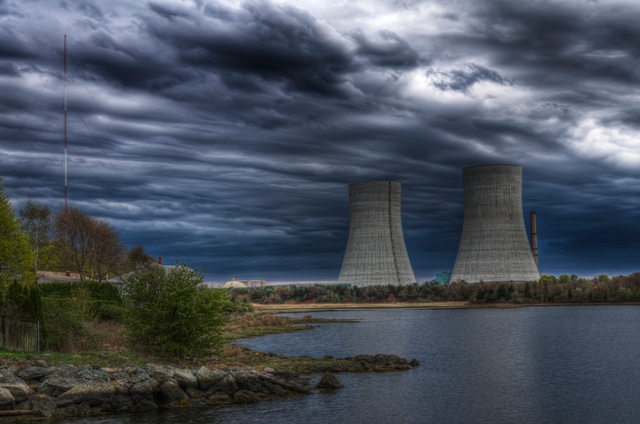
Storm Clouds Gather Over Brayton Point

Dec 14, 2012 by
 
Frank C. Grace, www.trigphotography.com

Coal-fired power is dying, not only across the nation, but across New England as well. The region’s coal-fired power plant fleet has started to succumb to the costs of operating a coal-fired dinosaur in the age of energy efficiency, growing renewable electricity generation, and–for now–low natural gas prices.

Predominantly coal-fired Brayton Point Station in Somerset, Massachusetts, is the state’s largest single source of carbon emissions (producing over 6 million tons in 2010). Another harmful pollutant emitted by Brayton Point is particulate matter, which is measured daily by monitors that continuously check the opacity of the soot coming out of the plant’s smokestack. Brayton has been violating their limits for emitting that soot, and failing to monitor their emissions of several other harmful pollutants.

Yesterday, CLF filed a notice of intent to sue Brayton’s current owners, Dominion Resources, for those violations. CLF’s upcoming lawsuit is just the latest in a growing list of bad news for Dominion and Brayton Point.

As New England’s other coal plants started to close or teeter on the edge of closure, Brayton Point Station was expected to be the last coal plant standing in the region. It is New England’s largest coal-fired power plant, and in the past decade its current owners, Dominion Resources, sank over $1 billion in pollution control upgrades into the behemoth. While Brayton Point does not have the kind of legal protection from market realities that PSNH exploits to prop up its dirty old coal generation in New Hampshire, many had assumed that Brayton Point was well-positioned to survive in the changing power generation landscape.

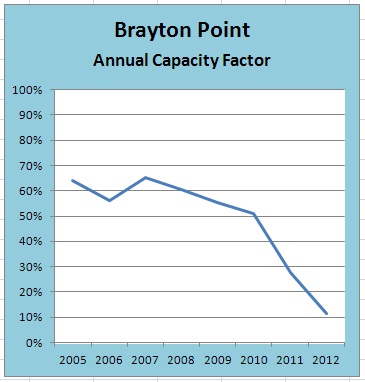
source: EPA and ISO-NE data
 
But the relentless pressure of low natural gas prices and the costs of starting up and operating an enormous coal-fired power plant have begun to affect every corner of the coal generation market in New England, and Brayton Point has not been spared. The plant’s “capacity factor,” which reflects the amount of power the plant generated compared to the amount of power it could have generated if used to its full potential, has taken a nosedive over the past three years. A plummeting capacity factor means that it is a better economic choice for a plant’s owners to keep it idle most of the time than to operate.

Dominion Resources, clearly, has seen the writing on the wall for coal in New England. After signing a binding agreement to cease coal operations at Salem Harbor Station as a result of CLF’s lawsuit against that plant, Dominion sold the Salem plant earlier this year. Following closely on the heels of the Salem sale, the company put Brayton Point on the market in September. While Dominion is marketing Brayton as a modern coal-fired power plant due to its recent billion-dollar pollution control investments, UBS recently assessed [PDF] the value of those investments (and the plant itself) at zero.

Brayton Point’s plummeting capacity factor and bleak sale prospects reflect both the current power of low natural gas prices and the weakness of these old, out-dated coal plants. That trend will continue as the New England energy market continues to move forward with better integration of efficiency, conservation and renewable generation. Dark clouds are rising over Brayton Point. In the meantime, CLF and our partners will work diligently to hold the Brayton Point power plant accountable for producing its own dark clouds of pollution in violation of the law.

http://www.clf.org/blog/clean-energy-climate-change/storm-clouds-gather-over-brayton-point/

Monday, August 20, 2012

Activists call on gov to close Somerset's Brayton Point plant, transition state away from coal

It's time!


Activists call on gov to close Somerset's Brayton Point plant, transition state away from coal

Rally 1
Dave Souza|Herald News

Local activists rallied at Kennedy Park, overlooking the Brayton Point Power Station, on Wednesday, calling on Gov. Deval Patrick to push for the closure of the plant’s coal-burning operation.


By Jo C. Goode
Posted Aug 16, 2012


With the Brayton Point Power Station as a backdrop, a group of local activists rallied on the overlook at Kennedy Park on Wednesday to call on Gov. Deval Patrick to move the state away from coal and to help communities in economic transition as coal-powered plants shut down.

Organizers of the Coalition for Clean Air South Coast also announced that 100 local business owners in Fall River, New Bedford, Swansea and Westport pledged support of the group’s initiatives, which include shutting down Brayton Point Power Station’s coal-burning operation by 2020.

“We want to see Brayton Point Power Station commit to make a transition away from coal, but we don’t think they will do it on their own and that’s why we are looking for Gov. Patrick’s support,” said Sylvia Broude, of Toxics Action Center.

Patrick signed the Global Warming Solutions Act into law in 2008, making Massachusetts one of the first states in the nation to move forward with a comprehensive regulatory program to address climate change and greenhouse gases.

Brayton Point Station, the largest power station in New England, was purchased in 2005 by Dominion, a national company that produces gas, nuclear, LNG and coal power along the eastern seaboard.

In 2010, the power station was deemed by the EPA as the largest polluter in New England and responsible for nearly half of all mercury emissions in the state.

Westport resident David Dionne, of the Coalition for Clean Air, told about 25 supporters the state has one of the highest rates of childhood asthma in the country.

“The emissions of burning of coal has a direct link to the incidents of asthma. We are here today to reduce those numbers and we’re going to do it by eliminating that coal pile,” Dionne said, pointing across the Taunton River to the Brayton Point Station site.

The country is still in the dark ages when it comes to producing electricity, said Al Lima of the Coalition for Clean Air and Green Futures, who questioned why the country won’t move away from coal power.

“The answer is we lack the political will to go beyond coal. We know how to do it but we are stuck in the status quo. We are here today to go beyond coal. We are here today to demand that Gov. Patrick take action to adopt clean resources of power, to implement energy conservation measures and to free us from the scourge of dirty coal,” Lima said.


The Patrick Administration is committed to an aggressive clean energy agenda by enacting nation-leading policies to replace fossil fuels with renewable energy and Massachusetts and New England, said spokesman Reginald Zimmerman in an email.

“In addition to signing the Green Communities Act, which fosters increased energy efficiency, Gov. Patrick has also signed into law the Global Warming Solutions Act, creating the most ambitious greenhouse gas emission reduction initiative in the country. These policies are driving our clean energy revolution and will deliver environmental and economic benefits for generations to come, ” Zimmerman said.

When Brayton Point Power Station was purchased by Dominion, $1.2 billion in environmental improvements were put in place, said Brayton Point Power spokeswoman Lisa Lundy, and the plant meets all federal environmental regulations.

“We are very much in compliance and our goal is to be a reliable producer of electricity while protecting the environment,” Lundy said.

As coal-burning power plants shut down throughout the state — the Salem Harbor Coal Plant is slated for closure in 2014 — communities face the loss of jobs, municipal revenues and property redevelopment.

The closing of the Somerset Station in 2010 is a perfect example of how a former pollution-generating, coal-fired power plant may be redeveloped into an oceanic research facility — a current proposal by developers of the property — said Broude, who called the proposal “an ambitious but realistic plan.”

Dionne said it’s crucial to change the paradigm of reliance on the coal-burning power plants that operate in communities to green industry that will produce jobs, economic development and tax revenue.

“This is the perfect place for the state to get involved, it is really an example of what we’re talking about. The state has the opportunity to help Somerset with that transition,” Dionne said.

Neighbors and local activists who fought against Somerset Station for years are credited with shutting down the coal-burning operation, once included on the “Filthy Five” list of the worst-polluting plants in the state.


Read more: http://www.heraldnews.com/news/x2038877262/Activists-call-on-gov-to-close-Somersets-Brayton-Point-plant-transition-state-away-from-coal#ixzz2464dUTqU