Search This Blog

Translate

Blog Archive

Middleboro Review 2

NEW CONTENT MOVED TO MIDDLEBORO REVIEW 2

Toyota

Since the Dilly, Dally, Delay & Stall Law Firms are adding their billable hours, the Toyota U.S.A. and Route 44 Toyota posts have been separated here:

Route 44 Toyota Sold Me A Lemon


Showing posts with label Robert Parry. Show all posts

Saturday, August 3, 2019

George Will Confirms Nixon's Vietnam Treason


Published on
 by

George Will Confirms Nixon's Vietnam Treason


Excerpt:
In the four years between the sabotage and what Kissinger termed “peace at hand” just prior to the 1972 election, more than 20,000 US troops died in Vietnam. More than 100,000 were wounded. More than a million Vietnamese were killed.
But in 1973, Kissinger was given the Nobel Peace Prize for negotiating the same settlement he helped sabotage in 1968.
About this website
COMMONDREAMS.ORG
.. Richard Nixon was a traitor.The new release of extended versions of Nixon's papers now confirms this long-standing belief, usually dismissed as a "conspiracy theory" by Republican conservatives. Now it has been substantiated by none other than right-wing columnist George Will.Nixon's newly reveal...


Richard Nixon was a traitor.
The new release of extended versions of Nixon's papers now confirms this long-standing belief, usually dismissed as a "conspiracy theory" by Republican conservatives. Now it has been substantiated by none other than right-wing columnist George Will.
Nixon's newly revealed records show for certain that in 1968, as a presidential candidate, he ordered Anna Chennault, his liaison to the South Vietnam government, to persuade them to refuse a cease-fire being brokered by President Lyndon Johnson.
Nixon's interference with these negotiations violated President John Adams's 1797 Logan Act, banning private citizens from intruding into official government negotiations with a foreign nation.
Published as the 40th Anniversary of Nixon's resignation approaches, Will's column confirms that Nixon feared public disclosure of his role in sabotaging the 1968 Vietnam peace talks. Will says Nixon established a "plumbers unit" to stop potential leaks of information that might damage him, including documentation that he believed was held by the Brookings Institute, a liberal think tank. The Plumbers' later break-in at the Democratic National Committee led to the Watergate scandal that brought Nixon down.
Nixon's sabotage of the Vietnam peace talks was confirmed by transcripts of FBI wiretaps. On November 2, 1968, LBJ received an FBI report saying Chernnault told the South Vietnamese ambassador that "she had received a message from her boss: saying the Vietnamese should "hold on, we are gonna win."
As Will confirms, Vietnamese did "hold on," the war proceeded and Nixon did win, changing forever the face of American politics—with the shadow of treason permanently embedded in its DNA.
The treason came in 1968 as the Vietnam War reached a critical turning point. President Lyndon Johnson was desperate for a truce between North and South Vietnam. 
LBJ had an ulterior motive: his Vice President, Hubert Humphrey, was in a tight presidential race against Richard Nixon. With demonstrators in the streets, Humphrey desperately needed a cease-fire to get him into the White House. 
Johnson had it all but wrapped it. With a combination of gentle and iron-fisted persuasion, he forced the leaders of South Vietnam into an all-but-final agreement with the North. A cease-fire was imminent, and Humphrey’s election seemed assured.
But at the last minute, the South Vietnamese pulled out. LBJ suspected Nixon had intervened to stop them from signing a peace treaty. 
In the Price of Power (1983), Seymour Hersh revealed Henry Kissinger—then Johnson’s adviser on Vietnam peace talks—secretly alerted Nixon’s staff that a truce was imminent. 
According to Hersh, Nixon “was able to get a series of messages to the Thieu government [of South Vietnam] making it clear that a Nixon presidency would have different views on peace negotiations.”
Johnson was livid. He even called the Republican Senate Minority Leader, Everett Dirksen, to complain that “they oughtn’t be doing this. This is treason.”
“I know,” was Dirksen’s feeble reply.
Johnson blasted Nixon about this on November 3rd, just prior to the election. As Robert Parry of Consortiumnews.com has written: “when Johnson confronted Nixon with evidence of the peace-talk sabotage, Nixon insisted on his innocence but acknowledged that he knew what was at stake.” 
Said Nixon: “My, I would never do anything to encourage….Saigon not to come to the table….Good God, we’ve got to get them to Paris or you can’t have peace.”
But South Vietnamese President General Theiu—a notorious drug and gun runner—did boycott Johnson’s Paris peace talks. With the war still raging, Nixon claimed a narrow victory over Humphrey. He then made Kissinger his own national security adviser. 
In the four years between the sabotage and what Kissinger termed “peace at hand” just prior to the 1972 election, more than 20,000 US troops died in Vietnam. More than 100,000 were wounded. More than a million Vietnamese were killed. 
But in 1973, Kissinger was given the Nobel Peace Prize for negotiating the same settlement he helped sabotage in 1968.
According to Parry, LBJ wanted to go public with Nixon’s treason. But Clark Clifford, an architect of the CIA and a pillar of the Washington establishment, talked Johnson out of it. LBJ’s close confidant warned that the revelation would shake the foundations of the nation. 
In particular, Clifford told Johnson (in a taped conversation) that “some elements of the story are so shocking in their nature that I’m wondering whether it would be good for the country to disclose the story and then possibly have [Nixon] elected. It could cast his whole administration under such doubt that I think it would be inimical to our country’s best interests.”
In other words, Clifford told LBJ that the country couldn’t handle the reality that its president was a certifiable traitor, eligible for legal execution. 
Fittingly, Clark Clifford’s upper-crust career ended in the disgrace of his entanglement with the crooked Bank of Credit and Commerce (BCCI), which financed the terrorist group Al Qaeda and whose scandalous downfall tainted the Agency he helped found.
Johnson lived four years after he left office, tormented by the disastrous war that destroyed his presidency and his retirement. Nixon won re-election in 1972, again with a host of dirty dealings, then became the first American president to resign in disgrace.


LINK

Wednesday, December 5, 2018

George H.W. Bush, the CIA and a Case of State-Sponsored Terrorism


READ MORE HERE OR GO TO THE ORIGINAL HERE


George H.W. Bush, the CIA and a Case of State-Sponsored Terrorism


Forty-two years ago, a car-bomb exploded in
Washington killing Chile’s ex-Foreign Minister
Orlando Letelier, an act of state terrorism
that the CIA and its director George H.W.
Bush tried to cover up, Robert Parry reported


Thursday, April 13, 2017

Basing WARS on LIES


NOTE THE DATE!

This is NOT NEWS.


The New York Times building. (photo: Wikipedia)

NYT Backs Off Its Syria-Sarin Analysis

By Robert Parry, Consortium News
30 December 13

he New York Times has, kind of, admitted that it messed up its big front-page story that used a "vector analysis" to pin the blame for the Aug. 21 Sarin attack on the Syrian government, an assertion that was treated by Official Washington as the slam-dunk proof that President Bashar al-Assad gassed his own people.
But you'd be forgiven if you missed the Times' embarrassing confession, since it was buried on page 8, below the fold, 18 paragraphs into a story under the not-so-eye-catching title, "New Study Refines View Of Sarin Attack in Syria."
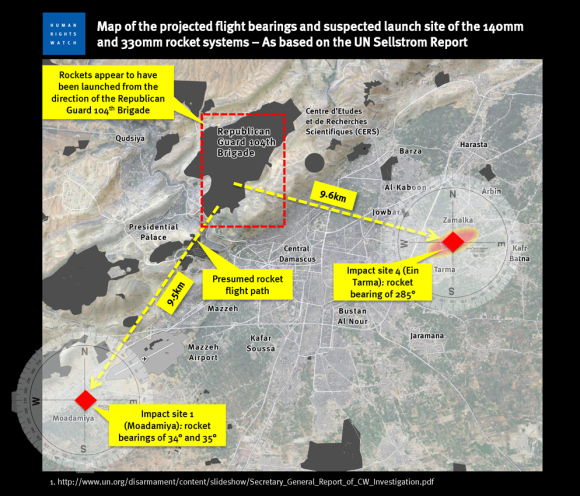
But this Times article at least acknowledges what has been widely reported on the Internet, including at Consortiumnews.com, that the Times' "vector analysis" - showing the reverse flight paths of two missiles intersecting at a Syrian military base - has collapsed, in part, because the range of the rockets was much too limited.
There were other problems with the "vector analysis" that was pushed by the Times and Human Rights Watch, which has long wanted the U.S. military to intervene in the Syrian civil war against the Syrian government.
The analytical flaws included the fact that one of the two missiles - the one landing in Moadamiya, south of Damascus - had clipped a building during its descent making a precise calculation of its flight path impossible, plus the discovery that the Moadamiya missile contained no Sarin, making its use in the vectoring of two Sarin-laden rockets nonsensical.
But the Times' analysis ultimately fell apart amid a consensus among missile experts that the rockets would have had a maximum range of only around three kilometers when the supposed launch site is about 9.5 kilometers from the impact zones in Moadamiya and Zamalka/Ein Tarma, east of Damascus.
The Times' front-page "vectoring" article of Sept. 17 had declared: "One annex to the report [by UN inspectors] identified azimuths, or angular measurements, from where rockets had struck, back to their points of origin. When plotted and marked independently on maps by analysts from Human Rights Watch and by The New York Times, the United Nations data from two widely scattered impact sites pointed directly to a Syrian military complex."
An accompanying map on the Times' front page revealed the flight-path lines intersecting at an elite Syrian military unit, the 104th Brigade of the Republican Guard, based northwest of Damascus, near the Presidential Palace. This "evidence" was then cited by U.S. politicians and pundits as the in-your-face proof of the Syrian government's guilt.
The Times/HRW analysis was especially important because the Obama administration, in making its case against the Syrian regime of Bashar al-Assad, had refused to release any evidence that could be independently evaluated. So, the "vector analysis" was almost the only visible nail in Assad's coffin of guilt.
Short-Range Rockets
In Sunday's article - the one below the fold on page 8 - the Times reported that a new analysis by two military experts concluded that the Aug. 21 rockets had a range of about three kilometers, or less than one-third the distance needed to intersect at the Syrian military base northwest of Damascus.
The report's authors were Theodore A. Postol, a professor of science, technology and national security policy at the Massachusetts Institute of Technology, and Richard M. Lloyd, an analyst at the military contractor Tesla Laboratories.
The Times noted that "the authors said that their findings could help pinpoint accountability for the most lethal chemical warfare attack in decades, but that they also raised questions about the American government's claims about the locations of launching points, and the technical intelligence behind them. ... The analysis could also lead to calls for more transparency from the White House, as Dr. Postol said it undermined the Obama administration's assertions about the rockets' launch points."
Finally, in the article's 18th paragraph, the Times acknowledged its own role in misleading the public, noting that the rockets' estimated maximum range of three kilometers "would be less than the ranges of more than nine kilometers calculated separately by The New York Times and Human Rights Watch in mid-September. ... Those estimates had been based in part on connecting reported compass headings for two rockets cited in the United Nations' initial report on the attacks."
In other words, the much-ballyhooed "vector analysis" had collapsed under scrutiny, knocking the legs out from under Official Washington's certainty that the Syrian government carried out the Aug. 21 attack which may have killed several hundred civilians including many children.
The Times article on Sunday was authored by C.J. Chivers, who along with Rick Gladstone, was a principal writer on the now-discredited Sept. 17 article.
The erosion of that "vector analysis" article has been underway for several months - through reporting at Web sites such as WhoGhouta and Consortiumnews.com - but few Americans knew about these challenges to the Official Story because the mainstream U.S. news media had essentially blacked them out.
When renowned investigative reporter Seymour Hersh composed a major article  citing skepticism within the U.S. intelligence community regarding the Syrian government's guilt, he had to go to the London Review of Books to get the story published. [See Consortiumnews.com's "Deceiving the US Public on Syria."]
Even Ake Sellstrom, the head of the United Nations mission investigating chemical weapons use in Syria, challenged the vector analysis during a Dec. 13 UN press conference, citing expert estimates of the missiles' range at about two kilometers, but his remarks were almost entirely ignored. [See Consortiumnews.com's "UN Inspector Undercuts NYT on Syria."]
A Replay of Iraqi WMD
Besides the deaths from the Sarin itself, perhaps the most troubling aspect of this episode has been how close the U.S. government came to going to war with Syria based on such flimsy and dubious evidence. It seems as if Official Washington and the U.S. mainstream news media have learned nothing from the disastrous rush to war in Iraq a decade ago.
Just as false assumptions about Iraq's WMD set off a stampede over that cliff in 2003, a similar rush to judgment regarding Syria brought the U.S. government to the edge of another precipice of war in 2013.
The New York Times and other major U.S. news outlets propelled the rush to judgment in both cases, rather than questioning the official stories and demanding better evidence from U.S. government officials. In September 2002, the Times famously fronted an article linking Iraq's purchase of some aluminum tubes to a secret nuclear weapons program, which - as Americans and Iraqis painfully learned later - didn't exist.
In the case of Syria, another potential catastrophe was averted only by a strong opposition to war among the American public, as registered in opinion polls, and President Barack Obama's last-minute decision to seek congressional approval for military action and then his openness to a diplomatic settlement brokered by Russia.
To defuse the crisis, the Syrian government agreed to destroy all its chemical weapons, while still denying any role in the Aug. 21 attack, which it blamed on Syrian rebels apparently trying to create a casus belli that would precipitate a U.S. intervention.
With very few exceptions, U.S. news outlets and think tanks mocked the notion of rebel responsibility and joined the Obama administration in expressing virtual certainty that the Assad regime was guilty.
There was almost no U.S. media skepticism on Aug. 30 when the White House stoked the war fever by posting on its Web site what was called a "Government Assessment," a four-page white paper that blamed the Syrian government for the Sarin attack but presented zero evidence to support the conclusion.
Americans had to go to Internet sites to see questions raised about the peculiar presentation, since normally a decision on war would be supported by a National Intelligence Estimate containing the judgments of the 16 intelligence agencies. But an NIE would also include footnotes citing dissents from analysts who disputed the conclusion, of which I was told there were a number.
The Dogs Not Barking
As the war frenzy built in late August and early September, there was a striking absence of U.S. intelligence officials at administration briefings and congressional hearings. The dog-not-barking reason was that someone might have asked a question about whether the U.S. intelligence community was in agreement with the "Government Assessment."
But these strange aspects of the Obama administration's case were not noted by the major U.S. news media. Then, on Sept. 17 came the New York Times front-page article citing the "vector analysis." It was the Perry Mason moment. The evidence literally pointed right at the "guilty" party, an elite unit of the Syrian military.
Whatever few doubts there were about the Syrian government's guilt disappeared. From the triumphant view of Official Washington, those of us who had expressed skepticism about the U.S. government's case could only hang our heads in shame and engage in some Maoist-style self-criticism.
For me, it was like a replay of Iraq-2003. Whenever the U.S. invading force discovered a barrel of chemicals, trumpeted on Fox News as proof of WMD, I'd get e-mails calling me a Saddam Hussein apologist and demanding that I admit that I had been wrong to question President George W. Bush's WMD claims. Now, there were ugly accusations that I had been carrying water for Bashar al-Assad.
But - as John Adams once said - "facts are stubborn things." And the smug certainty of Official Washington regarding the Syrian Sarin case gradually eroded much as a similar arrogance crumbled a decade ago when Iraq's alleged WMD stockpiles never materialized.
While it's still not clear who was responsible for the Aug. 21 deaths outside Damascus - whether a unit of the Syrian military, some radical rebel group or someone mishandling a dangerous payload - the facts should be followed objectively, not simply arranged to achieve a desired political outcome.
Now, with the New York Times' grudging admission that its "vector analysis" has collapsed, the pressure should build on the Obama administration to finally put whatever evidence it has before the world's public.
[For more details on this issue, see Consortiumnews.com's "NYT Replays Its Iraq Fiasco in Syria." For more of our early reporting on the Syrian chemical weapons attack, see: "A Dodgy Dossier on Syrian War"; "Murky Clues From UN's Syria Report"; "Obama Still Withholds Syria Evidence"; "How US Pressure Bends UN Agencies"; "Fixing Intel Around the Syria Policy."] 


http://readersupportednews.org/opinion2/276-74/21241-focus-nyt-backs-off-its-syria-sarin-analysis


Saturday, April 8, 2017

Think about it! Another Dangerous Rush to Judgment in Syria


Another Dangerous Rush to Judgment in Syria


Exclusive: The U.S. government and the mainstream media rushed to judgment again, blaming the Syrian government for a new poison-gas attack and ignoring other possibilities, reports Robert Parry.


By Robert Parry

With the latest hasty judgment about Tuesday’s poison-gas deaths in a rebel-held area of northern Syria, the mainstream U.S. news media once more reveals itself to be a threat to responsible journalism and to the future of humanity. Again, we see the troubling pattern of verdict first, investigation later, even when that behavior can lead to a dangerous war escalation and many more deaths.

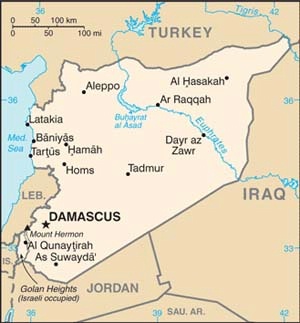
Map of Syria.
Before a careful evaluation of the evidence about Tuesday’s tragedy was possible, The New York Times and other major U.S. news outlets had pinned the blame for the scores of dead on the Syrian government of Bashar al-Assad. That revived demands that the U.S. and other nations establish a “no-fly zone” over Syria, which would amount to launching another “regime change” war and would put America into a likely hot war with nuclear-armed Russia.

Even as basic facts were still being assembled about Tuesday’s incident, we, the public, were prepped to disbelieve the Syrian government’s response that the poison gas may have come from rebel stockpiles that could have been released either accidentally or intentionally causing the civilian deaths in a town in Idlib Province.

One possible scenario was that Syrian warplanes bombed a rebel weapons depot where the poison gas was stored, causing the containers to rupture. Another possibility was a staged event by increasingly desperate Al Qaeda jihadists who are known for their disregard for innocent human life.

While it’s hard to know at this early stage what’s true and what’s not, these alternative explanations, I’m told, are being seriously examined by U.S. intelligence. One source cited the possibility that Turkey had supplied the rebels with the poison gas (the exact type still not determined) for potential use against Kurdish forces operating in northern Syria near the Turkish border or for a terror attack in a government-controlled city like the capital of Damascus.

Reporting by investigative journalist Seymour Hersh and statements by some Turkish police and opposition politicians linked Turkish intelligence and Al Qaeda-affiliated jihadists to the Aug. 21, 2013 sarin gas attack outside Damascus that killed hundreds, although the Times and other major U.S. news outlets continue to blame that incident on Assad’s regime.

Seasoned Propagandists

On Tuesday, the Times assigned two of its most committed anti-Syrian-government propagandists to cover the Syrian poison-gas story, Michael B. Gordon and Anne Barnard.
The controversial map developed by Human Rights Watch and embraced by the New York Times, supposedly showing the flight paths of two missiles from the Aug. 21 Sarin attack intersecting at a Syrian military base.
Gordon has been at the front lines of the neocon “regime change” strategies for years. He co-authored the Times’ infamous aluminum tube story of Sept. 8, 2002, which relied on U.S. government sources and Iraqi defectors to frighten Americans with images of “mushroom clouds” if they didn’t support President George W. Bush’s upcoming invasion of Iraq. The timing played perfectly into the administration’s advertising “rollout” for the Iraq War.

Of course, the story turned out to be false and to have unfairly downplayed skeptics of the claim that the aluminum tubes were for nuclear centrifuges, when the aluminum tubes actually were meant for artillery. But the article provided a great impetus toward the Iraq War, which ended up killing nearly 4,500 U.S. soldiers and hundreds of thousands of Iraqis.

Gordon’s co-author, Judith Miller, became the only U.S. journalist known to have lost a job over the reckless and shoddy reporting that contributed to the Iraq disaster. For his part, Gordon continued serving as a respected Pentagon correspondent.

Gordon’s name also showed up in a supporting role on the Times’ botched “vector analysis,” which supposedly proved that the Syrian military was responsible for the Aug. 21, 2013 sarin-gas attack. The “vector analysis” story of Sept. 17, 2013, traced the flight paths of two rockets, recovered in suburbs of Damascus back to a Syrian military base 9.5 kilometers away.

The article became the “slam-dunk” evidence that the Syrian government was lying when it denied launching the sarin attack. However, like the aluminum tube story, the Times’ ”vector analysis” ignored contrary evidence, such as the unreliability of one azimuth from a rocket that landed in Moadamiya because it had struck a building in its descent. That rocket also was found to contain no sarin, so it’s inclusion in the vectoring of two sarin-laden rockets made no sense.

But the Times’ story ultimately fell apart when rocket scientists analyzed the one sarin-laden rocket that had landed in the Zamalka area and determined that it had a maximum range of about two kilometers, meaning that it could not have originated from the Syrian military base. C.J. Chivers, one of the co-authors of the article, waited until Dec. 28, 2013, to publish a halfhearted semi-retraction. [See Consortiumnews.com’s “NYT Backs Off Its Syria-Sarin Analysis.”]

Gordon was a co-author of another bogus Times’ front-page story on April 21, 2014, when the State Department and the Ukrainian government fed the Times two photographs that supposedly proved that a group of Russian soldiers – first photographed in Russia – had entered Ukraine, where they were photographed again.

However, two days later, Gordon was forced to pen a retraction because it turned out that both photos had been shot inside Ukraine, destroying the story’s premise. [See Consortiumnews.com’s “NYT Retracts Russian-Photo Scoop.”]

Gordon perhaps personifies better than anyone how mainstream journalism works. If you publish false stories that fit with the Establishment’s narratives, your job is safe even if the stories blow up in your face. However, if you go against the grain – and if someone important raises a question about your story – you can easily find yourself out on the street even if your story is correct.

No Skepticism Allowed

Anne Barnard, Gordon’s co-author on Tuesday’s Syrian poison-gas story, has consistently reported on the Syrian conflict as if she were a press agent for the rebels, playing up their anti-government claims even when there’s no evidence.

A heart-rending propaganda image designed to justify a major U.S. military operation inside Syria against the Syrian military.
For instance, on June 2, 2015, Barnard, who is based in Beirut, Lebanon, authored a front-page story that pushed the rebels’ propaganda theme that the Syrian government was somehow in cahoots with the Islamic State though even the U.S. State Department acknowledged that it had no confirmation of the rebels’ claims.

When Gordon and Barnard teamed up to report on the latest Syrian tragedy, they again showed no skepticism about early U.S. government and Syrian rebel claims that the Syrian military was responsible for intentionally deploying poison gas.

Perhaps for the first time, The New York Times cited President Trump as a reliable source because he and his press secretary were saying what the Times wanted to hear – that Assad must be guilty.

Gordon and Barnard also cited the controversial White Helmets, the rebels’ Western-financed civil defense group that has worked in close proximity with Al Qaeda’s Nusra Front and has come under suspicion of staging heroic “rescues” but is nevertheless treated as a fount of truth-telling by the mainstream U.S. news media.

In early online versions of the Times’ story, a reaction from the Syrian military was buried deep in the article around the 27thparagraph, noting: “The government denies that it has used chemical weapons, arguing that insurgents and Islamic State fighters use toxins to frame the government or that the attacks are staged.”

The following paragraph mentioned the possibility that a Syrian bombing raid had struck a rebel warehouse where poison-gas was stored, thus releasing it unintentionally.

But the placement of the response was a clear message that the Times disbelieved whatever the Assad government said. At least in the version of the story that appeared in the morning newspaper, a government statement was moved up to the sixth paragraph although still surrounded by comments meant to signal the Times’ acceptance of the rebel version.

After noting the Assad government’s denial, Gordon and Barnard added, “But only the Syrian military had the ability and the motive to carry out an aerial attack like the one that struck the rebel-held town of Khan Sheikhoun.”

But they again ignored the alternative possibilities. One was that a bombing raid ruptured containers for chemicals that the rebels were planning to use in some future attack, and the other was that Al Qaeda’s jihadists staged the incident to elicit precisely the international outrage directed at Assad as has occurred.

Gordon and Barnard also could be wrong about Assad being the only one with a motive to deploy poison gas. Since Assad’s forces have gained a decisive upper-hand over the rebels, why would he risk stirring up international outrage at this juncture? On the other hand, the desperate rebels might view the horrific scenes from the chemical-weapons deployment as a last-minute game-changer.

Pressure to Prejudge

None of this means that Assad’s forces are innocent, but a serious investigation ascertains the facts and then reaches a conclusion, not the other way around.

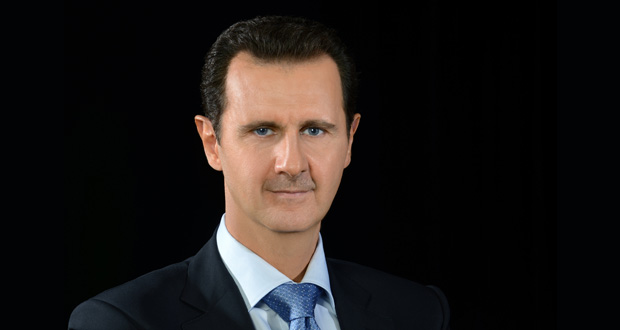
Syrian President Bashar al-Assad.
However, to suggest these other possibilities will, I suppose, draw the usual accusations about “Assad apologist,” but refusing to prejudge an investigation is what journalism is supposed to be about.

The Times, however, apparently has no concern anymore for letting the facts be assembled and then letting them speak for themselves. The Times weighed in on Wednesday with an editorial entitled “A New Level of Depravity From Mr. Assad.”

Another problem with the behavior of the Times and the mainstream media is that by jumping to a conclusion they pressure other important people to join in the condemnations and that, in turn, can prejudice the investigation while also generating a dangerous momentum toward war.

Once the political leadership pronounces judgment, it becomes career-threatening for lower-level 
officials to disagree with those conclusions. We’ve seen that already with how United Nations investigators accepted rebel claims about the Syrian government’s use of chlorine gas, a set of accusations that the Times and other media now report simply as flat-fact.

Yet, the claims about the Syrian military mixing in canisters of chlorine in supposed “barrel bombs” make little sense because chlorine deployed in that fashion is ineffective as a lethal weapon but it has become an important element of the rebels’ propaganda campaign.

U.N. investigators, who were under intense pressure from the United States and Western nations to give them something to use against Assad, did support rebel claims about the government using chlorine in a couple of cases, but the investigators also received testimony from residents in one area who described the staging of a chlorine attack for propaganda purposes.

One might have thought that the evidence of one staged attack would have increased skepticism about the other incidents, but the U.N. investigators apparently understood what was good for their careers, so they endorsed a couple of other alleged cases despite their inability to conduct a field investigation. [See Consortiumnews.com’s “UN Team Heard Claims of Staged Chemical Attacks.”]

Now, that dubious U.N. report is being leveraged into this new incident, one opportunistic finding used to justify another. But the pressing question now is: Have the American people come to understand enough about “psychological operations” and “strategic communications” that they will finally show the skepticism that no longer exists in the major U.S. news media?

Investigative reporter Robert Parry broke many of the Iran-Contra stories for The Associated Press and Newsweek in the 1980s. You can buy his latest book, America’s Stolen Narrative, either in print here or as an e-book (from Amazon and barnesandnoble.com).


https://consortiumnews.com/2017/04/05/another-dangerous-rush-to-judgment-in-syria/


Monday, November 21, 2016

RSN: NYT Advocates Internet Censorship


It's Live on the HomePage Now: 
Reader Supported News


Sure, I'll make a donation!

FOCUS: Robert Parry | NYT Advocates Internet Censorship 
Should Facebook censor fake news? (photo: Czarek Sokolowski/AP) 
Robert Parry, Consortium News 
Parry writes: "The New York Times wants a system of censorship for the Internet to block what it calls 'fake news,' but the Times ignores its own record of publishing 'fake news.'" 
READ MORE

Contribute to RSN
Become a Fan of RSN on Facebook and Twitter


Wednesday, October 19, 2016

RSN: Israel Arresting Palestinian Children for Their Facebook Posts, It Has Been a Really Unprecedented Year for Global Climate Action


It's Live on the HomePage Now: 
Reader Supported News


Sure, I'll make a donation!

Robert Parry | Good Deaths in Mosul, Bad Deaths in Aleppo 
Iraqi soldiers during a training session for the battle to retake Mosul, as a shepherd led his herd in Bashiqa this month. (photo: Thaier Al-Sudani/Reuters) 
Robert Parry, Consortium News 
Parry writes: "Note how differently The New York Times prepares the American public for civilian casualties from the new U.S.-backed Iraqi government assault on the city of Mosul to free it from the Islamic State, compared to the unrelenting condemnation of the Russian-backed Syrian government assault on neighborhoods of east Aleppo held by Al Qaeda." 
READ MORE
'Guantanamo Diary' Author Freed After 14 Years of Imprisonment 
Cora Currier, The Intercept 
Currier writes: "Mohamedou Slahi, author of a bestselling memoir recounting his imprisonment and torture by the United States government, has been sent home to his native Mauritania after more than 14 years in Guantanamo Bay." 
READ MORE
Sen. McCain Says Republicans Will Block All Court Nominations if Clinton Wins 
Nina Totenberg, NPR 
Totenberg writes: "Sen. John McCain (R-Ariz) said Monday that if Hillary Clinton is elected, Republicans will unite to block anyone she nominates to the Supreme Court." 
READ MORE
'We're Going to Call That a Win': Water Protectors Promise More Protests as Felony Charges Dropped 
Amy Goodman, Democracy Now! 
Excerpt: "At the Morton County Courthouse in North Dakota on Monday, authorities dropped or rejected multiple felony and misdemeanor charges against water protectors involved in the ongoing resistance to the $3.8 billion Dakota Access pipeline, including a felony charge against Marcus Frejo Little Eagle, known by his artist name Quese IMC." 
READ MORE
Thousands in Indefinite Detention in Chicago's Cook County Jail Because They Can't Afford Bond 
Chuck Goudie and Barb Markoff, ABC7 
Excerpt: "Human rights advocates say poor people are being denied justice because they can't afford bond, a mass incarceration that includes thousands of defendants in Cook County Jail." 
READ MORE
Israel Arresting Palestinian Children for Their Facebook Posts 
teleSUR 
Excerpt: "As Facebook gives the Israeli government more access to posts deemed as 'incitement,' occupation forces have been raiding the homes of Palestinians children and detaining them for months over posts on the social media site, a report by the Defense for Children International-Palestine said Monday." 
READ MORE
It Has Been a Really Unprecedented Year for Global Climate Action 
Natasha Geiling, ThinkProgress 
Geiling writes: "The past few months have seen a historic amount of global climate action, from the official entry into force of the Paris climate agreement to a landmark agreement to begin limiting emissions from the international aviation industry." 
READ MORE

Contribute to RSN
Become a Fan of RSN on Facebook and Twitter