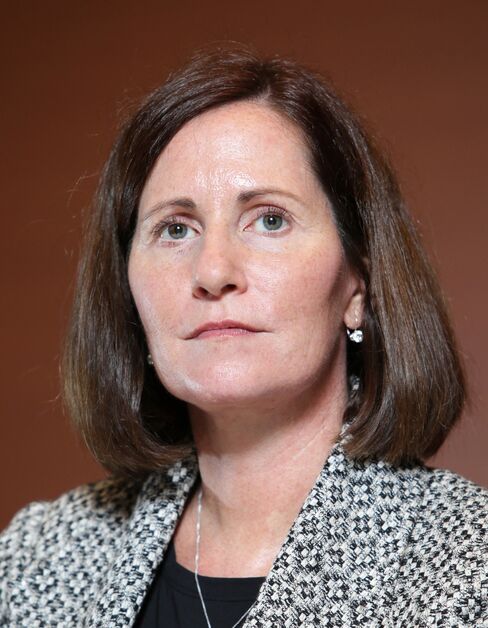
Toyota Abandoning Julie Hamp: Missed PR Op, Japan Male
Myopia, Power Sharing, or Just Another Diversity Disaster?
How much of the story do we know?
Julie Hamp came to Toyota as head of Global Communications with a great track record
from GM & Pepsi. Toyota PR had been run by a white male who held the position for 23
years. He and the PR department seemed to be overwhelmed during the various crisis
at Toyota over the years from unintended acceleration to recall mismanagement..
So in comes a bright, experienced female public relations executive and immediately
Japan and the male team in Torrance are touting how Toyota finally has renewed
diversity and hailed Julie Hamp as the highest ranking female in all of the Toyota
organization.
Then, she goes to Japan for meeting with the Japanese management, She has severe
pain in her knee such that her family mails her 57 oxycodone pills in desperation. The
package was labeled “Jewelry” so the Japan postal authorities opened it. There were
pendants in the box with the pills at the bottom.
From there, all reason and fairness were lost and the Japan press & obsessed authorities
set out to discredit Julie Hamp with all kinds of backstory content including her $3 M
house, suggesting that there must be something suspicious about all her activities
including a Rolex watch gift to her daughter. What this had to do with the case, it is still
not clear. BTW, nearly every Toyota executive in the U.S. lives in a $3M house in Palos
Verdes, Orange County, or Manhattan Beach.
Did President Akio Toyoda cop out on the company’s diversity policy,
showing his true colors about women in management?
What is clear is that Toyota really hasn’t changed much in the last 25 years. Further no
company, entity, or group has gone to bat for this competent communicator—and
definitely not Akio Toyoda, President of Toyota, who essentially threw her under the
corporate bus; nor any of the business newspapers, the Japan press, or Toyota’s
marketing and PR departments, the U.S .government, and most of the white males and
Japan shadow management.
How will or has Toyota’s PR handled a real PR problem?
It would seem that the Toyota PR machine, U.S. press, Wall Street Journal and --others
could have found out, explained, and really made a max effort to get the facts, to find the
truths, whys, and real circumstances and set about to support and explain this whole
unintended situation. It is still not too late.
Instead they and we stood by and watched this competent women being feed to lions of
Japan’s paparazzi press and the tradition-bound Japanese male management.
For example, such questions were not answered anywhere by anyone.
Why did Julie Hamp do what she did?
Does she have a severe medical condition that required prescription painkillers?
[She did]
Why did she have so many painkillers? [Because she was going in in Japan for a while]
Was the oxycodone prescribed by her doctor? [Of course]
Why was the oxycodone "mailed"? [She apparently forgot her jewelry & the prescribed
pain medication]
What was the real story & the real reason all this happened?
The real question we may never know what really happened might be:
How much was she paid in severance to keep a confidential lid on what really
happened? [Estimated to be as much as $500,000]
These “don’t tell or” covenants are common in corporate America, particularly with
Asian car companies and have happened to several female executives who have been
fired or let go by Asian OEMs.
Corporate lawyers structure binding agreements with fired employees that any and all
their severance payouts and benefits are only valid if they say absolutely nothing. So if
an executive like Julie Hamp is, in effect, fired-- she must have income or resources til
she can get another job or sustain herself and family while she recovers from the
shock. -- So the real reason for executive departures never gets revealed or even dealt
with.
For whatever reason, to date this matter was not handled right by Toyota, Mr. Toyoda,
the Japanese authorities, and the international press corps. Will any of the players be
able to find out and reveal real reason for all this unfortunate incident? Not likely.
Will Toyota ever do something about its long standing diversity
problem by empowering women to really run things?
If Mr. Toyoda wants to really show that he is concerned about diversity, the corporate
image, shareholder earnings, and car sales worldwide, then how about immediately
promoting or recruiting a female executive to the # 2 spot in the Toyota org chart and let
her be a candidate to replace him?. And being a family member or named Toyoda does
not count.
Ex-Toyota Exec Seen Escaping Prosecution over Oxycodone Import
Tokyo, July 7 (Jiji Press)--Former Toyota Motor Corp. <7203> Managing Officer Julie Hamp is seen escaping prosecution for importing from the United States oxycodone, which is designated as a narcotic drug under Japan's drug control law, informed sources said Tuesday. According to the sources, the Tokyo District Public Prosecutors Office has decided not to indict Hamp after finding that she intended to use the drug to reduce knee pain. She will be released from detention on Wednesday. Hamp took up the Toyota post in April, becoming the first female executive in the Japanese automaker's history. She resigned on June 30 after being arrested on June 18 for importing 57 oxycodone tablets earlier in the month. During interrogations, Hamp insisted that while she knew oxycodone is a restricted drug, she had no recognition that it is a narcotic, the sources said. She was also quoted as saying that she asked her father to send the tablets, which were prescribed to him. Her father submitted a testimony through a lawyer to support the daughter's claim.
(2015/07/07-22:27)
http://jen.jiji.com/jc/i?g=eco&k=2015070700960
Toyota’s First Female Executive Julie Hamp Resigns
Published on Jul 2, 2015
July 2 -- Toyota’s first female executive quit after just 90 days on the job. Julie Hamp’s resignation comes just two weeks after her arrest in Japan for allegedly importing prescription painkillers into the country. Bloomberg’s Craig Trudell reports on “Trending Business.”
Bloomberg Television offers extensive coverage and analysis of international business news and stories of global importance. It is available in more than 310 million households worldwide and reaches the most affluent and influential viewers in terms of household income, asset value and education levels. With production hubs in London, New York and Hong Kong, the network provides 24-hour continuous coverage of the people, companies and ideas that move the markets.
Julie Hamp to be released by July 8. No indictment.
Julie Hamp, who resigned her post as Toyota Motor Corp.’s first female executive after being arrested in Japan for an alleged drug-law violation, will be released, Kyodo News reported.
Prosecutors lacked enough evidence to indict Hamp, Kyodo said, without saying where it got the information. A spokeswoman at the Tokyo District Public Prosecutor’s Office declined to comment.
“We are now trying to check the fact and cannot make any comment for now,” Monika Saito, a Toyota spokeswoman, said by phone.
The arrest of Hamp, 55, was a setback for Toyota’s drive to lead Japan Inc. in making management ranks more international and accepting of female executives. The company accepted Hamp’s resignation as communications chief less than two weeks after President Akio Toyoda had called a press conference to vouch for her character and express confidence she hadn’t intentionally broken Japanese law.
Hamp, an American, has been held by Tokyo police since her June 18 arrest on suspicion she imported the pain medication oxycodone. Japan designates the drug as a narcotic and requires advance permission from the health and welfare ministry to bring it into the country.
Hamp became global head of communications for Toyota in April. She joined the company in June 2012 from PepsiCo Inc., where she was a senior vice president, and worked previously for General Motors Corp.
Prosecutors will not indict ex-Toyota exec Hamp over painkillers
KYODO, BLOOMBERG
Former Toyota Motor Corp. executive Julie Hamp will not be charged with illegally importing a controlled painkiller, investigative sources said Tuesday.
Prosecutors decided not to indict the 55-year-old American after concluding that her action was not ill-intended and considering the fact that she has already resigned from her job.
Hamp became the auto giant’s first female executive but stepped down last week over the scandal.
Police arrested her June 18 on suspicion of mailing 57 oxycodone pills from Kentucky to a Tokyo hotel where she was staying. The drug is illegal without a prescription in Japan.
The pills were found by customs officials when a package containing them arrived at Narita International Airport on June 11.
Oxycodone is often used as a pain reliever by cancer patients and is said to be stronger than morphine.
Hamp told the police she arranged for the pills to be sent for knee pain and did not think it would violate Japanese laws.
Toyota appointed Hamp as its first female managing officer on April 1 as part of efforts to diversify its leadership, but the automaker said she had resigned as of June 30.
Her case, and that of others like 26-year-old Carrie Russell, an English teacher held for 18 days in February for possessing prescription drugs sent from the U.S., offers a warning to visitors: Japan has tough laws for possession of prescription drugs, even when those medications may have been recommended by doctors abroad.
“When you get medicine from your physician, you assume it’s OK to bring it with you,” said Russell, who’s been taking medication for attention deficit disorder since she was 10. “I was completely wrong,” she said in a phone interview from Oregon.
A spokeswoman at the Tokyo Prosecutor’s Office, who asked not to be named citing department policy, declined to comment on Hamp’s and Russell’s cases. Hamp’s attorney and family members in the U.S. could not be reached for comment.
Oxycodone is a pain reliever used to treat moderate to severe pain and can be obtained in the U.S. with a prescription.
Under Japan’s criminal laws, police can detain suspects for 23 days without charge. During that period, police will interrogate those suspected of drug-related offenses for as long as six hours a day, according to Hirotaka Honda, a Tokyo-based attorney at the Honda Law Office who represents foreigners involved in criminal and domestic disputes involving the police.
“Detainees can be interrogated whenever the police think it is necessary,” said Honda. “And while getting investigated, they cannot be with their lawyer.”
Russell’s ordeal started Feb. 20 when she said she was approached by five plainclothes police officers with her photo in hand while she dined with a friend at a Tokyo pub.
One of the officers asked if she had any amphetamines.
Russell, who initially had no idea what they were talking about, said no. Even so, she was handcuffed and placed in the back seat of an unmarked van for a five-hour drive to Nagoya, her home since arriving in Japan.
A little more than 13,100 people were charged with drug-related crimes last year, the most in a decade, according to the National Police Agency. About 6 percent, or 778 individuals, were foreigners, the agency said. More than 80 percent of the crimes involved methamphetamines.
Cases of drug smuggling meanwhile rose 11 percent to 245, according to police data.
“The National Police Agency is getting more and more strict with drug cases recently,” said Hiroaki Okamoto, an attorney at Nakamura International Criminal Defense LPC in Tokyo.
Every day during her detention, Russell woke at 6:30 a.m., ate breakfast and performed morning chores. She would then be escorted into a room from 10 a.m. or 11 a.m. to be questioned until 5 p.m., she said.
“It was literally them asking me the same thing over and over again,” said Russell, who said she was the only foreigner in the detention center. The police were “trying to get me to break and say something that didn’t happen or was suspicious. But there was nothing for me to break on.”
After her interrogations, Russell had free time to read a book until lights out. The questioning would start again the next day, she said.
A spokesman with the Tokyo Metropolitan Police Department declined to comment on the case.
Before moving to Tokyo, Russell taught English in South Korea. Her mother, a physician, had sent her packages, including Adderall, a pharmaceutical amphetamine used to treat ADD, which was never opened.
Russell mailed her belongings, including the drugs, from Seoul to Nagoya when she got a new job in Japan, unaware of the rule that users need advance permission before bringing certain drugs into the country.
The English teacher was released after 18 days of detention only when U.S. Ambassador Caroline Kennedy made a personal appeal. She decided to return to the U.S. after her release.
On its website, the U.S. Embassy warns citizens to check before mailing or carrying medication to Japan, or face arrest and detention.
An embassy spokesman, who asked not to be named, declined to comment specifically on the case involving Hamp.
However unwittingly, Toyota has revealed Japan's bigoted and insular culture, as well as Japan's questionable judicial system. Although the FACTS are unclear, it does appear that a compliant Japanese media genuflected to the police retaliation to convict in the press. One must wonder if Julie Hamp was set up by an insular society offended by a woman in a top position or was it an American woman in a top position? It is doubly distressing that the US Corporate Media has ignored the issue.
Prison Ordeal Offers Lesson on Declaring Meds in Japan
Three weeks ago, Julie Hamp was Toyota Motor Corp.’s highest-ranking female executive. Her days now likely consist of 6:30 a.m. wake-up calls followed by hours of questioning by Japanese police.
Hamp, 55, who resigned as Toyota’s communications officer last week from a Japanese jail, has been detained since her June 18 arrest for allegedly importing prescription painkillers that require prior approval before being brought into Japan. Prosecutors will decide on July 8 whether Hamp, who hasn’t been formally charged, is to be indicted.
Her experience, and that of others like 26-year-old Carrie Russell, an English teacher held for 18 days in February for possessing prescription drugs sent from the U.S., offers a warning to visitors: Japan has tough laws for possession of prescription drugs, even when those medications may have been recommended by doctors abroad.
“When you get medicine from your physician, you assume it’s OK to bring it with you,” said Russell, who’s been taking medication for attention deficit disorder since she was 10. “I was completely wrong,” she said in a phone interview from Oregon.
Tokyo metropolitan police arrested Hamp of Toyota Motor on suspicion that she had imported the pain medication oxycodone. Hamp had her father send 57 tablets containing oxycodone to a Tokyo hotel where she was staying, according to Kyodo News, citing a Tokyo police representative.
A spokeswoman at the Tokyo Prosecutor’s Office, who asked not to be named citing department policy, declined to comment on Hamp and Russell’s cases. Hamp’s attorney and family members in the U.S. couldn’t be reached to comment.
23-Day Detentions
Oxycodone is a pain reliever used to treat moderate to severe pain and can be obtained in the U.S. with a prescription.
Under Japan’s criminal laws, police can detain suspects for 23 days without charge. During that period, police will interrogate those suspected of drug-related offenses for as long as six hours a day, according to Hirotaka Honda, a Tokyo-based attorney at the Honda Law Office who represents foreigners involved in criminal and domestic disputes involving the police.
“Detainees can be interrogated whenever the police think it is necessary,” said Honda. “And while getting investigated, they cannot be with their lawyer.”
Russell’s ordeal started Feb. 20 when she said she was approached by five plainclothes police officers with her photo in hand while she dined with a friend at a Tokyo pub. One of the officers asked if she had any amphetamines. Russell, who initially had no idea what they were talking about, said no. Even so, she was handcuffed and placed into the back seat of an unmarked van for a five-hour drive west to Nagoya, her home since arriving in Japan.
Drug Cases
Japan, a nation of 127 million, charged 13,121 individuals with drug-related crimes last year, the most in a decade, according to the National Police Agency. About 6 percent, or 778 individuals, were foreigners, the agency said. More than 80 percent of the crimes involved methamphetamines.
The same year, cases of drug smuggling rose 11 percent to 245, according to police data.
“The Japanese police agency is getting more and more strict with drug cases recently,” said Hiroaki Okamoto, an attorney at Nakamura International Criminal Defense LPC in Tokyo.
Every day during her detention, Russell woke at 6:30 a.m., ate breakfast, and performed morning chores. She would then be escorted into a room from 10 a.m. or 11 a.m. to be questioned until 5 p.m., she said.
‘Get Me to Break’
“It was literally them asking me the same thing over and over again,” said Russell, who said she was the only foreigner in the detention center. The police were “trying to get me to break and say something that didn’t happen or was suspicious. But there was nothing for me to break on.”
After her interrogations, Russell had free time to read a book until lights out. The questioning would start again the next day, she said.
A spokesman with the Tokyo Metropolitan Police Department declined to comment on the Russell case.
Before moving to Tokyo, Russell taught English in South Korea. Her mother, a physician, had sent her packages, including adderall, a pharmaceutical amphetamine used to treat ADD, which was never opened.
Russell mailed her belongings, including the drugs, from Seoul to Nagoya when she got a new job in Japan, unaware of the rule that users need advance permission before bringing certain drugs into the country.
The English teacher was released after 18 days of detention only when U.S. Ambassador Caroline Kennedy made a personal appeal. She decided to return to the U.S. after her release.
Smuggling Charges
On its website, the U.S. embassy warns citizens to check before mailing or carrying medication to Japan, or face arrest and detention.
A spokesman at the U.S. embassy in Tokyo, who asked not to be named, declined to comment specifically on the case involving Hamp, the former Toyota Motor executive.
Toyota President Akio Toyoda told reporters on June 19 that he’s confident Hamp didn’t intentionally break the law, describing her as “a very important and trustworthy friend and colleague.”
If prosecutors decide to indict Hamp on July 8, her stint in the detention center could be longer, according to Okamoto.
“She’s a foreigner and she doesn’t have her family living in Japan. Also, she doesn’t seem to have admitted to illegally importing the drugs with intention,” said Okamoto. “With all those conditions, it will be very difficult to have her released.”
Okamoto said that if found guilty, Hamp could face 2 1/2 years imprisonment with a two-year suspension. Even with a suspended sentence, foreigners found guilty in drug cases will be deported, he said.
“Bail is the exception rather than the rule in Japan and is virtually unheard of for foreigners,” according to the website of the U.S. Embassy. “If you are arrested in Japan you will in all likelihood remain in jail until you are indicted or released.”
Former managing officer and CCO, Toyota Motor Corp
The Power List 2015 was compiled before Julie Hamp resigned as Toyota's global communications leader on Wednesday morning after being arrested last month for allegedly violating Japanese drug laws.
2015 rank: 10 2014 rank: 25
By Tony Cervone, SVP, global communications, General Motors
Over the course of her career, Julie Hamp has raised the bar for her profession over and over again.
She continues to set new heights and break down barriers, now as managing officer and CCO for Toyota Motor Corp. Yes, that’s right, Toyota globally. At its main headquarters in Japan.
She is not only the first female in that job, and the first American, but she is also the first person in that seat with a truly global background. While I don’t want to diminish the first two – they are real and to be rightly proud of – it’s the latter that will drive her continued success.
Anyone who knows Julie understands she measures herself on the ability to succeed into the future, not celebrating milestones. Her career has taken her across the globe, and to different industries, but predominantly automotive.
She leads people, driving for new levels of performance, but letting them do their jobs and continue to learn. Julie finds talented people, then nurtures them, and grows with them. She understands the role of solid counsel, but in a way that isn’t offensive or threatening to senior leaders.
Julie understands the need for consistency, but allows it to be expressed naturally and authentically, with special sensitivity to cultural nuances. She understands discipline, but doesn’t drive bureaucracy. In short, Julie provides a great balance. And she fully deserves to be "the first" in so many ways.
Media insiders snickered at the timing of Julie Hamp — the former Toyota Motor chief communications officer arrested in Japan for allegedly importing prescription painkillers — being named this week to PRWeek’s Power List of top 50 executives.
Hamp, ranked No. 10, stepped down from her position on Wednesday, the day the list was published, after she was busted June 18 for suspicion of violating Japan’s strict drug laws. Officials found 57 oxycodone pills in a package Hamp shipped to herself from the US.
The powerful painkiller can only be imported with special permission.
Hamp, Toyota’s highest female executive, is being held in jail, but has yet to be charged. She could face up to 10 years in prison.
The magazine’s glowing piece on Hamp read, “She continues to set new heights and break down barriers . . . at [Toyota’s] main headquarters in Japan.”
Now it’s added a note online explaining that her arrest came after the print deadline.
Editor-in-Chief Steve Barrett told us: “She’s achieved a top level of seniority in an industry that’s dominated by males . . . One error of judgment doesn’t destroy 35 years of expertise.”
Dan Bartlett, Walmart EVP for corporate affairs, came in at No. 1 on the PR Power List.
.....one can cite FACTS and FIGURES till you’re blue in the face and yet no one will listen to the information or pay attention the story you’re attempting to tell. But have a GOOD SCANDAL involved, and suddenly EVERYONE PAYS ATTENTION. Is this one of these cases?
Foreigners who have worked at large Japanese corporations here in Japan know that their corporate culture is dominated by constant factional warfare. Anyone who has watched Japanese period dramas on NHK will also know what I'm talking about. Unfortunately, foreign executives often become unwitting pawns in this, since they don't know how to navigate the minefield that is corporate Japan. The problem for foreign workers is especially compounded by the fierce and institutionalized racism, bigotry, prejudice and xenophobia they encounter within Japanese companies, something which Japanese workers don't have to deal with.
Having worked in management at Japanese companies here in Japan, I have witnessed many foreign executives struggle and be pushed to despair by Japanese companies. They could never have been prepared for the feudal, insular, close minded and backward attitudes they encountered at these companies. Their past successes and professional accomplishments meant nothing in the face of relentless racism, racial discrimination, xenophobia, power harassment, bullying, sexual harassment and physical violence (yes, even physical assaults are commonplace at Japanese companies), which are a huge part of the corporate culture at Japanese companies.
Japanese companies are hostile places for expat workers. Many Japanese hate and deeply resent having to work with foreigners and they are constantly hatching plans to saboutage and isolate them, and try to make them fail. They are frequently undercut and blindsided, for no reason other than that they are foreigners and many Japanese feel that Japanese companies should be the exclusive domain of Japanese workers. To them, foreign workers are just intruding on their sacred turf and destroying the (myth of) Wa, or Japanese harmony. I don't think foreign workers can ever be prepared for the mistreatment and abuse that are hurled at them at Japanese companies.
So, I think Julie Hamp was a victim in all of this. She had a very successful career at GM and PepsiCo before joining Toyota. People who know her say she never did drugs, even back in her college days in the U.S. The fact that she now felt the need to take such strong medication says more to me about the difficulties foreign workers face in coping with a very hostile and alien Japanese corporate culture, than it does about any personal failings she may have. Remember, this is the same country which drove Crown Princess Masako to such deep depression that she rarely engages in any public events. This is a woman who graduated from Harvard and was a successful career woman before getting married. We should not blame Julie Hamp, the same way we should not blame Crown Princess Masako. They are both victims of a Japan which is extremely rigid, can be very harsh and cuel towards outsiders and refuses to adapt to the changing times.
It would therefore be a mistake to focus too much on the illegal importation of medication by Julie Hamp. A much more important aspect of this story is how working for Japanese corporations pushes many otherwise very successful foreign executives to the edge and sometimes over the cliff.
1. oxycodone is classified as medical drugs called opioid analgesics, relieve pain.
↓
2. oxycodone average consumption in Japan (mg) is very small when compared to other developed countries
↓
3. Morphine also, very little consumption and also compared to other industrialized countries in Japan of the opioid analgesics. However, this does not mean more is by far also the United States of consumption.
↓
4. In any case, Japan is the use of medical drugs as compared to the developed countries of Europe and the US, is the extremely small. This Conversely, Japan is said to be very late, even as legally and health care system in terms of pain management. ... See more
I say! · Reply · 6 hours ago
Ichikawa Hiromi · DaVita Kidney Care registered nurses
I one of the impression of the United States health care with the things of "analgesic generous" will be listed.
Of course narcotic analgesic in the United States has a different treatment with other drugs. But,
I drink drug if after simple Ope of day 800㎎ / 1 dose Eve (in commercially available drug 150㎎ / single dose) and 100 tablets of prescription, but still does not work in the United States. Once, it the number 20-30 is very common in doctor prescribe.
I was also caused a mild culture shock is prescription drugs even after treatment of a tooth.
Personally a little too much! I hope that it will be.
But the United States is the configuration of the population also be multinational,
Because the pain to the idea of different allowable range in individual culture and background, it is not the judgment that "it is possible to put up with if this extent." At the discretion of the health care workers.
That is, medical personnel patient "this degree of pain is white patience."
Remarks are there atmosphere that can not be. ... See more
I say! · Reply, 1, 8 hours ago
Moriya knowledge-work destination: freedom industry
By the way, there is a Toyota Memorial Hospital in the neighborhood of the Toyota headquarters. This is where a little can visit and come out the work. Or people of this person Tokyo headquarters?
I say! - Reply 8 hours ago
Ishizuka Shoichi
According to the health care system of Japan, I supposed there was no problem if Could wrote a prescription and seek medical attention. I think that Mr. hump has tried to get the easy neglected its efforts with a problem. Blogger said, I have to say that of Atehamero the TPP negotiations parallel the standards of the US health care system in Japan, do you want to Japan to drug pollution superpower of the United States the same level? It will not a thing may be as it is mimicking the US way.
I say! · Reply · 2 · 9 hours ago
Naotaka-office Igarashi: Ginza tricolor
Or say that it ignores the place of the essential, do not the issue. The suspect Buy oxycodone take a prescription in the United States in his father name, I think that it has been reported import hidden in the bottom of the bag or something, and. It is not impossible in the state of directors far from the company that represents Japan and if the state to use this medicine in cancer pain, received it only irresponsible even (since it comes to state you do not know when to die). If not, why legally prescribed, and what was it a really sent to the way like that smuggling does not send over the proceedings. It is funny.
Also it is not in even as much as narcotic analgesics called weak opioid domestic but there are several powerful analgesics also. You might properly be used doctor less.
By the way, if you use a narcotic analgesics for pain relief, such as cancer pain, drug action, addiction does not occur, it is common sense of relaxation therapy is that. In the case of oral administration, side effects, such as death does not happen basically. The United States has caused the drug is rampant problem in that sense, we can say even that too much inappropriate. There is no need to import up to bad things.
I say! · Reply · 3 · 17 hours ago
Moriya knowledge-work destination: freedom industry
This suspect before you send for the oxycodone, what I had seen in the Japanese medical institutions?
I say! · Reply · 2 · 19 hours ago
Junji Yamamoto
Such that there is no relationship at all! !
I say! · Reply · 5 hours ago
Watanabe Toru Hachioji, Tokyo
In, what you want to say? Hide~e the sentence and Chimau configuration force 哄~Tsu
I say! · Reply · 3 · 19 hours ago
Sakamoto Hideo
Something, late Edo period, Edo of namamugi incident, such as day-to-day common sense sense of repetition like a and incidents feeling's Na ... really habit tradition of is different is major cause of ···> o <