
Search This Blog

Translate

Blog Archive

Middleboro Review 2

NEW CONTENT MOVED TO MIDDLEBORO REVIEW 2

Toyota

Since the Dilly, Dally, Delay & Stall Law Firms are adding their billable hours, the Toyota U.S.A. and Route 44 Toyota posts have been separated here:

Route 44 Toyota Sold Me A Lemon


Showing posts with label media coverup. Show all posts

Thursday, November 28, 2019

The Most Enduring Media Cover-Up


Clearing the FOG hosts Margaret Flowers and Kevin Zeese interviewed Alison Weir, journalist and founder of If Americans Knew, a website that provides factual information about the Israeli State and Palestine. Weir describes how she learned firsthand that US media provide a false and one-sided narrative about Occupied Palestine and why she has dedicated the past twenty years to counter that. She also explains some of the most common myths and what she learned as she did research for her book, “Against Our Better Judgment.” Weir is a very clear thinker on the issue of Palestine-Israel and provides the data and language we need to speak to a propagandized population. You can listen to the entire interview and the week’s news analysis on Clearing the FOG.
Interview
Clearing the FOG (CtF): Alison, your website is a great source of information. Before we get into the site, why don’t you tell us about how you got involved in this issue.
Alison Weir (AW): People always wonder that because I don’t happen to be Jewish or Arab or Muslim or Palestinian and like most Americans 20 years ago, I knew very little about this issue. I had been active on other issues, anti-war during the Vietnam war, civil rights, that type of thing but I had never focused on Israel-Palestine until the Second Intifada began in the Fall of 2000. I’m sure you know intifada just means “Uprising,” a Palestinian Uprising. When that began, in Fall of 2000, I got curious about it.
My background is journalism. At that time, I was the editor of a very small weekly newspaper in Northern California. This wasn’t for my job, it was just my personal curiosity. I started to follow the news coverage on this uprising and I quickly noticed that it was very one-sided, that we were hearing from and about Israelis in great detail, but we got very little information from and about Palestinians.
I went on the internet and discovered a great deal of information from the region itself, from humanitarian agencies that were there, Israeli media in English, Palestinian media. And I discovered that Israeli forces were shooting Palestinians every day in large quantities, including many children and I noticed this reality was not being reported on the news sites that I usually looked at. The San Francisco Chronicle, the New York Times, especially NPR, seemed to be covering that up.
So the more I looked into it, the more I felt this was a truly significant cover-up. I felt and I do feel now that this was the longest-lasting and most enduring cover-up I had ever seen and that it was occurring across the political spectrum. After a few months of looking into that, I decided, it seemed so significant that I quit my job in Sausalito and traveled as a freelance reporter throughout Gaza and the West Bank. It was a very intense trip, I was not part of any delegation. There really weren’t any delegations at that time.
When I came back, I started the organization, If Americans Knew. The goal has been to be very factual, to show the sources of our information. It’s very transparent. It gives Americans without ideological slant the facts on Israel-Palestine and especially the American connection, the fact that we are in many ways responsible for what Israel does because our tax money goes to Israel. It’s now over 10 million dollars per day. We’ve given Israel far more than we’ve given anybody else.
Most Americans, I think, are the way I was. I felt I had no connection to this confusing issue on the other side of the world, but I learned I have a very direct connection to it and therefore it’s my responsibility to know about it and to act in ways that I feel are morally required. In a nutshell, that’s how I ended up 20 years later still working on this issue.
CtF: That was a very courageous thing to do. Of course, the US also provides cover for Israel in the United Nations or when the International Criminal Court wants to investigate Israel. How were you received by Palestinians when you went there to cover the Intifada?
AW: The perception was and is that you will be in great danger from Palestinians. But I discovered it was the opposite. I was welcomed. I was invited to stay in people’s homes, which I often did. People were very excited to learn that an American journalist was there. I told people I’m here to see what’s going on and people would smile at me in places like Gaza where there were really very few Americans at that time. I didn’t see any other journalists traveling around.
Crowds of people would come up to me and they wanted to show me their bullet-riddled homes and show me what was happening to them. So I found it then and on my other trips there since, people are very welcoming, very friendly. Often they’re very aware of how much money the US gives to Israel. Even though most Americans don’t know that, it is known in the region. Despite their knowledge of that and despite their knowledge of how the US has supported Israel in so many ways, they’re still very welcoming to Americans and very willing to not blame us for what our government is doing. So it’s really the opposite of what people have been led to believe it would be like.
CtF: We were just in Occupied Palestine recently and what you describe is very consistent with our experience as well. Your website focuses on correcting the misconceptions. What are some of the most important misconceptions that people in the United States have about the situation in Occupied Palestine?
AW: That’s at the heart of the problem because there are so many that it’s hard to make people realize it’s really as different as they expect. If there were only one or two, people can accept that. It’s harder for them to realize that almost everything they thought was true is not accurate. And that is what I am often telling them.
One of the main things is that we are directly related to the conflict. We give Israel massive amounts of money. This is per capita on average 7,000 times more than we give other people. One of the other things is that many people are unaware that Israel was established in my lifetime, that when I was born there was no Israel. There was a region called Palestine that had been there called Palestine for really millennia.
Many intelligent and knowledgeable people are not aware of what Israel Palestine is about, that basically Israel was established through warfare. It was not established by the United Nations, another misconception. It was established by a war of ethnic cleansing. That’s what we now term that type of war. It’s the title of an excellent book by an Israeli historian Ilan Pappe, so, the very foundation of Israel is very different than people realize.
This was an intentional dispossession of the indigenous population. It started with the beginning of the establishment of the modern state of Israel and continues through today. Constantly Israel is confiscating additional Palestinian land and taking it over for Jewish-only settlements, as they’re called. Many people are unaware that many Palestinians are Christians. This is where Christianity began. It’s rarely mentioned in the US media.
The other thing people are often unaware of these days is media coverage always focuses on “rockets from Gaza.” Every news report mentions rockets from Gaza. The fact is that I was there traveling around by myself as a reporter before any rockets had been fired and I saw already at that time in early 2001 extreme devastation. I saw neighborhoods in Gaza that were bullet-riddled, that looked like the pictures you see of World War II ruins. In the West Bank too shelling was going on. This was before any rockets had been fired.
People think Israel is defending itself from rockets, but the rockets were actually resistance groups in Gaza trying to fight back with really very ineffectual rockets. In the whole time they’ve been used, they’ve killed at most a few dozen Israelis. Meanwhile, Israeli forces have killed many thousands of Gazans. The only statistic we get in the typical news report is thousands of rockets have been fired from Gaza. They never tell that the total number of Israelis who have been killed is perhaps by now, maybe 50, perhaps not even that high and they never tell that during that time about 5,000 Gazans have been killed. We don’t hear about the massive bombardment of Gaza that’s been going on for a very long time and that has killed thousands of Gazans. And of course, killed many people in the West Bank also.
CtF: When we were there, we saw fighter planes flying over Jerusalem on their way to bomb Gaza. Over 30 Gazans were killed, including a family. Tens of thousands of Palestinians were displaced from their homes in the recent siege of Gaza. And these so-called rocket attacks, they’re like little pipsqueak rockets. These rockets were a response to an Israeli assassination in Gaza. It’s really amazing they use that as an excuse, but they do.
AW: They get away with it because the media only tell about the response and don’t tell about what came before. The American population is completely misled. Most of these are small homemade projectiles, but media will report them as missiles and people are imagining a Nike missile or something. That’s just not what’s going on.
There have been studies of the chronology of the violence in the conflict. There was one excellent study by an MIT professor who looked at periods of calm, at various truces through the years. Her study showed that it was something like 96% of the time in the shorter truces it was Israel that had first resumed violence against Palestinians and in the longer truces, it was 100% of the time that Israeli forces resumed the violence. This is just not known to the American public because it’s very filtered news coverage that people are getting.
Your point of hearing jets flying over to bomb Gaza is very significant. People don’t know that here we have one of the most powerful militaries on the planet, largely due to our tax money and often US weaponry, fighting against a population that has no Air Force, no Navy, no aircraft, no helicopter gunships. The disparity is astounding and the media try to call it a war. A war is between two military forces. That’s not what we have when we look at Gaza and Israeli forces.
CtF: It’s such an asymmetric situation. Palestinians have been forced from their homes, living in an apartheid state and have the right under international law to defend themselves. But the Palestinians we met with while we were there, activists, said we are nonviolent, we believe in using non-violence and talked about teaching their children not to hate other people, how giving in to that was destructive. One of the things that people push back in the United States is they say that there never really was a Palestine, that Palestinian nationality didn’t start until the 20th century. Can you comment on that? 
AW: Yes. This is one of the Israeli talking points that many people have fallen for. You see this on Facebook and Twitter and various places. It’s a nonsensical argument. It’s true, there was not a state of Palestine. There was not a state of Israel. There was a region called Palestine. You can look at old maps.
Palestine was a region back in biblical times. It was talked about in more recent times. It was talked about in more recent centuries. It was under the Ottoman Empire. It was what we call multicultural. Around 1900, the population was about 80 percent Muslim, about 15 percent Christian and a little under five percent Jewish. This was a region. It was not a nation-state, as we know nation-states came relatively late to the world. Germany wasn’t a nation-state for many years. The United States did not used to be a nation-state. Palestine was a region. Palestinians have existed.
There was a book published some years ago by an Israel partisan who went by the name Joan Peters claiming the Palestinians did not exist, that they were just nomads that had come in because the Zionists’ wonderful entrepreneurial spirit had created jobs for these nomads to join them. This is the thesis of her book called “From Time Immemorial.” Many people read it. It was praised by pretty much every book review in the United States.
People like Barbara Tuchman, an Israel partisan, but known as a historian, praised it. It turned out to be a complete hoax.  Some very good historians and analysts including some Jewish Americans looked into the book and found out that these many footnotes were often fraudulent. They were actually coming from Zionist propaganda. In Israel itself, it was exposed as non-factual. In Britain, it was exposed as non-factual. In the United States, it eventually was, but I don’t think any of the people that gave it a positive review and that endorsed it then had the honesty or principle to retract their erroneous reviews.
Many people, especially many Jewish Americans, read that book and were taken in by it and then repeat the myth that there were no such thing as Palestinians. Even Golda Meir, the famous Israeli Prime Minister, said at one point that quote there were no Palestinians. That’s like Americans trying to say well there were no Native Americans here. Of course, there was.
CtF: Even in the country itself Israeli Jews seem oblivious to the reality in their own country. Home demolitions and the settlers putting settlements on Palestinian communities and on Palestinian lands. We drove on Jewish-only roads. If I Google “Jewish only roads,” I find an article about “Jewish only roads don’t exist.” One of the challenges we have in talking to people in the United States, and even in Israel, Occupied Palestine, is they don’t want to see reality. How do you communicate to people who just seem oblivious whether unintentionally or intentionally?
AW: Certainly, Israelis have been brought up to be just the way you’re describing. Nurit Peled, an academic, has done excellent work showing that Israeli textbooks are very propagandistic in the way that they depict Palestinians. They’re not even called Palestinians. They call them Israeli Arabs. So this is deeply embedded in many portions of the Israeli population.
Fortunately, there are many people in Israel that are dissenting from that and they’re trying to reach their fellow Israelis. There are Israelis Against Torture and Israelis Against Home Demolition. There are a number of Israeli groups within the society, a small fraction, but they’re doing really wonderful work in trying to expose what’s actually going on. There are some Israeli journalists, especially Gideon Levy, who write every week in the Israeli media about some of the latest atrocities being committed by Israel against Palestinians.
I would love to reach everybody. I’d love to reach every Israeli. I’d love to reach every American who’s taken in by Israeli talking points. What I focus on is the really fairly promising reality that about three-quarters of the American population, despite the pro-Israel media coverage that we’ve been getting for decades and despite Hollywood, really does not have a strong view on this issue. And general surveys will show that they say something like we shouldn’t take sides, which is sensible. If you don’t know much about an issue, you just don’t take sides.
That sounds like a fairly wimpy approach to those of us who know what’s going on there, but what that would mean if you don’t take sides is we would stop giving Israel 10 million dollars per day. We would stop vetoing UN resolutions to protect Israel from world condemnation of its violence. So it’s actually quite a good stand if we did what the majority of Americans already say we should do.
I try to focus on giving the general public the facts on this issue and the importance of making their wishes known to their elected representatives that it’s time to stop this massive aid to Israel. It prevents peace. Israeli militarists think they have a blank check from the most powerful nation on the planet, which they do right now. So my view is we give voters factual information on this. We show how extremely tragic the situation is because of what we’re funding and the fact that it hurts us as well and emphasize how important it is to tell our elected representatives that we want them to change these misguided destructive US policies of a blank check to Israel.
It’s time for us to vote and to work on the issue of Israel Palestine. Not only because of what it’s doing to Palestinians, not only because of what it then does to the US but because our support of Israel has led to our wars in the region. It has led to much of the violence in the region that has since spilled over elsewhere. It’s the core issue of the Middle East and it’s the time for us to focus on it and to address it.
CtF: I want to ask you about a topic that you’ve been writing about recently. And that is the criticism that people who question or criticize the Israeli state are anti-semitic. Can you talk about that?
AW: Yes, that’s used all the time and most of us are profoundly opposed to bigotry of all kinds. We don’t want to be splattered with such mudslinging. We don’t want to be called anti-Semitic. We don’t want to be anti-Semitic and we’re not being anti-Semitic when we speak out for justice as a principal, but that’s the attack that they try to use.
A member of the Israeli Parliament some years ago on Amy Goodman’s Democracy Now said, and I’m paraphrasing, she said this is a trick. We always use it when somebody is critical of Israel, we call them anti-Semitic and that is exactly what going on. Nobody should be anti-Semitic. Nobody should be against any population, should be hostile and prejudiced against people. Bigotry is wrong. So that’s what they try to use.
What’s gotten worse is that not only do they try to claim somebody’s anti-Semitic when we’re talking about a nation-state and talking about injustice and trying to support principles of justice for all people, there is an effort to change the definition of anti-Semitism to include criticisms of Israel. This is extremely insidious.
It’s been going on for a number of years. There’s a new formulation in which certain criticisms of Israel, factual statements about Israel, will now be defined as anti-Semitism. Therefore it will be defined as hate speech, etc. This effort was begun by an Israeli Minister named Natan Sharansky. It has now been embedded in the US State Department and it’s being embedded elsewhere around the world. We need to learn about that and we need to oppose it. We need to stick with the traditional definition of anti-Semitism and we should oppose all anti-Semitism just as we oppose all racism, but we should not allow that incorrect epithet to be used to silence us or to prevent us from working for justice and human rights for all people including Palestinians.
CtF: One of the people we visited with when we were recently in Occupied Palestine was Rabbi Hirsh, who is with an ultra-orthodox Jew, and he makes a very strong case that Zionism is inconsistent with Judaism, that it violates the Torah. That makes the state of Israel really under his religious analysis to be against Judaism. A growing group of Jews in the United States is getting active in the Boycott, Divestment, and Sanctions movement. A number of Jewish groups are actually beginning to criticize Zionism and Israel. It’s really is an absurd claim that people who criticize Israel or Zionism are anti-Semitic. It just shows the weakness of their arguments.
AW: It does and I’m glad you brought that up because when Zionism, political Zionism, began with Theodore Herzl and some conferences in Switzerland in the late 1800s, the majority of Jews around the world did not join that movement. They said we’re Americans, we’re British etcetera. Even a Jewish population in Palestine was opposed to it, especially observant Jews were opposed to it and considered it a heretical move. There are many Jews who for religious reasons oppose Zionism saying this is against the Bible. It’s against God’s will. That’s part of what people don’t know. And in my book, in the research I did, it was very interesting to see how Zionists were very upset that Jewish-Americans were not embracing Zionism in the early years. In fact, for a number of decades, there were groups such as the American Council on Judaism that actively and strenuously opposed Zionism.
CTF: Finally, how can people learn more about the work that you do?
AW: The first thing would be to go to our website: IfAmericansKnew.org. From there, you will also go to our blog, the If Americans Knew blog. Between those two resources, I believe there’s a lot of information that will be useful to people. My book is available on Amazon. The short title is “Against Our Better Judgment.” It can be read very quickly. It’s one of the selling points and it’s thoroughly cited. It turned out that the book is half citations. So every statement in it, you can find the source for that statement. It contains a great deal of information that many people, even experts on the issue, did not know about before because when I started researching it, I was starting from scratch. I read a huge number of books. We’re also working to encourage people to join the effort to work within their congressional district to inform the people in your community about what’s going on. You can email us at contact@IfAmericansKnew.org and help get this information off the internet and into the hands of people in your community. We also have a very active Facebook page, If Americans Knew Facebook page, where we post things every day. I especially encourage people to join our email list. We should not rely on Facebook for our communication. That is a private company and they could turn it off whenever they want to so, please join our email list also.
CtF: If you haven’t visited If Americans Knew, it’s a very deep website. If you ever want to understand a particular aspect of Israel or Occupied Palestine, you’ll find a lot of the facts right there. If you’re ever writing about it, debating it, trying to understand and discuss it with others, it’s a very fact-based and deep web site that serves a very useful purpose for engaging on this issue. 
AW: We’ve certainly tried and the websites been live about 15 or 16 years. There’s really a depth of content there. We’re trying to upgrade it to a more modern look but there’s so much content, we just haven’t been able to do that yet. So it’s an old-school look but the content is there for people to find and it’s all sourced. We try to make sure that our material is factual and show people that that’s the case.


The Most Enduring Media Cover-Up
by Kevin Zeese


Clearing the FOG hosts Margaret Flowers and Kevin Zeese interviewed Alison Weir, journalist and founder of If Americans Knew, a website that provides factual information about the

Israeli State and Palestine. Weir describes how she learned firsthand that US media provide a false and one-sided narrative about Occupied Palestine and why she has dedicated the past twenty years to counter that. She also explains some of the most common myths and what she learned as she did research for her book, “Against Our Better Judgment.” Weir is a very clear thinker on the issue of Palestine-Israel and provides the data and language we need to speak to a propagandized population




Saturday, October 17, 2015

NECN, Jackie Bruno, FULL DISCLOSURE and Slanted Media Cover up!


Former Miss Massachusetts USA & runner up, Jackie Bruno....? 

Her parents are principals in ROUTE 44 TOYOTA! 

Now Jackie! How 'bout FULL DISCLOSURE? 

It is TOYOTA'S PROPAGANDA to BLAME THE DRIVER....much easier when it's an elderly driver! 

Elderly Woman Slams Car Into 

Greater Boston Gym

Elderly Woman Crashes Into a Mass. Gym (Published Thursday, Oct. 8, 2015
A car slammed into a Boston Sports Clubs location in Newton, Massachusetts, on Thursday afternoon.
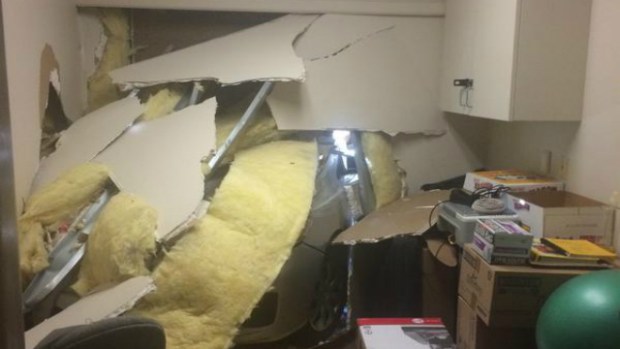
The accident was reported around 2 p.m. at the gym at 135 Wells Ave. The car went right through an exterior wall and into an unoccupied office/storage area.

A view of the crash from inside Boston Sports Clubs.
Photo credit: Courtesy
"I just heard a big bang. And the desk was moving over to one of the rooms, and I saw the wall crashing a little bit in," said Cidalia Aguiar, a physical therapist at the health club. "I'm glad no one was in hte room."
No one was injured, and a passenger in the car actually went inside and started working out as crews worked to remove the vehicle.
The driver was an 82-year-old woman. Police said she hit the gas pedal instead of the brake while attempting to park in a handicap spot.

http://www.necn.com/news/new-england/Car-Slams-Into-Boston-Area-Health-Club-331337292.html


2000 - 2015 TOYOTA COROLLA Vehicle Speed Control Problems 
http://www.arfc.org/complaints/2015/toyota/corolla/vehicle_speed_control/problem.aspx 
http://www.arfc.org/complaints/2014/toyota/corolla/vehicle_speed_control/problem.aspx
http://www.arfc.org/complaints/2013/toyota/corolla/vehicle_speed_control/problem.aspx
http://www.arfc.org/complaints/2012/toyota/corolla/vehicle_speed_control/problem.aspx
http://www.arfc.org/complaints/2011/toyota/corolla/vehicle_speed_control/problem.aspx
http://www.arfc.org/complaints/2010/toyota/corolla/vehicle_speed_control/problem.aspx
http://www.arfc.org/complaints/2009/toyota/corolla/vehicle_speed_control/problem.aspx
http://www.arfc.org/complaints/2008/toyota/corolla/vehicle_speed_control/problem.aspx
http://www.arfc.org/complaints/2007/toyota/corolla/vehicle_speed_control/problem.aspx
http://www.arfc.org/complaints/2006/toyota/corolla/vehicle_speed_control/problem.aspx
http://www.arfc.org/complaints/2005/toyota/corolla/vehicle_speed_control/problem.aspx
http://www.arfc.org/complaints/2004/toyota/corolla/vehicle_speed_control/problem.aspx
http://www.arfc.org/complaints/2003/toyota/corolla/vehicle_speed_control/problem.aspx
http://www.arfc.org/complaints/2002/toyota/corolla/vehicle_speed_control/problem.aspx
http://www.arfc.org/complaints/2001/toyota/corolla/vehicle_speed_control/problem.aspx
http://www.arfc.org/complaints/2000/toyota/corolla/vehicle_speed_control/problem.aspx


JUST MY THOUGHTS....AT THE MOMENT!


Thursday, March 12, 2015

Is that an older TOYOTA crashing into Pudge Brothers Pizza?


Please notice that the article leaps to conclusions and fails to identify the vehicle.
 
We already know that insurance companies and car washes KNOW which vehicles are prone to SUDDEN UNINTENDED ACCELERATION. Is that what happened?


Why does the media fail to report MAKE, MODEL and YEAR of the vehicle?


[HORRIFYING VIDEO ON LINK]

Car Hits Woman, Plows Into Colorado Pizza Parlor


Posted: Mar 12, 2015

(CNN) -- Surveillance video out of Aurora, Colorado shows a car hitting a woman walking by, slamming into a pizza shop, and then hitting the woman walking away.


Pudge Brothers Pizza is used to walk-ins, but the never thought they'd have a drive-through window like this.

The driver of the car reportedly hit the gas instead of the brakes and not only plowed into the restaurant, but also a woman who was walking by.

The woman who ended up on the hood somehow bounced right back. She is expected to be okay.

As for the people in the car, friends say it was all just an accident.

Despite the damage, the Pudge Brothers aren't slowing down or even stopping. The restaurant is staying open, still making pizzas, even without a front window.

The police haven't said is charges will be pressed.


http://www.wibw.com/home/headlines/Car-Hits-Woman-Plows-Into-Colorado-Pizza-Parlor-296134901.html?device=phone&c=y


JUST MY OPINION...AT THE MOMENT

Thursday, December 25, 2014

Media Spin! Bob Scrum SPILLED THE BEANS! The Nation of MINDLESS SHEEP!


Mr. Schrum announced to the world that THEY know which vehicles are prone to

SUDDEN UNINTENDED ACCELERATION


The Corporate Media SPINS the issue by attacking a Car Wash Employee with a LABEL.

NOTICE? 

Why would you call someone 'DOPEY' ? Is that simply to stop you from THINKING?


Bob Schrum, the owner of Flagstop Car Wash, said his employees are provided a list of cars, trucks and SUVs that have been proven prone to unintentional acceleration. In fact, he said the instances have been well documented by the National Car Wash Association.
FROM:

Car Washes KNOW, but Consumers Don't?


Have consumers become such midless sheep that the Corporate Media Pre-Digested Pap makes sense?


Jeep vehicles are WELL-KNOWN in terms of sudden unintended acceleration. Ask ANY car wash business. As a matter of fact, the Car Wash Association has a formal LIST of most likely vehicles to do this. Jeeps often TAKE OFF while inside these car washes. Carol lives on a lake and the humid conditions may well be connected.

There's a BIG hidden secret in the auto industry...it's called ELECTRONIC sudden unintended acceleration! I know...you thought that was just about FLOOR MATS and sticky pedals, or "driver error," right? That's certainly what TOYOTA would like you to continue to believe, BUT DON'T!

These ultra-complex new engines are completely computer driven. Software is needed to control the throttle system. You THINK you are giving gas when you press the accelerator, but you are only SUGGESTING this to the computer. In electronic SUA cases, the throttle software may be glitch-prone and NOT do as you wish.

What happens then? Well, the glitch may (and has for countless SUA victims) result in an OPEN THROTTLE situation. The brakes become INEFFECTIVE in these situations and crashes into storefronts, buildings, and homes have resulted.

What does the automaker say? They hook the vehicles up to the computer and declare NOTHING WRONG! They cite the EDR which has erroneous data and say YOU were NOT braking. They point the finger at you based on AGE, GENDER, MEDICAL history, prescription meds, etc. YOU name it, they've TRIED it!

Get the picture? And you THOUGHT the GM issue was big? Think again! This cover-up of ELECTRONIC SUA is scandalous and very well-orchestrated.

Why even a WHISTLEBLOWER has been legally harassed by Toyota as it does NOT want her Toyota internal docs posted online anymore. The automaker wants to intimidate and SILENCE her. It doesn't want the PUBLIC involved, for goodness sake!


SEE IT: Queens car wash worker plows Lexus into traffic

Dashcam footage shows the 2009 Lexus IS250 first being slowly driven through the cleaning machines in Long Island City, reports Jalopnik.com, but then suddenly lurch forward. The driver is heard swearing in Spanish as the car narrowly avoids hitting another customer and speeds across the road. It sideswipes one vehicle before finally coming to a stop on the opposite sidewalk.

NEW YORK DAILY NEWS
Wednesday, December 24, 2014
  
A dopey Queens car wash employee mistakenly slammed his foot onto a car's gas pedal instead of the brake — and ended up plowing into four lanes of traffic.

Dramatic dashboard camera footage shows the 2009 Lexus IS250 first being slowly driven through the cleaning machines in Long Island City, reports Jalopnik.com.

As the vehicle emerges from the garage, however, it suddenly lurches forward.


The driver is heard swearing in Spanish as the car narrowly avoids hitting another customer and speeds across the road.

It sideswipes one vehicle before finally coming to a stop on the opposite sidewalk.


He uploaded the footage of the Nov. 7 crash to YouTube on Sunday and it's since been viewed more than 60,000 times. Mike also posted other videos of the damage online.


Charlene Blake
Jeep vehicles are WELL-KNOWN in terms of sudden unintended acceleration. Ask ANY car wash business. As a matter of fact, the Car Wash Association has a formal LIST of most likely vehicles to do this. Jeeps often TAKE OFF while inside these car washes. Carol lives on a lake and the humid conditions may well be connected.

There's a BIG hidden secret in the auto industry...it's called ELECTRONIC sudden unintended acceleration! I know...you thought that was just about FLOOR MATS and sticky pedals, or "driver error," right? That's certainly what TOYOTA would like you to continue to believe, BUT DON'T!

These ultra-complex new engines are completely computer driven. Software is needed to control the throttle system. You THINK you are giving gas when you press the accelerator, but you are only SUGGESTING this to the computer. In electronic SUA cases, the throttle software may be glitch-prone and NOT do as you wish.

What happens then? Well, the glitch may (and has for countless SUA victims) result in an OPEN THROTTLE situation. The brakes become INEFFECTIVE in these situations and crashes into storefronts, buildings, and homes have resulted.

What does the automaker say? They hook the vehicles up to the computer and declare NOTHING WRONG! They cite the EDR which has erroneous data and say YOU were NOT braking. They point the finger at you based on AGE, GENDER, MEDICAL history, prescription meds, etc. YOU name it, they've TRIED it!

Get the picture? And you THOUGHT the GM issue was big? Think again! This cover-up of ELECTRONIC SUA is scandalous and very well-orchestrated.

Why even a WHISTLEBLOWER has been legally harassed by Toyota as it does NOT want her Toyota internal docs posted online anymore. The automaker wants to intimidate and SILENCE her. It doesn't want the PUBLIC involved, for goodness sake!
Charlene Blake
Jeep vehicles are WELL-KNOWN in terms of sudden unintended acceleration. Ask ANY car wash business. As a matter of fact, the Car Wash Association has a formal LIST of most likely vehicles to do this. Jeeps often TAKE OFF while inside these car washes. Carol lives on a lake and the humid conditions may well be connected.

There's a BIG hidden secret in the auto industry...it's called ELECTRONIC sudden unintended acceleration! I know...you thought that was just about FLOOR MATS and sticky pedals, or "driver error," right? That's certainly what TOYOTA would like you to continue to believe, BUT DON'T!

These ultra-complex new engines are completely computer driven. Software is needed to control the throttle system. You THINK you are giving gas when you press the accelerator, but you are only SUGGESTING this to the computer. In electronic SUA cases, the throttle software may be glitch-prone and NOT do as you wish.

What happens then? Well, the glitch may (and has for countless SUA victims) result in an OPEN THROTTLE situation. The brakes become INEFFECTIVE in these situations and crashes into storefronts, buildings, and homes have resulted.

What does the automaker say? They hook the vehicles up to the computer and declare NOTHING WRONG! They cite the EDR which has erroneous data and say YOU were NOT braking. They point the finger at you based on AGE, GENDER, MEDICAL history, prescription meds, etc. YOU name it, they've TRIED it!

Get the picture? And you THOUGHT the GM issue was big? Think again! This cover-up of ELECTRONIC SUA is scandalous and very well-orchestrated.

Why even a WHISTLEBLOWER has been legally harassed by Toyota as it does NOT want her Toyota internal docs posted online anymore. The automaker wants to intimidate and SILENCE her. It doesn't want the PUBLIC involved, for goodness sa

Azar Hadi

Wow, Lexus took off by itself, This is nothing new, Toyota and Lexus are known to take off on their own with no input from the driver. It actually happened to me in 2005, while sitting at the red light my 2004 ES 330 Lexus took off on its own. I am very lucky that I did not kill anyone because I probably would have been sitting in prison today, but the Lexus managed crushing my legs and totaling two cars and injured another person. Even though Toyota/Lexus have paid over $5 billion in lawsuits, repairs, fine and penalties, but these out of control cars with electronic software defects have not been fixed yet. What is it going to take for Toyota to stop the lies and cover up, injuring and murdering people all over the world.

Parris Boyd


By all means let's pander to the murderous interests of the auto industry by not mentioning the issue of electronically-induced unintended acceleration or the fact that the national carwash association has been keeping records of vehicles prone to suddenly speed out of control. And make DOUBLE sure not to reveal what the carwash employee said happened. Maybe Toyota is trying to take the lead away from Jeep when it comes to notoriety for these kinds of events at carwashes. I've been blogging about the issue - search "Beware of Toyota. Their next victim may be YOU..."


Charlene Blake

BTW, why is it that police always say the drivers "hit the gas pedal instead of the brakes?" It also to sounds like a directive from a superior! The phrase is repeated over and over to the point of being statistically impossible! Are we, the public, being asked to accept this statistical impossibility? Are police "encouraged" to find fault in the driver? After all, sooooo many of these crashes are reduced to "pedal confusion" or "mistaking the gass pedal for the brake" even when the drivers themselves indicate this is NOT the case! Wow! Smacks of a cover-up of auto industry-wide proportion with Toyota and Lexus leading the way, IMO! I'm far from alone in that sentiment!


The SPIN:

Car Wash Employee Forgets What Pedals Do What, Totals Lexus


Friday, November 7, 2014

TAKATA: More Japanese Lies! More Phony Apologies! NO CONSUMER PROTECTION


In an accident, a TAKATA AIRBAG can kill you!


Hien Tran

WORTH READING:
It Looked Like a Stabbing, but Takata Airbag Was the Killer


You stand a better chance of BEING KILLED BY YOUR VEHICLE than contracting EBOLA!


[VIDEO AND ADDITIONAL INFORMATION ON LINKS]

Takata Saw and Hid Risk in Airbags in 2004, Former Workers Say


By HIROKO TABUCHI

NOV. 6, 2014


Inside a Takata showroom in Tokyo on Thursday.Credit Shizuo Kambayashi/Associated Press

Alarmed by a report a decade ago that one of its airbags had ruptured and spewed metal debris at a driver in Alabama, the Japanese manufacturer Takata secretly conducted tests on 50 airbags it retrieved from scrapyards, according to two former employees involved in the tests, one of whom was a senior member of its testing lab.

The steel inflaters in two of the airbags cracked during the tests, a condition that can lead to rupture, the former employees said. The result was so startling that engineers began designing possible fixes in preparation for a recall, the former employees said.

But instead of alerting federal safety regulators to the possible danger, Takata executives discounted the results and ordered the lab technicians to delete the testing data from their computers and dispose of the airbag inflaters in the trash, they said.

Related Coverage


The secret tests, which have not been previously disclosed, were performed after normal work hours and on weekends and holidays during summer 2004 at Takata’s American headquarters in Auburn Hills, Mich., the former employees said.


That was four years before Takata, in regulatory filings, says that it first tested the problematic airbags. The results from the later tests led to the first recall over airbag rupture risks in November 2008.
 
Today, 11 automakers have recalled more than 14 million vehicles worldwide because of the rupture risks. Four deaths have been tied to the defect, which can cause the airbag’s steel canister to crack and explode into pieces when the device deploys in a crash. The airbags are inflated by means of a propellant, based on a common compound used in fertilizer, that is encased in the canister, which together are known as the inflater.
 
Complaints received by regulators about various automakers blame Takata airbags for at least 139 injuries, including 37 people who reported airbags that ruptured or spewed metal or chemicals.

Takata is one of the world’s largest suppliers of airbags, accounting for about one-fifth of the global market.

The former Takata employees, who between them had four decades of experience at the company, spoke on the condition of anonymity because of continuing ties to Takata. They said they were speaking up because of concerns that their former employer was not being forthright about the defective airbags.

“All the testing was hush-hush,” one former employee said. “Then one day, it was, ‘Pack it all up, shut the whole thing down.’ It was not standard procedure.”

A spokesman for Takata, Alby Berman, declined to comment on the disclosure of the testing.


OPEN Graphic

Graphic: Takata Airbag Recalls: Affected Vehicles

In the past, a spokesman for Honda said it was assured by Takata in 2004 that the episode in Alabama, which involved a 2002 Honda Accord, was an anomaly.
 
On Thursday, a Honda spokesman, Chris Martin, said in a statement, “This is a serious allegation about actions taken by Takata. It is our intention to determine whether anyone at Honda has any evidence that these claims are credible.”
 
Separately, materials reviewed by The New York Times cast doubt on Takata’s claims to federal regulators that it had resolved manufacturing and quality control problems with its airbag propellant in the early 2000s. Takata has said, in regulatory filings, that by November 2002, it had ensured that there was “proper handling” of the propellants at a factory in Moses Lake, Wash., where it had traced problems with the rupturing airbags.
 
But as recently as April 2009, Takata engineers scrambled to repair a flaw in a machine at another factory in Monclova, Mexico, that made the airbag propellant more volatile, according to materials from a company presentation given that year.
 
Two former quality-control managers at the company’s main distribution center in Texas, moreover, described in interviews a series of quality problems that arose as the company raced to meet a surge in demand for its airbags.
 
The Times reviewed internal Takata documents, emails, photos, videos and regulatory filings. Emails show workers raising concerns that airbag units were being delivered to automakers wet or damaged because of transportation mishaps. Closed-circuit television footage shows forklifts dropping stacks of the airbag units.

Danger in the Steering Wheel

Eleven carmakers, including Toyota, Honda, Nissan, Mazda, Ford, Chrysler and BMW, have recalled more than 14 million cars worldwide, including more than 11 million in the United States, to fix a defect in airbags made by the Takata Corporation. Some have ruptured, sending metal fragments into the car. At least four deaths and more than 30 injuries have been linked to the problem.


INFLATER/CANISTER
PROPELLANT
Cutaway view
INFLATER/CANISTER
STEERING WHEEL
AIRBAG
HOW IT WORKS:
Inside the canister, pellets of a propellant based on ammonia nitrate, a common compound used in fertilizer, are ignited and generate the nitrogen gas that inflates the airbag in a fraction of a second.
THE PROBLEM:
Takata has said manufacturing problems, together with exposure to moisture in cars in humid regions, can cause the propellant to degrade. This can make the propellant burn too strongly when the airbag is deployed, rupturing the inflater and sending metal fragments into the car’s interior and injuring the driver or passengers.


The dropped airbags were not always properly inspected for damage, especially in the early 2000s, according to the former quality-control managers who said they later pushed for stricter controls at the facility. The two spoke on the condition of anonymity because of fear of retribution.
 
Takata is facing renewed scrutiny for its handling of the defective airbags, which The Times reported in September had been the subject of a short-lived investigation by the National Highway Traffic Safety Administration that was closed in 2010 without any enforcement action. The federal agency has now reopened its investigation into Takata, a House committee has asked the Government Accountability Office to conduct its own investigation, and federal prosecutors in Manhattan have also taken an interest.
 
“Claims such as these have raised additional concerns about Takata’s handling of airbag issues and are one of the reasons we’re compelling them to produce documents and answer questions, under oath,” the highway safety agency said.
 
The Takata spokesman, Mr. Berman, said, "Takata will continue to fully cooperate with the government investigation as we also support the needs of our customers.”
 
In Tokyo on Thursday, the company’s chief financial officer apologized broadly for the problems caused by the defective airbags, while the company announced that legal uncertainty and rising recall costs would result in a larger-than-expected quarterly loss.
 
“We don’t know at this point how things will play out,” said Yoichiro Nomura, the chief financial officer.
Photo


A Takata distribution center in Texas. Former employees say quality problems arose as the company tried to fill demand for airbags.

The most recent death linked to the airbags involved an accident in a suburban Los Angeles parking lot last year. Hai Ming Xu, 47, was killed by an airbag that deployed explosively in his 2002 Acura TL.
 
The police in Alhambra, Calif., initially treated the case as a homicide because of the nature of his injuries, before an autopsy suggested the wounds were caused by the airbag, according to a Los Angeles County Coroner’s report. The report concluded that extensive lacerations on Mr. Xu’s face came from “a metallic portion” of the airbag inflater that “hit the deceased on the face as it deployed.” The report also said tears had been discovered in the airbag.
 
The first known rupture of a Takata airbag occurred in Alabama in 2004, according to Honda. The inflater that ruptured in the Accord and injured the car’s driver that year “looked like it had exploded, and had a hole punched out of the side of the canister,” said one of the former Takata lab employees who examined the airbag.
 
Takata and Honda have declined to disclose further details of that accident, which ended in a settlement between the automaker and the driver, according to Honda.
 
Behind the scenes, however, the former Takata lab employees said, the manufacturer wanted to know more. The tests on the 50 airbags were supervised by Al Bernat, then Takata’s vice president for engineering, they said, and were unknown to all but a small group of people, that included lab technicians, fabricators and engineers. The employees said that they did not know under whose authority Mr. Bernat was operating.
 
The tests’ results worried the technicians: Two of the airbag inflaters Takata had retrieved from the junkyards showed cracks and the start of “rapid disassembly” during the tests, Takata’s preferred term for explosion, according to the two people. They said Takata engineers at the time theorized that a problem with the welding of the inflater’s canister, intended to hold the airbag’s explosives, made its structure vulnerable to splitting and rupturing. The two people said engineers designed prototypes for possible fixes, including a second canister to strengthen the unit.

Continue reading the main story
OPEN Document

Document: Takata Internal Documents


But after three months, they said, the testing was ordered halted. The lab employees were also instructed that all data, including video and computer backups, be destroyed. Inflaters and prototypes of fixes were also to be disassembled and disposed of in a scrap-metal Dumpster, the senior lab employee said. No explanation was offered, the employee said, though the order was not considered surprising given the secret nature of the testing.
 
As for the two problematic airbag inflaters, Mr. Bernat, the supervisor, told people at the time that they were not significant because they had been retrieved from cars with cracked windshields and were likely “corrupted by weather,” according to the two former employees.
 
Reached at his home in Rochester Hills, Mich., Mr. Bernat declined to comment and referred questions to his former employer. Takata also declined to comment.
 
As automakers have recalled the airbags in recent years, Takata has suggested that weather plays a significant role in making its airbags prone to rupture. Takata said humidity could hurt the stability of the airbag’s explosives.
 
In explaining the defect, the company has also pointed to manufacturing flaws involving the airbags’ explosive, or propellant, including improper exposure to moisture, and problems with a machine that presses propellant powder into tablets. Takata has said both troubles were corrected in the early 2000s.
 
But the internal documents suggest Takata engineers scrambled as late as 2009 to repair a machine at its Monclova plant that pressed explosive propellant powder into pellets after “inflaters tested from multiple propellant lots showed aggressive ballistics,” according to the internal presentation in June 2009.
 
 
Two former quality-control managers at the company’s main distribution center in Texas, moreover, described in interviews a series of quality problems that arose as the company raced to meet a surge in demand for its airbags.
The Times reviewed internal Takata documents, emails, photos, videos and regulatory filings. Emails show workers raising concerns that airbag units were being delivered to automakers wet or damaged because of transportation mishaps. Closed-circuit television footage shows forklifts dropping stacks of the airbag units.
Continue reading the main story

Danger in the Steering Wheel

Eleven carmakers, including Toyota, Honda, Nissan, Mazda, Ford, Chrysler and BMW, have recalled more than 14 million cars worldwide, including more than 11 million in the United States, to fix a defect in airbags made by the Takata Corporation. Some have ruptured, sending metal fragments into the car. At least four deaths and more than 30 injuries have been linked to the problem.


INFLATER/CANISTER
PROPELLANT
Cutaway view
INFLATER/CANISTER
STEERING WHEEL
AIRBAG
HOW IT WORKS:
Inside the canister, pellets of a propellant based on ammonia nitrate, a common compound used in fertilizer, are ignited and generate the nitrogen gas that inflates the airbag in a fraction of a second.
THE PROBLEM:
Takata has said manufacturing problems, together with exposure to moisture in cars in humid regions, can cause the propellant to degrade. This can make the propellant burn too strongly when the airbag is deployed, rupturing the inflater and sending metal fragments into the car’s interior and injuring the driver or passengers.


The dropped airbags were not always properly inspected for damage, especially in the early 2000s, according to the former quality-control managers who said they later pushed for stricter controls at the facility. The two spoke on the condition of anonymity because of fear of retribution.
Takata is facing renewed scrutiny for its handling of the defective airbags, which The Times reported in September had been the subject of a short-lived investigation by the National Highway Traffic Safety Administration that was closed in 2010 without any enforcement action. The federal agency has now reopened its investigation into Takata, a House committee has asked the Government Accountability Office to conduct its own investigation, and federal prosecutors in Manhattan have also taken an interest.
“Claims such as these have raised additional concerns about Takata’s handling of airbag issues and are one of the reasons we’re compelling them to produce documents and answer questions, under oath,” the highway safety agency said.
The Takata spokesman, Mr. Berman, said, "Takata will continue to fully cooperate with the government investigation as we also support the needs of our customers.”
In Tokyo on Thursday, the company’s chief financial officer apologized broadly for the problems caused by the defective airbags, while the company announced that legal uncertainty and rising recall costs would result in a larger-than-expected quarterly loss.
“We don’t know at this point how things will play out,” said Yoichiro Nomura, the chief financial officer.
Photo


A Takata distribution center in Texas. Former employees say quality problems arose as the company tried to fill demand for airbags.

The most recent death linked to the airbags involved an accident in a suburban Los Angeles parking lot last year. Hai Ming Xu, 47, was killed by an airbag that deployed explosively in his 2002 Acura TL.
The police in Alhambra, Calif., initially treated the case as a homicide because of the nature of his injuries, before an autopsy suggested the wounds were caused by the airbag, according to a Los Angeles County Coroner’s report. The report concluded that extensive lacerations on Mr. Xu’s face came from “a metallic portion” of the airbag inflater that “hit the deceased on the face as it deployed.” The report also said tears had been discovered in the airbag.
The first known rupture of a Takata airbag occurred in Alabama in 2004, according to Honda. The inflater that ruptured in the Accord and injured the car’s driver that year “looked like it had exploded, and had a hole punched out of the side of the canister,” said one of the former Takata lab employees who examined the airbag.
Takata and Honda have declined to disclose further details of that accident, which ended in a settlement between the automaker and the driver, according to Honda.
 
Behind the scenes, however, the former Takata lab employees said, the manufacturer wanted to know more. The tests on the 50 airbags were supervised by Al Bernat, then Takata’s vice president for engineering, they said, and were unknown to all but a small group of people, that included lab technicians, fabricators and engineers. The employees said that they did not know under whose authority Mr. Bernat was operating.
 
The tests’ results worried the technicians: Two of the airbag inflaters Takata had retrieved from the junkyards showed cracks and the start of “rapid disassembly” during the tests, Takata’s preferred term for explosion, according to the two people. They said Takata engineers at the time theorized that a problem with the welding of the inflater’s canister, intended to hold the airbag’s explosives, made its structure vulnerable to splitting and rupturing. The two people said engineers designed prototypes for possible fixes, including a second canister to strengthen the unit.
OPEN Document

Document: Takata Internal Documents


But after three months, they said, the testing was ordered halted. The lab employees were also instructed that all data, including video and computer backups, be destroyed. Inflaters and prototypes of fixes were also to be disassembled and disposed of in a scrap-metal Dumpster, the senior lab employee said. No explanation was offered, the employee said, though the order was not considered surprising given the secret nature of the testing.
 
As for the two problematic airbag inflaters, Mr. Bernat, the supervisor, told people at the time that they were not significant because they had been retrieved from cars with cracked windshields and were likely “corrupted by weather,” according to the two former employees.
 
Reached at his home in Rochester Hills, Mich., Mr. Bernat declined to comment and referred questions to his former employer. Takata also declined to comment.
 
As automakers have recalled the airbags in recent years, Takata has suggested that weather plays a significant role in making its airbags prone to rupture. Takata said humidity could hurt the stability of the airbag’s explosives.
 
In explaining the defect, the company has also pointed to manufacturing flaws involving the airbags’ explosive, or propellant, including improper exposure to moisture, and problems with a machine that presses propellant powder into tablets. Takata has said both troubles were corrected in the early 2000s.
 
But the internal documents suggest Takata engineers scrambled as late as 2009 to repair a machine at its Monclova plant that pressed explosive propellant powder into pellets after “inflaters tested from multiple propellant lots showed aggressive ballistics,” according to the internal presentation in June 2009.
Photo


Yoichiro Nomura, Takata’s chief financial officer, apologized on Thursday for the problems caused by the defective airbags.Credit Thomas Peter/Reuters

The internal materials and interviews with the former quality-control managers also suggest that quality control problems at......
 

PLEASE READ THE REST OF THE ARTICLE AND VIEW THE VIDEO ON THIS LINK: 

http://www.nytimes.com/2014/11/07/business/airbag-maker-takata-is-said-to-have-conducted-secret-tests.html?hp&action=click&pgtype=Homepage&module=first-column-region&region=top-news&WT.nav=top-news&_r=2


Airbag recall update: New York Times reports manufacturer saw and hid risk in 2004, ex-workers say


Air Bag Recall
This undated photo provided by the Insurance Institute for Highway Safety shows a crash test of a 2002 Honda CR-V, one of the models subject to a recall to repair faulty air bags. (via The Associated Press)


The New York Times, in a story posted online Thursday evening, reports that the manufacturer in the middle of a massive recall of dangerous airbags secretly conducted tests that revealed the problem 10 years ago, according to two former employees involved in the tests. The airbags have ruptured in some cases, sending shrapnel into the passenger compartments of cars. The 2004 tests revealed cracking of the steel inflaters, which could lead to rupture, the former employees told the Times. But instead of alerting the National Highway Traffic Safety Administration, executives of the manufacturer, Takata Corp., ordered the testing data deleted, the Times reports the former employees said. The Times says:

The secret tests, which have not been previously disclosed, were undertaken after normal work hours and on weekends and holidays during summer 2004 at Takata's American headquarters in Auburn Hills, Mich., the former employees said.

That was four years before Takata, in regulatory filings, says that it first tested the problematic airbags. The results from the later tests led to the first recall over airbag rupture risks in November 2008.

The problems with the airbags have led to the recall of nearly 8 million airbags in the United States, involving more than a dozen manufacturers. Takata makes about 22 percent of the airbags used in U.S. cars.

Read the New York Times article (metered model).

The Associated Press reported last week:

U.S. safety regulators are ordering Japanese auto supplier Takata Corp. to provide more information about air bags that can explode and shoot shrapnel toward drivers and passengers.

The order sent Thursday makes 36 separate requests for information on production mistakes, lawsuit settlements and reports of deaths or injuries that the Tokyo-based company has received. The National Highway Traffic Safety Administration also wants to know how many replacement parts Takata can make each day and what it has discussed with automakers and competitors.


http://www.oregonlive.com/business/index.ssf/2014/11/airbag_recall_update_new_york.html