Showing posts with label war against Whistleblowers. Show all posts
Showing posts with label war against Whistleblowers. Show all posts
Thursday, January 4, 2018


Saturday, December 2, 2017
Is SCOTUS poised to limit SEC whistleblowers?
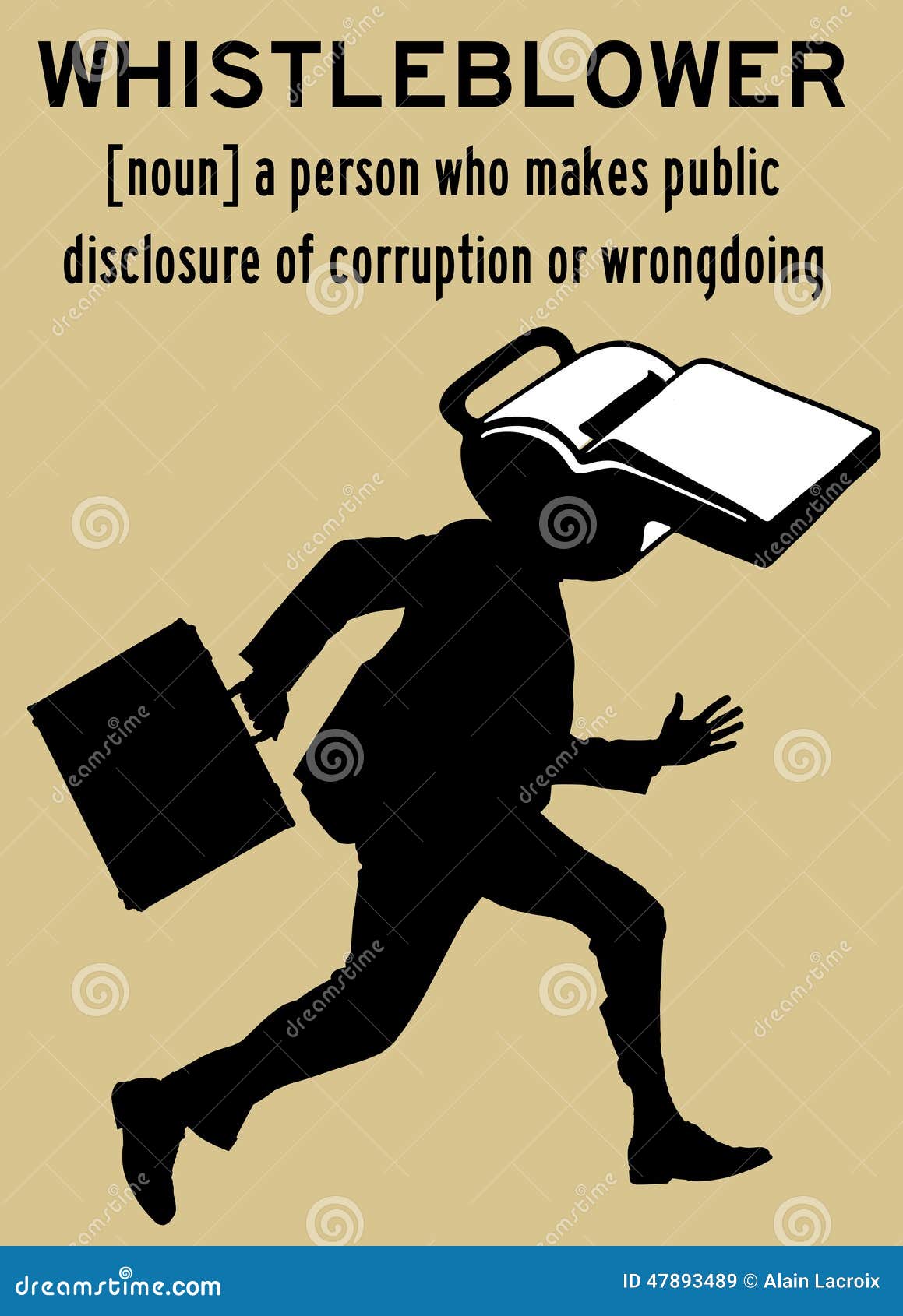
Is SCOTUS poised to limit SEC whistleblowers?
In oral arguments Tuesday, the U.S. Supreme Court seemed poised to bar whistleblowers from suing companies for illegal retaliation under the Dodd-Frank Act if they’ve only voiced their complaints about the alleged wrongdoing internally, and not to the Securities and Exchange Commission (SEC).
The arguments sought to clarify the definition of a whistleblower under the law as argued in the case of Paul Somers, a vice president and portfolio manager of Digital Realty in Singapore. He claims he was fired in 2014 after telling senior executives in San Francisco about potential financial misconduct in a company project in Hong Kong.
Mr. Somers sued Digital Realty, claiming the company violated whistleblower protections provided under the Dodd-Frank Act of 2010 when it fired him. The Act was introduced in the wake of the 2008 Wall Street collapse and prohibited employers from lashing out at anyone who “made disclosures” of potential violations and other wrongdoing.
The Dodd-Frank Act also defines a whistleblower as someone who tips off the SEC, and that is the narrow interpretation that the high court sounds willing to support.
A final ruling in the case is expected early next year. If the Supreme Court does bar internal whistleblowers from the law’s protections, it would reverse the decision of two circuit courts that had decided the case in Mr. Somers’ favor.
Digital Realty has maintained in its appeals of the case that the federal whistleblower law protects only those who report potential securities violations to the SEC.
Supreme Court Justice Neil Gorsuch believes that U.S. courts should interpret the laws strictly according to their text instead of on their broader intent, and he expressed his frustration at the lower courts’ verdicts for Mr. Somers in Thursday’s hearing.
“I’m just stuck on the plain language here. How much clearer could Congress have been?” Gorsuch asked a lawyer for the whistleblower.
Supreme Court Justice Elena Kagan acknowledged the loophole afforded by the law’s language and structure, calling it “odd.”
“It’s peculiar. It’s probably not what Congress meant. But what makes it the kind of thing where we can just ignore it?” she said. She also agreed that a literal interpretation of the law could produce misguided, conflicting results for whistleblowers.
* * *
Are you aware of fraud being committed against the federal government, or a state government? If so, you may be protected and rewarded for doing the right thing by reporting the fraud. If you have any questions about whether you qualify as a whistleblower, please contact an attorney at Beasley Allen for a free and confidential evaluation of your claim. There is a contact form on this website, or you may email one of the lawyers on our whistleblower litigation team: Archie Grubb, Larry Golston, Lance Gould or Andrew Brashier.
Sources:
Los Angeles Times
New York Times
RightingInjustice
Los Angeles Times
New York Times
RightingInjustice
Wednesday, September 6, 2017
RSN: John Kiriakou | The FBI's Spy and Whistleblower Shell Game

05 September 17
FOCUS: John Kiriakou | The FBI's Spy and Whistleblower Shell Game

John Kiriakou, Reader Supported News
Kiriakou writes: "The FBI will never apologize for ruining the lives of so many innocent people over so many decades."
READ MORE
John Kiriakou, Reader Supported News
Kiriakou writes: "The FBI will never apologize for ruining the lives of so many innocent people over so many decades."
READ MORE
Contribute to RSN
Update My Monthly Donation
Saturday, July 15, 2017
RSN: A Whistleblower Plays by the Rules at CIA, and Finds 'Nothing Gets Done'
14 July 17 PM
Sure, I'll make a donation!
|
A Whistleblower Plays by the Rules at CIA, and Finds 'Nothing Gets Done'
Tim Johnson, McClatchy DC
Johnson writes: "Reidy, 46, anguishes over his charges, angry at the years-long delay in resolving his complaints but also wary of crossing a line and revealing anything classified beyond his allegations of a 'catastrophic intelligence failure' overseas."
READ MORE

A worker slides a mop over the floor at the entrance to the Central Intelligence Agency in this 2005 photo. (photo: J. Scott Applewhite/AP)
 hen wayward contract employees at the CIA began pilfering snacks from vending machines back in 2013, the Office of the Inspector General sprang into action. Surveillance cameras went up, the culprits were nabbed, and all lost their jobs.
From start to finish, the case of the $3,314.40 in stolen snacks lasted two months.
When more serious allegations of wrongdoing arise at the CIA, though, inspectors may be far less speedy, especially when their findings could embarrass the Langley, Va., spy agency.
In one notable case, that of John Reidy, a contractor whose resume shows that he worked with spies deep inside Iran’s mullah-run regime, charges of wrongdoing have sat idle in the hands of CIA inspectors. Details of Reidy’s charges remain highly classified. The case is now seven years old, and seems only to gather dust.
Reidy, 46, anguishes over his charges, angry at the years-long delay in resolving his complaints but also wary of crossing a line and revealing anything classified beyond his allegations of a “catastrophic intelligence failure” overseas.
“I cannot talk about the 2007 incident. It is classified. I risk incarceration. I have a family,” Reidy wrote in an email before meeting with a reporter.
But in addition to his whistleblower case, Reidy presses a larger issue, one that is pertinent to the era of President Donald Trump and his persistent charges that sensitive leaks cripple his six-month-old administration. Leaks may grow worse if intelligence agencies don’t learn how to channel dissent and protect those who offer it in a constructive spirit.
“I played by the rules,” Reidy said. “They are broken. … The public has to realize that whistleblowers [like me] can follow all the rules and nothing gets done.” In frustration, Reidy last month sent a 90-page letter and documentation about his case to the chairman of the Senate’s powerful Judiciary Committee, lambasting its lack of resolution.
“They have enough time to look into who is stealing candy from a vending machine but they can’t look into billion-dollar contract fraud?” Reidy asked in an interview.
The CIA refused to comment on Reidy’s case.
“As a general matter, we do not comment on ongoing litigation,” said spokesperson Heather Fritz Horniak.
Even if CIA officials have a far different version of events, perhaps contradicting some of Reidy’s allegations, the secrecy with which the agency operates impedes them from speaking out. CIA Director Mike Pompeo said in a speech Tuesday night that his agency finds it difficult to “push back” against misleading or wrong news reports.
“At CIA we’re often limited in what we can say, given the need to protect classified information. In many cases we can’t set the record straight because doing so could harm national security,” Pompeo told a gathering of the Intelligence and National Security Alliance, a nonpartisan group in support of the intelligence community.
It took a lawsuit to release the information about the theft from CIA vending machines. The agency released a declassified report about the case as part of hundreds of documents obtained through a Freedom of Information Act lawsuit filed in 2015 by BuzzFeed News.
Pilfering from the vending machines began in 2012, and by March 2013, inspectors began looking into the thefts, discovering that the culprits were unplugging a cable linking the machines to a payment system, FreedomPay, letting them obtain snacks at no charge.
"Video footage recovered from the surveillance cameras captured numerous perpetrators engaged in the FreedomPay theft scheme, all of whom were readily identifiable as Agency contract personnel," the inspectors’ report says.
The vending machine thievery wrapped up neatly. But Reidy still waits for resolution of the seemingly far more significant issues he has raised.
Reidy is more straight arrow than troublemaker. A native of Worcester, Massachusetts, he was educated in Catholic schools, then attended St. Anselm College in New Hampshire and obtained a law degree from the University of San Francisco. Law degree in hand, he dreamed of joining the FBI.
After a stint in the Army, where he worked in a criminal investigations division, Reidy applied for jobs at both the FBI and the CIA. The CIA called more quickly, and Reidy joined in 2003, leaving six months later for a private contractor that dealt in security policy.
Reidy formed his own company in 2006, Form III Defense Solutions, and worked as a subcontractor, piggybacking on contracts won by bigger companies for intelligence collection, tactical targeting guidance and other matters, usually with the CIA.
A resume he gave to McClatchy shows that from 2006 to 2009, Reidy developed an “Iran Study Guide” and worked on “humint” — or human intelligence. Reidy said intelligence community secrecy rules bar him from naming the country where he handled a “complex agency operation,” but he does say he studied some Farsi language. He hasn’t done any classified work since 2012.
Two different issues led Reidy in 2010 to submit a complaint to the CIA’s internal watchdog, the Inspector General’s Office. One issue involved what Reidy alleged was fraud between elements within the CIA and contractors. Another issue involved what he called a “massive” and “catastrophic” intelligence failure due to a bungled foreign operation, according to his 2014 appeal to an office under the director of national intelligence.
Reidy said he sent the Inspector General’s Office 80 emails and 56 documents to back up his complaints.
Legal protections for whistleblowers in the intelligence community grew stronger in 2012, when then-President Barack Obama signed a presidential directive protecting people from various forms of retaliation, including demotions, termination or reassignment. Reidy took heart at the move.
“He was the poster child of the person the system is supposed to work for,” said Kel McClanahan, a Maryland attorney who represented Reidy until 2016.
Despite the Obama directive, experts working in the national security arena say employees still confront obstacles. Employees’ lawyers have no access to classified documents around which a case may rest. Classified matters cannot even be discussed between client and attorney. The CIA sees its Inspector General’s Office as impartial and makes it difficult for employees who hire attorneys, although Reidy did so for years.
Often, CIA employees or contractors find their careers put on hold.
“You will likely find yourself a pariah because nobody likes someone who rocks the boat,” said Bradley P. Moss, a Washington lawyer who handles some national security cases involving whistleblowers.
Employees disgruntled over fraud, abuse or other matters cannot easily look to obtain redress from outside the intelligence community.
“There’s no outside review of whistleblower cases in the intelligence community,” said Kathleen McClellan, deputy director at Expose Facts, a whistleblower advocacy group. “If you’re an employee who sees something egregious, they don’t have to do anything with it. They can flush it down the toilet for all you know.”
As Reidy found out, an internal investigation can drag on without time limit.
“They can go on for years. They can go on for decades,” said Jesselyn Radack, a former Justice Department ethics attorney who also works at Expose Facts.
Reidy has also told his story to staffers with security clearances for the House and Senate intelligence committees, and seen his case bounce between the CIA inspector general and the inspector general for the Directorate of National Intelligence.
Desperate for an outcome, Reidy increasingly warns that the failure of whistleblowing channels may lead disgruntled employees and contractors to go public with secrets, posing a danger to national security.
The CIA and the National Security Agency have been hit with numerous cases of leaks since the ground-shaking case of Edward Snowden, the NSA contractor who in 2013 leaked to the media details of extensive surveillance, including of tens of millions of Americans.
This year, another NSA contractor, Harold T. Martin, was indicted for amassing secret stolen documents and data at his Maryland home over a 20-year period. He awaits trial.
Prosecutors in early June charged another NSA contractor, 25-year-old Reality Winner, with sending a classified report about Russia’s meddling in the 2016 elections to The Intercept, a national security news outlet. She could face 10 years in prison.
For its part, WikiLeaks, the anti-secrecy group, began publishing in March a series of cyber-espionage documents that it claimed were taken from the CIA’s elite hacking unit. Speculation rose that a CIA contractor stole the documents and leaked them.
Seeking to spur action in his case, Reidy last month fired off letters to the chairman and ranking member of the Senate Judiciary Committee, warning that working through the CIA Inspector General’s Office has been a dead end.
“They just delay, delay, and delay and hope the problem goes away,” Reidy said in a June 5 letter to Sen. Charles Grassley, the Judiciary panel’s chairman.
Reidy said his own example bodes poorly for those who want to report fraud or abuse.
“If you are contemplating whistleblowing … you’re going to sit there and say, ‘If I go through that system, it will not end well for me. I’m going to lose my career and I’m going to be financially devastated,’” Reidy said.
Contribute to RSN
Update My Monthly Donation
Saturday, June 10, 2017
RSN: Edward Snowden | On the Trump Administration's Recent Arrest of an Alleged Journalistic Source
09 June 17
Sure, I'll make a donation!
The People's Summit: From Resistance to Power
This weekend, Reader Supported News will be bringing you coverage of the People’s Summit in Chicago.
SEE MORE
This weekend, Reader Supported News will be bringing you coverage of the People’s Summit in Chicago.
SEE MORE
FOCUS: Edward Snowden | On the Trump Administration's Recent Arrest of an Alleged Journalistic Source

Edward Snowden, Freedom of the Press Foundation
Snowden writes: "No matter one's opinions on the propriety of the charges against her, we should all agree Reality Winner should be released on bail pending trial."
READ MORE
Edward Snowden, Freedom of the Press Foundation
Snowden writes: "No matter one's opinions on the propriety of the charges against her, we should all agree Reality Winner should be released on bail pending trial."
READ MORE
Contribute to RSN
Update My Monthly Donation
Thursday, June 8, 2017
RSN: John Kiriakou | What Reality Winner Did Was Heroic
Sure, I'll make a donation!
FOCUS: John Kiriakou | What Reality Winner Did Was Heroic
John Kiriakou, Reader Supported News
Kiriakou writes: "The arrest this week of NSA contractor Reality Winner on Espionage Act charges of providing national defense information to The Intercept is the clearest evidence to date that President Donald Trump intends to continue former president Barack Obama’s war on whistleblowers and transparency."
READ MORE
John Kiriakou, Reader Supported News
Kiriakou writes: "The arrest this week of NSA contractor Reality Winner on Espionage Act charges of providing national defense information to The Intercept is the clearest evidence to date that President Donald Trump intends to continue former president Barack Obama’s war on whistleblowers and transparency."
READ MORE
Contribute to RSN
Sunday, May 21, 2017
RSN: Robert Reich | 5 More Ways Trump Has Obstructed Justice
Sure, I'll make a donation!
Robert Reich | 5 More Ways Trump Has Obstructed Justice

Robert Reich, Robert Reich's Facebook Page
Reich writes: "To help you keep count, here are the 5 evidences of Trump's obstruction of justice - his commitment to stopping FBI Director James Comey from investigating Trump's and Trump aides' dealings with Russia to rig the 2016 election."
READ MORE
Robert Reich, Robert Reich's Facebook Page
Reich writes: "To help you keep count, here are the 5 evidences of Trump's obstruction of justice - his commitment to stopping FBI Director James Comey from investigating Trump's and Trump aides' dealings with Russia to rig the 2016 election."
READ MORE
Trump Administration and Saudi Arabia Sign the Largest Arms Sale in History
Akbar Shahid Ahmed, Reader Supported News
Ahmed writes: "A $110 billion arms deal with Saudi Arabia that President Donald Trump announced Saturday would be illegal because of the Saudis' role in the ongoing conflict in Yemen, according to a legal analysis the Senate received Friday."
READ MORE
Akbar Shahid Ahmed, Reader Supported News
Ahmed writes: "A $110 billion arms deal with Saudi Arabia that President Donald Trump announced Saturday would be illegal because of the Saudis' role in the ongoing conflict in Yemen, according to a legal analysis the Senate received Friday."
READ MORE
Chelsea Manning Is Free but Whistleblowers Still Face Prison
Janine Jackson, FAIR
Jackson writes: "Human Rights Watch is glad that Chelsea Manning is free. A statement from the group's General Counsel's office notes that Manning's 'absurdly disproportionate' 35-year sentence for passing classified documents to WikiLeaks in 2010, commuted by Barack Obama on his last day in office, was prosecuted under the Espionage Act of 1917, which they warn still stands ready for use against the next potential whistleblower."
READ MORE
Janine Jackson, FAIR
Jackson writes: "Human Rights Watch is glad that Chelsea Manning is free. A statement from the group's General Counsel's office notes that Manning's 'absurdly disproportionate' 35-year sentence for passing classified documents to WikiLeaks in 2010, commuted by Barack Obama on his last day in office, was prosecuted under the Espionage Act of 1917, which they warn still stands ready for use against the next potential whistleblower."
READ MORE
The Firing of an Officer Who Didn't Shoot First and Ask Questions Later Reveals the Greater Failings of Law Enforcement in the US
Jeffery Robinson, ACLU
Robinson writes: "'I am not going to shoot you, brother.' In what world do those words being said by a police officer result in that officer being fired?"
READ MORE
Jeffery Robinson, ACLU
Robinson writes: "'I am not going to shoot you, brother.' In what world do those words being said by a police officer result in that officer being fired?"
READ MORE

A police officer checks in on a fellow officer. (photo: Richard Burkhart/Savannah Morning News)

 am not going to shoot you, brother.”
In what world do those words being said by a police officer result in that officer being fired? You don’t have to go down the rabbit hole in search of a place where up is down, left is right, and war is peace. All you need do is go to Weirton, West Virginia.
Police Officer Stephen Mader was fired from his job for not killing a Black man when he could have. He’s now in a battle that seems both absurd and highlights the absurdity of our times: He has to sue to regain his reputation and his right to work because he did not kill a suicidal man who was “armed” with an unloaded gun.
That’s right — an unloaded gun.
R.J. Williams was grappling with depression when his former girlfriend called 911 and reported that Mr. Williams had an unloaded gun and was suicidal. Officer Mader, however, arrived on the scene before that information was even relayed to law enforcement, so he was going to have to rely on his training in the absence of this information. How his use of that training steered his actions tells vital things about police training and police action.
When Mader pulled up, Mr. Williams brought his hands from behind his back, revealing his gun. Mader was facing a Black man with a gun, without backup, at night, on the street. We’ve seen this story before. We’ve seen how it usually plays out: The police kill another Black man. Excuses are made for the officer who shot, and the media cycles through its outrage or lack thereof. Then the nation returns to business as usual. It’s the callous cycle of Black killing.
So why didn’t Mader shoot to kill?
This is a deceptively simple question with important, complex answers that reveal the problems with our criminal justice system.
Given the reality of policing in America, his refusal to shoot an “armed” Black man could not have come from fear of prosecution. In 2015, the Guardian reported that police in America killed 1,145 people. There were 18 prosecutions. Black men were killed at twice the rate of whites, and Black men between 15-34 years of age were killed at five times the rate of whites in the same age group. Unarmed Black men are killed by police every year and the consequences are frighteningly similar — leave with pay until the “no charges to be filed” decision is announced and then head back to work — sometimes with a promotion. Prosecution is the last thing Mader had to worry about. So if it wasn’t fear of prosecution, what was it?
The answer: He followed his training and had a deep respect for the sanctity of life.
Mader did not shoot because he did what conscientious law enforcement leaders say every officer should do. He analyzed the full situation. By taking into account all the factors he could, he consequently saw more than a Black man with a gun. He saw a person in distress who was not acting aggressively. R.J. Williams never aimed his gun at Officer Mader. Having been trained in the military in deescalation tactics, Mader followed his training.
Instead of yelling, “GET ON THE GROUND OR I WILL BLOW YOUR HEAD OFF,” he calmed his voice and spoke slowly and softly. He engaged. He listened to what Williams was saying, which amounted to repeated pleas to “just shoot me.” He evaluated Williams’ demeanor. Even though the dispatcher failed to say that the gun was not loaded, Mader came to that conclusion.
Mader understood that he was facing someone who was trying to commit “suicide by cop.” He saw someone in intense pain, not someone looking to hurt him. Officer Mader showed the bravery and compassion we should value in every police officer. “I’m not going to shoot you, brother,” he told R.J. Williams. Then two other officers arrived on the scene, and the situation worsened.
Mr. Williams began to raise his hand with the gun, and one of the newly arrived officers shot and killed him. Officer Mader’s assessment that the gun was unloaded were confirmed when the gun was checked. By this time, Mr. Williams had indeed committed suicide by cop. The situation should have been deescalated. Deescalation saves lives. Full stop.
His training served Officer Mader well, and it led him to make the right decision. His department did not serve him well. It fired him for making the right decision. That is what’s wrong with the criminal justice system today as seen on a community level with law enforcement.
In Chicago, Laquan McDonald had a knife in his hand and was shot 16 times in 14 seconds. The situation was not deescalated. In Camden, New Jersey, a man with a knife in his hand was approached by police and instead of killing him they followed him for several minutes, clearing people out of harm’s way, until they could tackle him and take him into custody with no one injured, no one killed. The situation was deescalated by police.
Respect for life and adherence to deescalation techniques is what we should expect from our police officers. It’s why training is critically necessary. It saves lives.
We should not fire cops who act heroically. We should not fire cops who use their training to protect community members, even when — no, especially when — they are in distress.
Officer Mader did everything in his power to preserve life that night in Weirton, West Virginia. He resisted the impulse to respond with force. He was on his way to saving Mr. Williams’ life when the other two officers arrived. If we mean what we say about the need for deescalation in police departments around America, Stephen Mader deserves our thanks. He deserves our praise.
But most importantly, he deserves his job back.
New Study Finds There Are More Sweatshops Than Starbucks in Chicago
Jeff Schuhrke, In These Times
Schuhrke writes: "Illegal abuses in low-wage workplaces are largely going unreported by workers because of a realistic expectation their bosses will retaliate against them for speaking up, according to a new study released this week."
READ MORE
Jeff Schuhrke, In These Times
Schuhrke writes: "Illegal abuses in low-wage workplaces are largely going unreported by workers because of a realistic expectation their bosses will retaliate against them for speaking up, according to a new study released this week."
READ MORE
Brazil Squatters Punished for Demanding Housing Rights for Poor
teleSUR
Excerpt: "Two members of Brazil's popular housing movement have been fined by a federal court, Brasil de Fato reported Friday. Their crime? Occupying a dilapidated, abandoned Social Security Institute, INSS, building that's been empty for almost 30 years."
READ MORE
teleSUR
Excerpt: "Two members of Brazil's popular housing movement have been fined by a federal court, Brasil de Fato reported Friday. Their crime? Occupying a dilapidated, abandoned Social Security Institute, INSS, building that's been empty for almost 30 years."
READ MORE
Inside the Effort to Kill Protections for Endangered Animals
Christopher Ketcham, National Geographic
Ketcham writes: "The Crow tribespeople call the grizzly bear their ancestor, the Elder Brother who protects their home, which is the land. So when the United States Fish and Wildlife Service said that grizzly populations in the Greater Yellowstone Ecosystem would be removed from the endangered species list, I traveled to Montana to meet the chairman of the Crow Nation, A. J. Not Afraid, who has lobbied to stop the delisting."
READ MORE
Christopher Ketcham, National Geographic
Ketcham writes: "The Crow tribespeople call the grizzly bear their ancestor, the Elder Brother who protects their home, which is the land. So when the United States Fish and Wildlife Service said that grizzly populations in the Greater Yellowstone Ecosystem would be removed from the endangered species list, I traveled to Montana to meet the chairman of the Crow Nation, A. J. Not Afraid, who has lobbied to stop the delisting."
READ MORE
Contribute to RSN
Thursday, October 6, 2016
RSN: Oliver Stone: Obama's Administration Has Been the Worst Ever for Whistleblowers
FOCUS | Oliver Stone: Obama's Administration Has Been the Worst Ever for Whistleblowers

Dana Kennedy, The Daily Beast
Kennedy writes: "The Oscar-winning director of 'Snowden' opens up about allegations of Russian hacking against the U.S., 'evil Hillary,' and how Obama can prove he's 'human' by pardoning Snowden."
READ MORE
Dana Kennedy, The Daily Beast
Kennedy writes: "The Oscar-winning director of 'Snowden' opens up about allegations of Russian hacking against the U.S., 'evil Hillary,' and how Obama can prove he's 'human' by pardoning Snowden."
READ MORE
Contribute to RSN
Monday, October 3, 2016
RSN: Chelsea Manning's Integrity
FOCUS: Chelsea Manning's Integrity

Lida Maxwell, Jacobin
Maxwell writes: "If Edward Snowden's integrity reminds us of the importance of following the principles each of us hold, Chelsea Manning's integrity reminds us of the importance of fighting for the voices of the dispossessed to be heard, and allowing those voices to challenge and transform our principles."
READ MORE
Lida Maxwell, Jacobin
Maxwell writes: "If Edward Snowden's integrity reminds us of the importance of following the principles each of us hold, Chelsea Manning's integrity reminds us of the importance of fighting for the voices of the dispossessed to be heard, and allowing those voices to challenge and transform our principles."
READ MORE
Contribute to RSN
Subscribe to:
Posts (Atom)


