Search This Blog

Translate

Blog Archive

Middleboro Review 2

NEW CONTENT MOVED TO MIDDLEBORO REVIEW 2

Toyota

Since the Dilly, Dally, Delay & Stall Law Firms are adding their billable hours, the Toyota U.S.A. and Route 44 Toyota posts have been separated here:

Route 44 Toyota Sold Me A Lemon


Showing posts with label DROUGHT. Show all posts

Sunday, November 10, 2019

More than 100 elephants die amid severe drought in Zimbabwe


Yet fools dismiss climate change.
Severe drought due to climate change is causing death to wildlife and starvation to human population in Zimbabwe

About this website

CBSNEWS.COM
As temperatures soar over 113 degrees, severe conditions are also threatening 11 million people with hunger across southern Africa


In this Oct, 27, 2019, photo, an elephant walks next to a carcass of another elephant in an almost dry pool that used to be a perennial water supply in Mana Pools National Park, Zimbabwe. AP

Mana Pools, Zimbabwe — Weak from hunger and thirst, the elephant struggled to reach a pool of water in this African wildlife reserve. But the majestic mammal got stuck in the mud surrounding the sun-baked watering hole, which had dramatically shrunk due to a severe drought.
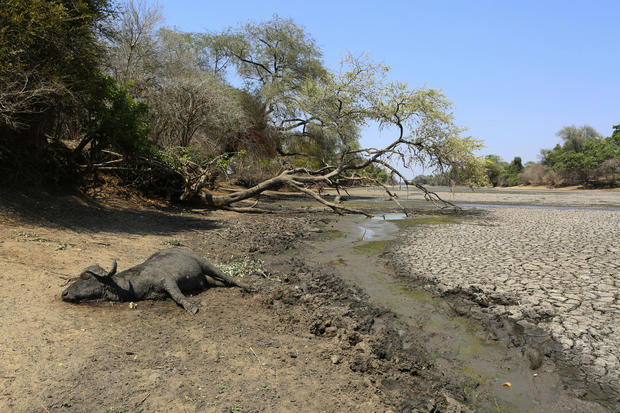
Eventually park staff freed the trapped elephant, but it collapsed and died. Just yards away lay the carcass of a Cape buffalo that had also been pulled from the mud, but was attacked by hungry lions.
Elephants, zebras, hippos, impalas, buffaloes and many other wildlife are stressed by lack of food and water in Zimbabwe's Mana Pools National Park, whose very name comes from the four pools of water normally filled by the flooding Zambezi River each rainy season, and where wildlife traditionally drink. The word "mana" means four in the Shona language.
At least 105 elephants have died in Zimbabwe's wildlife reserves, most of them in Mana and the larger Hwange National Park in the past two months, according to the Zimbabwe National Parks and Wildlife Management Authority. Many desperate animals are straying from Zimbabwe's parks into nearby communities in search of food and water.


Zimbabwe Wildlife Drought
In this Oct, 27, 2019, photo, the carcass of a buffalo lies on the edges of a sun baked pool that used to be a perennial water supply in Mana Pools National Park, Zimbabwe. AP

Mana Pools, a UNESCO World Heritage Site for its splendid setting along the Zambezi River, annually experiences hot, dry weather at this time of year. But this year it's far worse as a result of poor rains last year. Even the river's flow has reduced.

The drought parching southern Africa is also affecting people. An estimated 11 million people are threatened with hunger in nine countries in the region, according to the World Food Program, which is planning large-scale food distribution. The countries of southern Africa have experienced normal rainfall in only one of the past five growing seasons, it said.
Seasonal rains are expected soon, but parks officials and wildlife lovers, fearing that too many animals will die before then, are bringing in food to help the distressed animals. The extremely harsh conditions persuaded park authorities to abandon their usual policy of not intervening.
Each morning, Munyaradzi Dzoro, a parks agency wildlife officer, prays for rain.
"It's beginning to be serious," he said, standing next to the remains of the elephant and buffalo. "It might be worse if we fail to receive rains" by early November. The last substantial rains came in April, he said.
An early end to a "very poor rainy season" has resulted in insufficient natural vegetation to see the animals through, said Mel Hood, who is participating in the Feed Mana project, which is providing supplementary feeding.


Zimbabwe Wildlife Drought
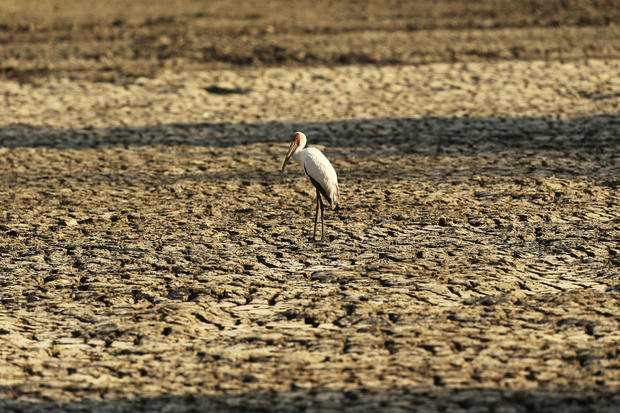
In this Oct, 27, 2019, photo, a bird stands on a sun-baked pool that used to be a perennial water supply in Mana Pools National Park, Zimbabwe.AP

Most of the animals in Mana Pools "are more or less confined to the barren flood plains," where temperatures soar to 113 degrees Fahrenheit,she said.
Separated from neighboring Zambia by the Zambezi, the region's once reliable sources of water have turned into death traps for animals desperate to reach the muddy ponds. Like the elephant and buffalo, many other animals in the park have gotten stuck in the clay while trying to reach Long Pool, the largest of the watering holes at 3 miles (5 kilometers) long.

The animals were pulled out by rangers, but they could not survive predators on the pounce for weak prey.
"The carnivores attacked it from behind," Dzoro said of the buffalo. The elephant carcass had been there for almost a week and emitted a strong stench as flies feasted on it.
At just 5% of its normal size, Long Pool is one of the few remaining water sources across the park's plains. On a recent day, hippos were submerged in some puddles to try to keep their skin from drying out in the extreme heat while birds picked at catfish stranded in the mud.
Two others of Mana's pools have completely dried up, while the third is just 20% to 30% of its usual size and dwindling, Dzoro said.
There are more than 12,000 elephants roaming Mana's flood plains as well as an abundance of lions, buffaloes, zebras, wild dogs, hyenas, zebras and elands. The animals are visibly affected by the drought. Some impalas show signs of skin mange. In addition to the land animals, the park has 350 bird and aquatic species, according to the parks agency.
In other parts of Mana, park authorities are pumping water from deep boreholes, but the supplies are barely enough, he said.
"We used to say nature should take its course," Dzoro said of the park's normal policy of not intervening and allowing the ecosystem to find its own balance.
"We are now forced to intervene, which is manipulative conservation, because we are not sure when and how we will receive the rain. To avoid losing animals we have to intervene to maintain population sizes," Dzoro said.
With the acacias, other indigenous trees and grasses that provide the bulk of food for herbivores like elephants and buffaloes also decimated by the drought, authorities began supplementary feeding in July.
Trucks and tractors ferry hay to various locations in the 2,196- square-kilometer (848-square-mile) park. In some spots, elephants, buffaloes and zebras are fed next to each other. The Feed Mana project has so far trucked 14,000 bales to the park, said Hood, the animal welfare campaigner.
The group has been appealing for "urgent" donations of items such as soy bean hay, grass and cubes made of nutritious grains and molasses.
"Although it may not be enough to stave off all the hunger pangs, it is certainly giving these animals a chance to survive until conditions improve," Hood said.
Zimbabwe has an estimated 85,000 elephants and neighboring Botswana has more than 130,000. The two countries have the largest elephant population in the world. Zimbabwe says it's struggling to cope with booming numbers of wild elephants and is pushing to be allowed to sell its ivory stockpile and export live elephants to raise money for conservation and ease congestion in the drought-affected parks.


Other African countries, especially Kenya, are opposed to any sale of ivory. And earlier this year the meeting of the Convention on International Trade in Endangered Species voted to continue the ban on all ivory sales.
At Mana Pools, saving the animals is a challenge and officials say Zimbabwe is severely affected by climate change that has changed weather patterns.


In past years, Mana Pools would get up to 24 inches (600 millimeters) of rain per year, said Dzoro, the wildlife officer. Now it's lucky to get half that.
With such a dramatic reduction, "we can't have perennial sources to sustain animals and some of the perennial springs have dried up. Climate change is affecting us. That's why the manipulative way now is the only way to rescue our fauna," Dzoro said.
"Climate change is real for sure, we are witnessing it," he said.


LINK

Monday, June 17, 2019

Quinta Jurecic | Nancy Pelosi's Argument Against Impeachment Is Incoherent


Reader Supported News
17 June 19

Now more than ever we are faced with enormous challenges. These are the times that bring out the best in the best of us.
We will stand as strong now as we ever have.
We proudly ask for your support.
Marc Ash
Founder, Reader Supported News

If you would prefer to send a check:
Reader Supported News
PO Box 2043
Citrus Hts
CA 95611


Reader Supported News
17 June 19
It's Live on the HomePage Now:
Reader Supported News


Quinta Jurecic | Nancy Pelosi's Argument Against Impeachment Is Incoherent 
Speaker of the House Nancy Pelosi. (photo: Oliver Contreras/The Washington Post)
Quinta Jurecic, Lawfare
Jurecic writes: "Nancy Pelosi has made her position clear: She is not budging from her opposition to impeachment."
READ MORE

Former 'The Daily Show' host Jon Stewart, right, speaks with Joe Zadroga, father of Sept. 11 first responder James Zadroga, who died in 2006. (photo: Jim Watson/AFP/Getty Images)

Jon Stewart Shames Mitch McConnell for Failing 9/11 First Responders on 'Fox News Sunday'
Matt Wilstein, The Daily Beast
Wilstein writes: "The former 'Daily Show' host said that only 'intense lobbying and public shaming' could make the Senate Majority Leader show compassion for 9/11 first responders." 


Richard Nixon. (photo: Gordon Standing)

Trump: I Didn't Fire Mueller Because "That Didn't Work Out Too Well" for Nixon
Daniel Politi, Slate
Politi writes: "Trump insists he was completely within his rights to fire Mueller if he wanted to."
READ MORE

Protesters in masks and goggles chant slogans outside the Legislative Council in Hong Kong on Wednesday. (photo: Philip Fong/AFP/Getty Images)

Masks, Cash and Apps: How Hong Kong's Protesters Find Ways to Outwit the Surveillance State
Shibani Mahtani, The Washington Post
Mahtani writes: "The moment the 25-year-old protester got home from demonstrations that turned violent - tear gas still stinging her eyes - she knew what she had to do: delete all of her Chinese phone apps."
READ MORE

A farmer and his sons walking in the face of a dust storm, Cimarron County, Oklahoma, 1936. (photo: Arthur Rothstein)

America Loves the Idea of Family Farms. That's Unfortunate.
Sarah Taber, New York Magazine
Taber writes: "Family farming's difficulties aren't a modern problem born of modern agribusiness. It's never worked very well."
READ MORE

An African bush elephant. (photo: De Agostin/Getty)

Namibia Forced to Auction 1,000 Wild Animals Due to Drought
teleSUR
Excerpt: "As a result of a drought affecting the southern African nation of Namibia since April, the country has decided to take a radical step that would see them auctioning at least 1,000 wild animals."
READ MORE

Men search through pieces suitable for recycling at the municipal garbage dump in the south-eastern city of Diyarbakir, Turkey. (photo: Sertac Kayar/Reuters)

Where Does Your Plastic Go?
Erin McCormick, Bennett Murray, Carmela Fonbuena, Leonie Kijewski, Gökçe Saraçoğlu, Jamie Fullerton, Alastair Gee and Charlotte Simmonds, Guardian UK
Excerpt: "Hundreds of thousands of tons of US plastic are being shipped every year to poorly regulated developing countries around the globe for the dirty, labor-intensive process of recycling."
READ MORE


Friday, October 12, 2018

We have 12 years to limit climate change catastrophe, warns UN


We have 12 years to limit climate change catastrophe, warns UN

Urgent changes needed to cut risk of extreme heat, drought, floods and poverty, says IPCC 


Urgent changes needed to cut risk of extreme heat, drought, floods and poverty, says IPCC
A firefighter battles a wildfire in California
 A firefighter battles a fire in California. The world is currently 1C warmer than preindustrial levels. Photograph: Ringo HW Chiu/AP
The world’s leading climate scientists have warned there is only a dozen years for global warming to be kept to a maximum of 1.5C, beyond which even half a degree will significantly worsen the risks of drought, floods, extreme heat and poverty for hundreds of millions of people.
The authors of the landmark report by the UN Intergovernmental Panel on Climate Change (IPCC) released on Monday say urgent and unprecedented changes are needed to reach the target, which they say is affordable and feasible although it lies at the most ambitious end of the Paris agreementpledge to keep temperatures between 1.5C and 2C.
The half-degree difference could also prevent corals from being completely eradicated and ease pressure on the Arctic, according to the 1.5C study, which was launched after approval at a final plenary of all 195 countries in Incheon in South Korea that saw delegates hugging one another, with some in tears.
Quick guide

What difference would restricting warming to 1.5C make?

“It’s a line in the sand and what it says to our species is that this is the moment and we must act now,” said Debra Roberts, a co-chair of the working group on impacts. “This is the largest clarion bell from the science community and I hope it mobilises people and dents the mood of complacency.”
Policymakers commissioned the report at the Paris climate talks in 2016, but since then the gap between science and politics has widened. Donald Trump has promised to withdraw the US – the world’s biggest source of historical emissions – from the accord. The first round of Brazil’s presidential election on Sunday put Jair Bolsonaro into a strong position to carry out his threat to do the same and also open the Amazon rainforest to agribusiness.
The world is currently 1C warmer than preindustrial levels. Following devastating hurricanes in the US, record droughts in Cape Town and forest fires in the Arctic, the IPCC makes clear that climate change is already happening, upgraded its risk warning from previous reports, and warned that every fraction of additional warming would worsen the impact.
Scientists who reviewed the 6,000 works referenced in the report, said the change caused by just half a degree came as a revelation. “We can see there is a difference and it’s substantial,” Roberts said.
At 1.5C the proportion of the global population exposed to water stress could be 50% lower than at 2C, it notes. Food scarcity would be less of a problem and hundreds of millions fewer people, particularly in poor countries, would be at risk of climate-related poverty.
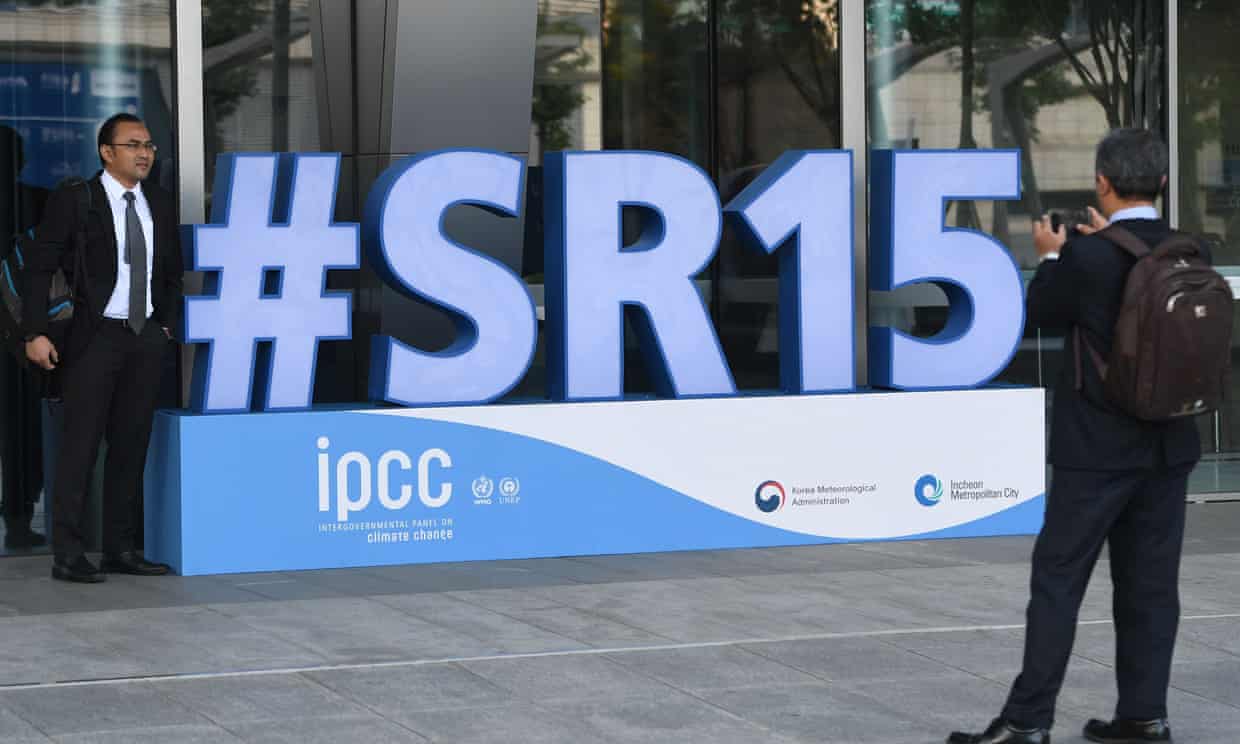
Attendees take a photo before the opening of the 48th session of the IPCC in IncheonFacebookTwitterPinterest
 Attendees take a photo before the opening of the 48th session of the IPCC in Incheon. Photograph: Jung Yeon-Je/AFP/Getty Images
At 2C extremely hot days, such as those experienced in the northern hemisphere this summer, would become more severe and common, increasing heat-related deaths and causing more forest fires.
But the greatest difference would be to nature. Insects, which are vital for pollination of crops, and plants are almost twice as likely to lose half their habitat at 2C compared with 1.5C. Corals would be 99% lost at the higher of the two temperatures, but more than 10% have a chance of surviving if the lower target is reached.
Sea-level rise would affect 10 million more people by 2100 if the half-degree extra warming brought a forecast 10cm additional pressure on coastlines. The number affected would increase substantially in the following centuries due to locked-in ice melt.
Oceans are already suffering from elevated acidity and lower levels of oxygen as a result of climate change. One model shows marine fisheries would lose 3m tonnes at 2C, twice the decline at 1.5C.
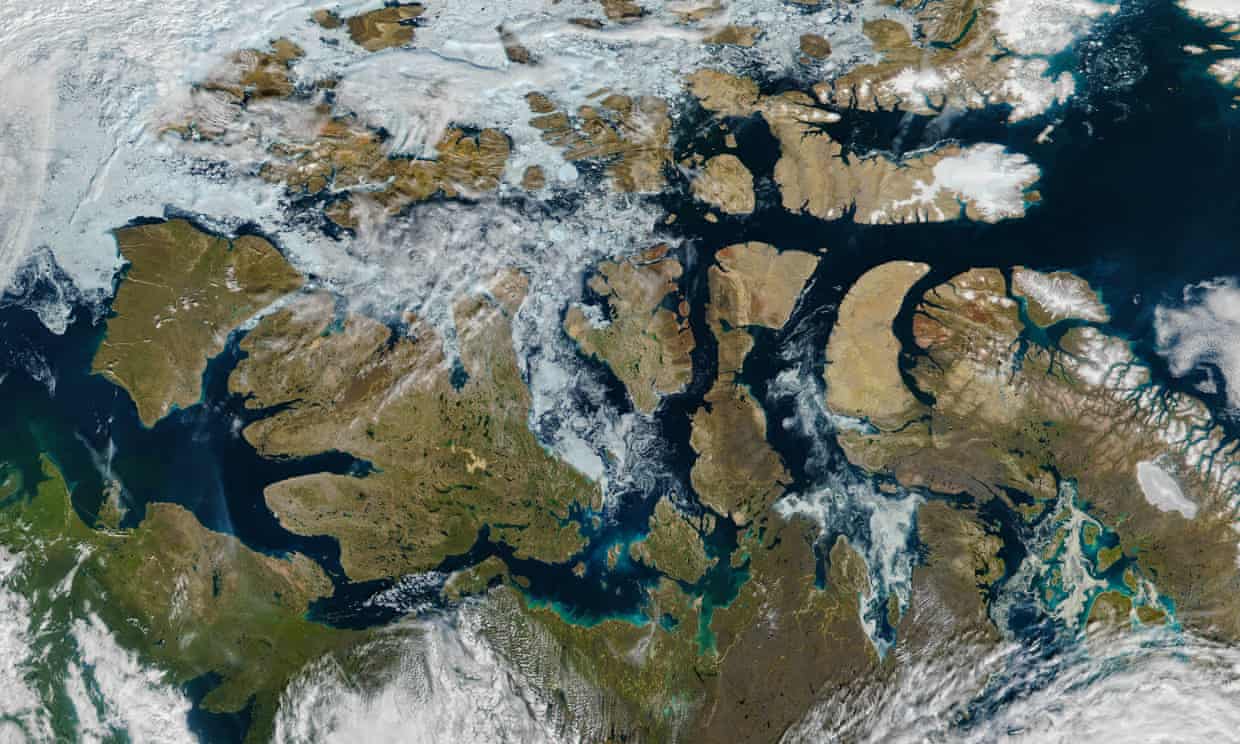
Sea ice-free summers in the Arctic, which is warming two to three times fast than the world average, would come once every 100 years at 1.5C, but every 10 years with half a degree more of global warming.


Time and carbon budgets are running out. By mid-century, a shift to the lower goal would require a supercharged roll-back of emissions sources that have built up over the past 250 years.
The IPCC maps out four pathways to achieve 1.5C, with different combinations of land use and technological change. Reforestation is essential to all of them as are shifts to electric transport systems and greater adoption of carbon capture technology.
Carbon pollution would have to be cut by 45% by 2030 – compared with a 20% cut under the 2C pathway – and come down to zero by 2050, compared with 2075 for 2C. This would require carbon prices that are three to four times higher than for a 2C target. But the costs of doing nothing would be far higher.
“We have presented governments with pretty hard choices. We have pointed out the enormous benefits of keeping to 1.5C, and also the unprecedented shift in energy systems and transport that would be needed to achieve that,” said Jim Skea, a co-chair of the working group on mitigation. “We show it can be done within laws of physics and chemistry. Then the final tick box is political will. We cannot answer that. Only our audience can – and that is the governments that receive it.”
He said the main finding of his group was the need for urgency. Although unexpectedly good progress has been made in the adoption of renewable energy, deforestation for agriculture was turning a natural carbon sink into a source of emissions. Carbon capture and storage projects, which are essential for reducing emissions in the concrete and waste disposal industries, have also ground to a halt.
Reversing these trends is essential if the world has any chance of reaching 1.5C without relying on the untried technology of solar radiation modification and other forms of geo-engineering, which could have negative consequences.
A nearly ice-free Northwest Passage in the Arctic in August 2016FacebookTwitterPinteres
 A nearly ice-free Northwest Passage in the Arctic in August 2016. Photograph: IIRS/Suomi NPP/Nasa
In the run-up to the final week of negotiations, there were fears the text of the report would be watered down by the US, Saudi Arabia and other oil-rich countries that are reluctant to consider more ambitious cuts. The authors said nothing of substance was cut from a text.
Bob Ward, of the Grantham Research Institute on Climate Change, said the final document was “incredibly conservative” because it did not mention the likely rise in climate-driven refugees or the danger of tipping points that could push the world on to an irreversible path of extreme warming.
The report will be presented to governments at the UN climate conference in Poland at the end of this year. But analysts say there is much work to be done, with even pro-Paris deal nations involved in fossil fuel extraction that runs against the spirit of their commitments. Britain is pushing ahead with gas fracking, Norway with oil exploration in the Arctic, and the German government wants to tear down Hambach forest to dig for coal.
At the current level of commitments, the world is on course for a disastrous 3C of warming. The report authors are refuseing to accept defeat, believing the increasingly visible damage caused by climate change will shift opinion their way.
“I hope this can change the world,” said Jiang Kejun of China’s semi-governmental Energy Research Institute, who is one of the authors. “Two years ago, even I didn’t believe 1.5C was possible but when I look at the options I have confidence it can be done. I want to use this report to do something big in China.”
The timing was good, he said, because the Chinese government was drawing up a long-term plan for 2050 and there was more awareness among the population about the problem of rising temperatures. “People in Beijing have never experienced so many hot days as this summer. It’s made them talk more about climate change.”
Regardless of the US and Brazil, he said, China, Europe and major cities could push ahead. “We can set an example and show what can be done. This is more about technology than politics.”
James Hansen, the former Nasa scientist who helped raised the alarm about climate change, said both 1.5C and 2C would take humanity into uncharted and dangerous territory because they were both well above the Holocene-era range in which human civilisation developed. But he said there was a huge difference between the two: “1.5C gives young people and the next generation a fighting chance of getting back to the Holocene or close to it. That is probably necessary if we want to keep shorelines where they are and preserve our coastal cities.”
Johan Rockström, a co-author of the recent Hothouse Earth report, said scientists never previously discussed 1.5C, which was initially seen as a political concession to small island states. But he said opinion had shifted in the past few years along with growing evidence of climate instability and the approach of tipping points that might push the world off a course that could be controlled by emissions reductions.
“Climate change is occurring earlier and more rapidly than expected. Even at the current level of 1C warming, it is painful,” he told the Guardian. “This report is really important. It has a scientific robustness that shows 1.5C is not just a political concession. There is a growing recognition that 2C is dangerous.”

Since you’re here…

… we have a small favour to ask. More people are reading the Guardian than ever but advertising revenues across the media are falling fast. And unlike many news organisations, we haven’t put up a paywall – we want to keep our journalism as open as we can. So you can see why we need to ask for your help.
The Guardian is editorially independent, meaning we set our own agenda. Our journalism is free from commercial bias and not influenced by billionaire owners, politicians or shareholders. No one edits our editor. No one steers our opinion. This is important because it enables us to give a voice to the voiceless, challenge the powerful and hold them to account. It’s what makes us different to so many others in the media, at a time when factual, honest reporting is critical.
If everyone who reads our reporting, who likes it, helps to support it, our future would be much more secure. For as little as $1, you can support the Guardian – and it only takes a minute. Thank you.