Search This Blog

Translate

Blog Archive

Middleboro Review 2

NEW CONTENT MOVED TO MIDDLEBORO REVIEW 2

Toyota

Since the Dilly, Dally, Delay & Stall Law Firms are adding their billable hours, the Toyota U.S.A. and Route 44 Toyota posts have been separated here:

Route 44 Toyota Sold Me A Lemon


Showing posts with label United Nations. Show all posts

Wednesday, November 27, 2019

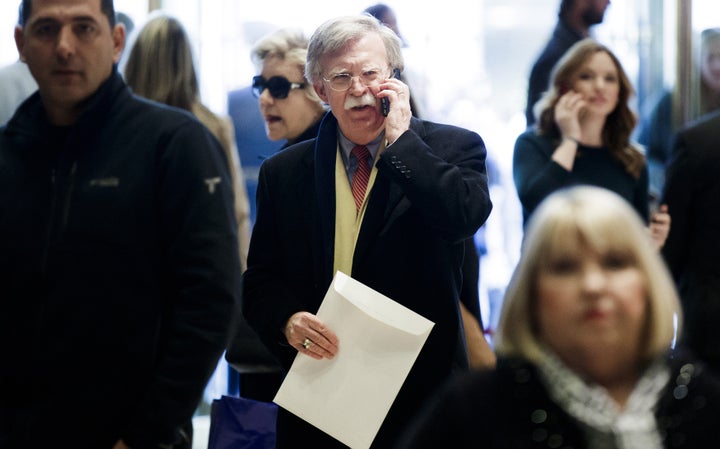
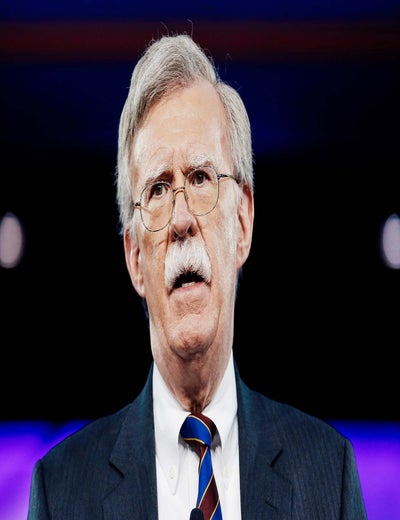
JOHN BOLTON


At the top of this page is a SEARCH FEATURE that should bring up old articles about the Chicken Hawk, WAR MONGER, PNAC co-founder JOHN BOLTON.

JOHN BOLTON couldn't secure REPUBLICAN votes to be appointed UN Ambassador.

Lotsa baggage with this Whack-A-Ding.

John Bolton’s Super PAC Spent Millions On Senators Who Might Vote To Confirm Him


WASHINGTON ― President-elect Donald Trump is reportedly close to announcing that he has selected former United Nations Ambassador John Bolton for the No. 2 job at the Department of State.

One of the most pro-war members of the Republican foreign policy establishment, Bolton has served in numerous roles, including acting U.N. ambassador and an assistant attorney general in the Department of Justice, under the last three Republican presidents. He’s also been raising millions of dollars to elect some of the senators who would now get to vote to approve his new position.
Bolton launched the John Bolton Super PAC in 2013, which some speculated was a way to promote himself ahead of a potential 2016 president run. That run never materialized, but the PAC, which could raise an unlimited amount of money, enabled Bolton to bring in huge contributions from wealthy benefactors while lending his hawkish credentials to congressional candidates. In the 2014 and 2016 election cycles, Bolton raised $11.3 million and spent $5.6 million on independent expenditures in support of Republican candidates.
Three of the candidates whom Bolton’s super PAC boosted ― Sens. Thom Tillis (R-N.C.), Tom Cotton (R-Ark.) and Richard Burr (R-N.C.) ― could now be in a position to vote for his confirmation as deputy secretary of State. That would create an unprecedented situation: The director of a super PAC would be seeking votes to secure a prominent government position from the very same senators he helped elect.
It’s unclear whether those senators would recuse themselves from voting on his nomination. Tillis got the most support of any candidate in the past two elections from Bolton’s super PAC with $1.4 million to boost his 2014 election. Tillis defeated incumbent Sen. Kay Hagan (D-N.C.) in the 2014 election by 1.7%. The Hagan-Tillis Senate race was the first Senate race to top the $100 million mark, largely on the back of spending by super PACs and nonprofit groups.
Bolton’s super PAC also boosted Cotton in his first Senate election campaign in 2014. The group spent $825,687 to support Cotton’s campaign, which he won easily.
The only successful race that Bolton’s super PAC spent money on in 2016 was incumbent Burr’s. The John Bolton Super PAC spent $740,675 to support Burr and oppose his challenger, Democrat Deborah Ross. Burr won his election by 6 percentage points.
“Donald Trump’s creating trickle-down conflicts of interest,” Adam Smith, communications director for the campaign finance reform group Every Voice, said in an email. “Whether it’s John Bolton and his super PAC or a mega-donor like Betsy DeVos, there will be several Senators who have received financial support from nominees they’ll be voting on and it’s fair to ask whether those donations will play a role in their votes.”
The offices of Burr, Cotton and Tillis did not respond to requests for comment.


Potential Deputy Secretary of State nominee John Bolton's super PAC helped elect three senators who will be in a position to


Potential Deputy Secretary of State nominee John Bolton’s super PAC helped elect three senators who will be in a position to vote on his nomination.

Bolton’s super PAC has largely been financed by the same wealthy benefactors over the two years it has been active. The largest donor is billionaire hedge fund manager Robert Mercer, who gave $4 million over the past four years. Mercer is perhaps the most influential big donor in Trump World. After backing Sen. Ted Cruz (R-Texas) during the primary, Mercer and his daughter Rebecca Mercer threw their weight heavily behind Trump. They were behind the mid-campaign revamp that brought on KellyAnne Conway as campaign manager and Steve Bannon as campaign chief executive. Conway was previously paid by the Mercers through a pro-Cruz super PAC. Bannon’s Breitbart is partially financed by contributions from Mercer.
Other major Trump backers supporting Bolton’s super PAC include Home Depot co-founder Bernie Marcus and Los Angeles real estate magnate Geoff Palmer.
Bolton will need every vote he can get from Republicans if he is nominated. Republicans hold a slim 52-48 majority in the Senate. Sen. Rand Paul (R-Ky.) has already stated that he will oppose Bolton’s nomination. When Paul was running for the Republican presidential nomination, Bolton’s nonprofit group the Foundation for American Security & Freedom ran an advertisement attacking Paul for questioning the fear-mongering about Iran’s nuclear program. The ad showed an American family being evaporated by a nuclear bomb.
Bolton’s 2005 nomination to be U.N. ambassador was highly controversial. Bolton was a known opponent of the U.N. with a stated view that “it wouldn’t make a bit of difference” if the U.N. building in Manhattan lost 10 of its 38 floors. During his confirmation hearings he was faced with accusations of harassment from a former USAID employee. He could not clear a Democratic filibuster and was recess-appointed by President George W. Bush. Numerous Senate Republicans stated at the time that they would not vote for his confirmation.
CORRECTION: An earlier version of this story said Bolton was an assistant director in the Justice Department. He was an assistant attorney general.

VIDEO ON LINK


MEET JOHN BOLTON: THE MERCER-BACKED TRUMP ADVISOR PUSHING FOR POST-BREXIT DEREGULATION

Wednesday, November 13, 2019

Biden’s Support of Iraq War Shows How He Would Run the White House


"Biden’s support for the invasion seems to demonstrate a belief that the United States need not abide by its international legal obligations."
I guess we all know what Bernie Sanders position was, don't we!

About this website

TRUTHOUT.ORG
Biden's vote to invade Iraq was no "mistake," but an indication of his contempt for international law.

Sen. Joe Biden speaks during an interview in his office about the possibility of war with Iraq on February 5, 2003.

According to Article VI of the U.S. Constitution, international treaties signed by the president and ratified by a two-thirds majority of the Senate are to be treated as supreme law of the United States. Among these is the United Nations Charter, long recognized as the most important single document regulating the use of military force in the post-World War II era.
Biden defended his Iraq War vote on the grounds of enforcing UN Security Council resolutions being violated by Iraq. However, in articles 41 and 42 of the UN Charter, the signatory nations of the world agreed that no member state has the right to enforce any resolution militarily unless the Security Council determines that there has been a material breach of its resolution, decides that all non-military means of enforcement have been exhausted, and specifically authorizes the use of military force. This is what the Security Council did in November 1990 with Resolution 678 in response to Iraq’s ongoing occupation of Kuwait in violation of a series of resolutions demanding withdrawal. When Iraq finally complied through its forced evacuation from Kuwait in February 1991, this resolution became moot.
Legally, the conflict regarding access for UN inspectors and possible Iraqi procurement of weapons of mass destruction had always been between Iraq and the UN, not between Iraq and the United States. Therefore, the United States had no legal right to act on the dispute unilaterally. Although UN Security Council Resolution 687, which demanded Iraqi disarmament, was the most detailed in the world body’s history, no military enforcement mechanisms were included. Nor did the Security Council specify any military enforcement mechanisms in subsequent resolutions. As is normally the case when it is determined that governments are violating all or part of UN resolutions, any decision about enforcement is a matter for the Security Council as a whole — not for any one member of the council.
While UN Security Council resolution 1441, passed in November 2002, warned of unspecified “serious consequences” if Iraq failed to comply with the UN disarmament and inspections regime, the resolution also made clear that only the weapons inspectors — not UN member states — had the authority to report Iraqi violations. In the lead-up to the March 2003 U.S. invasion, the inspectors did not report any Iraqi violations of serious consequence. Furthermore, the resolution stated that the Security Council “remains seized of the matter,” reiterating the fact that only the Council itself had the authority to approve the use of force.
Biden’s support for the invasion seems to demonstrate a belief that the United States need not abide by its international legal obligations.
It is noteworthy, then, that Biden voted against an amendment sponsored by then-Sen. Carl Levin (D-Michigan) that would have authorized U.S. military action against Iraq if the UN Security Council approved the use of force and instead voted for the resolution that essentially authorized President George W. Bush to invade Iraq at the time and circumstances of his own choosing.
If Biden believes the United States can unilaterally claim the right to invade Iraq because of that country’s violation of Security Council resolutions, other Council members could logically also claim the right to invade other states that are in material breach of UN Security Council resolutions, such as Israel, Morocco, Turkey, Armenia, Pakistan and India. Biden’s insistence on the right of the United States to unilaterally invade foreign countries because of alleged violations of UN Security Council resolutions seriously undermines the principle of collective security and the authority of the UN, and thereby opens the door to international lawlessness.
International law is quite clear about when military force is allowed. In addition to the aforementioned case of UN Security Council authorization, the only other time the UN Charter allows a member state to use armed force is described in Article 51, which states that it is permissible for “individual or collective self-defense” against “armed attack … until the Security Council has taken measures necessary to maintain international peace and security.” Since none of these criteria were met, the U.S. invasion was clearly a violation of the UN Charter, as acknowledged by the UN secretary general and the majority of member states. Biden’s support for the war, therefore, demonstrates his belief that the United States should not be bound by its international legal obligations.
There is a tradition in customary international law that does allow for a preemptive strike in self-defense, but this is only in an indisputable case of a clear and present danger, such as troops massing along a border poised for invasion, or missiles being loaded onto launchers in preparation for an attack. It does not, as Biden claims, give the United States the right to invade a country on the far side of the world based upon unsubstantiated allegations that that country might be developing weapons that might be passed on to terrorists that might someday be used against us.
A broad consensus of international legal scholars, then-UN Secretary General Kofi Annan and the overwhelming majority of the world’s governments recognized that a U.S. invasion of Iraq would be illegal. As a lawyer, as the head of the Senate Foreign Relations Committee, and as someone who repeatedly touts his knowledge of international affairs, it is hard to imagine Biden did not realize that invading Iraq would constitute serious war crimes. The fact that he did so anyway should raise alarm about the prospects of him becoming president.
The October 2002 war resolution essentially constituted a renunciation of the UN Charter’s prohibition against such wars of aggression and an effective repudiation of the post-World War II international legal order. Biden’s vote to authorize this illegal invasion, therefore, demonstrates his contempt for international law and is indicative that, as president, he would likely not hesitate to violate international legal norms in order to advance U.S. hegemony.
The biggest concern about Biden’s support for the Iraq War, therefore, is not just that he made a series of demonstrably false claims about Iraq’s unconventional weapons, weapons programs and weapons systems to justify the invasion. Even if he had been telling the truth, the war still would have been illegal.
Similarly, while his dismissal of the concerns expressed by the large numbers of scholars and diplomats familiar with the region who warned him that an invasion and occupation would lead to years of bloodshed, political instability, sectarian violence and growing extremism shows frighteningly bad judgement, the invasion would have still been illegal and set a very dangerous precedent.
Biden’s support for the invasion seems to demonstrate a belief that the United States need not abide by its international legal obligations, including those prohibiting wars of aggression. As a result, his support for the invasion of Iraq is not simply a “mistake.” It is very relevant and says a lot about what kind of president he would be.

Stephen Zunes is a professor of politics and coordinator of Middle Eastern studies at the University of San Francisco.