Search This Blog

Translate

Blog Archive

Middleboro Review 2

NEW CONTENT MOVED TO MIDDLEBORO REVIEW 2

Toyota

Since the Dilly, Dally, Delay & Stall Law Firms are adding their billable hours, the Toyota U.S.A. and Route 44 Toyota posts have been separated here:

Route 44 Toyota Sold Me A Lemon


Showing posts with label Douglas Feith. Show all posts

Wednesday, March 27, 2019

They Had Already Decided They Wanted to Invade Iraq’ - CounterSpin interviews with Robert Dreyfuss and Diana Duarte on media and the Iraq War


FAIR

‘They Had Already Decided
They Wanted to Invade Iraq’ -
CounterSpin interviews with
Robert Dreyfuss and
Diana Duarte on media and
the Iraq War

view post on FAIR.org

The CounterSpin episode for March 22, 2019, reaired classic interviews with Robert Dreyfuss (2/27/04) and Diana Duarte (3/22/13) about media’s Iraq War roles.
MP3 Link
Janine Jackson:  Welcome to CounterSpin, your weekly look behind the headlines. I’m Janine Jackson. This week on CounterSpin: Many in media were critical of Ari Fleischer, former press secretary for George W. Bush, who used the March anniversary of the US’s 2003 invasion of Iraq, based on what Americans were told was the threat of Saddam Hussein’s weapons of mass destruction, as an opportunity to launch a Twitter tirade to say, “It’s a myth that Bush lied.” He and Bush “faithfully and accurately reported” intelligence community assessments, Fleischer maintained.
Media seemed concerned that Fleischer was insufficiently respectful of the toll of the Iraq War, including what the Washington Post modestly estimated as “thousands of dead Iraqis”—researchers would put that number at, minimally, half a million.
But Fleischer’s revision isn’t just wrong in emphasis or in sentiment. And we didn’t have to wait 16 years to know that. In February 2004, CounterSpin spoke with investigative journalist Robert Dreyfuss about that pre-war intelligence on Iraq, and the role of a secret and largely unaccountable organization inside the Pentagon in manufacturing and publicizing it. We’ll hear that interview again today.
Also on the show: There is the way elite media gin the US public up for war, ofttimes against countries most Americans couldn’t find on a map, like Venezuela. That involves cartoonish demonization of leaders, and feigned outrage at human rights concerns that are not of interest in other places. With the Iraq War, elite media were, after the fact, willing to say “mistakes were made” around evidence of weapons, but, as we discussed with Diana Duarte, on the war’s 10th anniversary in March of 2013, there is little ongoing curiosity about the other justifications media endorsed, including that toppling Saddam Hussein would advance human rights in Iraq, and especially the rights of women. We’ll also hear that conversation again today.
Corporate media’s role in the run-up to—and the ongoing aftermath of—the war on Iraq, this week on CounterSpin.
***
Janine Jackson: The toll of the US war on Iraq, following years of devastating sanctions, can hardly be reckoned. At least half a million people killed, millions displaced, made ill, their homes and communities destroyed, of course the political repercussions in the region, and thousands of US servicemembers killed and wounded—all of it based on falsehoods, peddled to the US public by warmongering politicians enabled by the press.
After months of coverage dominated by pro-war pundits and former generals—Iraqis themselves rarely heard from—many Americans likely accepted the official story that the invaders would be welcomed as liberators in the streets of Baghdad. But vast numbers did not. Millions marched in the streets in opposition to the war before it started. But that viewpoint was sidelined and worse in corporate media, whose current rehabilitation of the author of the nightmare, George W. Bush, is only the latest sign of their eager amnesia about the role they played in leading us to an illegal war based on lies.
In February of 2004, CounterSpin spoke with investigative journalist Robert Dreyfuss about pre-war intelligence on Iraq, and the role of a secret and largely unaccountable organization inside the Pentagon in manufacturing and publicizing it. Dreyfuss co-authored an article for Mother Jones on the matter called “The Lie Factory.” This is CounterSpin’s Steve Rendall in early 2004, speaking with journalist Robert Dreyfuss.
Mother Jones: The Lie Factory
Mother Jones (1–2/04)
Steve Rendall: Robert, when David Kay announced that he didn’t think they’d find weapons of mass destruction in Iraq, he was adamant that the administration was misled by the CIA, and that intelligence was not shaped or distorted by the Bush administration. Much of the media discussion followed that same line, but your article suggests that there’s a lot more to the story. Tell us a little bit about what you found.
Robert Dreyfuss: I think the most important thing is that while the CIA probably did not get very much right about Iraq, they were at least convinced, most of the intelligence agencies, that there was a lot of doubt, that there were a lot of things they didn’t know. The doubts got completely erased in the policymaking circles, and in particular the Pentagon—which set up its own little sort of rump intelligence unit called the Office of Special Plans, under Douglas Feith at the Pentagon bureaucracy—not only was responsible for deleting these doubts, but they had some value added, too.
They added in their own spin and their own intelligence, part of which came from Iraqi exiles, part of which came from their own staff, which was doing its own intelligence. And they created talking papers that ended up wildly exaggerating the threat that Iraq allegedly posed to both the United States and to its neighbors, and that information went directly to Vice President Cheney’s office and to the White House, and it led the administration in the direction of going to war, because that was a war they already wanted.
In other words, the idea that they were invading Iraq based on faulty intelligence has it exactly backwards. They had already decided they wanted to invade Iraq. So the intelligence was then used to justify a pre-existing policy.
And so for Bush to argue, or anyone else to argue, that the administration went to war based on faulty intelligence is just plain silly. They would have gone to war in any case, but they were afraid to make the argument that Saddam Hussein is a bad guy and therefore, for reasons of national strategy, for reasons of oil, for reasons of Middle East policy and protecting Israel, for all of these reasons, we’re going to invade Iraq. That probably wouldn’t have sold, either to the American public or to Congress, so instead they picked on this “Iraq is a threat” argument.
SR: So, Robert Dreyfuss, can I assume that the “lie factory” referred to in the title of your piece refers to this internal Pentagon Office of Special Plans?
RD: Yeah. It started right after 9/11; within a month of 9/11, they set this unit up. It wasn’t called the Office of Special Plans then; it had a different name. It went from being something like two or three people, and it expanded, and brought in contractors and consultants, and eventually took the name Office of Special Plans, which incorporated this intelligence unit. That’s what became, basically, the war planning office at the Pentagon.
SR: And from what you report, they pushed out analysts that weren’t going along with the program to some degree.
RD: They really purged anybody who wasn’t part of the zealous team of missionaries that believed in the war. These people were forced into retirement, they were transferred to other offices, some of them just quit in disgust. And they brought in people, ironically, who were not intelligence experts, people who were ideologues, but who were not particularly skilled at either intelligence collection or analysis.
So what they did is they took these piles and piles of information, with thousands of little data bits, and they picked out the ones that supported the case for going to war, and they discarded all the rest.
And any intelligence conclusion is based on evaluating all of the information, a lot of which is going to be contradictory. Some of it’s based on forged documents, on lies, on misinformation, on just plain old honest human mistakes. So all of that information isn’t going to agree, and the job of an intelligence analyst or a professional is to look at it all and say, “Here’s my conclusion, and here’s the reasons why my conclusion isn’t 100 percent, so I give this a certain percent validity.”
Well, this office didn’t do that at all; they just basically said, “We’re gung ho for war, and Iraq is an enormous threat to American national security.” And all of the junk that we heard about unmanned aerial vehicles striking the United States, and Iraq building its nuclear program and importing WMD-related materials, all of that was a crock.
SR: In your reporting of this, you conducted a lot of interviews, and one that was particularly compelling was one you did with a certain former Air Force colonel. Tell us about that story, briefly.
RD: Her name’s Karen Kwiatkowski. She was a lieutenant colonel in the Air Force, and she worked inside the Pentagon in the Near East/South Asian Affairs Office, which is where this Office of Special Plans took shape. And so she watched it all, week by week, taking shape, and she was horrified by it. She is a tremendously courageous whistleblower, in fact, because she’s a conservative, not someone who’s some sort of fuzzy-minded liberal. She was, however, shocked by what she calls the “neoconservative cabal” that was shaping the way this office operated and, in particular, by the intervention of people like Dick Cheney’s staff director Lewis Libby and others, who were tasking, or assigning, jobs and missions to this unit, which is highly unusual. It’s an office that should work down deep in the bowels of the Pentagon, and here’s the vice president’s office operating on a day-to-day basis in touch with them.
SR: Robert Dreyfuss, at this point, it seems that some very good reporting has come out of mainstream media, particularly from the Washington Post. But some critics suggest the Post hasn’t pushed its reporting to the front page often enough. Even Washington Post ombudsman Michael Getler wroterecently, “Make sure you read Page A17, or wherever the next piece of the puzzle appears.” What do you think of the priority the media has given to this story so far?
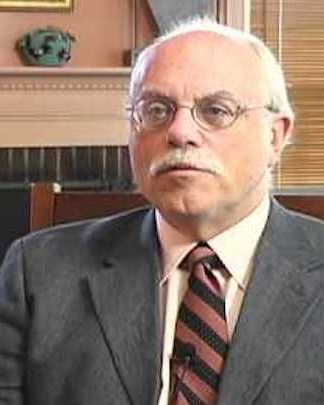
Robert Dreyfuss
Robert Dreyfuss: “The core of the problem is the media is unwilling to look at the government and say that there’s conscious malfeasance happening. They much prefer to say this was a mistake.” (image: Echo Chamber Project)
RD: I think it has gotten somewhat lost for two reasons. One is it got lost because the aftermath of the war was so catastrophically bad, with an insurgency and a complete mess and a seemingly completely bumbling US administration over there, that that’s become the main story.
And then, second, it’s sort of obvious that Bush and Cheney were saying “WMD” for months and months and months, and we got over there and they weren’t there. So what else can you say except, “Well, we didn’t find them, and they were wrong?” So I think they sort of lost the handle on how to investigate the wrongdoing.
I think the core of the problem is the media is unwilling to look at the government and say that there’s conscious malfeasance happening. They much prefer to say this was a mistake, or this was just, you know, incompetence or conflict of interest, or all kinds of other things that are more, I guess, easier to swallow, than to say that someone was out there deliberately manufacturing evidence.
I mean, one of the most obvious cases is, no one has really investigated who forged those uranium documents. There’s no argument that those documents were deliberately forged by someone. It wasn’t a mistake. And finding out what we know about who forged them—and I believe that somebody in the intelligence system here knows—is something that reporters ought to be just leaping into, and I don’t see that too many people are even asking the question.
And there are other questions like that that I think have just been ignored, and in part because reporters follow the official investigations, and now there have been several efforts by the Republicans in Congress to intimidate investigations and say, “Well, there’s nothing there.” The chairman of the House Intelligence Committee has pretty much said that point blank. So I think to the extent that the official investigations are turning into coverups, then I think the media is finding it difficult to get these more explosive charges onto the front page.
SR: You’ve appeared on CounterSpin before, discussing Iraqi National Congress leader Ahmed Chalabi and his unreliability. A recent Knight Ridder story points out that, in spite of the fact that defectors and witnesses put forth by Chalabi’s INC “exaggerated what they knew, fabricated tales, or were coached by others what to say,” the US intends to continue funding the INC’s intelligence-gathering. The Knight Ridder story hasn’t received much attention in other media now. What are your thoughts on this part of the story? Bear in mind that we only have a few seconds left, Robert.
RD: Well, we’re not just funding him, we’re supporting him to become the next president of Iraq! I mean, here’s a guy who is a long-term, historic crook and bank-embezzler; now we know he’s also a liar about intelligence, and the Pentagon is still supporting him to become the leader of the nation, never mind a couple million dollars to fund his organization. So I continue to be stunned and amazed that Chalabi has any credibility whatsoever with anyone. Although apparently he’s been quite a valuable source for Judy Miller at the New York Times over the years, so I guess he’s got some friends in the media himself.
Janine Jackson: That was Robert Dreyfuss speaking with CounterSpin’s Steve Rendall. The article “The Lie Factory,” by Dreyfuss and Jason Vest, can still be found on MotherJones.com.
***
Janine Jackson: CounterSpin spoke with Diana Duarte, communications director at the international human rights group MADRE, in March of 2013, when corporate media were doing their annual looks back at the invasion and occupation of Iraq, largely limited, as ever, to consideration of the war as a “strategic miscalculation,” but not a grievous violation of international law and of human rights.
I started with a reference to a New York Times columnist:
NYT: The Meaning of a Skull
New York Times (4/27/03)
Thomas Friedman wrote in April 2003, “As far as I am concerned, we do not need to find any weapons of mass destruction to justify this war.” And even though all the talk now is about how we were “misled” about particular evidence of weapons, the truth is plenty of people said, “It’s really enough that we don’t like Saddam Hussein” (anymore, but that’s another story).
There was a human rights justification for the war, and that had a lot to do with liberating women. And I don’t know how much that idea is being interrogated, even today. What do you think we should know about the status of human rights for women in the Iraq of 2013?
Diana Duarte: It’s certainly the case that the justification of liberating women was mobilized very strongly in the early days of the war, and we still see that to this day, that it’s one of the strawmen that is still standing, and it’s so far from the truth.
The women that we work with, we partner with an Iraqi women’s organization on the ground that has told us, time and again, that conditions for women now are worse than they were before the war. Now women are facing wave after wave of violence, women are facing violence in the home and in the street, largely due to the fact that this war unleashed—and the US was implicated, and very strongly involved in fueling—militias that have targeted women, have used gender-based violence as a way to sustain a social vision that is based on subjugating women.
JJ: So it really is a systemic violation of women’s rights, and not simply women as civilians being caught up in the “sectarian strife” we hear about.
DD: Exactly. It’s a strategy. Their vision of the world, the vision of these repressive political forces, who have been allies of the US, is largely based on subjugating women, on keeping women in their place in the home, and of subjugating any kind of secular force in the society. And women have been at the frontlines of this kind of violence.
JJ: And this has affected, of course, even the drafting of the constitution in Iraq.
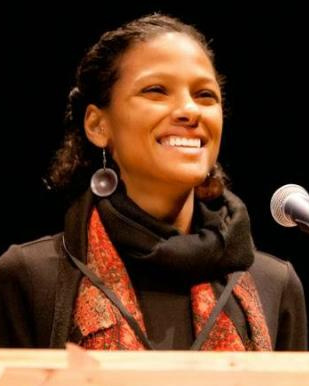
Diana Duarte (photo: MADRE)
Diana Duarte: “Women’s rights were quite easily and freely traded away by the US.” (photo: MADRE)
DD: Exactly. Women’s rights were quite easily and freely traded away by the US, in the hopes that it would create some kind of stability in the country. And stability is certainly the farthest from what we see on the ground nowadays.
JJ: There was a report in the Guardian recently, that was presented as new, about links between the Pentagon and these Iraqi militias responsible for torture and killing of civilians. But MADRE had written about this back in 2007, at least, based on experiences of those partner organizations in Iraq. Isn’t that true?
DD: Certainly I want to say that the story that is being told by the Guardian is an important story to tell, highlighting the role of the US and the Pentagon policy of organizing militias and paramilitaries,  purportedly to combat an insurgency, but with dramatic and terrible human rights implications for women and communities in Iraq.
But the thing about it is that it should be not be framed as some kind of revelation, or even as news at this point, as you were saying. We and other human rights organizations have been highlighting this as a policy for years. We did release a report in 2007, called “Promising Democracy, Imposing Theocracy,” which named people specifically who were involved in advancing this policy.
In that Guardian article that you mentioned, they even go so far as to say that this is the “first time” that US advisors are being implicated in these human rights abuses, which is certainly startling and strange for us to hear, given that we and other human rights organizations have been implicating those same US advisors—including James Steele, who’s mentioned in the article—for many years now.
Another thing that was sort of strange about the article is where they do mention the connection to James Steele in Central America, where he was very much involved in a policy of fueling paramilitaries in El Salvador to manage this counterinsurgency, but again with dramatic human rights implications. And they call it “an eerie parallel” to what happened in Iraq, as if it’s just a strange coincidence, as if he didn’t have a resumé, a background, in this kind of strategy, and as if that wasn’t part of the reason that he was brought to Iraq, to implement that same strategy once again, with similar effect.
JJ: The New York Times had a story on how the war’s anniversary was “barely noted in Washington,” and had comments from officials and former officials. But if they’d wanted to find people talking about it, right outside the White House was a group of veterans and human rights groups who were talking about the Right to Heal Initiative, calling for reparations for Iraq and treatment for veterans. So there are people calling for action today about the impact of this war.
DD: And the Right to Heal applies certainly to US veterans, who will be dealing with the implications of this war for years to come. But it also applies to communities in Iraq. One of the people who was standing outside of the White House, as you mentioned, was a woman named Yanar Mohammed. She’s our partner in Iraq, and we have been working with her to highlight and to bring support to one community in particular, called Hawija, that is dealing with the fallout of environmental contamination by a nearby US military base, which has resulted in rampant levels of birth defects and cancers among children who have been born in recent years. So the Right to Heal is something that we will need to be advocating for and pushing for for generations to come.
McClatchy: US Pledge to Help Iraqis Who Aided Occupation Largely Unfulfilled
McClatchy (3/14/13)
JJ: The last time we spoke to MADRE’s Yifat Susskind, she was talking about that increase in cancers. The International Journal of Environmental Research and Public Health said that in Fallujah alone, the rate of life-threatening illness and birth defects is “significantly greater than those reported for survivors of Hiroshima and Nagasaki.”
I saw a piece by McClatchy’s Hannah Allam, about how thousands of Iraqis eligible for resettlement in the US, because they risked their lives helping the US in the war as interpreters and so forth, aren’t getting it—and there’s no appeals process. Patrick Cockburn wrote about how official corruption in Iraq is so deeply and particularly harmful to development there.
It just seems that there are so many stories that reporters could be telling, that are not looks back or navel-gazing, but are really today stories.
DD: And also the stories will continue to emerge, and  it’s important to connect the dots between what we’re seeing now and policies that went back all the way to the 1980s, as I was saying, but that we should be demanding accountability for at this point. It’s been 10 years, yes. But the US role in Iraq is something we still need to be talking about, and that we still need to be demanding justice for, and we’ll continue to do that with our partners on the ground.
JJ: And that reporters need to maybe change who they’re talking to, so they can stop talking about how no one’s saying anything about it.
DD: Exactly. And that government statements can be convenient covers for human rights violations on the ground, and that the partners that we’re working with, and the human rights activists throughout the region, have been really working hard to highlight these kinds of stories, and that they’re the ones whose stories should be told.
JJ: That was Diana Duarte from the human rights group MADRE, speaking with CounterSpin in 2013. And before that, Robert Dreyfuss from 2004.


FAIR/Fairness & Accuracy In Reporting
124 W. 30th Street, Suite 201
New York NY 10001
USA


Friday, July 18, 2014

RSN: The Human Price of Neocon Havoc

Be careful what you believe!

Most of the current War Mongers are CHICKEN HAWKS ....they have never served in the military...no bullet has ever whizzed past them....yet they believe every conflict requires GUNS and LIVES.


What's PNAC about? The fantasy of U.S. World Domination after the failures in Iraq and Afghanistan?

And WHO is supposed to follow these clowns? YOU?

Please do your homework and let's stop electing WAR MONGERS! Think about what you want for your grandchildren.

Great article!  


It's Live on the HomePage Now:
Reader Supported News


*COMING TO TERMS WITH THE 99.5% WHO DO NOT CONTRIBUTE: Our challenge at this point is to address the 99.5% of those who visit RSN on a monthly basis but do not contribute. Those who are really strapped, we understand. But .05% of the Readers donating on a monthly basis, that's absurd. It's unfair to those who do contribute and it's holding the project back. If you are an active donor please be patient as we work through this. Thanks to everyone. / Marc Ash - Founder, Reader Supported News*


FOCUS: Robert Parry | The Human Price of Neocon Havoc
Neocons - Paul Wolfowitz, William Kristol and Richard Perle. (photo: unknown)
Robert Parry, Consortium News
Parry writes: "Neocons are the 'masters of chaos' as they destabilize disfavored governments around the world."
READ MORE

Wednesday, October 24, 2012

‘Moderate Mitt’: Neocon Trojan Horse


Great article by Robert Parry that offers some insight into the Project for the New American Century and should have us all wondering if we're willing to fight more wars for the Chicken Hawks --

‘Moderate Mitt’: Neocon Trojan Horse

October 24, 2012
Exclusive: Republican presidential nominee Mitt Romney did all he could in Monday’s debate to calm voters’ fears that he would revert to George W. Bush’s neocon foreign policy. But there was one telling slip-up when Romney signaled that his heart remains with the neocon plan to remake the Middle East, reports Robert Parry.

By Robert Parry
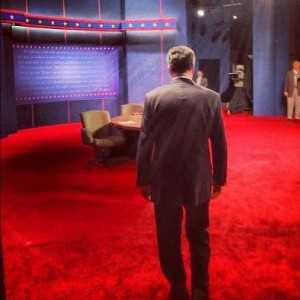
Republican presidential nominee Mitt Romney striding onto the debate stage. (Photo credit: mittromney.com)


Mitt Romney’s peculiar sense of geography – thinking Iran was some landlocked country that needed Syria as a “route to the sea” – may have raised some eyebrows over Romney’s lack of basic knowledge, but another part of the same answer, referring to the civil war in Syria as “an opportunity,” should have raised more alarm.

Though Romney’s goal in Monday’s foreign policy debate was to downplay his warlike neoconservative stands, his reference to the Syrian chaos as “an opportunity” suggests that his more moderate rhetoric is just another ploy to deceive voters and win the election, not a real abandonment of neocon strategies.

In that sense, the new “moderate Mitt” is less a sign of a neocon retreat from his earlier bellicosity than a Trojan Horse to be wheeled onto the White House grounds on Jan. 20, 2013, so the neocons can pour forth from its hollowed-out belly and regain full control of U.S. foreign policy.

So, the neocons don’t really mind that Romney has suddenly abandoned many of their cherished positions, such as extending the Afghan War beyond 2014 and returning U.S. troops to Iraq. The neocons understand the political need for Romney to calm independent voters who fear that he may be another George W. Bush.

In Monday’s debate, Romney said, “Syria’s an opportunity for us because Syria plays an important role in the Middle East, particularly right now. Syria is Iran’s only ally in the Arab world. It’s their route to the sea. It’s the route for them to arm Hezbollah in Lebanon, which threatens, of course, our ally Israel. And so seeing Syria remove Assad is a very high priority for us. Number two, seeing a — a replacement government being responsible people is critical for us.”

The “route to the sea” comment – with its faint echo of a distant time in geopolitics – represented proof that Romney lacks even a rudimentary knowledge of world geography, since much of Iran’s southern territory fronts on the Persian Gulf and Iran could only reach Syria by transiting Iraq. Syria and Iran have no common border.

But more significantly, Romney was revealing the crucial connection between the neocon desire for “regime change” in Syria and the neocon determination to strangle Israel’s close-in enemies, such as Lebanon’s Hezbollah.

Romney’s demand for a new Syrian government of “responsible people” further suggests that the Republican presidential nominee shares the core neocon fantasy that the United States can simply remove one unsavory Middle East dictator and install a pro-Western, Israel-friendly leader who will then shut off aid to Hezbollah in Lebanon and Hamas in Gaza.

That was the central fallacy in the Iraq War, the notion that United States with its unparalleled military might could shift the Mideast’s political dynamics to Israel’s advantage through coercive “regime change.” In Iraq, the U.S. military eliminated Saddam Hussein but then saw a new Iraqi government ally itself with Iran.

The new Iraq may be less of a military threat, but it has not reached out and embraced Israel as some neocons had hoped. Indeed, by removing Hussein’s Sunni-controlled regime – and ending up with a Shiite-dominated one – Bush’s Iraq War essentially eliminated a major bulwark against the regional influence of Iran’s Shiite regime.

Dream Still Alive

Yet, despite the bloody and costly catastrophe in Iraq, the heart of the neocon dream is still beating – and Romney’s comment indicates that he shares its illusions. Dating back at least to the mid-1990s, the neocon idea has been to use violent or coercive “regime change” in Muslim countries to secure Israel’s security.

The neocons’ first target may have been Iraq, but that was never the endgame. The strategy was to make Iraq into a military base for then removing the governments of Iran and Syria. Back in the heady days of 2002-2003, a neocon joke posed the question of what to do after ousting Saddam Hussein in Iraq – whether to next go east to Iran or west to Syria. The punch-line was: “Real men go to Tehran.”

According to the neocon grand plan, once pro-Israeli governments were established in Iran, Iraq and Syria, Israel’s hostile neighbors, Hezbollah in Lebanon and Hamas in Gaza, would lose their benefactors and shrivel up, without money or weapons. Then, Israel could dictate its terms for peace and security.

This neocon strategy emerged after the lopsided U.S. victory in Kuwait, in which President George H.W. Bush demonstrated the leaps-and-bounds advantage of the high-tech U.S. military over the Iraqi army whose soldiers were literally blown to bits by U.S. missiles and “smart bombs” while American casualties were kept to a minimum.

After that 1991 victory, it became conventional wisdom in Washington that no army on earth could withstand the sophisticated killing power of the U.S. military. That belief – combined with frustration over Israel’s stalemated conflicts with Hamas and Hezbollah – led American neocons to begin thinking about a new approach, “regime change” across the Middle East.

The early outlines of this aggressive concept for remaking the Middle East emerged in 1996 when a group of neocons, including Richard Perle and Douglas Feith, went to work for Israel’s Likud leader Benjamin Netanyahu during his campaign for prime minister.

The neocon strategy paper, called “A Clean Break: A New Strategy for Securing the Realm,” advanced the idea that only regime change in hostile Muslim countries could achieve the necessary “clean break” from the diplomatic standoffs that had followed inconclusive Israeli-Palestinian peace negotiations.

Under the “clean break,” Israel would no longer seek peace through mutual understanding and compromise, but rather through confrontation, including the violent removal of leaders such as Iraq’s Saddam Hussein who were supportive of Israel’s close-in enemies.

The plan called Hussein’s ouster “an important Israeli strategic objective in its own right,” but also one that would destabilize the Assad dynasty in Syria and thus topple the power dominoes into Lebanon, where Hezbollah might soon find itself without its key Syrian ally. Iran also could find itself in the cross-hairs of “regime change.”

But what the “clean break” needed was the military might of the United States, since some of the targets like Iraq were too far away and too powerful to be defeated even by Israel’s highly efficient military. The cost in Israeli lives and to Israel’s economy from such overreach would have been staggering.

In 1998, the U.S. neocon brain trust pushed the “clean break” plan another step forward with the creation of the Project for the New American Century, which urged President Bill Clinton to overthrow Saddam Hussein.

However, Clinton would only go so far, maintaining a harsh embargo on Iraq and enforcing a “no-fly zone” which involved U.S. aircraft conducting periodic bombing raids. Still, with Clinton or his heir apparent, Al Gore, in the White House, a full-scale invasion of Iraq appeared out of the question.

An Opening

The first key political obstacle was removed when the neocons helped engineer George W. Bush’s ascension to the presidency in Election 2000. However, the path was not fully cleared until al-Qaeda terrorists attacked New York and Washington on Sept. 11, 2001, leaving behind a political climate across America for war and revenge.

Of course, the U.S. invasion of Iraq in March 2003 had other motives besides Israeli security – from Bush’s personal animus toward Saddam Hussein to controlling Iraq’s oil resources – but a principal goal of the neocons was the projection of American power deep into the Muslim world, to strike at enemy states beyond Israel’s military reach.

In those days of imperial hubris, the capabilities of the U.S. military were viewed as strategic game-changers. However, the Iraqi resistance to the U.S. conquest, relying on low-tech weapons such as “improvised explosive devices,” dashed the neocon dream – at least in the short run. The “real men” had to postpone their trips to Tehran and Damascus.

But the dream hasn’t died. It just had to wait out four years of Barack Obama. In Campaign 2012, the neocons have returned to surround Mitt Romney, who like George W. Bush a decade ago has only a vague understanding of the world and is more than happy to cede the direction of U.S. foreign policy to the smart, confident and well-connected neocons.

The neocons also understand the need to manipulate the American people. In the 1980s, when I was covering Ronald Reagan’s Central American policies, I dealt with the neocons often and came to view them as expert manipulators whose view of democracy was that it was okay to trick the common folk into doing what was deemed necessary.

So, the neocons learned to exaggerate dangers and exploit fears. They tested their skills out in Central America with warnings about how peasant rebellions against corrupt oligarchs were part of some grand Soviet scheme to conquer the United States through the soft underbelly of Texas.

When the neocons returned to power under George W. Bush, they applied the same techniques in hyping the threat from Iraq. They pushed baseless claims about Saddam Hussein sharing non-existent weapons of mass destruction with al-Qaeda, all the better to scare the American people.

Painful Reversals

The neocons faced some painful reversals when the Iraq War foundered from late 2003 through 2006, but they salvaged some status in 2007 by pushing the fiction of the “successful surge,” which supposedly turned impending defeat into victory, although the truth was that the “surge” only delayed the inevitable failure of the U.S. enterprise.
After Bush’s departure in 2009 and the arrival of Obama, the neocons retreated, too, to Washington think tanks and the editorial pages of national news outlets. However, they continued to influence the perception of events in the Middle East, shifting the blame for the Iraq defeat – as much as possible – onto Obama.

New developments in the region also created what the neocons viewed as new openings. For instance, the Arab Spring of 2011 led to civil unrest in Syria where the Assad dynasty – based in non-Sunni religious sects – was challenged by a Sunni-led insurgency which included some democratic reformers as well as some radical jihadists.

Meanwhile, in Iran, international resistance to its nuclear program prompted harsh economic sanctions which have undermined the Islamic rule of the Shiite mullahs. Though President Obama views the sanctions as leverage to compel Iran to accept limits on its nuclear program, some neocons are already salivating over how to hijack the sanctions on behalf of “regime change.”

At this pivotal moment, what the neocons need desperately is to maneuver their way back into the White House behind Mitt Romney’s election. And, if that requires Romney to suddenly soften his hard-line neocon rhetoric for the next two weeks, that is a small price to pay.

Which brings us back to Monday’s foreign policy debate in which Romney abandoned what had been his supposedly principled stands, such as denouncing Obama’s schedule to withdraw U.S. troops from Afghanistan by the end of 2014. Though Romney had called that a major mistake – telling the Taliban when the Americans were departing – he embraced the same timetable. The voters could breathe a sigh of relief over “Moderate Mitt.”

However, in Romney’s comment about Syria, he showed his real intent, the neocon desire to exploit the conflict in Syria to replace Bashar al-Assad with a new leader who would accommodate Israel and shut down assistance going to Lebanon’s Hezbollah. It was in that context that Romney termed the Syrian violence, which has claimed an estimated 30,000 lives, an “opportunity.”

But the real opportunity for the neocons would come if the American voters, satisfied that Romney no longer appears to be the crazy war hawk of the Republican primaries, elect him on Nov. 6 and then celebrate his arrival next Jan. 20 by pushing a crude wooden horse through the gates of 1600 Pennsylvania Avenue.

Investigative reporter Robert Parry broke many of the Iran-Contra stories for The Associated Press and Newsweek in the 1980s. You can buy his new book, America’s Stolen Narrative, either in print here or as an e-book (from Amazon and barnesandnoble.com).


http://consortiumnews.com/2012/10/24/moderate-mitt-neocon-trojan-horse/