Search This Blog

Translate

Blog Archive

Middleboro Review 2

NEW CONTENT MOVED TO MIDDLEBORO REVIEW 2

Toyota

Since the Dilly, Dally, Delay & Stall Law Firms are adding their billable hours, the Toyota U.S.A. and Route 44 Toyota posts have been separated here:

Route 44 Toyota Sold Me A Lemon


Showing posts with label Ford. Show all posts

Sunday, November 11, 2018

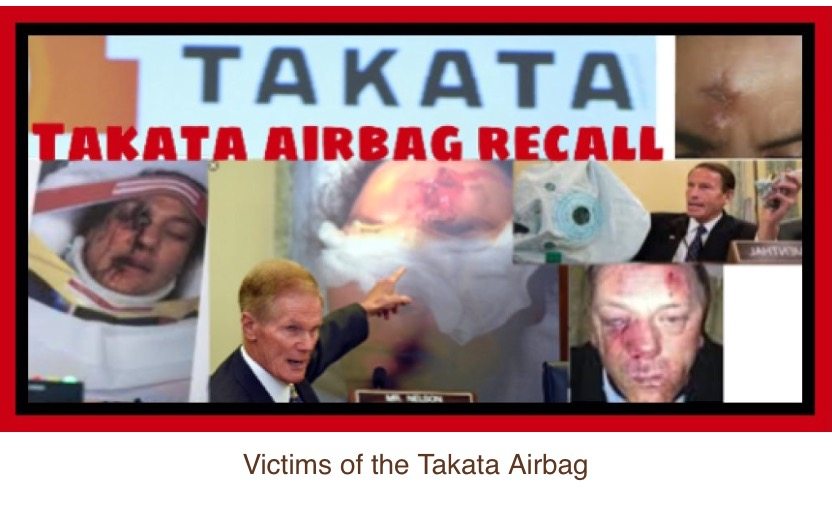
In Re: Takata Airbag Products Liability Litigation: BMW, Ford, Honda, Mazda, Nissan, Subaru, and Toyota


PLEASE GO TO THE LINK BELOW TO SEE IF YOUR VEHICLE IS INCLUDED


In Re: Takata Airbag Products Liability Litigation


BMW, Ford, Honda, Mazda, Nissan, Subaru, and Toyota Settlements


Welcome to the Official Informational Website for the Takata Settlement

This is the informational website for the proposed economic loss class action settlements with BMW, Honda, Mazda, Nissan, Subaru, and Toyota in a class action lawsuit styledIn Re: Takata Airbag Products Liability Litigation, Master Case No. 1:15-MD-02599-FAM. The Court preliminarily approved the settlements with BMW, Mazda, Subaru, and Toyota on June 9, 2017 and issued preliminary approval orders that were docketed on June 12, 2017. The Court preliminarily approved the settlements with Honda and Nissan on September 19, 2017.
For more information, please select the appropriate Settlement below referencing the automobile manufacturer of your Subject Vehicle.
Important Note: Some vehicles included in the Settlement will be recalled at a later date and others may not require a recall. Your receipt of a Settlement Notice does not mean your vehicle is subject to a recall. Please refer to the National Highway Traffic Safety Administration’s website, www.safercar.gov, for the latest information about Takata recalls and to determine if your vehicle is subject to a recall.


Thursday, January 11, 2018

Ford Says Certain Ranger Pickups Should Stop Being Driven Immediately after Second Airbag-Related Death


If you own a vehicle that has an EXPLODING TAKATA AIRBAGM 

for your safety, PLEASE get it taken care of. 


Ford Says Certain Ranger Pickups Should Stop Being Driven Immediately after Second Airbag-Related Death

 JANUARY 11, 2018

After confirming a second death related to a ruptured Takata airbag in a 2006 Ranger, Ford is telling owners of 2902 affected pickup trucks to stop driving them immediately. The automaker said Thursday that parts are available now for fixes, and it’s contacting the vehicles’ owners. The National Highway Traffic Safety Administration (NHTSA) said Ford will also send mobile repair teams to owners’ homes, tow vehicles to a local dealership for repair, and/or provide loaner vehicles.
Ford said it was notified on December 22 about a fatal crash involving a 2006 Ranger that happened last July in West Virginia and confirmed that it linked the death to a ruptured driver’s-side Takata airbag inflator. The automaker inspected the vehicle and found that the inflator was made by the Japanese supplier on the same day as another such part that was blamed for a fatal crash. That one was also in a 2006 Ford Ranger and occurred in South Carolina in December 2015. The affected pickups were built at Ford’s Twin Cities Assembly Plant from August 10, 2005, to December 15, 2005. There are 2712 such trucks in the United States and its territories and 190 in Canada, Ford said.
Globally to date, there have been 21 deaths (including 19 in Honda vehicles) and hundreds of injuries related to the faulty Takata part. Its inflators can explode on airbag deployment, sending metal pieces flying through the vehicle’s cabin. Although the unprecedented safety recall currently spans some 34 million vehicles in the United States, until Ford’s announcement on Thursday only Honda had singled out a specific group of its affected vehicles that should not be driven. Known as Alpha Hondas, they include the 2001–2002 Accord and Civic, the 2002 Honda CR-V and Odyssey, the 2002–2003 Acura 3.2TL, the 2003 Acura 3.2CL, and the 2003 Honda Pilot. A Honda spokesperson told Car and Driver in November that it estimates there are about 100,000 such vehicles on the road and still in need of repair.
U.S. safety regulators have otherwise said the millions of other vehicles affected by the recall are more safe to drive with the recalled airbags still active, because they are far more likely to inflate properly than to rupture in a crash. Ford Ranger pickups from model years 2004 through 2011 had already been part of the Takata airbag recall, which will span some 65 to 70 million vehicles in the United States by 2019, according to NHTSA. See our master list here.
In overseeing the Takata airbag recall, NHTSA has divided affected vehicles into 12 priority groups that correspond to the risk of airbag explosion based on a vehicle’s age and its exposure to heat and humidity. Independent testing has found that the faulty airbag inflators are most likely to rupture after long-term exposure to temperature fluctuations and moisture, so older vehicles and those located in high-humidity parts of the country are considered top priorities for repair.

Owners can check to see if their vehicle is affected and get information by entering their vehicle’s VIN on NHTSA’s online recall lookup tool.


Monday, January 8, 2018

Takata adds 3.3 million faulty airbags to largest automotive recall in U.S. history


Takata adds 3.3 million faulty airbags to largest automotive recall in U.S. history


By 
National Online Journalist  Global News


The Japanese airbag maker Takata continues to expand its massive parts recall by recalling an additional 3.3 million airbags.
According to reports from CBS, the latest addition to the recall includes airbags from some 2009, 2010 and 2013 vehicles made by Honda, Toyota, Audi, BMW, Daimler, Fiat Chrysler, Ford, General Motors, Jaguar-Land Rover, Mazda, Mercedes-Benz, Mitsubishi, Nissan, Subaru and Tesla.
WATCH: Class action lawsuits against Takata

Takata is an automotive parts supplier that filed for bankruptcy in June after sparking the largest automotive recall in U.S. history with a recall of three million vehicles in 2014. Since then, the recall has been intermittently expanded.
Forbes reports that defective Takata airbags could potentially explode in a crash and spray vehicle occupants with small metal shards.
WATCH: Recall impact on Japanese car maker Takata


The bags have been linked to over 180 injuries and 18 deaths, including the most recent one identified in Louisiana last month.
Just a few days into 2018, the judge overseeing the bankruptcy of Takata Corp’s U.S. unit cleared the way for the company’s creditors to vote on its chapter 11 plan — which critics say limits the legal rights of those who’ve been injured by the faulty airbags.
Criticisms include claims that the plan favours automakers over vehicle owners. The trust would pay compensation based on the injury, ranging from $10,000 to $5 million USD for death or loss of eyesight, according to hearing documents.
However, car owners would be barred from suing Honda, and other auto makers who opted to join the trust arrangement.
Currently there are plans for a supplier owned by China’s Ningbo Joyson Electronic Corp., plans to acquire the Takata Corp.
These recalls have included Takata airbags in Canada, two of which took place in December 2017.
The first recalled faulty airbags on 2004, 2005 and 2006 Ford Rangers and the second involved faulty airbags on 2016 and 2017 Mitsubishi I-Mievs.
WATCH: Takata airbag recall becomes largest auto recall in U.S. history

Approximately 30,000 Ford Rangers were affected, while just over 200 Mitsubishi I-Mievs were affected.
Forbes goes on to report that almost two-thirds, or 31.5 million U.S. vehicles affected have not been repaired as of mid-September, according to an independent report released in November.
-With files from Reuters. 
https://globalnews.ca/news/3950585/takata-recalls-millions-more-faulty-airbags/

Thursday, January 4, 2018

Ford to fix coolant leaks in vehicles recalled for fire risk


Ford to fix coolant leaks in vehicles recalled for fire risk


DETROIT — Ford says it will repair any coolant leaks that might be found in more than 200,000 recalled vehicles that are at risk of catching fire.
The repairs, detailed in company documents posted by U.S. safety regulators in December, come 10 months after the company said it would only install a coolant level sensor "with supporting hardware and software."
In March, the automaker announced that it would recall the cars, SUVs and vans because their 1.6-liter turbocharged engines can overheat if coolant gets low, causing the cylinder head to crack and spew oil. At the time, Ford had reports of 29 engine fires with no injuries.
Ford Motor Co.'s March press release and recall documents filed with the National Highway Traffic Safety Administration did not mention fixing any leaks but the company now says that was its plan all along.
In a Dec. 13 letter to dealers, Ford said mechanics should check the cars for coolant leaks, and if they find any concerns, they should make repairs that include hose replacements, a new valve and other parts. They'll also replace the coolant reservoir tank and cap if needed, reprogram control software and update messages that are sent to the dashboard. The repairs will be part of the recall, the letter stated.
NHTSA said in a December statement that it "has been in touch with Ford throughout the recall process and the remedy includes hardware and software updates. Affected owners should take action to get the free repair."
Experts say a healthy engine should not leak or consume coolant, which is often called anti-freeze and is circulated through the engine to regulate the temperature.
In North America, the recall includes Escape SUVs from the 2014 model year, plus the 2014 and 2015 compact Fiesta ST, the 2013 and 2014 Fusion midsize car and the 2013 through 2015 Transit Connect small van. Ford also conducted similar recalls in Europe and China.
The December letter to dealers said parts are available for Escapes but will not be ready for the other vehicles until January or February.
https://www.usatoday.com/story/money/cars/2018/01/03/ford-fix-coolant-leaks-vehicles-recalled-fire-risk/1001090001/

Monday, December 18, 2017

This matters: Ford Asks for Takata Recall Pass


MUST READ: 


Ford Asks for Takata Recall Pass


On July 10, 2017, Takata recalled PSDI-5 driver air bag inflators containing phase-stabilized ammonium nitrate (PSAN) as a generant and calcium sulfate as a desiccant, which were used in vehicles sold in the United States as original equipment in frontal driver airbag modules. Recall 17E034 affected 2.7 million Ford, Mazda and Nissan vehicles produced between 2005 and 2012.


http://www.safetyresearch.net/blog/articles/ford-asks-takata-recall-pass


The price of delay:

Lancaster County man’s death prompts lawsuit, national recall over airbags


BY TEDDY KULMALA

JANUARY 29, 2016 08:16 PM

A Lancaster County man who was killed when his pickup struck a cow last month would still be alive had it not been for the truck’s defective airbag deploying violently, shooting a piece of shrapnel through his neck and spine, his family says in a lawsuit filed this week.

Joel Knight, 52, died Dec. 22 after his 2006 Ford Ranger hit a cow on S.C. 522 as he was driving to work, authorities have said. He was wearing a seatbelt, but an attorney representing Knight’s family says the truck’s airbag – the manufacturer of which is accused in multiple cases of injury and death resulting from defective products – ruptured violently. A piece of shrapnel from the exploding device pierced Knight’s neck and spine.


“They’ve been having problems, known defects and deaths since 2003 – for more than a decade,” said Drew Creech of Elrod Pope Law Firm in Rock Hill, which is representing the family. “It’s a problem they’ve known about and they made a deliberate decision not to recall.”

The lawsuit claims Ford and Takata knew of multiple cases of people being injured or killed by exploding airbags, including a pregnant Malaysian woman who died in July 2014 after a wreck and fatal airbag rupture similar to the one that killed Knight. And yet, the suit alleges, Takata and Ford still “put profits ahead of safety” by continuing to produce and install the defective airbags.

The inflator devices in question were developed by Takata in the late 1990s to make airbags more compact, reduce the toxic fumes earlier airbag models emitted and to save costs and maximize profit for Takata, the complaint states. The redesigned airbags are inflated by an ammonium nitrate-based explosive encased in a metal canister.

“Over time, it becomes highly volatile and it causes an explosion much greater than normally anticipated,” Creech said. When the airbag deploys, the metal cylinder inside the canister ruptures in half and shoots out of the canister “like a bullet coming out of a rifle barrel.”

Creech said Ford and Takata recalled only a handful of vehicles despite knowing of many such cases, including the crash that killed the Malaysian woman, whose Honda had the same airbag and inflator model as Knight’s Ford Ranger.

“Ford was certainly aware of her death, aware of the massive (Takata airbag) recall, yet Ford chose not to recall the Ford Rangers,” Creech said. “They eventually did a very limited recall in a very select few states for the 2004 and 2005 Ford Ranger. They never recalled the 2006 Ford Ranger at all, even though they knew the same inflator model was in the Ranger.”

Knight is believed to be the ninth person killed in the United States as a result of the defective airbags, federal regulators say. His death last month prompted Takata and Ford to expand a recall this week to include trucks made from 2004 through 2006 in the U.S. and Canada. Ford alone is recalling 391,000 Rangers made during that time.

Federal regulators say this latest recall will affect about 5 million vehicles, including those made by Audi, BMW, Ford, Honda, Mazda, Mercedes Benz, Saab and Volkswagen. Visit SaferCar.gov to see if your vehicle is included in the recall.

“Our heartfelt condolences go out to the driver’s family,” Takata has said in statements to multiple outlets. “We are cooperating fully with regulators and our automotive customers and continue to take aggressive action to advance vehicle safety, including through our ongoing testing efforts, replacement kit production and raising consumer awareness of recalled vehicles.”

http://www.thestate.com/news/state/south-carolina/article57402388.html


Wednesday, October 18, 2017

Ford urged to recall 1.3M Explorers amid carbon monoxide poisoning concerns


October 17, 2017

Ford urged to recall 1.3M Explorers amid carbon 

monoxide poisoning concerns


There is a new push Tuesday morning for the  Ford Motor Company to recall its Explorer SUVs over carbon monoxide poisoning concerns. The Center for Auto Safety is urging Ford to pull more than 1.3 million Explorers off the road.
Ford announced it is offering free inspections and repairs to reduce the potential for exhaust to enter vehicles. But the company insists its Explorers are safe and said the offer is "for our customers' peace of mind."
The Center for Auto Safety is calling on Ford to recall all of its 2011 through 2017 Ford Explorer SUVs, reports CBS News' Kris Van Cleave.
The National Highway Traffic Safety Administration is investigating more than 2,700 complaints about possible carbon monoxide in Explorers, including reports of 41 injuries and three accidents that may also be linked.
In July, police in Austin, Texas, parked more than 400 Explorers after nearly two dozen officers were found to have high levels of carbon monoxide in their blood.
Across the country, Ford has been repairing the Explorer police cruisers at no cost, but the company says the issue is separate from the complaints in civilian models and due to modifications of the vehicles after they were purchased -- like installing emergency lights.
In a statement, Ford said they are "confident in our current methods for quickly identifying and addressing potential vehicle issues."
The company says it will send letters next month to owners of the 2011 through 2017 Explorers, urging them to take their SUVs to dealers for inspections, so any necessary repairs can be made.
Customers can take their vehicles, regardless of mileage or warranty status, to a Ford dealer to have this service performed, starting Nov. 1, 2017 through Dec. 31, 2018. Customer mailings will begin the week of Nov. 13, 2017, and be completed by Dec. 22, 2017.  Customers with questions also can call a dedicated hotline at 888-260-5575.

https://www.cbsnews.com/news/ford-explorer-models-2011-to-2017-center-for-auto-safety-recall-urged/

Ford says recall of F-150, Super Duty pickups to cost $267 million in Q4


Ford says recall of F-150, Super Duty pickups to cost $267 million in Q4


October 18, 2017


DETROIT -- Ford Motor Co. on Wednesday recalled 1.3 million 2015-17 F-150 pickups and 2017 Super Duty pickups to fix faulty side door latches.
In a filing with the Securities and Exchange Commission, Ford said the recall would cost it $267 million and will show up on the company's fourth quarter income statement. 
Ford said dealers will install a water shield in affected vehicles for free. Without the shield, the doors may not open or close properly and may open while driving, Ford said.
A Ford spokeswoman, Elizabeth Weigandt, said customers would be notified next month but did not have a timetable for when parts will be available. 
Affected F-150s were built from March 12, 2014, to Dec. 31, 2016, at the Dearborn Assembly Plant and from Aug. 11, 2014, to Dec. 30, 2016, at the Kansas City Assembly Plant.
Affected Super Duty pickups were built from Oct. 8, 2015, to Sept. 1, 2016, at the Kentucky Assembly Plant.
Ford said it is unaware of any accidents or injuries related to the problem.
This is not Ford's first door latch problem.
It took a $295 million hit in the first quarter because of two recalls, one of which involved the expansion of a door latch recall to nearly 211,000 vehicles including 2014 Fiestas, 2013-14 Fusions and 2013-14 Lincoln MKZs.
Ford has now recalled more than 5 million vehicles for varying door latch-related issues since 2016, but the company said the issue in the new recall is different from prior ones.
Weigandt said Ford's decision to issue a recall is driven by data. "When the data indicates a safety recall is needed, we move quickly," she said.
Reuters contributed to this report.

http://www.autonews.com/article/20171018/OEM11/171019669/ford-truck-recall-earnings

Wednesday, August 9, 2017

Nissan to pay $98 mil. to settle Takata suit in U.S.


https://www.usatoday.com/story/money/cars/2016/10/21/exploding-takata-air-bag-claims-11th-victim-us/92502330/

Nissan to pay $98 mil. to settle Takata suit in U.S.


ReutersWASHINGTON (Reuters) — Nissan Motor Co. on Tuesday agreed to pay $97.7 million to settle class-action claims of consumer economic loss in the United States tied to the recall of 4.4 million vehicles with Takata air bag inflators, court records show.
Nissan said in a statement that it was not admitting fault under the settlement.
The settlement is similar to others reached with major automakers. In June, a federal judge in Miami granted preliminary approval to settlements with Toyota Motor Corp., Subaru Corp., BMW AG and Mazda Motor Corp. totaling $553 million and affecting 15.8 million vehicles with Takata inflators.
At least 18 deaths and 180 injuries worldwide have been tied to the defect that led Takata Corp. to file for bankruptcy protection in June.
Takata inflators can explode with excessive force, unleashing metal shrapnel inside cars and trucks.
Honda Motor Co. and Ford Motor Co. to date have not agreed to settle consumer economic loss claims.
All the settlements reached so far include an outreach program to contact owners of recalled vehicles and to address the low number of completed repairs, as well as compensation for economic losses including out-of-pocket expenses; a possible residual distribution payment of up to $500; rental cars for some owners; and a customer support program for repairs and adjustments, including an extended warranty.
Nissan said its settlement is “intended to significantly increase customer outreach and to accelerate recall remedy completion rates for Takata airbag inflator recalls.”
As of late June, only 29.9 percent of Nissan vehicles recalled with Takata inflators had been fixed.
The settlement is subject to court approval. A hearing to grant final approval for the other four automaker settlements is set for Oct. 25.
In January, Takata agreed to plead guilty to criminal wrongdoing and to pay $1 billion to resolve a U.S. federal investigation into its inflators.
Takata agreed to establish two independently administered restitution funds: one for $850 million to compensate automakers for recalls and a $125 million fund for individuals injured by its airbags who had not already reached a settlement. 


Takata seeks to suspend airbag victims' lawsuits against carmakers


Takata seeks to suspend airbag victims' lawsuits against carmakers


WILMINGTON, Del./WASHINGTON -- Takata Corp.'s bankrupt U.S. business will ask a federal judge on Wednesday to suspend lawsuits against automakers that have been brought by people injured by its faulty air bag inflators, something that opponents say is an abuse of the law.
Takata and TK Holdings Inc., the company's U.S. unit, filed for bankruptcy in June and said they faced tens of billions of dollars in liabilities from its inflators, which are subject to the biggest recall in automotive history.
Bankruptcy automatically stayed hundreds of lawsuits against TK Holdings for wrongful death, injuries, economic loss and breach of consumer protection laws. But in July the company sought a preliminary injunction to suspend lawsuits against automakers that use its inflators.
Without the injunction, Takata said the litigation would distract management from completing the sale of the company's viable operations to Key Safety Systems for $1.6 billion and could threaten the supply of airbag inflators to replace recalled ones.
Plaintiffs' lawyers called the requested injunction "an abuse of the bankruptcy laws for the benefit of all of the world's largest automobile manufacturers." They said Takata's request would delay consideration of plaintiff's lawsuits for six months or more, which would be a very long time for the plaintiffs.
The official bankruptcy committee that represents injured drivers said in court papers the injunction would have "human consequences" and prevent people from pursuing compensation.
The committee cited the example of a 23-year-old New Jersey woman whose quadriplegia resulted from brain injuries that a government investigator said were caused by a faulty Takata airbag.
The woman's lawyers estimated her economic loss would be $18 million, which does not include potential damages for pain and suffering.
At least 18 deaths and 180 injuries worldwide have been linked to Takata airbags. Takata has said it expected 125 million vehicles worldwide to be recalled by 2019.
Takata set aside $125 million to compensate those injured by its air bags as part of a guilty plea, but plaintiffs' lawyers argue it will not be enough.
Major automakers including BMW AG, Ford Motor Co., Honda Motor Co. and Toyota Motor Corp. sided with Takata in backing a six-month delay in lawsuits, arguing in a court filing that doing so would "advance the interests of their customers and the safety of the motoring public by increasing the likelihood" the Takata restructuring will succeed and "protect the supply of replacement inflators and diminish the risk of future deaths and injuries."


Sunday, April 23, 2017

Ready for Another Recall? NHTSA Investigating Ford for More Power Steering Problems


Not new...just a reminder.


Ready for Another Recall? NHTSA Investigating Ford for More Power Steering Problems


Here we go again. The National Highway Traffic Safety Administration (NHTSA) has launched another investigation of hundreds of complaints about steering problems in certain Ford Motor Co. vehicles. Can another recall be far behind? With one proposed class action lawsuit already pending against Ford in California over the same steering issues, the car manufacturer might want to brace itself for another round of explaining its actions.
The NHTSA is investigating 508 consumer complaints alleging a loss of power steering assist in the 2010-12 Ford Fusion and Lincoln MKZ, and the 2010-11 Mercury Milan equipped with rack mounted Electric Power Assisted Steering (EPAS). Four of those complaints maintain the power steering failure resulted in a road accident. The investigation, announced by the NHTSA’s Office of Defects Investigation on Oct. 2, effects an estimated 938,000 vehicles. 
Drivers reported seeing a power steering warning message when the failure happened, according to the announcement. Some drivers said the problem was corrected when they turned the car off and restarted it. But many drivers said the problem occurred again after restarting the car. 

Loss of Control

The investigation announcement doesn’t provide much detail about what can happen after the power steering cuts out unexpectedly, but the lawsuit does. 
In Philips v. Ford (No. 14-02989), filed in the U.S. District Court for the Northern District of California, San Jose Division, on June 27, vehicle owners accuse Ford of failing to tell consumers that the EPAS system in certain Fusion and Focus models “is prone to premature failure during ordinary and foreseeable driving situations … leaving [the drivers] unableto control their vehicles.” The plaintiffs filed an amended complaint on Sept. 8. 
Ford moved to dismiss on Oct. 24. A hearing on the motion is scheduled for February 12, 2015.
The complaint describes what happened when the owner of a 2010 Ford Fusion lost power steering while entering a freeway in 2012. When the power steering suddenly quit, the driver also lost traction control and the ability to brake, causing the car to swerve and hit the concrete barrier on the driver’s side of the ramp, according to the complaint. Both the driver and the passenger were injured in the crash. 
It’s important to note that the power steering failure doesn’t mean that the driver has no way to control the car at all. When the EPAS system fails, the manual steering system takes over. However, “[t]he sudden shock of needing to immediately exert great effort to control the vehicle makes the Defective Vehicles extremely susceptible to accidents when EPAS fails.” It’s easy to see how a collision can occur, particularly if an elderly or teen driver is behind the wheel. 

Little Help Alleged

Meanwhile, the complaint alleges, Ford has been less than helpful when car owners have sought to have the steering problem fixed.  After hitting a curb when the power steering in her 2011 Ford Fusion failed in 2012, the car owner took the vehicle to a Ford dealer three times to have the problem fixed, the complaint says.  But the dealer refused to work on the problem because the steering failure couldn’t be replicated, alleges the complaint. 
To make matters worse, the complaint maintains Ford has known about the steering problem for four years but has continued to make, market and sell the vehicles. “Specifically, Ford has been aware since 2010, if not earlier, that the EPAS system it designed, manufactured, and installed in the Defective Vehicles is prone to sudden and premature failure, resulting in marked increases to steering effort and loss of driver control,” alleges the complaint. 
The lawsuit identifies the following vehicles as having defective EPAS systems: the 2010-2014 Ford Fusion; 2010-2014 Ford Fusion Hybrid; 2013-2014 Ford Fusion Energi; 2012-2014 Ford Focus; and 2012-2014 Ford Focus Electric. “Notably, Ford has never recalled the 2010 or 2011 Ford Fusion—or any other model of Defective Vehicle—and never disclosed the problems to the customers, NHTSA, or the public,” the complaint states. 

Ford’s Response

In its motion to dismiss, Ford argues the lawsuit isn’t a nationwide action because the plaintiffs only bought cars in six states— Arizona, California, Georgia, Illinois, Michigan, and Ohio. Therefore, the proposed class action complaint does not represent consumers in other states, says Ford. 
Secondly, under the laws of those six states, the economic-loss rule bars the plaintiffs’ tort claims based solely on alleged damage to the vehicles themselves, Ford argues. The plaintiffs also failed to plead with the required particularity the necessary facts to support their fraud claims. Further, the plaintiffs do not plead facts sufficient to state claims for breach of express or implied warranty, Ford maintains. 
Finally, the existence of an adequate legal remedy in the form of the claims for breach of express or implied warranty bars the plaintiffs from seeking equitable relief. “They may not be able to recover on those claims, but that does not make the legal remedy inadequate,” says Ford. 

Second Lawsuit

Meanwhile, a second proposed class action suit also bears watching. Two California car owners accuse another major car manufacturer of ignoring complaints about power steering defects.  
Deadlines have been extended into 2015 on class action certification briefing in a lawsuit brought by Toyota vehicle owners in October 2012. Irene Corson and Susan M. Yacks say Toyota Motor Sales USA Inc. and Toyota Motor Corp. have known about an electric power steering defect in 2009 and 2010 Corolla and Matrix models but failed to disclose the defect or recall the vehicles. 
The plaintiffs in Corson v. Toyota (12-08499), pending in the U.S. District Court for the Central District of California, allege the power steering problem caused their vehicles “to wander or drift from center at highway speeds and/or suddenly veer to one direction during normal use.” Plaintiffs filed a third amended complaint on Aug. 5, 2013, alleging violations of the Unfair Competition Law, Business and Professions Code, Consumers Legal Remedies Act, Magnuson-Moss Act, as well as state statutory and common law claims for breach of express and implied warranty.
The plaintiffs seek a nationwide class of current and former owners and lessees of the Corolla and Matrix vehicles in question. Alternatively, they seek sub-classes involving vehicles purchased or leased in New York and Pennsylvania, according to the amended complaint. 
Sidebar: 

SUV Recall

It’s been a busy year for Ford in terms of power steering problems. 
In May, Ford recalled 1.1 million sport utility vehicles in the U.S. and Canada over power steering issues. The recall reversed Ford’s refusal in June 2013 to recall 2011 Explorers for the same steering problem, The Wall Street Journal reported. The SUV recall targeted certain 2011-2013 Explorers with malfunctioning electrical connections and 2008-2011 Escape and Mariner models with faulty sensors, the WSJ said. 

http://newsomelaw.com/blog/2015/01/07/ready-another-recall-nhtsa-investigating-ford-more-power-steering-problems/


Monday, September 28, 2015

The 8 Biggest Corporate Welfare Recipients in America - Your tax dollars!


The 8 Biggest Corporate Welfare Recipients in America

Read more: http://www.cheatsheet.com/business/high-on-the-hog-the-top-8-corporate-welfare-recipients.html/?a=viewall#ixzz3n5NGpID7


In the U.S.,  it is rather commonplace to see welfare recipients demonized, people on food stamps ostracized, and anyone on any form of public assistance is often made to feel guilty that they need help. They are called lazy and incompetent, with little regard for circumstance or economic hardship. Sure, there are some people that take advantage of the system. But there are millions that desperately need help, and social welfare programs are the only thing standing between them and poverty.
That demonization seems to shift, however, when it comes to giving assistance to big business. According to The Cato Institute, corporate welfare handouts shot all the way up to $92 billion as of 2002. Most of those subsidies were secured by companies in industries like energy — which are some of the most profitable entities in the history of the world. As one writer at Forbes points out, cutting these huge subsidies would be a great way to help balance the national budget, but it is never put into action, and much less even considered.
More recently, subsidy tracking group Good Jobs First released a report last year detailing where exactly taxpayer dollars are being funneled, and which states are the most likely to divvy up handouts. There are some surprises in the report, but many details won’t come as much of a shock at all. New York and Washington were the top two states for handing out corporate subsidies, with New York alone topping more than $20 billion across nearly 69,000 individual handouts. The data also shows that roughly 75% of disclosed subsidy dollars have gone to 965 big companies. The total known value of subsidies across the country came out at an estimated $110 billion, although its likely more.
From its data, Good Jobs First was able to identify the top 100 recipients of corporate subsidies, dominated by transportation and natural resource companies. Here are the top eight companies from that list, and the total known amount in subsidies they are receiving.

Nike-shoes-e1387486792661.jpg
Source: Getty Images

8. Nike — $2.03 Billion

Nike, based in the Portland suburb of Beaverton, Oregon, has taken in more than $2 billion in government appropriations, spanning 75 individual subsidies. Spanning the globe in terms of scope and reach, Nike isn’t exactly strapped for cash, so making the case that the company is in need of government assistance can be difficult.

Nike has been doing a good job of cleaning up its act over the past several years, cracking down on harsh factory conditions in its many plants across the world and giving plenty of money to schools across the country — most notably, the University of Oregon. While far from the top, Nike is getting a substantial boost to its revenue from the taxpayers, and it’s something the public and their representatives should keep an eye on.

Source: Leon Neal/Getty Images

7. Royal Dutch Shell — $2.04 Billion

As a petroleum company, Shell has been reaping profits like the world has never seen before, along with industry cohorts like Exxon Mobil. Many consumers have had to find ways to adjust as gas prices continue to rise, along with production costs of plastics and other materials. All the while, major oil companies have been sitting back and watching profits pile up.
Shell received $2.04 billion across 79 subsidies — enough to make it the top oil company in Good Jobs First‘s findings. For politicians looking to actually make headway towards balancing the budget, handouts to companies like Shell might be a good place to start reviewing. As The New York Times writes, these handouts only add on to the billions oil companies are already bringing in. In the words of Senator Robert Menendez of New Jersey, “there is no reason for these corporations to shortchange the American taxpayer.”
Fiat500Logo
Source: Fiat

6. Fiat Chrysler Automobiles — $2.06 Billion

Fiat, now the owner of Chrysler, has been receiving a considerable chunk of taxpayer cash to help with its vehicle production worldwide. The government has ponied over more than $2 billion to the Italian-based auto maker, which it has used to help prop up brands like Dodge, Ram, and Chrysler here in the states. The company has come out to say that the survival and performance of its American brands are crucial to success, as it hopes revamps to its Jeep and Alfa Romeo lineups help on the bottom line.
Fiat has received 96 subsidies to bring their total up to $2.06 billion, and it’s obvious that the government sees the importance of helping the company prop up its American businesses. With several production plants and dealerships operating across the U.S., hopefully it turns out to be a worthwhile investment.
2014FordMustang-e1408710501417.jpg
Source: Ford

5. Ford — $2.52 Billion

It doesn’t get much more ‘American’ than the Ford Motor Company, which itself has allocated $2.52 billion in government funding as of late. Spread across 193 separate appropriations, the subsidies have been able to help Ford recover from the financial crisis and adapt to a world that looks more and more like it have less cars on the road in coming years. Ford has been able to avoid, by and large, some of the other issues other American manufactures have had to deal with, but it still faces an uncertain future.
Ford has seen revenues surge as new technology, features, and models have been added to its lineup. It’s still the maker of the best selling car in America, the F-150, and its Fusion sedan has been winning over many in the sedan segment. However, for a company that is pulling in $7.2 billion in profits, as reported by The Guardian, it does bring up questions as to why the company is getting so much from the taxpayers when it is more than profitable.
GeneralMotorsDetroit
Source: General Motors

4. General Motors — $3.58 Billion

Detroit’s own General Motors was found to be getting $3.58 billion in subsidies, coming in from 320 individual appropriations. Having survived bankruptcy on the backs of the taxpayers in 2009, GM took drastic measures to return itself to profitability. Several brands were cut from under the GM umbrella, leaving just four still in production. GM looked to be on a path towards stability until recent happenings have quickly returned the company to the public’s ire.
GM was found to have allowed vehicles with severe issues to go to market, resulting in customer deaths and the recall of millions of cars, trucks, and SUVs. With most of the recalls having occurred over the past year, the realization of how much the company is receiving in subsidies has been more of an afterthought than anything. Though GM is getting things turned around, it’s still likely to be on the receiving end of public money for quite some time.
Source: Justin Sullivan/Getty Images

3. Intel — $3.87 Billion

The pride of Santa Clara, California, Intel is a maker of semiconductor microchips used in computers all across the world. The company was one of the big drivers behind the computing revolution of the 1980s and 1990s, and its founding dates all the way back to 1968. Intel is also on the receiving end of large amounts of government cash, with totals most recently reaching $3.87 billion from 59 individual subsidies.
It’s not a total stretch to understand why Intel might be getting so much money from the government, as there is a whole lot of interest in investing in the development of computing’s evolution. From defense to space exploration and everything in between, there’s no doubt that Intel’s chips will be used to power a huge amount of projects in coming years, with the private sector also a close watch.
Source: Mario Laporta/Getty Images

2. Alcoa — $5.64 Billion

You may not know Alcoa by name, but there’s probably at least one product with Alcoa aluminum in it somewhere in your home. As the world’s third largest producer of aluminum, Alcoa has an extensive history dating back to 1886 when it was first founded in Pittsburgh, Pennsylvania. The company has received $5.64 billion across 99 subsidies according to Find Good Jobs‘ report, which have helped the company go on to secure lucrative contracts for projects, like building jet engine parts.
As of the past few years, Alcoa has really been picking up steam. Production has increased at its numerous plants and stock prices have jumped as investors have taken notice. As the company continues to ramp things up, look for subsidy levels to remain high in coming years.
Source: Thinkstock
Source: Thinkstock

1. Boeing — $13.18 Billion

The top welfare recipient of them all is aerospace giant Boeing, which has operations spread all across the country building aircraft and working on numerous Department of Defense projects. The amount of work Boeing does for the federal government no doubt plays a part in the amount of subsidies the company has been able to secure, but Boeing has also played hardball with local jurisdictions to get enormous tax breaks. With more than $13 billion coming in from 148 handouts, Boeing has thoroughly entrenched itself in the interest of the government and taxpayers.
Despite the immense amount of money the company is receiving, it has still gone on to hold cities hostage in tax negotiations, threatening to remove jobs and open up shop in friendlier climates. This past year, Boeing secured the highest ever tax break at the state level when it cornered the Washington legislature into ceding to its demands, lest it move its production plants to another part of the country. The legislature granted Boeing its wish, but Boeing went on to announce drastic layoffs anyway, angering many locals.
Boeing has become the king of corporate handouts, and other corporations have a long way to go to catch up.
Follow Sam on Twitter @Sliceofginger


http://www.cheatsheet.com/business/high-on-the-hog-the-top-8-corporate-welfare-recipients.html/?a=viewall