Search This Blog

Translate

Blog Archive

Middleboro Review 2

NEW CONTENT MOVED TO MIDDLEBORO REVIEW 2

Toyota

Since the Dilly, Dally, Delay & Stall Law Firms are adding their billable hours, the Toyota U.S.A. and Route 44 Toyota posts have been separated here:

Route 44 Toyota Sold Me A Lemon


Showing posts with label Toyota airbags. Show all posts

Wednesday, August 9, 2017

Takata seeks to suspend airbag victims' lawsuits against carmakers


Takata seeks to suspend airbag victims' lawsuits against carmakers


WILMINGTON, Del./WASHINGTON -- Takata Corp.'s bankrupt U.S. business will ask a federal judge on Wednesday to suspend lawsuits against automakers that have been brought by people injured by its faulty air bag inflators, something that opponents say is an abuse of the law.
Takata and TK Holdings Inc., the company's U.S. unit, filed for bankruptcy in June and said they faced tens of billions of dollars in liabilities from its inflators, which are subject to the biggest recall in automotive history.
Bankruptcy automatically stayed hundreds of lawsuits against TK Holdings for wrongful death, injuries, economic loss and breach of consumer protection laws. But in July the company sought a preliminary injunction to suspend lawsuits against automakers that use its inflators.
Without the injunction, Takata said the litigation would distract management from completing the sale of the company's viable operations to Key Safety Systems for $1.6 billion and could threaten the supply of airbag inflators to replace recalled ones.
Plaintiffs' lawyers called the requested injunction "an abuse of the bankruptcy laws for the benefit of all of the world's largest automobile manufacturers." They said Takata's request would delay consideration of plaintiff's lawsuits for six months or more, which would be a very long time for the plaintiffs.
The official bankruptcy committee that represents injured drivers said in court papers the injunction would have "human consequences" and prevent people from pursuing compensation.
The committee cited the example of a 23-year-old New Jersey woman whose quadriplegia resulted from brain injuries that a government investigator said were caused by a faulty Takata airbag.
The woman's lawyers estimated her economic loss would be $18 million, which does not include potential damages for pain and suffering.
At least 18 deaths and 180 injuries worldwide have been linked to Takata airbags. Takata has said it expected 125 million vehicles worldwide to be recalled by 2019.
Takata set aside $125 million to compensate those injured by its air bags as part of a guilty plea, but plaintiffs' lawyers argue it will not be enough.
Major automakers including BMW AG, Ford Motor Co., Honda Motor Co. and Toyota Motor Corp. sided with Takata in backing a six-month delay in lawsuits, arguing in a court filing that doing so would "advance the interests of their customers and the safety of the motoring public by increasing the likelihood" the Takata restructuring will succeed and "protect the supply of replacement inflators and diminish the risk of future deaths and injuries."


Monday, August 3, 2015

Toyota trying to locate thousands of counterfeit airbag parts that could prove deadly in a crash


Toyota trying to locate thousands of counterfeit airbag parts that could prove deadly in a crash


Safety concern ... the bogus parts can fail to deploy the airbag in a crash. Picture: Sup
Safety concern ... the bogus parts can fail to deploy the airbag in a crash. Picture: Supplied.


EXCLUSIVE: TOYOTA Australia is trying to locate “thousands” of counterfeit airbag parts that could prove deadly in a crash.
The bogus parts — sold in what appears to be genuine Toyota packaging — fit most of the 2 million Toyotas sold in Australia over the past 10 years, but the company has no idea how many have been installed in cars locally.
The fake airbag “spiral cables” are sold by unscrupulous importers who are selling them to independent repairers and possibly Toyota dealers who are likely unaware the parts are bogus.
Red alert ... a copy of the confidential Toyota dealer bulletin. Picture: Supplied.
According to an urgent dealer bulletin obtained by News Corp Australia, Toyota has “serious concerns about the safety of these parts” after internal testing in Japan found there were four ways they could fail to deploy an airbag in a crash.
Toyota Australia has declined to comment on the matter.
But the dealer bulletin issued over the weekend says there is a “high likelihood of insufficient conductivity to support airbag deployment electrical current” and “significant risk of airbag non deployment in an accident”.
The technical bulletin says the counterfeit part does not have gold plated connectors, the crimping of the cable is not strong enough and it does not use copper wire as per the genuine article. The plastic locking tabs are also “poorly formed” or misaligned.
As is the case with most new cars, the airbag connector — the link between the car’s power source and the airbag in the steering wheel — must be replaced every time an airbag is deployed in a crash.
The genuine part costs about $300 wholesale, while the fake part is estimated to cost as little as $50.
Spot the difference ... the genuine part (left) and the counterfeit (right). Picture: Sup
Spot the difference ... the genuine part (left) and the counterfeit (right). Picture: Supplied.


Adding to the confusion, one of the importers of the counterfeit devices sells the exact same part with and without Toyota packaging, marketing the cheaper option simply as “non-genuine”, when in fact both parts are fake and have not been tested to manufacturer standards.
Owners of Toyota cars that have never been involved in an accident are not at risk of being affected by the bogus parts.
But Toyota vehicles that have been repaired after an airbag deployed in a crash may have been fitted with the counterfeit parts either knowingly or unwittingly by smash repairers.
One dealer speaking on condition of anonymity said: “The problem is, we truly have no way of knowing how many of these fake parts are out there. But we suspect there are thousands, because they are quite a commonly used part.”
According to insurance industry figures, about 15 per cent of crashes are serious enough to deploy airbags, which on conservative estimates equates to about 150,000 cars needing replacement airbags each year nationally.
Industry experts fear the counterfeit parts may not be exclusive to Toyota, and other brands may be affected.
But Toyota is one of the prime targets as it sells the most cars.
Toyota has been Australia’s biggest selling car company for the past 12 years in a row.
The Toyota bulletin has advised dealers to check the airbag connector when cars come in for routine servicing, to ensure it is not a counterfeit part.
The latest safety issue is unrelated to the recent recalls involving Takata airbags, which so far have seen more than 860,000 cars sent back to dealers in Australia, of which 207,000 were Toyotas and 306,000 were Hondas.

Originally published as Toyota’s fake airbag parts scare
http://www.adelaidenow.com.au/technology/toyota-trying-to-locate-thousands-of-counterfeit-airbag-parts-that-could-prove-deadly-in-a-crash/story-fnjwq0cw-1227467021159?from=public_rss

Saturday, May 16, 2015

TOYOTA RECALLS


Please click on the following NHTSA Campaign ID links to view the recall information.


NHTSA Campaign ID Number :15V240
Manufacturer :Gulf States Toyota, Inc.
Make / Model Years :TOYOTA / 2015
Subject : Reuse of Trim Panel Clip may Allow Panel to Detach
Thank you,
Recalls Subscription Team
Office of Defects Investigation (ODI)
National Highway Traffic Safety Administration (NHTSA)
U.S. Department of Transportation (DOT)


close RECALL Subject : Reuse of Trim Panel Clip may Allow Panel to Detach

Sunday, February 1, 2015

KILLER Air Bags inflate while driving


Automakers recall 2.1M vehicles for faulty air bags


Wednesday, December 3, 2014

NHTSA Flunkie David Friedman: Yada Yada Yada....


NHTSA's failures are so numerous....yet it seems when car accidents and injuries lack a clearcut explanation, NHTSA jumps to label 'DISTRACTED DRIVER'....the next auto industry propaganda campaign.

Keep watching!

Too many complaints have been filed that NHTSA has ignored.


NHTSA says no need for national recall of passenger airbags

Supplier to audit inflator production with independent panel


Related Stories
Related Downloads
Related Topics

Editor’s note: An earlier version of this story incorrectly said NHTSA has backed off its push for a nationwide recall of Takata airbags. The agency continues to call for such a move for driver-side airbags while not yet making any similar requests regarding passenger airbags.

The National Highway Traffic Safety Administration today confirmed that it is not yet ready to call for a nationwide recall of Takata-produced passenger airbags -- easing fears that automakers could face shortages of replacement inflators.

But the agency is sticking with its demand for a national recall of Takata driver-side airbag inflators -- a step the supplier has not yet supported.

The agency says it may yet demand a nationwide recall of passenger airbags if Takata’s test data warrants it.

Separately, Takata Chairman Shigehisa Takada announced plans to form an independent panel to audit his company’s production of inflators -- part of an effort to reassure lawmakers and regulators that it has fixed chronic quality-control problems.

In written testimony submitted to the House Subcommittee on Commerce, Manufacturing and Trade for a Wednesday hearing, Deputy Administrator David Friedman said a nationwide recall of Takata’s passenger airbag inflators “is not supported by the data as we now understand it.”

The agency’s top priority is to ensure an adequate supply of replacement inflators in high-humidity areas such as Florida, Hawaii, Puerto Rico and the U.S. Virgin Islands.

“At this point, a national recall of all Takata air bags would divert replacement air bags from areas where they are clearly needed, putting lives at risk,” Friedman wrote to the subcommittee, which is part of the House Energy and Commerce Committee.

In his own written testimony, Takata’s Hiroshi Shimizu asserted that the recalls should be focused on high-humidity areas.

Shimizu, Takata's senior vice president for global quality assurance, said no inflators from vehicles outside high-humidity areas have failed Takata’s tests.

According to a Commerce committee staff document, the company has tested about 4,000 inflators, including 1,000 to 2,000 units collected outside high-humidity areas.

Independent panel formed

Meanwhile, in today’s statement, Chairman Takada said he will form a “quality assurance panel” to audit the company’s production methods. The panel will be chaired by former U.S. Transportation Secretary Samuel Skinner.

Takada also pledged to “take dramatic actions” to increase production of replacement inflators.

The company has previously confirmed plans to add two production lines to its inflator factory in Monclova, Mexico. In January, that expansion will raise monthly production of replacement inflators to 450,000 units, up from 300,000 units now.

It was not immediately clear whether Takada expects to boost production above that target.

Takata also appointed two former U.S. transportation secretaries, Rodney Slater and Norman Mineta, to serve as special counsels as the company struggles to get its arms fully around a series of recalls related to defective Takata airbags.

Takata has collected more than 20 terabytes of data in response to requests for information from U.S. safety regulators and is producing more than 360,000 pages of documents for regulators, Takada’s statement said.

Reuters contributed to this report.


http://www.autonews.com/article/20141202/OEM11/141209943/nhtsa-says-no-need-for-national-recall-of-passenger-airbags


Takata Resists Midnight Deadline to Expand Airbag Recall....


Takata Takes No Action on Demand to Expand Recall of Faulty Airbags

Facing a midnight deadline to expand a recall of defective airbags, Takata, the Japanese auto supplier, had not taken any action Tuesday night on the demand by United States regulators.
 
The National Highway Traffic Safety Administration gave the company an ultimatum last week, to expand the recall beyond a limited geographic region to the rest of the nation or face further legal action and potential penalties. It gave Takata until midnight, Eastern United States time, to comply.
 
But in a statement released Tuesday morning, Takata’s chief executive, Shigehisa Takada, offered no indication that the company would make such a move.
 
“We recognize that N.H.T.S.A. has urged Takata and our customers to support expansions of the current regional campaigns in the United States,” he said. When asked to clarify its statement, the company offered no further details.
In a prepared statement for a hearing before a House congressional panel on Wednesday, however, a Takata executive said that the company believed that public safety was best served if limited geographic areas of high humidity “remain the priority for the replacement of suspect inflaters.”
Photo


Shrapnel holes in a Honda driver’s-side airbag made by Takata. The airbags can explode violently when they deploy.Credit Gary Cameron/Reuters
 
In a statement late Tuesday, David J. Friedman, deputy administrator of the agency, said Takata’s response was disappointing, and added: “Takata shares responsibility for keeping drivers safe and we believe anything short of a national recall does not live up to that responsibility. We will review Takata’s response in full to determine next steps.”
 
The company’s response is likely to set up a showdown at the hearing, where a Takata representative is scheduled to testify, as are executives from Honda, Toyota and B.M.W. Lawmakers have been calling for more aggressive action on recalling and repairing the defective airbags, including at a Senate hearing on Nov. 20. Mr. Friedman is also expected to testify.
 
The agency originally agreed in June to a limited recall that covered Florida, Hawaii, Puerto Rico and the Virgin Islands. But regulators pushed for a national recall after learning of an airbag rupture in August in a 2007 Ford Mustang that injured the driver. That episode was in North Carolina, a state that was excluded from the regional recall.
 
Eleven carmakers have recalled over 14 million cars worldwide, including more than 11 million in the United States, to repair the airbags. At least five deaths have been linked to the airbags, which can explode violently when they deploy, sending metal fragments into the cabin. All occurred in vehicles made by Honda, Takata’s largest customer.
OPEN Graphic

Graphic: Takata Airbag Recalls: Affected Vehicles

Honda and Toyota on Tuesday called for the auto industry to independently test Takata airbag inflaters that had been the subject of recalls, to supplement testing being undertaken by Takata.
 
“Toyota is seeking industrywide coordination in support of a yet-to-be-named independent engineering analysis expert to test airbag inflaters,” the company said in a statement. “Independent testing will allow the affected automakers to share test results and analyses, and better understand how best to implement recall repairs.
 
A Toyota representative will also appear before the House committee on Wednesday. Abbas Saadat, a regional product safety executive for Toyota North America, wrote in House testimony, made available ahead of the hearing, that the company wanted “additional assurances about the integrity and quality of Takata’s manufacturing processes, particularly in light of previous experiences.”
 
Mr. Takada, in his statement, addressed some concerns that senators had raised in the Nov. 20 hearing. He said that the company had hired two former transportation secretaries, Rodney E. Slater and Norman Y. Mineta, to serve as special counsels and that it was forming a quality assurance panel, which would prepare a report on the company’s current manufacturing procedures.
Continue reading the main story

Danger in the Steering Wheel

Eleven carmakers, including Toyota, Honda, Nissan, Mazda, Ford, Chrysler and BMW, have recalled more than 14 million cars worldwide, including more than 11 million in the United States, to fix a defect in airbags made by the Takata Corporation. Some have ruptured, sending metal fragments into the car.


INFLATER/CANISTER
PROPELLANT
Cutaway view
INFLATER/CANISTER
STEERING WHEEL
AIRBAG
HOW IT WORKS:
Inside the canister, pellets of a propellant based on ammonia nitrate, a common compound used in fertilizer, are ignited and generate the nitrogen gas that inflates the airbag in a fraction of a second.
THE PROBLEM:
Takata has said manufacturing problems, together with exposure to moisture in cars in humid regions, can cause the propellant to degrade. This can make the propellant burn too strongly when the airbag is deployed, rupturing the inflater and sending metal fragments into the car’s interior and injuring the driver or passengers.


The panel, which will be led by Samuel K. Skinner, who was also a transportation secretary before becoming chief of staff under President George H. W. Bush, is reminiscent of an internal audit that General Motors ordered this year to examine how it had failed to disclose a deadly defect for more than a decade. It was unclear whether Takata’s panel would scrutinize past events.
 
The company also said it would work with other manufacturers to “expand the flexibility of Takata’s replacement program,” which could help increase production of parts to repair vehicles. Mr. Takada said the company was “examining the possible use of competitor products as replacement wherever safe and feasible.”
 
The use of other suppliers is a concession to concerns raised at the Senate hearing last month. Senator Richard Blumenthal, Democrat of Connecticut, said that Takata’s production of 300,000 replacement parts a month — with a goal of eventually increasing production to 450,000 parts a month — was too low. He encouraged Takata to use other suppliers to help increase production.
 
Also facing criticism over the scope of the Takata recall is Chrysler. In a letter to the company’s chief executive last week, the safety agency urged Chrysler to expand its recall to include a broader region by Dec. 1. The automaker replied a day later, explaining that it would consider the decision and “make a determination promptly following its review” on Tuesday.
 
When asked, the company did not say whether a decision had yet been made.


http://www.nytimes.com/2014/12/03/business/takata-resists-midnight-deadline-to-expand-airbag-recall.html?_r=1


Tuesday, December 2, 2014

EXPLODING TAKATA AIRBAGS: "....We feel like this issue is endless.”


Airbag explosion in scrapyard has Japan weighing more recalls

December 2, 2014 - 6:12 am ET

TOKYO (Bloomberg) -- Japan’s investigation into dangerous airbags is leading to a remote scrapyard in the central Gifu prefecture, where the explosion of a car model not included in current recalls suggests automakers may have to yet again expand their safety campaigns.

In the latest incident, an airbag from Takata Corp., the Tokyo-based company at the center of the crisis, deployed with such force that it shattered the windshield and sprayed metal shards on the floor of the Toyota Motor Corp. subcompact, said Akihiro Wakayama, a manager at the Chikamatsu Shokai Co. scrapyard.

The explosion last month sounded “like a gunshot” and was “two to three times” louder than normal, he said.

Japan’s transport ministry is investigating the cause of the malfunction to determine whether more vehicles need to be recalled. The 2003 Toyota WiLL Cypha wasn’t among the 2.6 million subject to safety campaigns in Japan.

“I was surprised once again because the unusual explosion occurred in a vehicle that we were told to be safe,” Wakayama, 43, said in an interview in the city of Seki in central Japan. “That made me think we really don’t know what we can trust to do our work safely.”

The airbag in the Toyota was the seventh to have ruptured at scrapyards in Japan since June 2012, where 350,000 of the devices made by Takata were evaluated and recycled every year, according to transport ministry official Masato Sahashi. The previous six ruptures -- four in Honda Motor Co.’s Fit and two in Toyota’s Corolla -- were reported around July 2012 and led to an additional 3 million vehicles being recalled globally.

Toyota said last week that it is still investigating the issue.

Special order

Takata is facing global investigations into the safety of its airbags. The company has submitted its response to a 36-question special order by the National Highway Traffic Safety Administration, spokesman Toyohiro Hishikawa said by phone.

NHTSA had said the supplier needed to respond by Dec. 1 or face a $35 million fine. The order sought information on factory quality control, use of contaminated or improperly formulated propellant and a complete accounting of deaths and injuries, among other questions.

Takata also faces a hearing by the U.S. House Energy and Commerce Committee on Wednesday and must respond by Dec. 2 to NHTSA’s demand that driver’s side airbag recalls be expanded nationwide.

Recycling law

As part of Japan’s Automobile Recycling Law implemented in 2005, dismantlers are required to deploy or remove the airbags before scrapping the vehicles. They are asked to report any malfunction during the process to automakers to investigate whether a recall is needed.

The transport ministry is requiring carmakers to report any scrapyard ruptures as soon as possible and has set up a group that meets daily with Takata to monitor the progress of the recalls. The ministry doesn’t have statistics on the percentage of recalls that originated from malfunction reports from scrapyards.

Takata’s airbags are linked to at least four deaths in Honda Motor Co. vehicles in the U.S., where the National Highway Traffic Safety Administration is trying to determine why the devices are deploying with too much force and shooting metal shrapnel at vehicle occupants.

Malaysian death

Last month, Honda reported a death in Malaysia, raising concerns about more cases in emerging markets where safety reporting standards and regulatory oversight are laxer.

About 13 million vehicles have been called back by 11 carmakers globally to date over Takata’s airbags. In Japan, four ruptures were reported in vehicles in use, though there were no injuries or fatalities because the seats were not occupied when the airbags deployed.

“It’s not clear where the crisis is heading,” said Satoshi Yuzaki, who oversees stock market research at Takagi Securities Co. in Tokyo. “Takata hasn’t assured us they have everything under control and keeps dealing with new recalls. We don’t see light at the end of tunnel yet.”

Kikko Takai, Takata spokeswoman, said that determining the root cause of the malfunction is the company’s top priority and reiterated an apology for the “inconvenience and trouble” caused.

Piecemeal approach

The U.S. traffic safety regulator has said Takata's piecemeal approach to fixing a potentially deadly flaw in millions of cars is insufficient.

The company is expected to extend its regional recall of driver-side airbags to the entire U.S., the Nikkei reported today, without saying where it got the information. Takata earlier had pushed back against calls by NHTSA to broaden the safety campaigns.

Back at Wakayama’s scrapyard in Japan, about 30 to 40 vehicles bought from used-car dealers are brought in to be scrapped each day.

Since the recalls escalated in the past year, the workers check to see if the vehicles are on the recall lists for defective airbags, which are removed and returned to the automakers as they’re considered too dangerous to detonate.

Despite the checks, cases like the Toyota WiLL Cypha occasionally slip through. In an earlier incident, metal shrapnel from a ruptured airbag installed in a Nissan Cube penetrated the windshield and punched a hole in the ceiling of the hall where the detonation took place. After that, the workers took to covering the cars with thick blankets.

“I tell our workers to be cautious no matter what cars you’re working on,” said Wakayama, the scrapyard manager. “They can’t seem to find the root cause, which makes people like us who have to deal with airbags anxious. We feel like this issue is endless.”


http://www.autonews.com/article/20141202/OEM11/141209961/airbag-explosion-in-scrapyard-has-japan-weighing-more-recalls


Sunday, November 30, 2014

Inside Takata, tantrums, but little sense of crisis over air bags


SEE:

Akiko Takada, CEO's mother, reported to be dominant person in Takata


Stephanie Erdman was injured by an EXPLODING TAKADA AIRBAG:


Hien Thi Tran was killed by an EXPLODING TAKADA AIRBAG:


Inside Takata, tantrums, but little sense of crisis over air bags


By Norihiko Shirouzu

TOKYO, Nov 30 (Reuters) - Shigehisa Takada, the third-generation head of Takata Corp, shows little sense of the crisis engulfing the Japanese air bag maker at the centre of one of the auto industry's biggest safety recalls, according to three people who have met him recently.

Just days before a Nov. 21 U.S. congressional hearing on defective Takata air bags that have been linked to at least five deaths, Takada told business associates he was personally dealing with the quality issues, and his company had identified and fixed the main cause of the defect - which he said was mainly a flawed manufacturing process, the people said.

He told them that Takata had significantly improved its air bag propellant chemistry for bags it is using to replace defective ones, and the company now just has to step up and replace all suspect air bags as quickly as possible.

"He acts like this recall is going to blow by in due time and harbours little sense of crisis," said one of the associates, none of whom wanted to be named given the sensitive nature of their comments.

More than 16 million vehicles have been recalled worldwide since 2008 over Takata's air bag inflators, which can explode with too much force and spray metal fragments into the car.


LOW PROFILE

Takata's handling of the massive safety recall has frustrated U.S. politicians and regulators and has confused drivers as to whether their cars need fixing or not.

Takada, the Tokyo-based company's 48-year-old chairman and CEO, apologised at the annual shareholders' meeting in late-June, which was closed to the media, but has otherwise not been seen in public.

"He's a nice man, very sincere and seemingly capable, but he doesn't view this as a crisis spiralling out of control," said another of the business associates.

The scale of the recalls looks certain to escalate after U.S. safety regulators ordered Takata last Wednesday to expand piecemeal regional recalls of driver-side air bags to cover the entire United States, not just hot and humid areas where the inflators are thought to become more volatile.

Takada did not explain to the business associates exactly what Takata had done to improve the propellant chemistry and manufacturing process, and they said he should be explaining these changes publicly.

They said his reluctance or inability to do so may in part be due to the influence his 74-year-old mother retains at Takata, which was founded by his grandfather more than 80 years ago as a textile mill.

Shigehisa joined the family firm straight from university, became president in 2007, aged 41, and moved to the top executive post after the death in 2011 of his father, Juichiro, who built Takata into Japan's leading auto safety manufacturer.

Juichiro, known in the U.S. as "Jim Takada", was a rolled-up sleeves executive who donned a hard hat on site visits and once was spotted down on his hands and knees checking a faulty machine in a noisy textile plant in South Carolina, recalled a former colleague of the current CEO.

His son, he added, is very different - "painfully shy, bookish and into computers ... very good with statistics."

"BIG WIFE"

His mother Akiko, a former Takata executive, now heads the non-profit Takata Foundation, but remains vocal as a special adviser to the company. Some managers call her "O-okusan", or "big wife", underscoring her influence, while Shigehisa is referred to as "the son", or "Shige-chan" - a familiar, short form of his name with a suffix normally reserved for children.

"In a business situation, she could be very forceful and tries to impose her way in just about every way possible," said one of Shigehisa's business associates who has worked with Akiko on a project. Two of the three associates recalled how she once engaged in a tit-for-tat negative campaign with a rival.

"Imagine being her son and trying to exercise leadership with her buzzing around you," the person said. "He's paralyzed to make decisions on his own."

Takada is also under pressure from big automaker clients such as Honda Motor and Toyota Motor which try to control and influence how Takata deals with the recalls, two of the business associates said. Also, external legal advisers hired in the United States have focused on minimizing potential court damage rather than on repairing a battered public image.

The business associates said the lawyers restrict what Takada and other executives say and do publicly.

"Takata management's ability is not hindered by any forces from within the company or from outside," spokesman Toyohiro Hishikawa said in response to Reuters queries for this article.

In response to criticism that Takata's leadership has not been more visible, Hishikawa said: "That doesn't rule out the possibility of our top management team explaining our stance on and response to the recalls more publicly in the future."

Takata, which has around 43,000 employees globally, has seen its market value slump almost 60 percent this year to just above $900 million.

In one recent incident, Shigehisa went "missing for a few hours" from Takata's Tokyo headquarters after a row with his mother, said one person familiar with the matter.

"He was yelled at by his mother and went missing. Nobody knows where he went.

He came back after a few hours," the person said. (Additional reporting by Paul Lienert in Detroit and Antoni Slodkowski in Tokyo; Editing by Ian Geoghegan)


Read more: http://www.dailymail.co.uk/wires/reuters/article-2854791/Inside-Takata-tantrums-little-sense-crisis-air-bags.html#ixzz3KYbr0WeB
Follow us: @MailOnline on Twitter | DailyMail on Facebook


Thursday, October 23, 2014

WAIT A MINUTE! NHTSA KNEW? IN 2008?


ByJeff GlorCBS NewsOctober 22, 2014, 7:33 PM

More scrutiny for Japanese maker of defective air bags

 
Today the government urged still more owners of vehicles with potentially deadly airbags to bring them in immediately for repair. 3 million more vehicles were added to the list, bringing the total to 7.8 million.

Also today, The Wall Street Journal reported that the Japanese maker of the defective airbags, Takata, is being targeted by federal prosecutors.

It seemed to be a minor accident in Florida involving a 2006 Dodge Charger. But when the airbag went off, it exploded, sending shrapnel into the driver's leg.
en102214glor.jpg
Airbags made by the Takata company are being blamed for several deaths and dozens of injuries.
CBS News

This car had a Takata airbag, but the vehicle is not on a recall list.

"The only difference between this piece of shrapnel shooting him in the leg and in the heart were inches. It was just a small difference, and luck," said Jason Turchin, who represented the victim.

Flying metal from Takata airbags has been linked to at least four deaths and 30 injuries.

The airbags contain a canister filled with a chemical propellant. In an accident, the propellant explodes with excessive force, rupturing the metal canister, sending shrapnel out.

So far, the recalls have mostly been in southern states -- because Takata believes humidity increases the force of the propellant.

The National Highway Traffic Safety Administration was first alerted to this problem in 2008.

Now a growing chorus of legislators is asking why more isn't being done.

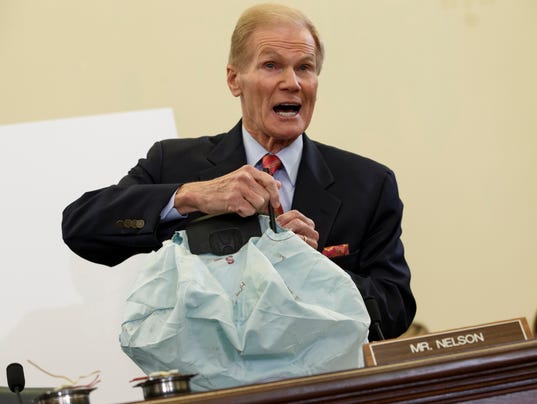
"I have no patience for federal regulators not being entirely up front forward leaning and aggressive to stop these defective products," said Florida Sen. Bill Nelson.

Chrysler settled that case in Florida and told us tonight they're investigating the performance of certain airbag inflators. Takata told us previously "one accident is one too many," but no new statement from Takata tonight.

The NHTSA released an updated advisory Tuesday night with a new list of the vehicles being recalled:

BMW: 627,615 total number of potentially affected vehicles:
2000 - 2005 3 Series Sedan2000 - 2006 3 Series Coupe2000 - 2005 3 Series Sports Wagon2000 - 2006 3 Series Convertible2001 - 2006 M3 Coupe2001 - 2006 M3 Convertible
Chrysler: 371,309 total number of potentially affected vehicles:
2003 - 2008 Dodge Ram 15002005 - 2008 Dodge Ram 25002006 - 2008 Dodge Ram 35002006 - 2008 Dodge Ram 45002008 - Dodge Ram 55002005 - 2008 Dodge Durango2005 - 2008 Dodge Dakota2005 - 2008 Chrysler 3002007 - 2008 Chrysler Aspen
Ford: 58,669 total number of potentially affected vehicles:
2004 - Ranger2005 - 2006 GT2005 - 2007 Mustang
General Motors: undetermined total number of potentially affected vehicles
2003 - 2005 Pontiac Vibe2005 - Saab 9-2X
Honda: 5,051,364 total number of potentially affected vehicles:
2001 - 2007 Honda Accord2001 - 2005 Honda Civic2002 - 2006 Honda CR-V2003 - 2011 Honda Element2002 - 2004 Honda Odyssey2003 - 2007 Honda Pilot2006 - Honda Ridgeline2003 - 2006 Acura MDX2002 - 2003 Acura TL/CL2005 - Acura RL
Mazda: 64,872 total number of potentially affected vehicles:
2003 - 2007 Mazda62006 - 2007 MazdaSpeed62004 - 2008 Mazda RX-82004 - 2005 MPV2004 - B-Series Truck
Mitsubishi: 11,985 total number of potentially affected vehicles:
2004 - 2005 Lancer2006 - 2007 Raider
Nissan: 694,626 total number of potentially affected vehicles:
2001 - 2003 Nissan Maxima2001 - 2004 Nissan Pathfinder2002 - 2004 Nissan Sentra2001 - 2004 Infiniti I30/I352002 - 2003 Infiniti QX42003 - 2005 Infiniti FX35/FX45
Subaru: 17,516 total number of potentially affected vehicles:
2003 - 2005 Baja2003 - 2005 Legacy2003 - 2005 Outback2003 - 2005 Baja2004 - 2005 Impreza
Toyota: 877,000 total number of potentially affected vehicles:
2002 - 2005 Lexus SC2002 - 2005 Toyota Corolla2003 - 2005 Toyota Corolla Matrix2002 - 2005 Toyota Sequoia2003 - 2005 Toyota Tundra


http://www.cbsnews.com/news/faulty-airbag-responsible-for-multiple-deaths-injuries/


Wednesday, June 4, 2014

TOYOTA Recalls 50,000 for Air Bag Software Problems


Please click on the following NHTSA Campaign ID links to view the recall information.
NHTSA Campaign ID Number : 14V272
Manufacturer : Toyota Motor Engineering & Manufacturing
Make / Model Years : TOYOTA / 2014
Subject : Improper Seat Belt Restraint Software/FMVSS 208
Thank you,

Recalls Subscription Team
Office of Defects Investigation (ODI)
National Highway Traffic Safety Administration (NHTSA)
U.S. Department of Transportation (DOT)


Report Receipt Date: MAY 22, 2014
NHTSA Campaign Number: 14V272000
Component(s):
Potential Number of Units Affected: 50,000

All Products Associated with this Recall expand

Details close

3 Associated Documents expand