Search This Blog

Translate

Blog Archive

Middleboro Review 2

NEW CONTENT MOVED TO MIDDLEBORO REVIEW 2

Toyota

Since the Dilly, Dally, Delay & Stall Law Firms are adding their billable hours, the Toyota U.S.A. and Route 44 Toyota posts have been separated here:

Route 44 Toyota Sold Me A Lemon


Showing posts with label Toyota's software problems. Show all posts

Friday, November 18, 2016

Toyota's Woes Raise Questions About Auto Electronics


Time:2016-11-18 


Toyota's Woes Raise Questions About Auto Electronics


Could software, or faulty logic design, be at the root of runaway acceleration problems plaguing Toyota automobiles?

Toyota steadfastly denies this is the case, but others are not sure.

In recent testimony to the U.S. House of Representatives, Toyota CEO President Akio Toyoda insisted that neither electronics nor software could be blamed for the rash of runaway Toyotas reported in the U.S.
Nonetheless, the U.S. National Highway Traffic Safety Administration (NHTSA) heard enough concern over electronics that it is opening an investigation of possible electronic and software defects. And Toyota itself is installing, at least on some models, a brake override system to bypass electronic control, one that shuts the engine off when both the accelerator and the brake pedal are held down at the same time.

That Congress, not to mention the American public, is reluctant to accept Toyota's assurances typifies the mistrust felt toward microprocessor-based systems in automobiles, even as people rely on them daily.
Could the growing complexity of software in our automobiles be leading to more software bugs in our automobiles, some leading to deadly behaviors? Or, are such suspicions based, perhaps unfairly, on experiences with the buggy software on home computers, software that is probably designed with far less rigor than automotive software?

In short, can the electronics in automobiles be trusted without a second thought? Depends on whom you ask.

The unintended acceleration problem has been seemingly plaguing Toyota for several years, though it was the news about the tragic deaths of a San Diego family last August that brought national attention to the matter.

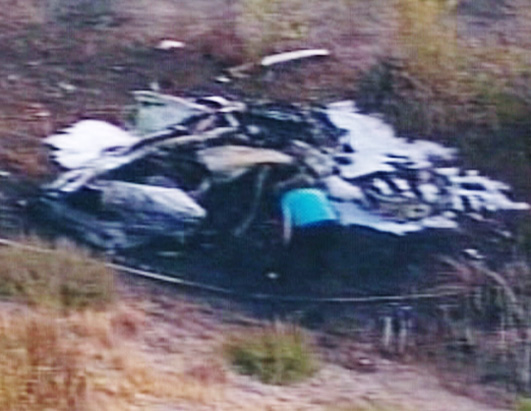
A borrowed Toyota Lexus, driven by off-duty police officer Mark Saylor, started accelerating uncontrollably, reaching a speed above 100 miles per hour and plowing through an intersection before careening off into a river basin, killing all four passengers.

Toyota itself places the blame on accidents like these on sticky accelerators and improperly positioned floor mats. "Toyota is confident that no defect exists in the [electronic control unit]," an F.A.Q. on the Toyota site explains.

This response doesn't satisfy at least some members of Congress.

"You can't rule [electronics] out because you don't know. You can't conclude [the cause] one way or the other," said U.S. Senator Olympia Snowe, a Maine Republican, during a Senate Committee on Commerce, Science, and Transportation hearing held Wednesday to investigate the NHTSA's handling of the complaints about unintended acceleration.

Snowe noted that NHTSA couldn't rule the possibility out because it had no software engineers on staff to investigate the claim.

The component under scrutiny has been the electronic throttle control system (), which Toyota started installing in some of its cars beginning in 2002.

Before electronics were introduced in autos, the accelerator pedal was directly connected by a cable to the throttle, which regulates the amount of air, and hence gas, entering the engine.

Now, an electronic control module [ECM], consisting of two processors and nonvolatile memory that holds the logic of the unit, sits between the pedal and the throttle. The ETC monitors the location of the pedal through two position sensors connected to the accelerator.

Two additional sensors are also connected to the throttle. The throttle itself is controlled by a motor, which in turn is controlled by the ECM.

Toyota claims its unit operates under fail-safe conditions, using self-diagnostic logic. If output values from two pedal accelerators do not match, or if the two values from the throttle do not match, or either is showing values that are out of their normal ranges, then the ETC will revert to a fail-safe mode, which means an alert light will come on in a dashboard and the car will run at reduced speed.

David Gilbert, a professor of automotive technology at Southern Illinois University Carbondale, found that the ETC is not foolproof, despite Toyota's claims. In tests, which he later described before last week's Congressional hearings, he found that the ETC did not detect certain types of short-circuit malfunctions that could occur with the pedal sensors. If the ETC did not detect the complete possible range of errors, then it could not enter into a fail-safe mode, he argued.

"Some types of [ETC] circuit malfunctions were detectable by the ECM, and some were not," Gilbert told Congress. "The Toyota detection strategies were unable to identify malfunctions of the APP sensor signal inputs to the ECM."

With this in mind, it could be conceivable that malfunctions that were not anticipated by the ETC could lead to a runaway engine, Gilbert argued.

Speaking before Wednesday's Senate hearing, Toyota Vice President Takeshi Uchiyamada said that the company tried to replicate Gilbert's test and was unable to produce the same results. "In any case, it would be extremely unlikely or difficult to reproduce in the real world," he said, speaking through a translator.
But trying to ferret out everything that could happen in normal operations is a demanding task, one perhaps that the auto industry, and its parts suppliers, are just learning, some say.

Despite the best efforts of coders and reviewers, most professionally written software programs still have about one bug per thousand lines of code, said Andy Chou, chief scientist at Coverity. For code that has gone through extensive review -- such as code used in airplanes -- that number jumps to about one in 10,000

Coverity is an expert in the area. It analyzes software for defects and counts among its customers automobile-parts manufacturers such as Bosh, and car manufacturers such as Daimler and Renault.

Citing a widely used figure, Chou said that the average luxury automobile has more than 100 million lines of code, spread across all of its microcontrol units.

If this is indeed the case, then the auto has twice the amount of code found in a desktop operating system.

And, in many cases, this code could have been developed under the severe time pressure of getting new models out each calendar year.

"There is a different set of pressures for the automobile industry than there is in the avionics industry, where a plane may last for decades," Chou said.

As this collection of software grows more complex, it may become susceptible to more errors that are more difficult to find, or even reproduce.

For instance, one of the challenges investigators and mechanics have had is in reproducing the accelerator problem in test labs. This could be due to some sort of race condition, in which a system may behave differently from one moment to the next depending on the largely indeterminate timing of certain interrelated events, Chou said.

Also, as different control units of the automobile are networked together -- which manufacturers are increasing doing -- then the degree of complexity, and the ways errors can spring up, grow even larger still, Chou said.

"We're talking about very large, complex systems," Chou said. "When these systems are connected, they can start to have behaviors that are emergent. They are not necessarily behaviors that they would have on their own but you put them together, they may do things that are unexpected."
Not all agree with this assessment, though.

Reza Hoseinnezhad, a research fellow at the The University of Melbourne's Melbourne School of Engineering, has done extensive work on developing brake-by-wire prototypes, or electronic-based braking systems. He sees the worries over electronics design as largely overstated, given the quality-control measures the automotive industry uses for mission-critical components.

"The reported faults are very rare and if they are occurring within the software and logic design of the Toyota cars, they would have been predictable and debuggable before mass production," Hoseinnezhad said in an e-mail interview.

Which is not to say that Toyota, or other car manufacturers, haven't experienced software problems before. In February, the car maker recalled 400,000 of its Prius models to update the software for its antilock brakes. And in 2005, the car manufacturer recalled 160,000 of the Prius models due to faulty software that caused the engine to stop running.

But while automobiles do contain a lot of code, management is simplified quite a bit due to the modular design, Hoseinnezhad maintained.

"In modular style, the total length of the code is very long, but the complexity is comprehendible, the code is understandable and debugging is easy," he said. "Logical errors are usually expected to be detected and debugged before mass production of such systems. "

One thing is certain: This is not the last time suspicions will be raised about automobile electronics and the software that supports them. All cars rely on electronics, and there are few standards in place to ensure their safety.

This may be one reason why the U.S. White House has allocated funding for an additional 66 positions within NHTSA, and Congress is mulling over new laws to strengthen the review of potential automotive hazards. Toyota itself has set up an independent panel to review its ETC systems.

Whether or not electronic systems are already safe, industry and government are both learning that the public needs to trust in their safety as well.

"This loss of trust is more costly for us than anything else," Uchiyamada said.


Saturday, March 28, 2015

Toyota Recall


Please click on the following NHTSA Campaign ID links to view the recall information.
NHTSA Campaign ID Number : 15V143
Manufacturer : Toyota Motor Engineering & Manufacturing
Make / Model Years : TOYOTA / 2012-2014
Subject : Loss of Electric Drive

Thank you,

Recalls Subscription Team
Office of Defects Investigation (ODI)
National Highway Traffic Safety Administration (NHTSA)
U.S. Department of Transportation (DOT)

To file a vehicle safety-related complaint, please go online to our File a Complaint web page, or call us toll-free at 1-888-327-4236.

To find out more about NHTSA, please go to the Safercar.gov website or call our Vehicle Safety Hotline toll-free at 1-888-327-4236.


RECALL Subject : Loss of Electric Drive

Wednesday, June 4, 2014

TOYOTA Recalls 50,000 for Air Bag Software Problems


Please click on the following NHTSA Campaign ID links to view the recall information.
NHTSA Campaign ID Number : 14V272
Manufacturer : Toyota Motor Engineering & Manufacturing
Make / Model Years : TOYOTA / 2014
Subject : Improper Seat Belt Restraint Software/FMVSS 208
Thank you,

Recalls Subscription Team
Office of Defects Investigation (ODI)
National Highway Traffic Safety Administration (NHTSA)
U.S. Department of Transportation (DOT)


Report Receipt Date: MAY 22, 2014
NHTSA Campaign Number: 14V272000
Component(s):
Potential Number of Units Affected: 50,000

All Products Associated with this Recall expand

Details close

3 Associated Documents expand

Sunday, December 1, 2013

Toyota

There is some great information about Toyota's software failures below.

When reading about software failures, please remember that Toyota's failures caused injuries, killed people, destroyed families. We're talking about real people who have been seriously harmed or killed.


Since 1999, Toyota and Lexus owners have made in excess of two thousand (2,000) complaints of “Sudden Unintended Acceleration,” which resulted in 815 crashes, 341 injuries and, 19 deaths.FROM: http://www.garyeto.com/auto/sudden-acceleration.html


EmbeddedGurus


2012 Explained – Toyota

Thursday, December 27th, 2012 by Nigel Jones

Regular readers of this blog will no doubt have noticed the paltry number of articles posted by me this year. While there have been a number of contributing factors, one of the more significant has been Toyota. I have been part of the team that has spent a large part of 2012 examining the engine control module hardware and firmware for Toyota cars and light trucks in light of reports on unintended acceleration. Yesterday, a tentative settlement was announced in the class action lawsuit. Other litigation concerning personal injury is still pending. As a result of the pending litigation, together with various protective orders (confidentiality agreements) I can’t comment or provide any details. For those of you that are interested, here are some key links. [Click on link below.]


http://embeddedgurus.com/stack-overflow/2012/12/2012-explained-toyota/


Toyota Unintended Acceleration and the Big Bowl of “Spaghetti” Code


Last month, Toyota hastily settled an Unintended Acceleration lawsuit – hours after an Oklahoma jury determined that the automaker acted with “reckless disregard,” and delivered a $3 million verdict to the plaintiffs – but before the jury could determine punitive damages.

What did the jury hear that constituted such a gross neglect of Toyota’s due care obligations?

The testimony of two plaintiff’s experts in software design and the design process gives some eye-popping clues. After reviewing Toyota’s software engineering process and the source code for the 2005 Toyota Camry, both concluded that the system was defective and dangerous, riddled with bugs and gaps in its failsafes that led to the root cause of the crash.

Bookout and Schwarz v. Toyota emanated from a September 2007 UA event that caused a fatal crash. Jean Bookout and her friend and passenger Barbara Schwarz were exiting Interstate Highway 69 in Oklahoma, when she lost throttle control of her 2005 Camry. When the service brakes would not stop her speeding sedan, she threw the parking brake, leaving a 150-foot skid mark from right rear tire, and a 25-foot skid mark from the left. The Camry, however, continued speeding down the ramp and across the road at the bottom, crashing into an embankment. Schwarz died of her injuries; Bookout spent five months recovering from head and back injuries.

Attorney Graham Esdale, of Beasley Allen, who represented the plaintiffs is the first to say that the Bookout verdict – in some measure – rested on those two black skid marks scoring the off- ramp.

“Toyota just couldn’t explain those away,” Esdale said. “The skid marks showed that she was braking.”

The jury was very attentive, despite the technical discussions that dominated the testimony.

After the jury learned that the case had been settled, jurors asked Judge Patricia Parrish if they could stay and discuss the trial. A dozen jurors, Judge Parrish, and the plaintiff’s lawyers discussed it. Esdale says that it was obvious from that conversation that the jury was poised to punish Toyota for its conduct and cover-up.

Skid marks notwithstanding, two of the plaintiffs’ software experts, Phillip Koopman, and Michael Barr, provided fascinating insights into the myriad problems with Toyota’s software development process and its source code – possible bit flips, task deaths that would disable the failsafes, memory corruption, single-point failures, inadequate protections against stack overflow and buffer overflow, single-fault containment regions, thousands of global variables.

The list of deficiencies in process and product was lengthy.

Michael Barr, a well-respected embedded software specialist, spent more than 20 months reviewing Toyota’s source code at one of five cubicles in a hotel-sized room, supervised by security guards, who ensured that entrants brought no paper in or out, and wore no belts or watches. Barr testified about the specifics of Toyota’s source code, based on his 800-page report. Phillip Koopman, a Carnegie Mellon University professor in computer engineering, a safety critical embedded systems specialist, authored a textbook, Better Embedded System Software, and performs private industry embedded software design reviews – including in the automotive industry – testified about Toyota’s engineering safety process. Both used a programmer’s derisive term for what they saw: spaghetti code – badly written and badly structured source code.

Barr testified:
There are a large number of functions that are overly complex. By the standard industry metrics some of them are untestable, meaning that it is so complicated a recipe that there is no way to develop a reliable test suite or test methodology to test all the possible things that can happen in it. Some of them are even so complex that they are what is called unmaintainable, which means that if you go in to fix a bug or to make a change, you’re likely to create a new bug in the process. Just because your car has the latest version of the firmware — that is what we call embedded software — doesn’t mean it is safer necessarily than the older one….And that conclusion is that the failsafes are inadequate. The failsafes that they have contain defects or gaps. But on the whole, the safety architecture is a house of cards. It is possible for a large percentage of the failsafes to be disabled at the same time that the throttle control is lost.

Even a Toyota programmer described the engine control application as “spaghetti-like” in an October 2007 document Barr read into his testimony.

Koopman was highly critical of Toyota’s computer engineering process. The accepted, albeit voluntary, industry coding standards were first set by Motor Industry Software Reliability Association (MISRA) in 1995. Accompanying these rules is an industry metric, which equates broken rules with the introduction of a number of software bugs: For every 30 rule violations, you can expect on average three minor bugs and one major bug. Toyota made a critical mistake in declining to follow those standards, he said.

When NASA software engineers evaluated parts of Toyota’s source code during their NHTSA contracted review in 2010, they checked 35 of the MISRA-C rules against the parts of the Toyota source to which they had access and found 7,134 violations. Barr checked the source code against MISRA’s 2004 edition and found 81,514 violations.

Toyota substituted its own process, which had little overlap with the industry standard. Even so, Toyota’s programmers often broke their own rules. And they failed to keep adequate track of their departures from those rules – and the justification for doing so, which is also standard practice. Koopman testified that if safety is not baked into the recipe in the process of creating the product, it cannot be added later.

“You have to exercise great care when you’re doing safety critical software. You can’t just wing it. And Toyota exercised some care, but they did not reach the level of accepted practice in how you need to design safety critical systems,” he said.

One of the biggest safety standards Toyota broke was allowing single point failures within its system. (Single point failure refers to a piece of hardware or software that has complete control over whether a system is safe or not—such as a single-engine airplane.) Koopman testified:
“If there is a single point of failure, by every safety standard I have ever seen, it is by definition unsafe, and no amount of countermeasures, no amount of failsafes will fix that. They will reduce how often it happens, but it won’t completely fix it. Because we have millions of vehicles out there, it will find a way to fail that you didn’t think of, and it will fail.”

Other egregious deviations from standard practice were the number of global variables in the system. (A variable is a location in memory that has a number in it. A global variable is any piece of software anywhere in the system can get to that number and read it or write it.) The academic standard is zero. Toyota had more than 10,000 global variables.

“And in practice, five, ten, okay, fine. 10,000, no, we’re done. It is not safe, and I don’t need to see all 10,000 global variables to know that that is a problem,” Koopman testified.

Other important design process errors Barr and Koopman identified were an absence of a peer code review, and Toyota’s failure to check the source code of its second CPU, supplied by Denso —even as executives assured Congress and NHTSA that the cause of UA couldn’t be in the engine software.

Barr testified to some of the vehicle behavior malfunctions caused by the death of tasks within the CPU, and concluded that Bookout’s UA was more likely than not caused by the death of a redacted-name task, called Task X at trial. Barr dubbed it “the kitchen-sink” task, because it controlled a lot of the vehicle’s functions, including throttle control; the cruise control – turning it on, maintain the speed and turning it off – and many of the failsafes on the main CPU.

He was critical of Toyota watchdog supervisor – software to detect the death of a task — design. He testified that Toyota’s watchdog supervisor “is incapable of ever detecting the death of a major task. That’s its whole job. It doesn’t do it. It’s not designed to do it.”

Instead, Toyota designed it to monitor CPU overload, and, Barr testified: “it doesn’t even do that right. CPU overload is when there’s too much work in a burst, a period of time to do all the tasks. If that happens for too long, the car can become dangerous because tasks not getting to use the CPU is like temporarily tasks dying.”

Barr also testified that Toyota’s software threw away error codes from the operating system, ignoring codes identifying a problem with a task. At trial, Barr said:

And task death, although I focused a lot of task X here, because it does so much and it does throttle control and it does failsafe, it’s pretty important, but there is [redacted] tasks and they can die in different combinations. It could be task 3 and task X, or task 3and task 7 and task X, or just task 9. And those can cause an unpredictable range of vehicle misbehaviors. It turns out that unintended acceleration is just the most dangerous thing your car can do when it malfunctions.

Even if you were to dismiss their conclusions as nothing but paid-for expert testimony, Koopman and Barr’s assessment about software errors as a possible UA root cause go a long way in explaining so much: how Toyota’s system could fail and leave no trace; why we are still seeing UAs in late model Toyota vehicles and why Toyota can’t seem to fix it with floor mat and pedal recalls; how it could get away with hiding some of the root causes of UA events for so long.

Their descriptions of the incredible complexity of Toyota’s software also explain why NHTSA has reacted the way it has and why NASA never found a flaw it could connect to a Toyota’s engine going to a wide open throttle, ignoring the driver’s commands to stop and not set a diagnostic trouble code.

For one, Barr testified, the NASA engineers were time limited, and did not have access to all of the source code. They relied on Toyota’s representations – and in some cases, Toyota misled NASA. For example, NASA was under the false belief that Toyota had designed in hardware bit flip protections called Error Detection and Correction Codes, (EDAC). The 2005 Camry for example did not have EDAC, Barr testified, but in an email Toyota told NASA that it did. At trial he said:

NASA didn’t know that that wasn’t there. It wasn’t there in the 2005 Camry. And so if the bit-flip occurred, there would be no hardware mechanism to find it. And if it occurred in a critical value that was not mirrored, there would be no software protections against it. So the conclusion here is that there are critical variables in which bits could flip.

Their testimony explains why it would be near impossible for NHTSA to ever pin an electronic failure on a problem buried in software. NHTSA didn’t even have any software engineers on ODI’s staff during the myriad Toyota UA investigations. They have no real expertise on the complexities that actually underpin all of the safety-critical vehicle functions of today’s cars. It’s as if ODI engineers are investigating with an abacus, a chisel and a stone tablet. One begins to understand the agency’s stubborn doubling, tripling, quadrupaling down on floor mats and old ladies as explanations for UA events.

But even if NHTSA did have this expertise, the software piece is so complex ODI would never have the time or budget to assess an automaker’s source code. This is why we keep harping on the need for NHTSA to write a functional safety regulation – under its own steam or Congressional mandate.

We are posting preliminary drafts of Koopman’s (part 1 and part 2) and Barr’s trial testimony, along with Barr’s slides – long, but well worth a read for anyone interested in understanding more about embedded software systems in automobiles and how not to design one; where NHTSA went wrong: and the unbelievably shaky software at the foundation of Toyota’s electronic architecture.

Normally, one associates a company’s desire to shield trade secrets with the protection of something valuable. That something, one presumes, is the technology itself — the secret recipe a company uses in making its product. Rather than protecting the automotive equivalent of formula for Coke, the testimony of Koopman and Barr suggest that Toyota really wanted to hide was its formula for disaster. Consider the contents of a September 2007 email among Toyota employees:

“‘In truth technology such as failsafe is not part of the Toyota’s engineering division’s DNA,’ ” Barr read in court. “And it continues, ‘But isn’t it good that it is recognized as one of the major strengths of Toyota and its system controls industry.’ And then I highlighted also the portion that says, ‘Continuing on as is would not be a good thing.’”


http://www.safetyresearch.net/2013/11/07/toyota-unintended-acceleration-and-the-big-bowl-of-spaghetti-code/


Saturday, February 2, 2013

What about my brakes?


If you insist on brakes, Toyota might not be the car for you.

Wednesday, January 23, 2013

Toyota: Don't Believe It!

Toyota has settled another fatal Sudden Unintended Acceleration crash that killed two people for an 'undisclosed amount,' meaning there is a Gag Order attached.

Notice that they dragged it out for two years, causing the families anguish, settling a month before trial.

Deny! Deny! Deny!  Instead of fixing the problem.

Check these out:
Toyota Table of Contents

My Toyota sits on the property of Route 44 Toyota while everyone pretends NO BRAKES don't exist.

The BRAKE FAILURE was demonstrated to the Route 44 Toyota technician sitting in the passenger seat - NO BRAKES!

How do you drive a Toyota with NO BRAKES????


Toyota warned U.S. dealerships in 2002 that Camry owners complained of throttle surges and recommended adjusting the computer, documents indicted. [sic]
"If you look at this document, it says electronics," attorney Clarence Ditlow said. "It says the fix is reprogrammed in the computer. It doesn't say anything about floor mats."

....repair bulletin proves the manufacturer misled the public about the causes of sudden acceleration.


Toyota knew:

The early Toyota investigation showed the problems and the luck associated with SUA investigations. NHTSA randomly two vehicles that repeatedly demonstrated SUA. NHTSA knew the problem was in the cruise control computer because if they moved the computer from

the bad Toyota that had SUA to a good Toyota that did not have SUA, the good Toyota developed SUA. When NHTSA tested the vehicles at VRTC, it could not find a failure mode.

3 Ultimately, NHTSA gave the computers to Toyota to take to Japan and test. Although Toyota found a failure mode in the printed circuit board, details of the findings were kept confidential.
From: Toyota: ...biggest and most deadly corporate cover up of all times...


Toyota settlement in wrongful-death case may be best legal move, observers say


By Associated Press, January 17, 2013
 
LOS ANGELES — As Toyota Motor Corp. chips away at settling lawsuits claiming its vehicles suddenly accelerate, the question remains whether attorneys who sued could prove to a jury there was a design flaw.

Toyota is sticking to its propaganda --

The company maintains stuck accelerator pedals, faulty floor mats and driver error are the reasons for vehicles unexpectedly surging, while plaintiffs’ attorneys contend Toyota’s electronic throttle control system is to blame.

Recent settlements totaling more than $1 billion by Toyota to resolve numerous lawsuits involving economic loss and a few involving wrongful death claims may signal that the automaker doesn’t want to risk coming out on the losing end of a potentially costly court decision.

“A bad loss in a jury trial would inflict lasting damage to Toyota in loss of public confidence,” said Los Angeles-based attorney Christine Spagnoli, who has won several multimillion-dollar verdicts against automakers over safety defects. “I believe Toyota will continue to look for better opportunities to get a win.”


The company said Thursday it settled a lawsuit with the family of two people killed in a Utah crash that was set to go to trial next month and serve as a test case for hundreds of others that are pending.

Terms of the agreement weren’t released, but it comes just weeks after Toyota agreed to pay more than $1 billion to settle lawsuits where vehicle owners said the value of their cars and SUVs plummeted after the company recalled millions of vehicles because of sudden-acceleration issues.

In the Utah case, Paul Van Alfen and his son’s fiancee, Charlene Jones Lloyd, were killed when their Camry slammed into a wall near Wendover, Utah. in 2010. The Utah Highway Patrol concluded based on statements from witnesses and the crash survivors that the gas pedal was stuck.

It was the first so-called “bellwether” case, before a federal judge in Orange County, Calif., chosen to help predict the potential outcome of other lawsuits making similar allegations.

Wayne Mason, a product liability attorney in Dallas, doesn’t believe Thursday’s settlement portends poorly for either side going forward.


“This is like taking an aspirin when you have a migraine,” Mason said. “Each of these cases has to be weighed on their own merit. I will be surprised if some don’t get tried.”

Toyota continues to be dogged by sudden-acceleration issues that arose four years ago. Last month the U.S. government hit the company with a record $17.4 million fine for failing again to quickly report problems to federal regulators and for delaying a safety recall. More than 150,000 2010 Lexus Rx 350s and RX 450h models were recalled because the driver’s-side floor mats can trap the gas pedal and cause the vehicles to speed up without warning.


Toyota has recalled more than 14 million vehicles globally to fix sticky gas pedals and floor mats.

The company also paid a total of $48.8 million in fines for three violations in 2010.

While the recalls have soiled the company’s sterling reputation for reliability, Toyota has regained its position as the world’s largest automaker and saw sales increase 27 percent last year.
 
The automaker also has received some vindication Both the National Highway Traffic Safety Administration and NASA were unable to find any defects in Toyota’s source code that could cause acceleration problems.


In 2011, a federal judge found that Toyota wasn’t liable for a 2005 crash involving a Scion that the driver blamed on the electronic throttle or a floor mat.


Because the data recorders can lose their information if disconnected from the car’s battery or if the battery dies—as could happen after a crash—the agency is focusing only on recent accidents, said a person familiar with the situation.


NHTSA has received more than 3,000 complaints of sudden acceleration in Toyotas and Lexuses, including some dating to early last decade, according to a report the agency compiled in March. The incidents include 75 fatal crashes involving 93 deaths.


http://www.vosizneias.com/60054/2010/07/14/washington-report-suggests-driver-error-in-toyota-crashes/

A second bellwether trial is slated for later this year, but it’s unclear if a resolution will be made before then. Plaintiffs’ attorneys have reviewed thousands of internal Toyota documents, reviewed data and deposed employees, but most of that material has been kept under seal in court records.

In a statement announcing the Van Alfen settlement, Toyota said there will be a number of other chances to defend itself in a court of law, although the company may “decide from time to time” to settle select cases.

“It would seem that Toyota did not want a public airing of the evidence that has been gathered in the lawsuits, so that it can continue to say that there is not a problem,” Spagnoli said. “If Toyota felt it could have successfully defended its products in these cases, it would have welcomed a public trial.”


http://articles.washingtonpost.com/2013-01-17/business/36409995_1_accelerator-pedals-rx-450h-floor-mats

Thursday, January 10, 2013

The Russian Roulette of Toyota

Like most people, we paid little attention to the failures of Toyota, believing the SUA [Sudden Unintended Acceleration] problems had been resolved which it seems is untrue judging from recent complaints.


Never believing both the dealer, Route 44 Toyota and Toyota itself would fail to correct a problem, our Prius C remains on the dealer's lot with NO BRAKES.

The claim, of course, is 'NO COMPUTER ERROR MESSAGE,' something announced elsewhere, a common refrain, ignoring that the error codes are not programmed or merely being denied.

After killing and injuring innocents victims, Toyota's tactics are transparent:

1. Blame the driver
2. Claim vehicle behavior is not duplicated [except I repeatedly duplicated the lack of brakes on the dealer's property]
3. Denial
4. Repeat: NO COMPUTER ERROR MESSAGE
5. Dilly, Dally, Delay and Stall with expensive law firms
6. Discredit others

Toyota routinely deceives the court and opposing counsel when it has been sued in connection with sudden acceleration and other defect cases, according to a detailed investigation by the Associated Press that was released yesterday.

Toyota has withheld requested documents, hidden test results, and refused to release data that is stored electronically in its vehicles.

From: Toyota Uses Deceptive Legal Tactics to Defend Lawsuits

7. Repeat from the beginning

Interesting article below --

The man who took on Toyota
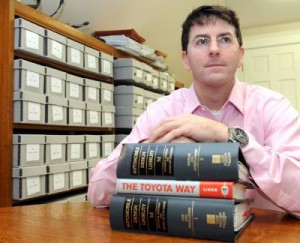
From his office in Rehoboth, Sean Kane looks at auto safety
Posted: Sunday, March 7, 2010

The man who took on Toyota   
Sean Kane of Safety Research and Strategies, Rehoboth.
(Staff pphoto by Mike George.)

As an auto safety analyst whose work was instrumental in the massive Firestone Tires recalls, Rehoboth resident Sean Kane is used to being the lightning rod for controversy.

So Kane, 42, founder and president of Safety Research and Strategies, was in his element when he pointed a finger at possible electronic glitches that might be causing sudden acceleration in Toyota cars and trucks.Kane's company produced a 51-page report on the phenomenon, alleging more than 2,000 cases of sudden, unintended acceleration, including a number of fatalities.

SRS has also called into question Toyota's "fix" for the problem, which included replacing floor mats and modifying accelerator pedals.

Toyota officials have maintained there's no evidence that a fault in their vehicles' electronic throttle system causes motors to rev unpredictably.

Kane suspects otherwise.

"We're already beginning to hear complaints from car owners who received the fixes that it didn't fix the problem," said Kane, who testified before a Congressional committee last month on the unintended acceleration.

Toyota acknowledged this week it has received verifiable information from U.S. transportation officials that some vehicle owners whose cars were fixed as part of two recalls still had unintended-acceleration incidents.

The U.S. Department of Transportation said Wednesday it was investigating recent complaints of sudden acceleration by Toyota owners whose vehicles have been repaired. But Toyota continues to say it has found no evidence of a failure of its electronic throttle control system and believes its accelerator pedal remedies are effective.

Regardless, Kane's advocacy drew a predictable backlash from Toyota allies and the mainstream automotive media.

U.S. Rep. Steve Buyer, R-Ind., whose state hosts Toyota assembly plants, implied Kane was too closely tied to trial attorneys and accused him of "exaggerating" and "manipulating" data.

Well-known automotive commentator and host of TV's Autoline Detroit John McElroy compared a test showing that a voltage spike could cause a Toyota to accelerate instantly without being detected by an onboard computer to controversial and "fraudulent" tests several years ago involving alleged defects in Audis and Chevy trucks.

Kane's not surprised by the reaction, but says his company's findings are driven by facts.
"We follow the data," said Kane, who works in a cluttered office on the second floor of a brick office building overlooking an overgrown pasture in Rehoboth. "We only know what the facts tell us."

An introduction to Kane's report did extend thanks to five attorneys who he said had helped sponsor his research. But Kane says his company also does work for the government and multinational corporations, and that the lawyers' contribution was minor and did not influence his findings.

Kane is mildly amused by the charge that his research is somehow tainted by the fact it might someday be useful in a court case.

"Why is it such a bad thing that consumers might hire a lawyer to represent them?" Kane said. "Toyota uses lawyers, but that seems to be perfectly OK."

Regardless of whose opinion you credit, mysterious incidents involving Toyotas that suddenly surged ahead or backward have had tragic consequences.

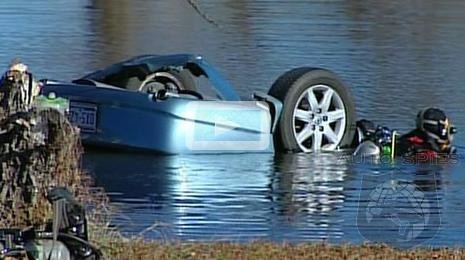
One of the most cited cases is that of a California couple whose car plunged over a 70-foot cliff as they were parking to enjoy lunch at an oceanside restaurant.

On Feb. 5, 2007, says the SRS report, Bulent and Ann Ezal were parking their 2005 Camry outside the Pelican Point Restaurant in Pismo Beach when the car suddenly accelerated from a complete stop.

It then crashed through a fence, hurtled over a bluff and fell to the rocks below, overturning in the surf.

Bulent Ezal, who had been riding the brakes as he eased into a parking space, recovered from his injuries. His wife died.

Other Toyota and Lexus owners say they have experienced frightening sudden acceleration events, and lived to tell the tale.

According to the National Highway Transportation Safety Administration, Kevin Haggerty reported no fewer than five instances of sudden unintended acceleration in his 2007 Avalon. Late last year, Haggerty said he was driving on a major highway when the car began to accelerate without his foot being on the gas pedal.

Haggerty reported being unable to stop the vehicle even when pressing hard on the brake, but was able to control his speed by alternating the car between neutral and drive.

Haggerty pulled his car into a Toyota dealership, brakes smoking, while the vehicle continued to roar at full throttle in neutral.

Toyota says many of the reports given to the federal agency are either unverifiable or don't include owner information that would allow the company to do follow-up investigations.

Nevertheless, Toyota, under increasing pressure because of reports, began recalling the first of about 8 million vehicles in November and suspended the manufacture of some models.

To fix the problem, Toyota recommended removal of all-weather floor mats that could keep gas pedals from returning properly and installed fixes to prevent what the company called rare instances of "sticky" pedals.

But Kane and his researchers said so many instances of cars suddenly taking off, even without the driver's foot on the gas pedal, or throttles suddenly roaring to life while at idle, hinted at a problem with vehicle electronics, rather than sticky pedals.

That assertion, at a time when Toyota was already facing an expensive recall and messy public relations quandary, won few friends from the auto industry or government regulators that Kane had criticized for being slow to investigate.

"A lot of people would like to kick our ass," Kane said.

Kane, testifying before a congressional panel last week, came under direct criticism from Indiana's Buyer, who assailed the safety expert's links to trial lawyers. The mainstream media, including McElroy and the Wall Street Journal, also focused questioning eyes on Kane's ethics and science.

The media, for the most part, paid far less attention to the ethical bona fides of Kane's chief detractor.

Buyer is resigning at the end of his term amid questions over the Frontier Foundation, which he founded in 2003 to provide college scholarships. The foundation reportedly hasn't helped any students, but it did hand out about $10,000 in grants, including gifts to the National Rifle Association and a cancer charity run by a lobbyist for Eli Lilly and Co., according to reports in the Indianapolis Star.

Most of the $880,000 raised by the foundation came from corporations that potentially have business before the Energy and Commerce Committee on which Buyer sits, the Star reported.
Buyer, an opponent of health care reform, has also accepted almost $1 million in campaign contributions from pharmaceutical companies and health care professionals.

Skeptics also came down hard on David Gilbert, an automotive expert who was able to induce a sudden throttle surge in a Toyota vehicle as a result of a small voltage spike. The anomaly did not create an error code in the Toyota's computer, attesting that an electronic problem could indeed cause sudden acceleration without being detected - just as posited by safety researchers.

Whether the specific scenario posed in the tests is the same as the conditions that are causing problems on consumer vehicles is another matter - and not an allegation being made by Kane or Gilbert.

Kane, who formerly worked for a safety organization founded by Ralph Nader, knows that looking behind the curtain of a multi-billion-dollar industry for evidence of technical or ethical lapses doesn't win popularity contests.

The Rehoboth resident was also in the forefront of the investigation concerning failures of Firestone Tires on the Ford Explorer in 2000-2001, whose resulting revelations prompted a national scandal and the recall of millions of tires.

Kane's influence didn't go unnoticed.

Jason Vines, Ford vice president for public affairs during the Explorer fiasco, was quoted in the Wall Street Journal as grouping Kane with what he called "supposed safety advocates who are actually just shills for trial attorneys."

Kane, who has also campaigned for clear date-of-manufacture codes on tires and allowing public access to federal defect early warning data, says his company does not provide expert witnesses or give testimony during litigation.

The company, he says, only collects and analyzes facts.

Paid research the company does for clients also allows SRS to pursue a number of public interest initatives, Kane says.

While Kane's tenacity in hunting flaws or problems in automotive products might suggest someone not exactly in love with the automobile, Kane has been a "car guy" since before he could drive.

"I've always been fascinated with cars," said Kane, who started reading Car and Driver regularly when he was 11 or 12.

Falling under the spell of the British sportscars of the day, Kane bought his first car at 15 - a sporty MGB GT.

These days, Kane, a married father of three, drives a Volvo wagon.

During time off, he works a piece of old farmland he and his wife bought for their home years ago.

He can often be found bouncing about the property in a tractor-front end loader.

After news of Toyota's acceleration problems gained widespread notariety last fall, journalists and others began seeking Kane out on a daily basis.

"People would literally be waiting at the door in the morning," he said.

While the Toyota hubub has scarcely subsided, Kane and his small staff are back to working full bore on the 40 to 50 research projects his company manages at any one time.

He also continues to shuttle periodically between his home and Washington for meetings with regulators and others.

Kane, a blooded veteran of Washington's hothouse atmosphere, the auto industry spin machine and the media's sharpshooting columnists, says he's not uncomfortable playing Roadrunner to the establishment's Wile-E-Coyotes.

"It doesn't bother us being a David," Kane says. "Even if all you have is a slingshot, if you have the truth for ammunition, you'll be fine."

http://www.thesunchronicle.com/news/the-man-who-took-on-toyota/article_fa583a01-e91a-5148-be6d-7fab8883034f.html

Saturday, December 29, 2012

Toyota Table of Contents

Below is a 'Table of Contents' providing some of the available information about Toyota's Failures that have injured or killed innocent victims.

Toyota KNEW!

This is not Driver Error or Floor Mats!

As additional articles are discovered, we'll try to keep this up-to-date.


WASHINGTON, March 23 (UPI) -- Toyota warned U.S. dealerships in 2002 that Camry owners complained of throttle surges and recommended adjusting the computer, documents indicted. [sic]

A lawyer with the non-profit Center for Auto Safety in Washington said the technical service bulletin discusses electronics issues -- not mechanical issues raised in the massive recall -- and how the condition was corrected, CNN reported Tuesday.

"If you look at this document, it says electronics," attorney Clarence Ditlow said. "It says the fix is reprogrammed in the computer. It doesn't say anything about floor mats."

....repair bulletin proves the manufacturer misled the public about the causes of sudden acceleration.

From: Toyota allowed people to die

Toyota: .....put the blame where it belongs....
Toyota's Death Toll
Toyota ignored killing people

Toyota Settlement
Toyota Prius Crash
Runaway Toyotas?
Toyota: Driver Error? Don't believe it!


"No Computer Error Message"
Toyota Denial Problems Continue
Toyota's Failures Kill
Toyota: Blame Someone Else for Deaths
Toyota: Trust Me????
Toyota accused of 'pattern of' coverups
Toyota allowed people to die

More Prius C Problems
Toyota: ...biggest and most deadly corporate cover up of all times...
 
Route 44 Toyota....the Love Story #3 The Horrifying Truth
Route 44 Toyota....the Love Story #2 The Celebration


Toyota's Brake Recall


There is no indication that they studied the software from any of the vehicles that crashed.


There's more to this!


Toyota: Poppycock!

2011 NHTSA Toyota Prius Complaints

2012 NHTSA Toyota Complaints

Ahh...Computer Geeks!

Route 44 Toyota named in RipOff Report

Thank you, Arlene Reiss for complaining about Toyota's safety flaws!

Thank you, Jason Resinstedler, for highlighting Toyota's poor design!

Route 44 Toyota....the Love Story #1

Toyota Sucks Site

Another Route 44 Toyota Failure

2010 NHTSA Toyota Prius Complaints & SUA

Prius Sudden Unitended Acceleration Ignored

Toyota Prius C: Buyer Beware!

"No Computer Error Message"


The Russian Roulette of Toyota


Toyota: Don't Believe It!


Another Toyota Recall

Toyota Pretense

CAUTION: Route 44 Toyota

What about my brakes?

 
Toyota: So...I have this friend.....
 
Route 44 Toyota: The Love Story Continues
 
Route 44 Toyota: The Love Story
 
Route 44 Toyota: Illegal Business Practice
 
CFPB and Credit Reports
 
Toyota and the Tea Baggers: Did you ever notice......

Your child.....? SPLAT! What if.......?

Toyota and the Tea Baggers: Did you ever notice......

Let's Go Place Just Don't Count On Stopping!

A Massachusetts woman....

The Cost of Not Regulating

Defective Vehicles Jeopardize Your Family's Safety...

Defective Vehicles Jeopardizing Safety

Route 44 Toyota Threatens SLAPP Suit!

Route 44 Toyota: In Response....

Route 44 Toyota: RipOff Report

  • Toyota PTC [Pre-Trial Conference]

  • Dilly, Dally Dan

  • ATTENTION: Disgruntled Toyota & Route 44 Toyota Cu...

  • Thank you, Route 44 Toyota!

  • SLAPP and the First Amendment
    Amazingly kind!

  • Toyota Recall Testimony

  • Toyota Owner: "A Near Death Experience"

  • Betsy Spills Toyota’s Beans

  • Is Toyota Telling the Truth About Sudden Accelerat...

  • Toyota Recalls
    Toyota Recalls
    Victims' Family's Plea to Toyota
    Toyota Safety Recall


    Toyota Prius Complaints
    Dilly, Dally Dan Nervous About Freedom of Speech
    Toyota: Flim Flam and Pretense
    Route 44 Toyota and FCRA [Fair Credit Reporting Act]
    The Arrogance of Route 44 Toyota

    Complaining....

  • Has Toyota really corrected the problem?

  • Documents Contradict Toyota

  • Hertz, Raynham, MA
  • Attorney Daniel Viera and the U.S. Constitution
  • Route 44 Toyota: Arrogance Means Never Having to S...

  •  
    Nightmares of Toyota
    Route 44 Toyota: Can't tell it by me!
    Route 44 Toyota: A Haunting Response
    Toyota: Put it in writing!
    Toyota settles wrongful death lawsuit
    Toyota Whistleblower

    Toyota: Shirking their responsibility...


    Toyota: What is this doing to our insurance rates?...
    Toyota Prius: What is this doing to our insurance ...
    Toyota 2012 RAV4
    Toyota Corolla failures
    Toyota Complaints
    Route 44 Toyota Threatens SLAPP - Ask me!
    Ask Me About Toyota!

    The Power of Handouts