Search This Blog

Translate

Blog Archive

Middleboro Review 2

NEW CONTENT MOVED TO MIDDLEBORO REVIEW 2

Toyota

Since the Dilly, Dally, Delay & Stall Law Firms are adding their billable hours, the Toyota U.S.A. and Route 44 Toyota posts have been separated here:

Route 44 Toyota Sold Me A Lemon


Showing posts with label Toyota confidential settlements. Show all posts

Saturday, June 24, 2017

Honda HRV Sudden Unintended Acceleration


Sudden acceleration

When I was pulling into a parking spot, moving slowly, the car suddenly surged forward, jumped the curb and flattened a parking sign. One moment the car was in the parking space and the next it was up on the grass.

There's no way that a driver pulling into a parking spot would ever use the amount of force it would have taken to jam the gas pedal down enough to cause the car to do that, if it would even be possible.

I've seen a lot of information on the Internet about Honda and sudden acceleration. The dealer said there is nothing from Honda stating a known problem in the 2017 HR-V.
Attached Thumbnails
Click image for larger version

Name: IMG_0800 2.jpg
Views: 42
Size: 352.9 KB
ID: 23434  

http://www.hrvforum.com/forum/698-hrv-defects-issues-problems/33994-sudden-acceleration.html


Honda Admits Software Problem, Recalls 175,000 Hybrids

7/10/2014


MADISON, Wis. — For the first time, an automobile company has conceded that a software glitch in electronic control units could cause cars to accelerate suddenly, forcing drivers to scramble to take emergency measures to prevent an accident. Honda Motor Co., citing software problems, announced Thursday that it is recalling 175,000 hybrid vehicles in Japan.

Honda revealed that some hybrid versions of its Fit and Vezel subcompacts could suddenly accelerate without warning.

A Honda spokesman in Tokyo told Bloomberg that unintended acceleration incidents have caused property damage, but no injuries or deaths thus far. The recall affects only vehicles that were sold in Japan.

Anthony Anderson, a UK electrical engineering consultant, told EE Times, "To the best of my knowledge, this recall is the first occasion on which any car manufacturer has admitted publicly to a link between a software malfunction and sudden acceleration and issued a recall to fix the software."

Not coincidentally, Toyota Motor Corp. is busy settling several hundred lawsuits contending that its vehicles inadvertently accelerated. The carmaker has never acknowledged the software issue. Instead, it blamed dozens of injuries and deaths on loose floor mats, sticky accelerator pedals, and driver error.

The only time Toyota's defective software faced public scrutiny occurred in last fall's Bookout v Toyota Motor Corp. trial. An Oklahoma County jury found Toyota liable for a crash and awarded $1.5 million of compensation to the driver, Jean Bookout, who was injured in the crash, and $1.5 million to the family of a passenger, Barbara Schwarz, who died.

After the jury verdict, Toyota Motor Corp. reached a confidential settlement with the victims to avoid punitive damages.

"Honda, by acknowledging its mistakes, is much more likely to survive than companies that push problems under the floormat and claim that the problems do not exist," Anderson said.
— Junko Yoshida, Chief International Correspondent, EE Times 


Related posts:


http://www.eetimes.com/document.asp?doc_id=1323061


NHTSA ID Number: 11000029
Incident Date June 19, 2017
Consumer Location HERNDON, VA
Vehicle Identification Number N/A
Summary of Complaint
CRASHYes
FIRENo
INJURIES0
DEATHS0
I WAS PULLING INTO A PARKING SPACE AND THE CAR SUDDENLY ACCELERATED AND CRASHED INTO A SIGN, FLATTENING IT. IT MOVED WITH GREAT SPEED.
NHTSA ID Number: 10983307
Incident Date February 18, 2017
Consumer Location Unknown
Vehicle Identification Number 3CZRU5H51HM****
Summary of Complaint
CRASHYes
FIRENo
INJURIES0
DEATHS0
TL* THE CONTACT OWNED A 2017 HONDA HR-V. WHILE REVERSING AT AN UNKNOWN SPEED, THE VEHICLE ACCELERATED INDEPENDENTLY ONTO A PEDESTRIAN WALKWAY WITHOUT WARNING AND COLLIDED WITH THREE VEHICLES. THERE WERE NO INJURIES AND A POLICE REPORT WAS NOT FILED. THE VEHICLE WAS LATER TOWED TO A DEALER TO HAVE THE DATA BOX INFORMATION REMOVED, BUT THE DEALER REFUSED SINCE THE VEHICLE WAS DEEMED A TOTAL LOSS. THE MANUFACTURER LATER AUTHORIZED THE DEALER TO COMPLY WITH THE DATA REMOVAL. THE FAILURE MILEAGE WAS 2,342.


Sunday, June 14, 2015

Route 44 Toyota: You've taught me more than you know!


Route 44 Toyota denied the existence of a problem with my BRAND NEW TOYOTA, yet could adequately tamper with the vehicle to change the mileage! Curious! 


To date, TOYOTA, et al have spent.....is it 6 times the value of my BRAND NEW TOYOTA


Next week....another stack of paperwork that will add to the meaningless pile....


....more forests destroyed! 


.....The LEMON LADY refused to drive her FUNKY TOYOTA! 


......others are SAFE! 


Some TOYOTA drivers....are not so lucky! 


PLEASE READ WHAT OTHERS HAVE HAD TO SAY INCLUDING WHISTLE BLOWER BETSY BENJAMINSON & ACTIVIST CHARLENE BLAKE: 


Charlene M. Blake (@charleneblake)
Expose 'em, #Toyota whistleblower, Betsy Benjaminson! #Bob #Hilliard, product liability attorney, GET #CROOKS GOOD!betsybenjaminson.blogspot.com

Download the Twitter app


The Queue--55 GM lawyers and others to be deposed by "Bulldog" Hilliard & Co.


Saturday, April 25, 2015

Toyota Settles Copyright Suit Over BB King Commercial


Subject: Toyota Settles Copyright Suit Over BB King Commercial


Toyota Settles Copyright Suit Over BB King Commercial
By Aebra Coe
Law360, New York (April 23, 2015, 11:52 AM ET)
-----------------------------------------------------------------------------------------
Law360, New York (April 23, 2015, 11:52 AM ET) -- Toyota Motor Sales USA agreed to settle a copyright suit Thursday, just one day after it argued that a Nevada federal judge had misconstrued copyright law by failing to find that a man who wrote a book about returning a stolen guitar to B.B. King is barred from suing the automaker over a commercial with the same plot.


The plaintiff's counsel, Jeffrey L. Galliher of Dennett Winspear LLP, told Law360 the parties reached a confidential settlement Thursdaymorning.

On Wednesday, Toyota’s guns were blazing, asking U.S....


Wednesday, November 19, 2014

Bloomberg Law: Confidential Deals Over Takata Airbags(Audio)


TOYOTA settled how many SUDDEN UNINTENDED ACCELERATION lawsuits with CONFIDENTIALITY AGREEMENTS?


An OUT-OF-CONTROL LEXUS killed the Saylor Family...TOYOTA settled for 

$10 MILLION with a CONFIDENTIALITY AGREEMENT....that's what a family is worth to TOYOTA.....under the right circumstances.....the LEXUS burst into flames....


Ya wanna point fingers? 


The finger pointing can't circumvent TOYOTA!


Bloomberg Law: Confidential Deals Over Takata Airbags(Audio)


Nov 18, 2014


Bloomberg News’s Margaret Cronin Fisk and University of Michigan law professor Erik Gordondiscuss the confidential settlements over Takata air bags. The faulty air bags have led to at least five deaths and the recall of more than 7 million vehicles. They speak with June Grasso on Bloomberg Radio’s “Bloomberg Law.”
Running time 20:28


Related


http://www.bloomberg.com/news/2014-11-18/bloomberg-law-confidential-deals-over-takata-airbags-audio-.html?cmpid=yhoo


Friday, October 31, 2014

Are you SAFE? Disabling AIR BAGS? You're kidding, right?


Betsy Benjaminson, the Whistle Blower that TOYOTA is bullying, wrote a great piece about this issue:

Senator Blumenthal: Secret settlements play important role in allowing lethal defects to "fester"


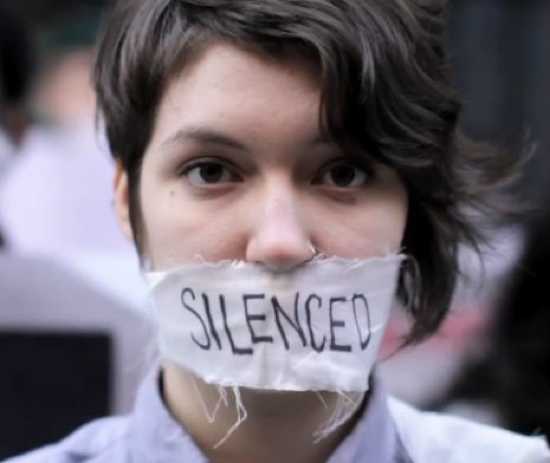
TOYOTA settled cases of SUDDEN UNINTENDED ACCELERATION with CONFIDENTIALITY AGREEMENTS to silence parties and patted itself on the back for avoiding the cost of RECALLS,  ignoring those who were killed or injured, families that were destroyed.


The fix for exploding airbags may be more deadly than the problem

October 31, 2014


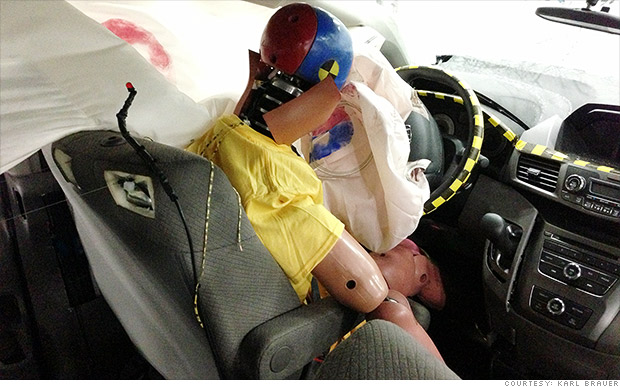
airbag dummy


NEW YORK (CNNMoney)

This is one fix for recalled vehicles that might be more deadly than the problem.


Eight million vehicles made by 10 different automakers have been recalled due to flawed airbags that can explode and hit passengers with shrapnel. The problem: The airbag manufacturer Takata doesn't have enough replacement airbags to fix all the recalled cars.


Not all the manufacturers involved have said how they'll handle the expected shortage. But Toyota has said that it plans to disable defective airbags once it runs out of replacements as it repairs the 800,000 cars it has recalled.
"It's something we're prepared to do, an indication of how seriously we take the problem," said Toyota (TM) spokeswoman Cindy Knight.

Related: Airbag recall could expand

Not everyone thinks this is a good idea, since only a small percentage of the defective airbags are likely to explode in a crash. More people could be killed due to disabled airbags than by the defective airbags, said the Center for Auto Safety's executive director Clarence Ditlow.

"You save more lives by leaving the airbags in place than you would lose lives by the airbag exploding," Ditlow said. Even if a driver is wearing a seatbelt, he said, airbags can provide life-saving protection in a crash.

Related: Honda, Takata sued over exploding airbags

Toyota (TM) says the recalled airbags are only on the passenger side of it's cars. If it disables an airbag, it will put a sticker on the dashboard advising people not to ride in the front passenger seat until its replaced. And it stressed that disabling the airbags is just a temporary solution until a replacement can be installed.

Toyota has gotten permission from the National Highway Traffic Safety Administration to disable the airbags, which otherwise would be illegal. Both Toyota and NHTSA are pushing to get owners to bring their cars in to be serviced, whether or not Toyota runs out of replacement airbags.

Bringing a recalled car in for service is always voluntary for owners. About a third of recalled cars are never repaired, according to industry estimates. But if Toyota goes ahead with its plans, drivers who bring their cars in will be told that disabling the airbags is the best solution for their problem.

Other automakers affected by the recall may also run into a shortage of replacements.

Related: Honda CEO takes pay cut over recalls

Five million vehicles made by Honda Motor (HMC) have been hit by the recall, but the automaker has declined to say whether it will disable the flawed airbags if or when it runs out of replacements.

The company is working to get enough of the replacement airbags, according to Honda spokesman Chris Martin, and that it has not yet asked NHTSA for permission to disable any air bags.

General Motors has recalled 80,000 autos for this airbag problem and the company says it won't disable them if it runs out of replacements.


VIDEO ON LINK


Exploding airbags spark fears


"We're in pretty good shape on replacement parts at the moment," said GM spokesman Alan Adler. "But if and when we run out of parts, our plan is to give owners loaner vehicles. We would not disable the airbag."

There have been four deaths and dozens of serious injuries tied to the exploding airbags, according to the Center for Auto Safety, all in Honda and Accura cars built by Honda Motor (HMC).

NHTSA is pushing Takata to step up efforts to produce replacement bags. But Takata did not return repeated requests for comment as to when it will be able to supply enough replacement airbags to repair all 8 million cars.

Related: 566,000 Dodges and Jeeps recalled


http://money.cnn.com/2014/10/31/autos/exploding-airbag-fix/

Tuesday, October 21, 2014

TOYOTA LAP BELT


TOYOTA'S TACTICS include the DILLY, DALLY, DELAY, STALL & BILL 'EM ....according to the TOYOTA CORPORATE HANDBOOK!


Never correct a problem!


Never RESOLVE a problem!


Never RESPOND to consumers!


Clog the court's for the dumbest of reasons.....


This man went to prison because his OUT OF CONTROL TOYOTA killed people....


Trial scheduled for November.....we'll see how sympathetic the jury is!


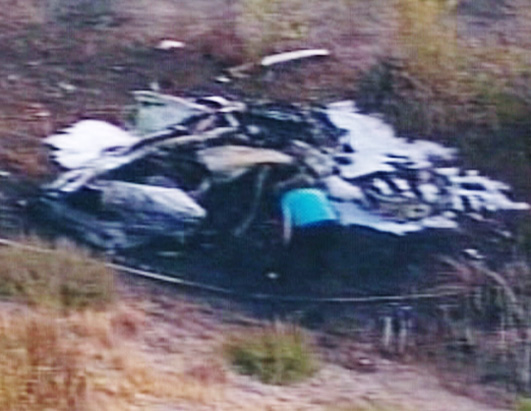
The Saylor Family was killed when an OUT OF CONTROL LEXUS burst into flames, their last minutes spent in terror.....TOYOTA settle for $10 MILLION! [That's what your family is worth!]


THIS SAYS IT ALL!


From: Beware of Toyota. Their next victim may be you...:

Jury awards Plaintiff $12 million in Toyota lap belt case


It's a real shame that consumers have to file expensive, time consuming, and emotionally draining lawsuits to stand a chance of prevailing against crooked corporations like Toyota.


Jury awards paralyzed Monterey County woman $12 million in Toyota suit
Monterey County Herald staff
POSTED: 10/18/2014
 
Chelsie Hill was awarded 12 million by a jury on Friday, holding Toyota responsible for most of the cost of her medical expenses related to her 2010
Chelsie Hill was awarded 12 million by a jury on Friday, holding Toyota responsible for most of the cost of her medical expenses related to her 2010 accident. (Vern Fisher -- Monterey Herald)
 
 
MONTEREY - A jury on Friday awarded $12 million to a Pacific Grove woman who sued Toyota Motor Corp. after she was paralyzed during a 2010 crash despite wearing a lap belt.
Chelsie Hill was awarded $8 million for past and future medical expenses, and $4 million for her pain and suffering. Toyota is responsible for 95 percent and 90 percent of those costs, respectively, the jury ruled.
"Chelsie was crying and thanked the jurors when they reached a decision," Bob Rosenthal, Hill's attorney, said.
Since sustaining her injuries, Hill has paid more than $600,000 in medical bills.
Hill argued that Toyota knew the lap belt was dangerous and installed it anyway, instead of a safer three-point lap belt. The automaker argued it was Hill's indifference and lack of attention to her own safety that cost her the ability to walk.
Her doctor testified Hill was "jackknifed" by the belt, splitting her spine. Jurors held Aaron Corn, the convicted drunken driver who crashed the 1996 Toyota 4Runner, 5 percent responsible for Hill's injuries and left Hill with 5 percent of the responsibility for her injuries.
"All of the other passengers (in the crash) are walking proof of the safety of a three-point belt," Rosenthal said in closing statements Thursday.
Because of the injuries she sustained, Hill is expected to live until the age of 65. A former dancer, she has already been diagnosed with osteoporosis at the age of 22.
Friends of Hill's family were pleased with the outcome.

"It's unbelievable. I was there most of the trial and it was just too close to call," Jonathan Pellegrin, a family friend of Hill, said.

Rosenthal said the award was "appropriate and just."

"Toyota misled the public about the safety of their lap belts and now there are millions of people out there driving those cars," he said.

As of 2014, there are more than 3 million Toyota vehicles with at least one lap belt -- similar to the one Hill wore -- driving in the U.S., according to Ben Kelley, a Center for Auto Safety board member who testified at trial.

http://www.mercurynews.com/crime-courts/ci_26753787/jury-awards-paralyzed-monterey-county-woman-12-million


Friday, April 4, 2014

How 'bout TOYOTA? RSN: GM Unacceptable? How About "Murderous"?


Charles Pierce | GM Unacceptable? How About "Murderous"?
Louisiana Governor Bobby Jindal. (photo: ThinkProgress)
Charles Pierce, Esquire
Pierce writes: "GM had known for 11 years that a defect in the ignition switches of some of its cars had been killing people, but the company didn't do anything about it until February."
READ MORE
More balanced coverage is expected of RSN. This is a White Wash of the Auto Industry - ignoring flaws!

Doesn't anyone find the timing 'curious'?
 
NHTSA whitewashed TOYOTA's failures!

Yes, GM had problems, but TOYOTA just paid $1.2 BILLION for a 'Get Out Of Jail Free' card, a pittance for a company sitting on $60 BILLION CASH.
http://jessiepowell.blogspot.com/2014/04/lets-not-ignore-toyota.html

TOYOTA documents indicate that the company was aware that SUDDEN UNINTENDED ACCELERATION was caused by software in 2002.

You'll never know how many TOYOTA killed because of settlements that contained confidentiality agreements.

"Not that everyone is now aware of Michael Barr's findings, but people are hearing about them, and government's mainstream media stooges - wary of egged faces - are nervously dropping inane hints about the involvement of electronics. Consumers may be starting to realize that Congress, the National Highway Traffic Safety Administration, and the Department of Justice are little more than mouthpieces for crooked corporations. Stay tuned as the gang faces further public scrutiny, not only about Toyota, but also GM."
FROM:
http://uc2.blogspot.com/2014/04/march-sales-down-for-toyota-brand-cars.html


The Auto Industry has gotten away with murder because government no longer responds to protect Americans.

Sunday, December 1, 2013

Toyota

There is some great information about Toyota's software failures below.

When reading about software failures, please remember that Toyota's failures caused injuries, killed people, destroyed families. We're talking about real people who have been seriously harmed or killed.


Since 1999, Toyota and Lexus owners have made in excess of two thousand (2,000) complaints of “Sudden Unintended Acceleration,” which resulted in 815 crashes, 341 injuries and, 19 deaths.FROM: http://www.garyeto.com/auto/sudden-acceleration.html


EmbeddedGurus


2012 Explained – Toyota

Thursday, December 27th, 2012 by Nigel Jones

Regular readers of this blog will no doubt have noticed the paltry number of articles posted by me this year. While there have been a number of contributing factors, one of the more significant has been Toyota. I have been part of the team that has spent a large part of 2012 examining the engine control module hardware and firmware for Toyota cars and light trucks in light of reports on unintended acceleration. Yesterday, a tentative settlement was announced in the class action lawsuit. Other litigation concerning personal injury is still pending. As a result of the pending litigation, together with various protective orders (confidentiality agreements) I can’t comment or provide any details. For those of you that are interested, here are some key links. [Click on link below.]


http://embeddedgurus.com/stack-overflow/2012/12/2012-explained-toyota/


Toyota Unintended Acceleration and the Big Bowl of “Spaghetti” Code


Last month, Toyota hastily settled an Unintended Acceleration lawsuit – hours after an Oklahoma jury determined that the automaker acted with “reckless disregard,” and delivered a $3 million verdict to the plaintiffs – but before the jury could determine punitive damages.

What did the jury hear that constituted such a gross neglect of Toyota’s due care obligations?

The testimony of two plaintiff’s experts in software design and the design process gives some eye-popping clues. After reviewing Toyota’s software engineering process and the source code for the 2005 Toyota Camry, both concluded that the system was defective and dangerous, riddled with bugs and gaps in its failsafes that led to the root cause of the crash.

Bookout and Schwarz v. Toyota emanated from a September 2007 UA event that caused a fatal crash. Jean Bookout and her friend and passenger Barbara Schwarz were exiting Interstate Highway 69 in Oklahoma, when she lost throttle control of her 2005 Camry. When the service brakes would not stop her speeding sedan, she threw the parking brake, leaving a 150-foot skid mark from right rear tire, and a 25-foot skid mark from the left. The Camry, however, continued speeding down the ramp and across the road at the bottom, crashing into an embankment. Schwarz died of her injuries; Bookout spent five months recovering from head and back injuries.

Attorney Graham Esdale, of Beasley Allen, who represented the plaintiffs is the first to say that the Bookout verdict – in some measure – rested on those two black skid marks scoring the off- ramp.

“Toyota just couldn’t explain those away,” Esdale said. “The skid marks showed that she was braking.”

The jury was very attentive, despite the technical discussions that dominated the testimony.

After the jury learned that the case had been settled, jurors asked Judge Patricia Parrish if they could stay and discuss the trial. A dozen jurors, Judge Parrish, and the plaintiff’s lawyers discussed it. Esdale says that it was obvious from that conversation that the jury was poised to punish Toyota for its conduct and cover-up.

Skid marks notwithstanding, two of the plaintiffs’ software experts, Phillip Koopman, and Michael Barr, provided fascinating insights into the myriad problems with Toyota’s software development process and its source code – possible bit flips, task deaths that would disable the failsafes, memory corruption, single-point failures, inadequate protections against stack overflow and buffer overflow, single-fault containment regions, thousands of global variables.

The list of deficiencies in process and product was lengthy.

Michael Barr, a well-respected embedded software specialist, spent more than 20 months reviewing Toyota’s source code at one of five cubicles in a hotel-sized room, supervised by security guards, who ensured that entrants brought no paper in or out, and wore no belts or watches. Barr testified about the specifics of Toyota’s source code, based on his 800-page report. Phillip Koopman, a Carnegie Mellon University professor in computer engineering, a safety critical embedded systems specialist, authored a textbook, Better Embedded System Software, and performs private industry embedded software design reviews – including in the automotive industry – testified about Toyota’s engineering safety process. Both used a programmer’s derisive term for what they saw: spaghetti code – badly written and badly structured source code.

Barr testified:
There are a large number of functions that are overly complex. By the standard industry metrics some of them are untestable, meaning that it is so complicated a recipe that there is no way to develop a reliable test suite or test methodology to test all the possible things that can happen in it. Some of them are even so complex that they are what is called unmaintainable, which means that if you go in to fix a bug or to make a change, you’re likely to create a new bug in the process. Just because your car has the latest version of the firmware — that is what we call embedded software — doesn’t mean it is safer necessarily than the older one….And that conclusion is that the failsafes are inadequate. The failsafes that they have contain defects or gaps. But on the whole, the safety architecture is a house of cards. It is possible for a large percentage of the failsafes to be disabled at the same time that the throttle control is lost.

Even a Toyota programmer described the engine control application as “spaghetti-like” in an October 2007 document Barr read into his testimony.

Koopman was highly critical of Toyota’s computer engineering process. The accepted, albeit voluntary, industry coding standards were first set by Motor Industry Software Reliability Association (MISRA) in 1995. Accompanying these rules is an industry metric, which equates broken rules with the introduction of a number of software bugs: For every 30 rule violations, you can expect on average three minor bugs and one major bug. Toyota made a critical mistake in declining to follow those standards, he said.

When NASA software engineers evaluated parts of Toyota’s source code during their NHTSA contracted review in 2010, they checked 35 of the MISRA-C rules against the parts of the Toyota source to which they had access and found 7,134 violations. Barr checked the source code against MISRA’s 2004 edition and found 81,514 violations.

Toyota substituted its own process, which had little overlap with the industry standard. Even so, Toyota’s programmers often broke their own rules. And they failed to keep adequate track of their departures from those rules – and the justification for doing so, which is also standard practice. Koopman testified that if safety is not baked into the recipe in the process of creating the product, it cannot be added later.

“You have to exercise great care when you’re doing safety critical software. You can’t just wing it. And Toyota exercised some care, but they did not reach the level of accepted practice in how you need to design safety critical systems,” he said.

One of the biggest safety standards Toyota broke was allowing single point failures within its system. (Single point failure refers to a piece of hardware or software that has complete control over whether a system is safe or not—such as a single-engine airplane.) Koopman testified:
“If there is a single point of failure, by every safety standard I have ever seen, it is by definition unsafe, and no amount of countermeasures, no amount of failsafes will fix that. They will reduce how often it happens, but it won’t completely fix it. Because we have millions of vehicles out there, it will find a way to fail that you didn’t think of, and it will fail.”

Other egregious deviations from standard practice were the number of global variables in the system. (A variable is a location in memory that has a number in it. A global variable is any piece of software anywhere in the system can get to that number and read it or write it.) The academic standard is zero. Toyota had more than 10,000 global variables.

“And in practice, five, ten, okay, fine. 10,000, no, we’re done. It is not safe, and I don’t need to see all 10,000 global variables to know that that is a problem,” Koopman testified.

Other important design process errors Barr and Koopman identified were an absence of a peer code review, and Toyota’s failure to check the source code of its second CPU, supplied by Denso —even as executives assured Congress and NHTSA that the cause of UA couldn’t be in the engine software.

Barr testified to some of the vehicle behavior malfunctions caused by the death of tasks within the CPU, and concluded that Bookout’s UA was more likely than not caused by the death of a redacted-name task, called Task X at trial. Barr dubbed it “the kitchen-sink” task, because it controlled a lot of the vehicle’s functions, including throttle control; the cruise control – turning it on, maintain the speed and turning it off – and many of the failsafes on the main CPU.

He was critical of Toyota watchdog supervisor – software to detect the death of a task — design. He testified that Toyota’s watchdog supervisor “is incapable of ever detecting the death of a major task. That’s its whole job. It doesn’t do it. It’s not designed to do it.”

Instead, Toyota designed it to monitor CPU overload, and, Barr testified: “it doesn’t even do that right. CPU overload is when there’s too much work in a burst, a period of time to do all the tasks. If that happens for too long, the car can become dangerous because tasks not getting to use the CPU is like temporarily tasks dying.”

Barr also testified that Toyota’s software threw away error codes from the operating system, ignoring codes identifying a problem with a task. At trial, Barr said:

And task death, although I focused a lot of task X here, because it does so much and it does throttle control and it does failsafe, it’s pretty important, but there is [redacted] tasks and they can die in different combinations. It could be task 3 and task X, or task 3and task 7 and task X, or just task 9. And those can cause an unpredictable range of vehicle misbehaviors. It turns out that unintended acceleration is just the most dangerous thing your car can do when it malfunctions.

Even if you were to dismiss their conclusions as nothing but paid-for expert testimony, Koopman and Barr’s assessment about software errors as a possible UA root cause go a long way in explaining so much: how Toyota’s system could fail and leave no trace; why we are still seeing UAs in late model Toyota vehicles and why Toyota can’t seem to fix it with floor mat and pedal recalls; how it could get away with hiding some of the root causes of UA events for so long.

Their descriptions of the incredible complexity of Toyota’s software also explain why NHTSA has reacted the way it has and why NASA never found a flaw it could connect to a Toyota’s engine going to a wide open throttle, ignoring the driver’s commands to stop and not set a diagnostic trouble code.

For one, Barr testified, the NASA engineers were time limited, and did not have access to all of the source code. They relied on Toyota’s representations – and in some cases, Toyota misled NASA. For example, NASA was under the false belief that Toyota had designed in hardware bit flip protections called Error Detection and Correction Codes, (EDAC). The 2005 Camry for example did not have EDAC, Barr testified, but in an email Toyota told NASA that it did. At trial he said:

NASA didn’t know that that wasn’t there. It wasn’t there in the 2005 Camry. And so if the bit-flip occurred, there would be no hardware mechanism to find it. And if it occurred in a critical value that was not mirrored, there would be no software protections against it. So the conclusion here is that there are critical variables in which bits could flip.

Their testimony explains why it would be near impossible for NHTSA to ever pin an electronic failure on a problem buried in software. NHTSA didn’t even have any software engineers on ODI’s staff during the myriad Toyota UA investigations. They have no real expertise on the complexities that actually underpin all of the safety-critical vehicle functions of today’s cars. It’s as if ODI engineers are investigating with an abacus, a chisel and a stone tablet. One begins to understand the agency’s stubborn doubling, tripling, quadrupaling down on floor mats and old ladies as explanations for UA events.

But even if NHTSA did have this expertise, the software piece is so complex ODI would never have the time or budget to assess an automaker’s source code. This is why we keep harping on the need for NHTSA to write a functional safety regulation – under its own steam or Congressional mandate.

We are posting preliminary drafts of Koopman’s (part 1 and part 2) and Barr’s trial testimony, along with Barr’s slides – long, but well worth a read for anyone interested in understanding more about embedded software systems in automobiles and how not to design one; where NHTSA went wrong: and the unbelievably shaky software at the foundation of Toyota’s electronic architecture.

Normally, one associates a company’s desire to shield trade secrets with the protection of something valuable. That something, one presumes, is the technology itself — the secret recipe a company uses in making its product. Rather than protecting the automotive equivalent of formula for Coke, the testimony of Koopman and Barr suggest that Toyota really wanted to hide was its formula for disaster. Consider the contents of a September 2007 email among Toyota employees:

“‘In truth technology such as failsafe is not part of the Toyota’s engineering division’s DNA,’ ” Barr read in court. “And it continues, ‘But isn’t it good that it is recognized as one of the major strengths of Toyota and its system controls industry.’ And then I highlighted also the portion that says, ‘Continuing on as is would not be a good thing.’”


http://www.safetyresearch.net/2013/11/07/toyota-unintended-acceleration-and-the-big-bowl-of-spaghetti-code/