Search This Blog

Translate

Blog Archive

Middleboro Review 2

NEW CONTENT MOVED TO MIDDLEBORO REVIEW 2

Toyota

Since the Dilly, Dally, Delay & Stall Law Firms are adding their billable hours, the Toyota U.S.A. and Route 44 Toyota posts have been separated here:

Route 44 Toyota Sold Me A Lemon


Showing posts with label NTSB Mark Rosekind. Show all posts

Thursday, August 27, 2015

NHTSA: Always an excuse not to do its job! + 37,900 complaints ignored by Toyota


Senators urge NHTSA to speed early warning reforms


David Shepardson, Detroit News Washington Bureau

August 27, 2015


Washington — Two U.S. senators want the National Highway Traffic Safety Administration to expand early warning reporting requirements for automakers in the wake of the agency's findings that several automakers have not complied with the rules.

Sens. Ed Markey, D-Mass., and Richard Blumenthal, D-Conn., noted that as part of Fiat Chrysler Automobiles NV record setting $105 million civil penalty for failing to properly carry out two dozens recalls it must provide the agency "with comprehensive reporting on each death or injury incident that is reportable to the agency."

The senators said "these steps are a substantial improvement over previous handling of safety recalls and reflect the direction the senators are calling on NHTSA to move in, but the lawmakers want NHTSA to go further by making such information public and applicable to all automakers, not just the one."

“The longer NHTSA waits to issue new requirements that automakers automatically submit all early warning documents related to potentially fatal defects and that NHTSA make this information available to the public one a user-friendly website, the higher the chance that the next fatal defect goes undetected,” the senators wrote to NHTSA Administrator Mark Rosekind. “It is time to recall our defective early warning reporting system and issue new rules to detect fatal defects.”

NHTSA spokesman Gordon Trowbridge declined to comment and referred questions to Rosekind's Senate testimony in June.

In June, the Transportation Department's Office of Inspector General said NHTSA must reform how automakers submit early warning data. NHTSA specifies 24 broad codes for categorizing early warning reporting data. But NHTSA says "an average vehicle may have over 15,000 components. Without detailed guidance, decisions regarding key aspects of early warning reporting data are left to the manufacturers’ discretion—resulting in inconsistent reporting and data that (NHTSA) and vehicle safety advocates consider to be of little use."

NHTSA: Always an excuse not to do its job! 



NHTSA said it plans to toughen early warning reporting rules by next June — unless it is required to write legally binding regulations, which could take longer,

The audit found that NHTSA's efforts for verifying that manufacturers submit complete and accurate early warning reporting data are lacking. NHTSA "does not follow standard statistical practices when analyzing early warning reporting data, such as establishing a base case for what statistical test results would look like in the absence of safety defects," the audit found. NHTSA doesn't ensure it is getting accurate information and the audit found generally relies on the "honor" system.

NHTSA has the authority to inspect manufacturers’ records for compliance with early warning reporting, but it has never used the authority. In one case, NHTSA knew a major recreational vehicle manufacturer was not complying but did not take action for nearly a decade.

Many of the audits 17 recommendations called for reforms, including developing "a method for assessing and improving the quality of early warning reporting data" and requiring automakers to develop procedures for complying with early warning reporting requirements; and require NHTSA to review these procedures at times.

NHTSA has vowed to comply with all of the recommendations by next year.

The senators introduced legislation earlier this year — the Early Warning Reporting System Improvement Act — that would require automobile and parts manufacturers to submit accident reports or other document that first alerted them to a fatality involving their vehicle or equipment to NHTSA’s Early Warning Reporting database. NHTSA would then required to automatically make those documents public unless they are exempted from public disclosure under the Freedom of Information Act.

In January, NHTSA fined Honda Motor Co. $70 million for failing to disclose more than 1,700 reports of deaths, injuries and other "early warning" over more than a decade — then the largest auto safety fine in U.S. history.

The Japanese automaker initially admitted in November it violated two sections of a 2000 federal law that requires automakers to disclose reports to NHTSA. The company has agreed to pay the maximum $35 million fine allowable under each section as part of a consent agreement for failing to turn over different types of reports.

"We're talking about 11 years — 11 years of information we did not have — and it is egregious," Transportation Secretary Anthony Foxx said in January. He said it didn't matter why Honda failed to follow the law. "Good intentions don't help the automaker," Foxx said, saying NHTSA is taking a "very aggressive posture."

Foxx said NHTSA has asked all automakers to audit their early warning reporting systems to make sure they are in compliance with the reporting law. "We have to continue to do better on our end but we sure want to send a signal very clearly to the industry that they have an end to this responsibility to take on as well," Foxx said.

In November, Honda disclosed that since 2003 it had made a series of significant mistakes in failing to report more than 1,700 incidents. It came under harsh criticism in Congress. Honda blamed a faulty computer program and inadvertent data entry and coding errors as reasons for failing to report problems, but the automaker also said it didn't do enough to fix the problem. After reports first surfaced that Honda hadn't complied with reporting requirements, it commissioned an audit in September to determine how often and why it failed to comply with requirements.


+ 37,900 complaints ignored by Toyota


The reporting requirements are designed to help the auto safety agency spot safety trends earlier. They are required under the TREAD Act, which Congress approved after 270 reported deaths in Ford SUVs were linked to faulty Firestone tires.


http://www.detroitnews.com/story/business/autos/2015/08/27/senators-urge-nhtsa-speed-early-warning-reforms/32482797/


Sunday, February 1, 2015

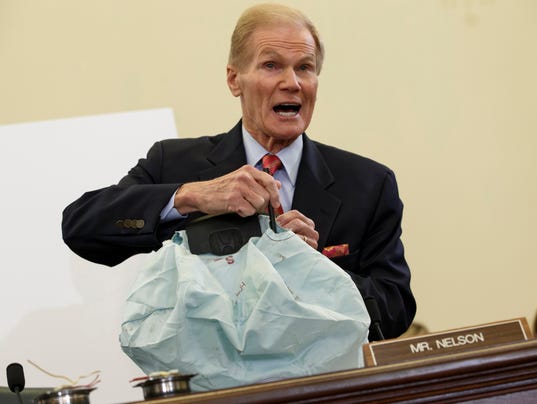
KILLER Air Bags inflate while driving


Automakers recall 2.1M vehicles for faulty air bags


Friday, January 16, 2015

Defining an industry that eschews safety....


There's enough blame to go around....including NHTSA's revolving door....


...ignoring complaints.....


...DOJ's Get-Out-Of-Jail-Free $1.2 BILLION TOYOTA SETTLEMENT.....


...TOYOTA COMPLAINTS that were ignored....
...TOYOTA OIL SLUDGE COMPLAINTS that were ignored.....


....TOYOTA'S MELTING DASHBOARDS.....


+ 37,900 complaints ignored by Toyota


In each of the cases, the DEFECTS were KNOWN! 

To pretend correcting KNOWN DEFECTS will lead to higher prices .......


Car Costs to Rise as Deadly Flaws Lead to Stricter Safety


By Ma Jie and Masatsugu Horie

Jan 16, 2015


Auto-parts suppliers are feeling the pressure as car companies move to raise quality standards after a record year for U.S. vehicle recalls in 2014.
 
In Japan, parts makers that sell to automakers worldwide say they’re taking costly steps to meet higher international quality standards, introducing extra safety features in their component designs, and buying more sophisticated inspection equipment. In the wake of massive recalls for deadly flaws such as General Motors Co. (GM)’s defective ignition switches and Takata Corp. (7312) air bags that spewed metal shards at motorists, the suppliers say they have little choice in the matter.

“It’s expensive,” said Shigenobu Nagamori, the president of Nidec Corp. (6594), a Kyoto-based maker of small precision motors that’s seeking to expand its business with carmakers. “But otherwise, if we’re forced to compensate for losses later on, we’ll all be finished.”

Carmakers recalled more than 60 million vehicles in the U.S. last year, double the previous record set in 2004. As the National Highway Traffic Safety Administration pledges to step up scrutiny this year, the renewed focus on quality will add to manufacturing costs -- which in turn may lead to consumers paying more for cars.
Photographer: Tomohiro Ohsumi/Bloomberg
An employee inspects auto parts on the production line of Iwaki Diecast Co.'s plant in...Read More

“The risk of recalls will get even bigger in the future as cars use more and more electrical components and become more complicated,” saidSatoru Takada, an auto analyst at Toward the Infinite World Inc. “The costs auto-parts makers pay to ensure safety will probably continue to rise.”

Air-Bag Deaths

Honda, Japan’s third-largest automaker, has said it will scrutinize development and asked for support from suppliers after it recalled more than 13 million vehicles since 2008 due to Takata air bag flaws. Tokyo-based Takata and carmakers are investigating the root cause of the defects, which have been blamed for five deaths in the U.S. and Malaysia.
 
Takata expects a 25 billion yen ($212 million) loss this fiscal year after booking a 47.6 billion yen charge in the first half for product quality provisions. The company said in November it’s difficult to estimate the amount of damage claims it has received in the U.S.

Takata spokesman Hideyuki Matsumoto said the company regards safety and quality as its “No. 1 priority” and will continue to invest money to develop new technology and raise quality standards.

Honda Fines

Honda agreed this month to pay a record $70 million in civil fines for failing to tell the U.S. government about more than 1,700 deaths and injuries potentially linked to flaws in its vehicles. Also this month, Takanobu Ito, the company’s president, spoke about Honda’s quality issues in his address at an annual gathering in Tokyo that’s traditionally an awards gala to honor suppliers.
 
ZF Japan Co. President Richard Kracklauer, who attended, said it’s clear companies like his will need to work even harder to ensure high quality standards “if we are to continue business with Honda.”
 
Fumio Fujimori, president of Aisin Seiki Co., expects parts makers including his own company to spend more time and money pursuing higher product safety standards, which may in turn lead to higher product prices, he said in an interview this month. The company cut its profit forecast in October, citing mounting expenses for upgrading equipment to check quality.
 
Aisin Seiki, which is 35 percent owned by the Toyota group and makes parts ranging from transmissions to power door locks, will follow stricter designs required by an international standard known as ISO 26262, Fujimori said. It’s working to improve the traceability of products so that if a quality problem arises, the company can quickly analyze it and find the cause.

‘Mandatory’ Standards

Complying with ISO standards used to be a matter of “honor” for Japanese companies, said Fujimori, whose largest customer after Toyota Motor Corp. (7203) is Volkswagen AG. (VOW) Now, he said, it’s become “almost mandatory” for auto-parts makers as car manufacturers won’t buy from those that don’t.
 
Jtekt Corp. (6473), a maker of electric power-steering systems, will also implement the “fail-safe” systems required by ISO 26262 to ensure safety, even as such designs drive up costs, President Tetsuo Agata said in an interview in November. The Osaka-based company counts GM, Ford Motor Co. and Hyundai Motor Co. among its largest overseas customers.
 
“It’s about human life, so we really want to make sure to fully comply,” Agata said. “If we make mistakes in this area, it could easily cost us our position in the industry.”
 
Takata's shares dropped 3.5 percent, extending a five-day losing streak. Nidec’s shares fell 1.6 percent and Jtekt declined 2.3 percent in Tokyo trading on Friday. The benchmark Topix index slid 0.9 percent.


http://www.bloomberg.com/news/2015-01-16/car-costs-to-rise-as-deadly-flaws-lead-to-greater-safety-demands.html


Thursday, January 15, 2015

NHTSA ignored 4,150 COMPLAINTS?


Consumers can only HOPE that NTSB Mark Rosekind drives NHTSA to protect not only VEHICLE Owners and Drivers from MANUFACTURERS' FAILURES, but STOPS IGNORING COMPLAINTS.


It is widely known that only a small .... miniscule percentage of CONSUMERS ever file complaints.


What else has NHTSA ignored?

These DEFECTIVE VEHICLES are on our roads jeopardizing our safety and the safety of others.


Government records reveal thousands of complaints about Saturn Ion power steering issue


JUST MY OPINION...AT THE MOMENT!

Saturday, January 10, 2015

Honda shuns US branch.....


While NHTSA was looking for smoke signals on the horizon and people were getting injured or killed......

+ 1,700 death and injury claims....AND WHERE WAS NHTSA?


Honda in Japan Distances Itself From Fine on U.S. Subsidiary

TOKYO — A record $70 million fine imposed on Honda Motor by safety regulators in the United States was being treated in Japan like a mildly intriguing piece of foreign news: an American problem for what has become, in many ways, a highly American company.
 
Call it a paradox of globalization. Japanese carmakers’ businesses — and Honda’s in particular — are now so widely dispersed around the world that to many, their overseas subsidiaries can look like semiautonomous colonies. Located far away, they seem almost to operate under unique rules intended for their local habitats.
 
It is a structure that Honda emphasized on Friday as it sought to distance its Japanese headquarters from the fallout of the fine, the largest ever imposed on an automaker by the National Highway Traffic Safety Administration. Honda has admitted what is the basis for the fine — that it grossly underreported serious accidents involving its cars to the United States government for more than a decade.
 
The agreement between the automaker and agency over the civil penalty, which was signed on Dec. 29, named not only American Honda Motor Company but also “all its parent and subsidiary companies.” That has not stopped the compartmentalizing, however.

Interactive Feature

A Record Year for Auto Recalls

More vehicles, including old models, have been recalled in the United States in 2014 than ever before. Explore the size and scope of the recalls, and find out if your car has been affected.
OPEN Interactive Feature
“This is above all an issue between American Honda Motor Company and the U.S. authorities,” said a spokesman for the parent corporation in Tokyo, Ben Nakamura. A representative of Honda’s American subsidiary said in an email that the fine had been levied against and would be paid by the business in the United States.
 
Keeping Honda’s American problems at arm’s length could be made easier by the company’s status as perhaps the most American of Japan’s carmakers. It earns more than half of its revenue in North America and was the first Japanese automaker to establish a production base in the United States — a motorcycle factory in Marysville, Ohio, which opened in 1979.
 
So many more plants have followed that in its most recent fiscal year, which ended in March 2014, Honda built more cars and light trucks in the United States and Canada than it sold there — another first for a Japanese company. The surplus was exported, mostly to Mexico.
 
Yet, for all the American experience accumulated by Honda and other Japanese manufacturers, the United States can still seem like a hostile environment.
Photo


Hondas waiting for export in Yokohama, Japan, last July. Japan is the second-largest exporter of cars to the United States.Credit Everett Kennedy Brown/European Pressphoto Agency
Many involved in Japan’s car industry, as well as Japanese citizens, believe the American authorities treat Japanese automakers more harshly than they do their American rivals. It is a view that hardened during Toyota’s recall crisis five years ago, which occurred at a low point for Toyota’s competitors in the United States, with General Motors and Chrysler having experienced bankruptcy and government rescues.
 
Toyota eventually paid $1.2 billion to settle a criminal investigation by the Justice Department related to defect reporting. In a four-year inquiry, the department found that the company concealed information about defects from consumers and the government, risking lives because of faulty parts that could cause sudden, unintended acceleration in several vehicle models. Some in Japan nevertheless saw the unprecedented penalty as unjustly sev
 
The Honda fine could deepen the perception of unfairness. It was twice the size of a penalty levied by the highway safety agency against G.M. last year over its delayed response to ignition switch defects linked to at least 13 deaths.
 
Fearing a backlash, Japanese auto executives are reluctant to publicly criticize the authorities in the United States. But in private, some have expressed dismay over what they see as overheated rhetoric from American politicians and the dangers of America’s litigious culture. The conservative Sankei newspaper, picking up on the theme, said last month that it saw “hints of Japan-bashing” in the furor over dangerous airbags made by the Japanese parts supplier Takata.

Interactive Feature

Fatal Flaws: Crisis in Auto Safety

The New York Times has exposed missteps and delays by automakers and federal safety regulators in responding to deadly defects in automobiles during what has become a record year for recalls.
          
OPEN Interactive Feature
“Just like with Toyota’s large-scale U.S. recall issue, there may be a dynamic that is trying to weaken Japan, which is increasing its presence in the global automobile industry,” it said.
 
Honda’s contention that its reporting problems are limited to the United States is backed by government safety regulators in Japan. The Ministry of Land, Infrastructure, Transport and Tourism, which is responsible for automobile safety in Japan, said it had found no evidence that Honda underreported defects or accidents in Japan. The ministry did not comment on the appropriateness of the Honda fine.
 
In some previous cases, it has vocally defended Japanese producers: During a recall of millions of Takata-made seatbelt buckles in 1996, officials in Tokyo said similar seatbelt problems were rare in Japan, and suggested that American drivers were experiencing trouble because they kept their vehicles dirtier than their fastidious Japanese counterparts.
 
Honda disclosed in November that it had failed to report almost two-thirds of the about 2,600 notices of injuries or deaths in the United States that it obtained from mid-2003 through mid-2014. A spokesman for the ministry, Masato Sahashi, said that it did not publish numbers on equivalent reports in Japan but that Honda’s numbers were not “noticeably smaller than those of other carmakers.”
 
Honda said the problems in the United States resulted partly from a misinterpretation of American rules governing what sort of accidents required reporting to the transportation safety agency.
 
American Honda Motor created its own automated reporting system that was not in line with agency standards, but that has since been fixed, said Mr. Nakamura, the Honda spokesman. That system was not used in other markets.
 
Correction: January 9, 2015
An earlier version of this article misstated the month in which Honda’s fiscal year ended. It was in March, not April.


http://www.nytimes.com/2015/01/10/business/honda-in-japan-distances-itself-from-us-subsidiary-after-record-fine.html?_r=1


Thursday, January 8, 2015

+ 1,700 death and injury claims....AND WHERE WAS NHTSA?


Looking for smoke signals on the horizon?


Honda hit with $70M in fines by feds


Sunday, November 30, 2014

What will the Auto Industry tolerate?


At the bottom of the article below is a list of reasonable proposals that would strengthen NHTSA and work to protect consumers from the egregious conduct witnessed recently, whether it's TOYOTA'S FAILURE TO CORRECT SUDDEN UNINTENDED ACCELERATION, GM's ignition switch failures, TAKATA EXPLODING AIRBAGS.

Will the Do-Nothing Congress pass anything sensible?

Will the Auto Industry tolerate reasonable oversight?


Is NHTSA nominee up to the task?

Rosekind first must prove himself to Congress


Mark Rosekind faces a confirmation hearing with lawmakers who have demanded reforms.


By Ryan Beene

Automotive NewsNovember 30, 2014 - 12:01 am ET

WASHINGTON -- As an expert on human fatigue, Mark Rosekind is well-suited to steer the National Highway Traffic Safety Administration toward the era of autonomous driving and connected-car technologies.

But in the near term, Rosekind will have to prove to members of Congress that he is up to the task of revitalizing an agency beset by lapses exposed in the General Motors ignition switch and Takata airbag scandals.

Rosekind will need to address "how to restore the public's trust in America's auto safety watchdog ... the need to implement the cultural change that's needed at the agency" and how it can keep up with the fast-changing auto industry, said Sen. Claire McCaskill, D-Mo., who heads the Senate Commerce Committee's consumer-protection panel.

Rosekind, who was appointed last month to head NHTSA, faces a Senate confirmation process that begins Wednesday and will put him face to face with several lawmakers who have been harshly critical of the agency and demanded reform. NHTSA has been without a Senate-confirmed administrator since January, when David Strickland stepped down and left his deputy, David Friedman, to serve as NHTSA's public face.


McCaskill: How to restore trust


The senators who will pass judgment on Rosekind have proposed several bills that would boost NHTSA's funding and enforcement powers, and they are likely to demand a commensurate level of responsiveness and accountability on the part of the regulator.

A lack of agency resources has been a recurring theme of congressional hearings into the GM and Takata recalls. NHTSA allocates just $10 million a year to its roughly 50 staffers who investigate defects in automobiles, buses, commercial vehicles, heavy-duty trucks and child car seats. By comparison, GM alone hired 35 safety investigators this year to beef up its defect investigation department, on top of the staff it already had, CEO Mary Barra told a U.S. House committee in June.

"NHTSA and Dr. Rosekind will face serious challenges and must do a better job discerning danger in cases like those involving GM ignition switches and Takata airbags, which imperiled drivers long after NHTSA had reason to act," Sen. Richard Blumenthal, D-Conn., said in a statement. "At NHTSA, regulatory capture has created a failure to ask tough questions and has needlessly put lives at risk," he added, referring to the close relationship between the agency and the industry it regulates.
Since 2010, Rosekind has been a member of the National Transportation Safety Board, which investigates major transportation accidents. He was a NASA official in the 1990s, where he led a program to evaluate and prevent the effects of pilot fatigue, and he founded a fatigue-management firm after leaving the agency.

At NHTSA, Rosekind must overcome his limited experience with the auto industry and with running a large organization.

"Given the GM ignition switch and now Takata, I would have expected someone with more of a hands-on experience in vehicle safety," Clarence Ditlow, executive director of the Center for Auto Safety, told Reuters.

But some of NHTSA's outspoken critics were pleased with Rose-kind's nomination. Joan Claybrook, NHTSA's administrator under President Jimmy Carter, called Rosekind "an excellent choice."

"He understands regulation and law enforcement, both of which are critical as the leader of NHTSA," she said. "And he recognizes that regulators are not necessarily popular no matter what they do."
On the docket
 
Lawmakers have introduced several bills this year to improve compliance with and enforcement of federal auto safety laws.
• Motor Vehicle Safety Act of 2014*
Sponsor: Rep. Henry Waxman, D-Calif.
Requires more automaker disclosures about fatal accidents and greater public access to safety reports, increases NHTSA funding for vehicle safety programs, boosts maximum agency fine to $200 million
• Early Warning Reporting System Improvement Act
Sponsor: Sen. Edward Markey, D-Mass.
Requires more automaker disclosures about fatal accidents and greater public access to safety reports, requires NHTSA to upgrade its online databases and provide public notice of all defect investigations
• Motor Vehicle and Highway Safety Enhancement Act
Sponsor: Sen. Claire McCaskill, D-Mo.
Doubles funding for NHTSA's vehicle safety operations over 6 years, raises or eliminates caps on NHTSA fines for violations, gives federal prosecutors more freedom to pursue criminal charges against safety-law violators
• Whistleblower bill
Sponsor: Sen. John Thune, R-S.D.
Provides cash incentives to encourage industry employees to alert officials about faulty products
• Hide No Harm Act
Sponsor: Sen. Richard Blumenthal, D-Conn.
Makes it a crime, punishable by fines and prison time, for an executive to knowingly conceal corporate actions that pose risk of death or serious injury

*Sen. Jay Rockefeller, D-W.Va., introduced a similar bill in the Senate.


Thursday, November 20, 2014

Breathe a SIGH OF RELIEF! NHTSA pronounces DRIVERS AT FAULT!


NHTSA: Explaining away their incompetence, negligence and their irresponsible conduct, YUP!

BLAME THE DRIVERS!


In this entire endeavor, there are 2 striking points:


1. Car Washes KNOW which vehicles are prone to ACCELERATION - YOU don't!

Bob Schrum, the owner of Flagstop Car Wash, said his employees are provided a list of cars, trucks and SUVs that have been proven prone to unintentional acceleration. In fact, he said the instances have been well documented by the National Car Wash Association.

Car Washes KNOW, but Consumers Don't?


2. TOYOTA'S ARROGANCE is displayed in the comment below:
Behind the scenes, Toyota played hardball with critics. A public relations manager named Masami Doi had spelled out the approach in a December email. "There are at most around 10 people who are the sources of negative tone communications. If they can be suppressed, I think we will be able to manage it somehow. Like you said, let's go with an intention of destroying each individual person's ability to oppose us, one by one…."
– David Hechler, Is Toyota Telling The Truth About Sudden Acceleration (emphasis supplied)

According to this story, some of the NASA scientists who worked on the February 2011 report that DOT Secretary Ray LaHood proclaimed an exoneration of Toyota electronics were so disturbed by the way they were forced to “investigate,” they refused to sign the final product.


FROM : TOYOTA Lies and Media Cover Up


When NHTSA can't even do its job, it writes off accidents as DRIVER ERROR!

Who is dumb enough to believe the PROPAGANDA?


Despite Airbag Defects, Driving Safer Than 20 Years Ago

Labor Day holiday traffic in Los Angeles on Aug. 29, 2014. (Photo: Mark Ralston/AFP/Getty Images)
 
 
On the eve of Thursday’s Senate Commerce, Science, and Transportation Committee hearing on defective vehicle airbags that may have killed four people in the United States, President Obama nominated Mark Rosekind, a member of the National Transportation Safety Board, to fill the long-vacant job as head of the National Highway Traffic Safety Administration.

The Governors Highway Safety Association cheered the nomination, calling Rosekind a leader in investigating and deterring drunk driving, drugged driving, and distracted driving.

Senators have been complaining for months that Obama hadn’t nominated a permanent NHTSA chief and that the agency hadn’t been vigilant and aggressive enough in monitoring car defects.

While Thursday’s hearing may well reveal disturbing details about defective airbags and perhaps inadequate NHTSA oversight, the larger context remains: despite some defective vehicle parts, NHTSA data indicate that driver error is responsible for more than 90 percent of accidents.
But driving in America is much safer than it was 20 years ago.

That’s true by many measures: fatalities per million vehicle miles traveled, per 100,000 population, and per 100,000 licensed drivers.

In 2012 there were 7,155 fewer fatalities than in 1994, even though there were 36.4 million more licensed drivers and Americans drove 600 billion more miles than in 1994.

The decline in driving fatalities is due in part to airbags (which is why it’s so important that they perform as designed) but also to:
In addition to the airbag problem and automobile recalls generally, Rosekind, if confirmed, would also have the job of explaining and perhaps trying to begin implementing a NHTSA rule now in the works that would mandate that new cars have vehicle-to-vehicle communications capability, a rule which raises thorny privacy questions.


http://blogs.rollcall.com/the-container/despite-airbag-defects-driving-safer-than-20-years-ago/?dcz=


JUST MY OPINION .... AT THE MOMENT!