Search This Blog

Translate

Blog Archive

Middleboro Review 2

NEW CONTENT MOVED TO MIDDLEBORO REVIEW 2

Toyota

Since the Dilly, Dally, Delay & Stall Law Firms are adding their billable hours, the Toyota U.S.A. and Route 44 Toyota posts have been separated here:

Route 44 Toyota Sold Me A Lemon


Showing posts with label Kurds. Show all posts

Wednesday, November 20, 2019

Colin Kaepernick's Contested Workout and the Power Plays of the NFL


Reader Supported News
20 November 19

Why are these people the ones standing up for Reader Supported News? Can someone please explain that to me?
Marc Ash
Founder, Reader Supported News


If you would prefer to send a check:
Reader Supported News
PO Box 2043
Citrus Hts, CA 95611


Reader Supported News
19 November 19
It's Live on the HomePage Now:
Reader Supported News


Colin Kaepernick's Contested Workout and the Power Plays of the NFL
Colin Kaepernick hosted a workout on Saturday, in Atlanta, completing fifty-three of sixty throws, after a breakdown in negotiations with the N.F.L. over the terms of a league-sponsored event. (photo: Austin McAfee/Icon Sportswire/Getty Images)
Louisa Thomas, The New Yorker
Thomas writes: "For the past three years, Colin Kaepernick's absence from the N.F.L. has made him a nearly constant presence in the broader culture. Kaepernick, who, six years ago, led the San Francisco 49ers to the Super Bowl, began kneeling during pregame performances of the national anthem in 2016, in protest of racial injustice."
READ MORE


(photo: Jack Taylor/Getty Images)
Sweden Drops Julian Assange Rape Investigation
Johan Ahlander and Simon Johnson, Reuters
Excerpt: "A Swedish prosecutor dropped a rape investigation against WikiLeaks founder Julian Assange, ending the near decade-old case that had sent the anti-secrecy campaigner into hiding in London's Ecuadorian embassy to avoid extradition."
READ MORE

Iraqi Kurdish Peshmerga fighters at their base on a hill overlooking Makhmour, a town the Kurds recently recaptured from the Islamic State, Nov. 27, 2014. (photo: Moises Saman/Magnum Photos)
Murtaza Hussain, The Intercept
Hussain writes: "In the summer of 2014, with a campaign of shocking violence, the Islamic State established itself as the most fearsome terrorist organization in the Middle East."
EXCERPTS:
As the international community groped for a response, ISIS fighters reached the borders of Iraqi Kurdistan, within striking distance of the glass high-rises of the bustling Kurdish capital, Erbil. It was there, from a dusty, remote Kurdish military base nicknamed “Black Tiger” outside the town of Makhmour, that ISIS was finally confronted by Kurdish Peshmerga in a battle that began to turn the tide against the extremists.
“Makhmour was the first place that we took territory from ISIS,” Staff Col. Srud Salih, the Kurdish commander of the Black Tiger base, told The Intercept this summer. “The victories of the Peshmerga began from here.”
The battle of Makhmour represented another important milestone in the war against ISIS: It was the place where two foreign military interventions began. One was directed by the U.S.-led international coalition, which provided air support and later, heavy weaponry. The other, in the form of ammunition, training, and intelligence support, came from Iran. Over the course of a few short days that August, coalition airstrikes hit ISIS positions in the parched desert hills near Makhmour, leveling the playing field between the heavily armed extremists and the Kurdish fighters.
Since the election of Donald Trump, the United States and Iran have grown increasingly fractious, exchanging provocations that have fueled fears of war. But in the early days of the fight against ISIS under President Barack Obama, these longtime rivals were focused on a common goal: halting the Islamic State’s advance and destroying its so-called caliphate.
While the broad outlines of the conventional war against ISIS have long been known, the details of Iran’s covert war against the militants have not. A portrait of this secret war emerges from a trove of Iranian intelligence reports provided to The Intercept by an anonymous source. The reports come from Iran’s Ministry of Intelligence and Security, or MOIS, the country’s primary intelligence agency.
A Secret Battle
Alongside the U.S.-led military campaign against the Islamic State, Iran’s MOIS was waging a parallel, clandestine campaign, spying on ISIS gatherings, providing covert aid to its enemies, and working to break its alliances with other insurgent factions, according to the leaked documents.

In many ways, the Iranian intelligence campaign against ISIS mirrored the U.S. strategy for dealing with Iraq. In addition to an overt military confrontation with the group and support for Shia militias and the Iraqi Army, the Iranians also worked to cultivate Sunni and Kurdish partners whom they perceived as moderate — or at least willing to work with them. From the outset, the MOIS kept its eyes on the day the war would end, when local partners from all sides would be needed to patch together a functional Iraq.
“The Americans’ insistence on not cooperating with Iran in the war against ISIS and not participating in the meetings of the 10 countries of the region — the Arabs and Turkey — as well as the Western and Arab countries’ extreme positions on the presence and role of Iran in Iraq has had a negative influence,” one secret report noted.

Although the Iranian contribution was ultimately more modest than that of the Americans, Iran was nimbler in backing the Iraqi Kurds. “Iran’s security institutions are often able to make decisions and act more quickly in an emergency than their U.S. counterparts, who have to navigate a web of bureaucracy,” a Kurdish analyst who was present during the battle, and asked for anonymity to discuss issues related to Iran, told The Intercept. “When ISIS attacked Makhmour, the Iranian help came first. It took a day or two after the battle began for the Americans to join in with air support.”


'It is always a bit troubling in the current environment when websites don't really indicate what they're all about,' said Matt Gertz. (photo: Étienne Laurent/EPA)


Adam Gabbatt, Guardian UK
Gabbatt writes: "In March this year, the small Illinois town of Hinsdale, in the western Chicago suburbs, was facing a crisis."

EXCERPT:
“The depths of what they went to were pretty egregious,” said Joan Brandeis, who was part of the Vote Yes Campaign.
“This was purposely done to mislead people into thinking that was a publication from the district.”
The unusual effort in Hinsdale – which ultimately failed when Hinsdale voted yes to the $140m funding, was one of the more strident examples of what appears to be a sweeping effort to populate the country with local, rightwing-skewed news sites.
Locality Labs operates scores of sites across Illinois, Michigan, Maryland and Wisconsin, often sharing content. In Michigan alone, the Lansing State Journal reported, almost 40 sites opened in one fell swoop this fall.
“It is always a bit troubling in the current environment when websites don’t really indicate what they’re all about, and sort of hide who is behind them, and I think that’s clearly the case here,” said Matt Gertz, a senior fellow at the not-for-profit press watchdog Media Matters.
“In the fractured media environment that we’re operating in now, if you’re just scrolling through your Facebook feed or your Twitter feed and you see an article, you click on it and you might take in the information from there without really ever wondering what the source actually is.”
The CEO of Locality Labs is Brian Timpone, an ex-journalist with a track record of operating dubious news organizations. Timpone’s predecessor to Locality Labs was a company called Journatic, which saw a licensing contract with the Chicago Tribune torn up after it published plagiarized articles and made up quotes and fake names for its writers. Locality Labs did not respond to a request for comment.
Locality Labs’ sites are almost identical in layout. The Great Lakes Wire is similar to the Ann Arbor Times, which bears a striking resemblance to the DuPage Policy Journal and the Prairie State Wire.
Each has the look of a local news organization, with information on gas prices and local businesses.
Some of the sites – in a slightly difficult to find “About” section – say they are a product of Local Government Information Services, and state that they are funded by advocacy groups who believe in “limited government”.
But others – the Prairie State Wire, for example – either do not, or they claim to be an “objective” product of a Locality Labs-linked company called Metrics Media, despite retaining their rightwing tone.
What the sites all have in common is praising Republican politicians, and denigrating Democratic ones.
Last week Illinois sites – including the West Cook News, Grundy Reporter, South Central Reporter and Illinois Valley Times – each ran a story about a thinktank criticizing JB Pritzker, the state’s Democratic governor.
The stories were all written by Glenn Minnis – whose byline was also listed in the Hinsdale School News. None of the articles mentioned that the thinktank in question was a rightwing, anti-tax lobbying organization.
Other articles written by Minnis include a slew of stories in support of Jeanne Ives, a Republican candidate for Congress.
Ives’ Federal Election Commission filings show that she paid $2,000 to a company called Franklin Archer this year. The CEO of Franklin Archer is Michael Timpone, who a former Franklin Archer employee confirmed to the Guardian is the brother of Locality Labs’ Timpone.
Franklin Archer says it specializes in public relations and social promotion, and owns 200 local news sites, according to its website, which are operated by Locality Labs.
‘There’s this understanding that local news is in shambles now’
Ives made the $2,000 payment to Franklin Archer in August, around the same time Locality Labs-operated news sites began writing articles praising her and her campaign. Franklin Archer did not respond to a request for comment.
Opinion as news is nothing new. But the appearance of the rightwing-skewed Locality Labs sites, presented as merely local news, has been aided by the demise of the local news industry in America as real local newspapers have shut down in droves, sometimes leading to “news deserts”.
About 1,800 newspapers closed between 2004 and 2018, while a University of North Carolina study last year found that 1,300 US communities have completely lost news coverage.
“There’s this understanding that local news is in shambles right now, that newspapers across the country are failing and that there is a lack of local coverage,” Gertz said. Despite that crisis, Gertz said people still tend to have more faith in local news than in national outlets.
“And so there’s an idea here that you can move in and take advantage of that, of both the lack of local news options and the fact that people are inclined to trust local news by creating these hyperlocal news sites and provide no little bit of conservative propaganda.”
The trend has already been documented in television news. The conservative-friendly media firm Sinclair Media Group has spent the last few years buying up local television stations – it currently owns almost 200 across the country.
A 2018 study into Sinclair, by the Emory University political scientists Gregory Martin and Josh McCrain, found that once Sinclair absorbed a new channel, the station’s output quickly changed tone. The newly acquired stations reduce coverage of local news, Martin and McCrain wrote, “and move the ideological tone of coverage in a conservative direction”.
“Something like Sinclair is more concerning simply because they have the built-in audience. They’re moving into metropolises by buying local stations,” Gertz said.
“There’s a clear model for actually having political influence.”
The model for Locality Labs is less tried and tested. But with the decline of local news unlikely to be reversed anytime soon, it seems the opportunities for further murkiness will only get larger.

The leader of a U.N. study on children's rights says of the U.S. policy of separating migrant children from their families, 'I would call it inhuman treatment for both the parents and the children.' Here, children are seen near a tent at the Homestead Temporary Shelter for Unaccompanied Children in Homestead, Florida, earlier this year. (photo: Wilfredo Lee/AP)

UN Expert Faults US for 'Inhuman Treatment' and High Incarceration of Children
Bill Chappell, NPR
Chappell writes: "The U.S. has the highest child incarceration rate in the world, according to an expert who authored a new U.N. study on the treatment of children. The expert also says the Trump administration's family separation policy is 'absolutely prohibited' by the Convention on the Rights of the Child."
READ MORE

Protesters marching during protests on 9 October. (photo: Todos Noticias/Wikimedia)

The Long Coup in Ecuador
Fabio Resmini, NACLA
Resmini writes: "Ecuador is facing some of its darkest days. The country is trapped with a highly unpopular president who has betrayed his mandate and proved his willingness to shed blood to implement a conservative economic agenda."
EXCERPTS:
Repression, Militarization of Politics, and Delegitimization of Protests
For 12 days, Ecuador witnessed extensive repression by state forces. Official numbers of the Ombudsman Office talk about eleven dead, 1,340 wounded, and 1,192 arrested—96 of which were below 15 years of age. Eighty percent of all detentions was said to be arbitrary and illegal. Data on missing persons was not made available.
Brutality from the police and the armed forces was systematic and widespread. Repression targeted hospitals, universities, and shelters, where children and elders were resting at night. Armed forces used live ammo, grenades, and expired tear gas bombs. Citizens have denounced torture, illegal detentions, and trials in military quarters. The night of October 11, explosions around the El Arbolito park, where the vast majority of protesters gathered, were heard all over northern Quito. The next day, the exasperated population took to the streets in all neighborhoods and the government called a curfew at 3 PM. When the protesters defied the measure, the level of state violence increased. Protesters were shot at and some reported the presence of snipers. All of this while the government insisted that it was open to dialogue.
This, however, is a different story. While in the past presidents were removed largely as a result of oligarchic infighting with limited redistributive consequences, this time the oligarchy is united behind Moreno. The restoration of the old economic model benefitting the few, largely dismantled by Correa during his presidency, is now at stake.
In addition, Moreno has found an important ally in the U.S. government. The permission to use the Galapagos Islands as a U.S. military airfield, the finishing blow to UNASUR, the delivery of Julian Assange, and the agreement with the IMF were all appreciated in Washington. Most importantly, the United States knows that the return of Correa would mean losing their influence in the country.
For these reasons, Correa is still considered a threat. He is yet to be defeated at the polls and received a high level of endorsement in the last provincial and municipal elections. That is why the constitutional solution to the crisis—the so-called muerte cruzada with anticipated elections—was always available but never pursued.
Moreno is now doing the dirty work with tax waivers and reckless economic reforms accompanied by extensive repression and annihilation of correista forces. He is unlikely to run again and therefore has no political capital to safeguard. Moreno is disposable, but in the middle of this process of reform and repression, absolutely irreplaceable. His fall would mean going to elections while the extinction of correismo is far from over.

Bison. (photo: Justin A. Morris/Getty Images)


What America Lost When It Lost the Bison
Ed Yong, The Atlantic
Yong writes: "Chris Geremia was surprised. After considerable effort, and substantial risk to life and limb, he and his colleagues finally had the results from their decade-long experiment, and those results were both clear and unexpected: Bison do not surf."

EXCERPT:
Their actions change the landscape. In areas where bison graze, plants contain 50 to 90 percent more nutrients by the end of the summer. This not only provides extra nourishment for other grazers, but prolongs the growing season of the plants themselves. And by trimming back the plant cover in one year, bison allow more sunlight to fall on the next year’s greenery, accelerating its growth. When Geremia’s team looked at parts of Yellowstone where bison numbers have fluctuated, it found that the green wave grew in intensity and crested over a longer period as the herds grew larger. The bison engineer and intensify the spring. And astonishingly, they had a stronger influence on the timing of plant growth than weather and other environmental variables. They’re equivalent to a force of nature.
That force would have been even more powerful in centuries past, when 30 to 60 million bison roamed North America. “They would have been everywhere,” says Matthew Kauffman of the University of Wyoming, who led the new study. “The productivity of those grasslands would have been radically different because there are that many bison, trampling, eating, defecating, and urinating.” These herds must have changed the path of the green wave, and inadvertently governed the fates of other animals that surf it, from deer to elk to bighorn sheep. What happened, then, when European colonizers virtually eliminated the bison? By 1900, fewer than 600 remained.
When we lose animals, we also lose everything those animals do. When insects decline, plants go unpollinated and predators go unfed. When birds disappear, pests go uncontrolled and seeds stay put. When herds of bighorn sheep and moose are shot, their generational knowledge disappears and migration routes go extinct, as Kauffman showed last year. And when bison are exterminated, springtime changes in ways that we still don’t fully understand.
They’ve rebounded somewhat, but still occupy less than 1 percent of their former range. There are probably about 500,000 bison around today, but the majority are part of privately owned herds. Only 20,000 or so live on public lands, and only 8,000 of those can move freely. And of those unfenced bison, about 5,500 live in Yellowstone. “This large population can change how spring happens,” Geremia says, “but there aren’t a lot of other places today where bison have the landscape that they do here.” It’s not enough to preserve bison numbers without also conserving bison behavior. If the animals exist, but aren’t allowed to migrate, there will still be a bison-shaped hole in the world.




Sunday, November 3, 2019

CC News Letter 02 Nov - How Controlling Syria’s Oil Serves Washington’s Strategic Objectives?


Dear Friend,

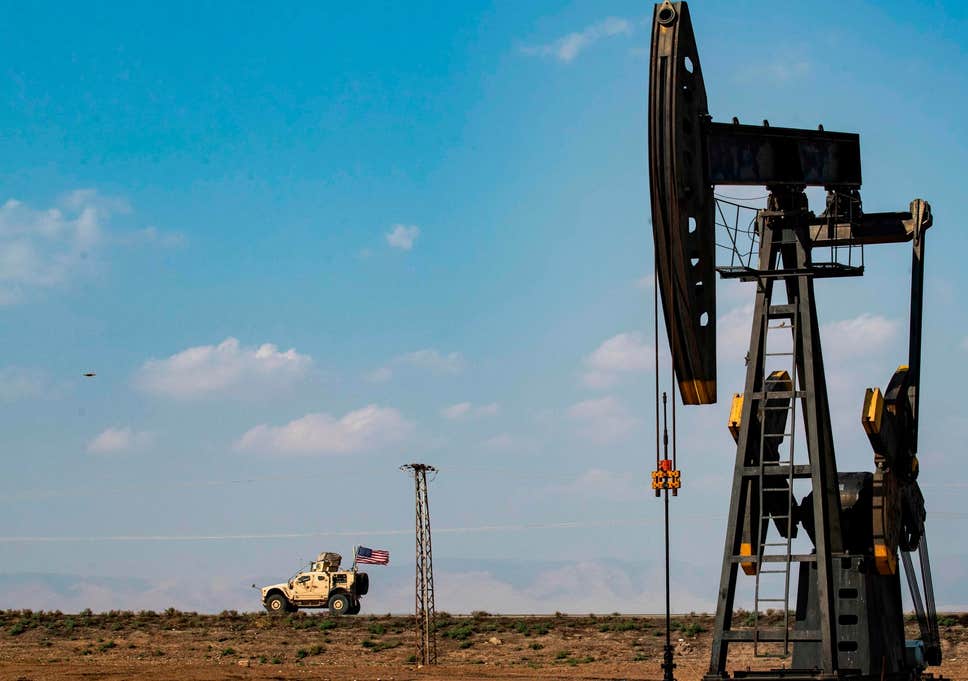
Before the evacuation of 1,000 American troops from northern Syria to western Iraq, the Pentagon had 2,000 US forces in Syria. After the drawdown of US troops at Erdogan’s insistence in order for Ankara to mount a ground offensive in northern Syria, the US has still deployed 1,000 troops, mainly in oil-rich eastern Deir al-Zor province and at al-Tanf military base.

Kindly support honest journalism to survive. https://countercurrents.org/subscription/

If you think the contents of this news letter are critical for the dignified living and survival of humanity and other species on earth, please forward it to your friends and spread the word. It's time for humanity to come together as one family! You can subscribe to our news letter here http://www.countercurrents.org/news-letter/.

In Solidarity

Binu Mathew
Editor
Countercurrents.org


How Controlling Syria’s Oil Serves Washington’s Strategic Objectives?
by Nauman Sadiq


Before the evacuation of 1,000 American troops from northern Syria to western Iraq, the Pentagon had 2,000 US forces in Syria. After the drawdown of US troops at Erdogan’s insistence in order for Ankara to mount a ground offensive in northern Syria, the US has still deployed 1,000 troops, mainly in oil-rich eastern Deir al-Zor province and at al-Tanf military base.


Proposed withdrawal of US troops in Syria
by Ron Forthofer


It’s past time for the US elite to renounce US imperialism with its immorality, crimes against humanity, killing and destruction and to pay reparations to its victims. The US must also stop being a rogue state and join the community of nations.

Before the evacuation of 1,000 American troops from northern Syria to western Iraq, the Pentagon had 2,000 US forces in Syria. After the drawdown of US troops at Erdogan’s insistence in order for Ankara to mount a ground offensive in northern Syria, the US has still deployed 1,000 troops, mainly in oil-rich eastern Deir al-Zor province and at al-Tanf military base.
Al-Tanf military base is strategically located in southeastern Syria on the border between Syria, Iraq and Jordan, and it straddles on a critically important Damascus-Baghdad highway, which serves as a lifeline for Damascus. Washington has illegally occupied 55-kilometer area around al-Tanf since 2016, and several hundred US Marines have trained several Syrian militant groups there.
It’s worth noting that rather than fighting the Islamic State, the purpose of continued presence of the US forces at al-Tanf military base is to address Israel’s concerns regarding the expansion of Iran’s influence in Iraq, Syria and Lebanon.
Regarding the oil- and natural gas-rich Deir al-Zor governorate, it’s worth pointing out that Syria used to produce modest quantities of oil for domestic needs before the war – roughly 400,000 barrels per day, which isn’t much compared to tens of millions barrels daily oil production in the Gulf states.
Although Donald Trump crowed in a characteristic blunt manner in a tweet after the withdrawal of 1,000 American troops from northern Syria that Washington had deployed forces in eastern Syria where there was oil, the purpose of exercising control over Syria’s oil is neither to smuggle oil out of Syria nor to deny the valuable source of revenue to the Islamic State.
There is no denying the fact that the remnants of the Islamic State militants are still found in Syria and Iraq but its emirate has been completely dismantled in the region and its leadership is on the run. So much so that the fugitive caliph of the terrorist organization was killed in the bastion of a rival jihadist outfit, al-Nusra Front in Idlib, hundreds of kilometers away from the Islamic State strongholds in eastern Syria.
Much like the “scorched earth” battle strategy of medieval warlords – as in the case of the Islamic State which early in the year burned crops of local farmers while retreating from its former strongholds in eastern Syria – Washington’s basic purpose in deploying the US forces in oil and natural gas fields of Deir al-Zor governorate is to deny the valuable source of income to its other main rival in the region, Damascus.
After the devastation caused by eight years of proxy war, the Syrian government is in dire need of tens of billions dollars international assistance to rebuild the country. Not only is Washington hampering efforts to provide international aid to the hapless country, it is in fact squatting over Syria’s own resources with the help of its only ally in the region, the Kurds.
Although Donald Trump claimed credit for expropriating Syria’s oil wealth, it bears mentioning that “scorched earth” policy is not a business strategy, it is the institutional logic of the deep state. President Trump is known to be a businessman and at least ostensibly follows a non-interventionist ideology; being a novice in the craft of international diplomacy, however, he has time and again been misled by the Pentagon and Washington’s national security establishment.
Regarding Washington’s interest in propping up the Gulf’s autocrats and fighting their wars in regional conflicts, it bears mentioning that in April 2016, the Saudi foreign minister threatened [1] that the Saudi kingdom would sell up to $750 billion in treasury securities and other assets if the US Congress passed a bill that would allow Americans to sue the Saudi government in the United States courts for its role in the September 11, 2001 terror attack – though the bill was eventually passed, Saudi authorities have not been held accountable; even though 15 out of 19 9/11 hijackers were Saudi nationals.
Moreover, $750 billion is only the Saudi investment in the United States, if we add its investment in Western Europe and the investments of UAE, Kuwait and Qatar in the Western economies, the sum total would amount to trillions of dollars of Gulf’s investments in North America and Western Europe.
Furthermore, in order to bring home the significance of the Persian Gulf’s oil in the energy-starved industrialized world, here are a few stats from the OPEC data: Saudi Arabia has the world’s largest proven crude oil reserves of 265 billion barrels and its daily oil production exceeds 10 million barrels; Iran and Iraq, each, has 150 billion barrels reserves and has the capacity to produce 5 million barrels per day, each; while UAE and Kuwait, each, has 100 billion barrels reserves and produces 3 million barrels per day, each; thus, all the littoral states of the Persian Gulf, together, hold 788 billion barrels, more than half of world’s 1477 billion barrels of proven oil reserves.
No wonder then, 36,000 United States troops have currently been deployed in their numerous military bases and aircraft carriers in the oil-rich Persian Gulf in accordance with the Carter Doctrine of 1980, which states: “Let our position be absolutely clear: an attempt by any outside force to gain control of the Persian Gulf region will be regarded as an assault on the vital interests of the United States of America, and such an assault will be repelled by any means necessary, including military force.”
Additionally, regarding the Western defense production industry’s sales of arms to the Gulf Arab States, a report [2] authored by William Hartung of the US-based Center for International Policy found that the Obama administration had offered Saudi Arabia more than $115 billion in weapons, military equipment and training during its eight-year tenure.
Similarly, the top items in Trump’s agenda for his maiden visit to Saudi Arabia in May 2017 were: firstly, he threw his weight behind the idea of the Saudi-led “Arab NATO” to counter Iran’s influence in the region; and secondly, he announced an unprecedented arms package for Saudi Arabia. The package included between $98 billion and $128 billion in arms sales.
Therefore, keeping the economic dependence of the Western countries on the Gulf Arab States in mind, during the times of global recession when most of manufacturing has been outsourced to China, it is not surprising that when the late King Abdullah of Saudi Arabia decided to provide training and arms to the Islamic jihadists in the border regions of Turkey and Jordan against the government of Bashar al-Assad in Syria, the Obama administration was left with no other choice but to toe the destructive policy of its regional Middle Eastern allies, despite the sectarian nature of the proxy war and its attendant consequences of breeding a new generation of Islamic jihadists who would become a long-term security risk not only to the Middle East but to the Western countries, as well.
Similarly, when King Abdullah’s successor King Salman decided, on the whim of the Crown Prince Mohammad bin Salman, to invade Yemen in March 2015, once again the Obama administration had to yield to the dictates of Saudi Arabia and UAE by fully coordinating the Gulf-led military campaign in Yemen not only by providing intelligence, planning and logistical support but also by selling billions of dollars’ worth of arms and ammunition to the Gulf Arab States during the conflict.
In this reciprocal relationship, the US provides security to the ruling families of the Gulf Arab states by providing weapons and troops; and in return, the Gulf’s petro-sheikhs contribute substantial investments to the tune of hundreds of billions of dollars to the Western economies.
Regarding the Pax Americana which is the reality of the contemporary neocolonial order, according to a January 2017 infographic [3] by the New York Times, 210,000 US military personnel were stationed all over the world, including 79,000 in Europe, 45,000 in Japan, 28,500 in South Korea and 36,000 in the Middle East.
Although Donald Trump keeps complaining that NATO must share the cost of deployment of US troops, particularly in Europe where 47,000 American troops are stationed in Germany since the end of the Second World War, 15,000 in Italy and 8,000 in the United Kingdom, fact of the matter is that the cost is already shared between Washington and host countries.
Roughly, European countries pay one-third of the cost for maintaining US military bases in Europe whereas Washington chips in the remaining two-third. In the Far Eastern countries, 75% of the cost for the deployment of American troops is shared by Japan and the remaining 25% by Washington, and in South Korea, 40% cost is shared by the host country and the US contributes the remaining 60%.
Whereas the oil-rich Gulf Cooperation Countries (GCC) – Saudi Arabia, UAE, Kuwait and Qatar – pay two-third of the cost for maintaining 36,000 US troops in the Persian Gulf where more than half of world’s proven oil reserves are located and Washington contributes the remaining one-third.
Footnotes:
[1] Saudi Arabia Warns of Economic Fallout if Congress Passes 9/11 Bill:
[2] The Obama administration’s arms sales offers to Saudi top $115 billion:
[3] What the U.S. Gets for Defending Its Allies and Interests Abroad?
Nauman Sadiq is an Islamabad-based attorney, columnist and geopolitical analyst focused on the politics of Af-Pak and Middle East regions, neocolonialism and petro-imperialism.

Scott Morrison’s Authoritarian Streak: Crushing Anti-Mining Protest in Australia
by Dr Binoy Kampmark


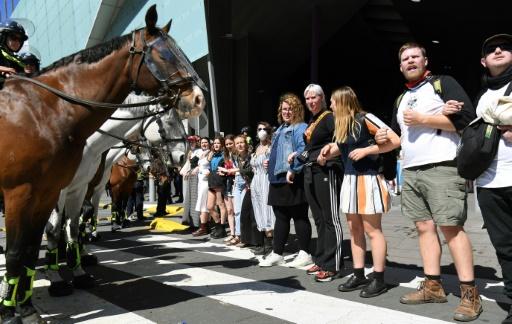
The Prime Minister of Australia is fuming.  Having made his mark on Australian politics by being the mining sector’s most avid defender, Scott Morrison was disturbed by the week’s events in Melbourne that saw clashes between police and protesters outside the sixth annual international mining and resources conference.

The Prime Minister of Australia is fuming.  Having made his mark on Australian politics by being the mining sector’s most avid defender, Scott Morrison was disturbed by the week’s events in Melbourne that saw clashes between police and protesters outside the sixth annual international mining and resources conference.
It made sense for the protesters to kick up a fuss at the big ticket event.  IMARC, as the site states, “is where the global mining leaders connect with technology, finance and the future.  It is Australia’s largest mining event bringing together over 7,000 decision makers, mining leaders, policy makers, investors, commodity buyers, technical experts, innovators and educators from over 100 countries to Melbourne for four days of learning, deal-making and unparalleled networking.”
The welcoming note from Victorian Premier Daniel Andrews was enthusiastic and distinctly not green in colouring.  This was a chance to celebrate what Australians do best; no, not sustainable energy, nor technologies of ecological soundness, but boast “world class talent in the resources field”, “a sector that continues to grow and provide jobs for many Victorians, especially in country areas.” The Australian economy was inseparable from the resources sector, “creating jobs and driving investment”.
An ideal opportunity had presented itself for climate change protesters who converged on the Melbourne Convention Centre.  By the third day, the patience of the cordoning police had worn thin.  The blood was rushing, the red haze had descended.  Batons and capsicum spray were deployed.  Over sixty protesters were arrested.  “I haven’t seen this kind of aggression before,” observed Emma Black, a self-proclaimed seasoned veteran of the protest scene.  Channel 7 journalist Paul Dowsley was more than bemused by being jostled by officers.  “Incredible. I was obeying their direction to move to another area.  I’m stunned.”
The response from Victoria Police was dismissive: “In this case, the reporter involved did not follow police instructions to move away from the area.  This was a safety issue and Victoria Police believes an appropriate amount of force was used to move the reporter from the area.”
On Thursday, the anti-mining protesters turned their attention to the PwC’s Southbank offices.  The conduct on the part of officers preventing disruptions to arriving delegates had been zealous enough to pique the interest of the Professional Standards Committee.  In the words of a police spokesman, “Protesters have raised several concerns in relation to the police response during the protest.  These concerns have been noted and are being assessed by our Professional Standards Committee.”
A sense about where that investigation will go can be gathered by the next remark.  “A number of groups have engaged in more deliberate tactics including blocking disabled access… and ignored police directions.  These protesters have been dealt with swiftly and effectively by the police.”
Another police statement addressing the second day of the blockade stressed that, “Whilst we respect the rights of people to peacefully protest, the unlawful action taken today is a drain on police resources from across the greater Melbourne.
The protesters proved sufficiently disruptive for Prime Minister Morrison to suggest a dark force at work: the “Quiet Australian”, that fictional confection he never tires of, is under siege.  But what from?
In a speech to the Queensland Resources Council on Friday, Morrison suggested that a “new breed of radical activism” was harrying those in mining and businesses associated with it. “I am very concerned about this new form of progressivism… intended to get in under the radar but [which] at its heart would deny the liberties of Australians.”  This breed of activism was “apocalyptic in tone, brooks no compromise, all or nothing, alternative views not permitted – a dogma that pits cities against regional Australia, one that cannot resist sneering at wealth creating and job creating industries, and the livelihoods particularly of regional Australians including here in Queensland.”  The wedge politician par excellence.
Morrison was a touch too keen to inflate the level of threat posed by such groups, who are “targeting businesses of all sizes, including small businesses, like contracting businesses in regional Queensland.”  This was far more serious than a “street protest”.  (The distinction in Australian law and policy is rarely made, in any case.)
His suggestion was as simple as it was authoritarian: protesters seeking to disrupt the chain of supply should be punished as saboteurs.  They, he stressed, were the undemocratic ones, the silencers.  His government, he explained on Melbourne radio 3AW, had “already taken action against their cousins who want to invade farms and we put legislation through to protect our farmers from that type of economic vandalism.”  Instead of taking credit for having sparked interest in such protests, indifferent as he is to those obscene and rarely said words “climate change”, he was going to take credit for crushing the dissent, putting the outrage to bed.
It was enough to disturb Katharine Murphy of The Guardian. “As he rails against activism, Scott Morrison is turning a bit sinister, a bit threatening.” The prime minister had treated Australians to a spectacle of complaint “against intolerance while in the same breath foreshadowing his own bout of government sanctioned intolerance – the type where police might be involved, and people might be bundled away in vans.”
As in other countries where fossil fuels and natural resources reign, Australia is hamstrung, an aspiring banana republic in the deceptive guise of a first world country.  Environmental pressure to alter their influence is not just seen as a matter of dissent but a threat.  To go green is to turn gangrenous.  To worry about environmental ruin and human causes is to be, in Morrison’s view, “indulgent and selfish” rather than responsible and cognisant.  A true upending of logic, and a potentially imperilling one.  Rather than confronting it, Morrison’s solution is drawn from the tradition and precedent of history: to protect resource industries, call in the police.
Dr. Binoy Kampmark was a Commonwealth Scholar at Selwyn College, Cambridge.  He lectures at RMIT University, Melbourne.  Email: bkampmark@gmail.com


Dalit Man Killed By Upper Caste In Uttar Pradesh
by Vidya Bhushan Rawat


He was the only son of his landless parents in a village named as Udaypura in Deoria district of Uttar Pradesh. When the brick kiln season is off, most of the people from Mushahar community who live on the river bank are engaged in fishing as they have no other source of food.. This time, with so much of rain, all communities on river bank are enjoying a good fish. But October 28th i.e. Diwali
day came as a devastation for Chhotu who was just 27 years old when he refused to share his fish catch with a local Brahmin who was determined for the same. The altercation happened between Chhotu and the local bully who happened to be Brahmin as he was thrashed, beaten up mercilessly and thrown in the river.


Poomani’s ” Heat”
by Nikhil Sanjay-Rekha Adsule


So, much has been written as so called book review on Vekkai(Heat) as well critic on the recently released film called “Asuran” based on the same, which stars Dhanush in a leading role but it shall be apt to revisit poomani’s classic novella and go through its finer nuances and relate it to the historical, Social, Economic, Cultural, Political in real time as time, space and place still is marred by same inequalities on the basis of Gender, Caste, Class and Religion.


Attitude
by Mirza Yawar Baig


To witness a crime
in progress and to decide to take a video to post on Instagram, instead of taking action to prevent the crime or to help the victim, is a matter of attitude. Cherophobia (the fear of being ‘too happy’ because you feel that if you allow yourself to feel happy, then disaster will strike), is a matter of attitude. Satisfaction, gratitude, ambition, courage, compassion are all attitudes. So also, are their opposites. And each one has an impact on our life.


Cost of inaction to prevent and treat TB is (very) high
by Shobha Shukla


Prevention of TB was the focus of many a sessions at the 50th Union World Conference on Lung Health in Hyderabad, India, on the theme of ‘Ending the Emergency: Science, Leadership, Action.’ This conference comes one year after the first ever United Nations High-Level Meeting (UNHLM) on TB.