Search This Blog

Translate

Blog Archive

Middleboro Review 2

NEW CONTENT MOVED TO MIDDLEBORO REVIEW 2

Toyota

Since the Dilly, Dally, Delay & Stall Law Firms are adding their billable hours, the Toyota U.S.A. and Route 44 Toyota posts have been separated here:

Route 44 Toyota Sold Me A Lemon


Showing posts with label tuberculosis. Show all posts

Sunday, November 3, 2019

CC News Letter 02 Nov - How Controlling Syria’s Oil Serves Washington’s Strategic Objectives?


Dear Friend,

Before the evacuation of 1,000 American troops from northern Syria to western Iraq, the Pentagon had 2,000 US forces in Syria. After the drawdown of US troops at Erdogan’s insistence in order for Ankara to mount a ground offensive in northern Syria, the US has still deployed 1,000 troops, mainly in oil-rich eastern Deir al-Zor province and at al-Tanf military base.

Kindly support honest journalism to survive. https://countercurrents.org/subscription/

If you think the contents of this news letter are critical for the dignified living and survival of humanity and other species on earth, please forward it to your friends and spread the word. It's time for humanity to come together as one family! You can subscribe to our news letter here http://www.countercurrents.org/news-letter/.

In Solidarity

Binu Mathew
Editor
Countercurrents.org


How Controlling Syria’s Oil Serves Washington’s Strategic Objectives?
by Nauman Sadiq


Before the evacuation of 1,000 American troops from northern Syria to western Iraq, the Pentagon had 2,000 US forces in Syria. After the drawdown of US troops at Erdogan’s insistence in order for Ankara to mount a ground offensive in northern Syria, the US has still deployed 1,000 troops, mainly in oil-rich eastern Deir al-Zor province and at al-Tanf military base.


Proposed withdrawal of US troops in Syria
by Ron Forthofer


It’s past time for the US elite to renounce US imperialism with its immorality, crimes against humanity, killing and destruction and to pay reparations to its victims. The US must also stop being a rogue state and join the community of nations.
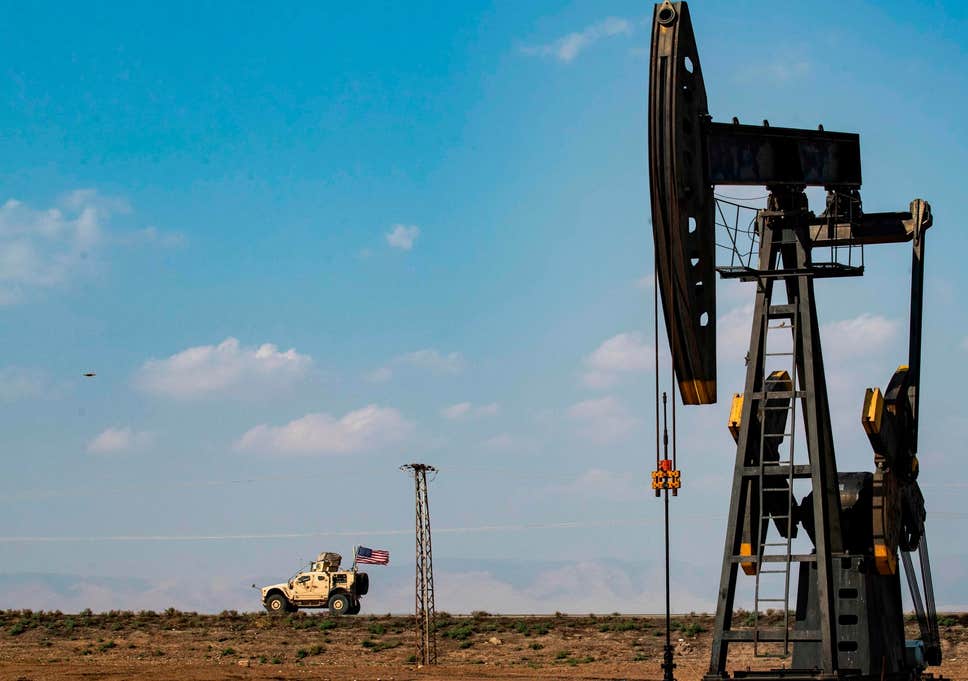
Before the evacuation of 1,000 American troops from northern Syria to western Iraq, the Pentagon had 2,000 US forces in Syria. After the drawdown of US troops at Erdogan’s insistence in order for Ankara to mount a ground offensive in northern Syria, the US has still deployed 1,000 troops, mainly in oil-rich eastern Deir al-Zor province and at al-Tanf military base.
Al-Tanf military base is strategically located in southeastern Syria on the border between Syria, Iraq and Jordan, and it straddles on a critically important Damascus-Baghdad highway, which serves as a lifeline for Damascus. Washington has illegally occupied 55-kilometer area around al-Tanf since 2016, and several hundred US Marines have trained several Syrian militant groups there.
It’s worth noting that rather than fighting the Islamic State, the purpose of continued presence of the US forces at al-Tanf military base is to address Israel’s concerns regarding the expansion of Iran’s influence in Iraq, Syria and Lebanon.
Regarding the oil- and natural gas-rich Deir al-Zor governorate, it’s worth pointing out that Syria used to produce modest quantities of oil for domestic needs before the war – roughly 400,000 barrels per day, which isn’t much compared to tens of millions barrels daily oil production in the Gulf states.
Although Donald Trump crowed in a characteristic blunt manner in a tweet after the withdrawal of 1,000 American troops from northern Syria that Washington had deployed forces in eastern Syria where there was oil, the purpose of exercising control over Syria’s oil is neither to smuggle oil out of Syria nor to deny the valuable source of revenue to the Islamic State.
There is no denying the fact that the remnants of the Islamic State militants are still found in Syria and Iraq but its emirate has been completely dismantled in the region and its leadership is on the run. So much so that the fugitive caliph of the terrorist organization was killed in the bastion of a rival jihadist outfit, al-Nusra Front in Idlib, hundreds of kilometers away from the Islamic State strongholds in eastern Syria.
Much like the “scorched earth” battle strategy of medieval warlords – as in the case of the Islamic State which early in the year burned crops of local farmers while retreating from its former strongholds in eastern Syria – Washington’s basic purpose in deploying the US forces in oil and natural gas fields of Deir al-Zor governorate is to deny the valuable source of income to its other main rival in the region, Damascus.
After the devastation caused by eight years of proxy war, the Syrian government is in dire need of tens of billions dollars international assistance to rebuild the country. Not only is Washington hampering efforts to provide international aid to the hapless country, it is in fact squatting over Syria’s own resources with the help of its only ally in the region, the Kurds.
Although Donald Trump claimed credit for expropriating Syria’s oil wealth, it bears mentioning that “scorched earth” policy is not a business strategy, it is the institutional logic of the deep state. President Trump is known to be a businessman and at least ostensibly follows a non-interventionist ideology; being a novice in the craft of international diplomacy, however, he has time and again been misled by the Pentagon and Washington’s national security establishment.
Regarding Washington’s interest in propping up the Gulf’s autocrats and fighting their wars in regional conflicts, it bears mentioning that in April 2016, the Saudi foreign minister threatened [1] that the Saudi kingdom would sell up to $750 billion in treasury securities and other assets if the US Congress passed a bill that would allow Americans to sue the Saudi government in the United States courts for its role in the September 11, 2001 terror attack – though the bill was eventually passed, Saudi authorities have not been held accountable; even though 15 out of 19 9/11 hijackers were Saudi nationals.
Moreover, $750 billion is only the Saudi investment in the United States, if we add its investment in Western Europe and the investments of UAE, Kuwait and Qatar in the Western economies, the sum total would amount to trillions of dollars of Gulf’s investments in North America and Western Europe.
Furthermore, in order to bring home the significance of the Persian Gulf’s oil in the energy-starved industrialized world, here are a few stats from the OPEC data: Saudi Arabia has the world’s largest proven crude oil reserves of 265 billion barrels and its daily oil production exceeds 10 million barrels; Iran and Iraq, each, has 150 billion barrels reserves and has the capacity to produce 5 million barrels per day, each; while UAE and Kuwait, each, has 100 billion barrels reserves and produces 3 million barrels per day, each; thus, all the littoral states of the Persian Gulf, together, hold 788 billion barrels, more than half of world’s 1477 billion barrels of proven oil reserves.
No wonder then, 36,000 United States troops have currently been deployed in their numerous military bases and aircraft carriers in the oil-rich Persian Gulf in accordance with the Carter Doctrine of 1980, which states: “Let our position be absolutely clear: an attempt by any outside force to gain control of the Persian Gulf region will be regarded as an assault on the vital interests of the United States of America, and such an assault will be repelled by any means necessary, including military force.”
Additionally, regarding the Western defense production industry’s sales of arms to the Gulf Arab States, a report [2] authored by William Hartung of the US-based Center for International Policy found that the Obama administration had offered Saudi Arabia more than $115 billion in weapons, military equipment and training during its eight-year tenure.
Similarly, the top items in Trump’s agenda for his maiden visit to Saudi Arabia in May 2017 were: firstly, he threw his weight behind the idea of the Saudi-led “Arab NATO” to counter Iran’s influence in the region; and secondly, he announced an unprecedented arms package for Saudi Arabia. The package included between $98 billion and $128 billion in arms sales.
Therefore, keeping the economic dependence of the Western countries on the Gulf Arab States in mind, during the times of global recession when most of manufacturing has been outsourced to China, it is not surprising that when the late King Abdullah of Saudi Arabia decided to provide training and arms to the Islamic jihadists in the border regions of Turkey and Jordan against the government of Bashar al-Assad in Syria, the Obama administration was left with no other choice but to toe the destructive policy of its regional Middle Eastern allies, despite the sectarian nature of the proxy war and its attendant consequences of breeding a new generation of Islamic jihadists who would become a long-term security risk not only to the Middle East but to the Western countries, as well.
Similarly, when King Abdullah’s successor King Salman decided, on the whim of the Crown Prince Mohammad bin Salman, to invade Yemen in March 2015, once again the Obama administration had to yield to the dictates of Saudi Arabia and UAE by fully coordinating the Gulf-led military campaign in Yemen not only by providing intelligence, planning and logistical support but also by selling billions of dollars’ worth of arms and ammunition to the Gulf Arab States during the conflict.
In this reciprocal relationship, the US provides security to the ruling families of the Gulf Arab states by providing weapons and troops; and in return, the Gulf’s petro-sheikhs contribute substantial investments to the tune of hundreds of billions of dollars to the Western economies.
Regarding the Pax Americana which is the reality of the contemporary neocolonial order, according to a January 2017 infographic [3] by the New York Times, 210,000 US military personnel were stationed all over the world, including 79,000 in Europe, 45,000 in Japan, 28,500 in South Korea and 36,000 in the Middle East.
Although Donald Trump keeps complaining that NATO must share the cost of deployment of US troops, particularly in Europe where 47,000 American troops are stationed in Germany since the end of the Second World War, 15,000 in Italy and 8,000 in the United Kingdom, fact of the matter is that the cost is already shared between Washington and host countries.
Roughly, European countries pay one-third of the cost for maintaining US military bases in Europe whereas Washington chips in the remaining two-third. In the Far Eastern countries, 75% of the cost for the deployment of American troops is shared by Japan and the remaining 25% by Washington, and in South Korea, 40% cost is shared by the host country and the US contributes the remaining 60%.
Whereas the oil-rich Gulf Cooperation Countries (GCC) – Saudi Arabia, UAE, Kuwait and Qatar – pay two-third of the cost for maintaining 36,000 US troops in the Persian Gulf where more than half of world’s proven oil reserves are located and Washington contributes the remaining one-third.
Footnotes:
[1] Saudi Arabia Warns of Economic Fallout if Congress Passes 9/11 Bill:
[2] The Obama administration’s arms sales offers to Saudi top $115 billion:
[3] What the U.S. Gets for Defending Its Allies and Interests Abroad?
Nauman Sadiq is an Islamabad-based attorney, columnist and geopolitical analyst focused on the politics of Af-Pak and Middle East regions, neocolonialism and petro-imperialism.

Scott Morrison’s Authoritarian Streak: Crushing Anti-Mining Protest in Australia
by Dr Binoy Kampmark


The Prime Minister of Australia is fuming.  Having made his mark on Australian politics by being the mining sector’s most avid defender, Scott Morrison was disturbed by the week’s events in Melbourne that saw clashes between police and protesters outside the sixth annual international mining and resources conference.

The Prime Minister of Australia is fuming.  Having made his mark on Australian politics by being the mining sector’s most avid defender, Scott Morrison was disturbed by the week’s events in Melbourne that saw clashes between police and protesters outside the sixth annual international mining and resources conference.
It made sense for the protesters to kick up a fuss at the big ticket event.  IMARC, as the site states, “is where the global mining leaders connect with technology, finance and the future.  It is Australia’s largest mining event bringing together over 7,000 decision makers, mining leaders, policy makers, investors, commodity buyers, technical experts, innovators and educators from over 100 countries to Melbourne for four days of learning, deal-making and unparalleled networking.”
The welcoming note from Victorian Premier Daniel Andrews was enthusiastic and distinctly not green in colouring.  This was a chance to celebrate what Australians do best; no, not sustainable energy, nor technologies of ecological soundness, but boast “world class talent in the resources field”, “a sector that continues to grow and provide jobs for many Victorians, especially in country areas.” The Australian economy was inseparable from the resources sector, “creating jobs and driving investment”.
An ideal opportunity had presented itself for climate change protesters who converged on the Melbourne Convention Centre.  By the third day, the patience of the cordoning police had worn thin.  The blood was rushing, the red haze had descended.  Batons and capsicum spray were deployed.  Over sixty protesters were arrested.  “I haven’t seen this kind of aggression before,” observed Emma Black, a self-proclaimed seasoned veteran of the protest scene.  Channel 7 journalist Paul Dowsley was more than bemused by being jostled by officers.  “Incredible. I was obeying their direction to move to another area.  I’m stunned.”
The response from Victoria Police was dismissive: “In this case, the reporter involved did not follow police instructions to move away from the area.  This was a safety issue and Victoria Police believes an appropriate amount of force was used to move the reporter from the area.”
On Thursday, the anti-mining protesters turned their attention to the PwC’s Southbank offices.  The conduct on the part of officers preventing disruptions to arriving delegates had been zealous enough to pique the interest of the Professional Standards Committee.  In the words of a police spokesman, “Protesters have raised several concerns in relation to the police response during the protest.  These concerns have been noted and are being assessed by our Professional Standards Committee.”
A sense about where that investigation will go can be gathered by the next remark.  “A number of groups have engaged in more deliberate tactics including blocking disabled access… and ignored police directions.  These protesters have been dealt with swiftly and effectively by the police.”
Another police statement addressing the second day of the blockade stressed that, “Whilst we respect the rights of people to peacefully protest, the unlawful action taken today is a drain on police resources from across the greater Melbourne.
The protesters proved sufficiently disruptive for Prime Minister Morrison to suggest a dark force at work: the “Quiet Australian”, that fictional confection he never tires of, is under siege.  But what from?
In a speech to the Queensland Resources Council on Friday, Morrison suggested that a “new breed of radical activism” was harrying those in mining and businesses associated with it. “I am very concerned about this new form of progressivism… intended to get in under the radar but [which] at its heart would deny the liberties of Australians.”  This breed of activism was “apocalyptic in tone, brooks no compromise, all or nothing, alternative views not permitted – a dogma that pits cities against regional Australia, one that cannot resist sneering at wealth creating and job creating industries, and the livelihoods particularly of regional Australians including here in Queensland.”  The wedge politician par excellence.
Morrison was a touch too keen to inflate the level of threat posed by such groups, who are “targeting businesses of all sizes, including small businesses, like contracting businesses in regional Queensland.”  This was far more serious than a “street protest”.  (The distinction in Australian law and policy is rarely made, in any case.)
His suggestion was as simple as it was authoritarian: protesters seeking to disrupt the chain of supply should be punished as saboteurs.  They, he stressed, were the undemocratic ones, the silencers.  His government, he explained on Melbourne radio 3AW, had “already taken action against their cousins who want to invade farms and we put legislation through to protect our farmers from that type of economic vandalism.”  Instead of taking credit for having sparked interest in such protests, indifferent as he is to those obscene and rarely said words “climate change”, he was going to take credit for crushing the dissent, putting the outrage to bed.
It was enough to disturb Katharine Murphy of The Guardian. “As he rails against activism, Scott Morrison is turning a bit sinister, a bit threatening.” The prime minister had treated Australians to a spectacle of complaint “against intolerance while in the same breath foreshadowing his own bout of government sanctioned intolerance – the type where police might be involved, and people might be bundled away in vans.”
As in other countries where fossil fuels and natural resources reign, Australia is hamstrung, an aspiring banana republic in the deceptive guise of a first world country.  Environmental pressure to alter their influence is not just seen as a matter of dissent but a threat.  To go green is to turn gangrenous.  To worry about environmental ruin and human causes is to be, in Morrison’s view, “indulgent and selfish” rather than responsible and cognisant.  A true upending of logic, and a potentially imperilling one.  Rather than confronting it, Morrison’s solution is drawn from the tradition and precedent of history: to protect resource industries, call in the police.
Dr. Binoy Kampmark was a Commonwealth Scholar at Selwyn College, Cambridge.  He lectures at RMIT University, Melbourne.  Email: bkampmark@gmail.com


Dalit Man Killed By Upper Caste In Uttar Pradesh
by Vidya Bhushan Rawat


He was the only son of his landless parents in a village named as Udaypura in Deoria district of Uttar Pradesh. When the brick kiln season is off, most of the people from Mushahar community who live on the river bank are engaged in fishing as they have no other source of food.. This time, with so much of rain, all communities on river bank are enjoying a good fish. But October 28th i.e. Diwali
day came as a devastation for Chhotu who was just 27 years old when he refused to share his fish catch with a local Brahmin who was determined for the same. The altercation happened between Chhotu and the local bully who happened to be Brahmin as he was thrashed, beaten up mercilessly and thrown in the river.


Poomani’s ” Heat”
by Nikhil Sanjay-Rekha Adsule


So, much has been written as so called book review on Vekkai(Heat) as well critic on the recently released film called “Asuran” based on the same, which stars Dhanush in a leading role but it shall be apt to revisit poomani’s classic novella and go through its finer nuances and relate it to the historical, Social, Economic, Cultural, Political in real time as time, space and place still is marred by same inequalities on the basis of Gender, Caste, Class and Religion.


Attitude
by Mirza Yawar Baig


To witness a crime
in progress and to decide to take a video to post on Instagram, instead of taking action to prevent the crime or to help the victim, is a matter of attitude. Cherophobia (the fear of being ‘too happy’ because you feel that if you allow yourself to feel happy, then disaster will strike), is a matter of attitude. Satisfaction, gratitude, ambition, courage, compassion are all attitudes. So also, are their opposites. And each one has an impact on our life.


Cost of inaction to prevent and treat TB is (very) high
by Shobha Shukla


Prevention of TB was the focus of many a sessions at the 50th Union World Conference on Lung Health in Hyderabad, India, on the theme of ‘Ending the Emergency: Science, Leadership, Action.’ This conference comes one year after the first ever United Nations High-Level Meeting (UNHLM) on TB.





Tuesday, October 29, 2019

CC News Letter 29 Oct - Far Right EU MPs Visit Kashmir


Dear Friend,

The 27-member delegation of European Parliament members visited the troubled region of Jammu and Kashmir. It’s the first foreign delegation allowed to visit Kashmir after abrogation of Article 370 on August 5, this year. The MEPs are drawn largely from extreme right-wing parties like the German Alternative for Germany (AfD) famous for its anti-immigrant stand, and France’s Rassemblement National. In all, 22 of the 27 members of European Parliament (MEPs) are Right-wing politicians in their home countries.

Kindly support honest journalism to survive. https://countercurrents.org/subscription/

If you think the contents of this news letter are critical for the dignified living and survival of humanity and other species on earth, please forward it to your friends and spread the word. It's time for humanity to come together as one family! You can subscribe to our news letter here http://www.countercurrents.org/news-letter/.

In Solidarity

Binu Mathew
Editor
Countercurrents.org


Far Right EU MPs Visit Kashmir
by Countercurrents Collective


The 27-member delegation of European Parliament members visited the troubled region of Jammu and Kashmir. It’s the first foreign delegation allowed to visit Kashmir after abrogation of Article 370 on August 5, this year. The MEPs are drawn largely from extreme right-wing parties like the German Alternative for Germany (AfD) famous for its anti-immigrant stand, and France’s Rassemblement National. In all, 22 of the 27 members of European Parliament (MEPs) are Right-wing politicians in their home countries.


Evo Morales wins in Bolivia, the OAS and U.S. lose
by Elson Concepcion


The irreversible victory of Evo Morales in Bolivia’s recent elections, (with 46.64% of the vote vs. 36.83% for Carlos Mesa), has shed light on several aspects of
the role of the Organization of American States (OAS) and Washington throughout their campaign to destabilize popular or left-wing governments, and return control to those who raise the banners of neoliberalism and submission to the United States.


Progressives secure majority in the chambers of congress in Bolivia
by Countercurrents Collective


The Movement to Socialism (MAS), the progressives, has secured a majority presence in the Senate and Deputy Chamber of Bolivia, Vice President of the country Álvaro García Linera said Monday. During a presentation explaining the results of the election on October 20, the vice president said MAS obtained 21 representatives in the Senate while securing 68 lawmakers in the House of Representatives.


Camp Bucca, Abu Ghraib and the Rise of Extremism in Iraq
by Kathy Kelly


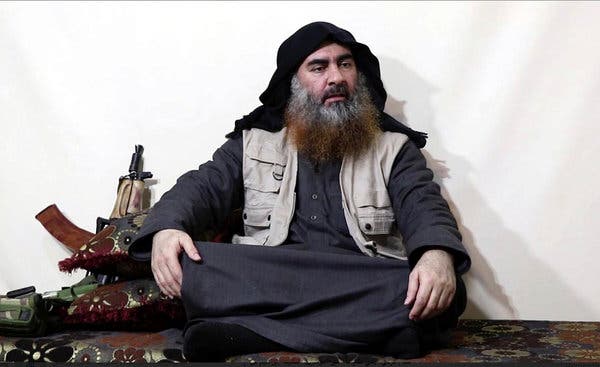
We need not choose blindness, or the hatred that lets us be herded in fear. We can instead seek to pay reparations for suffering caused through our wars. We can work to abolish war, mourn the deaths of Al-Baghdadi’s children and question how conditions inside U.S. military camps, in Iraq, led to the extremism of Al-Baghdadi and his ISIS followers.

Yesterday morning, President Trump announced the death of Abu Bakr Al- Baghdadi and three of his children.
President Trump said Al-Baghdadi, the founder of ISIS, was fleeing U.S. military forces, in a tunnel, and then killed himself by detonating a suicide vest he wore.
In 2004, Al-Baghdadi had been captured by U.S. forces and, for ten months, imprisoned in both Abu Ghraib and Camp Bucca.
I visited Camp Bucca in January, 2004 when, still under construction, the Camp was a network of tents, south of Basra, in an isolated, miserable area of Iraq.
Before our three-person Voices delegation entered Iraq, that month, we waited for  visas in Amman, Jordan. While there, two young Palestinian men visited us and described their experiences during six months of imprisonment in Camp Bucca. Recalling the horrible experience, they remembered how fearful they felt, sleeping in sand infested with desert scorpions; they were paraded naked, for showers, in front of U.S. military women and told to bark like a dog or say “I love George Bush”  before their empty bowls would be filled with food. Unable to communicate with anyone outside the prison, they could only hope for release when their turn finally came to appear before a three-person Tribunal.
Five of their friends were still in the prison. They begged us to visit these friends and plead for their release. All of them were Palestinians studying for professional degrees in Baghdad. Reluctant to lose their chances of eventually graduating, they took a risk and remained in Baghdad throughout the 2003 Shock and Awe bombing. U.S. marines arrived at their dormitory on Baghdad’s Haifa Street and systematically rounded up students with foreign IDs. They were tagged as TCNs, “Third Country Nationals,” and herded off to various prisons.
In Baghdad, our friends in the Christian Peacemaker Teams had already developed a data base of names and prison numbers to help Iraqis discover the whereabouts of missing relatives. They found the prison numbers for two of the young men we were asked to visit and advised us to ask for Major Garrity, a U.S. military officer who was in charge of Camp Bucca.
We traveled to the southernmost town in Iraq, Umm Qasr, and sat on a weathered picnic table outside of Camp Bucca, awaiting Major Garrity’s decision. Prospects were bleak since we learned, upon arrival, that we’d come after visiting hours and the next day to visit was three days later. There was no shade, the sand was coated with black grease, and we constantly spat small black flies out of our mouths. Camp Bucca was one of the most hellish spots I’ve ever encountered. Yet we felt quite grateful when word arrived that Major Garrity had approved our visit.
A military pick-up truck drove us across an expanse of sand, and soon we were witnessing a tearful, tender embrace between one of the prisoners and his brother, a dentist from Baghdad, who had accompanied us. With no prompting, the prisoners, all in their twenties, corroborated the grievances their previously released friends expressed. They spoke of loneliness, monotony, humiliation and the fearful uncertainty prisoners face when held without charge by a hostile power with no evident plans to release them. They were, however, relieved to know we could tell their relatives we had met with them. Later, Major Garrity said the outlook for them being released wasn’t very positive. “Be glad they’re here with us and not in Baghdad,” she said, giving us a knowing look. “We give them food, clothes and shelter here. Be glad that they’re not in Baghdad.” Later, in May of 2004, CNN released pictures from the Abu Ghraib prison. We began to understand what she meant.
The November 3, 2005 issue of the New York Review of Books quoted three officers, two of them non-commissioned, stationed with the U.S. Army’s 82nd Airborne Division at Forward Operating Base (FOB) Mercury in Iraq.
Speaking on condition of anonymity, they described in multiple interviews with Human Rights Watch how their battalion in 2003-2004 routinely used physical and mental torture as a means of intelligence gathering and for stress relief… Detainees in Iraq were consistently referred to as PUCs. The torture of detainees reportedly was so widespread and accepted that it became a means of stress relief, where soldiers would go to the PUC tent on their off-hours to “fk a PUC” or “smoke a PUC.” “Fking a PUC” referred to beating a detainee, while “smoking a PUC” referred to forced physical exertion sometimes to the point of unconsciousness.
“Smoking” was not limited to stress relief but was central to the interrogation system employed by the 82nd Airborne Division at FOB Mercury. Officers and NCOs from the Military Intelligence unit would direct guards to “smoke” the detainees prior to an interrogation, and would direct that certain detainees were not to receive sleep, water, or food beyond crackers. Directed “smoking” would last for the twelve to twenty-four hours prior to an interrogation. As one soldier put it: “[The military intelligence officer] said he wanted the PUCs so fatigued, so smoked, so demoralized that they want to cooperate.
A sergeant told Human Rights Watch, “If he’s a good guy, you know, now he’s a bad guy because of the way we treated him.”
The violence that brought the Islamic State into being has a long history.
In numerous trips to Iraq from 1996 to 2003, our Voices delegation members grew to understand the unbearable weariness and suffering of Iraqi families eking out an uncertain existence under punishing economic sanctions. Between the wars, the death toll in children’s lives alone, from externally imposed economic collapse and from the blockade of food, medicine, water purification supplies and other essentials of survival, was estimated by the U.N. at 5,000 children a month, an estimate accepted without question by U.S. officials.
U.S. assaults, from Desert Storm (1991) to Shock and Awe (2003) — achieved through aerial bombings, children’s forced starvation, use of depleted uranium and white phosphorous, through bullet fire, night raids, blockaded medicines, emptied reservoirs and downed power lines, through abandoned state industries and cities left to dissolve in paroxysms of ethnic cleansing — have all been one continuous war. Along with the abuses of prisoners in places like Camp Bucca, FOB Mercury, Abu Ghraib, and Guantanamo, U.S. warfare predictably led to the buildup of ISIS and Abu Bakr Al-Baghdadi’s commitment to “an eye for an eye.”
Asked, in 2016, to talk about his favorite passage in the Bible, President Trump said “eye for an eye.” He didn’t seem to realize that Jesus rejected this teaching.
“But I say unto you,” Jesus said, “love your enemy and pray for those who persecute you.”
Rather than urge retaliation, Jesus spoke of dignified non-resistance through winning over the opponent.
We need not choose blindness, or the hatred that lets us be herded in fear. We can instead seek to pay reparations for suffering caused through our wars. We can work to abolish war, mourn the deaths of Al-Baghdadi’s children and question how conditions inside U.S. military camps, in Iraq, led to the extremism of Al-Baghdadi and his ISIS followers.
Kathy Kelly (kathy@vcnv.org) co-coordinates Voices for Creative Nonviolence 


Al-Baghdadi’s Successors and Islamic State’s Affiliates
by Nauman Sadiq


In the event of the death of the Islamic State’s self-styled caliph, Amaq, a news agency affiliated with the Islamic State, reported on 7 August 2019 that the terrorist organization’s chief Abu Bakr al-Baghdadi had appointed Abdullah Qardash as his successor.


Agrochemical Apocalypse: Interview with Environmental Campaigner Dr Rosemary Mason
by Colin Todhunter


For almost a decade, Rosemary Mason has been writing open letters and sending reports she has compiled to media outlets and prominent officials and agencies in the US, the UK and Europe to question their decisions and/or to inform them of the dangers of pesticides. She has been relentless in exposing conflicts of interest, fraudulent science and institutionalised corruption in regulatory processes surrounding glyphosate and other agrochemicals. Her quest has been fired by a passion to protect the natural world and the public but there is also a personal aspect: she is affected by a serious health condition which she attributes directly to the reckless use of pesticides in South Wales where she resides

The renowned author and whistleblower Evaggelos Vallianatos describes British environmentalist and campaigner Dr Rosemary Mason as a “defender of the natural world and public health.” I first came across her work a few years ago. It was in the form of an open letter she had sent to an official about the devastating environmental and human health impacts of glyphosate-based weed killers. What had impressed me was the document she had sent to accompany the letter. It was over 20 pages long and contained official data and referred to a plethora of scientific papers to support the case she was making.
For almost a decade, Rosemary Mason has been writing open letters and sending reports she has compiled to media outlets and prominent officials and agencies in the US, the UK and Europe to question their decisions and/or to inform them of the dangers of pesticides. She has been relentless in exposing conflicts of interest, fraudulent science and institutionalised corruption in regulatory processes surrounding glyphosate and other agrochemicals. Her quest has been fired by a passion to protect the natural world and the public but there is also a personal aspect: she is affected by a serious health condition which she attributes directly to the reckless use of pesticides in South Wales where she resides. And her assertion here is not based on idle speculation. In her reports, she has presented a great deal of evidence about the deterioration of the health of the British public and how agrochemicals play a major contributory role.
She recently sent me a report ‘How glyphosate-based herbicides poisoned our nature reserve and the world‘. It focuses on how she had set up a nature reserve in South Wales. What she and her husband (who has a professional background in conservation and nature) had achieved on that reserve was impressive. But thanks to the local council’s indiscriminate spraying of glyphosate-based herbicides, it was subsequently transformed from a piece of land teeming with flora and fauna into a barren wasteland.
What follows is an interview I conducted with Rosemary Mason about her nature reserve and her campaigning. We discussed her motivation, the support she has received and her feelings after almost a decade of campaigning.
Colin Todhunter: Have you always had a passion for the natural environment?
Rosemary Mason: I was born in the countryside during the war and my mother took us on walks and taught us about wildflowers, which was her passion. My brothers and I fished in the stream for minnows and sticklebacks and set nightlines for pike and chub (we never caught any). When I was a junior doctor, I became interested in bird watching and I am former chair of the West Area, Glamorgan Wildlife Trust. At that time, unlike today, farmland was full of lapwing, oystercatcher and redshank displaying and protecting their nests.
CT: Why did you decide to set up your nature reserve?
RM: In 2006, the Bumblebee Conservation Trust was launched in response to the massive declines in bumblebees, butterflies and insects in general, with the demise of traditional hedgerows, hay meadows, chalk grassland and wildflowers and the intensification of farming and the widening use of pesticides. At the same time, the UK’s Natural Environment Research Council perversely announced the closure of its wildlife research centres for ‘financial reasons’, a decision opposed by 99% of 1,327 stakeholders. Monks Wood centre, which hosted BBC’s Spring Watch, pioneered work on DDT and pesticides in the 1960s and more recently revealed how climate change is affecting wildlife, with spring arriving three weeks earlier. More significantly, the research centres were also involved in assessing the impacts of GM (genetically modified) crops on wildlife, with findings contradicting industry claims that no harm would be caused.
In response, in March 2006, my husband and I decided to establish our own small pesticide-free wildlife reserve after attending a joint meeting of the Welsh Ornithological Society and the British Trust for Ornithology in Aberystwyth.
CT: I have read your new report about your nature reserve. I would certainly encourage everyone to read it. It describes in some detail how you and your husband set about attracting an impressively wide array of bird, insect and plant species to the reserve, many of which had virtually disappeared from the British countryside, mainly as a result of intensive farming practices. What I found impressive is your knowledge of these species and how you were able to identify them. From the narrative provided (which at times reads almost like a novel) and the enthusiasm conveyed, you put in a lot of hard work developing the reserve and what you achieved there was impressive.
RM: In brief, it was a miracle. I think the next five years from 2006 were the most exciting and fulfilling of my life. At the end of 2009, I wrote an account of speckled bush crickets. Judith Marshall, working at the Natural History Museum, is a world expert on grasshoppers and bush crickets. She said it was the first monograph to be written on a single species.
CT: Can you say something about the demise of the nature reserve?
RM: We published a second photo-journal in 2010, ‘The year of the bumblebee: observations in a small nature reserve.’ But in 2011, I knew something was wrong. The moths were disappearing from the area and the orb web spider had gone from the hedge. We were aware that the local council was spraying glyphosate-based herbicides on Japanese knotweed in the valley below and close to our reserve. But we had to be sure.
So, in August 2013 and August 2014, we sent samples of river water and tap water to Leipzig to Prof Dr Monika Kreuger for analysis. Between August 2013 and August 2014, the levels of glyphosate in tap water had increased ten-fold, from 30 ppt to 300 ppt. These were of the order of concentrations that stimulated the growth of breast cancer cells in a laboratory setting.
In August 2013, we asked our then Welsh Assembly Member to request the council to stop spraying glyphosate-based herbicides on Japanese knotweed. The council said they would only stop if they were authorised by the Health and Safety Executive. So, I wrote to the HSE at the beginning of 2014 telling them about measuring increasing glyphosate levels in water and that we had had many cases of breast cancer in our area. They refused to do it because they said that glyphosate-based herbicides were still legal. I begged them to do it on several occasions, as we saw the biodiversity in our reserve plummeting. Finally, they said if I asked the same question again, they wouldn’t reply to me.
CT: You have engaged in a long struggle for many years, trying to get officials at local, national and European levels to act on pesticides. You have written many open letters to policy makers and key officials and have usually attached lengthy reports referring to data and scientific papers in support of your case. I think you began doing this in late 2010. Whose work have you taken inspiration from along the way? 
RM: The work of Dr Henk Tennekes, the independent Dutch toxicologist, was a real eye opener for me. In 2010, he published a paper and wrote a book ‘The Systemic Insecticides: a disaster in the making’. It is about the loss of insects and insect-feeding birds in Europe, caused by neonicotinoid insecticides. The RSPB and the IUCN Charities refused to help fund the book because it ‘wasn’t scientific enough’.  We subsequently discovered that Syngenta had funded neonicotinoid seeds for the RSPB Hope Farm Reserve. Systemic neonicotinoid insecticides are still on the market in the UK and the US nine years later.
I found Henk’s work to be shattering. It actually changed the course of my life. The fact was that he’d worked out that the effect on the brains of insects was irreversible, cumulative and there was no safe level of exposure. What was worse was that the Chemical Regulation Directorate didn’t seem to take it seriously. So, I wrote to Europe and the US EPA and the response was the same: ‘there is no evidence that the neonics are harmful to honeybees.’ Henk had written this book with amazing pictures and artwork showing the impact on insect-feeding birds throughout Europe. Humans had the same receptors; so, imagine the effects on humans if there are lots of neonics around. By March 2011, Henk and I decided that there would be a chemical apocalypse. So here we are, eight years later and bingo, our predictions were spot on!
Francisco Sanchez-Bayo, a toxicologist living in Australia, wrote papers with Henk agreeing that neonicotinoids insecticides irreversibly damaged the brains of insects and that levels built up over time. In 2019, he wrote a paper with a colleague in China, which proved that insect losses were global and due to pesticides.
Then there was the late Dr Maewan Ho of the former Institute of Science in Society who helped me to publish an article in the ISiS magazine in September 2014: ‘How Roundup poisoned my nature reserve’. She sadly died on 16 March 2016 from advanced cancer. She was an amazing woman and gave me much encouragement.
Finally, Polly Higgins, a Scottish barrister and environmentalist, gave up her practice and set up an organisation to end ecocide (destruction of the environment). Polly Higgins was an inspiration and campaigned tirelessly against ecocide. She died from cancer aged 50.
CT: Given all the open letters you have written to officials over the years, I cannot but feel you have by and large been stonewalled. Where does the buck stop?
RM: With David Cameron, the Health and Safety Executive and Defra (Department for Environment, Food & Rural Affairs) . A ‘Letter from America’ was sent from nearly 60 million US citizens warning Europe not to authorise GM crops and Roundup because of the disastrous effects on human health and biodiversity. Wales and Scotland took that advice. David Cameron received it on 11 November 2014, but he and Defra ignored it on behalf of England and kept it secret from the public. Cameron also appointed Michael Pragnell Founder of Syngenta to be Chairman of Cancer Research UK, which I’ve written about.
The HSE refused to ask the Council to stop spraying GBH on our reserve because it was ‘still legal’. The European Commission and the European Food Safety Authority ignored the Letter from America too and kept on authorising GM crops for feed and food in the EU.
Of course, there are many others who should be held responsible too, such as Bernhard Url, chief executive of EFSA, and the recently retired Chief Medical Officer for England, Dame Sally Davies.
CT: How do you feel about the destruction of your reserve, the pesticides issue, the state of nature and those officials who have effectively ignored much of what you have said to them? Disappointed? Frustrated?
RM: Those are such inadequate words to express my feelings. I am devastated about the global losses of biodiversity and I weep for our reserve. Sometimes, I dream that it is all reversible, but I know it is not. I read books about nature as ‘comfort food’. I feel sorry for the children who may never see a butterfly or a bumblebee. Indeed, I am a bit disappointed about the lack of support I have had from certain environmental groups and media outlets that report on environmental issues. I would like the mainstream media to acknowledge the role of the pesticides industry, but I don’t suppose they ever will.
However, I have gained some satisfaction from receiving expressions of gratitude and praise via the academia.edu site where my work is archived. And at least Jon Snow (Channel 4 broadcast journalist in the UK) has revealed the chief cause of losses of biodiversity to be poisoning the land, not global warming.
How do I feel? Maybe ‘resigned’ would be the right word to use.
All of Rosemary Mason’s work can be accessed on the academia.edu website https://independent.academia.edu/RosemaryMason
Colin Todhunter is an independent writer


Israel’s new moves to airbrush the occupation
by Jonathan Cook


The United
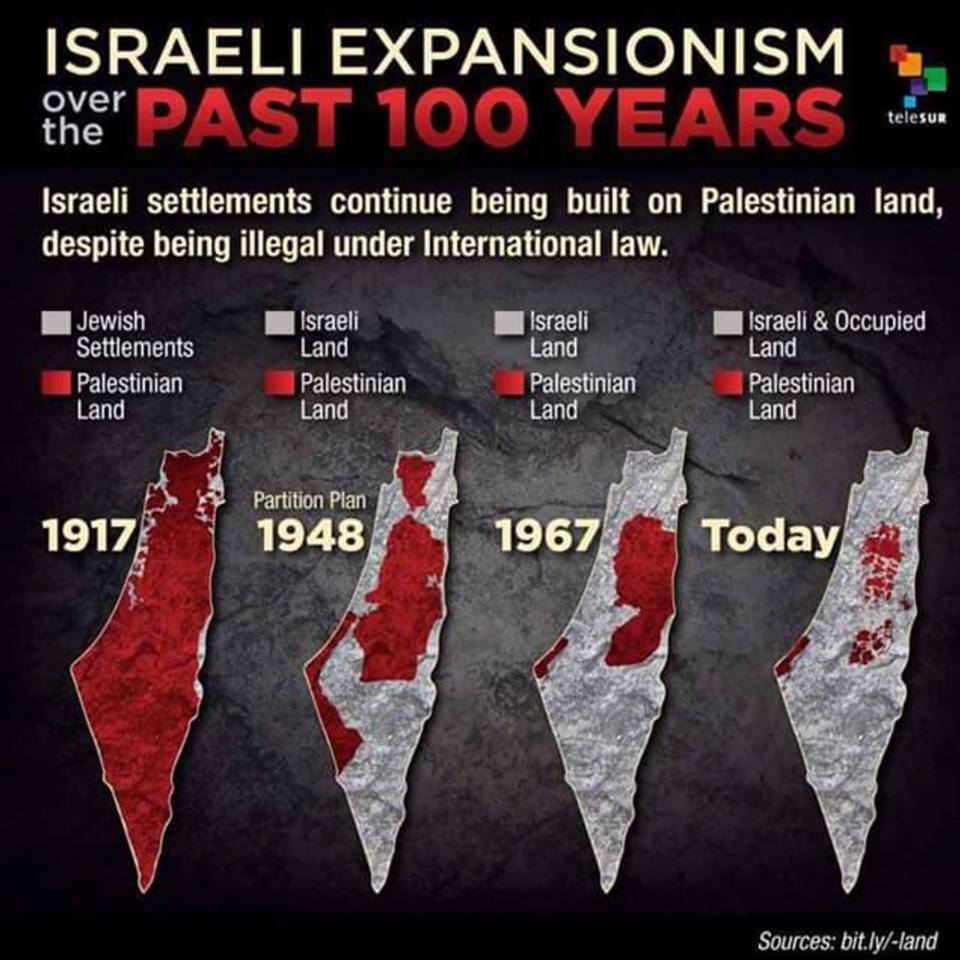
Nations’ independent expert on human rights in the Palestinian territories issued a damning verdict last week on what he termed “the longest belligerent occupation in the modern world”. Michael Lynk, a Canadian law professor, told the UN’s human rights council that only urgent international action could prevent Israel’s 52-year occupation of the West Bank transforming into de facto annexation.


Nazareth: The United Nations’ independent expert on human rights in the Palestinian territories issued a damning verdict last week on what he termed “the longest belligerent occupation in the modern world”.
Michael Lynk, a Canadian law professor, told the UN’s human rights council that only urgent international action could prevent Israel’s 52-year occupation of the West Bank transforming into de facto annexation.
He warned of a recent surge in violence against Palestinians from settlers, assisted by the Israeli army, and a record number of demolitions this year of Palestinian homes in East Jerusalem – evidence of the ways Israel is further pressuring Palestinians to leave their lands.
He urged an international boycott of all settlement products as a necessary step to put pressure on Israel to change course. He also called on the UN itself to finally publish – as long promised – a database that it has been compiling since 2016 of Israeli and international companies doing business in the illegal settlements and normalising the occupation.
Israel and its supporters have stymied the release, fearing that such a database would bolster the Boycott, Divestment and Sanctions (BDS) campaign that seeks to end Israel’s impunity.
Lynk sounded the alarm days after Israel’s most venerated judge, Meir Shamgar, died aged 94.
Shamgar was a reminder that the settlers have always been able to rely on the support of public figures from across Israel’s political spectrum. The settlements have always been viewed as a weapon to foil the emergence of a Palestinian state.
Perhaps not surprisingly, most obituaries overlooked the chicanery of Shamgar in building the legal architecture needed to establish the settlements after Israel occupied the Palestinian territories in 1967.
But in a tweeted tribute, Benjamin Netanyahu, the interim prime minister, noted Shamgar’s contribution to “legislation policy in Judea and Samaria”, using the Israeli government’s term for the West Bank.
It was Shamgar who swept aside the prohibition in international law on Israel as an occupying state, transferring its population into the territories. He thereby created a system of apartheid: illegal Jewish settlers enjoyed privileges under Israeli law while the local Palestinian population had to endure oppressive military orders.
Then, by a legal sleight of hand, Shamgar obscured the ugly reality he had inaugurated. He offered all those residing in the West Bank – Jews and Palestinians alike – access to arbitration from Israel’s supreme court.
It was, of course, an occupier’s form of justice – and a policy that treated the occupied territories as ultimately part of Israel, erasing any border. Ever since, the court has been deeply implicated in every war crime associated with the settlement enterprise.
As Israeli lawyer Michael Sfard noted, Shamgar “legalised almost every draconian measure taken by the defence establishment to crush Palestinian political and military organisations”, including detention without trial, house demolitions, land thefts, curfews and much more. All were needed to preserve the settlements.
Shamgar’s legal innovations – endorsing the systematic abuse of Palestinians and the entrenchment of the occupation – are now being expanded by a new generation of jurists.
Their latest proposal has been described as engineering a “revolution” in the occupation regime. It would let the settlers buy as private property the plots of occupied land their illegal homes currently stand on.
Disingenuously, Israeli officials argue that the policy would end “discrimination” against the settlers. An army legal adviser, Tzvi Mintz, noted recently: “A ban on making real-estate deals based on national origin raises a certain discomfort.”
Approving the privatisation of the settlements is a far more significant move than it might sound.
International law states that an occupier can take action in territories under occupation on only two possible grounds: out of military necessity or to benefit the local population. With the settlements obviously harming local Palestinians by depriving them of land and free movement, Israel disguised its first colonies as military installations.
It went on to seize huge swathes of the West Bank as “state lands” – meaning for Jews only – on the pretext of military needs. Civilians were transferred there with the claim that they bolstered Israel’s national security.
That is why no one has contemplated allowing the settlers to own the land they live on – until now. Instead it is awarded by military authorities, who administer the land on behalf of the Israeli state.
That is bad enough. But now defence ministry officials want to upend the definition in international law of the settlements as a war crime. Israel’s thinking is that, once the settlers become the formal owners of the land they were given illegally, they can be treated as the “local population”.
Israel will argue that the settlers are protected under international law just like the Palestinians. That would provide Israel with a legal pretext to annex the West Bank, saying it benefits the “local” settler population.
And by turning more than 600,000 illegal settlers into landowners, Israel can reinvent the occupation as an insoluble puzzle. Palestinians seeking redress from Israel for the settlements will instead have to fight an endless array of separate claims against individual settlers.
This proposal follows recent moves by Israel to legalise many dozens of so-called outposts, built by existing settlements to steal yet more Palestinian land. As well as violating international law, the outposts fall foul of Israeli law and undertakings made under the Oslo accords not to expand the settlements.
All of this is being done in the context of a highly sympathetic administration in Washington that, it is widely assumed, is preparing to approve annexation of the West Bank as part of a long-postponed peace plan.
The current delay has been caused by Netanyahu’s failure narrowly in two general elections this year to win enough seats to form a settler-led government. Israel might now be heading to a third election.
Officials and the settlers are itching to press ahead with formal annexation of nearly two-thirds of the West Bank. Netanyahu promised annexation in the run-up to both elections. Settler leaders, meanwhile, have praised the new army chief of staff, Aviv Kochavi, as sympathetic to their cause.
Expectations have soared among the settlers as a result. Their impatience has fuelled a spike in violence, including a spate of recent attacks on Israeli soldiers sent to protect them as the settlers confront and assault Palestinians beginning the annual olive harvest.
Lynk, the UN’s expert, has warned that the international community needs to act swiftly to stop the occupied territories becoming a permanent Israeli settler state. Sadly, there are few signs that foreign governments are listening.
A version of this article first appeared in the National, Abu Dhabi.
Jonathan Cook won the Martha Gellhorn Special Prize for Journalism. His books include “Israel and the Clash of Civilisations: Iraq, Iran and the Plan to Remake the Middle East” (Pluto Press) and “Disappearing Palestine: Israel’s Experiments in Human Despair” (Zed Books). His website is www.jonathan-cook.net

Popular Protest: How effective is it?
by Dr James M Dorsey


If there is one theme, beyond corruption and a host of economic and social grievances, that have driven protests — large and small, local, sectoral and national – across the globe, it has been a call for dignity.


Dirty Hands
by Gaither Stewart


“Dirty hands” in literature results when a leader encounters a conflict of duties with values and must choose between alternatives, none of which
are entirely satisfactory. In Jean-Paul Sartre’s play Les Mains Sales (Dirty hands), Communist leader Hoederer explains his view to the bourgeois, Hugo, who has joined the Proletarian Party in the fictive East European country of Illyria at the end of World War Two. Despite his love and admiration for Hoederer and the model he makes, Hugo is steadfast in his refusal to “dirty” his hands


Babri Masjid/Ramjanmabhumi: Will Democracy Survive or Mobocracy Thrive?
by Haider Abbas


The nation is bracing for the judgement in the most controversial issue of India, the Ramjanambhumi/Babri Masjid, Ayodhya, Faizabad, UP case where Muslims are waiting with bated breath and Hindus in an over joyous mode are waiting for victory as a ‘double-diwali’, already there are voices from BJP parliamentarians (latest by Sakshi Maharaj on Oct 27) and legislators that construction of Ram
Temple, on the demolished site of Babri Masjid, would start before December 6


History as Storytelling
by Subhash Gatade 


No commentator even asked why the home minister—a graduate in bio-chemistry who has also worked as a stockbroker and in co-operative banks [Sheela Bhatt, “What Amit Shah’s fall really means”, July 28, 2010]—was found the most apt person to inaugurate a two-day seminar on a subject of history at Banaras Hindu University where he shared his pearls of wisdom. His emphasis was that Indian historians should “rewrite history from an Indian perspective”. The focus of the seminar was on Skandagupta Vikramaditya, the fifth-century AD emperor.


Study of Gender,Caste and Religion,their intersection and interconnection in Aravind Malagatti’s “GOVERNMENT BRAHMANA”
by Nikhil Sanjay-Rekha Adsule


Aravind Malagatti’s ” GOVERNMENT BRAHMANA” is the first Dalit Autobiography i.e 1994 in Kannada Dalit Literature under the realm of Dalitiya Sahitya which in the words of Malagatti himself implies that it’s the literature belonging to category of Dalitatva which means it’s written by Dalits with a Dalit Consciousness.It’s a weapon ought to be used in Psychological Revolution against the multifaceted demon of Caste, to which (psychological Revolution) Malagatti puts on the higest pedestal and even states that ” Psychological Revolution is more powerful than a Blood revolution”.


Ground zero: Frontline champions lead the fight to #endTB as global meet opens in India
by Shobha Shukla


It was indeed
a humbling experience for me to interact with a few frontline healthcare workers who are courageously fighting the #endTB battle on the ground in Hyderabad, India (the venue for the 50th Union World Conference on Lung Health). My day began with meeting G Swamy Reddy, project officer at Lepra Society in Hyderabad. He has been involved with leprosy and more recently TB care and control activities of Lepra since 1989.


Monday, October 28, 2019

CC News Letter 28 Oct - Progressive Cristina Fernandez wins presidency in Argentina


Dear Friend,


In a dramatic comeback, Cristina Fernández de Kirchner, progressive and one of Argentina’s most popular presidents during her two terms in 2007-2015, has been voted back into office as vice president.

California wildfires are again in the news as the Kincade Fire now raging risked 50,000 people, who have been evacuated.  It might come as a surprise but there have been 41,074 wildfires compared to 47,853 in 2018 for the first nine months of the year.

Kindly support honest journalism to survive. https://countercurrents.org/subscription/

If you think the contents of this news letter are critical for the dignified living and survival of humanity and other species on earth, please forward it to your friends and spread the word. It's time for humanity to come together as one family! You can subscribe to our news letter here http://www.countercurrents.org/news-letter/.

In Solidarity

Binu Mathew
Editor
Countercurrents.org


Progressive Cristina Fernandez wins
presidency in Argentina
by Countercurrents Collective


In a dramatic comeback, Cristina Fernández de Kirchner, progressive and one of Argentina’s most popular presidents during her two terms in 2007-2015, has been voted back into office as vice president.


Climate Risks: Wildfires, Glacier Melt, Coastal Flooding
by Dr Arshad M Khan


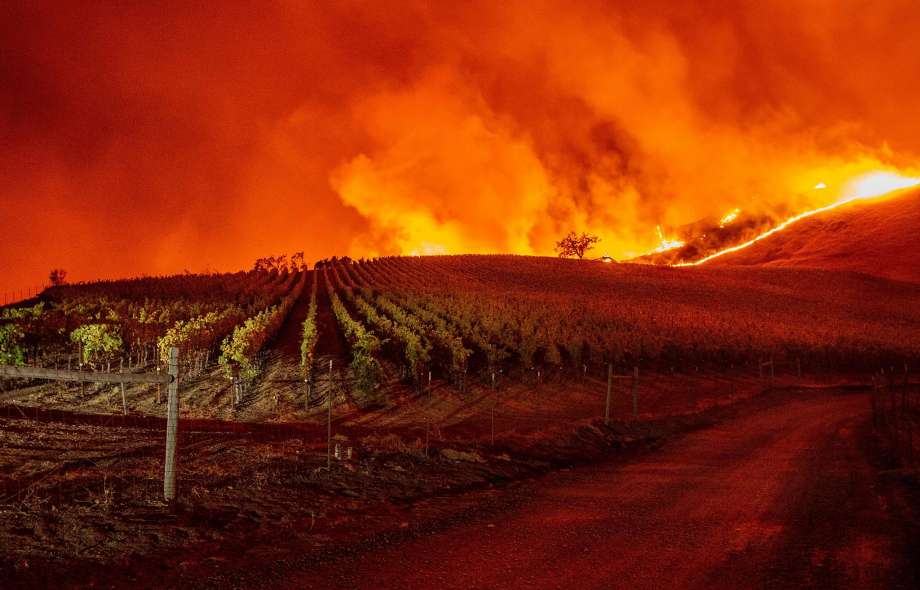
California wildfires are again in the news as the Kincade Fire now raging risked 50,000 people, who have been evacuated.  It might come as a surprise but there have been 41,074 wildfires compared to 47,853 in 2018 for the first nine months of the year.

California wildfires are again in the news as the Kincade Fire now raging risked 50,000 people, who have been evacuated.  It might come as a surprise but there have been 41,074 wildfires compared to 47,853 in 2018 for the first nine months of the year.  Blame the downslope Santa Ana winds for fanning them.  Fires can occur naturally through lightning strikes but these days some 90 percent are due to human carelessness:  discarded cigarettes, unquenched campfires and the like, all exacerbated by a warming climate.  Killing 85 people, the deadliest wildfire in the state’s history seemed to have been caused by Pacific Gas and Electric power lines (although it is still under investigation), and they are suspected in the present Kincade Fire.  Wildfires do clear brush — 4.4 million acres burned off this year — ensuring a worse fire will not occur in the future.
As can be expected, such fires also place property at risk.  California, Texas and Colorado have the highest numbers of properties at risk, while Montana and Idaho are tops in percentage terms; in Montana 29 percent and in Idaho 26 percent of properties are in the danger zone.
If the west is prone to wildfires, the east has an opposite problem:  flooding.  Sea levels are rising.  The Greenland ice sheet holding enough water to raise the water line by 7 meters is melting.  Scientists estimate two-thirds of the ice loss is due to glacier calving as chunks of ice detach from the 300 odd outlet glaciers that end in the fjords.  As reported in Science magazine recently, (October 11, 2019), Helheim, a major glacier responsible for 4 percent of Greenland’s annual ice loss is being observed by a team headed by Fiamma Straneo of the Scripps Institution.
In severe retreat since 2014, the glacier has reduced “by more than 100 meters, leaving a tell-tale ring on the rock around the fjord.”  This summer its water temperature is 0.2C above the previous high in a relentless rise.  Also the data collected will improve mathematical modeling to predict future consequences.
Coastal flooding on the East Coast has been noted by the New York Times (October 8, 2019) in a feature article titled  As Sea Levels Rise, So Do Ghost Forests.  Trees in coastal areas are dying off due to frequent total incursions of saltwater.
An excellent estimate of coastal flooding on the East and Gulf coasts, Encroaching Tides, was prepared by the Union of Concerned Scientists a few years ago.  Sober reading, it forecasts coastal innundation over the next three decades.  It talks about adaptation to the new norms, the responsibility of Municipalities, States and the Federal Government,
sea walls, economic consequences, and a retreat from heavily impacted areas.  Is anybody listening, and when they called for reducing emissions was the US listening?
When more than 190 countries signed up to almost all of the rulebook buttressing the 2015 Paris Agreement, it made the 24th International Climate Conference in Katowice, Poland (Dec 2018) a major success.  This December the 25th International Climate Conference will convene in Santiago, Chile.  A primary issue before it is how to avoid double counting i.e. counting the same emission reduction more than once.  Countries have so far failed to reach common ground on how to avoid it despite the threat to carbon markets underpinning the Paris Agreement.  Is bashing heads together in Santiago one answer?
Meanwhile on the top of the world, inhabiting the Tibet plateau, the beautiful and majestic chiru or Tibetan antelope, once in trouble from excessive poaching and then recovering, is at risk again.  This time it is due to climate change.  It has caused excessive melt and a burst natural dam that used to surround Lake Zonag right beside their calving site.
Dr Arshad M Khan (http://ofthisandthat.org/index.html) is a former Professor based in the U.S. whose comments over several decades have appeared in a wide-ranging array of print and internet media.  His work has been quoted in the U.S. Congress and published in the Congressional Record.


Plurinationalism, Pancasila –  and the pettiness of Hindu Nationalism
by Ananda Maitreya


While the
Indian constitution includes succinct expressions of a nation’s aspirations to respecting all faith persuasions and manners of belief, the Bolivian constitution is more explicit and detailed in the recognition of the plurality of nationalities that exist under the nation-state of Bolivia – and their flourishing.


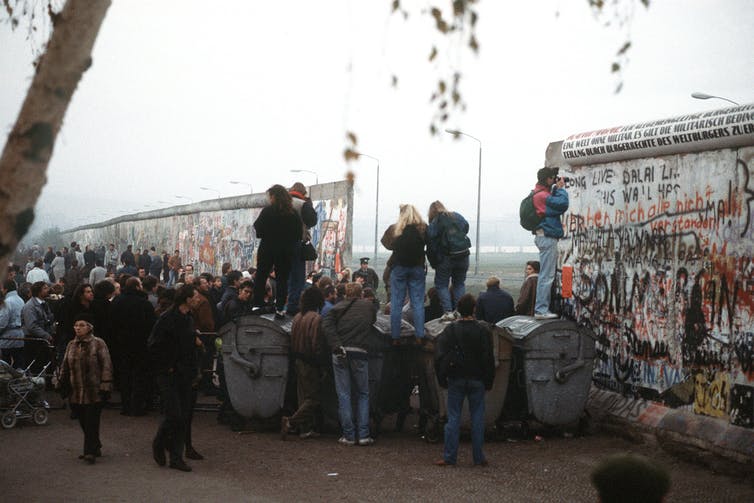
What the Dismantling of the Berlin Wall Means 30 Years Later
by James Carroll


This November anniversary of the dismantling of the Berlin Wall should offer an occasion to say no to that. The Wall’s demise stopped in its tracks the demonic dynamic set in motion on the very same date in 1938 by that Kristallnacht. If idealistic hope could so triumph once, it can so triumph again, no matter what the die-hard realists of our moment may believe. I’ve referred to that November in Berlin as a miracle, but that is wrong.


Some anniversaries are less about the past than the future. So it should be with November 9, 1989. In case you’ve long forgotten, that was the day when East and West Germans began nonviolently dismantling the Berlin Wall, an entirely unpredicted, almost unimaginable ending to the long-entrenched Cold War. Think of it as the triumph of idealistic hope over everything that then passed for hard-nosed “realism.” After all, Western intelligence services, academic Kremlinologists, and the American national security establishment had always blithely assumed that the Cold War would essentially go on forever — unless the absolute malevolence of Soviet Communism led to the ultimate mayhem of nuclear Armageddon. For almost half a century, only readily dismissed peaceniks insisted that, in the nuclear age, war and endless preparations for more of it were not the answer. When the Berlin Wall came down, such idealists were proven right, even if their triumph was still ignored.
Yet war-as-the-answer reasserted itself with remarkable rapidity. Within weeks of the Wall being breached by hope — in an era that saw savage conflicts in Central America, the Philippines, and South Africa transformed by a global wave of nonviolent resolution — the United States launched Operation Just Cause, the invasion of Panama by a combat force of more than 27,000 troops. The stated purpose of that act of war was the arrest of Panama’s tinhorn dictator Manuel Noriega, who had initially come to power as a CIA asset. That invasion’s only real importance was as a demonstration that, even with global peace being hailed, the world’s last remaining superpower remained as committed as ever to the hegemony of violent force.
Who Ended the Cold War?
While President George H.W. Bush rushed to claim credit for ending the Cold War, the Soviet Union’s Mikhail Gorbachev was the lynchpin of that historic conclusion. It was he who, in the dramatic autumn of 1989, repeatedly ordered Communist forces to remain in their barracks while throngs of freedom-chanters poured into the streets of multiple cities behind the Iron Curtain. Instead of blindly striking out (as the leaders of crumbling empires often had), Gorbachev allowed democratic demands to echo through the Soviet empire — ultimately even in Russia itself.
Yet the American imagination was soon overtaken by the smug fantasy that the U.S. had “won” the Cold War and that it was now a power beyond all imagining. Never mind that, in 1987, when President Ronald Reagan issued his famed demand in then still-divided Berlin, “Mister Gorbachev, tear down this wall,” the Soviet leader was already starting to do precisely that.
As the wall came down, the red-scare horrors that had disturbed American dreams for three generations seemed to dissolve overnight, leaving official Washington basking in triumphalism. The U.S. then wrapped itself in a self-aggrandizing mantle of virtue and power that effectively blinded this country’s political leadership to the ways the Cold War’s end had left them mired in an outmoded, ever more dangerous version of militarism.
After Panama, the self-styled “indispensable nation” would show itself to be hell-bent on unbridled — and profoundly self-destructive — belligerence. Deprived of an existential enemy, Pentagon budgets would decline oh-so-modestly (though without a “peace dividend” in sight) but soon return to Cold War levels. A bristling nuclear arsenal would be maintained as a “hedge” against the comeback of Soviet-style communism. Such thinking would, in the end, only empower Moscow’s hawks, smoothing the way for the future rise of an ex-KGB agent named Vladimir Putin. Such hyper-defensive anticipation would prove to be, as one wag put it, the insurance policy that started the fire.
Even as the disintegration of the once-demonized USSR was firmly underway, culminating in the final lowering of the hammer-and-sickle flag from the Kremlin on Christmas Day 1991, the United States was launching what would prove to be a never-ending and disastrous sequence of unnecessary Middle Eastern wars. They began with Operation Desert Storm, George H.W. Bush’s assault on Saddam Hussein’s Iraq in 1990. In American memory, that campaign, which crushed the Iraqi autocrat’s army and forced it out of Kuwait, would be a techno-war made in heaven with fewer than 200 U.S. combat deaths.
That memory, however, fits poorly with what was actually happening that year. An internationally mounted sanctions regime had already been on the verge of thwarting Hussein without the U.S.-led invasion — and, of course, what Bush the father began, Bush the son would, with his 2003 shock-and-awe recapitulation, turn into the permanent bedrock of American politics. 
As the 30th anniversary of the end of the Cold War approaches, it should be obvious that there’s been a refusal in the United States to reckon with a decades-long set of conflagrations in the Greater Middle East as the inevitable consequence of that first American invasion in 1990. Above all, Desert Storm, with its monumental victory parade in Washington D.C., brought the Pentagon’s Cold War raison d’être back from the brink of obsolescence. That campaign and what followed in its wake guaranteed that violence would continue to occupy the heartlands of the U.S. economy, its politics, and its culture. In the process, the world-historic aspirations kindled by the miracle of the Berlin Wall’s dismantling would be thoroughly dashed. No wonder, so many years later, we hardly remember that November of hope — or the anniversary that goes with it.
Out of the Memory Hole
By revisiting its astonishing promise as the anniversary approaches, however, and by seeing it more fully in light of what made it so surprising, perhaps something of that vanished positive energy can still be retrieved. So let me call to mind the events of various earlier Novembers that make the point. What follows is a decade-by-decade retracing of the way the war machine trundled through recent history — and through the American psyche — until it was finally halted in a battle-scarred, divided city in the middle of Europe, stopped by an urge for peace that refused to be denied.
Let’s start with November 1939, only weeks after the German invasion of Poland that began what would become World War II. A global struggle between good and evil was just then kicking into gear. Unlike the previous Great War of 1914-1918, which was fought for mere empire, Hitler’s war was understood in distinctly Manichaean terms as both apocalyptic and transcendent. After all, the moral depravity of the Nazi project had already been laid bare when Jewish synagogues, businesses, and homes everywhere in Germany were subject to the savagery of Kristallnacht, or “the night of broken glass.” That ignition of what became an anti-Jewish genocide took place, as it happened, on November 9, 1938.
The good-versus-evil absolutism of World War II stamped the American imagination so profoundly that a self-righteous moral dualism survived not only into the Cold War but into Washington’s twenty-first-century war on terror. In such contests against enemies defined as devils, Americans could adopt the kinds of ends-justify-the-means strategies called for by “realism.” When you are fighting along what might be thought of as an axis of evil, anything goes — from deceit and torture to the routine sacrifice of civilians, whose deaths in America’s post-9/11 wars have approached a total of half a million. Through it all, we were assured of one certain thing: that God was on our side. (“God is not neutral,” as George W. Bush put it just days after the 9/11 attacks.)
From Genocide to Omnicide
But what if God could not protect us? That was the out-of-the-blue question posed near the start of all this — not in August 1945 when the U.S. dropped its “victory weapon” on two cities in Japan, but in August 1949 when the Soviet Union acquired an atomic bomb, too. By that November, the American people were already in the grip of an unprecedented nuclear paranoia, which prompted President Harry Truman to override leading atomic scientists and order the development of what one called a “genocidal weapon,” the even more powerful hydrogen bomb. Then came the manic build-up of the U.S. nuclear arsenal to proportions suitable less for genocide than for “omnicide.” Such weapons mushroomed (if you’ll excuse the word in a potentially mushroom-clouded world) from fewer than 200 in 1950 to nearly 20,000 a decade later. Of course, that escalation, in turn, drove Moscow forward in a desperate effort to keep up, leading to an unhinged arms race that turned the suicide of the human species into a present danger, one measured by the Doomsday Clock, of the Bulletin of the Atomic Scientists, which was set at two minutes to midnight in 1953 — and then again in 2019, all these Novembers later.
Now, let’s flash forward another decade to November 1959 when the mortal danger of human self-extinction finally became openly understood, as Soviet leader Nikita Khrushchev began issuing blatant threats of nuclear war over — you guessed it — Berlin. Because part of that city, far inside Communist East Germany, was still occupied by American, French, and British forces, it amounted to a tear in what was then called the Iron Curtain, separating the Soviet empire from Western Europe. With thousands fleeing through that tear to the so-called Free World, the Soviets became increasingly intent on shutting the escape hatch, threatening to use the Red Army to drive the Allies out of Berlin. That brought the possibility of a nuclear conflict to the fore.
Ultimately, the Communists would adopt a quite different strategy when, in 1961, they built that infamous wall, a concrete curtain across the city. At the time, Berliners sometimes referred to it, with a certain irony, as the “Peace Wall” because, by blocking escape from the East, it made the dreaded war between the two Cold War superpowers unnecessary. Yet within a year the unleashed prospect of such a potentially civilization-ending conflict had hopscotched the globe to Communist Cuba. The Cuban Missile Crisis of 1962 caused the world to shudder as incipient nuclear war between Washington and Moscow suddenly loomed. That moment, just before Khrushchev and American President John F. Kennedy stepped back from doomsday, might have changed something; a relieved world’s shock of recognition, that is, might have thrown the classic wooden shoe of sabotage into the purring engine of “realism.” No such luck, however, as the malevolent power of the war state simply motored on — in the case of the United States directly into Vietnam.
By November 1969, President Richard Nixon’s cynical continuation of the Vietnam War for his own political purposes had already driven the liberal-conservative divide over that misbegotten conflict into the permanent structure of American politics. The ubiquitous “POW/MIA: You Are Not Forgotten” flag survives today as an icon of Nixon’s manipulations. Still waving over ball parks, post offices, town halls, and VFW posts across the nation, that sad black banner now flies as a symbol of red state/blue state antagonism — and as a lasting reminder of how we Americans can make prisoners of ourselves.
By 1979, with the Vietnam War in the past, President Jimmy Carter showed how irresistible November’s tide — the inexorable surge toward war — truly was. It was in November of that year that militant Iranian students overran the American embassy in Tehran, taking sixty-six Americans hostage — the event that was credited with stymying the formerly peace-minded president. In reality, though, Carter had already initiated the historic anti-Soviet arms build-up for which President Ronald Reagan would later be credited.
Then, of course, Carter would ominously foreshadow America’s future reversals in the deserts of the Levant with a failed rescue of those hostages. Most momentously, however, he would essentially license future Middle East defeats with what came to be known as the Carter Doctrine — the formally declared principle that the Persian Gulf (and its oil) were “vital interests” of this country, worthy of defense “by any means necessary, including military force.” (And of course, his CIA would lead us into America’s first Afghan War, still in a sense going on some 40 years later.)
Retrieving Hope?
Decade by decade, the evidence of an unstoppable martial dynamic only seemed to accumulate. In that milestone month of November 1989, Washington’s national security “realists” were still stuck in the groove of such worst-case thinking. That they were wrong, that they would be stunned by the fall of the Berlin Wall and the subsequent implosion of the Soviet Union, should mandate thoughtful observance of this coming 30th anniversary.
During the late 1980s, a complex set of antiwar and antinuclear countercurrents seemed to come out of nowhere. Each of them should have been impossible. The ruthlessly totalitarian Soviet system should not have produced in Mikhail Gorbachev a humane statesman who sacrificed empire and his own career for the sake of peace. The most hawkish American president in history, Ronald Reagan, should not have responded to Gorbachev by working to end the arms race with him — but he did.
Pressuring those two leaders to pursue that course — indeed, forcing them to — was an international grassroots movement demanding an end to apocalyptic terror. People wanted peace so much, as President Dwight D. Eisenhower had predicted in 1959, that, miracle of all miracles, governments got out of their way and let them have it. With the breaching of the Berlin Wall that November 9th — a transformation accomplished by ordinary citizens, not soldiers — the political realm of the possible was substantially broadened, not only to include prospective future detente among warring nations, but an eventual elimination of nuclear weapons themselves.
Yet, in November 2019, all of that seems lost. A new Cold War is underway, with East-West hostilities quickening; a new arms race has begun, especially as the United States renounces Reagan-Gorbachev arms-control agreements for the sake of a trillion-plus dollar “modernization” of its nuclear arsenal. Across the globe, democracy is in retreat, driven by pressures from both populist nationalism and predatory capitalism. Even in America, democracy seems imperiled. And all of this naturally prompts the shudder-inducing question: Were the worst-case realists right all along?
This November anniversary of the dismantling of the Berlin Wall should offer an occasion to say no to that. The Wall’s demise stopped in its tracks the demonic dynamic set in motion on the very same date in 1938 by that Kristallnacht. If idealistic hope could so triumph once, it can so triumph again, no matter what the die-hard realists of our moment may believe. I’ve referred to that November in Berlin as a miracle, but that is wrong. The most dangerous face-off in history ended not because of the gods or good fortune, but because of the actions and efforts of human beings. Across two generations, countless men and women — from anonymous community activists and union organizers to unsung military officials, scientists, and even world leaders — overcame the seemingly endless escalations of nuclear-armed animus to make brave choices for peace and against a war of annihilation, for life and against death, for the future and against the doom-laden past.
It can happen again. It must.
James Carroll, TomDispatch regular and former Boston Globe columnist, is the author of 20 books, most recently the novel The Cloister. His history of the Pentagon, House of War, won the PEN-Galbraith Award. His Vietnam War memoir, An American Requiem, won the National Book Award. He is a fellow of the American Academy of Arts and Sciences.
Follow TomDispatch on Twitter and join us on Facebook. Check out the newest Dispatch Books, John Feffer’s new dystopian novel (the second in the Splinterlands series) Frostlands, Beverly Gologorsky’s novel Every Body Has a Story, and Tom Engelhardt’s A Nation Unmade by War, as well as Alfred McCoy’s In the Shadows of the American Century: The Rise and Decline of U.S. Global Power and John Dower’s The Violent American Century: War and Terror Since World War II.
Originally published in TomDispatch  


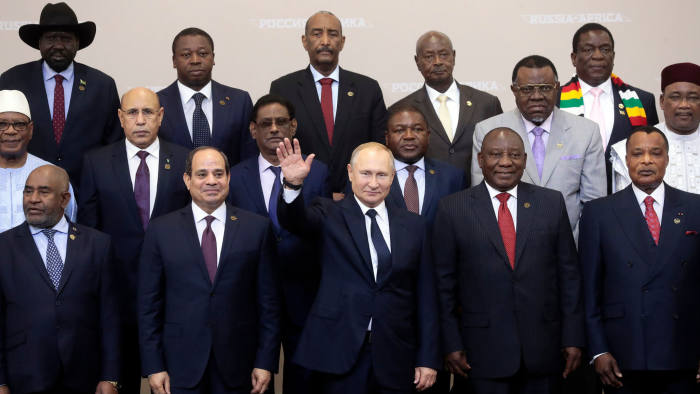
Moscow once again appears on the African continent
with the first Russia-Africa summit
by Abdus Sattar Ghazali


The first ever two-day Russia-Africa economic summit ended Thursday in the resort city Sochi, Russia resulting over 500 commercial agreements worth $12 billion.


The first ever two-day Russia-Africa economic summit ended Thursday in the resort city Sochi, Russia resulting over 500 commercial agreements worth $12 billion.
About four dozen African leaders and high-level government officials attended the summit and economic forum, from Nigerian President Muhammad Buhari to African Union Commission Chairman Moussa Faki Mahamat. Over 40 African nations were represented by heads of state or government at the summit, while 11 others sent their vice presidents, foreign ministers or ambassadors.
The two-day event was the first of its kind hosted by Russia, which is seeking a new engagement on the African continent in competition with China, the United States, and even countries like India and Turkey, which have increased their diplomatic efforts in recent years.
According to Financial Times Russia offered nuclear power plants, fighter jets and missile defense systems to African countries in a charm offensive designed to win back influence on the continent, at the summit.
Russia has defense orders worth $14bn from African countries, its state-run arms export agency said at the summit. Sales to the continent account for about a third of Moscow’s military exports. Mr Putin said Russia had agreed “military technical co-operation agreements” with more than 30 African states, to supply weapons. “Some of these deliveries are free of charge,” he added. Elina Ribakova, deputy chief economist at the Institute of International Finance, described Russia’s offerings as “no strings attached”.
While the Soviet Union was a close partner with many African states during the cold war, Russia’s current bilateral trade of $20bn is just a tenth of China’s, and relies heavily on exports of arms and grain to a handful of richer states.
Mr Putin promised to double trade within the next “four to five years”, and used a marathon schedule of back-to-back bilateral meetings with visiting delegations on both days of the summit to offer deals on everything from diamond mining to pork exports — though few have yet materialized.
The Kremlin’s aim is to use military and trade ties to reinsert itself as a geopolitical powerbroker on the continent, the Financial Times said.
Agreements signed
Some of the agreements signed at the Russia-Africa Forum as reported by Sputnik:
Trade financing: The Russian Export Center, VEB.RF state development corporation, Sberbank and GemCorpCapital LLP investment company have signed a $5 billion worth framework agreement for creating a mechanism of Russian-African trade financing.
Nuclear energy: Russia and Ethiopia have signed an intergovernmental agreement in Sochi for cooperation on the peaceful use of nuclear energy. Russian oil company Lukoil signed a memorandum for drilling rights in Equatorial Guinea and Nigeria, while state-run atomic energy group Rosatom inked a preliminary agreement to build a nuclear power plant in Ethiopia. It also agreed to begin construction on an Egyptian reactor next year.
Defence ties: Russia plans to deliver $4 billion worth of weapons to Africa in 2019, Rosoboronexport Director General Alexander Mikheev told Sputnik.
Russia and Nigeria have signed a contract for deliveries of 12 Russian Mi-35 attack helicopters, Russian Federal Service for Military-Technical Cooperation Deputy Director Anatoly Punchuk told Sputnik on Wednesday at the Russia-Africa forum.
Although Russia has signed military agreements with some two dozen countries, its actual presence on the ground is still relatively marginal in comparison to the French or the US. The US military has outposts in 34 African countries and had at least 33 active missions in 2017, according to journalist Nick Turse. This includes special forces fighting covert wars in Libya, Somalia, Tunisia, and Niger, with little to no accountability to the US Congress or the broader American public.
Late to the Party: Russia’s Return to Africa
“Late to the Party: Russia’s Return to Africa,” is the title of the article of Paul Stroski about the Russia-Africa summit published by the Carnegie Endowment for International Peace. Paul Stroski, a senior fellow in Carnegie’s Russia and Eurasia Program, said:
“After a decades-long absence, Russia is once again appearing on the African continent. The Kremlin’s return to Africa, which has generated considerable media, governmental, and civil society attention, draws on a variety of tools and capabilities. Worrying patterns of stepped-up Russian activity are stirring concerns that a new wave of great-power competition in Africa is now upon us.
“U.S. policymakers frequently stress the need to counter Russian malign influence on the continent. On a visit to Angola in early 2019, Deputy Secretary of State John Sullivan said that “Russia often utilizes coercive, corrupt, and covert means to attempt to influence sovereign states, including their security and economic partnerships.”
“Advocates for a more forceful Western policy response point to high-visibility Russian military and security cooperation in the Central African Republic and the wide-ranging travels of Russian political consultants and disinformation specialists as confirmation that Russia, like China, represents a major challenge in Africa.”
Resurgence of a global power on the continent
Joe Penney of Quartz Africa says Russia’s Africa summit is the latest step in its resurgence as a global power on the continent. Since 2015, Russia has signed military agreements with 21 African countries, and in the past decade, it has grown its trade with the continent to $20.4 billion in 2018 from $5.7 billion in 2009.
“Forced to find new diplomatic partners as well as markets for arms and goods after United States and European Union’s sanctions for Russia’s annexation of Crimea, the rapid growth of this partnership has set off alarm bells in Washington, D.C. and Paris,” Joe Penney said adding:
“Russia’s interest, like those of other major world powers in Africa, “involves arms exports, imports of natural resources, and the projection of power,” writes Jakob Hedenskog, researcher at the Swedish Defense Research Agency. It has accelerated its diplomatic, military and economic push by building upon its former Soviet ties, when it armed anti-Apartheid and anti-colonial movements like those in Angola, Mozambique, and Algeria. While Russia is Africa’s top arms supplier, nearly 80% of the weapons it sells the continent are directed to its longtime ally Algeria, who have relied on Russian equipment since their independence war against France in the late 1950s. Its economic plans for Africa include lucrative oil and gas, mining and nuclear energy deals across the continent.”
Penney quoted journalist Nick Turse as saying: Although Russia has signed military agreements with some two dozen countries, its actual presence on the ground is still relatively marginal in comparison to the French or the US. The US military has outposts in 34 African countries and had at least 33 active missions in 2017, according to journalist Nick Turse. This includes special forces fighting covert wars in Libya, Somalia, Tunisia, and Niger, with little to no accountability to the US Congress or the broader American public.
China-Africa summit
Russia-Africa summit and economic forum follows a similar approach by the Chinese. The Forum on China-Africa Cooperation has become so influential as a source of economic support for African countries, twice as many African leaders attended the Beijing event in September 2018.
The 2018 Beijing Summit of the Forum on China Africa Cooperation (FOCAC) was defined by Beijing as its most important home diplomatic event of the year, with 53 out of 54 African countries represented, leaving out only Swaziland, which still maintains diplomatic relations with Taiwan.
Established 18 years ago, FOCAC has achieved fruitful results and has become a significant mark of China-Africa cooperation. China-Africa trade volume amounted to $170 billion in 2017, up from just over $10 billion in 2000, according to data from China’s Ministry of Commerce.
the Forum on China-Africa Co-operation-Ministerial Conference (FOCAC) was held in Beijing from 10 to 12 October 2000. This was the first gathering of its kind in the history of China-Africa relations.
The second FOCAC adopted the Beijing Action Plan (2019-2021).
The vigorous development of China-Africa cooperation has not only promoted the progress of Africa, but also inspired international partners to pay closer attention to Africa and increase their input into and cooperation with the continent, Chinese President Xi Jinping said.
African leaders expressed support and appreciation for the Belt and Road Initiative, believing that the joint building of the Belt and Road by Africa and China will speed up African regional integration.
The year 2018 marked the fifth anniversary of the China-proposed Belt and Road Initiative, with more African countries expressing their interest in joining the grand project.
So far, nearly 10 African countries have signed Belt and Road cooperation agreements with China, and a few more are in negotiations..
Proposed in 2013, the Belt and Road Initiative refers to the Silk Road Economic Belt and the 21st Century Maritime Silk Road, which aims to build a trade and infrastructure network connecting Asia with Europe and Africa along the ancient trade routes of the Silk Road.
China is willing to work with Africa to dovetail its Belt and Road Initiative with the Agenda 2063 of the African Union, the 2030 Agenda for Sustainable Development of the United Nations, as well as the development strategies of individual African countries to explore new opportunities and inject new impetus for Africa’s development, said Chinese State Councilor and Foreign Minister Wang Yi.
Abdus Sattar Ghazali is the Chief Editor of the Journal of America (www.journalofamerica.net) email: asghazali2011 (@) gmail.com


Disagreeing Reasonably in a Complex World: A review of The Case Against Free Speech
by Robert Jensen


Reasonable people can disagree, and I take both Moskowitz and myself to be reasonable. The Case against Free Speech is a flawed book, and I’m glad I read it. Both things are true, and therefore both are relevant.


Genetically Engineered Golden Rice: A Silver Bullet that Misses the Target 
by Colin Todhunter


Promoters of genetic modification (GM) in agriculture have long argued that genetically engineered Golden Rice is a practical way to provide poor farmers in remote areas with a subsistence crop capable of adding much-needed vitamin A to local diets. Vitamin A deficiency is a problem in many poor countries in the Global South and leaves millions at high risk for infection, diseases and other maladies, such as blindness.


Unlevelled Fields: Brexit, Workers’ Rights and the Environment
by Dr Binoy Kampmark


The smorgasbord of Brexit terms has been further plated up with the latest acronym: the WAB or Withdrawal Agreement Bill.  It comes in at 115 pages, with an added bonus of 126 pages of explanatory notes.  For something seemingly so significant, not much time was on offer for
those in the Commons to peruse, let alone digest it.  Rushed before the members last Monday, Prime Minister Boris Johnson was hoping that the most significant constitutional change to Britain in decades would be a push over.


Report From Iran: The Country Moves Onward
by Ugo Bardi


Iran is a country that maintains something of the fascination it had in ancient times, when it was both fabulous and remote. In our times, it remained somewhat remote, but also something that couldn’t be ignored as it went through a series of dramatic events, from the revolution of 1979, the hostage crisis, the Iraq-Iran war from 1980 to 1988, and much more. The latest political convulsion was the “Green Revolution” in 2009 that quickly abated, but the country clearly keeps evolving, especially in its relations with the West.


By-Elections 2019: Arrogance slapped
by Vidya Bhushan Rawat


The poll results of the Haryana and Maharashtra Assembly as well as by-polls in about 52 constituencies across the country are out and wronged the pollsters as well as the arrogant ‘spokespersons’ on the Manustream media who were out and out ‘determined’ to ‘decimate’ the opposition. In any democracy, if we wish to strengthen it, people must ensure that a healthy opposition remains in the Parliament and Assemblies to make the government accountable


Dushyant Chautala Factor in Haryana Politics
by Dr Rahul Kumar


A young, tall, smart, US-educated Dushyant Chautala, Deputy Chief Minister of Haryana understands better how he can protect his beloved and respected father Ajay Chautala under the thumb of the BJP. He also understands that the BJP is a ‘Nirma Washing Powder ’now- a -days for all the corrupt political
leaders in India.


Whipping Nationalism: Media ends up a ‘lapdog than a watchdog’
by Jaspal Singh Sidhu


Inducing Flag Waving Patriotism, Indian Media Stands Unmasked and Exposed


Pain
by Dr Mudasir Firdosi


Man in his arrogance committing the inconceivable,
pretending to be divinely indestructible.
Suffering, enduring, caring,
liberates the resilient
Freedom is yet attained,
no matter what the era pronounces.


The Age of Savarkar in Gandhi’s India
by Aijaz Zaka Syed


During the month and year of Gandhi’s 150th birth anniversary, the BJP has the audacity to celebrate Savarkar, the plotter of Mahatma’s assassination


Justice for Harsha!
by Anonymous


On October 21st , 2019, Harsha a student in
Amrita School of Engineering in Bangalore, committed suicide within the college premise, by jumping off the main college building. Ever since then the students have been protesting in the college demanding justice for Harsha who was pushed to take this step by the college administration. This write up is by alumni of Amrita School of Engineering, Bangalore on how the students are treated in the college and latest set of events that led to the loss of a student’s life.


Are we forgetting that TB prevention is better than cure?
by Shobha Shukla


Prevention of new infections of TB bacteria (Mycobacterium tuberculosis) and their progression to active TB disease is critical to reduce the burden of TB disease and to achieve the goal of ending TB by 2030.