Search This Blog

Translate

Blog Archive

Middleboro Review 2

NEW CONTENT MOVED TO MIDDLEBORO REVIEW 2

Toyota

Since the Dilly, Dally, Delay & Stall Law Firms are adding their billable hours, the Toyota U.S.A. and Route 44 Toyota posts have been separated here:

Route 44 Toyota Sold Me A Lemon


Showing posts with label Military-Industrial-Congressional Complex. Show all posts

Sunday, August 27, 2017

A Nation Genuflecting to FAILED WARS


Reader Supported News
26 August 17 PM
It's Live on the HomePage Now: 
Reader Supported News


Sure, I'll make a donation!

Media Says Trump Is 'Presidential' Again - for Ramping Up War in Afghanistan 
Ben Norton, FAIR 
Norton writes: "Donald Trump is finally 'presidential' again, pundits insist, now that he is ratcheting up another US war." 
READ MORE
Donald Trump. (photo: Al Drago/NYT)
onald Trump is finally “presidential” again, pundits insist, now that he is ratcheting up another US war.
In a speech on August 21, the far-right US president did an about-face, announcing a surge in the 16th year of the war in Afghanistan, which he had previously harshly condemned. Trump did not reveal many specifics, but reports suggest his administration will deploy 4,000 more soldiers to the country (Fox News, 8/21/17), in addition to the roughly 8,400 US troops and 5,000 other NATO forces already there.
Like clockwork, pundits responded to the news by rushing to praise Trump for his “presidential” decision. There is nothing quite as presidential as expanding an unending war that has left many thousands of Muslim civilians dead.
Just weeks before, the Trump administration had been openly acknowledging that the US war in Afghanistan was at least partly motivated by access to the large South Asian nation’s “vast mineral wealth”—nearly $1 trillion in untapped mineral deposits (New York Times, 7/25/17). Yet now, according to media reports, the war is suddenly about “national security” and safety.
The response from the commentariat echoes similar proclamations made just four months ago, when pundits lionized Trump for launching 59 Tomahawk missiles at a Syrian government air base (in an attack that effectively helped ISIS).
After the April strike, an analysis by FAIR (4/11/17) found that, of 47 major US newspaper editorials on the attack, just one opposed it. Trump’s missile strike was even sexualized by MSNBC‘s Brian Williams.
This time, in response to another military escalation, pundits were more aware, even self-critical, of the cartoonishness of reflexively praising presidential violence. But they did it anyway.
In Foreign Policy (8/22/17), Paul D. Miller minced no words, fawning over “Trump’s Presidential Afghanistan Speech.” Miller, who directed Afghanistan and Pakistan policy on the National Security Council for both George W. Bush and Barack Obama, declared that Trump’s address “was one of Donald Trump’s finest moments as president.”
“Trump’s nationalism, which I otherwise find objectionable, has led him to a keener and better appreciation of how to speak about war than Obama,” Miller added—a palpable demonstration of the intersection of the far right and establishment center that has been dubbed, with tongue in cheek, fish hook theory.
Miller’s obsequious op-ed was republished by the New York Daily News (8/22/17), New York City’s putative “left-wing” tabloid, with the headline “Trump’s Presidential Afghanistan Speech Sticks to the Script, Makes Powerful Argument.”
Maggie Haberman, a White House correspondent for the New York Times and a political analyst for CNN, tweeted effusively about “one of his more forceful/best lines of address”: “We are not nation-building again. We are killing terrorists.”
Washington think tanks, replete with revolving doors between the US government and so-called civil society, were likewise enthused. Michael O’Hanlon, the director of research for the foreign policy program at the arch-establishment Brookings Institution, published an op-ed in USA Today (8/21/17) with retired Gen. John Allen, who oversaw the war in Afghanistan from 2011 until 2013 before moving to Brookings, praising Trump’s reversal.
“Our new leader made the presidential call,” read the deck of the USA Today article, which had the titles “Donald Trump Making Afghanistan and America Safer” and “Donald Trump Makes Right Moves in Afghanistan.”
“We would especially commend Mr. Trump for making a difficult and very presidential decision about future American policy,” crooned O’Hanlon and Allen.
Rich Lowry, the right-wing syndicated columnist, Fox News commentator and editor of the neoconservative bible National Review, said in his magazine (8/21/17) that Trump’s Afghanistan speech “was quite good.” He noted it “seems a pretty conventionally hawkish policy,” and wrote of “the unifying potential of Trump’s nationalism.”
“It’s hard not to seem presidential when giving a speech like this,” Lowry continued. “If Trump had done nothing but give teleprompter speeches since his inauguration, he’d be about 10 points higher in the polls.”
Some of the most fanatic neoconservatives are warming to Trump. Proud self-declared “Americanimperialist” Max Boot, who excoriated Trump during his presidential campaign, came out swinging in his defense in the pages of the US newspaper of record. “Back to Nation-Building in Afghanistan. Good,” read Boot’s New York Times op-ed (8/22/17).
Right-wing pundits were not the only ones praising Trump’s Afghanistan surge. Their neoconservative counterparts in Congress were similarly enthused. Hard-line hawk John McCain—to whom Democratic lawmakers recently gave a standing ovation—likewise “commend[ed] President Trump for taking a big step in the right direction with the new strategy for Afghanistan,” and called for Trump to “conduct himself as a wartime commander-in-chief.”
Across the ocean, hawkish pundits said much the same. Writing in the UK’s Prospect (8/22/17), retired top general and King’s College London visiting professor Robert Fry applauded Trump’s Afghanistan surge, noting “his behavior bears a passing resemblance to the presidential.” The headline stressed, “Trump’s Afghanistan Policy Shows He’s Finally Thinking Like a President.”
In coverage that was more balanced in cosmetics, albeit not political substance, CNN (8/21/17) portrayed the speech as a largely welcome development, framing it as a matter of the collective good: “Trump to Ask Americans to Trust Him on Afghanistan.”
Again, on July 25, the New York Times‘ Mark Landler and James Risen reported that “President Trump, searching for a reason to keep the United States in Afghanistan after 16 years of war, has latched on to a prospect that tantalized previous administrations: Afghanistan’s vast mineral wealth, which his advisers and Afghan officials have told him could be profitably extracted by Western companies.”
Landler and Risen added that Trump “has suggested that this [vast mineral wealth] could be one justification for the United States to stay engaged in the country.” But their front page Times story has fallen down the memory hole, and, less than a month later, media insist the war in Afghanistan is a matter of “national security.”
“The speech will test the President’s capacity to convince Americans that he has settled on the right course of action on a major national security issue, and to unify the nation around it,” wrote CNN‘s Stephen Collinson.
The Afghanistan address, Collinson added, “represents a chance for Trump to leverage the symbolism of his office to stabilize a presidency that has threatened to spin out of control over the last two weeks.” Escalating war could help Trump “stak[e] out a more conventional presidential posture.”
A handful of journalists, like Huffington Post‘s Marina Fang, joked that Trump is being complimented as “presidential” simply for reading from a teleprompter:
Importantly, some media outlets did highlight Trump’s hypocrisy, drawing attention to the fact that he had campaigned—albeit inconsistently—on a pledge to withdraw from foreign wars, not to ramp them up (LA Times, 8/21/17).
Yet the contrasts between the punditry’s response to Trump’s Afghanistan’s speech and its outrage in July, when the president ended a CIA program that had for years strengthened ISIS, Al Qaeda and other extremist groups in Syria (FAIR.org, 7/27/17), are extremely stark.
One cannot help but observe that, when Trump is unpopular, he can miraculously reverse his fortunes by supporting a war. Trump no doubt understands that after, say, refusing to condemn white supremacists and drawing a ludicrous false equivalence between racist fascism and the antiracist resistance to fascism, he need only wrap himself in US military might and pundits—even ones who excoriated him mere days before—will suddenly praise him as a “presidential” imperial leader.
A very few journalists deserve credit for using the term “presidential” in its literal sense, not as a euphemistic stand-in. The Telegraph‘s Rob Crilly (8/22/17), who was critical of the military escalation, wrote: “If Donald Trump sounded presidential on Afghanistan, it is because he is repeating his predecessors’ mistakes.”
On Twitter, the Washington Post‘s Radley Balko quipped, “TBH, pledging thousands of troops to Afghanistan *is* the most presidential thing Trump has done. And I mean that in the worst way possible.”
After all, waging war in Afghanistan is a tried-and-true American tradition, going back to President Ronald Reagan’s 1983 Oval Office meeting with the mujahideen and the lionization of “anti-Soviet warrior” Osama bin Laden (Independent, 12/6/93).
Trump is indeed continuing a trajectory established by numerous presidents before him. Corporate media could do a far better job of interrogating whether or not that’s a good thing.


Contribute to RSN
Become a Fan of RSN on Facebook and Twitter
Update My Monthly Donation

Thursday, July 20, 2017

NORTH KOREA HYSTERIA


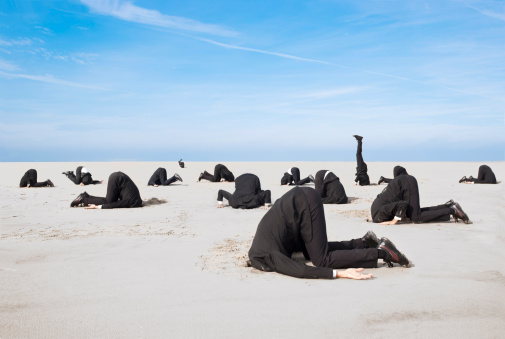
It's clear from hysteria generated y the Overweight Bully in irrational tweetie rants that too many misguided folks readily accept the HYSTERIA.

Periodically, pertinent articles and information will be posted separately for ease of searching.


By Linda S. Heard
Most responsible rational state actors would shudder when warned by the mighty United States to quit its nuclear weapons programme and intercontinental ballistic missile (ICBM) testing or risk being attacked. However, North Korea’s leader Kim Jong-un is neither responsible nor rational.


By Eric Zuesse
Alliances between nations are military. Without being military, they would be nothing at all. Trade agreements don’t require alliances. World War I wouldn’t have occurred if there had not been alliances—it was built upon alliances. It was not built on trade agreements. It wasn’t even built on trading-blocs.

By Margaret Kimberley
The Democratic People’s Republic of Korea (DPRK), commonly known as North Korea, has the right to test and develop as many weapons as it likes. It doesn’t need another country’s permission to enhance its arsenal and, given America’s history of aggression, it is wise to do so. Any country deemed an enemy of the United States that doesn’t have a strong defense is in danger of ending up like Iraq or Libya, invaded or destroyed by other means.


Monday, July 17, 2017

Killing in YOUR Name


These are people...families...women and children....innocents caught in a fight for American Empire and ENERGY.

If Americans don't 'get it' the Middle East surely does.


Reader Supported News
It's Live on the HomePage Now: 
Reader Supported News

Sure, I'll make a donation!

US Coalition Killed 744 Iraqi, Syrian Civilians in June: Report 
teleSUR 
Excerpt: "War monitoring group Airwars claims June was the second deadliest month for civilians in Iraq and Syria since the start of Coalition attacks in 2014." 
READ MORE

Turkya Azadin weeps while watching Iraqi Civil Defense members recover bodies trapped in the rubble after a reported coalition airstrike in Mosul. (photo: Marcus Yam/LA Times)
War monitoring group Airwars claims June was the second deadliest month for civilians in Iraq and Syria since the start of Coalition attacks in 2014.

t least 744 civilians were killed in strikes in Iraq and Syria last month by the U.S.-led Coalition fighting the Islamic State group, an independent organization said on Wednesday.
“Across Iraq and Syria, Airwars tracked a record 223 alleged Coalition casualty events during June, likely killing a minimum of between 529 and 744 civilians – a rise of 52 percent on May’s estimated totals,” the London-based group of researchers and journalists said.
“June was the second deadliest month for civilians in Iraq and Syria since the start of Coalition actions in August 2014,” according to the report.
The reported death toll is higher than that claimed by the U.S.-led Coalition.
In the monthly report released on Friday, the Coalition said its strikes had unintentionally killed at least 603 civilians between August 2014 and May 2017. The Coalition, battling to defeat Islamic State group militants in Iraq and Syria, claims it goes to great lengths to avoid civilian casualties.
The liberation operation of Mosul in Iraq officially came to an end on Monday when Iraqi Prime Minister Haider al-Abadi declared victory in the city, three years after the Islamic State group seized it.
A top U.S. general in Iraq strongly rejected an Amnesty International report accusing the coalition of violating international law in the battle for Mosul.
"I reject any notion that coalition fires were in any way imprecise, unlawful or excessively targeted civilians," Lieutenant General Stephen Townsend told a news briefing in Washington.
He added that he believed the fight against the Islamic State group was the "most precise campaign in the history of warfare."
Operations are still underway from various fronts to liberate the city of Raqqa in Syria.
The United Nations has raised concern about the situation of up to 50,000 civilians who remain trapped in the region.
“Availability of food, water, medicine, electricity and other essentials has been dwindling, with the situation rapidly deteriorating,” U.N. High Commissioner for Refugees spokesman Andrej Mahecic said in Geneva.
"It is imperative that trapped civilians are able to secure safe passage out — to reach safety, shelter and protection."
Contribute to RSN
Become a Fan of RSN on Facebook and Twitter
Update My Monthly Donation


Killing Women, Children, Innocents in YOUR Name!


The US supplied WHITE PHOSPHOROUS  to Saudi Arabia to use on civilians.

The US supplied cluster bombs to Saudi Arabia to use on civilians.

Saudi Arabia has bombed hospitals in Yemen.

Yemen has a cholera epidemic that is killing civilians, in addition to lack of food creating an humanitarian crisis.

A hand full of WHITE EUROPEANS are killed and Americans embrace HYSTERIA as if there is no cause.

Dontcha wonder?
*******

Reader Supported News
It's Live on the HomePage Now:
Reader Supported News

Sure, I'll make a donation!


US and UK Acting Above the Law to Support the Saudi War in Yemen 
Nafeez Ahmed, Middle East Eye 
Ahmed writes: "A former State Department war crimes expert warns that arms sales to Saudi Arabia is 'prohibited' under US law - but the lethal exports still go ahead." 
READ MORE
A Saudi airstrike explodes near civilian homes in Yemen. (photo: Mohamed al-Sayaghi/Reuters)


A former State Department war crimes expert warns that arms sales to Saudi Arabia is ‘prohibited’ under US law - but the lethal exports still go ahead

ritain and America are above the law. Our complicity in Saudi Arabia’s war in Yemen proves it.

This week, the High Court in London ruled that British arms sales to Saudi Arabia are lawful, dismissing a judicial review filed by Campaign Against Arms Trade (CAAT), which had demanded that weapons exports be halted over humanitarian concerns.
CAAT are appealing the ruling, and no wonder – it was ultimately decided on the basis of largely secret evidence supplied by the UK government, heard in closed court. This is not open justice: it is evidence of how the Whitehall foreign policy establishment abuse "national security" as a carte blanche to protect themselves from legal accountability.
The same thing is happening across the pond. According to a former senior war crimes advisor to the US State Department, US arms sales to Saudi Arabia are “prohibited” under US laws due to “credible allegations” of illegal actions during the kingdom’s bombing campaign in Yemen.
The analysis is set out in a compelling white paper published in May by Professor Michael Newton, who teaches the International Law Practice Lab at Vanderbilt University Law School. The American Bar Association sent Newton's paper to the US Senate saying that "questions had arisen" concerning whether the sales were "consistent with US statuatory obligations".
Unfortunately, despite the robustness of the legal argument, it did not prevent the US Senate from narrowly backing the sale of $500m worth in precision-guided munitions to Saudi Arabia in mid-June.
If our domestic laws have no power to prevent our governments from becoming complicit in Saudi state terror in Yemen, this does not make those arms sales legitimate. It means, simply, that our laws are not fit for purpose - that the rule of law has become a farce, a figleaf to enable the US and Britain to outsource illegal wars to their Gulf proxies.
Precipitating 'humanitarian catastrophe'
According to the UN’s Office of the High Commissioner for Human Rights, there have been over 13,000 civilian casualties in Yemen, with 21 million Yemenis in urgent need of humanitarian assistance. Saudi Arabia’s indiscriminate bombing campaign in Yemen, which has contributed directly to this crisis, has been condemned as unlawful by a UN panel of experts, the European Parliament and humanitarian NGOs.
Lynn Maalouf, deputy director for research at Amnesty International’s Beirut regional office, saidthat British and American weapons “have been used to commit gross violations and helped to precipitate a humanitarian catastrophe” in Yemen.
Like Britain, the US has played a lead role in supporting Saudi Arabia’s war in Yemen through exports of military equipment, including for in-flight refuelling to support the bombing campaign. Over the last eight years, the US has provided more than $115bn in arms sales to Saudi Arabia.
Last year, the Obama administration authorised $1.3bn in arms sale, despite internal warnings from some State Department officials that the US could be implicated in war crimes for supporting the Saudi-led air campaign in Yemen.
In May, President Donald Trump announced a $110bn arms deal with Saudi Arabia over the next 10 years although, like all things Trumpian, the scale of the deal may well have been deliberately overblown. 
Profiting off civilian deaths
But it’s the thought that counts, of course: the earnest joint American and Saudi desire for a lucrative, long-term arrangement in which the US military-industrial complex profits from the massacre of Yemeni civilians.
But according to Professor Michael Newton, ongoing US arms sales are “prohibited” under the Arms Export Control and the Foreign Assistance Act.
Following a distinguished US military career, Newton served as the senior advisor to the ambassador-at-large for war crimes Issues in the US State Department. He also taught international law at the US Military Academy at West Point.
Newton told me that despite these strong findings, he was not trying to say “that Saudi Arabia committed war crimes, but merely that they have done an insufficient job of addressing the serious allegations”. The remedy, he said, is for the US and Saudi Arabia “to coordinate closely on transparency and improved targeting".
Yet this is not happening. There is no transparency, and no evidence of improved targeting. And as long as this doesn’t happen, US arms sales to Saudi Arabia "should not be presumed to be permissible," writes Newton.  
“In the face of persistent reports of wrongdoing, Saudi Arabia has failed to rebut allegations or provide detailed evidence of compliance with binding obligations arising from international humanitarian law,” wrote Newton in his working paper for Vanderbilt Law School’s Legal Studies Research Paper Series.
Even after Saudi military units received training and equipment to reduce civilian casualties, “multiple credible reports of recurring and highly questionable strikes” continued to emerge. Newton thus argued that the US government “cannot continue to rely on Saudi assurances that it will comply with international law and agreements concerning the use of US-origin equipment".
He therefore concluded that under federal law, further arms sales “are prohibited… until the Kingdom of Saudi Arabia takes effective measures to ensure compliance with international law and the president submits relevant certifications to the Congress".
Growing opposition
Of course, neither is happening, but at least US "defence" companies are making a killing. Literally.
I asked Andrew Smith, a spokesperson for CAAT, about these findings. "We welcome all scrutiny of governments that are complicit in arming and supporting the brutal bombardment that has been unleashed on Yemen,” he said.
“The growing opposition to the US government's uncritical support of the Saudi regime is very important and it is only right that it is questioned not just in Congress and on the streets, but also by legal experts."
I also asked the State Department what they thought of Professor Newton’s damning conclusions. A spokesperson replied over email, but did not address the main allegation that the arms sales are simply prohibited under federal law.
"All potential US defense sales are carefully assessed under the US government’s Conventional Arms Transfer (CAT) Policy to examine issues including regional security, nonproliferation, and human rights concerns," the spokesperson wrote.
All this is done "as part of a broader determination [emphasis added] as to whether or not a sale is in the best foreign policy and national security interests of the United States".
The spokesperson went on to assure me that a review and monitoring process is always undertaken to ensure that US arms "are used in the manner intended and consistent with our legal obligations, foreign policy goals, and values".
But in the context of Newton's argument, this suggests that the US government is in fact intimately aware of the Saudi state's systematic violations of international law in Yemen - and is happy to continue supporting the war all the same. 


 http://readersupportednews.org/news-section2/318-66/44690-us-and-uk-acting-above-the-law-to-support-the-saudi-war-in-yemen

Contribute to RSN
Become a Fan of RSN on Facebook and Twitter
Update My Monthly Donation