Showing posts with label TOYOTA Engine Failure. Show all posts
Sunday, January 11, 2015
Toyota censorship....? NHTSA's Failures?
Glad you brought up the engine temperature in Toyota and Lexus engines! In fact, a well-known and highly regarded mechanic in the Orlando, FL area brought up the issue of extremely high temperatures in these engines back in the early 2000s! The temperature was very high and engine fires resulted! I recall a woman in a circa 1998 Sienna had her engine spontaneously combust while ON THE HIGHWAY! She got burned badly. Her show dogs were in the vehicle and they were torched and died! I was contacted by the woman's daughter who found my online engine oil sludge petition (with over 3300 signatures). Apparently, engine fires in these late 1990s Toyota and Lexus vehicles was not all that uncommon. I believe NHTSA opened and closed (we know now how NHTSA bends for automakers) an investigation into spontaneous fires.
I'm certain that somewhere I have the name of that mechanic who often did radio segments for auto owners! There was great discussion at the time because the engine oil in Toyota and Lexus vehicles was COOKING like grease when you fry bacon! BOY! The engine in some vehicle models, especially that 4-cylinder Camry that they later discontinued the engine in, looked blackened like burnt fried eggs and bacon! I saw one such engine up close myself and MANY more in pictures sent to me by angry Toyota owners! What a BIG mess for the owners to deal with!
Yup! Koua Fong Lee did indeed have one of those engines in question at the time! Owners who traveled mostly via highways and longer distances were the ones complaining the loudest! Why, at one time, Toyota had over 10,0000 complaints of various kinds...mostly about engine oil sludge...on the later DDoS-stricken website "The Complaint Station." At the time, Toyota beat out Walmart in numbers of online complaints! The site moderators later said it was permanently hit by malicious attacks and one confided in me when I asked that he thought Toyota was behind it! The site was very active under the Toyota forum with engineers, oil experts, and customers who had seized engines as a result of gooey, black sludge!
Things were looking promising for uncovering a cause of this malady when the site suddenly and very mysteriously went down permanently in the summer of 2004! At that same exact time, the Cartrackers forums also went down permanently and that was the second location of very active Toyota engine oil sludge discussion! I know because I contributed to the discussions based on my online engine oil sludge petition results.
Charlene McCarthy Blake

Thursday, March 13, 2014
All THE LEMON LADY got.....
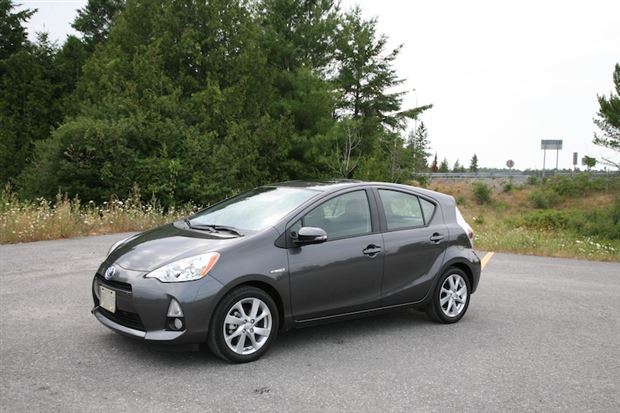
THE LEMON LADY loved her TOYOTA Prius C!
It was ergonomically well-designed and comfortable, rather busy with too much information, too many buttons....
Yeah, there were things that TOYOTA could have done better....it lacked the blind spots the TOYOTA Prius possessed....it suited THE LEMON LADY's needs.....until unpredictable behavior began .....including TOYOTA BRAKE FAILURE!
THE LEMON LADY'S TOYOTA BRAKE FAILURE ended with no injuries.
Sadly, the same can't be said for other TOYOTA OWNERS.
This is worth reading:
FROM: Beware of Toyota. Their next victim may be YOU...
Shhh... sudden unintended acceleration complaints are continuing
[From a RAV4 owner]
When the “sudden acceleration” issue with Toyota vehicles was all over the news, I was not concerned because I assumed it was user error. I remember my boss saying to me, “you’re not afraid to drive your Camry?” I told my boss that it’s just a bunch of idiots who are stepping on the gas by mistake, or people trying to get money from Toyota. Now that I’ve had this happen, I realize what a fool I was! I was so proud of the Toyota vehicles I own that I wouldn’t even consider that such a problem exists.
All THE LEMON LADY seems to have gotten is MR. ALBANY ATTORNEY who can't seem to fix his hair....
..and the ROUTE 44 TOYOTA BULLY!
..both of whom deserve awards for creativity for the Hallucinations they report in court!
It was ergonomically well-designed and comfortable, rather busy with too much information, too many buttons....
Yeah, there were things that TOYOTA could have done better....it lacked the blind spots the TOYOTA Prius possessed....it suited THE LEMON LADY's needs.....until unpredictable behavior began .....including TOYOTA BRAKE FAILURE!
THE LEMON LADY'S TOYOTA BRAKE FAILURE ended with no injuries.
Sadly, the same can't be said for other TOYOTA OWNERS.
This is worth reading:
FROM: Beware of Toyota. Their next victim may be YOU...
Shhh... sudden unintended acceleration complaints are continuing
[From a RAV4 owner]
When the “sudden acceleration” issue with Toyota vehicles was all over the news, I was not concerned because I assumed it was user error. I remember my boss saying to me, “you’re not afraid to drive your Camry?” I told my boss that it’s just a bunch of idiots who are stepping on the gas by mistake, or people trying to get money from Toyota. Now that I’ve had this happen, I realize what a fool I was! I was so proud of the Toyota vehicles I own that I wouldn’t even consider that such a problem exists.
All THE LEMON LADY seems to have gotten is MR. ALBANY ATTORNEY who can't seem to fix his hair....
..and the ROUTE 44 TOYOTA BULLY!
..both of whom deserve awards for creativity for the Hallucinations they report in court!
Wednesday, March 5, 2014
Class Action Lawsuit Against TOYOTA for Engine Failure
The article below offers an analysis of TOYOTA's organizational failures. Further down, is information about CLASS ACTION because of TOYOTA's Engine Failures.
The TOYOTA engine failures transpired from 2006-2011 - a 5 year period during which TOYOTA remained unresponsive to consumer complaints.
Toyota Recall Highlights Deep Organizational Failures
Akio Toyoda, President and CEO of Toyota Motor Corporation
When Toyota Motor halted sales of eight models in the United States because of potentially fatal sudden acceleration problems, industry pundits were quick to cite Toyota's rapid expansion into the States as the key culprit. Toyota established factories in five U.S. states in the late 1980s, but about five years ago it began ramping up production and making big expansion plans as a way to meet soaring demand and, ultimately, to grab the title of world's largest automaker from General Motors. This strategy — which spread its U.S. manufacturing operations across several states — was a clear break from Toyota's practice of concentrating its suppliers and plants in a narrow geographic area to allow better control. Because of its hasty ambition, Toyota developed a problem coordinating just-in-time arrivals from its suppliers and maintaining deep technical ties with those suppliers.
But that's only part of the story. The roots of Toyota's problems — and there are several — run much deeper. They include:
http://www.cbsnews.com/news/toyota-recall-highlights-deep-organizational-failures/
Toyota Vehicles. Owners/lessees of various model year 2006-2011 Toyota vehicles should be aware of the manufacturing defect described below. The problem may impact both (1) current owners and lessees of these vehicles and (2) former owners/lessees who no longer own these vehicles but incurred out-of-pocket expenses in repairing damages arising from the defect. Class Vehicles use a common 2.4L 4-cylinder short block engine. Our investigation indicates that a subset of the engines was manufactured by an unidentified supplier that failed to manufacture the engines’ piston rings to specifications. Due to this defect, a subset of Class Vehicles will eventually begin to lose oil through the rings’ oversized openings, causing engine parts to “grind” and, eventually, the engine to seize. Necessary repairs may include an engine overhaul, component replacement, or, total engine replacement costing upwards of $8,000. Vehicles that may be affected include these Vehicle Descriptor Section (VDS) numbers. (Vehicle Descriptor Section numbers are the 4th-8th numbers of your car's Vehicle Identification Number-VIN).
If you are interested in any of these potential class action cases, please contact Bryan L. Clobes of the Cafferty Clobes Meriwether & Sprengel law firm by phone at 215-864-2800 or by email at BClobes@CaffertyClobes.com.
http://www.consumer-action.org/lawsuits/
The TOYOTA engine failures transpired from 2006-2011 - a 5 year period during which TOYOTA remained unresponsive to consumer complaints.
Toyota Recall Highlights Deep Organizational Failures
Akio Toyoda, President and CEO of Toyota Motor Corporation
When Toyota Motor halted sales of eight models in the United States because of potentially fatal sudden acceleration problems, industry pundits were quick to cite Toyota's rapid expansion into the States as the key culprit. Toyota established factories in five U.S. states in the late 1980s, but about five years ago it began ramping up production and making big expansion plans as a way to meet soaring demand and, ultimately, to grab the title of world's largest automaker from General Motors. This strategy — which spread its U.S. manufacturing operations across several states — was a clear break from Toyota's practice of concentrating its suppliers and plants in a narrow geographic area to allow better control. Because of its hasty ambition, Toyota developed a problem coordinating just-in-time arrivals from its suppliers and maintaining deep technical ties with those suppliers.
But that's only part of the story. The roots of Toyota's problems — and there are several — run much deeper. They include:
Bureaucracy
- The lines of control of Toyota’s U.S. operations were murky. During most of Toyota’s expansion into America, the company’s California-based sales division and its Kentucky-based manufacturing division reported back to Japan, independent of each other. For a few years, the company’s top-ranking U.S. exec, James E. Press, was able to establish Toyota Motor North America in New York as the de facto headquarters in charge of all U.S. operations. He even rose to become the only American on Toyota’s board of directors in Japan. But Press quit in 2007 to join Chrysler and he was replaced by a series of Japanese executives with less clout. With Press’ departure, Toyota lost its key bridge between management in Japan and various U.S. constituencies — and its ability to respond rapidly when crises hit.
Overconfidence
- Another underlying problem is cultural. Toyota is a secretive and non-communicative organization.
American insiders joke that working for the company is like working for the Central Intelligence Agency, where information is shared only on a “need to know” basis, confides one American employee. And long a scrappy underdog to General Motors and Ford Motor, Toyota developed a sense of cockiness in the past two or three years as it began to surpass its American rivals in global sales. The company did not need rebates to sell its vehicles. Consumer Reports gave the brand high praise. Toyota did not believe it needed a strong public relations effort. The company thus failed to recognize that the pressures on the No. 1 player in any market are far more intense than the pressures on No. 2 and No. 3.
Weak Management
- For years, the company has been led by a series of world-class professional managers. Then last summer, Akio Toyoda, 53, grandson of the company’s founder, took charge as chief executive and some insiders did not think he was ready, say some auto industry watchers in Japan. They were right.
When he took the job, Toyoda told the world that he would practice “genchi genbutsu,” which translates roughly as “management by walking around” or “going to where the problem is.” But when the safety flap came to light, he remained silent and even attended the annual gathering of world leaders in Davos, Switzerland. American crisis response experts were flabbergasted. “What is he doing in Davos anyway?” Paul A. Argenti, a professor of corporate communications at Dartmouth’s business school was quoted as saying in The New York Times. “If you’ve got a crisis of this magnitude, you get on a plane and you go to the scene of the problem.” Instead, day-to-day management of the controversy was delegated to James E. Lenz III, head of Toyota Motor Sales.
One of the biggest mysteries is this: Why hasn’t Toyota still not gotten to the bottom of what went wrong? The company is famous for inventing the practice of asking “the five whys.” This was a rigorous methodology that permeated the company’s culture: If a car had a problem, why? Was it a supplier? If so, why did the supplier have a problem? And so on. This practice for decades has allowed Toyota to respond to problems better and faster than General Motors and Ford.
The Fallout
- Toyota’s problem-solving mechanism clearly broke down. The company revealed as much in the series of explanations it released. Initially, Toyota announced the floor mats were the problem. Then it was the gas pedals, which were made by an Indiana-based supplier and thus limited the problem only to U.S.-made cars. But that story didn’t hold up because of a well-publicized case involving a Lexus in California in which four people died — and that vehicle was made in Japan. Then in early February, problems developed with the Prius hybrid and its brakes in both the U.S. and Japan. Toyota described it as a software issue.
Now it seems the underlying problem involves the software and the computerized controls governing acceleration and braking in many Toyota vehicles. No one knows for sure but this series of problems could take months to reformulate. New safeguards may have to be put in place. It will not be a quick fix, as Toyota originally suggested.
CEO Toyoda has only compounded the crisis. When he finally held a press conference in Japan to apologize, he pointedly did not make a deep bow to demonstrate regret. In Japanese cultural terms, Toyoda’s bow was perfunctory. Moreover, his proposed solution — to create a global quality committee and seek advice from outside experts to evaluate Toyota’s operations fell spectacularly flat. He did not appear to understand what had gone wrong inside his own company, much less have a concrete way to address it.
Toyota used to have a reputation for quickly correcting mistakes. It first introduced a vehicle nicknamed the Toyopet in the U.S. in 1957. It was laughed out of the market because of its ungainly design and small size. But by 1959, Toyota was back and it executed flawlessly in the United States for 50 years, even introducing the luxury Lexus brand, which beat Mercedes, BMW and Cadillac in total sales.
Now it faces class-action lawsuits and intense scrutiny from Congress and officials at the National Highway Traffic Safety Administration. The tone is reminiscent of the Big Tobacco hearings more than a decade ago: What did Toyota know and when did it know it? There’s no question that Toyota’s reputation has been badly damaged. The only question now is how long it will take to recover.
William J. Holstein has been following Toyota since 1985. He published “The Japanese Power Game” in 1990. His most recent book was, “Why GM Matters: Inside The Race To Transform an American Icon.”
http://www.cbsnews.com/news/toyota-recall-highlights-deep-organizational-failures/
Toyota Vehicles. Owners/lessees of various model year 2006-2011 Toyota vehicles should be aware of the manufacturing defect described below. The problem may impact both (1) current owners and lessees of these vehicles and (2) former owners/lessees who no longer own these vehicles but incurred out-of-pocket expenses in repairing damages arising from the defect. Class Vehicles use a common 2.4L 4-cylinder short block engine. Our investigation indicates that a subset of the engines was manufactured by an unidentified supplier that failed to manufacture the engines’ piston rings to specifications. Due to this defect, a subset of Class Vehicles will eventually begin to lose oil through the rings’ oversized openings, causing engine parts to “grind” and, eventually, the engine to seize. Necessary repairs may include an engine overhaul, component replacement, or, total engine replacement costing upwards of $8,000. Vehicles that may be affected include these Vehicle Descriptor Section (VDS) numbers. (Vehicle Descriptor Section numbers are the 4th-8th numbers of your car's Vehicle Identification Number-VIN).
- 2007-2011 Camry Hybrid Vehicles. Engine: 2AZ / VDS: BB3EK, BB46K
- 2007-2009 Camry. Engine: 2AZ / VDS: BE46K
- 2009 Corolla. Engine: 2AZ / VDS: BE40E
- 2009 Matrix. Engine: 2AZ / VDS: GE40E, KE40E, LE40E
- 2006-2008 RAV4, Engine: 2AZ / VDS: BD31V, BD32V, BD33V, BD34V, BD35V, ZD31V, ZD32V, ZD33V, ZD34V, ZD35V
- 2007-2008
Solara. Engine: 2AZ / VDS: CE30P
If you are interested in any of these potential class action cases, please contact Bryan L. Clobes of the Cafferty Clobes Meriwether & Sprengel law firm by phone at 215-864-2800 or by email at BClobes@CaffertyClobes.com.
http://www.consumer-action.org/lawsuits/
Subscribe to:
Posts (Atom)