Search This Blog

Translate

Blog Archive

Middleboro Review 2

NEW CONTENT MOVED TO MIDDLEBORO REVIEW 2

Toyota

Since the Dilly, Dally, Delay & Stall Law Firms are adding their billable hours, the Toyota U.S.A. and Route 44 Toyota posts have been separated here:

Route 44 Toyota Sold Me A Lemon


Showing posts with label Takata recall. Show all posts

Thursday, December 21, 2017

Honda says ruptured Takata airbag led to death in Louisiana not original


Honda says ruptured Takata airbag led to death in Louisiana

Inflator in the Civic was not the original one installed

December 19, 2017 @ 7:22 pm
Reuters

Honda Motor Co.'s North American unit and the National Highway Traffic Safety Administration said Tuesday that a ruptured airbag inflator of Takata Corp. used in a Honda Civic caused the death of the driver on July 10.
The 2004 model car involved in the crash in Baton Rouge, Louisiana, was under recall but had not received the repair, the company said, adding that the ruptured inflator in the vehicle was not the original one installed.
Takata airbag inflators have been linked to at least 18 deaths and 180 injuries around the world.
Honda has so far removed over 100,000 inflators from salvage yards and has requested that major online auction sites prohibit and stop the sale of affected airbags.

http://www.autonews.com/article/20171219/OEM/171219727/honda-says-ruptured-takata-airbag-led-to-death-in-louisiana


Saturday, May 23, 2015

Senator Boxer: More Information on the Air Bag Recall


Honorable Senator Boxer:

Thank you for sharing additional information to protect consumers.
Tragically, this highlights the failures of many, including NHTSA.
Evidence indicates that Takata concealed the propellant failure and failed to take action.
Criminal prosecution would put these multi-national companies on notice to act responsibly.


May 22, 2015
 
This week we learned the shocking news that nearly 34 million air bags made by the Takata Corporation are being recalled nationwide because of a dangerous defect that has caused at least six deaths and more than 100 injuries.
 
Dozens of models of vehicles from automakers including Honda, BMW, Chrysler, Ford, General Motors, Mazda, Mitsubishi, Nissan, Saab, Subaru and Toyota dating back to the 2001 model year have been affected.
 
While automakers are required to send you a recall notice if your vehicle is under recall, I encourage anyone concerned that their vehicle might be affected to go to the Transportation Department's safety recall website. By entering your Vehicle Identification Number (VIN), you can find out if your vehicle is subject to the Takata air bag recall or any other safety recalls.
 
You can also visit the automakers' recall websites to determine if your vehicle is affected. For more information on how automakers are responding and to visit their recall websites, please click here.


Sincerely,


Barbara Boxer
United States Senator

Wednesday, February 25, 2015

TOYOTA FJ CRUISER 2014 Recall


Please click on the following NHTSA Campaign ID links to view the recall information.
NHTSA Campaign ID Number : 15V081
Manufacturer : Toyota Motor Engineering & Manufacturing
Make / Model Years : TOYOTA / 2014
Subject : Intermediate Steering Shaft Weld may Fail

Thank you,

Recalls Subscription Team
Office of Defects Investigation (ODI)
National Highway Traffic Safety Administration (NHTSA)
U.S. Department of Transportation (DOT)


To file a vehicle safety-related complaint, please go online to our File a Complaint web page, or call us toll-free at 1-888-327-4236.

To find out more about NHTSA, please go to the Safercar.gov website or call our Vehicle Safety Hotline toll-free at 1-888-327-4236


RECALL Subject : Intermediate Steering Shaft Weld may Fail

Sunday, January 4, 2015

Many recalls end up undone


Many recalls end up undone

Owners sometimes take lax attitude to fixing known problems.


By Jerry Hirsch
Los Angeles Times
Posted Jan. 3, 2015 @ 2:00 am


LOS ANGELES – Each day, attorney Terry Harris sets out in his trusty 2002 Honda Civic, which has 150,000 miles – and has been recalled for a variety of defects considered dangerous by safety regulators.
Two are for air bags that can explode, sending shrapnel into the cabin. Another aims to fix a wiring problem that could make the headlights shut off suddenly.
“I think probability works in my favor. I don’t feel that it is urgent,” Harris said. “If I ever take the car into the dealership, I will get it fixed. But it is not at the top of my things-to-do list.”
Automakers recalled about 60 million vehicles in the U.S. in 2014, almost double the previous record set a decade ago.
But as many as 35 million of these vehicles have not been repaired, according to some estimates – even though many have defects that have been linked to multiple fatalities.
“Any vehicle that is unrepaired is a risk,” said David Friedman, the National Highway Traffic Safety Administration’s deputy administrator.
GM has repaired a little more than 60 percent of almost 2 million older cars equipped with a defective ignition switch linked to at least 42 deaths. But that leaves about 700,000 unrepaired cars on U.S. roads. At any minute, the ignition switch can shift off, causing the driver to lose control.
It’s not the only potentially deadly problem. About 14 million vehicles from Honda, Toyota, Nissan, BMW, Ford, Chrysler and other brands were recalled in 2014 because they have defective Takata air bag inflators. In a crash, the air bags can fail to deploy correctly and will shoot metal fragments inside the car.
The problem is connected to at least five deaths, according to the Center for Auto Safety. Less than 10 percent have been fixed, said Clarence Ditlow, the center’s executive director.
Automakers have repaired only about 40 percent of all vehicles recalled in the U.S. in 2014, leaving more than 35 million vehicles with uncorrected defects, he said.
“There’s no doubt someone else is going to die,” Ditlow said.
Some vehicles don’t get fixed because people decide their car is running well, and they don’t want to take the time, Friedman said. Others never learn of the recall.
“How do you target people who don’t have English as their primary language, who are not on Facebook or Twitter?” Friedman asked. “We have to start thinking about marketing recalls in the same way automakers sell new cars.”
That’s what GM is trying to do. The automaker is dealing with one of the biggest recall scandals in automotive history – and being investigated by the Department of Justice, Congress and NHTSA for not recalling the cars with the ignition switch problem much earlier.
Judging from the $1.2 billion federal fine Toyota paid out in 2014 – after admitting that it misled regulators and consumers about recalls – GM is likely to pay a similarly high penalty. Already, it has set up a compensation fund expected to pay hundreds of millions of dollars to those injured in crashes or to survivors of those killed.
“We have used every possible communications channel to try to motivate people to bring their vehicles in,” said Ryndee Carney, a GM spokeswoman.
First there were traditional methods: direct mail, telephone calls and asking dealers to reach out to their customers. There’s also been pervasive news coverage, including congressional hearings and NHTSA announcements.
The automaker also tapped “big data” to reach people. It shared owner names and car registration data for unrepaired vehicles with Tustin data marketing firm Acxiom. Acxiom then used the information to post messages on how to get the car repaired on the individual’s Facebook page or while they were playing online games such as Candy Crush Saga or Words with Friends, Carney said.
These efforts helped GM get 60 percent of the cars repaired in about nine months, one of the best rates among large recalls in such a time period, Friedman said.
All automakers should adopt GM’s approach, Friedman said.
Other strategies could get cars repaired more quickly, Ditlow said.
State departments of motor vehicles should have a digital tie-in to the NHTSA’s federal database, notifying state officials if a car being registered has an outstanding recall repair, Ditlow said. They then could force the owner to repair the car being registering, he said.
Additionally, insurance companies might look up a vehicle’s recall history when someone purchases or renews coverage, then ask owners to make repairs. Ditlow said. Requiring used-car dealers to make sure any recall work is completed before selling a vehicle would also take defective cars off the road, he said.
“Every little thing helps,” Ditlow said.

http://www.capecodtimes.com/article/20150103/BUSINESS/150109864/101017/BIZ


Thursday, December 4, 2014

AAA Calls on Takata to Follow NHTSA’s Order to Support National Recall of Affected Air bags


Statement Bob Darblenet

AAA Calls on Takata to Follow NHTSA’s Order to Support National Recall of Affected Air bags

Statement from AAA CEO Bob Darbelnet

ORLANDO, Fla., (December 3, 2014) – “It is unacceptable that Takata continues to defy an order by the National Highway Transportation Safety Administration (NHTSA) to facilitate a national recall of dangerous air bags. While Takata officials continue to publically apologize for the deaths associated with the faulty air bags, they simultaneously ignored a midnight deadline by NHTSA to order a national recall.”

“Defying NHTSA should not be an option as motorists remain in danger from defective air bag inflators. NHTSA should act swiftly to use its full authority to compel a nationwide recall as quickly as possible. If the Agency does not have sufficient authority, Congress should act to clarify and expand this ability – be it through more substantial fines or other measures. As time passes more motorists remain at risk from the faulty air bags that have been linked to at least five deaths.”

“AAA fully supports NHTSA’s call for a national recall of affected Takata air bags beyond the limited high-humidity areas where a recall has to date been focused. Vehicles are increasingly bought and sold across state lines and may move long distances across the country. It is unreasonable to assume that vehicles outside of high humidity regions are inherently safe so it is in the best interest of consumers to expand this recall to all states. Motorists’ safety is a national issue that is not confined by regional boundaries and should take precedence over profits. Takata’s refusal to cooperate with NHTSA’s investigation is unacceptable and demonstrates their failure to fully understand, address and report the scope of the air bag deficiencies as soon as the problem was identified. AAA is calling on Takata, car manufacturers, and all parties involved to ensure that a national recall is handled in a timely manner.”

As North America’s largest motoring and leisure travel organization, AAA provides more than 54 million members with travel, insurance, financial and automotive-related services. Since its founding in 1902, the not-for-profit, fully tax-paying AAA has been a leader and advocate for the safety and security of all travelers. AAA clubs can be visited on the Internet at AAA.com.


Related Articles


http://newsroom.aaa.com/2014/12/aaa-calls-takata-follow-nhtsas-order-support-national-recall-affected-air-bags/


Friday, November 28, 2014

US Agency Threatens To Act Against Air Bag Maker


Florida Woman Injured By Shrapnel From Takata Airbag


US Agency Threatens To Act Against Air Bag Maker

 
The airbag unit for the passenger seat of a Toyota Motor Corp. vehicle is seen at the company's showroom in Tokyo, Japan, on Thursday, April 11, 2013. Takata Corp. faces its biggest recall crisis in almost two decades after defective airbag inflators led Toyota Motor Corp., Honda Motor Co. and Nissan Motor Co. to call back more than 3 million vehicles. (Source: Koichi Kamoshida/Bloomberg via Getty Images)
The airbag unit for the passenger seat of a Toyota Motor Corp. vehicle is seen at the company’s showroom in Tokyo, Japan, on Thursday, April 11, 2013. Takata Corp. faces its biggest recall crisis in almost two decades after defective airbag inflators led Toyota Motor Corp., Honda Motor Co. and Nissan Motor Co. to call back more than 3 million vehicles. (Source: Koichi Kamoshida/Bloomberg via Getty Images)


DETROIT (CBSMiami/AP) — U.S. safety regulators have threatened airbag maker Takata Corp. with fines and legal action, if they do not admit the driver’s air bag inflators are defective and agree to a nationwide recall.

In a letter to Takata’s Washington office, the National Highway Traffic Safety Administration gave the Japanese company until Tuesday to file paperwork declaring a defect and expanding the recall from high-humidity states to the full nation.

The company’s air bags have been blamed for at least five deaths and multiple injuries worldwide. They can inflate with too much force, blowing apart a mental canister and spewing shrapnel.

READ: Florida Woman Injured By Shrapnel From Takata Airbag

The letter is the first step in a legal process to compel a nationwide recall. To do so, the agency must determine that there’s a safety defect and hold a public hearing. Then it can go to court. It can also fine the company up to $7,000 per vehicle with defective inflators, and NHTSA says there are millions on the road today.

“Be assured that we will use all of our authority and resources,” Transportation Secretary Anthony Foxx said in a statement.

Takata has maintained that the air bag problems are caused by prolonged exposure to airborne moisture, and that there’s no need for a national recall. Moisture can make the chemical propellant in the air bags burn too fast. Boundaries of the recall zone vary by manufacturer, but generally it covers Gulf Coast states, Hawaii, Puerto Rico and some U.S. territories.

A company spokesman was working on a response Wednesday.

In the letter, NHTSA says Takata hasn’t safety defect papers as demanded by the agency Nov. 18.

The company, the letter said, has not explained why two driver’s side air bag inflators ruptured outside the high-humidity areas.

“Despite the severe consequences of air bag ruptures and mounting data demonstrating a safety defect, Takata responded that it did not agree with NHTSA’s basis for a nationwide recall,” the letter stated.

The agency cites inflator ruptures that injured drivers in California and North Carolina as justification for the national recall.

About 8 million vehicles from 10 manufacturers have been recalled in the U.S., and 14 million worldwide. The vehicles have Takata driver or passenger air bags, or both. So far the government is not seeking a national recall of passenger air bags, saying that data doesn’t support it outside of high-humidity areas.

NHTSA also is moving to get automakers to agree to minimum boundaries for the passenger air bag recalls in high-humidity areas with average dew points of 60 degrees or higher.

Its first target was Chrysler. In a letter Tuesday, NHTSA told the company to expand its recall and accused it of moving too slowly to notify car owners. The company says it’s working on a response.

Chrysler is recalling more than 371,000 older vehicles in Florida, Hawaii, Puerto Rico and the U.S. Virgin Islands. But NHTSA says the passenger air bags can malfunction in a wider area that adds southern Georgia; areas along the Gulf Coast in Alabama, Louisiana, Mississippi and Texas; and Guam, Saipan and American Samoa.

Other automakers with smaller recall zones will be asked to take similar action.

NHTSA demanded that Chrysler start notifying owners of the recall starting no later than Monday. In response, Chrysler said it would move notification from Dec. 19 to Dec. 8. The company also said a committee will consider expanding the recall on Monday.

Recently NHTSA has gotten tough with Takata on the air bag issue, but lawmakers have criticized the agency for a slow and haphazard response.


http://miami.cbslocal.com/2014/11/26/us-agency-threatens-to-act-against-air-bag-maker/#comments


Friday, November 21, 2014

NHTSA, USDOT Demand National Recall Action From Takata, Automakers


NHTSA, USDOT Demand National Recall Action From Takata, Automakers


By on November 21, 2014
 
 
takata-corp


While we were looking over the latest and greatest from the 2014 LA Auto Show, the Takata band played on.

The National Highway Traffic Safety Administration and the U.S. Department of Transportation are both calling for a national recall of all vehicles with Takata’s airbags, citing a catastrophic failure of a module outside the high-humidity zone previously established in an earlier recall.

The NHTSA also issued a General Order to the airbag supplier and 10 automakers — BMW, Chrysler, Ford, General Motors, Honda, Mazda, Mitsubishi, Nissan, Subaru and Toyota — requiring all to submit documents regarding “completed, ongoing or planned testing” of the supplier’s inflators outside of the current recall zone, with the goal of having all involved come correct with the agency and the American public about what they all plan to do about the airbags. Takata alone received a Special Order, regarding the propellent used in its airbags.

Responses to both orders are due by December 5.

Three of the 10 automakers involved with the General Order — Ford, GM and Honda — may likely have the hardest time replacing Takata completely. Per Bloomberg, the trio worked closely with the supplier to develop special features for their vehicles — Ford’s Adaptive Steering system, GM’s front center airbags — features that would take a while to work out with a new supplier if a deeper relationship were to take hold.

Meanwhile, only 6 percent of the 8 million vehicles equipped with Takata’s airbags have been repaired thus far, a rate critics of the supplier and its client base find appalling. The pace isn’t likely to quicken, however; Toyota says it would take a year at minimum to test and replace its units with those from other suppliers, while Nissan said doing the same for itself wasn’t feasible.

Returning to the Beltway, Reuters reports Takata had presented documents to the NHTSA linked to a 2009 accident involving its airbags, only for the agency to decline, as it had closed its investigation on the supplier and Honda, whose vehicle was involved in said accident. The NHTSA informed the news agency that the documents “would not have added to the agency’s understanding of the issues involved in that particular investigation.”

Speaking of Honda, senior executive Rick Schostek admitted before Congress that his company failed to notify the NHTSA or its customer base about the issues with Takata’s airbags, promising to offer consumers a loaner if their affected vehicles are repaired quickly due to supply shortages. As for Takata’s Hiroshi Shimizu, Automotive News says he went on the defensive, going so far as to claim that it was “hard” for him to “answer yes or no” to several questions asked by the U.S. Senate Commerce Committee, much to the dismay and bemusement of the committee members.

Prior to the call for a nationwide recall, the regional-specific actions, as well as the NHTSA’s order to consumers to have their airbags replaced immediately, contributed to public anxiety over whether or not the airbag before them would disfigure or kill in an accident. According to Bloomberg, Takata itself believes a national recall would only further exacerbate those fears, potentially diverting resources “from where they’re needed, putting lives at risk.”

Meanwhile, Reuters reports the Monclova, Mexico facility where the defective units were assembled had issues from the moment it opened its doors in 2000. Aside from the units made in 2001, 2002 and 2012, an explosion in 2006 — one some workers claim was fueled by the same ammonium nitrate used in Takata’s airbags as a propellent — jump-started a production run where quality slipped against hourly quotas. Whether the top brass knew of the problems, however, is a different story, as it never sent permanent staff to Mexico from its headquarters in Japan.

Over in Germany, BMW is working with the supplier to have its airbags made closer to home in Freiberg, transferring production from Mexico. The move only applies to BMW, who expects additional production to come online by mid-December. Alternative arrangements would take two years and “divert attention from current recall efforts,” per the automaker.

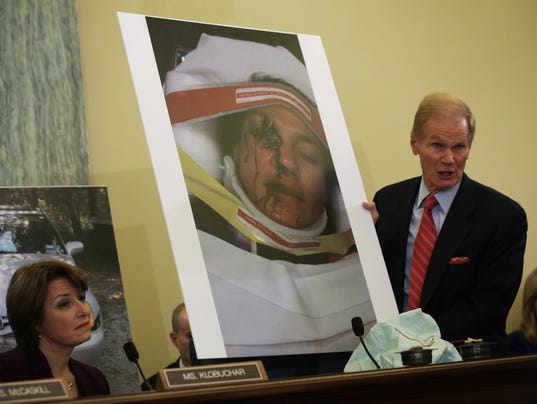
Finally, U.S. Air Force First Lieutenant Stephanie Erdman gave her testimony before Congress, detailing what had happened to her when a vehicle turned in front of her 2002 Honda Civic in September 2013. According to The Detroit News, the resulting injuries and ongoing surgeries led to a lawsuit against Honda, whose certified dealership in Destin, Fla. failed to notify Erdman of the February 2010 driver’s side airbag recall or what would happen if the airbag deployed in the wrong conditions, nor did the dealership replace the unit in question. She also feared that once the spotlight subsides on Takata et al, the problems would still be there, and urged Congress to continue to hold all accountable for their actions.


http://www.thetruthaboutcars.com/2014/11/nhtsa-usdot-demand-national-recall-action-takata-automakers/