Search This Blog

Translate

Blog Archive

Middleboro Review 2

NEW CONTENT MOVED TO MIDDLEBORO REVIEW 2

Toyota

Since the Dilly, Dally, Delay & Stall Law Firms are adding their billable hours, the Toyota U.S.A. and Route 44 Toyota posts have been separated here:

Route 44 Toyota Sold Me A Lemon


Showing posts with label auto industry recalls. Show all posts

Tuesday, August 15, 2017

Center for Auto Safety names Ditlow's successor


CHECK OUT ADDITIONAL INFORMATION ON THEIR WEB SITE:

Center for Auto Safety Names Jason K. Levine Executive Director


Center for Auto Safety names Ditlow's successor


August 15, 2017


Jason Levine: "American consumers expect their government to prevent the false advertising of used cars and protect the environment from auto pollution. Yet, the only momentum we see in Washington is a regulatory rollback that too many in the auto industry are aiding and abetting."

The Center for Auto Safety
 has appointed an official with a track record in federal government consumer protection agencies as its new executive director, the advocacy group said Tuesday.
Jason Levine, who spent about six years at the U.S. Consumer Product Safety Commission during the administration of former President Barack Obama, succeeds Clarence Ditlow, who died in November last year.
Levine has also worked for the Federal Election Commission and the Department of Health and Human Services.
In a news release, Levine said: "Despite rising auto fatalities, and new recalls coming almost daily, the current administration has shown no interest in meeting its statutory duty and moral responsibility to enforce safety laws on behalf of drivers, passengers, and pedestrians.
"American consumers expect their government to prevent the false advertising of used cars and protect the environment from auto pollution. Yet, the only momentum we see in Washington is a regulatory rollback that too many in the auto industry are aiding and abetting. The Center's role as the eyes, ears, and voice of the consumer is more important than ever."
The Center for Auto Safety was founded in 1970 by consumer rights advocate Ralph Nader and Consumers Union.

http://www.autonews.com/article/20170815/OEM11/170819888/center-for-auto-safety-names-ditlows-successor

Monday, December 26, 2016

Consumer groups criticize deal on auto recalls


The exploding TAKATA airbag scandal highlights the failure of the auto industry and NHTSA to protect consumers.  


Consumer groups criticize deal on auto recalls

BOSTON — Consumer advocates are blasting an agreement between regulators and used-car dealerships over auto recall disclosures, saying the deal endangers public safety.
Last week the Federal Trade Commission reached agreements with CarMax, the largest U.S. used-car dealer with more than 140 locations, including one in Danvers; Atlanta-based Asbury Automotive Group Inc.; and West-Herr Automotive Group in New York.
Under proposed consent orders, the dealers cannot claim that used vehicles are safe unless recall repairs have been made or open recalls are disclosed to buyers. They also must notify customers that cars bought as far back as 2013 may be subject to recalls.
The settlement did not impose fines or sanctions on the dealers.
The commission also reached agreements in similar cases with General Motors Co. and two other retailers, Jim Koons Management in the mid-Atlantic and Lithia Motors Inc. in Oregon.
In a statement, the Federal Trade Commission said some in the industry “touted how rigorously they inspect their used cars yet failed to adequately disclose that some of the cars were subject to un-repaired safety recalls.”
Consumer advocates say the deal is a giveaway to the used-car industry because it allows companies to disclose that cars “may” be subject to recalls without actually repairing them.
“The bottom-line here is that the result will be more consumers buying unsafe cars, putting the lives of not just themselves but everyone who shares the roadways in danger,” said Deirdre Cummings, legislative director at Massachusetts Public Interest Research Group.
“Consumers rightly have the expectation that when shopping at any car dealership they will be sold a safe car, and at the very least, they certainly would not expect that any car for sale would still be under a safety recall,” she said.
Flawed system
But some in the used-car business say the recall system is flawed, and rules such as last week’s consent order unfairly keep them from selling cars that are safe to drive.
Not all recalls issued by manufacturers and the government are safety-related, said Robert O’Koniewski, executive vice president of the Massachusetts State Automobile Dealers Association.
“It could be a page in the owner’s manual that needs to be changed or something wrong with the cup holders in a vehicle console,” he said.
Federal law prohibits auto dealers from selling new cars that are under recall, he said, but there are no such requirements for used vehicles.
In Massachusetts, the state’s “lemon law” requires dealers to disclose recalls on used cars — as well as any other information that could affect the sale, such as a dent that needs repairing — but it doesn’t require them to fix the problems.
National consumer groups say they plan to sue the government to block last week’s agreement. Rosemary Shahan, president of Consumers for Auto Reliability and Safety, a Sacramento, California-based advocacy group, called the deal “tragic” and “reckless.”
U.S. Sen. Ed Markey, who with other lawmakers has pushed for stricter limits on the industry, said it “makes it easier for dangerous cars to remain on the road.”
“Instead of ensuring safe cars for consumers, the FTC is ensuring safe harbor for used car dealers who provide false and deceptive assurances,” Markey said in a statement.
CarMax COO Cliff Wood said his company is an industry leader in transparency over recalls but will alter its sales and advertising language to comply with the agreement and keep consumers informed.
“We share vehicle-specific, open-recall information in store and online to ensure our customers know about open recalls prior to purchase,” Wood said in a statement. “We will continue to make enhancements to our comprehensive recall disclosure program.”
CarMax said all of its used cars “meet or exceed state safety inspection requirements,” but noted that recalls must be “repaired at a manufacturer-authorized facility.”
“The recall system is based on the manufacturer’s relationship with its dealers and registered vehicle owners, and not with independent used auto retailers,” the company said. “Among other things, this means that manufacturers have not authorized CarMax to complete recall repairs.”
Last year, MassPIRG and other groups released a report claiming that more than 17 percent of vehicles sold at CarMax’s North Attleboro dealership were subject to a federal safety recall that had not been repaired. Several vehicles had faulty transmissions that could allow the vehicle to roll away and injure people exiting the car or bystanders, according to MassPIRG.
AG intervention?
Advocates are looking to Attorney General Maura Healey to intervene by enforcing a state law that prohibits dealers from selling unsafe used cars and using deceptive sales practices.
Emily Snyder, a spokeswoman for Healey, said the office would be concerned if retailers fail to make repairs or alert customers about known recalls or other safety-related issues.
Sean Kane, president of Safety Research and Strategies Inc. in Rehoboth, said increasing numbers of recalls and deceptive sales practices confuse consumers.
Last week’s ruling, he said, “will only add” to the confusion.
“There’s a staggering number of recalls out there,” he said, noting estimates that suggest 1 in 5 vehicles are subject to a recall.
One major recall, for example, involves Takata-made airbags, some of which have exploded when deployed.
A November 2014 recall of the driver- and passenger-side airbags affects 14 automakers, 22 brands and more than 100 million vehicles worldwide, in what regulators say is the largest, most complex auto safety recall in U.S. history.
O’Koniewski said auto manufacturers are not able to keep up with the demand for parts to make repairs — including the Takata airbags.
“The shortage of parts is a huge problem,” he said. “Dealers are being forced to sit on new vehicles until the parts become available.”
The National Highway Traffic Safety Administration, which oversees vehicle recalls, offers car-buyers and owners a search tool to check for recalls at www.safercar.gov. Most dealerships can also provide a CarFax report on used vehicles that will show if it’s subject to a recall.
Christian M. Wade covers the Massachusetts Statehouse for The Salem News and its sister newspapers and websites. Email him atcwade@cnhi.com.


Monday, March 9, 2015

KUDOS! Jack Fitzgerald Fights to Protect Auto Consumers' Rights and Lives


Consumers need more dealers willing to protect their customers!


Thanks for standing up, Mr. Fitzgerald!


Where are the other dealers? Too cowed to stand for their customers?


In another lifetime, the LEMON LADY was at a dealership having a lengthy car service, had an opportunity to listen to customers and telephone calls.

Dealership employees denied problems that had been posted on the internet!

One of the problems that was conspicuous was dashboard lights going on - BRAND NEW VEHICLES!  Dealer's response: Oh NO! First we've heard!


Makes ya wonder!


Jack Fitzgerald Fights to Protect Auto Consumers' Rights and Lives

Automakers Shoot the Messenger for Honest Practices


Jack Fitzgerald testifying in Annapolis, MD with Laura Christian, the mother of a child who died as a result of a safety flaw in a vehicle that was later recalled.


ANNAPOLIS, Md., March 9, 2015 /PRNewswire/ -- An automobile is a milestone purchase in the lives of most consumers. They are not just buying a car; they are investing in the manufacturer's promise of quality and safety. Jack Fitzgerald, CEO and founder of Fitzgerald Auto Malls, strives to provide consumer value from the point of purchase throughout the lifetime of ownership.
 
For almost 50 years, Fitzgerald has been one of Maryland's leading car dealers and consumer advocates. The formula to his success is his "FitzWay" principle that is based on honesty, respect, and dignity. However, automakers are making it difficult for consumers to receive these rights by forcing car dealers to be accomplices to their hidden truths.
 
"People have lost their lives on the road because manufacturers have hidden safety problems by delaying recalls, and forcing dealers to withhold critical information," Fitzgerald said.
 
Fitzgerald is working with consumer advocate and Maryland resident Laura Christian, whose daughter Amber Marie Rose died in 2005 as a result of a safety flaw in her new Chevy Cobalt.
 
Amber's accident had many contributing factors, including the defective, later-recalled General Motors (GM) ignition switch that GM failed to address in a timely matter. When Fitzgerald heard this tragic story, he knew it was time to take action. Fitzgerald and Christian are fighting for a package of reforms to speed up recalls and get car buyers better safety information.
 
"When dealers are free to disclose full information and do repair work without fear of retribution by the carmakers, you'll see the responsible dealers compete to deliver good information and outstanding repair service to their customers," Jack Fitzgerald adds. "Then the market will start to work to make all of us safer on the road." While many of his colleagues may privately agree with him, the threat of retaliation by the manufacturers is too strong to come forward publicly.
 
Fitzgerald testified in the Maryland Senate on February 24th and March 5th for the package of reforms. The reform bills aim to get critical, timely safety information to car buyers and to make car buying more fair and transparent. In the simplest terms: the bills are about shining light on consumer protection. The House of Delegates will hold hearings on the three bills on March 10th.
 
The bills will pave a road to better consumer education and safety:
  • Enable dealers to share information by email, and on other forums, about safety and technical service issues. This is a great way to inform consumers about problems, get cars fixed before preventable accidents happen, and make the recall/safety repair process faster and more transparent.
 
  • Hold manufacturers financially accountable for their dealers' deceptive ads. This will push manufacturers to ensure their dealers' ads tell the truth.

  • Limit abusive audits of the warranty repairs that dealers do for car buyers. This protects dealers against retaliation, and takes steps to safeguard the legal rights of Maryland car dealers, so that they can safeguard the interests of their customers. Dealers can put their customers first.
In his testimony to the Senate, Bill Kress, representing the Alliance of Automobile Manufacturers, said, "The dealers are not capable or qualified to determine if it's [a defect they find in a car] a safety issue."
 
Jack Fitzgerald refutes this statement. "Dealers employ the factory trained and certified technicians, who furnish the very information that becomes a special policy, technical service bulletin, and perhaps even a recall," explains Fitzgerald. The dealers aim to disclose the defects already identified in bulletins and materials shared with dealers that they are prohibited from disclosing to the consumer.
 
The association for the auto manufacturers, the Auto Alliance, is taking the only tack they can – to "shoot the messenger." They suggest Fitzgerald is supporting these reforms out of his own self-interest. With support for the bills coming from groups such as CASA de Maryland and the Maryland Attorney General's Office, and with Montgomery County's Office of Consumer Protection endorsing the bills in principle, it is clear this issue is indeed about consumer protection.
 
Fitzgerald has no plans to stop now. Through these reforms, Fitzgerald and other dealers will be able to share important vehicle pricing and safety information with car buyers. Ultimately, the reforms will ensure consumers' rights and save lives.


SOURCE Fitzgerald Auto Malls


http://www.prnewswire.com/news-releases/jack-fitzgerald-fights-to-protect-auto-consumers-rights-and-lives-300047173.html


JUST MY OPINION...AT THE MOMENT!

Saturday, January 31, 2015

RECALLS: Auto Industry Lap Dog: NHTSA


One of the biggest problems with AUTO RECALLS is the FAILURE of owners to address/correct the issue.

Sometimes, the vehicle has been sold - ever had that happen when you sold or traded a vehicle and received a RECALL NOTICE?

THE LEMON LADY has!


Edmunds pointed out the FAILURE OF THE NHTSA web site to include the TOYOTA FIRE RISK here:

Reminders of PINTO'S EXPLODING GAS TANK! There is NO Excuse!


Ya buy a used TOYOTA AVALON!

You're supposed to conduct your own RESEARCH to determine .... you're supposed to conduct a lengthy internet search to reveal RECALLS......?


I don't think so!


Beware of Toyota. Their next victim may be you....author has called NHTSA TOYOTA'S LAP DOG....


Is that so?  Why isn't the TOYOTA FIRE RISK on NHTSA's web site?


While comments are effusive....point well taken....

Fire risk exposed in Toyota Avalon - lapdog NHTSA remains silent


Tough to decide.....is it the pretense to keep your mouth shut.....


or the GAGGLES OF ATTORNEYS TOYOTA retains......


Sunday, January 4, 2015

Many recalls end up undone


Many recalls end up undone

Owners sometimes take lax attitude to fixing known problems.


By Jerry Hirsch
Los Angeles Times
Posted Jan. 3, 2015 @ 2:00 am


LOS ANGELES – Each day, attorney Terry Harris sets out in his trusty 2002 Honda Civic, which has 150,000 miles – and has been recalled for a variety of defects considered dangerous by safety regulators.
Two are for air bags that can explode, sending shrapnel into the cabin. Another aims to fix a wiring problem that could make the headlights shut off suddenly.
“I think probability works in my favor. I don’t feel that it is urgent,” Harris said. “If I ever take the car into the dealership, I will get it fixed. But it is not at the top of my things-to-do list.”
Automakers recalled about 60 million vehicles in the U.S. in 2014, almost double the previous record set a decade ago.
But as many as 35 million of these vehicles have not been repaired, according to some estimates – even though many have defects that have been linked to multiple fatalities.
“Any vehicle that is unrepaired is a risk,” said David Friedman, the National Highway Traffic Safety Administration’s deputy administrator.
GM has repaired a little more than 60 percent of almost 2 million older cars equipped with a defective ignition switch linked to at least 42 deaths. But that leaves about 700,000 unrepaired cars on U.S. roads. At any minute, the ignition switch can shift off, causing the driver to lose control.
It’s not the only potentially deadly problem. About 14 million vehicles from Honda, Toyota, Nissan, BMW, Ford, Chrysler and other brands were recalled in 2014 because they have defective Takata air bag inflators. In a crash, the air bags can fail to deploy correctly and will shoot metal fragments inside the car.
The problem is connected to at least five deaths, according to the Center for Auto Safety. Less than 10 percent have been fixed, said Clarence Ditlow, the center’s executive director.
Automakers have repaired only about 40 percent of all vehicles recalled in the U.S. in 2014, leaving more than 35 million vehicles with uncorrected defects, he said.
“There’s no doubt someone else is going to die,” Ditlow said.
Some vehicles don’t get fixed because people decide their car is running well, and they don’t want to take the time, Friedman said. Others never learn of the recall.
“How do you target people who don’t have English as their primary language, who are not on Facebook or Twitter?” Friedman asked. “We have to start thinking about marketing recalls in the same way automakers sell new cars.”
That’s what GM is trying to do. The automaker is dealing with one of the biggest recall scandals in automotive history – and being investigated by the Department of Justice, Congress and NHTSA for not recalling the cars with the ignition switch problem much earlier.
Judging from the $1.2 billion federal fine Toyota paid out in 2014 – after admitting that it misled regulators and consumers about recalls – GM is likely to pay a similarly high penalty. Already, it has set up a compensation fund expected to pay hundreds of millions of dollars to those injured in crashes or to survivors of those killed.
“We have used every possible communications channel to try to motivate people to bring their vehicles in,” said Ryndee Carney, a GM spokeswoman.
First there were traditional methods: direct mail, telephone calls and asking dealers to reach out to their customers. There’s also been pervasive news coverage, including congressional hearings and NHTSA announcements.
The automaker also tapped “big data” to reach people. It shared owner names and car registration data for unrepaired vehicles with Tustin data marketing firm Acxiom. Acxiom then used the information to post messages on how to get the car repaired on the individual’s Facebook page or while they were playing online games such as Candy Crush Saga or Words with Friends, Carney said.
These efforts helped GM get 60 percent of the cars repaired in about nine months, one of the best rates among large recalls in such a time period, Friedman said.
All automakers should adopt GM’s approach, Friedman said.
Other strategies could get cars repaired more quickly, Ditlow said.
State departments of motor vehicles should have a digital tie-in to the NHTSA’s federal database, notifying state officials if a car being registered has an outstanding recall repair, Ditlow said. They then could force the owner to repair the car being registering, he said.
Additionally, insurance companies might look up a vehicle’s recall history when someone purchases or renews coverage, then ask owners to make repairs. Ditlow said. Requiring used-car dealers to make sure any recall work is completed before selling a vehicle would also take defective cars off the road, he said.
“Every little thing helps,” Ditlow said.

http://www.capecodtimes.com/article/20150103/BUSINESS/150109864/101017/BIZ


Thursday, December 4, 2014

AAA Calls on Takata to Follow NHTSA’s Order to Support National Recall of Affected Air bags


Statement Bob Darblenet

AAA Calls on Takata to Follow NHTSA’s Order to Support National Recall of Affected Air bags

Statement from AAA CEO Bob Darbelnet

ORLANDO, Fla., (December 3, 2014) – “It is unacceptable that Takata continues to defy an order by the National Highway Transportation Safety Administration (NHTSA) to facilitate a national recall of dangerous air bags. While Takata officials continue to publically apologize for the deaths associated with the faulty air bags, they simultaneously ignored a midnight deadline by NHTSA to order a national recall.”

“Defying NHTSA should not be an option as motorists remain in danger from defective air bag inflators. NHTSA should act swiftly to use its full authority to compel a nationwide recall as quickly as possible. If the Agency does not have sufficient authority, Congress should act to clarify and expand this ability – be it through more substantial fines or other measures. As time passes more motorists remain at risk from the faulty air bags that have been linked to at least five deaths.”

“AAA fully supports NHTSA’s call for a national recall of affected Takata air bags beyond the limited high-humidity areas where a recall has to date been focused. Vehicles are increasingly bought and sold across state lines and may move long distances across the country. It is unreasonable to assume that vehicles outside of high humidity regions are inherently safe so it is in the best interest of consumers to expand this recall to all states. Motorists’ safety is a national issue that is not confined by regional boundaries and should take precedence over profits. Takata’s refusal to cooperate with NHTSA’s investigation is unacceptable and demonstrates their failure to fully understand, address and report the scope of the air bag deficiencies as soon as the problem was identified. AAA is calling on Takata, car manufacturers, and all parties involved to ensure that a national recall is handled in a timely manner.”

As North America’s largest motoring and leisure travel organization, AAA provides more than 54 million members with travel, insurance, financial and automotive-related services. Since its founding in 1902, the not-for-profit, fully tax-paying AAA has been a leader and advocate for the safety and security of all travelers. AAA clubs can be visited on the Internet at AAA.com.


Related Articles


http://newsroom.aaa.com/2014/12/aaa-calls-takata-follow-nhtsas-order-support-national-recall-affected-air-bags/


Tuesday, December 2, 2014

New Whistleblower Bill Proposed


New Whistleblower Bill Proposed In Response To GM, Others


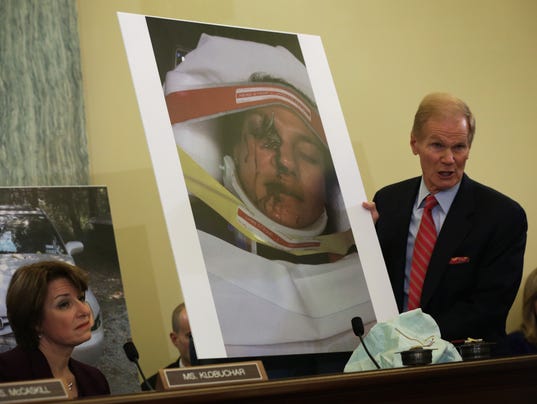
Sen. Bill Nelson (D-Fla), one of the bill's coauthors.


Sen. Bill Nelson (D-Fla), one of the bill's coauthors.

Two US Senators have introduced a new bill on Capitol Hill which seeks to minimize the chances for a delay between the detection of a potentially hazardous vehicle fault, and its report to the NHTSA.
The mechanism to accomplish this goal? Financial incentive, obviously.

This news comes to us from The Detroit News. The proposed bill would do three major things:
  1. It would do away with the current $35 million upper limit on what automakers can be fined by the NHTSA for delaying recalls.
  2. It would hike the maximum per-vehicle fine from $5,000, to $25,000.
  3. It would make employed and contracted whistleblowers eligible for up to 30 percent of the total NHTSA fine if they submit original information that leads to a prosecution.
That last point applies to persons who are either contracted or employed, by the automaker, a parts supplier, or a dealership. In addition, the bill would double the NHTSA’s funding, and enable the administration to prosecute wrongdoers for up to life in prison if it is discovered that their conduct resulted in death or serious injury.

Of course, it must be demonstrated that the whistleblower in-question first reported the identified safety issue to management before taking it to the NHTSA; the goal is to dissuade automakers from delaying recalls. This is the first significant proposed vehicle safety reform legislation with backing from a top Republican. If there is any hurdle to its passing, it is likely that upper management could be sentenced to life in a federal prison.


Something about the thought of a rich, white-collar executive behind bars for life seems to make people queasy.


Read more: http://gmauthority.com/blog/2014/12/new-whistleblower-bill-proposed-in-response-to-gm-others/#ixzz3KmVwUFWr


Koua Fong Lee was sent to prison .....,


...after Koua Fong Lee's RUNAWAY TOYOTA CAMRY killed these people....


Did TOYOTA feel queasy?


Thursday, July 17, 2014

Ford, Chrysler, Honda, Saab, General Motors Recalls

Everyone's getting 'ahead of the curve'....except TOYOTA!


So....when's TOYOTA gonna correct this?


This year's record wave of automotive recalls continued Tuesday with Ford Motor Co. calling back about 101,000 vehicles in North America — including its Edge and Flex sport utility vehicles, for a variety of problems.

This latest action demonstrates how automakers are recalling vehicles for major defects and minor issues. The recalls included more than 90,000 SUVs and sedans that can have a linkage problem that shuts off power to the wheels, as well as 368 Transit Connect commercial vans because the brake fluid reservoir cap has a European rather than U.S. label.

Automakers have become sensitive to recalls after Toyota paid a $1.2 billion federal fine this year for misleading regulators about defects, and General Motors became the target of numerous federal investigations for waiting about a decade to recall cars with a faulty ignition system linked to more than 50 crashes and at least 13 deaths.

Ford's recalls bring the number of vehicles called back by automakers in the U.S. to about 40 million this year, surpassing the previous high of 30.8 million in 2004.

GM accounts for about 26 million of the recalled autos. There also have been large recalls by Toyota,
Subaru, Nissan, Honda and others. Without GM, the industry has recalled about 14 million vehicles this year, about two-thirds of the number all automakers recalled in the U.S. in all of last year, according to data from the National Highway Traffic Safety Administration.
 
Ford's action includes 92,022 Taurus, Lincoln MKS and Police Interceptor sedans, and Flex and Lincoln MKT SUVs, all from the 2013-2014 model years. It also includes 2012-2014 model year Edge and 2014 MKX SUVs.

All of these vehicles have a potential problem where the linkage in the powertrain to the right front wheel can break. When that happens, the engine still runs but the wheels don't get power.

Additionally, this condition may result in the car rolling away from a parked position if the gearshift is placed in "park" without the parking brake being activated. No accidents or injuries have been attributed to this problem.

Dealers will inspect the vehicles and replace parts if they see problems.

Ford also recalled 197 Fiesta compact cars from the 2014 model year because the fuel tank supplier left out an adhesive layer and the tank can leak and start a fire. Dealers will replace the fuel tanks in these cars. There were no incidents reported linked to this potential problem, the automaker said.
 
Additionally, Ford recalled 2,124 Escape SUVs in North America because the panorama roof glass may have an improperly cured urethane bond between the glass and the attaching bracket. The roof can leak and the glass can come loose. No accidents or injuries have been attributed to this condition.
Also, 6,000 Ford commercial vehicle and motor home chassis were recalled, either for an electrical problem or an issue with the brake system, depending on the vehicle.


Following an investigation by the National Highway Traffic Safety Administration, Chrysler is recalling almost 895,000 sport utility vehicles because a wiring problem in the vanity mirror can cause a fire, the automaker said in a report posted Friday on the safety agency's website.
 
The action covers 2011-14 Jeep Grand Cherokee and Dodge Durango models, including about 651,000 in the United States, 45,700 in Canada, 23,000 in Mexico and 175,000 outside North America.
 
Chrysler said that a sun visor screw could penetrate a wire for the vanity light, causing a short circuit that could lead to a fire. The automaker said it discovered the problem in 2011 at its Detroit assembly plant, following complaints from owners about "sun visor thermal damage." It concluded that the wire was penetrated when workers at the assembly plant were repairing incorrectly installed headliners and had to remove the visor.
 
To correct the problem, Chrysler began making a series of changes to the manufacturing process, the last one early in 2013, "to ensure a repair operation was more robust." The company said it also discovered problems when repairs to the visor or headliner had been performed at dealerships.
 
In August 2013, federal regulators began an investigation, responding to owner complaints about fires near the vanity mirror. The investigation was upgraded last January to a more serious engineering analysis after NHTSA received 41 complaints about the problem and 38 reports of fires, including three with injuries. Many of the fires were minor and involved smoldering, but some owners reported more serious problems. "In some reports the fire spread to the front seats and/or door panels of the vehicle. In one report the sunroof was damaged, causing the glass to shatter," the agency reported.
 
In a March 19 letter, Chrysler told the agency that its internal investigation had concluded that the problem was extremely limited and resulted in little damage. The automaker also said that it had received no reports of injuries and that "there is no unreasonable risk to motor vehicle safety."
 
The agency, however, pushed its case and the automaker agreed to the recall.
 
In other actions:
  • The agency is investigating whether a rusted heat shield could jam the steering shaft on about 500,000 Ford Crown Victoria, Mercury Grand Marquis and Mercury Marauder sedans from the 2004-07 model years. The agency said in a report that it had received five complaints from owners, including one filed in April that said the steering had locked up on a highway entrance ramp. "I could not turn the wheel. Before I knew it I hit the curb and then rolled over approximately three times down an embankment," the owner wrote, also claiming a disabling injury.
  • Honda is recalling about 14,000 Acura ILX and ILX Hybrid sedans from the 2013-14 model years because the headlight reflectors could be damaged by heat, diminishing their light output, according to a report posted on the agency's website.
  • General Motors is recalling almost 29,000 Saab 9-3 convertibles from the 2004-11 model years to repair the driver's side seat belt, the automaker said in a report to the agency. The automaker said the automatic tensioning retractor that keeps the belt taught could break. At the time the vehicles were assembled, Saab was a subsidiary of GM, which no longer the case.