U.S. Asks Judge to Dismiss Toyota Acceleration Case as Monitoring Ends
REUTERS
AUG. 8, 2017
WASHINGTON — The U.S. Department of Justice on Tuesday asked a federal judge to dismiss a criminal charge against Toyota Motor Corp after the Japanese automaker completed three years of monitoring as part of a $1.2 billion settlement over claims of sudden unintended acceleration in its vehicles.
The request, filed in federal court in Manhattan, should bring to an end Toyota's legal woes stemming from its admission that it misled U.S. consumers by concealing and making deceptive statements about the extent of sudden acceleration problems in 2009 and 2010.
In 2014, the world's second-largest automaker paid what was then a record fine for a car company to settle the case and reached a deferred prosecution agreement with the Justice Department. That agreement included three years of oversight by an independent monitor, which ended on Monday.
Former U.S. attorney David Kelley, who acted as the monitor, declined to comment, citing confidentiality rules.
Toyota spokesman Scott Vazin said the automaker was pleased the government confirmed Toyota's compliance with the terms of the deferred prosecution agreement and was moving to dismiss the case.
"Over the past three years, we have worked hard in the spirit of continuous improvement to make Toyota a stronger company that serves its customers better," he said.
In bringing charges, the Justice Department said that Toyota minimized problems, misled regulators and provided inaccurate information to Congress in the scandal linked to at least five deaths.
In 2014, U.S. District Judge William Pauley said the case presented a "reprehensible picture of corporate misconduct" and expressed hope the government would ultimately hold responsible decision-makers at Toyota accountable. "This, unfortunately, is a case that demonstrates that corporate fraud can kill," he said.In 2014, U.S. District Judge William Pauley said the case presented a "reprehensible picture of corporate misconduct" and expressed hope the government would ultimately hold responsible decision-makers at Toyota accountable. "This, unfortunately, is a case that demonstrates that corporate fraud can kill," he said.
Ultimately, the Justice Department did not bring criminal charges against current or former Toyota executives.
The $1.2 billion settlement was the largest penalty levied by the United States on an auto company until Volkswagen AG admitted to diesel emissions fraud earlier this year and paid $4.3 billion in fines.
Toyota made significant changes to its safety practices after the recall crisis that briefly forced it to halt sales of nearly half of its vehicles in 2010 and led to company president Akio Toyoda appearing before Congress to apologize.
Toyota settled other related suits, including an agreement covering as many as 22 million current and former Toyota owners over sudden acceleration claims valued at as much as $1.63 billion. There are still some individual civil claims pending in California.
Vehicle dangling out of Downtown Austin parking garage lowered to ground
by CBS Austin
Friday, September 9th 2016
For just under three hours on Friday afternoon, a running Toyota 4-Runner was dangling alongside a Downtown Austin parking garage near 6th and Congress.
Sometime after 2:30 p.m. the male driver escaped the vehicle. Officials said he climbed to safety without a scratch, only "shaken up."
Witness Zachary Cayson was in the parking garage when it happened and called 911. He said it took only five minutes for the driver to get from his dangling vehicle to inside parking garage.
"I heard him screaming in the car, 'get me out of here,' he wasn't sure what to do. He wasn't hurt or anything, just scared," said Cayson.
9/9/2016, downtown Austin. A 24 year old man was unable to stop his car and drove off the top of a parking garage in downtown Austin TX.
Austin Fire Department spoke with the driver. They said he was pulling into a spot at the top of the parking garage when, for whatever reason, he couldn't stop the car. The car drove off the edge but protective cables around the perimeter of the garage got caught in the axel and tires of the SUV. Officials said the car flipped "end over end." The driver had on his seatbelt and was able to climb back inside the garage to safety.
Karl Schmidt was coming back from a delivery on his bike when he saw the car drive off the edge of the garage.
"The car just came flying off the parking garage, it swung and hit the thing and pieces of the car started falling from the sky. I just heard him screaming for his life," said Schmidt.
Fire officials tethered the car, cut the cable and slowly brought the vehicle back down to the alley way just after 5 p.m.
AUSTIN, Texas — It’s getting only more difficult to decide what qualifies as “news” versus what is just the usual flotsam and jetsam littering our social media streams, soon to be replaced by the next political argument or cute critter.
But when I glance up and notice a car dangling off the ninth floor of a parking garage, leaking gas into the alley below, I still have an innate sense that, yes, this moment might be worth more than a fleeting Instagram photo.
The only time I thought I might glimpse such a thing this summer was in the new Jason Bourne flick that I have yet to see.
But this real-life scene played out Friday. I was on vacation in Austin, the “Live Music Capital of the World.” I was tagging along with my wife on her work trip, where we extended our stay past her conference to explore a capital city that each of us had visited separately years ago.
On this Friday afternoon, I was strolling alone on Congress Avenue, the downtown artery that leads uphill to the majestic 303-foot-tall Capitol where the Legislature convenes biannually.
I glanced east down Sixth Street and noticed a crowd assembled on the sidewalk, plus the flashing red lights of emergency vehicles clogging the street while parked askew behind yellow tape. The crowd itself wouldn’t have looked out of place on Sixth had the hour been a little later, with waves of drunken frat boys on the prowl for cheap booze or exotic flavors of Voodoo Doughnuts, surrounded by the general cacophony of rock and blues bands.
But it turned out that there was a single focal point: a 2004 Toyota 4-Runner hanging from the parking garage. Its 24-year-old driver supposedly had been unable to brake and stop the SUV while parking. So it had burst through the wire barricade, flipped end over end and not plummeted into the alley only because a front wheel snagged on the cable, keeping it aloft.
I had just been walking down the street, minding my own business, and now felt like something of a hapless news magnet even when supposedly off the clock and out of state.
But this is the brain of a journalist, particularly a columnist who feasibly could end up writing about anything: We experience everyday life through a filter. The machinery always whirs in the back of our minds to determine if what we're observing might yield the next idea, trend or character.
I couldn’t help myself. I began snapping photos, shooting live video, talking to people. I met Karl Schmidt, a Jimmy John’s bicycle deliveryman who happened to be rolling through the alley at the precise moment of the accident.
“I heard the sound of the car slamming into the side of the building, and glass and metal fell from the sky," Schmidt said. "So I hit the brakes. Then I heard (the driver) give this blood-curdling scream. … I could see his arms were flailing and moving."
I arrived on the scene after the driver, fortunate that he had been buckled in, crawled out of the car and into the parking garage with the help of other passers-by who had sprinted up the stairs of the parking garage.
“It’s like ‘Jurassic Park,’” Schmidt said, “like where they're dangling, just hanging on by a tiny piece of metal.”
It also was a little spooky: The sight of people in a city’s downtown gazing up at potential disaster couldn’t help but set my mind reeling back to 9/11 on the verge of the somber 15th anniversary weekend. In 2001, I caught wind of the first plane crash into the World Trade Center via Carl Kassell's steady voice on NPR while en route to the Register newsroom in downtown Des Moines. Later that week I stood downtown with neighbors, colleagues, friends, fellow Americans as we gathered to share speeches and prayers.
It helped while in Austin to visit the LBJ Presidential Library and Museum, a beautiful and well-curated 10-story modernist landmark in the middle of the University of Texas campus just north of the Capitol. LBJ’s ‘60s tenure in the White House saw the historic tumult of the Cold War, civil rights, Vietnam and of course the JFK assassination. Soaking in the vivid multimedia of all those flash points, from the perspective of our nation having endured the chaos, felt like just what I needed.
Even if we keep falling short, at least we keep crawling forward.
I first traveled to Austin annually in the '90s on behalf of the Register as a music critic attending the South By Southwest (SXSW) music festival to scout new bands when the music industry still was living off the fat of the CD era. The Lone Star capital 15 years later in some ways was hard to recognize, its downtown skyline now a pincushion full of high-rise condos — including a 58-story giant Jenga set under construction that will be the tallest residential tower west of the Mississippi River.
This historically had been a city that carefully guarded its views of the Capitol dome, where the only height that’s really supposed to matter is the few feet that musicians climb to get on stage. At classic honky-tonk dive the Broken Spoke, for instance, musicians’ coiffed hair nearly brushes the sagging ceiling as they strum and sing.
The mantra in the Texas capital these days is “Keep Austin Weird,” a city afraid of losing the distinct flavor that made it famous. I sort of feel like Des Moines is at the stage where we’re just getting weird, just taking on more of a signature character that some day we can complain bitterly that we've lost.
Thus one dangling SUV turned into a jumbled metaphor for my journalist brain that apparently finds it hard to relax.
When I realized that the vehicle wasn't going to crash into the alley below but be lowered safely inch by inch, I stopped littering my Facebook friends' feeds with the live video and moved on down the street to the next honky tonk.
There is a BIG hidden secret in the auto industry...it's called ELECTRONIC sudden unintended acceleration! I know...you thought that was just about FLOOR MATS and sticky pedals, or "driver error," right? That's certainly what TOYOTA would like you to continue to believe, BUT DON'T!
These ultra-complex new engines are completely computer driven. Software is needed to control the throttle system. You THINK you are giving gas when you press the accelerator, but you are only SUGGESTING this to the computer. In electronic SUA cases, the throttle software may be glitch-prone and NOT do as you wish.
What happens then? Well, the glitch may (and has for countless SUA victims) result in an OPEN THROTTLE situation. The brakes become INEFFECTIVE in these situations and crashes into storefronts, buildings, and homes have resulted.
What does the automaker say? They hook the vehicles up to the computer and declare NOTHING WRONG! They cite the EDR which has erroneous data and say YOU were NOT braking. They point the finger at you based on AGE, GENDER, MEDICAL history, prescription meds, etc. YOU name it, they've TRIED it!
Get the picture? And you THOUGHT the GM issue was big? Think again! This cover-up of ELECTRONIC SUA is scandalous and very well-orchestrated.
Why even a WHISTLEBLOWER has been legally harassed by Toyota as it does NOT want her Toyota internal docs posted online anymore. The automaker wants to intimidate and SILENCE her. It doesn't want the PUBLIC involved, for goodness sake!
There's also a plethora of idiots texting and half-driving, who make stupid mistakes. If you are afraid of computers, put the Internet down and back away slowly.
Brett Lorenzen That isn't what happened here. Far from it. The throttle control software is not strictly regulated as in the airline industry. Experts have uncovered serious flaws in the Toyota embedded software that can lead to a deadly TAKE OFF. With some of the push button ignition Toyota vehicles, it takes too long to turn the vehicle off. The unintended acceleration episode can be just seconds in duration with a horrific crash at the end. Toyota owners have every reason to be concerned; some currently first hand what can occur!
Let's distinguish between "driver error" and "driver TERROR," shall we? One is a mistake made by the driver that results in a fender bender or accident otherwise. The other is the experience of being catapulted forward at rapid speed in just a few seconds time and with increased force due to an ELECTRONIC anomaly than has been to date identified by several experts in the field! Drivers in "driver TERROR" have NO control over the throttle and an essentially ineffective braking system as a consequence of the sheer power of this DEADLY scenario!
According to NASA expert, Dr. Henning Leidecker, some Toyota's can grow "tin whiskers" within certain electronic components. This can result in short circuits which can lead to yet another type of electronically-induced SUA event. Dr. Leidecker and associates actually DID FIND and study a case of "tin whiskers" found within the accelerator pedal assembly; rendering a Toyota vehicle UNDRIVEABLE.
Dr. Leidecker suggests driving the affected Toyota vehicles is "a game of Russian roulette." Dr. Leidecker is most concerned about 2002-2006 Toyota Camrys with their potential to grow "tin whiskers." H...See More
Singer/songwriter, Kris Kitko did an AWESOME job on her YouTube video, "Toyota Where Are Ya?" The video was directed at Toyota regarding her own real world experience with Toyota SUA, sudden unintended acceleration. With her satirical approach, she completely destroyed the Toyota and NHTSA myth about SUA, namely “pedal misapplication” by drivers. Unfortunately, Kris Kitko’s YouTube video is no longer available for viewing online.
In the wake of the NHTSA/DOJ $1.2 BILLION settlement following a CRIMINAL investigation, Kris should be encouraged to use her finely-honed musical skills to do a sequel to her first Toyota SUA YouTube video. The U.S. Federal Government allowed Toyota “deferred prosecution” in this settlement provided it follow the steps outlined in the terms of the agreement. No one…not one single Toyota executive…is going to serve any prison time for knowingly withholding evidence that could have saved many lives and ensured public safety on the roads.Toyota ADMITTED that it LIED to both the Toyota customers and the government.
Michael Barr, renowned embedded systems expert, after studying Toyota’s ETCS-I far longer than NASA did, found the existence of faults in the software which could lead to a real-world, potentially-catastrophic SUA event with a number of potentially ineffective failsafes. Imagine flying down the road in a Toyota with no functioning brake override to exit a software task-death! Isn’t that a bit like being on a high-speed roller coaster and having the track fail to keep you on? And want to know the most SHOCKING part? Toyota reportedly didn't have a copy of the code in their OWN monitor chip! Michael Barr and company had to SHOW them! Can we just say, “Scary!”
Toyota cites that there is no electronic cause for SUA in its vehicles based on the short-duration investigations by NHTSA and NASA. Michael Barr and other experts have shown these studies to be scientifically seriously flawed. First, the ETCS-I software investigation was extremely limited. Only a SMALL FRACTION of the embedded software was tested by NASA.
Secondly, Toyota misrepresented the presence of EDAC RAM (error detection and correction random access memory) while indications of this issue were apparently redacted in the original NHTSA report. This misled NASA into NOT LOOKING INTO a number of potential sources of failure – which they may otherwise might have.
Easygoing CEO is firmly in control of Toyota North America
1/6
Smiley N. Pool/Staff Photographer
Jim Lentz has quietly become the most powerful North America CEO in Toyota’s 58-year history in the U.S., with responsibility for sales, marketing, engineering, manufacturing and corporate. Now, the headquarters move to Plano is enabling him to alter the company’s culture.
It was the early ’80s, and the young, affable Lentz — now CEO of Toyota’s North American operations — had just begun work as a merchandising manager in Toyota’s Portland, Ore., office.
Though sales in the region were strong, his boss didn’t like his management style.
“He thought I was too soft,” Lentz said recently in an interview at his third-floor office at Toyota’s temporary headquarters in Plano. “He thought you managed with an iron fist.”
The boss gave Lentz an ultimatum: Change or leave the company.
“I had a lot of soul-searching to do over a very long weekend,” said Lentz, who had a wife and newborn son at home.
Ultimately, he chose to take a demotion and transfer to California rather than alter his easygoing style.
That proved to be a good move.
Today, the still mild-mannered Lentz rules Toyota’s operations in North America with low-profile authority — a 70-hour-a-week chief exec who still manages to be a 4-handicap golfer.
“I never speak first when I’m sitting around a table with my managers because if I do, I know they will tell me what I want to hear,” said Lentz, 59, who drives a Lexus NX hybrid crossover. “My job is to stimulate the organization and come up with the best decision I can.”
Despite his image as Gentle Jim, Lentz has quietly become the most powerful North America CEO in Toyota’s 58-year history in the U.S., with responsibility for all of the company’s operations — sales, marketing, engineering, manufacturing and corporate.
He and Akio Toyoda, CEO of Toyota Motor Corp., shook the auto industry last year with their decision to move the company’s North American headquarters from its longtime base in Southern California to Plano.
All of Toyota’s far-flung American divisions will be consolidated on a 100-acre campus rising from a site in West Plano — an enormous geographic and lifestyle change for 4,000 or more Toyota employees.
More important, the huge move will give Lentz the chance to alter Toyota’s conservative culture in North America in ways no predecessor could.
For example, he wants open office spaces at the new $300 million-plus headquarters where employees can interact frequently and exchange ideas — places where people in different departments can sit at stylish booths in break rooms and talk Toyota.
“I want a company that is flexible, transparent, quick-acting and doesn’t have big-company disease,” said Lentz, who also is a senior managing officer of parent company Toyota Motor Corp. “I want a company that responds quickly to changes in the marketplace and continues to focus on customer needs.”
In short, the modest guy from the Midwest — a scrapper who played hockey until he was 50 — will probably leave a large imprint on one of the biggest automakers in the world.
“With the ordeals Toyota went through in 2010, Jim would have been done long ago if he hadn’t been tough and decisive,” noted Dane Minor, general manager of Freeman Toyota in Hurst, the largest Toyota dealership in the area. “We’re doing better than ever and building better cars. That’s hard to argue with.”
In fact, Toyota is doing so well it can probably afford to reshape itself in Texas in any way it wants.
In the last fiscal year, the Japan-based automaker posted record results, reporting a 19 percent increase in net income to $18.14 billion.
Net profit in the first quarter of this fiscal year — April to June — rose 10 percent to $5.22 billion, another record.
“Toyota has the widest spectrum of successful vehicles in the auto industry, and that’s got to reflect on the guy at the top,” said Karl Brauer, a senior analyst at Kelley Blue Book.
First car: a ’64 Corvair
Lentz grew up in Glen Ellyn, Ill., a town of about 16,000 near Chicago, where he rode his bike to the baseball field in the summer and played hockey on frozen ponds in the winter.
His father, also named Jim, owned a printing business in town.
In high school, the younger Lentz earned extra money selling vacuum cleaners door to door, and his first vehicle was a 1964 Chevrolet Corvair he inherited from an aunt. “It had a rust hole in the floorboard,” Lentz said. “Every time I went through a puddle, I had to lift my feet to keep from getting wet.”
Cars were not much of a passion.
When he left home to attend the University of Denver, he planned to pursue a career in the financial world. “I thought I wanted to be a certified financial analyst,” he said.
While at the university, where he earned a bachelor’s degree in marketing and economics and an MBA in finance, he continued to play hockey in adult leagues.
“I wasn’t fast enough to play in college, so I played in an industrial league,” said Lentz, who finally gave up the game after rupturing two discs in his neck.
Although he had no particular interest in the auto industry, Lentz interviewed with Ford when the company came to the university in 1978 to talk with promising graduates.
Impressed with the company, Lentz signed on as a management trainee. Soon he was covering a region that included 235 Ford dealerships in seven mostly Western states.
Lentz spent much of his time learning the retail side of the automotive business from dozens of relatively small, hard-working dealers.
“I’d leave home at 8 a.m. on Monday morning, and my nearest dealer in Wyoming was six hours away,” he said. “I would get back about 8 p.m. on Friday.”
After a few years, Lentz heard that Toyota needed a merchandising manager in its Portland office — a job with less traveling.
In December 1982, he joined Toyota, headed soon for the showdown with the iron-fisted boss who only temporarily slowed his steady rise there.
Taking ‘body punches’
Virtually all of Lentz’s jobs over the years were on the sales and marketing sides of the business, forging a decades-long link with dealers and retailing.
By 2007, Lentz had become president and chief operating officer of Toyota Motor Sales USA and a senior vice president of Toyota Motor North America — jobs that looked pretty cushy.
Three years later, though, he would be tested in a tense series of company crises.
First, cautious, conservative Toyota got mired in national controversy over allegations of unintended acceleration in some of its cars and the company’s slow response.
Toyotas were supposedly accelerating on their own and running away with startled drivers — a scary scenario for consumers.
Then, an earthquake and tsunami in Japan so severely damaged Toyota’s supplier base that Lentz initially feared he would have to suspend production in North America for as much as a year.
And finally, major fluctuations in the value of the yen dealt Toyota and other Japanese exporters a jolting financial blow.
“After three or four successive body punches, I realized that maybe rapid change was the way this industry was going to be, and you had better be able to respond to it,” Lentz said.
He didn’t sleep much during that period, devoting lots of thought to Toyota’s handling of the unintended-acceleration issue.
At one point, Lentz had to testify before an angry Congress, facing a grilling by U.S. Rep. John Dingell, D-Mich., whom many considered the Detroit Three’s staunchest political ally.
“I think we just became complacent,” he said five years later, referring to Toyota’s initial response to the unintended-accleration allegations.
“What that told us was we weren’t acting quickly enough with customers or regulators on unintended acceleration,” Lentz said. “We had gotten lazy.”
Toyota paid $1.2 billion to settle the U.S. Justice Department’s investigation of unintended acceleration and millions more in private suits.
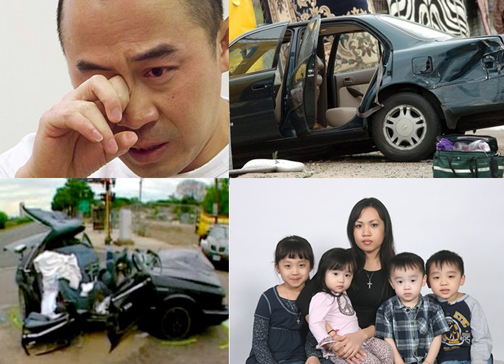
This man, Koua Fong Lee went to prison because of a DEFECTIVE TOYOTA.
There is no evidence that TOYOTA has corrected the DEFECT.
Instead, TOYOTA fought the Unanimous Jury Verdict.
That won’t happen again, Lentz vows.
In 2010, Lentz had responsibility only for the sales arm of Toyota in North America. Today he is CEO over all of Toyota’s divisions, and he wants everyone mixing and communicating at the new headquarters in Plano, which should be complete in 2017.
“If we have to react more quickly to rapid change, we better have an organization in place that will allow us to do that,” Lentz said.
‘They can’t rest’
Though an industry leader in revenue and profits, Toyota still has issues with its product line.
The company doesn’t have a subcompact crossover vehicle, one of the hottest segments in the industry, said Brauer of Kelley Blue Book.
And Toyota’s top-selling vehicle of any kind, the midsize Camry sedan, competes in a segment that is flattening out, while its Tundra full-size pickup doesn’t play at all, selling only about one-sixth the number of trucks that Ford does.
“Despite Toyota’s success over 40-plus years, they can’t rest on their laurels,” Brauer said.
Pat Lobb, who owns a large Toyota dealership in McKinney, said he and other dealers would love to have a hot halo car — like the late Toyota Supra — as well as a larger supply of trucks.
“Toyota is not always the first to a market,” said Lobb, who has been with Toyota in various capacities for 46 years. “But when they do get there, they’ve really done their homework.”
Fortunately, Toyota still enjoys loyal buyers and a strong image, Lobb said.
“They are making the best flavor of vanilla they can, and people are lapping it up,” said Jeff Bartlett, deputy editor of autos for Consumer Reports. “They are back almost where they were before 2010.”
But that’s no reason to rest, Lentz says. Even with what he has accomplished and dealt with over the last five years, Lentz insists that he’s not thinking much about retirement.
“It’s important for me to be able to say I’m adding value to the company,” he said. “I still love this business. I will decide when it’s time to go, when my replacement is ready and we can go on without skipping a beat.”
Jim Lentz
Title: CEO of Toyota North America and senior managing officer of parent company Toyota Motor Corp.
Age: 59
Years at Toyota: 33
Previous positions at Toyota: Group vice president and general manager of Toyota division; vice president and general manager of Los Angeles region; general manager, San Francisco region; field training manager; sales administration manager; truck-sales team member
Other jobs: Chairman of the board of directors for the Association of Global Automakers; member of executive advisory board for Daniels College of Business at the University of Denver
Education: Bachelor’s degree in marketing and economics, MBA in finance from the University of Denver
Residence: Westlake
Family: Married, two grown sons
Five facts about Jim Lentz
1. He makes 15 to 20 trips annually to Toyota’s corporate headquarters in Japan, taking commercial flights for the 13-hour, 6,500-mile trips.
2. He has a video conference facility at his home in Westlake so he can “meet” with executives in Japan and reduce some of his travel, though it means he must get up in the middle of the night because of time differences.
3. He never really aspired to be CEO when he was working his way up the ranks at Toyota. “When I would get asked in an interview, where do you want to be in five years, I never had an answer. I want to be a good employee. I want to add value.”
4. Though he’s a 70-hour-a-week CEO, Lentz doesn’t come into the office anymore on weekends, opting to work at home instead. “I do not come in to the office on weekends because I know others would feel the need to be here, and I don’t want that.”
5. He figures the car business will evolve into a “mobility” business. “Today, the business means private car ownership. Tomorrow it might be ride-sharing or even robots to help wounded veterans coming back home. It’s all about mobility, and we will have to find a way to make a business out of it.”