Search This Blog

Translate

Blog Archive

Middleboro Review 2

NEW CONTENT MOVED TO MIDDLEBORO REVIEW 2

Toyota

Since the Dilly, Dally, Delay & Stall Law Firms are adding their billable hours, the Toyota U.S.A. and Route 44 Toyota posts have been separated here:

Route 44 Toyota Sold Me A Lemon


Showing posts with label costs of global warming denial. Show all posts

Saturday, January 11, 2014

Thank Al Roker!

Climate Change is not a political issue and should not be held hostage to those perpetuating scientific ignorance.

Please add your name to stand up for science!


Sign the petition to thank Al Roker for standing up for scienceand smacking down climate denial.
Sign the thank you card to weathercaster Al Roker
TAKE ACTION


"Stuff it!"—that’s what veteran weathercaster Al Roker had to say to Rush Limbaugh’s climate-denying theories on the polar vortex.
 

Weathercasters attribute this week's bitter cold to the temporary breakdown of the polar vortex, an area of low-pressure air and gusting wind that’s usually centered over the Arctic. Though the concept may be new to most of us, "polar vortex" is a standard meteorological term—it’s science.
 
But for climate deniers, it's politically motivated conspiracy theories—not scientific facts—that rule the day. On Monday, Rush Limbaugh accused the mainstream media of concocting the term "polar vortex" to push the "leftist agenda" on climate change. Roker's response? On Wednesday’s "Today," he demonstrated that "polar vortex" is a bonafide scientific term and that skeptics like Limbaugh should "stuff it." He didn't stop there—after the show, he tweeted: "It's Meteorology 101. No political agenda."
 
 
Rush Limbaugh wasn’t the first denier to politicize weathercasting, and he won’t be the last. Climate change will continue to fuel severe weather in increasingly complex ways, and faux reporters like Limbaugh will spin counterintuitive weather patterns to sow doubt on manmade climate change—unless we push back.
 
What's one effective way to do that? By empowering responsible meteorologists like Roker to keep speaking out against the misinformation and putting science in the spotlight.
 
 
Factually yours,

Sylvie, Emily, Brant, Heidi, and the rest of the Forecast the Facts team

MORE INFORMATION

“Left creates ‘polar vortex’ to make you think winter is caused by global warming,” The Rush Limbaugh Show, 1-6-14


“The polar vortex is real! Al proves it,” The Today Show, 1-8-14


“Polar vortex blamed for dangerously cold weather,” NPR Morning Edition, 1-7-14
http://act.forecastthefacts.org/go/563?t=10&akid=313.64594.F17m9M

“What is this ‘polar vortex’ that is freezing the U.S.?,” Scientific American, 1-6-14
http://act.forecastthefacts.org/go/564?t=12&akid=313.64594.F17m9M


Forecast the Facts is a grassroots organization that empowers people to fight climate change denial and promote accurate information about the climate crisis. You can follow us on Twitter, and like us on Facebook. Help us end climate denial once and for all by contributing here.


Monday, January 6, 2014

This, That & Rand Paul, Lost in Space


Greg Palast added a new photo.

Sunday, January 5, 2014

Dear Donald Trump: Winter does not disprove global warming


Great rebuttal to the scientific ignorance about Global Warming....read the article in its entirety HERE


Dear Donald Trump: Winter does not disprove global warming
New Yorkers trudge through snow as Winter Storm Hercules approaches.
Roman Kruglov
Winter Storm Hercules approaches New York.
An intense blizzard, appropriately named Hercules, is blanketing the Northeast. Antarctic ice locked in a Russian ship containing a team of scientists — en route, no less, to do climate research. Record low temperatures have been seen in parts of the U.S., and in Winnipeg, temperatures on Dec. 31 were as cold as temperatures on … Mars.

So as is their seasonal wont, here come the climate skeptics. Exhibit A:


http://readersupportednews.org/off-site-opinion-section/60-60/21331-dear-donald-trump-winter-does-not-disprove-global-warming
The rest of RSN:
 
Matt Taibbi | Yuppie Prohibition League Denounces Pot Legalization
David Brooks and Ruth Marcus were critical of legalizing pot. (photo: William B. Plowman/Getty Images)
Matt Taibbi, Rolling Stone
Taibbi writes: "With all the other nonsense going on in this country, it's amazing (but of course expected) that anyone with other things to do would find the time to denounce Colorado's legal marijuana experiment."
READ MORE
Paul Krugman | Disinformation on Inequality
Paul Krugman, The New York Times
Krugman writes: "We could have a debate about whether rising inequality is a problem, and whether measures intended to curb it would do more harm than good. But we can't have that kind of debate if the anti-populist side won't acknowledge basic facts - and it won't."
READ MORE
Jonathan Chait | Republican Reform?
Jonathan Chait, New York Magazine
Chait writes: "If John Boehner's support for immigration reform is a kind of Prague Spring for the mainstream of the elected Republican Party, the equivalent among conservative intelligentsia can be found in the latest issue of National Affairs, which launches a double-barreled assault on conservative dogma."
READ MORE
6 Bill de Blasio Lines You'll Hear Again Between Now and 2016
Chris Cillizza, The Washington Post
Cillizza writes: "Given all of the emphasis on what de Blasio might mean for the Democratic party - and, in particular, the fight for the Democratic presidential nomination in 2016, it's worth looking through what he said in his inaugural address for hints of the rhetoric to come from Democrats."
READ MORE
Five Economic Reforms Millennials Should Be Fighting For
Jesse A. Myerson, Rolling Stone
Myerson writes: "It's a new year, but one thing hasn't changed: The economy still blows. Five years after Wall Street crashed, America's banker-gamblers have only gotten richer, while huge swaths of the country are still drowning in personal debt, tens of millions of Americans remain unemployed ..."
READ MORE


Tuesday, December 31, 2013

Ring of Mercury Contamination Around DIRTY CANADA TAR SANDS


The Dirty Energy Koch Brothers who brought you the Tea Party stand to enrich themselves further with Dirty Tar Sands, environment be damned!
This new tar sands finding is not surprising, but no less devastating. Read more here: http://alj.am/19BLOTA

SHARE if you agree: tar sands are bad for the climate, bad for the land, and bad for people. We're going to spend 2014 fighting them harder than ever.
 
 
Researchers have found a nearly 7,300-square-mile ring of land and water contaminated by mercury surrounding the tar sands in Alberta. Mercury levels were 16 ...times higher in the areas surrounding the tar sands operations. Read more about this important study here: http://america.aljazeera.com/articles/2013/12/29/7-500-mile-ring-ofmercuryfoundaroundcanadastarsands.html
 
 
The excavation of tar sands in Alberta is wrecking our climate, violating the rights of First Nation people and poisoning the air, water and land. LIKE and SHARE if it's time to stop this senseless destruction.See More

 
Blame this on DEREGULATION, slashing funding for oversight and inspection, obstructing government function, and allowing Big Corporations to govern.
"billowing flames and smoke that resembled a mushroom cloud." Thankfully no one was hurt, but can we please stop hauling tar sands oil by pipeline AND by rail?

Monday, December 30, 2013

Former BP Geologist: Peak Oil Is Here and It Will 'Break Economies'

Our focus should be on renewable sources of energy and would be were it not for the Regressive Party and their wealthy Dirty Energy Patrons like the Kochs.


File photo, gas station. (photo: Getty Images)

Former BP Geologist: Peak Oil Is Here and It Will 'Break Economies'

By Nafeez Ahmed, Guardian UK
27 December 13

Industry expert warns of grim future of 'recession' driven 'resource wars' at University College London lecture

former British Petroleum (BP) geologist has warned that the age of cheap oil is long gone, bringing with it the danger of "continuous recession" and increased risk of conflict and hunger.
At a lecture on 'Geohazards' earlier this month as part of the postgraduate Natural Hazards for Insurers course at University College London (UCL), Dr. Richard G. Miller, who worked for BP from 1985 before retiring in 2008, said that official data from the International Energy Agency (IEA), US Energy Information Administration (EIA), International Monetary Fund (IMF), among other sources, showed that conventional oil had most likely peaked around 2008.
 
Dr. Miller critiqued the official industry line that global reserves will last 53 years at current rates of consumption, pointing out that "peaking is the result of declining production rates, not declining reserves." Despite new discoveries and increasing reliance on unconventional oil and gas, 37 countries are already post-peak, and global oil production is declining at about 4.1% per year, or 3.5 million barrels a day (b/d) per year:
"We need new production equal to a new Saudi Arabia every 3 to 4 years to maintain and grow supply... New discoveries have not matched consumption since 1986. We are drawing down on our reserves, even though reserves are apparently climbing every year. Reserves are growing due to better technology in old fields, raising the amount we can recover - but production is still falling at 4.1% p.a. [per annum]."
Dr. Miller, who prepared annual in-house projections of future oil supply for BP from 2000 to 2007, refers to this as the "ATM problem" - "more money, but still limited daily withdrawals." As a consequence: "Production of conventional liquid oil has been flat since 2008. Growth in liquid supply since then has been largely of natural gas liquids [NGL]- ethane, propane, butane, pentane - and oil-sand bitumen."
 
Dr. Miller is co-editor of a special edition of the prestigious journal, Philosophical Transactions of the Royal Society A, published this month on the future of oil supply. In an introductory paper co-authored with Dr. Steve R. Sorrel, co-director of the Sussex Energy Group at the University of Sussex in Brighton, they argue that among oil industry experts "there is a growing consensus that the era of cheap oil has passed and that we are entering a new and very different phase." They endorse the conservative conclusions of an extensive earlier study by the government-funded UK Energy Research Centre (UKERC):
"... a sustained decline in global conventional production appears probable before 2030 and there is significant risk of this beginning before 2020... on current evidence the inclusion of tight oil [shale oil] resources appears unlikely to significantly affect this conclusion, partly because the resource base appears relatively modest."
In fact, increasing dependence on shale could worsen decline rates in the long run:
"Greater reliance upon tight oil resources produced using hydraulic fracturing will exacerbate any rising trend in global average decline rates, since these wells have no plateau and decline extremely fast - for example, by 90% or more in the first 5 years."
Tar sands will fare similarly, they conclude, noting that "the Canadian oil sands will deliver only 5 mb per day by 2030, which represents less than 6% of the IEA projection of all-liquids production by that date."
 
Despite the cautious projection of global peak oil "before 2020", they also point out that:
"Crude oil production grew at approximately 1.5% per year between 1995 and 2005, but then plateaued with more recent increases in liquids supply largely deriving from NGLs, oil sands and tight oil. These trends are expected to continue... Crude oil production is heavily concentrated in a small number of countries and a small number of giant fields, with approximately 100 fields producing one half of global supply, 25 producing one quarter and a single field (Ghawar in Saudi Arabia) producing approximately 7%. Most of these giant fields are relatively old, many are well past their peak of production, most of the rest seem likely to enter decline within the next decade or so and few new giant fields are expected to be found."
"The final peak is going to be decided by the price - how much can we afford to pay?", Dr. Miller told me in an interview about his work. "If we can afford to pay $150 per barrel, we could certainly produce more given a few years of lead time for new developments, but it would break economies again."
 
Miller argues that for all intents and purposes, peak oil has arrived as conditions are such that despite volatility, prices can never return to pre-2004 levels:
"The oil price has risen almost continuously since 2004 to date, starting at $30. There was a great spike to $150 and then a collapse in 2008/2009, but it has since climbed to $110 and held there. The price rise brought a lot of new exploration and development, but these new fields have not actually increased production by very much, due to the decline of older fields. This is compatible with the idea that we are pretty much at peak today. This recession is what peak feels like."
Although he is dismissive of shale oil and gas' capacity to prevent a peak and subsequent long decline in global oil production, Miller recognises that there is still some leeway that could bring significant, if temporary dividends for US economic growth - though only as "a relatively short-lived phenomenon":
"We're like a cage of lab rats that have eaten all the cornflakes and discovered that you can eat the cardboard packets too. Yes, we can, but... Tight oil may reach 5 or even 6 million b/d in the US, which will hugely help the US economy, along with shale gas. Shale resources, though, are inappropriate for more densely populated countries like the UK, because the industrialisation of the countryside affects far more people (with far less access to alternative natural space), and the economic benefits are spread more thinly across more people. Tight oil production in the US is likely to peak before 2020. There absolutely will not be enough tight oil production to replace the US' current 9 million b/d of imports."
In turn, by prolonging global economic recession, high oil prices may reduce demand. Peak demand in turn may maintain a longer undulating oil production plateau:
"We are probably in peak oil today, or at least in the foot-hills. Production could rise a little for a few years yet, but not sufficiently to bring the price down; alternatively, continuous recession in much of the world may keep demand essentially flat for years at the $110/bbl price we have today. But we can't grow the supply at average past rates of about 1.5% per year at today's prices."
The fundamental dependence of global economic growth on cheap oil supplies suggests that as we continue into the age of expensive oil and gas, without appropriate efforts to mitigate the impacts and transition to a new energy system, the world faces a future of economic and geopolitical turbulence:
"In the US, high oil prices correlate with recessions, although not all recessions correlate with high oil prices. It does not prove causation, but it is highly likely that when the US pays more than 4% of its GDP for oil, or more than 10% of GDP for primary energy, the economy declines as money is sucked into buying fuel instead of other goods and services... A shortage of oil will affect everything in the economy. I expect more famine, more drought, more resource wars and a steady inflation in the energy cost of all commodities."
According to another study in the Royal Society journal special edition by professor David J. Murphy of Northern Illinois University, an expert in the role of energy in economic growth, the energy return on investment (EROI) for global oil and gas production - the amount of energy produced compared to the amount of energy invested to get, deliver and use that energy - is roughly 15 and declining. For the US, EROI of oil and gas production is 11 and declining; and for unconventional oil and biofuels is largely less than 10. The problem is that as EROI decreases, energy prices increase. Thus, Murphy concludes:
"... the minimum oil price needed to increase the oil supply in the near term is at levels consistent with levels that have induced past economic recessions. From these points, I conclude that, as the EROI of the average barrel of oil declines, long-term economic growth will become harder to achieve and come at an increasingly higher financial, energetic and environmental cost."
Current EROI in the US, Miller said, is simply "not enough to support the US infrastructure, even if America was self-sufficient, without raising production even further than current consumption."
In their introduction to their collection of papers in the Royal Society journal, Miller and Sorrell point out that "most authors" in the special edition "accept that conventional oil resources are at an advanced stage of depletion and that liquid fuels will become more expensive and increasingly scarce." The shale revolution can provide only "short-term relief", but is otherwise "unlikely to make a significant difference in the longer term."
 
They call for a "coordinated response" to this challenge to mitigate the impact, including "far-reaching changes in global transport systems." While "climate-friendly solutions to 'peak oil' are available" they caution, these will be neither "easy" nor "quick", and imply a model of economic development that accepts lower levels of consumption and mobility.
 
In his interview with me, Richard Miller was particularly critical of the UK government's policies, including abandoning large-scale wind farm projects, the reduction of feed-in tariffs for renewable energy, and support for shale gas. "The government will do anything for the short-term economic bounce," he said, "but the consequence will be that the UK is tied more tightly to an oil-based future, and we will pay dearly for it."
 
 
The rest from RSN:
 
Elizabeth Warren | Protect, Expand Social Security
Senator Elizabeth Warren. (photo: Steve Pope/Getty Images)
Elizabeth Warren, Reader Supported News
Warren writes: "One major consequence of these increasing pressures on working people is that the dream of a secure retirement is slowly slipping away."
READ MORE
US Judge Says NSA Phone Data Program Is Lawful
Jonathan Stempel, Reuters
Excerpt: "A U.S. judge ruled the National Security Agency's program that collects records of millions of Americans' phone calls is lawful, rejecting a challenge by the American Civil Liberties Union to the controversial counter-terrorism program."
READ MORE
Obama Signs NDAA 2014, Indefinite Detention Remains
Natasha Lennard, Salon
Lennard writes: "The troubling NDAA provision first signed into law in 2012, which permits the military to detain individuals indefinitely without trial, remains on the books for 2014."
READ MORE
There's an Alarming Number of Deaths in US Jails
Cara Tabachnick, Guardian UK
Tabachnick writes: "There is great hesitancy on the part of security to address sick complaints as seriously as they should be, especially in jail where the churn of people is endless, with most disappearing quickly."
READ MORE
Obama Signs Bill to Combat Sexual Assault in the Military
Carimah Townes, ThinkProgress
Townes reports: "The day after Christmas, President Obama signed a defense bill with provisions to curb sexual assault in the U.S. military."
READ MORE
Medea Benjamin | 10 Good Things About the Year 2013
Medea Benjamin, Pink Tank
Benjamin writes: "It's also been a year of extraordinary activism: whistleblowers, DREAMers, Walmart workers, peacemakers, gay rights advocates, garment workers."
READ MORE

Sunday, December 22, 2013

Billionaire Conservatives Spend Up To $1bn A Year To Fight Climate Science

CounterCurrents offered 2 great articles about Climate Change that are well worth reading, including great graphs.

Revealing the hidden funding should make every reasonable person question their beliefs.


Dear Friend,

If you think the content of this news letter is critical for the dignified living and survival of humanity and other species on earth, please forward it to your friends and spread the word. It's time for humanity to come together as one family! You can subscribe to our news letter here http://www.countercurrents.org/subscribe.htm. You can also follow us on twitter, http://twitter.com/countercurrents and on Facebook, http://www.facebook.com/countercurrents

In Solidarity
Binu Mathew
Editor
www.countercurrents.org 

Billionaire Conservatives Spend Up To $1bn A Year To Fight Climate Science
By Countercurrents.org

http://www.countercurrents.org/cc221213.htm

Not only well-known conservative foundations the largest and most consistent funders behind the climate denial campaign but the majority of donations are "dark money," or concealed funding. A new study by Drexel University 's environmental sociologist Robert J. Brulle, PhD unravels the systematic efforts to discredit climate science. The first extensive study into the anatomy of the anti-climate effort found the conservative groups may have spent up to $1bn a year on the effort to deny science and oppose action on climate crisis.....


Key findings of the study include:
  • Conservative foundations have bank-rolled denial. The largest and most consistent funders of organizations orchestrating climate change denial are a number of well-known conservative foundations, such as the Searle Freedom Trust, the John William Pope Foundation, the Howard Charitable Foundation and the Sarah Scaife Foundation. These foundations promote ultra-free-market ideas in many realms.
  • Koch and ExxonMobil have recently pulled back from publicly visible funding. From 2003 to 2007, the Koch Affiliated Foundations and the ExxonMobil Foundation were heavily involved in funding climate-change denial organizations. But since 2008, they are no longer making publicly traceable contributions.
  • Funding has shifted to pass through untraceable sources. Coinciding with the decline in traceable funding, the amount of funding given to denial organizations by the Donors Trust and Donors Capital has risen dramatically. Donors Trust is a donor-directed foundation whose funders cannot be traced. This one foundation now provides about 25% of all traceable foundation funding used by organizations engaged in promoting systematic denial of climate change.
  • Most funding for denial efforts is untraceable. Despite extensive data compilation and analyses, only a fraction of the hundreds of millions in contributions to climate change denying organizations can be specifically accounted for from public records. Approximately 75% of the income of these organizations comes from unidentifiable sources.


Climate Change And The Rise And Fall Of Civilizations
By Emily Sohn

http://www.countercurrents.org/cc221213A.htm

As scientists dig in to ancient sites, they are turning up evidence that changes in climate – both large and small – are at least partly responsible for the rise and fall of many ancient civilizations. Even though Ubar is now located in one of the driest places on Earth, the region was once much wetter and full of underground water sources. Ubar disappeared when water levels dipped so low that a sinkhole formed and enveloped the outpost


A Militarily Resurging Russia
By Farooque Chowdhury

http://www.countercurrents.org/chowdhury221213.htm

A militarily resurging Russia is giving a new twist to global geopolitical game


Are 9/11 Truthers Anti-Semites? An Interview With Elias Davidsson
By Dr. Ludwig Watzal

http://www.countercurrents.org/watzal221213.htm

Elias Davidsson is one of these “truthers” who challenges the official narrative on 9/11. He is also concerned about the claim made by some “truthers” that Israel was behind the attacks. He is not, by any means, a sympathizer of Israel . On the contrary, as his writings demonstrate, he not only denounces the oppressive policies of the State of Israel against the Palestinians, but considers that state as inherently dangerous for its neighbors


Kashmir And The Heartless Generals
By Abdul Majid Zargar

http://www.countercurrents.org/zargar221213.htm

Following BJP’s Prime Ministerial Candidate, Modi’s suggestion to have a debate on Article 370 in Jammu’s Lallkar rally, many articles have appeared in the Indian print media- some in praise & few in denouncement . A common feature in these articles, however is the betrayal of collective amnesia by writers about the history of word “Temporary” appearing before the article


Maruti Suzuki Workers' Protest Continues
By Maruti Suzuki Workers Union

http://www.countercurrents.org/mswu221213.htm

To renew demand for the release of the 148 arrested workers who are in jail for more than 17 months without bail, to press the reinstatement of illegally terminated 2300 workers, Maruti Suzuki workers and their families sat on a day-long mass hunger strike in front of the Gurgaon DC Office and District Court.

Saturday, November 30, 2013

When do we say NO! to DIRTY COAL?


Is coal becoming a bad investment? (photo: Jonathan McIntosh/Rainforest Action Network)

go to original article

Global Outrage at Dirty Coal Threatens Investors' Profits


By Juan Cole, Informed Comment
23 November 13
he divestment movement on US college campuses against Big Carbon (coal, oil and gas) signals more than just the arrival of a new, determined and idealistic generation of students. It is a harbinger of danger for investors.

In addition to the keen competition thermal coal is facing as a source for electricity generation from fracked natural gas and from wind turbines, coal in particular faces a major public relations problem. It is the dirtiest way of producing electricity, causing lung problems and probably contributing to autism via mercury emissions, and it is the major cause of global warming.

The value of coal stocks is to outward seeming backed by trillions of dollars in coal reserves, but what if that substance is actually worthless? Coal is already being shorted by a major brokerage, which points out that even heavily coal-dependent China plans to move away from the fuel because of pollution concerns (like that coal plants are making the air thick as pea soup and giving small children lung cancer).

Canada's major Ontario province (as populous as Illinois) is banning coal plants, with the last one to be closed by the end of this year. Wind, nuclear and natural gas have taken coal's place. Wind and nuclear do not produce C02, and natural gas produces about half as much as coal. The feed-in tariff has also been important in encouraging renewables.

Local politicians are beginning to win races with an anti-coal platform, showing the sea change in public attitudes.

The pro-Carbon right wing government of Australia is facing growing public anti-coal protests.

Proposals for new coal plants are meeting with public opposition. Moreover, investors in companies planning to invest in coal-related projects are beginning openly to ask how they intend to secure the projects against sabotage by environmental activists. Since coal is destroying the earth, some people may mind it being mined and burned.

So many coal plants are closing in places like Massachusetts that communities are trying to replace the income by asking for redevelopment help. Even proponents of coal and its profits admit that the plants made local residents sick (can you say "black lung"?)

The dangers of coal ash are also increasingly being recognized by activists. Most people don't stop to think that most coal gets around by rail, and that the rail cars carrying it are emitting coal dust and dangerous substances such as arsenic.

India is now witnessing the stirrings of a nation-wide anti-coal movement that is protesting in cities across the country. Even not counting climate change impacts and sea level rise that will menace Bengal, Indian coal plants kill 120,000 people a year.

As with tobacco, where consumer lawsuits gradually began succeeding as judges and juries came to recognize that the substance causes cancer and that the companies had tried to obscure the dangers, so too with coal, consumers damaged by its burning may before too long be able to collect damages. Indeed, in the US, the Sierra Club has had some success in closing coal plants through law suits pointing out that they are in contravention of environmental laws (they are very dirty and put out loads of toxins in addition to their fatal carbon dioxide pollution).

They college students urging disinvestment may be wiser than we realize. Universities that hold stock in coal companies may be victims of a Madoff hoax- the collateral backing their value, coal itself, may be worthless or worst, it may be a legal liability. Universities and other investors would be wise to get out of those stocks before this fact comes to be generally recognized.
http://readersupportednews.org/opinion2/271-38/20579-focus-global-outrage-at-dirty-coal-threatens-investors-profits-


From the Environmental devastation caused by Mountaintop Removal....


to Coal Ash Spills like the TVA spill....


or the Lake Michigan Coal Ash spill....


or this COAL ASH SPILL....


...TO THE DIRTY AIR......


COAL IS DIRTY!


National Security Threat Posed By Global Warming


For understandable reasons, certain threats posed by climate change resonate with some people more than others. Do you think a threat to national security will make more people care?
 

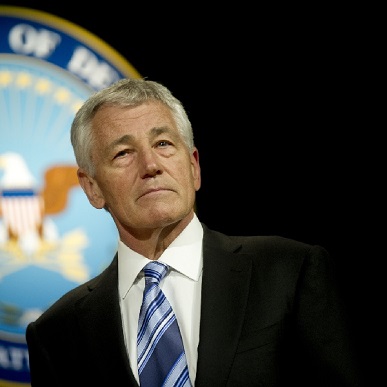
Defense Secretary Hagel reaffirms climate change, sustainability are central military concerns


DoD photo by Mass Communication Specialist 1st Class Chad J. McNeeley/Released

It may come as a surprise to many Americans that the U.S. military is deeply committed to addressing the threat of climate change and developing renewable energy sources. That’s what Secretary of Defense Chuck Hagel spoke about on Friday at the Halifax International Security Forum in Nova Scotia, where he assured the audience the emerging impacts of climate change on national security are a priority.
“Climate change does not directly cause conflict, but it can add to the challenges of global instability, hunger, poverty, and conflict,” Hagel said. “Food and water shortages, pandemic disease, disputes over refugees and resources, more severe natural disasters – all place additional burdens on economies, societies and institutions around the world.”
The military’s concern about climate change is not new – a 2006 report issued by eleven retired admirals and generals, for example, warned climate change threatened Amerca’s national security. It is also not a partisan issue – Thomas Fingar, who served as chairman of President Bush’s National Intelligence Council, warned climate change “will have wide-ranging implications for US national security interests over the next 20 years.”
But Hagel’s speech Friday was a reminder that climate change and renewable energy are very real concerns affecting military strategy not just in the future, but right now. Environmentalists often discuss climate change and sustainability in terms of how we can preserve the planet’s resources for the benefit of future generations. But military planners, meanwhile, must consider the impacts a melting Arctic will have on national security. And they have been investing in renewable and efficient energy for years because it allows them to be stronger and more secure. Hagel gave some recent highlights about their progress:
  • Afghanistan combat outposts are using tactical solar gear, which last year allowed them to keep 20 million gallons of fuel off the battlefield.
  • Also last year, the U.S. Air Force developed and implemented more efficient routes that saved them $1.5 billion.
  • Private sector investments on Department of Defense installations are expected to generate 3,000 megawatts of renewable energy by 2025.
Hagel should be commended for bringing attention to an issue that rarely receives enough, especially in the environmental movement. For understandable reasons, certain threats posed by climate change resonate with some people more than others. The thought of food shortages in third world countries, or rising sea levels, or dying polar bears is more than enough to make the average, card-carrying “green” person want to stand up and take action to save the planet.
But while climate change is of course an environmental threat, it is also a security threat. It’s important to remember that if we’re going to take comprehensive action in the fight against climate change, we’ll need support from more than the traditional allies of the movement. Reminding such potential supporters that the U.S. military worries about climate change too might be one good way to do it.
You might also enjoy:


http://www.edf.org/blog/2013/11/24/defense-secretary-hagel-reaffirms-climate-change-sustainability-are-central-military?utm_source=facebook&utm_medium=social-media&utm_campaign=KC


Tuesday, November 26, 2013

The greatest single threat facing the planet.....

Too many simply don't 'get it'!
Phytoplankton are half of the organic matter produced on Earth.


vvvvv
The fight back against Australia's climate denial.


Did you hear about the actions against UBS on Monday telling them to stop funding mountaintop removal coal mining in Appalachia? 14 people were arrested doing these amazing banner drops, and stunts, and 8 are still in jail as of Tuesday afternoon.

Please SHARE the story of these courageous activists.

You can also help get them out of jail by donating to their legal fund here: http://bit.ly/Ltg4zF Their court date isn't until January 8th, so let's help get them out before that!

Check out our page for more amazing photos and information about Monday's actions.
 
 
Did you hear about the actions against @[218020061613734:274:UBS] on Monday? 14 people were arrested, and 8 are still in jail as of Tuesday afternoon.

Please SHARE the story of these courageous activists.

You can also help us get them out of jail by donating to their legal fund here: http://bit.ly/Ltg4zF Their court date isn't until January 8th, so let's help get them out before that!

Check out our page for more amazing photos and information about Monday's actions.
Did you hear about the actions against UBS on Monday? 14 people were arrested, and 8 are still in jail as of Tuesday afternoon. Please SHARE the story of these... courageous activists. You can also help us get them out of jail by donating to their legal fund here: http://bit.ly/Ltg4zF Their court date isn't until January 8th, so let's help get them out before that! Check out our page for more amazing photos and information about Monday's actions.See More