Search This Blog

Translate

Blog Archive

Middleboro Review 2

NEW CONTENT MOVED TO MIDDLEBORO REVIEW 2

Toyota

Since the Dilly, Dally, Delay & Stall Law Firms are adding their billable hours, the Toyota U.S.A. and Route 44 Toyota posts have been separated here:

Route 44 Toyota Sold Me A Lemon


Showing posts with label higher education. Show all posts

Monday, August 5, 2019

America Is Divided by Education
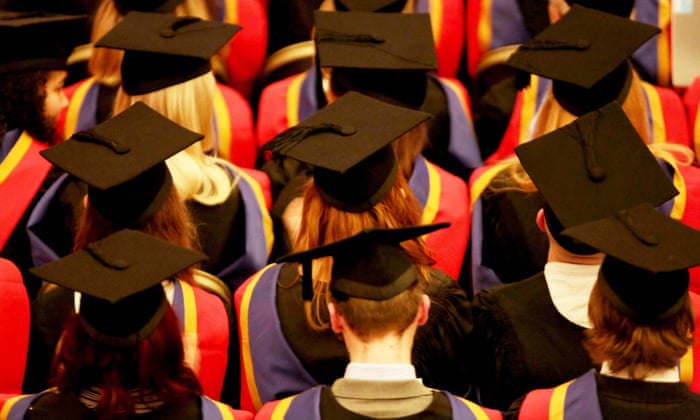


Image result for mortar board = DEM VOTER


'I love the poorly educated': why white college graduates are deserting Trump


America Is Divided by Education

The gulf between the party identification of white voters with college degrees and those without is growing rapidly. Trump is widening it.


One of the most striking patterns in yesterday’s election was years in the making: a major partisan divide between white voters with a college degree and those without one.

According to exit polls, 61 percent of non-college-educated white voters cast their ballots for Republicans while just 45 percent of college-educated white voters did so. Meanwhile 53 percent of college-educated white voters cast their votes for Democrats compared with 37 percent of those without a degree.

The diploma divide, as it’s often called, is not occurring across the electorate; it is primarily a phenomenon among white voters. It’s an unprecedented divide, and is in fact a complete departure from the diploma divide of the past. Non-college-educated white voters used to solidly belong to Democrats, and college-educated white voters to Republicans. Several events over the past six decades have caused these allegiances to switch, the most recent being the candidacy, election, and presidency of Donald Trump.


Last night’s results confirm that the diploma divide is likely here to stay—especially if the GOP maintains its alignment with Trump and the nationalist, anti-immigrant sentiments he hangs his hat on. The gap is likely to be one of the most powerful forces shaping American politics for decades to come.

The democratic and republican Parties looked a lot different in 1952, when the American National Election Studies—surveys of voters conducted before and after presidential elections—were in their infancy. The Republicans, to some extent, were still regarded as the party of Lincoln, even though they had shifted their focus to courting southern white voters, causing black people to leave the party. Meanwhile, the Democrats were the party of a coalition that pushed for social services—the party of the New Deal. There were far fewer college-educated Americans at the time, but the white Americans who did have degrees tended to vote Republican, and those who didn't sided with the Democrats by a significant margin.

This split was relatively stable for decades and then, steadily, it began to change. “The shift in whites without a college degree away from the Democratic Party begins as the Democratic Party becomes identified as the party of civil rights,” starting in the 1960s, Robert P. Jones, the CEO of the Public Religion Research Institute, told me. Disaffected white southern Democrats, in particular, fled in droves.

Party realignment doesn't happen overnight. Just because some voters swing across the aisle in one election doesn't mean they’ll quit the party they've identified with their entire lives. Still, strong support for the Democrats among whites without a college degree, borne out of economic incentives—and racial resentment—began to wane. In their book, The Rise of Southern Republicans, the scholars Merle Black and Earl Black call this shift the “Great White Switch.”

From the mid-1990s to 2008, the diploma divide was small, if not negligible. Even though the Democrats had become the party of civil rights and a broad, multicultural coalition, they were also still the party of unions, which were largely made up of non-degree-holding whites. Therefore, white people with and without college degrees were equally as likely to be Democrats or Republicans.

But in 2008, the election of Barack Obama, a black man, signaled that the Democrats were becoming the party of progressive racial politics. “Obama’s presidency simplifies the politics of race,” Michael Tesler, an associate professor of political science at UC Irvine, says. “If you were a low-educated white, you were much more likely to know about the partisan differences on race [after Obama] than you were before.”

That change didn’t show up in the party-affiliation data right away, but that’s common, Tesler says. It often takes more than one election for people to switch their party identification. But by 2012, white voters without a college degree were distinctly more likely to vote Republican than those with college degrees.

Read: The women who gave Trump the White House could tip the midterms to Democrats


In the 2016 election, 48 percent of college-educated white voters voted for Trump, compared with 66 percent of non-college-educated white voters. A Marist poll in October of this year found that 55 percent of non-college-educated white voters approved of the job Trump was doing, compared with just 39 percent of college-educated white voters. When Supreme Court Justice Brett Kavanaugh squeaked through a Senate confirmation hearing with a sexual assault allegation in tow, 54 percent of non-college-educated white voters supported him, compared with 38 percent who had gone to college. And the partisan diploma divide held steady last night, reflecting a divide in values between those with degrees and those without.

There’s a question that splits Americans neatly in two. Every year, on its American Values Survey, the Public Religion Research Institute asks Americans whether they “think American culture and way of life has mostly changed for the better, or has it mostly changed for the worse,” since the 1950s. 

Fifty percent of Americans say that it’s gotten better in this year’s poll, and 47 percent say that it has gotten worse.

But for white voters, the answer to that question is split by education level. Fifty-eight percent of college-educated whites this year say that America has gotten better since 1950, while 57 percent of non-college-educated whites say that it’s gotten worse. When President Trump says “Make America great again,” the againis instructive. He’s capitalizing on the nostalgia that non-college-educated white voters have for America’s past. “That harkening back to a supposed golden age where things were better has a really, really strong appeal for whites without a college degree,” Jones said.

That nostalgia, however, is for a time when black Americans and other minority groups had significantly fewer civil rights. And a Republican rhetoric that centers a longing for an era of white prosperity, rife with racist violence against black people, is why it’s impossible to understand the diploma divide without accounting for racial resentment. Needless to say, black Americans and other minority groups aren’t as keen on returning to the past.

When researchers control for voter attitudes on race in addition to white voters’ education level, Tesler says, the diploma divide disappears. No other factor, he says, explains the education gap as well—not economic anxiety, ideology, income, or gender.

David N. Smith, a professor at the University of Kansas, came to a similar conclusion when he and Eric Hanley took a dive into the 2016 American National Election Survey. They found that demographic data such as education are important predictors of which party someone votes for. But “when you bring the attitudes variables into account as well, what emerges is that attitudes loom even larger than demographics,” he told me.

Here’s how he put it: If you look at white people who voted for Trump—both those with college degrees and those without—and identify everybody with a high level of resentment toward minorities, women, and Muslims, as well as those who want an arrogant, assertive leader, there’s almost no one left. The vast majority of Trump voters share those sentiments, the researchers found, regardless of education level.

The GOP has come around to Trump. As my colleague McKay Coppins wrote, “Trump’s conquest of the Republican Party is complete, and the former ‘fringe’ has become so thoroughly intertwined with the ‘establishment’ that the two are virtually indistinguishable.”

The growing diploma divide is less a result of non-college-educated white voters becoming Republicans, and more of college-educated white voters finding that they can’t fully support the party anymore. “What's happened since 2016 is that the low-educated whites have kind of plateaued in their support for the Republicans,” Tesler says. “But you've seen this trend increase [of] high-educated whites [moving] towards the Democrats.”

Smith told me that from 2015 to 2017, the Weidenbaum Center at Washington University in St. Louis conducted a monthly panel survey—where the same statistically significant number of people are interviewed each month—that cataloged Republican attitudes toward Republican candidates. Over time, those who supported Ted Cruz, who called Trump a “sniveling coward” during the campaign, and those who supported Marco Rubio, who called him a “con man,” tended to come around to Trump.

But the voters that stand out, Smith said, are those who initially supported John Kasich. “They, in many instances, agree with Trump on policy issues, but the best data indicates that they are uncomfortable with him personally,” he said. “There are key aspects of his rhetorical style, of his governing style, that they don't like.”

Kasich has been on a crusade in recent weeks combatting the Republican rhetoric around the migrant caravan. “The Lord doesn’t want” America to build walls around around itself, he told CNN. And that wasn’t the first time he’d expressed concern about the state of the Republican party, and its rhetoric, as it has inched closer and closer to Trump. “If the party can't be fixed,” Kasich told Jake Tapper in October 2017, “then I’m not going to be able to support the party. Period. That's the end of it.”

Jones argues that the logic is simple. “The risk that the Republican Party runs by becoming the party that’s opposed to immigration, that’s worried about the country becoming more diverse,” he said, “is that they will turn off college-educated whites.”

But the consequences of the diploma divide are not just evident in the demographics on Election Day. Hidden in that gap is a threat to higher education itself. Last year, Pew issued a sobering survey. 

“Republicans have soured on higher education,” the survey declared, and it threw people into a frenzy.

Sixty-seven percent of Republicans, the survey found, had “some” to “little” confidence in colleges as institutions. A number of factors contribute to this distrust, the rising cost of tuition and the perception of a liberal bent at colleges among them. And if one major party believes that higher education is an engine of liberal indoctrination, and that party’s voters are increasingly likely not to have attended college, the political benefits of an anti–higher education stance are obvious.

That puts the budget lines for public colleges, in particular, at risk. Decades of funding cuts by state governments have already hit the institutions hard. And these cuts, in turn, have driven an increase in tuition costs and more animosity toward higher education. As Michael Grunwald recently wrote in Politico, “The next big Republican culture war will be a war on college.”

As the Republican party continues to cozy up to Trump, whose political career began by questioning the legitimacy of the first black president, and who rests his laurels on hostile anti-immigrant sentiments, more moderate Republicans—who, often, are college educated—will likely continue to flee. And the GOP will have even less of a reason to try to cater to the college set, or to embrace higher education–friendly policies. The diploma divide is wide, and the closer Republicans embrace Trump, the wider it may get.


LINK


Wednesday, July 10, 2019

FOCUS: Bernie Sanders | America Is Drowning in Student Debt. Here's My Plan to End It


Reader Supported News
10 July 19

Where RSN Gets Killed
Today as of 10:00am we have had 12,811 visitors and 3 donations.
You know that can’t work.
What will you do?
Marc Ash
Founder, Reader Supported News
Sure, I'll make a donation!

Update My Monthly Donation

If you would prefer to send a check:
Reader Supported News
PO Box 2043
Citrus Hts
CA 95611


Reader Supported News
10 July 19
It's Live on the HomePage Now:
Reader Supported News


Bernie Sanders. (photo: Scott Eisen/Getty)
Bernie Sanders, Fortune
Sanders writes: "A decade ago, America committed trillions of dollars to bail out Wall Street banks, whose greed had cratered the economy. Now, it is time to commit a fraction of that to cancel the student debt that is crushing 45 million Americans and dragging down our economy."
READ MORE


Thursday, March 7, 2019

POLITICO Massachusetts Playbook: HIGHER ED shake-up — BAKER bets on WIND — PRESSLEY says lower voting age


HIGHER ED shake-up — BAKER bets on WIND — PRESSLEY says lower voting age


Mar 07, 2019View in browser
 
Massachusetts Playbook logo
GOOD MORNING, MASSACHUSETTS.
WHAT TO DO ABOUT HIGHER ED — We've got around 114 institutions of higher education in Massachusetts, and they're an economic driver for more than 100 municipal economies. The industry employs around 125,000 people.
But as higher ed braces for what will likely be a major contraction over the next decade nationally, officials are trying to chart the next moves here in the Bay State.
As UMass President Marty Meehan put it at his State of the University address earlier this week, it's a case of supply and demand. Fewer kids were born around 2008, so fewer students are projected to enroll in colleges over the next decade. That means closures and mergers are on the horizon, especially at small, private schools with big price tags.
We're already seeing first-hand what small college closures look like here in New England. Southern Vermont College just announced it will close down this spring, the Pioneer Valley's Hampshire College is looking for a partner to keep it afloat, and students are still reeling from Mount Ida's abrupt closure last year.
So what's the next step? Charlie Baker filed a bill yesterday afternoon that would require colleges in financial trouble to alert the Board of Higher Education and submit a contingency plan for notifying current and admitted students and staff. The board could also sanction institutions that don't comply with requirements under the bill, and information submitted would be exempt from public records law, according to Baker's office.
Meanwhile, UMass Chairman Robert Manning said it's likely UMass will acquire several institutions over the next decade, according to theBoston Business Journal. Case in point: emails show Hampshire College had looked at UMass as a potential partner last fall.
And while UMass could stand to benefit from more students choosing an in-state public school as a result of this larger landscape shift, Meehan also wants to ramp up UMass' online offerings. He announced a new online college earlier this week, and plans for the university to grow in a market that's dominated by Southern New Hampshire University. SNHU boasts more than 90,000 online learners — that's more than the 75,000 students enrolled across the UMass system, and more than the entire population of Somerville.
Have a tip, story, suggestion, birthday, anniversary, new job, or any other nugget for the Playbook? Get in touch: smurray@politico.com.
TODAY — Gov. Charlie Baker highlights his road safety bill at the AAA Boston office. Lt. Gov. Karyn Polito attends a Worcester County Bar Association breakfast and attends a community compact discussion in Maynard with state Rep. Kate Hogan.
Rep. Katherine Clark introduces a bill that would require the U.S. State Department to include reproductive rights in its annual human rights report. Boston Mayor Marty Walsh speaks at a Boston Municipal Research Bureau luncheon. State Rep. Paul Tucker and Middlesex Sheriff Peter J. Koutoujian celebrate the anniversary of the People Achieving Change Together program. The Senate meets in formal session.
DATELINE BEACON HILL
- "Baker, T board members at odds on revenue strategy," by Bruce Mohl, CommonWealth Magazine: "GOV. CHARLIE BAKER and several of his appointees to the MBTA oversight board appear to be at odds over whether a T fare increase should be accompanied by hikes in fees and charges on other forms of transportation. The issue first surfaced on Monday at a meeting of the Fiscal and Management Control Board, where director Brian Lang said he didn't think a fare increase should take place in isolation. He said fares may need to go up, but that action should be accompanied by other revenue-raising measures, including higher fees on ride-hailing apps such as Uber and Lyft, an increase in the gas tax, or congestion toll pricing."
- "Governor Baker touts promise of wind power, new technology," by David Abel, Boston Globe: "New York recently set a long-term goal of generating 9,000 megawatts of energy from offshore wind power, while New Jersey plans to build 3,500 megawatts. But Massachusetts is seeking to produce just 1,600 megawatts, a target critics say is too modest. Some environmentalists had hoped that Governor Charlie Baker would announce a loftier goal Wednesday at a forum in Boston about the future of offshore wind power. Instead, Baker spoke more broadly about his administration's efforts to bring the nation's first large-scale offshore wind farm to the waters off Martha's Vineyard, a project that could begin by year's end."
- "Baker pushes for tougher pre-trial detention law," by Christian M. Wade, Salem News: "Gov. Charlie Baker cites the possible release on bail of a Lawrence police officer charged with raping a teenage boy as he makes the case for a proposal to keep potentially dangerous criminal defendants locked up as they await trial."
- "Baker wants increased state oversight of private colleges," by Laura Krantz, Boston Globe: "Governor Charlie Baker filed legislation on Wednesday to strengthen the state's ability to monitor the financial health of private colleges, a move that comes as an increasing number of small New England schools are struggling financially, and several have closed. The bill would authorize a state board to request information from colleges to determine their financial health. It would also requires schools that believe they may be on the brink of closing to notify the state."
- "LOTTERY COULD HANDLE SPORTS BETTING, GOLDBERG SAYS," by Katie Lannan, State House News Service: "New Hampshire, one of 11 states that offer lottery games online, took in more than $1.3 million in revenue from online sales in its first 12 weeks. In Massachusetts, where the Lottery is not online but consumers can bet on horse racing online and over the phone, one racing licensee reported more than $90 million in such wagers in 2016. Treasurer Deb Goldberg presented those statistics to legislators on Tuesday, again appealing to them to allow the state Lottery to move online to attract new customers and continue generating revenue for local aid in the face of competition from daily fantasy sports, casinos and the potential for legalized sports betting."
- "Cities Don't Always Tell You When There's Sewage In The River. A New Bill Would Change That," by Miriam Wasser, WBUR:"Statewide, about 200 active outfall pipes located in 18 cities discharge billions of gallons of sewage annually. And climate change is going to make the problem worse. Scientists predict that in the future, the Northeast will receive more precipitation in shorter, more intense bursts. It's a recipe for sewage overflows. No one builds CSOs anymore and no one wants the ones we have. But getting rid of them will cost billions and take years, so water advocates are pushing for a more modest, short-term goal: just letting the public know when there's sewage in the water. Queenan's group is behind a bill to do that."
WHAT CITY HALL IS READING
- "Walsh to propose 20 mph limit in neighborhoods and Uber, Lyft pickup sites," by Milton J. Valencia and Adam Vaccaro, Boston Globe: "Mayor Martin J. Walsh plans to roll out a set of transportation initiatives Thursday, including proposals to lower speed limits in neighborhoods to 20 miles per hour and create designated pickup and drop-off sites in certain areas for ride-hailing services such as Uber and Lyft. At his annual speech for the Boston Municipal Research Bureau, Walsh also is slated to announce that he has appointed a transit team to collaborate with the MBTA on issues such as quickening the bus system. And, he'll say the city will offer free MBTA passes to all middle and high school students, regardless of the distance to their schools — an increase from roughly 20,000 to more than 30,000 passes, at a cost of several million dollars."
FROM THE HUB
- "Drivers bemoan Boston traffic signal system that prevents free flow of vehicles," by Sean Philip Cotter, Boston Herald: "Boston drivers are seeing red over out-of-sync traffic lights they say force frequent braking and create gridlock, problems City Hall says it hopes to reduce with new technology, though transportation officials say they'd rather get people out of cars and into public transit or on bikes. "You have three lights in 50 yards, and the middle one will be green and the other two won't. Then the opposite. No one's going anywhere," Uber driver Felipe Rios told the Herald last week, voicing a common gripe about constant stops and starts that he and other drivers see as unnecessary. In numerous Herald interviews with cabbies and ride-share drivers, the same thoroughfares kept coming up: Surface Road along the Greenway, intersections around Causeway Street, the Longwood medical area, downtown, and the entire length of Massachusetts Avenue."
- "UMass Amherst Program Offered At Former Mount Ida Campus Angers Some UMass Boston Faculty," by Fred Thys, WBUR:"Starting in May, the UMass Amherst business school is offering a degree-granting program on the former campus of Mount Ida College, in Newton. Some professors at UMass Boston are angry about the move. They see it as UMass Amherst competing directly with UMass Boston's business school. UMass Amherst's Isenberg School of Management will offer a master's of science in business and analytics on the old Mount Ida campus."
- "Why is BPS transferring property to the city?" by Yawu Miller, Bay State Banner: "BPS officials say they're spending $1 billion as part of a ten-year process aimed at building new schools and renovating existing ones to fit changing needs of the city's students. But parent activists, school committee members and city councilors are still looking for clear answers on what will get built, when and for whom, and some expressed frustration during meetings last week at City Hall and the Boston School Committee as BPS officials answered questions on the BuildBPS planning process."
- "UMass president says local colleges are facing an 'existential threat,'" by Nik DeCosta-Klipa, Boston.com: "As yet another small New England college bites the dust, UMass President Marty Meehan is sounding alarms that an "existential threat" could soon cripple higher education across the region. According to Meehan, local colleges are facing a demographic crisis. After the United States saw its college student population explode during the second half of the 20th century, overall enrollment has begun to decline in recent years — across the country and in school-saturated New England. In 2016, more than two thirds of private colleges and a majority of public colleges failed to meet their enrollment goals. Declining enrollment means declining tuition revenue — which in turn is increasing the financial pressure on colleges, particularly small schools."
- "Tiptoeing into the exam school admission debate," by Michael Jonas, CommonWealth Magazine: "THE GLOBE REPORTS TODAY that the Boston Public Schools are "exploring the idea of replacing the controversial exam" that determines acceptance to the city's three selective-admission schools. Interim superintendent Laura Perille shared that news at a City Council hearing yesterday that was called to look at exam-school admission policies. But if the test used to determine admission to Boston Latin School and the city's two other exam schools is controversial, so is any talk of changing the system that families have learned to master to funnel their offspring into one of the schools."
- "Does Boston need to replace its flag?" by Nik DeCosta-Klipa, Boston.com: "Boston may currently have bragging rights over the rest of the country when it comes to baseball and football. But the literal fabric of the city is increasingly falling behind its peers. According to vexillologists (people who study flags), Boston is among the country's cellar-dwellers when it comes to its flag."
THE OPINION PAGES
- "THE FALL OF THE GE BOSTON DEAL, PART II," by Jason Pramas, DigBoston: "Last week in the first installment of this two-part column, I ran through the many problems with the January 2016 deal between General Electric, the city of Boston, and the Commonwealth of Massachusetts that has now collapsed for all intents and purposes. At one point the city and state were ready to give over $270 million in public funds to a company with a terrible track record in the Bay State and beyond. But the multinational's bad business fortunes led to the originally secret agreement's termination a mere three years after it was signed. And only dumb luck has saved the city and state from handing most of the promised lucre to a thoroughly undeserving corporate scofflaw like GE. Which doesn't make the failed deal any better or less worthy of public scrutiny."
DAY IN COURT
- "MBTA Transit Officers Charged In Connection With Beating Of Homeless Man," Associated Press: "Prosecutors say a former transit police officer who allegedly beat a homeless man and two sergeants who allegedly tried to cover up the excessive use of force are facing charges. Suffolk District Attorney Rachael Rollins and MBTA Police Chief Kenneth Green announced the indictments Wednesday. Officer Dorston Bartlett, of Lynn, is charged with assault and battery with a dangerous weapon and violating a person's civil rights for allegedly using his baton to strike a 32-year-old homeless man multiple times at Ashmont station in the early morning hours of last July 27."
WARREN REPORT
- "Will Warren's ban on big donations backfire?" by Jess Bidgood and Liz Goodwin, Boston Globe: "Standing in front of 200 voters in a packed Iowa storefront, Senator Elizabeth Warren was laying on a little guilt. Having sworn off private fund-raisers with millionaires, she explained, she was putting her campaign in the hands of regular voters like them. "It's a big bet on Iowa democracy, that we can do this together, that we can do it through $5 and $25 donations and whatever people can afford," Warren said, before urging her audience to go to her website and "sign up." It was an unsubtle hint: Give!"
- "Elizabeth Warren: What to know about the 2020 candidate's wealth tax proposal," Axios: "Sen. Elizabeth Warren (D-Mass.) opened her 2020 campaign with a wealth tax policy proposal that was inspired by University of California-Berkeley economists Emmanuel Saez and Gabriel Zucman. The plan would tax the wealthiest Americans on their assets."
DATELINE D.C.
- "Mass. Politicians Propose Lowering National Voting Age To 16," by Callum Borchers and Walter Wuthmann, WBUR: " If you're 16 in this country, you can drive, get a job and pay taxes — even marry or buy a gun, in some states. But you can't vote in national elections. Massachusetts Congresswoman Ayanna Pressley is trying to change that. The freshman lawmaker introduced her first amendment in Congress Tuesday. It's a proposal to lower the national voting age from 18 to 16. Pressley's amendment is being added to a sweeping, election-reform bill in the House of Representatives. That bill is in the hands of the House Rules Committee, chaired by Massachusetts Congressman Jim McGovern."
EYE ON 2020
- "A Moderate Republican Wants to Give Donald Trump a Primary Challenge in 2020," by Dorothy Wickenden, The New Yorker:"President Donald Trump boasts an approval rating of close to ninety per cent among Republican voters. But the former Massachusetts governor Bill Weld recently announced that he had started an exploratory committee to challenge Trump in the primary. It looks like a political-suicide mission, but Weld sees a pathway to victory that runs through his neighboring state of New Hampshire, and then on to other blue-leaning states where Republican voters might be open to a different candidate."
ABOVE THE FOLD
— Herald: "RED LIGHT DISTRICTS," — Globe: "Warren places big bet on small donors," "In shift, Facebook puts focus on privacy."
THE LOCAL ANGLE
- "Fall River mayor withdraws $306,000 offer to repay defrauded app investors," by Laurel J. Sweet, Boston Herald: "Fall River Mayor Jasiel F. Correia II has pulled back his offer to make financial amends to investors he's been federally charged with defrauding as a recall election threatening to jeopardize his political career looms next week. Federal prosecutors, suspect of Correia's timing and motive for making the offer in the first place, told U.S. District Court Magistrate Judge Donald L. Cabell in response to Tuesday's withdrawal that "the government is unaware of the source of" the $306,000 Correia last month proposed paying back through his attorney Kevin J. Reddington."
- "Merrimack Valley shop owners frustrated with natural gas disaster response," by Philip Marcelo, Associated Press: "More than six months after natural gas explosions rocked Massachusetts' Merrimack Valley, small business owners in the region say they're still reeling. Convenience store, grocery and salon owners complained at a forum in Lawrence on Wednesday that the compensation they've received from Columbia Gas, the utility company to blame for the Sept. 13 disaster, doesn't come close to covering their losses. Some said they haven't been paid at all, despite filing their claims months ago."
MEDIA MATTERS
- "What's Next for Kirk Minihane?" by Thomas Stackpole, Boston Magazine: "More than anything else, Minihane loves to fight. Where some people may find meaning in philanthropy, gardening, or even making money, Minihane's happy place is discovering how someone else is wrong and then giddily grinding their face in it. And for the better part of the past six years, he's taken that instinct and transformed it into radio gold between the hours of 6 and 10 a.m. as a cohost alongside John Dennis and Gerry Callahan of WEEI's top-rated morning act, which later became The Kirk & Callahan Show."
- "FORMER DEMOCRATIC GUBERNATORIAL CANDIDATE BOB MASSIE LAUNCHES NEW VIDEO PODCAST, 'CREATING THE WORLD WE WANT,'" from Bob Massie: Bob Massie, the former Democratic candidate for governor of Massachusetts in 2018, announced today that he is launching a new video podcast called "Creating the World We Want." Working in partnership with Tom Dodge, founder of video production firm NewView. Media, Massie said that the new podcast will feature in-depth interviews with guests who have bold visions for the future and deep experience in creating change." Link.
TRANSITIONS - James C. McGrath was appointed chair of the litigation department at Seyfarth Shaw.
DID THE HOME TEAM WIN? Yes! The Celtics beat Kings 111 to 109.
Want to make an impact? POLITICO Massachusetts has a variety of solutions available for partners looking to reach and activate the most influential people in the Bay State. Have a petition you want signed? A cause you're promoting? Seeking to increase brand awareness among this key audience? Share your message with our influential readers to foster engagement and drive action. Contact Jesse Shapiro to find out how: jshapiro@politico.com.
 
Follow us on Twitter
Stephanie Murray @StephMurr_Jour
 
Subscribe to the POLITICO Playbook family
FOLLOW US
 POLITICO, LLC 1000 Wilson Blvd. 
Arlington, VA, 22209, USA