Dear Friend,
Saral Sarkar discusses the collapse of civilization.
Kindly support honest journalism to survive. https://countercurrents.org/subscription/
If you think the contents of this news letter are critical for the dignified living and survival of humanity and other species on earth, please forward it to your friends and spread the word. It's time for humanity to come together as one family! You can subscribe to our news letter here http://www.countercurrents.org/news-letter/.
In Solidarity
Binu Mathew
Editor
Countercurrents.org
Is Collapse of Our Civilization Unavoidable?
by Saral Sarkar
The question put above should not surprise anybody who is informed about the state of the world today. In the past, other civilizations have collapsed or withered away. So our civilization too may not be able to avoid that fate. Currently, this possibility is being associated with global warming,1 But
even earlier, the end of the current civilization was speculated on in association with the discovery of limits to growth. With this essay, I am adding my two cents to the discussion.
UK refuses to stop spending billions of pounds on fossil fuel projects across world
by Countercurrents Collective
The United Kingdom government has rejected calls from MPs to stop spending billions on overseas fossil fuel projects. The UK Parliament’s Environmental Audit Committee (EAC) had warned that Britain is sabotaging its climate credentials by paying out “unacceptably high” oil and gas subsidies in developing countries.
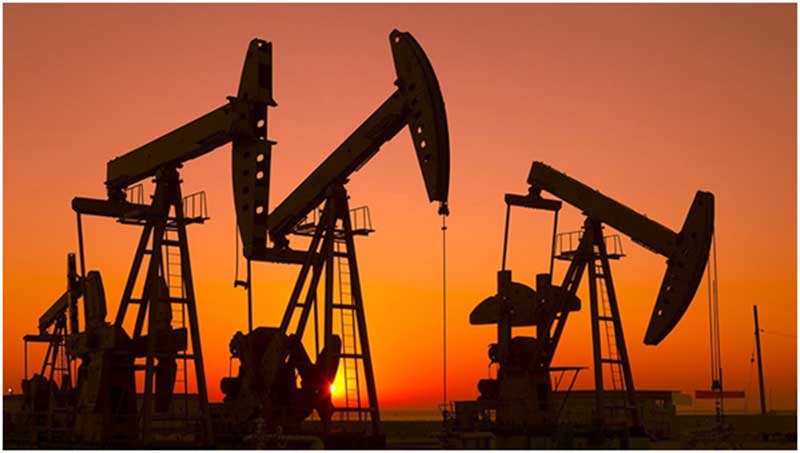
The United Kingdom government has rejected calls from MPs to stop spending billions on overseas fossil fuel projects.
The UK Parliament’s Environmental Audit Committee (EAC) had warned that Britain is sabotaging its climate credentials by paying out “unacceptably high” oil and gas subsidies in developing countries.
But UK’s international trade secretary Liz Truss shunned the cross-party group’s recommendation that investment in fossil fuel projects abroad should end by 2021, saying the move would be “too abrupt”.
A report published by the group in June found UK Export Finance (UKEF) – a government body that underwrites loans and insurance to help British firms secure business abroad – had spent £2.6bn in the last five years supporting global energy exports. Of this, £2.5bn went on fossil fuel projects, with the vast majority in low- and middle-income countries.
The EAC said the funding was “the elephant in the room undermining the UK’s international climate and development targets”.
It also warned the projects risked locking developing nations into fossil-fuel dependency “for decades to come”.
The committee called for UKEF to follow the lead of export credit agencies in other countries, such as Sweden, by capping lending to fossil fuel projects.
It urged the department to commit funding only to projects that align with the government’s target of net zero emissions by 2050.
Responding to the committee, the international trade secretary insisted Britain was “playing a leading role in the transition to a low carbon future” but there “remains a need for a mix of energy sources and technologies”.
In a letter published on Tuesday, Ms Truss said the government was “mindful that the transition to a low carbon economy, both in the UK and overseas, must also be equitable”.
She wrote: “In developing countries, energy security is central to continued development and poverty alleviation. The UK’s oil and gas sector is a significant source of skilled jobs across different regions of the UK and continues to play an essential role in the UK’s energy security even as we transition to lower carbon and renewable energy sources.”
Labour MP Mary Creagh, who chairs the committee, said it was “unbelievable” the government had “rejected our call to end taxpayer money being poured into new high carbon projects”.
She added: “We called for the government to commit to only back British business export projects that support the UK’s climate goals. Their refusal to do so completely undermines the government’s commitment to get to net zero emissions by 2050.
“People expect their political leaders try to stop, not accelerate, the pace of climate breakdown.”
Hypocrisy
Environmental campaign group Global Witness said the government’s position was one of “utter hypocrisy”.
Senior climate campaigner Adam McGibbon added: “Just last week the prime minister was in New York, for the UN climate summit, pledging action whilst his government at home was committing to funding fossil fuel projects abroad.
“The UK is trying to portray itself as a global climate leader ahead of the UN climate summit in Glasgow next year, but this stands violently at odds with reality.”
A report by the Committee on Climate Change in May warned UKEF was “not aligned with climate goals and often supports high-carbon investments”.
Bahraini oil refinery
The following month, UKEF announced it had agreed to lend £406m to companies working on the expansion of a Bahraini oil refinery.
Gas drilling platforms in Mozambique
The UKEF is currently also considering whether to grant funding for gas drilling platforms off the coast of Mozambique, a project advisers have warned could have “significant adverse” environmental impacts.
Turkish construction firm
Companies to have received funding from UKEF in recent years include Turkish construction firm Enka, which was handed £578m in subsidies for its work on two gas-fired power plants in Iraq.
The company’s subsidiary, registered in the UK in 2016 without an office, staff or operations in the country, was granted the money on the condition that at least 20 per cent of contracts on the project went to British businesses.
In June 2019, a UK parliament report said:
Britain must stop financing fossil fuel projects abroad by 2021 as it undermines the nation’s efforts to combat climate change.
The report, which targets financial support provided by the UKEF, was published as Britain debates plans to set tougher climate goals and move toward a net zero emissions target by 2050.
“The government claims that the UK is a world leader on tackling climate change,” said Mary Creagh, chair of the EAC, commenting on the report published by the committee.
“But behind the scenes the UK’s export finance schemes are handing out billions of pounds of taxpayers’ money to develop fossil fuel projects in poorer countries,” she said.
Environmental Audit Committee report
The Environmental Audit Committee (EAC) is appointed by the House of Commons to consider to what extent the policies and programs of government departments and non-departmental public bodies contribute to environmental protection and sustainable development; to audit their performance against such targets as may be set for them by Her Majesty’s Ministers; and to report thereon to the House.
The UKEF is the UK’s export credit agency (ECA). It helps UK companies access export finance, which are loans, insurance policies or bank guarantees that enable international trade to take place. Its mission is “to ensure that no viable UK export fails for lack of finance or insurance, while operating at no net cost to the taxpayer.”
The EAC report, published on June 10, 2019, said:
UKEF’s support for fossil fuel energy projects is unacceptably high, particularly in low- and middle-income countries. UKEF gave £2.6 billion to support the energy sector between 2013/14 and 2017/18. Of this, 96% (£2.5 billion) went to fossil fuel projects, with the £2.4 billion going to fossil fuel projects in low- and middle-income countries.
While there has been an increase in the proportion of support given to renewables projects in high-income countries in recent years, this is not reflected in support to low- and middle-income countries. In 2017/18, 96% of UKEF’s energy support to high income countries went to renewables and 4% to fossil fuel projects. By contrast, just 0.6% of UKEF’s energy support to low- and middle-income countries in 2017/18 went to renewables, and 99.4% went to fossil fuel projects. This level of support for fossil fuel energy projects does not respect the Paris Agreement, which commits signatories to “[Make] finance flows consistent with a pathway towards low greenhouse gas emissions and climate-resilient development.” (UN, Paris Agreement, (2015), Article 2.1.a)
Witnesses told the Committee that UKEF was risking stranded assets and “locking in” reliance on fossil fuel energy production for decades to come in areas where energy demand is set to increase. At a time when the UK Parliament has declared a “climate change emergency,” the Catholic Agency for Overseas Development have described UKEF’s activities as the “‘elephant in the room’ undermining UK climate and development leadership.’
Although UKEF’s support to UK businesses in the energy sector is demand-led and makes up just 0.02% of global oil and gas investment, UKEF’s support “de-risks investments” and “sends a clear signal” to the wider investment market, attracting further finance to the projects which it chooses to support. Changes to UKEF’s climate-related practices could have significant symbolic and real-world value as evidence of the UK’s leadership on tackling climate change. UKEF have already shown some willingness to address climate concerns by phasing out coal support (through the Powering Past Coal Alliance), following consultation, after the 2015 Paris Agreement.
Other export credit agencies have already gone further than UKEF. The Swedish Export Credit Corporation (SEK) caps its fossil fuel operations at 5% of total lending, and in 2018 fossil fuels made up less than 1% of its total lending. Canada’s Export Development Canada (EDC) introduced a Climate Change Policy in January 2019, committing the EDC to measure, monitor and disclose climate-related risks and opportunities, integrating climate change considerations into business decisions and encouraging partners to do the same.
This Committee is calling for UKEF’s mandate to be changed by the end of the year to ensure that UKEF’s support is aligned with the UK’s climate leadership and climate commitments, and to ensure that it is supporting a transition to net zero emissions by 2050.This would ensure that UKEF’s activities are contributing a just and sustainable energy transition in line with the IPCC and CCC’s strong advice to keep temperature below 1.5°C of global heating. It calls on Government to introduce a strategy to end support to new fossil fuel energy projects by 2021.
The report also recommends that UKEF should leverage its position among other OECD ECAs to ensure multilateral action towards net zero emissions, report on the forecast and actual emissions of its entire portfolio, including scope 3 emissions, to ensure maximum transparency, and commit to follow recommendations by the Task Force on Climate-related Financial Disclosures to quantify and report its exposure to stranded assets due to climate change and actions to support energy transition.
Ban Ki-moon
Former UN Secretary General, Ban Ki-moon urged that UKEF’s policy needs “recalibration” to meet international climate trends and obligations and wrote, “the best way for any country to avoid climate complacency is to develop robust, holistic and people-centered policies across government, so short-term trade or financial priorities do not trump the wider imperative of cutting global emissions.”
OECD’s finding
The OECD said in a report in June 2019:
Fossil-fuel subsidies are environmentally harmful, costly, and distortive. After a 3 years downward trend between 2013 and 2016, government support for fossil fuel production and use has risen again, in a threat to efforts to curb greenhouse gas emissions and air pollution, and the transition to cleaner and cheaper energy. Support across 76 countries increased by 5% to USD 340 billion in 2017.
The OECD-IEA report – OECD-IEA Update on Recent Progress in Reform of Inefficient Fossil Fuel Subsidies that Encourage Wasteful Consumption – was prepared for the G20.
The report shows that even in the group of 44 OECD and G20 countries, where fossil fuel support is still declining, the reduction has slowed down. Support in these countries was down 9% in 2017, a slower decline than the 12% recorded in 2016 and 19% in 2015.
The reversal comes as some countries reinstated stronger price controls on fossil fuels, in response to volatility in international oil prices, which made it harder to continue energy pricing and taxation reforms.
However, some progress has been made. The report finds that many countries, including Argentina, India, Indonesia and several Middle Eastern and Northern African economies, have continued to take steps to reduce support for energy consumption. Western Europe has completed its phasing out of hard-coal subsidies and efforts continue to end state aid to coal-fired power generation in the European Union.
Government incentive benefits oil and gas industries
The report said:
Oil and gas industries in several countries, however, continue to benefit from government incentives, mostly through tax provisions that provide preferential treatment for cost recovery. Such policies go against domestic efforts to reduce emissions.
The report was presented to G20 energy officials ahead of the G20 Ministerial Meeting on Energy Transitions and Global Environment in Karuizawa, Japan, where countries reiterated their commitment to phasing out inefficient fossil fuel subsidies and encouraged countries that have not done so to volunteer for a Peer Review.
“This new OECD-IEA report signals a worrying slowdown in our efforts to phase out fossil fuel subsidies,” said OECD Secretary-General Angel Gurría. “The critical nature of the climate change crisis has never been clearer than it is today. Countries should be accelerating their reforms, not taking their feet off the pedal. We cannot promote inclusive and sustainable growth if we continue subsidising fossil fuels!”
The report combines the IEA’s price-gap approach to capture the transfer to consumers of policies that keep fossil fuels below reference prices and the OECD’s 2019 Inventory of Support Measures for Fossil Fuels, which takes stock of spending programs and tax breaks used in the 36 OECD countries and eight emerging countries (Argentina, Brazil, China, Colombia, India, Indonesia, Russia and South Africa) to encourage fossil fuel production or use. These include measures that reduce prices for consumers or that lower exploration and exploitation costs for oil and gas companies.
Increasing transparency on the use of scarce public resources can help to keep up momentum for fossil fuel subsidy reform. Building on the evidence brought to the table by the OECD, G20 countries committed in Pittsburgh in 2009 to “rationalise and phase out over the medium term inefficient fossil fuel subsidies that encourage wasteful consumption.” Since then G20 countries – China, Germany, Indonesia, Italy, Mexico and the United States – have completed voluntary G20 Peer Reviews of inefficient fossil fuel subsidies, and Argentina and Canada are just starting theirs. The OECD has been asked to play Secretariat role for all the country reviews, to chair and facilitate these processes, which have to date evaluated more than 100 government interventions relating to the production and use of fossil fuels.
“OECD evidence leaves no doubt” says Gabriela Ramos, OECD Chief of Staff and G20 Sherpa – “inefficient fossil fuel subsidies undermine global efforts to tackle climate change, aggravate local pollution, and are a strain on public budgets, draining scarce fiscal resources that could be invested in education, skills, and physical infrastructure. We urge all G20 countries to keep up the effort, and join the voluntary G20 Peer Reviews of inefficient fossil fuel subsidies.”
Turning 70: Xi Jinping’s People’s Republic of China
by Dr Binoy Kampmark
Seventy years on, and the People’s Republic of China sees no sign of going the way
of the Soviet model. Market Leninism, or Socialism with Chinese Characteristics, has done its trick, and its magic – the billionaires, the luxury goods, the feverish manufacturing, the Belt and Road Initiative – troubles the modern gaggle of China watchers. That, and much more besides.
Ambitious Turkish plan to resettle two million displaced Syrians
by Abdus Sattar Ghazali
https://countercurrents.org/2019/10/ambitious-turkish-plan-to-resettle-two-million-displaced-syrians
Turkey has an ambitious plan to settle two million displaced Syrians in a 30 kilometer wide safe zone in northern Syria. Turkish President Recep Tayyi Erdogan unveiled the plan at the 74th session of the United Nations General Assembly last month.
MIT Report on Work of the Future: A Decided Capitalist Bias
by Mary Metzger
The Repercussions of the Destruction of Organized Labor in America
Juan Guaido,
Joshua Wong: New Generation of Pro-Western “Saints”
by Andre Vltchek
The new generation of “pro-Western heroes” and “saints” is clearly failing to impress the world. Juan Guaido and Joshua Wong are definitely as right-wing as Mother Teresa was, but not as “credible”.
A Weak Rope
by K P Sasi
The silent prisoner turned his proud face
Tightly covered by a black cloth
Looking towards the hangman in darkness
He wished to see the guilt in the eyes of his executioner.


 n a sudden change of heart, Michigan Gov. Rick Snyder announced that he would sign so-called "right to work" legislation designed to gut union membership in the auto capital of the world.


