Search This Blog

Translate

Blog Archive

Middleboro Review 2

NEW CONTENT MOVED TO MIDDLEBORO REVIEW 2

Toyota

Since the Dilly, Dally, Delay & Stall Law Firms are adding their billable hours, the Toyota U.S.A. and Route 44 Toyota posts have been separated here:

Route 44 Toyota Sold Me A Lemon


Showing posts with label Bakken Shale. Show all posts

Tuesday, August 30, 2016

Peaceful Protesting against DIRTY ENERGY! Time to listen


Dirty Energy has a poor record of protecting the environment and lawmakers fail to force them to do so. 

Dirty Energy, although heavily subsidized, doesn't even clean up after itself. 

Bravo to the Native Americans who are peacefully protesting this egregious action....should it be necessary?

Why are Native Americans being treated differently than the ARMED WHITE DOMESTIC TERRORISTS in Oregon? Why are the US Media PROPAGANDA Machines not reporting this?   


It's Live on the HomePage Now: 
Reader Supported News

Bill McKibben | After 525 Years, It's Time to Actually Listen to Native Americans 
Dozens of tribal members from several Native American nations taking to horseback to protest against the proposed construction of an oil pipeline in North Dakota. (photo: Megan Mitchell/NBC) 
Bill McKibben, Grist 
McKibben writes: "If the Army Corps, or the Obama administration, simply said: 'You know what, you're right. We don't need to build this pipeline.' It would mean that after 525 years, someone had actually paid attention to the good sense that Native Americans have been offering almost from the start." 
READ MORE

he center of the fight for our planet’s future shifts. But this week it’s on the Standing Rock Sioux Reservation straddling the border between North Dakota and South Dakota. There, tribal members have been, well, standing like a rock in the way of the planned Dakota Access Pipeline, a huge hose for collecting oil out of the Bakken shale and carrying it off to the Midwest and the Gulf where it can be made into gasoline.
The standoff has been picturesque and dramatic, featuring American Indians on horseback. But mostly it’s been brave and lonely, far from most journalists and up against the same forces that have made life hard for Indigenous Peoples for centuries.
The U.S. Army, for instance. It’s the Army Corps of Engineers that last month granted Energy Transfer Corporation the permit necessary to start construction near the reservation, despite a petition signed by 150,000 people, and carried—on foot—by young people from the reservation all the way to Washington. That would be the same U.S. Army that—well, google “Wounded Knee.” Or “Custer.” “Washita River.” “Pine Ridge.”
That’s not really ancient history, not any of it. It’s the reason that Native Americans live confined to bleak reservations in vast stretches of the country that no one thought were good for much of anything else. But those areas—ironically enough—now turn out to be essential for the production or transportation of the last great stocks of hydrocarbons, the ones whose combustion scientists tell us will take us over the edge of global warming.
And if former generations of the U.S. Army made it possible to grab land from Native people, then this largely civilian era of the Army Corps is making it easy to pollute and spoil what little we left them. As the corporation said over the weekend, it was “constructing this pipeline in accordance with applicable laws, and the local, state and federal permits and approvals we have received.”
But it’s not constructing it in accordance with the laws of physics. July was the hottest month ever recorded on our planet, and likely, say scientists, the hottest month since the beginning of human civilization. And in any event, those “applicable laws, permits, and approvals” are merely the cover for the latest plunder.
A spill from this pipeline would pollute the Missouri River, just as spills in recent years have done irreparable damage to the Kalamazoo and Yellowstone rivers. And that river is both the spiritual and economic lifeblood of the Standing Rock Reservation, one of the poorest census tracts in the entire country.
Forget, for a minute, the threat to the reservation, and forget, for a minute, the endless history of unfairness. Think instead of what it might mean if the Army Corps, or the Obama administration, simply said: “You know what, you’re right. We don’t need to build this pipeline.”
It would mean that after 525 years, someone had actually paid attention to the good sense that Native Americans have been offering almost from the start. It’s not that American Indians are ecological saints—no human beings are. But as the first people who saw what Europeans did to a continent when given essentially free rein, they were the appalled witnesses to everything from the slaughter of the buffalo to the destruction of the great Pacific salmon runs.
And in recent years they have been the vanguard of the movement to slow down climate change. Why did the Keystone XL pipeline not get built? Above all because Indigenous Peoples on both sides of the border took the lead in a battle that stretched over a decade. Why did Canadian leaders fail in their efforts to replace it with the Northern Gateway pipeline? Because tribes and bands across the west of that country made it clear they could not be bought off. Why will the easiest-to-access deep-water port on the Pacific coast not be turned into the country’s biggest new coal export terminal? Because the Lummi Nation at Cherry Point joined with protesters across the region to say no. This same dynamic is at play around the world, where Indigenous Peoples from the Amazon to the coral atolls of the Pacific are doing more than anyone else to slow down the grinding destruction of our earth.
One has the ominous sense of grim history about to be reenacted at Standing Rock. North Dakota authorities—who are in essence a subsidiary of the fossil fuel industry—have insisted that the Sioux are violent, that they have “pipe bombs.” There are rumors about calling in the National Guard. The possibility for renewed tragedy is very real.
But the possibility for a new outcome is there as well. The Army Corps of Engineers might back off. The president might decide, as he did with Keystone, that this pipeline would “exacerbate” climate change and hence should be reviewed more carefully. We might, after five centuries, actually listen to the only people who’ve ever successfully inhabited this continent for the long term.


Playing pass-the-risk in the shale patch


When Whiting Petroleum needed cash earlier this year as oil prices plummeted, JPMorgan Chase, its lead lender, found investors willing to step in. The bank helped Whiting sell $3.1 billion in stocks and bonds in March. Whiting used almost all the money to repay the $2.9 billion it owed JPMorgan and its 25 other lenders. The proceeds also covered the $45 million in fees Whiting paid to get the deal done, regulatory filings show.
Analysts expect Whiting, one of the largest producers in North Dakota’s Bakken shale basin, to spend almost $1 billion more than it earns from oil and gas this year. The company has sold $300 million in assets, reduced the number of rigs drilling for oil to eight from a high of 24, and announced plans to cut spending by $1 billion next year. Eric Hagen, a Whiting spokesman, says the company has “demonstrated that it is taking appropriate steps to manage within the current oil price environment.” Whiting has said it will be in a position next year to have its capital spending of $1 billion equal its cash flows with an oil price of $50 a barrel.
As for Whiting’s investors, the stock is down 36 percent, as of Oct. 14, since the March issue, and the new bonds are trading at 94¢ on the dollar. More than 73 percent of the stocks and bonds issued this year by oil and gas producers are worth less today than when they were sold, data compiled by Bloomberg show.
Banks’ sell-the-risk strategy underpins the shale oil boom. Lenders extended low interest credit to wildcatters desperate for cash, then—perhaps remembering the 1980s oil bust—wheeled the debt off their books by selling new stocks and bonds to investors, earning sizable fees along the way. “Everyone in the chain was making money in the short term,” says Louis Meyer, a special situations analyst at Oscar Gruss & Son. “And no one was thinking long term about what they’re going to do if prices fall.”
North American oil and gas producers have sold $61.5 billion in equity and debt since January, paying more than $700 million in fees, according to data compiled by Bloomberg. Half the money was raised to repay loans or restructure debt, the data show. “Being there for our clients in all market environments, particularly the tough ones, is something we feel very strongly about,” says Brian Marchiony, a JPMorgan spokesman. “During challenging periods, companies typically look to strengthen their balance sheets and increase liquidity, and we have helped many do just that.”
Lenders have been setting aside cash to cover potential energy losses. JPMorgan bolstered its reserves by $160 million in the third quarter. Bank of America’s at-risk loans increased 15 percent from a year ago as a result of the deteriorating finances of some of its oil and gas borrowers. Still, the oil bust has left banks relatively unscathed. Asked why lenders weren’t seeing more losses from energy defaults, BofA Chief Executive Officer Brian Moynihan said in a conference call, “A lot of that risk is distributed out to investors.”
Citigroup, Bank of America, and JPMorgan were among the banks that courted fast-growing shale drillers in the hope that an initial loan would lead to investment banking business. Citigroup’s energy portfolio, including loans and unfunded commitments, swelled to $59.7 billion as of June 30, Bank of America’s to $47.3 billion, and JPMorgan’s to $43.6 billion, according to company filings. “They loan money at cheap rates, and the banks get the fees from the bond and share sales,” says Jason Wangler, an analyst with Wunderlich Securities. “When things are going well, it’s mutually beneficial. Now it’s a different conversation.”
When crude prices plummeted in the early 1980s, hundreds of banks failed across such oil-rich states as Louisiana, Oklahoma, and Texas. This time around, banks were keen to limit their exposure to a boom-and-bust industry. Every year since 2009, about half the debt and equity sold by North American exploration and production companies was intended, at least in part, to restructure debt or repay loans, data compiled by Bloomberg show. Often the banks selling the securities were the ones getting repaid. “The bankers have gone through this before,” says Oscar Gruss’s Meyer. “They know how it works out in the end, and it’s not pretty. Most of the lenders have been more on top of things this time. They are not going to get caught short in the ways they got caught short before.”
The bottom line: Oil companies have sold $61.5 billion in stocks and bonds since January as oil prices have tumbled.


Tuesday, January 26, 2016

RSN: Bernie Bashes Hillary on Keystone and Other Pipelines


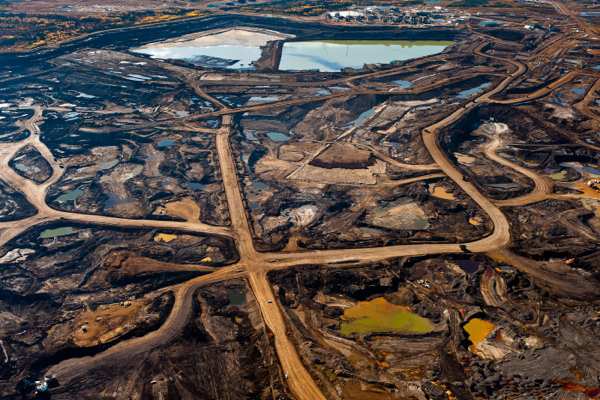
The Dirtiest Energy known, DIRTY TAR SANDS, has destroyed the environment in Canada.


Maybe you weren't paying attention because....well, after all, it's not in your 'backyard'! 


Well, these aren't exactly in Senator Bernie Sander's backyard either....but he spoke out! 


As Secretary of State, Hillary Clinton supported THE DIRTY TAR SANDS DIRTY ENERGY PIPELINE even as PROTESTERS AMASSED! 

Not only is Hillary Clinton Environmentally Tone Deaf, her money is coming from Big Polluters!  


Massachusetts is faced with the BIGGEST SCAM by Kinder Morgan to bring FRACKED GAS across Massachusetts...after making generous contributions to Tea Bagger Guv Charlie Baker. 


Bernie Sanders speaks at a rally to ban all new fossil fuel leases on public lands. (photo: The Sierra Club)
Bernie Sanders speaks at a rally to ban all new fossil fuel leases on public lands. 
(photo: The Sierra Club


Bernie Bashes Hillary on Keystone and Other Pipelines

By Katie Herzog, Grist
26 January 16

ernie Sanders came after Hillary Clinton on climate change and energy issues on Monday night. At a Democratic candidate town hall forum in Iowa, Sanders argued that he has the judgment to be president, pointing out that, unlike Clinton, he was correct from the start in opposing both the Iraq War and Keystone XL.
“On day one, I said the Keystone Pipeline is a dumb idea,” said Sanders — who, as it happens, looks remarkably like Larry David doing Bernie Sanders. “I think the Bakken pipeline, and pipelines in Vermont and New Hampshire, are dumb ideas,” he continued. “We’ve got to break our dependence on fossil fuels. Why did it take Hillary Clinton such a long time before she came into opposition on the Keystone Pipeline?” Sanders went on to point out that he, unlike Clinton, has also been consistent in opposing trade pacts like Trans-Pacific Partnership, a deal that many environmentalists criticize.
Clinton didn’t get a chance to respond because the town hall forum had the candidates addressing voters directly instead of engaging with each other. Each candidate came on stage alone to face the moderator and take questions from the audience. This gave each candidate some time alone in the spotlight, and severely cut down on instances of side-eye. An unknown evil genius decided to start the event with Sanders, end with Clinton, and stick poor, ignored Martin O’Malley in the middle, thereby ensuring that viewers wouldn’t turn it off halfway through. Smart move. Evil, but smart.
That means we couldn’t help but notice when O’Malley said something about climate change too. In fact, the underdog spoke the most — and the most passionately — on the topic. He argued that climate change is the issue young Americans should be more concerned about than any other — and then he pivoted right to his plan to address it and perk up the economy at the same time. “Climate change is the greatest business opportunity to come to the United States in a hundred years,” O’Malley said, and talked about his goal to shift the U.S. to 100 percent clean electricity by 2050 and create 5 million jobs in the renewable energy sector. He said the country will never reach that goal with an “all-of-the-above” energy strategy (take that, Hillary). And he said it’s a “generational” thing, which is code for “Clinton and Sanders are old as hell, whereas I’m just a wee babe with at least eight good years left.”
Clinton, when she finally got on stage, didn’t speak about climate change, but she did engage in some light flirting with moderator Chris Cuomo and heap praise on the president she wishes she’d married, Abraham Lincoln.
Meanwhile, Republican candidates were practicing their cage-wrestling moves for the next GOP debate, which is scheduled for Thursday.


Wednesday, January 13, 2016

RSN: Iowans' Passion for Sanders Worries Clinton, Activists Who Blocked Oil Train Will Argue in Court That It Was Necessary Because of Climate Change, Powerball's $1.3 Billion Swindle of Americans


Independence and the Lifeline of Public Funding
Without corporate funding, public support is not just important - it is a lifeline. For ten dollars a month you can insure that there will be a powerful independent presence in the news cycle.
Risk 10 dollars, it's well worth it.
Marc Ash 
Founder, Reader Supported News

If you would prefer to send a check: 
Reader Supported News 
PO Box 2043 
Citrus Hts 
CA 95611


It's Live on the HomePage Now:
Reader Supported News

Iowans' Passion for Sanders Worries Clinton
Senator Bernie Sanders of Vermont greeting supporters at an event in Ankeny, Iowa, on Sunday. (photo: Max Whittaker/NYT)
Patrick Healy and Yamiche Alcindor, The New York Times
Excerpt: "Iowa Democrats are displaying far less passion for Hillary Clinton than for Senator Bernie Sanders of Vermont three weeks before the presidential caucuses, creating anxiety inside the Clinton campaign as she scrambles to energize supporters and to court wavering voters."
READ MORE
owa Democrats are displaying far less passion for Hillary Clinton than for Senator Bernie Sanders of Vermont three weeks before the presidential caucuses, creating anxiety inside the Clinton campaign as she scrambles to energize supporters and to court wavering voters.
The enthusiasm gap spilled abundantly into view in recent days, from the cheering crowds and emotional outpourings that greeted Mr. Sanders, and in interviews with more than 50 Iowans at campaign stops for both candidates.
Voters have mobbed Mr. Sanders at events since Friday, some jumping over chairs to shake his hand, snap a selfie or thank him for speaking about the middle class. “Did you get to touch him?” asked one woman who could not get close enough after an event here on Saturday.


US Supreme Court: Florida Death Penalty System Is Unconstitutional
Sam Hananel, Associated Press
Excerpt: "The Supreme Court ruled Tuesday that Florida's unique system for sentencing people to death is unconstitutional because it gives too much power to judges - and not enough to juries - to decide capital sentences."
READ MORE
Maryland County Says 'No' to Obama's Deportation Raids
Clark Mindock, International Business Times
Mindock writes: "Just to the north of Washington, D.C., leaders in the adjacent Montgomery County in Maryland are warning President Barack Obama and his administration that they have no intention of complying with new deportation raids that target women and children who came from Central America, according to WUSA 9."
READ MORE
Powerball's $1.3 Billion Swindle of Americans
Judd Legum and Bryce Covert, ThinkProgress
Excerpt: "If you want to go to the corner store this week to pick up a gallon of milk, be prepared to wait. America has been gripped by lottery fever and lines are snaking out the doors of convenience stores across the county."
READ MORE
Why Hillary Clinton's Call-Out of the Hyde Amendment Is So Important
Christina Cauterucci, Slate
Cauterucci writes: "As she accepted Planned Parenthood's first-ever presidential primary endorsement at a New Hampshire rally on Sunday, Hillary Clinton recited a list of economic and social barriers that prevent women from obtaining abortions."
READ MORE
Deadly Suicide Blast Hits Istanbul Tourist Area; Officials Claim Islamic State Links
Erin Cunningham and Brian Murphy, The Washington Post
Excerpt: "A suicide bomber believed linked to the Islamic State in Syria set off a powerful blast Tuesday in one of Istanbul's most popular tourist districts, killing at least 10 people and injuring 15, officials said. Most of the victims were Germans."
READ MORE
Activists Who Blocked Oil Train Will Argue in Court That It Was Necessary Because of Climate Change
Katie Herzog, Grist
Herzog writes: "In September 2014, five climate activists with Rising Tide Seattle managed to halt the passage of a crude oil train at the BNSF Delta rail yard in Everett, Wash. After eight hours blocking the tracks, the five were arrested and charged with criminal trespass and blocking a train. Today, they go on trial."
READ MORE

Oil train protest. (photo: Light Brigading/Grist)

n September 2014, five climate activists with Rising Tide Seattle managed to halt the passage of a crude oil train at the BNSF Delta rail yard in Everett, Wash. After eight hours blocking the tracks, the five were arrested and charged with criminal trespass and blocking a train. Today, they go on trial.
In court, the activists — known as the Delta 5 — will argue their act of civil disobedience was necessary. A spokesperson for Rising Tide said the activists “will be the first ever to argue that their actions were justified because of the threat of climate change, using the ‘necessity defense’. The outcome of [the] trial could set national precedent for climate related civil disobedience and is being carefully watched.” The defendants will call on a rail safety expert and a climate scientist to argue that their actions were justified.
The train the Delta 5 stopped was carrying crude oil from the Bakken Formation in Montana and North Dakota. Bakken shale oil is particularly explosive, and was responsible for the 2013 conflagration that killed 47 people after a train derailed in Quebec.
The Pacific Northwest is rapidly becoming a hub for trains moving crude oil from the Bakken shale. Regulators in Washington state are currently considering six new oil-by-rail facilities. According to a reportcommissioned by the Sightline Institute, “Northwest oil train terminals could … lead to more oil drilling in the Bakken formation, as much as 114,000 barrels per day beyond what would be produced without the terminals. The resulting greenhouse gas pollution from this extra production could be as much as 30 million tons per year of carbon dioxide—the equivalent of doubling the number of cars on the road in Oregon and Washington.”
It was this fear that motivated the Delta 5.
“There came a point where I could no longer sit back and wait for the politicians to act,” said Delta 5 member Patrick Mazza. “I had to put my body on the line to demand not talk, but action on a massive scale to rapidly replace fossil fuels.”


Thursday, February 19, 2015

Derailed CSX train in West Virginia hauled newer-model tank cars


West Virginia Oil Train Derailment 'Another Reminder' Of Need To Upgrade Tank Cars


Stand Up WV Rally and Oil Train Derailments (Updated):Snowy updates from West Virginia


VIDEO ON LINK

Derailed CSX train in West Virginia hauled newer-model tank cars


Tue Feb 17, 2015


(Reuters) - An oil train was still on fire and leaking in West Virginia on Tuesday, a day after it derailed and erupted in flames, according to CSX Corp, which said the train was hauling newer model tank cars, not the older versions widely criticized as prone to puncture.

The train, which was carrying North Dakota crude to an oil depot in Yorktown, Virginia, derailed in a small town 33 miles southeast of Charleston, causing 20 tank cars to catch fire. Several were still leaking oil on Tuesday. All the oil tank cars on the 109-car train were CPC 1232 models, CSX said late Monday.

The CPC 1232 is the newer, supposedly tougher version of the DOT-111 car manufactured before 2011, which was faulted by regulators and operators for a number of years. U.S. and Canadian authorities, under pressure to address a spate of fiery accidents, are seeking to phase out the older models. The U.S. Transportation Department has recommended that even these later models be updated with improved braking systems and thicker hulls.

The fires, which destroyed one house and resulted in the evacuation of two nearby towns, were left to burn out on Tuesday, CSX said in a statement. No serious injuries were reported.

CSX said the cleanup of oil will begin when it can safely reach the site. In the meantime, delays are expected on the line.

None of the 25 tank cars that derailed fell into the nearby Kanawha River, CSX said. On Monday, officials said at least one car had entered the river.

Water tests along the Kanawha River have so far come up negative for traces of oil, according to a spokeswoman at the West Virginia Department of Environmental Protection. A nearby water treatment plant has been closed, she said.

This accident followed the Feb. 14 derailment in Ontario of a Canadian National Railways train from Alberta. It was also the second derailment in a year along this CSX line. A similar incident in Virginia involved a train also headed to Plains All American Pipelines LP's oil depot in Yorktown, Virginia.

A boom in oil rail shipments rail across North America has heightened focus on safety. In July 2013, 47 people were killed in the Quebec town of Lac-Mégantic after a train carrying crude oil derailed and exploded.


(Reporting by Jonathan Leff, Edward McAllister and Jarret Renshaw in New York; Editing by Jeffrey Benkoe and David Gregorio)


http://www.reuters.com/article/2015/02/17/us-usa-train-derailment-csx-idUSKBN0LK1ST20150217

Tuesday, April 22, 2014

Explosive Crude-By-Rail Rolls Into Main Street America

The article below from EarthJustice highlights the growing alarm and opposition to the skyrocketing threat of rail transport of hazardous cargo through densely populated areas and fragile lands.

Please note that great concern was raised about the transport of  Explosive ETHANOL through Massachusetts.

Do we know what's in those rail cars?


Railroad cars for transporting oil line up at a station. (Arvydas Kniuksta / Shutterstock)


Explosive Crude-By-Rail Rolls Into Main Street America


Is volatile crude oil coming by rail to a town near me? For weeks, I’ve been asking myself that question as I kept hearing about the skyrocketing number of trains that are transporting potentially explosive types of crude throughout the U.S. to East and West Coast export facilities.

And I’m not alone.

Recently, I attended a protest by my fellow neighbors in Berkeley, California, to stop crude-by-rail shipments coming through our town. The crude-oil boom is brought on by fracking in North Dakota and drilling in Canada’s Alberta tar sands. Both forms of crude are hazardous—Bakken shale crude from North Dakota is highly flammable and tar sands oil is extremely corrosive and also difficult to clean up.

Not surprisingly, once people hear how explosive and dangerous this crude can be when spilled, they really don’t want it traveling through their main streets…or anywhere else. But travel it does.

Hundreds of miles, in fact, through rural towns and along main streets, along densely populated areas like Chicago and Albany, and even inside windswept and vulnerable wild lands like Montana’s Glacier National Park.

I once drove a U-Haul along Yellowstone’s winding roads in my move from New York to California.

The sun was bright and the wind was calm, but I was still gripping the steering wheel the whole time.

Now imagine a 100-foot long train filled with millions of gallons of explosive crude oil traveling through that same area—in the dead of winter with the wind howling and the snow piling up on the tracks.

Seems like an accident just waiting to happen, right? Unfortunately, it already has, time and again. In fact, more oil spilled from trains last year than in the last four decades. And these spills can be catastrophic. Last July, a crude oil train derailed in Canada, decimating a town and killing 47 people.
Residents rally outside Berkeley City Hall.
Residents rally outside Berkeley City Hall to show opposition to a proposed crude by rail project. (Mauricio Castillo / Earthjustice)
These and other sobering statistics are causing communities to think twice about allowing these exploding trains onto their tracks. Last month, the City Council of Berkeley voted unanimously to oppose an oil company’s plans to transport crude oil through their town and other East Bay cities to a new refinery in nearby San Luis Obispo County. The council was backed by several people who showed up before the meeting to protest the crude by rail project.

East Bay resident Margaret Rossoff, who helps support communities in fighting refineries, compared crude by rail to “transporting dynamite.” Shoshanna Howard with the Center for Biological Diversity described the project as “preposterous,” adding that “We shouldn’t continue feeding into a fossil fuel system that has proven us wrong time and again.” Their concerns were echoed by many other local residents who felt strongly that we are going in the wrong direction by allowing more crude oil transport.

They are not alone.

In addition to Berkeley, the City Council of Richmond, another Bay Area community, also voted to oppose crude-by-rail plans that involved trains running through its city. In early February, the Bay Area Air Quality Management District issued energy company Kinder Morgan a permit to operate its crude-by-rail project, without any notice to the public or environmental and health review. Kinder Morgan is transporting volatile Bakken crude oil to Bay Area refineries using the same unsafe train cars involved in the explosion in Canada. Members of the Richmond community, perhaps even members of the air district’s Board of Directors, did not know that a permit to transport crude oil had been issued for over a month. The community’s opposition is backed by Earthjustice, which on behalf of environmental justice and conservation groups filed a lawsuit against Kinder Morgan and the air district and asked the court to halt operations immediately while the project undergoes a full and transparent review under the California Environmental Quality Act.

On the other side of the country, residents in the county of Albany, New York, feel similarly.

Recently, the county halted plans to expand crude-by-rail operations at its port terminal. The news followed pressure by a broad coalition—including community and environmental groups like Earthjustice—against the state Department of Environmental Conservation for its dangerously lax approach to skyrocketing shipments of crude-by-rail into the Port of Albany.

To Big Oil, these communities may look like places where it can transport millions of barrels of crude oil without drawing too much attention. But to people living near these tracks, like me and thousands of others, these communities are home. We have a right to know what hazards are moving in next door, a right to participate in decisions that impact our neighborhoods, and a right to health and environmental review of industrial activities before they happen.

We are not alone.


Related Audio Interview: Attorney Kristen Boyles discusses the fight to stop the expansion of crude-by-rail projects. Earthjustice, on behalf of communities and conservation groups, is fighting for the right of communities to stop these projects, which endanger public health and the environment. Listen to the interview:

Sunday, March 2, 2014

This and that.....Explosive Trains in Your Neighborhood? et al


The New York Times covers the confluence of oil-by-rail lines that send miles-long tanker cars filled with explosive Bakken crude through the city of Albany on their way to East Coast refineries.


Please share and pray
 
PLEASE SHARE this information -- A K-9 rescue organization in Lincoln County is offering a cash reward to find the person who shot and hog tied a dog and left h...er to die on the side of the road.

It's been a tough two weeks for the terrier mix. Rescuers named her Camilla because it means "warrior maiden."
http://bit.ly/19XEEJp


I'm often asked why I'm optimistic about the future of America. Three reasons: (1) Every time in our history this nation has faced a real test of its principles of equal opportunity and democratic inclusion, we've opted to expand both. (2) Latinos, African-Americans, and women continue to gain ground, economically and politically. (3) Young people overwhelmingly support economic and social justice, whether in the form of equal marriage rights, reproductive rights, or a fairer... allocation of the gains from economic growth. And young people are our future.

But none of this means we can relax. We have to continue to make a ruckus, get out the vote, fight voter suppression in whatever form, and get big money out of politics. Here's what the electoral results would have looked like in 2012 if only white men voted -- which would have been the case before the 15th amendment (extending the vote to African Americans in 1870) and the 19th (to women, in 1920).
 
I'm often asked why I'm optimistic about the future of America. Three reasons: (1) Every time in our history this nation has faced a real test of its principles of equal opportunity and democratic inclusion, we've opted to expand both. (2) Latinos, African-Americans, and women continue to gain ground, economically and politically. (3) Young people overwhelmingly support economic and social justice, whether in the form of equal marriage rights, reproductive rights, or a fairer allocation of the gains from economic growth. And young people are our future. 

But none of this means we can relax. We have to continue to make a ruckus, get out the vote, fight voter suppression in whatever form, and get big money out of politics. Here's what the electoral results would have looked like in 2012 if only white men voted -- which would have been the case before the 15th amendment (extending the vote to African Americans in 1870) and the 19th (to women, in 1920).


On Friday, The Ed Show concluded its weeklong coverage of Keystone XL with an interview with Canadian ambassador Gary Doer, and a discussion with Nebraska farmers and ranchers who plan to unite Pipeline Fighters in the coming election year to work for candidates who oppose KXL and support clean, renewable energy.

We can't thank Ed and msnbc enough for coming to Nebraska to share our stories!


In the past two weeks, more than 50 wild Yellowstone bison have been captured and shipped off to slaughter. There are hundreds of thousands of acres of public land adjacent to Yellowstone for bison, if Montana would only allow them to roam there.

Tell Governor Steve Bullock that it's time to allow bison access to public lands in Montana --> http://sc.org/helpbison


Thursday, February 27, 2014

Big Oil and Bad Air: Report Exposes Link Between Fracking and Toxic Air Emissions in Texas, Australian Coal Mine Fire, Arizona's Bigotry et al


Stories


In a major victory for civil rights advocates, Arizona's Republican Gov. Jan Brewer has vetoed a bill that would have allowed businesses to deny service to LGBT people in the name of ... Read More →

Residents who live near areas of oil and natural gas fracking have long complained that the industry has poisoned their water with toxic chemicals. Now a new investigation is shedding light on ... Read More →


Headlines →

Friday, October 11, 2013

Republican Government Shutdown silences information about MASSIVE ND OIL SPILL

NOTE: GLOBAL IS THE COMPANY THAT WANTS TO SHIP ETHANOL THROUGH MASSACHUSETTS FROM ALBANY.


Over 865,200 Gallons Of Fracked Oil Spill In North Dakota
By Steve Horn
11 October, 2013
Desmogblog.com
Over 20,600 barrels of oil fracked from the Bakken Shale has spilled from a Tesoro Logistics pipeline in Tioga, North Dakota in one of the biggest onshore oil spills in recent U.S. history.
 
Though the spill occurred on September 29, the U.S. National Response Center - tasked with responding to chemical and oil spills - did not make the report available until October 8 due to the ongoing government shutdown.
 
"The center generally makes such reports available on its website within 24 hours of their filing, but services were interrupted last week because of the U.S. government shutdown," explained Reuters.
 
The "Incident Summaries" portion of the National Response Center's website is currently down, and the homepage notes, "Due to [the] government shutdown, some services may not be available."
 
At more than 20,600 barrels - equivalent to 865,200 gallons - the spill was bigger than the April 2013
ExxonMobil Pegasus pipeline spill, which spewed 5,000-7,000 barrels of tar sands into a residential neighborhood in Mayflower, Arkansas.
 
Kris Roberts, environmental geologist for the North Dakota Department of Health Division of Water Quality told the Williston Herald, "the leak was caused by a hole that deteriorated in the side of the pipe."
 
“No water, surface water or ground water was impacted,” he said. “They installed monitoring wells to ensure there is no impact now or that there is going to be one.”
 
Roberts also told the Herald he was impressed with Tesoro's handling of the cleanup.
 
“They've responded aggressively and quickly,” Roberts commented, also noting that the cleanup will cost upward of $4 million. “Sometimes we've had to ask companies to do what they did right off the mark. They're going at this aggressively and they know they have a problem and they know what they need to do about it.”
 
Tesoro Logistics Chairman and CEO Greg Goff also weighed in on the spill.
 
"Protection and care of the environment are fundamental to our core values, and we deeply regret any impact to the landowner," said Goff in a press release. "We will continue to work tirelessly to fully remediate the release area."
 
Pipeline to Albany Refinery, Barging on the Hudson
 
Tesoro's six-inch pipeline was carrying oil obtained via the controversial hydraulic fracturing ("fracking") process to the Stampede, ND rail facility. From Stampede, Canadian Pacific's freight trains take the oil piped from Tesoro's pipeline and ship it to an Albany, NY holding facility by Global Partners located along the Hudson River.
 
"Over five years, the equivalent of roughly 91 million barrels of oil will be transported via CP’s rail network from a loading facility in Stampede, N.D., to a Global terminal in Albany," explained a September story appearing in the Financial Post.
 
Albany's holding facility received its first Canadian Pacific shipment from the Bakken Shale in December 2011, according to Bloomberg, with 1.4 million barrels of storage capacity. The facility receives 149,000-157,000 barrels of Bakken crude per day from Canadian Pacific.
 
Once shipped to Global's Albany holding facility, much of the oil is barged to market on tankers along the Hudson from the Port of Albany.
 
"As much as a quarter of the shale oil being produced in North Dakota could soon be headed by rail to the Port of Albany," explained an April 2012 article appearing in the Albany Times-Union.
 
"The crude oil...will be loaded onto barges to be shipped down the Hudson River to refineries along the East Coast."
 
North Dakota Petroleum Council Responds
 
North Dakota Petroleum Council's response to the largest fracked oil spill in U.S. history and one of the biggest onshore spills in U.S. history? Ho-hum.
 
"You know, this is an industrial business and sometimes things happen and the companies are certainly responsible to take care of these things when they happen," Petroleum Council President Ron Ness told KQCD.
 
 
DeSmogBlog will post continuing updates on the spill: stay tuned.