Search This Blog

Translate

Blog Archive

Middleboro Review 2

NEW CONTENT MOVED TO MIDDLEBORO REVIEW 2

Toyota

Since the Dilly, Dally, Delay & Stall Law Firms are adding their billable hours, the Toyota U.S.A. and Route 44 Toyota posts have been separated here:

Route 44 Toyota Sold Me A Lemon


Showing posts with label Toyota Independent Monitor. Show all posts

Sunday, November 16, 2014

Hmmm...TOYOTA TACTICS?


Charlene M. Blake (@charleneblake)
Does #Toyota illegally obtain credit reports or violate HIPAA laws in order to discredit or defame its own customers? pic.twitter.com/3MR0Ermwv3

Download the official Twitter app here


THE LEMON LADY'S EXPERIENCE IS POSTED HERE:

Independent Monitor


It seems NOTHING STOPS TOYOTA! NOT EVEN THE LAW!


JUST MY OPINION....AT THE MOMENT!


Tuesday, October 21, 2014

Straight From TOYOTA'S Corporate Playbook!


TOYOTA tortured a jury with 4 WEEKS' of TRIAL.....


.....tried to BLAME THE VICTIM, and the jury didn't buy it!


That after 4 YEARS OF DELAY! [DILLY DALLY DELAY STALL & BILL 'EM straight from TOYOTA CORPORATE PLAYBOOK!]


Jury says Toyota must pay reality TV star $12 million for crash injury


Wednesday, October 1, 2014

Toyota/Lexus/Land Cruiser Protect Middle Eastern Owners, but Not Americans?


This Toyoda Phony Baloney comes to the US, pretends ignorance of the FACTS, COMPLAINTS, INJURIES and DEATHS caused by TOYOTA'S DEFECTS.......


TOYOTA acknowledges their LIES and DECEPTION......


....pays a $1.2 BILLION FINE and life is DUCKY!


OR IS IT?


The DOJ Settlement .... TOYOTA'S Get Out Of Jail Free Card included an INDEPENDENT MONITOR.....


BELOW, are just a few of TOYOTA'S HORRIFYING TALES!

When it has suited TOYOTA, they have ignored CONSUMERS or settled with Confidentiality Agreement.....filling court dockets, clogging the courts, AG's files, prompting Class Action Lawsuits [i.e. for oil sludge]....


TOYOTA has wasted everyone's time and resources defending TOYOTA PROBLEMS that were KNOWN!


At the bottom on this page is an article indicating TOYOTA RECALLS to protect TOYOTA DRIVERS from KNOWN TOYOTA SUDDEN UNINTENDED ACCELERATION PROBLEMS!


PLEASE NOTE THOSE TOYOTA RECALLS are all OVERSEAS!


WHEN WILL TOYOTA CORRECT U.S. VEHICLES WITH THE SAME PROBLEMS?
WHEN WILL TOYOTA/NHTSA INC. TAKE ACTION TO PROTECT AMERICANS?

WHERE IS THE INSISTENCE OF THE INDEPENDENT MONITOR THAT U.S. CONSUMERS ARE ENTITLED TO THE SAME PROTECTION?


+ 37,900 complaints ignored by Toyota


Playbook: Chapter 4: Dehumanize Fatalities: 'Souvenirs from NHTSA.'


You didn't know them.....

...just an American family on an outing....in a RUNAWAY TOYOTA.


An August 28th 2010 crash near San Diego of a Lexus ES 350 sedan driven by the off-duty Highway Patrol officer, Mark Saylor resulted in tragedy.

Mr. Saylor was driving his wife, their 13-year-old daughter, and his brother-in-law on a family outing when their car "began to accelerate on its own" and sped out of control despite Saylor’s attempts "to apply the brakes and otherwise do everything possible to stop" the car.

The car reached speeds of up to 120 miles per hour before it struck another vehicle, plowed through a fence, hit a berm and flew through the air, then rolled several times into a field and burst into flames.


The HORRIFYING 911 call and loss of this California family FINALLY forced attention to be drawn to TOYOTA's FAILURES.


After praising itself for $$$$ saved by avoiding RECALLS and ignoring U.S. statutes, the sad loss of the Saylor Family called attention to TOYOTA.


TOYOTA settled cases with GAG ORDERS [confidentiality agreements], silencing public discussion, just as they did in the Saylor settlement....well....except TOYOTA blamed the dealership that removed the silence.


TOYOTA settled the Saylor Family lawsuit for $10 MILLION. You simply don't do that unless you know you're wrong.


You didn't know Noriko Uno. She died trying to stop her RUNAWAY TOYOTA.


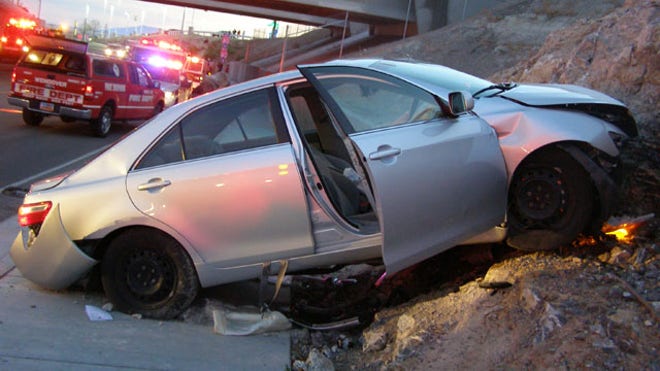
This is Noriko Uno's car:


She even pulled the hand brake to stop her car.


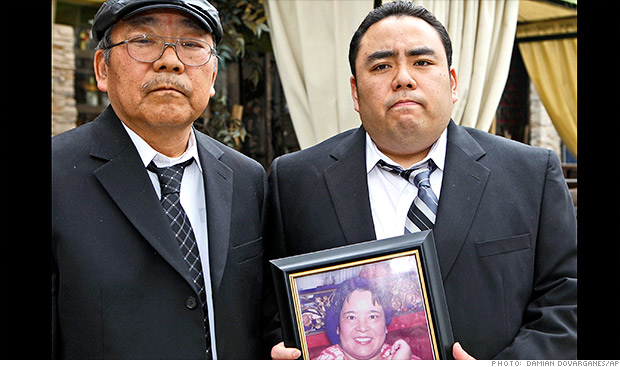
This is her family, torn apart by her loss.


Noriko Uno: Last Minutes Filled With Terror As Toyota Camry Sped Out of Control


TOYOTA has settled unknown cases to silence families, quiet public queries.

Paul Van Alfen's RUNAWAY TOYOTA:


The crash on Nov. 5 killed Paul Van Alfen, 66, and his son's fiancee Charlene Lloyd, 38; Van Alfen's wife and son were also injured in the wreck. Unlike similar crashes in Toyotas later blamed on drivers mistaking the accelerator for the brake, police say Van Alfen's Camry left skid marks as it exited Interstate 80 near Wendover, Utah. presumably from holding down the brake pedal. The Utah Highway Patrol said Monday that based on statements from the passengers who survived, the Camry's gas pedal appeared stuck.
Van Alfen's Camry had been covered by three recalls relating to sudden acceleration problems, including floor mats and sticking pedals. While investigators believe Van Alfen had brought his Camry in for the repairs, it's not clear what fixes had been performed. Toyota has also said it was upgrading 2008 Camrys to include brake override systems designed to cut engine power if the brake and accelerator are pressed simultaneously; and once again, it's not clear whether that upgrade was performed.


Over 141,000 Toyota and Lexus cars recalled over dangers of sudden acceleration


Over 141,000 Toyota and Lexus cars recalled over dangers of sudden acceleration
2.55

Sunday, September 14, 2014

Toyota's Smoking Gun


New 'Runaway Toyota' Case Tests DOJ's Integrity


Junko Yoshida

MADISON, Wis. — Just as the memory of Toyota's unintended acceleration cases began to fade, at least in the minds of the media and a few million thus far unaffected Toyota owners, in comes Robert Ruginis to dredge it all up again.
 
Ruginis, a Bristol, Rhode Island-based embedded systems engineer, filed a petition letter on Thursday, September 11, to the National Highway Traffic Safety Administration (NHTSA) about multiple low-speed surge events involving his wife's 2010 Toyota Corolla. The Ruginis case poses for Toyota the danger that the public and government regulators will remember that the Japanese automotive giant has never really addressed the root cause of unintended acceleration in its vehicles.

Ruginis is now asking the NHTSA to investigate "low-speed surging in the 2006-2010 Toyota Corolla with ETCS-i, in which the brakes fail to stop the vehicle in time to prevent a crash," according to the petition letter he filed Thursday.

In a move that could make the matter more high-profile, Ruginis is taking the matter to the lawyer designated as "independent monitor" as part of Toyota's deferred prosecution agreement with the government over the automaker's handling of unintended-acceleration claims.
In his letter to David Kelley, the independent monitor, Ruginis wrote:
I am writing to inform you that Toyota Motor North America may already have broken the terms of the March 2014 deferred prosecution agreement by making misleading statements and concealing information on a safety issue related to unintended acceleration. I request that you investigate my case.

To recap, Toyota was fined $1.2 billion earlier this year, as part of a deferred prosecution agreement with the Department of Justice. Toyota recalled 8.1 million cars, but says no cause was ever found except floor mats that can trap acceleration pedals and drivers who hit the accelerator when they thought they were pushing the brake.

The experience Ruginis and his wife have had with their Corolla -- bought new in May 2010 -- tells a very different story.

In a letter Ruginis wrote to NHTSA, he noted: "The MY2010 Corolla was subject to the floor mat entrapment and sticky accelerator recalls. The dealership applied the 'sticky pedal' remedy in February, before we purchased the vehicle. The floor mat remedy was applied in November 2010."

The Ruginis family's troubles with their new Corolla began almost immediately after they bought it.

In an interview with EE Times, Ruginis explained that he returned the car to the dealer twice before his wife crashed into another car in a parking lot in June this year. Both times, Toyota technicians claimed there was nothing wrong with the car.

As he told a story of the accident on June 8, 2014 in his petition letter to NHTSA, Ruginis wrote:
At the time of the crash, a sunny, temperate afternoon, my wife, Kathleen Ruginis, was making a slow, right hand turn to ease into a parking space on High Street in Bristol, Rhode Island. Her foot was on the brake, when the vehicle surged forward and crashed into an unoccupied parked Jeep in front of it. Fortunately, no one was injured.

Enough smoking gun

  Having already complained twice, Robert and Kathleen Ruginis realized this crash was not an isolated incident.

After the crash, Ruginis got in touch with Sean Kane, a well-known auto-safety expert. Kane, of Safety Research & Strategies, found 164 complaints from NHTSA's files that appear to relate to similar problems in Toyotas.

Kane told EE Times that the Ruginis case is "stunning" for several reasons.

First is Ruginis's background. Now an independent consultant focused on consumer electronics, he spent 35 years working on embedded systems. His experience ranged from a position at "Chrysler working on new engine control systems to Milton Bradley's Advanced R&D creating new electronic toys and games, to Raytheon working on Navy sonar and acoustic systems, to Hasbro creating an electronic engineering group to support the complete electronic product cycle from advanced R&D to production," according to Ruginis. In short, Kane thinks that a man who has spent his career with embedded systems ought to know when an embedded system goes haywire.

Second, noted Kane, Kathleen Ruginis's statements have been very clear and consistent. They are verified by a passenger in the car at the time of the crash.

Finally, a readout of the vehicle's Event Data Recorder (EDR) "is consistent to a 'T' to Kathleen's statements," according to Kane.

Kane sees "enough smoking gun" here to make this case "a real standout."

EDR readout in question

It's important to note, however, that EDR data isn't conclusive proof, as Kane explains. The EDR used in cars is not the same quality of so-called black boxes used in aviation. As Ruginis himself pointed out in his petition letter, "We are fortunate, because many parking lot crashes do not generate enough force to activate the EDR, and others produce inconclusive EDR results."

The EDR investigation report whose copy Ruginis received from Bosch, the EDR reader's manufacturer, illustrates what happened in the car going back five seconds before the crash.

The EDR readout shows that at the moment the airbag module made the decision whether to deploy (about the time of the impact), voltage going to the accelerator pedal was 0.78 (at idle), the brake was engaged, yet both the speed of the vehicle and engine RPM doubled in less than two seconds.
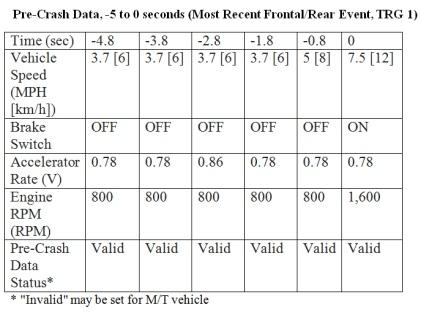
It shows the car's speed at 3.7 miles per hour and the brake switch 'off,' At 0.8 the brake switch is still off but then at 0 seconds, or point of impact, the car's speed increases to 7.5 miles an hour and the engine's RPM doubles from 800 to 1600. The data shows at that time the brake switch was 'on.'
It shows the car’s speed at 3.7 miles per hour and the brake switch “off," At 0.8 the brake switch is still off but then at 0 seconds, or point of impact, the car’s speed increases to 7.5 miles an hour and the engine’s RPM doubles from 800 to 1600. The data shows at that time the brake switch was “on.”


How different parties — NHTSA, Toyota and Ruginis — interpreted the EDR readouts (although Toyota initially simply ignored the data) has become the bone of contention, prompting Ruginis to file the petition to NHTSA and write to the independent monitor.

As Ruginis saw the EDR data, he explained to EE Times:
 
Our car was going 3.7mph the engine speed was 800RPM, the accelerator was not being pressed, the brake was not pressed and the Jeep was 14.78 feet away (my calculation of distance)
 
1.8 seconds later the car was going 7.5mph the engine speed was 1600RPM, the accelerator was not pressed, and the brake was pressed when the collision occurred
How could anyone anticipate that your vehicle speed will double in less than 1.8 seconds if you are not pressing the accelerator?

NHTSA, which did not originally agree with the interpretation above, issued a statement saying it will review Ruginis’ letter, after the petition was filed, according to Kane.

In its initial response to Ruginis’ request, Toyota made no reference to the EDR readout. The company wrote a dismissive letter, noting they didn’t find anything wrong with either the accelerator pedal or the brake.

The accelerator pedal was thoroughly inspected and found to move smoothly with no restrictions or binding. There was no interference or obstruction found with the operation of the accelerator pedal. When the accelerator pedal was released it would always return to the idle position. The brake components were in good condition with no damage or leaks. The floor mat was properly anchored. The vehicle was test driven for 16 miles, at various speeds and road conditions with several accelerating and braking maneuvers being conducted and all systems performed properly with no unusual or unexpected reactions observed.

When Ruginis subsequently followed up with Toyota, questioning why Toyota’s report had disregarded the EDR readout, Toyota simply wrote back:

Based on our inspection of your vehicle it has been determined the incident was not the result of any type of manufacturing or design defect.

Toyota’s failure to address the EDR readout triggered Ruginis’ petition to NHTSA and his contact with the independent monitor.

Curiously, after the petition letter was filed, Toyota “discovered” the EDR readout. It issued a statement Thursday saying, "The vehicle's Event Data Recorder (EDR) conclusively demonstrates that the brake pedal was not depressed until less than 0.8 of a second before impact."

The statement further said: "Toyota also thoroughly inspected and test drove Mrs. Ruginis' vehicle, which revealed no issues, and was unable to duplicate the phenomenon described. This data supports our conclusion that this was not a sudden unintended acceleration event but a collision that resulted from late braking, which is not unique to drivers of Toyota vehicles."

In a nutshell, Toyota is falling back on a familiar alibi: driver error.

Kane noted the paradox that Toyota, which at first overlooked the EDR readout, later interpreted the EDR data to blame the crash on the driver’s depressing the brake pedal too late to avoid the accident.

“You can’t cherry pick the data like that,” Kane said, “using it when it is convenient to them, and ignoring it when it was inconvenient.”

According to Ruginis, David Kelly, the independent monitor, has agreed to a meeting next Wednesday. Stating that a monitor is “to ensure that Toyota is accurately depicting safety and ethics of what they are doing,” Kane said that this will be Kelly’s first test as a watchdog.

Kane was not optimistic. “We will know that the independent monitor’s position is just legal window-dressing.”

— Junko Yoshida, Chief International Correspondent, EE Times Circle me on Google+

Related posts:


Friday, September 12, 2014

New Toyota sudden acceleration claim surfaces


New Toyota sudden acceleration claim surfaces


A Rhode Island man is taking an unusual — and high profile — approach in trying to bring attention to his wife's 2010 Toyota Corolla that he says has a dangerous habit of accelerating on its own.

He's not only taking his case to the National Highway Traffic Safety Administration, but to the lawyer who was designated to be the "independent monitor" as part of Toyota's deferred prosecution agreement with the government over its handling of unintended-acceleration claims.

In letters dated Thursday, Robert Ruginis of Bristol, R.I., alleges Toyota may have broken terms of its agreement by "concealing a safety issue and making misleading statements." He enlisted the help of Sean Kane, a well-known auto-safety expert, who rounded up more than 150 complaints from NHTSA's files that appear to relate to similar problems in Toyotas.

The cases stand out because most involve allegations of unintended acceleration during braking or at slow speeds, not the fear of high-speed runaway cars that were at the heart of the scandal that enveloped Toyota starting in 2009. Toyota was fined $1.2 billion earlier this year. It recalled 8.1 million cars, but says no cause was ever found except floor mats that can trap acceleration pedals and drivers who pushed the accelerator when they thought they were pushing the brake.

Ruginis, in an interview, says the car had the problem almost immediately after it was bought in
2010. At low speeds, the engine accelerated when she stepped on the brake. He says they took the car to the dealer twice to complain about the problems. In both cases, they were told that they couldn't find a problem, that it was most likely shifting in the transmission.

Then, this past June, she had a minor accident. Ruginis' wife was making a right turn with her foot on the brake when the car surged forward, striking an unoccupied, parked Jeep, he says.

He says he contacted Toyota for an inspection of the Event Data Recorder, or EDR. Ruginis, a computer engineering consultant, says the readout validated that his wife's foot had been on the brake and that the car accelerated.

Reached for comment, Toyota says in a statement it was the driver's fault for depressing the brake pedal too late to avoid an accident.

"The vehicle's Event Data Recorder (EDR) conclusively demonstrates that the brake pedal was not depressed until less than 0.8 of a second before impact," the statement reads. "Toyota also thoroughly inspected and test drove Mrs. Ruginis' vehicle, which revealed no issues, and was unable to duplicate the phenomenon described. This data supports our conclusion that this was not a sudden unintended acceleration event but a collision that resulted from late braking, which is not unique to drivers of Toyota vehicles."

Kane, of Safety Research & Strategies, says NHTSA also reviewed the data. NHTSA issued a statement saying it will review Ruginis' letter.

But Kane, in an e-mail, asks, "How does Toyota explain the vehicle and engine speeding up when she is braking — late or not?" Even if the accelerator and brake were pressed at the same time, he says the outcome is hard to explain away without unintended acceleration as a factor.

Meanwhile, some of the briefs of reports culled by Kane from NHTSA's files include:

•"The contact was driving 20 miles per hour when the engine exhibited an unusual increase in RPMs. The contact stated that when depressing the brakes, the RPMs would either decrease or increase rapidly. The vehicle was taken to the dealer and the contact was informed that the RPMs were operating normally."

•"The contact stated that while turning into a parking lot with his foot on the brake, all of a sudden the vehicle accelerated on its own. ... The vehicle barely missed striking a pedestrian and then crashed into a convenience store wall."

•"The contact owns a 2006 Toyota Corolla. The contact applied the brakes, the vehicle abnormally accelerated and crashed into a vehicle in front of him."

As for Ruginis, he still has the Corolla. He says he's stuck: His wife is afraid to drive it, and he doesn't want to sell it knowing it could have a problem.

In his letters, Ruginis asks NHTSA to investigate the issue further. Separately, he asks New York attorney David Kelley, the independent monitor, to assess whether Toyota's statement regarding car safety are accurate, at least in his case.

"Something is wrong here," he says.


http://www.usatoday.com/story/money/cars/2014/09/11/toyota-corolla-nhtsa-unintended-acceleration/15477263/


Bristol couple requests investigation by federal safety agency


Bristol couple requests investigation by federal safety agency

Tuesday, August 26, 2014

Lexus - Toyota Melting Dashboard - $3,000 REPAIR! Where's the MONITOR?


The article below specifically mentions a TOYOTA CAMRY, references LEXUS [A TOYOTA PRODUCT].

There are images of OTHER TOYOTA MODELS posted elsewhere.

Where's the INDEPENDENT MONITOR?

Why is NHTSA ignoring complaints?

If this Phony Baloney Toyoda is so sorry, why isn't he fixing these problems?


The melting dashboard on 2008 Toyota Camry.


Venice man says he has melting dashboard in his Toyota Camry

Posted: Aug 26, 2014


By John Rogers

VENICE, FL (WFLA) - 
          
A Venice man is in a sticky situation.

His dashboard on his Toyota Camry melts in the Florida heat and it leaves a dangerous glare on his windshield.

But the company refuses to pay for the repairs.

Years ago, Venice resident Kayser Sayeg purchased a 2008 Toyota Camry for his wife.

Kayser said, "It's a very nice car, very smooth driving. No problem."

But there was a problem, he soon discovered his dashboard melted in the summer heat!

“It's wet, like glue,” he remarked.

As we drove around, 8 On Your Side noticed the problem only got worse the hotter it got. If you pressed your hand on the dash, it remained stuck there. It was as if the entire dash was coated with the same sticky substance used in duct tape.

It's more than just a nuisance- it's causing a glare, making it hard to see.

Sayeg said, “It's really risky to drive this car."

His son Ilyas exclaimed, "I know it's dangerous! It's dangerous when I'm driving the car. My mom has to drive it!”

Sayeg took it to a Toyota dealer and was told the company would not be paying for the repairs.

"This is not our fault; it's the manufacturer,” explained Sayeg. “The sales manager of the company told me that this 2008 Toyota Camry has this kind of problem, so they know they have problem and they deny to fix it.”

8 On Your Side heard from numerous drivers with the same problem.

It applies to not only Toyotas, but other brands like Lexus.      [LEXUS IS TOYOTA!]

Nissan is also investigating similar claims.

"We have become aware of a few isolated consumer complaints about the dashboard appearance in their vehicle,” said a Nissan spokesperson.

Earlier this month, a Miami law firm filed a class-action lawsuit.

The plaintiffs are suing Toyota for not fixing these problems after the warranties expired.

A Toyota spokesman would not comment because of pending litigation.

Instead the company sent this statement, "We are continuing to investigate dashboard issues reported by some customers, which are affecting multiple manufacturers."

Sayeg just wants this issue solved before someone gets hurt.

"I believe their reputation is more important than a $3,000 dash,” said Sayeg.

“It'd be nice to see an auto manufacturer own up to it, fix it. Don't wait for people to get hurt, just fix it,” said his son Ilyas.

The National Highway Traffic Safety Administration has received numerous complaints about these dashboards, dating back to 2007.

If you'd like to file a complaint, click HERE


http://www.wfla.com/story/26373541/venice-man-says-he-has-melting-dashboard-in-his-toyota-camry


JUST MY OPINION....AT THE MOMENT!

Wednesday, July 23, 2014

Who is Toyota's "Independent Monitor"?


Charlene Blake (@charleneblake)
Months since criminal investigation and NO news about Toyota's "Independent Monitor." WHO is it?? #SUA #Toyota #Lexus betsybenjaminson.blogspot.com/2014/04/job-de…

Toyota "Independent Monitor"


Charlene Blake (@charleneblake)
Toyota "Independent Monitor," we need you to LISTEN to Toyota ELECTRONIC SUA crash victims. WHERE can you be reached? uc2.blogspot.com