Search This Blog

Translate

Blog Archive

Middleboro Review 2

NEW CONTENT MOVED TO MIDDLEBORO REVIEW 2

Toyota

Since the Dilly, Dally, Delay & Stall Law Firms are adding their billable hours, the Toyota U.S.A. and Route 44 Toyota posts have been separated here:

Route 44 Toyota Sold Me A Lemon


Showing posts with label herbicides. Show all posts

Wednesday, July 29, 2015

MoJo: The Super Sketchy New Ingredient in Weed Killers


Scientists Say a Supposedly Miraculous and Totally Unregulated Weed-Killer Ingredient Doesn't Even Work

Pesticide makers are raving about a hot ingredient: They say that a new kind of adjuvant—a chemical mixed with pesticides to boost their effectiveness—works wonders to treat superweeds, the pesky plants that are resistant to common herbicides.
But as it turns out, adjuvants are completely unregulated by the Environmental Protection Agency. And now a study has found that the new kind might not even work.
[READ MORE]


SIDE DISHES
The California Drought Is Making Some Fruit Taste...Better?!
No, Foregoing Your Glass of Water at a Restaurant Won't Fix California's Drought
Soon You Might Actually Be Able to Tell How Much Added Sugar Is in Your Food


Monday, March 3, 2014

5 Reasons Monsanto's 'Science' Doesn't Add Up


Irina Ermakova, a leading scientist at the Russian Academy of Scientists, joins GMO Free Midwest picket. (photo: Don Fitz)

5 Reasons Monsanto's 'Science' Doesn't Add Up

By Katherine Paul, Ronnie Cummins, Organic Consumers Association
02 March 14

o hear the pesticide and junk food marketers of the world tell it, anyone who questions the value, legitimacy or safety of GMO crops is naïve, anti-science and irrational to the point of hysteria.
 
But how long can Monsanto ignore the mounting actual scientific evidence that their technology is not only failing to live up to its promises, it’s putting public health at risk?
 
Jim Goodman, farmer, activist and member of the Organic Consumers Association policy advisory board, recently wrote about Monsanto’s deceptive use of the expression “sound science.”
But, ‘sound science’ has no scientific definition. It does not mean peer reviewed, or well documented research. ‘Sound science’ is only a term, an ideological term, used to support a particular point of view, policy statement or a technology. ‘Sound science’ is little more than the opinions of so-called “experts” representing corporate interests.

Simply put, ‘sound science’ always supports the position of industry over people, corporate profit over food safety, the environment and public health.
Here are five new reports and studies, published in the last two months, that blow huge holes in Monsanto’s “sound science” story. Reports of everything from Monsanto’s Roundup causing fatal, chronic kidney disease to how, contrary to industry claims, Roundup persists for years, contaminating soil, air and water. And oh-by-the-way, no, GMO crops will not feed the world, nor have they reduced the use of herbicides and pesticides.
 
1. Monsanto’s Roundup linked to fatal, chronic kidney disease. Article in Journal of Environmental Research and Public Health, February 2014
 
What happens when you mix glyphosate, the key active ingredient in Monsanto’s Roundup, with “hard” water? That is, water that contains metals, such as calcium, magnesium, strontium and iron, either found naturally in the soil, or resulting from the use of chemical fertilizers?
 
The glyphosate becomes “extremely toxic” to the kidneys.
 
That’s the theory put forth by researchers trying to uncover the mystery of thousands of deaths from chronic kidney disease among people in farming areas of Sri Lanka, El Salvador and Nicaragua.
 
2. Monsanto’s Roundup persists in soil and water. U.S. Geological Survey report in Environmental Toxicology and Chemistry, February 2014
 
Monsanto has always insisted (despite evidence to the contrary) that its Roundup herbicide is benign, that its toxicity doesn’t persist.
 
But that’s only half the story, according to a study published this month in Environmental Toxicology and Chemistry. Researchers now say that if you study only the key active ingredient, glyphosate, you might, as Monsanto claims, determine that Roundup is benign.
 
But there are other ingredients in Roundup, including one called Aminomethylphosphonic acid, or AMPA. The study, called "Pesticides in Mississippi air and rain: A comparison between 1995 and 2007," found that glyphosate and its still-toxic byproduct, AMPA, were found in over 75 percent of the air and rain samples tested from Mississippi in 2007.
 
What does that mean for you? According to one analysis, “if you were breathing in the sampled air you would be inhaling approximately 2.5 nanograms of glyphosate per cubic meter of air. It has been estimated the average adult inhales approximately 388 cubic feet or 11 cubic meters of air per day, which would equal to 27.5 nanograms (billionths of a gram) of glyphosate a day.” Gasp.
 
3. GMO crops have led to an increase in use of pesticides and herbicides. U.S. Department of Agriculture (USDA) report, February 2014.
 
The USDA, which gauging from its track record has never met a GMO crop it didn’t like, published a report substantiating what responsible, independent scientists have been saying along. Genetic engineering does not result in increased yields (as industry would have us believe)—but it has led to the increased (not decreased, as industry claims) use of pesticides and herbicides.
 
To be fair, the report gives overall favorable reviews to GMO crops. Not surprising, given the agency’s cozy relationship with Monsanto. But that makes it all the more telling that the once staunch-defender of GMO crops is now raising questions about industry’s long-term, decidedly unproven and unscientific, claims that biotechnology is the best thing since sliced (GMO wheat) bread.
 
Sustainable Pulse does a good job of sifting through the USDA’s report to reveal the agency’s criticisms of GMO crops.
 
4. Pesticides are more dangerous than we thought.Article in BioMed Research International, February 2014
 
More bad news on pesticides. A study published in BioMed Research International this month says that it’s not just the toxic chemicals we need to worry about in pesticides. It’s the inert ingredients, and how they interact with the active, toxic ingredients.
 
Typically, studies conducted to determine the safety of pesticides focus exclusively on the active ingredients. But scientists at the University of Caen tested eight commercial products, including Roundup, and found that nine of them were hundreds of times more toxic than their active ingredient alone.
 
Which product won the “Most Toxic” award? Monsanto’s Roundup, which was found to be “by far the most toxic of the herbicides and insecticides tested,” according to the study.
 
5. Small-Scale, organic farming needed to feed the world. U.N. Commission on Trade and Development (UNCTAD), Wake Up Before It Is Too Late, December 2013
 
In December 2013, the U.N. Commission on Trade and Development (UNCTAD) released the results of a lengthy, in-depth study that blows a huge hole in one of Monsanto’s favorite claims, that we need GMOs to feed the world. The study, entitled Wake Up Before it is Too Late, concluded with this warning: Small-scale organic farming is the only way to feed the world.
 
According to an analysis by one of the report’s contributors, the report contains in-depth sections on the shift toward more sustainable, resilient agriculture; livestock production and climate change; the importance of research and extension; the role of land use; and the role of reforming global trade rules.
 
More than 60 experts from around the world contributed to the report.
 
Clearly the evidence—real, scientific evidence—against GMO crops is mounting, when five new anti-GMO studies and reports surface in a matter of a couple of months.
 
How much more will it take before the USDA, U.S. Food & Drug Administration (FDA) and the U.S. Environmental Protection Agency stop supporting an industry under attack from the scientific community? And start putting public health before corporate profits?
 
In December, more than 200 scientists, physicians, and experts from relevant fields, signed a statement declaring that the biotech industry is deceiving the public when it claims that GMOs are safe. There is, the group said, no “scientific consensus” to support industry’s claims that GMOs are safe.
 
But as new studies surface every day, it’s become increasingly clear that among credible physicians and scientists, the consensus is that we’d better wake up, soon, to the risks and threats posed by a reckless technology that has been allowed to dominate our food and farming systems, unchecked, for far too long.

Saturday, February 22, 2014

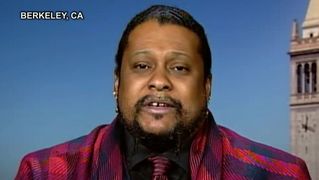
Silencing the Scientist: Tyrone Hayes on Being Targeted by Herbicide Firm Syngenta

Below is the video referenced below,  released by the Humane Society of the U.S. - CAUTION GRAPHIC IMAGES:

Undercover Exposé: Animals Locked in Cramped Cages, Piglets Fed to their Mothers at Kentucky Pig Factory


Democracy Now! Daily Digest

A Daily Independent Global News Hour with Amy Goodman & Juan González


We speak with scientist Tyrone Hayes of the University of California, Berkeley, who discovered a widely used herbicide may have harmful effects on the endocrine system. But when he tried ... Read More →

A new exposé in The Nation magazine reveals that much of the lobbying money spent on shaping policy in Washington is going unreported. For the third straight year, the official amount spent ... Read More →

Human Rights Watch has revealed as many as 12 civilians were killed in December when a U.S. drone targeted vehicles that were part of a wedding procession going toward the groom’s village ... Read


Tuesday, February 18, 2014

Corporation court corruption


Occupy Seattle's photo.
Corporation court corruption
 
 
Agribusiness Giant Syngenta Suppressing Evidence Of Herbicide-Caused Endocrine Disruption in Frogs: Activist Scientists' Fears Upheld By Court Documents

Monsanto's perfidies are relatively well known. But another agribusiness giant, Syngenta, which is the world's 3rd largest source of herbicides, seeds, and assorted agri-business technologies, sought for years to destroy the careers of scientists who discovered the dark side of its products: its herbicide Atrazine causes widespread endocrine disruption in frogs. The story of how far Syngenta has been willing to go brings the world of corporate harassment of activist scientists to the spotlight:

"To protect profits threatened by a lawsuit over its controversial herbicide atrazine, Syngenta Crop Protection launched an aggressive multi-million dollar campaign that included hiring a detective agency to investigate scientists on a federal advisory panel, looking into the personal life of a judge and commissioning a psychological profile of a leading scientist critical of atrazine.

The Switzerland-based pesticide manufacturer also routinely paid “third-party allies” to appear to be independent supporters, and kept a list of 130 people and groups it could recruit as experts without disclosing ties to the company.

Recently unsealed court documents reveal a corporate strategy to discredit critics and to strip plaintiffs from the class-action case. The company specifically targeted one of atrazine’s fiercest and most outspoken critics, Tyrone Hayes of the University of California, Berkeley, whose research suggests that atrazine feminizes male frogs."

http://100r.org/2013/06/pest-control-syngentas-secret-campaign-to-discredit-atrazines-critics/

"And then, every once in a while, I come across a true scandal, and it tips me back toward cynicism.

That said, now I’m pissed off: Monday morning we learned that the ag-tech corporation Syngenta paid millions of dollars in a covert effort to protect its herbicide atrazine and discredit critics. (The story, put out by Environmental Health News and 100Reporters, is worth reading in full here.) It’s a solid case study illustrating the lengths a company will go to influence the scientific debate. And, usefully, the documents show who Syngenta was paying to shill for them."

http://grist.org/food/syngenta-plays-dirty-to-shape-public-opinion-on-herbicide/

"According to company e-mails, Syngenta was distressed by Hayes’s work. Its public-relations team compiled a database of more than a hundred “supportive third party stakeholders,” including twenty-five professors, who could defend atrazine or act as “spokespeople on Hayes.” The P.R. team suggested that the company “purchase ‘Tyrone Hayes’ as a search word on the internet, so that any time someone searches for Tyrone’s material, the first thing they see is our material.” The proposal was later expanded to include the phrases “amphibian hayes,” “atrazine frogs,” and “frog feminization.” (Searching online for “Tyrone Hayes” now brings up an advertisement that says, “Tyrone Hayes Not Credible.”) "

http://www.newyorker.com/reporting/2014/02/10/140210fa_fact_aviv

" "In 2009, a New York Times investigation found that 33 million Americans are exposed to atrazine through drinking water. EPA data from 2010 shows contamination exceeding the federal limit in 9 out of 10 states monitoring it—several Midwestern water districts reported between 9 and 18 times the limit. (Atrazine's tendency to contaminate water supplies is one reason the European Union voted to ban it in 2003.)

The EPA has claimed these spikes are not a health hazard. Yet epidemiological studies have found links between prenatal atrazine exposure and birth defects, premature birth, and low birth weight—even at extremely low concentrations. As Hayes explains, "0.1 ppb is not a low dose at all. Estrogen is active at levels that are 100 to 1,000 times lower than that. So in terms of an endocrine disruptor, that's a high dose." "

http://www.motherjones.com/environment/2011/11/tyrone-hayes-atrazine-syngenta-feud-frog-endangered

Monday, November 18, 2013

NStar's herbicide use approved


NStar's herbicide use approved
 
Despite fierce opposition, state regulators have approved NStar's use of herbicides beneath the utility's transmission rights of way on Cape Cod and Martha's Vineyard in 2013.
 
The Massachusetts Department of Agricultural Resources approved the annual vegetation management plan Friday, according to an email from the department's spokeswoman Mary-Leah Assad.

NStar vegetation management plan 2013

For more information on NStar's vegetation management plan go to http://1.usa.gov/1ajyvXP. Here are the towns
on Cape Cod and Martha's Vineyard affected by herbicide
use under the plan:
  • Barnstable
  • Bourne
  • Brewster
  • Chatham
  • Edgartown
  • Falmouth
  • Harwich
  • Oak Bluffs
  • Orleans
  • Sandwich
  • Tisbury

Plans are approved for the calendar year so the current plan will expire Jan. 1, Assad wrote. Eight Cape towns and three Vineyard towns will be affected by the use of herbicides, according to the 15-page plan.
 
NStar has not used herbicides on Cape Cod for the past four years as part of a voluntary moratorium prompted by local concerns about the chemicals.
 
"We're very pleased to have received approval from the (Department of Agricultural Resources) so that we can continue with this very important electric service reliability program," NStar spokesman Michael Durand said Sunday.
 
NStar uses a vegetation-management program similar to programs across the country, Durand said.
 
These have consistently been shown to be not only the best way to maintain reliable service but also to promote the growth of a self-sustaining meadowland environment requiring less and less use of herbicides, he said.
 
Herbicides are applied to target species by workers using backpack sprayers as part of a plan that includes mechanical controls and the encouragement of low-growing plants in lieu of high-growing species, according to NStar officials.
 
The exact time and location of herbicide applications under the current plan will depend on a variety of factors, including scheduling with the company's vendor, Durand said.
 
The utility uses only herbicides approved for environmentally sensitive areas, Durand has said previously. NStar has repeatedly defended itself as being heavily regulated and accountable for less than 1 percent of the Cape's herbicide use.
 
In 2011, a Barnstable County panel reviewing NStar's use of herbicides voted in favor of the utility's plan.
 
Opponents of the practice, however, argue that NStar's use of the chemicals poses a danger to public health and the environment.
 
"The adventure continues," said Sue Phelan, director of GreenCAPE, a nonprofit organization that has led the opposition to NStar's herbicide use.
 
Phelan said NStar has avoided discussing the group's health concerns.
 
"I guess we'll just have to meet them where we meet them," she said.
 
Most recently that strategy included demonstrations Friday at NStar's office on Willow Street in West Yarmouth and in Boston at the end of October with Cape legislators. Last week, opponents staked out the Osterville home of Northeast Utilities CEO Tom May. Northeast Utilities is NStar's parent company.
 
Although all 15 Cape towns have passed resolutions calling on NStar to stop the practice, the company announced in August that it would resume the use of herbicides.
 
NStar submitted a vegetation management plan for 2014 on Thursday, according to Assad.
 
That plan will be published for public notice on Wednesday, followed by a 45-day comment period, she wrote.


Wednesday, October 23, 2013

Argentina Is Using More Pesticide Than Ever Before. And Now It Has Cancer Clusters.

Interesting article by Tom Philpott......

[Eye-opening graphs available in link below.]

Argentina Is Using More Pesticide Than Ever Before. And Now It Has Cancer Clusters.


| Wed Oct. 23, 2013
 

Argentina's agricultural transformation over the past 20 years—from prime producer of grass-finished beef to one of the globe's genetically modified crop-producing powerhouses—is often hailed as triumph of high-tech ag. Starting in the 1970s and accelerating recently, high crop prices and various government policies inspired ranchers in the fertile Pampas and Chaco regions to plow up pasture—releasing large amounts to carbon in the process—to plant soybeans, mainly for export markets. In the mid-1990s, when Monsanto rolled out its soybean seeds engineered to resist herbicide, Argentina's new crop farmers were early adapters (see chart to the right).

Sergio H. Lence, "The Agricultural Sector in Argentina: Major Trends and Recent Developmebts," 2010

Today, Argentina is the globe's third-largest soy producer—and nearly 100 percent of its soy crop is genetically altered. The trend has certainly benefited the GMO seed and agrichemical industry—as the below charts show, herbicide, pesticide, and fertilizer use has soared over the past 15 years.

But what about the people who live in the country's agricultural regions? A recent article by Associated Press reporters Michael Warren and Natacha Pisarenko paints a grim picture of life in the farm belt in the age of industrial corn and soy:

In Santa Fe, cancer rates are two times to four times higher than the national average. In Chaco, birth defects quadrupled in the decade after biotechnology dramatically expanded farming in Argentina.

The story quotes a pediatrician and neonatologist names Medardo Avila Vazquez, who has been moved to found a group called Doctors of Fumigated Towns. "We've gone from a pretty healthy population to one with a high rate of cancer, birth defects, and illnesses seldom seen before," he tells Warren and Pisarenko.

GMO seed giant Monsanto—whose soybean and corn seeds engineered to withstand its own herbicide, Roundup (glyphosate), blanket the nation's farmland—denies responsibility for the possible link between agrichemicals and rising rates of health disorders, the AP writers report. The company "does not condone the misuse of pesticides or the violation of any pesticide law, regulation, or court ruling," A Monsanto spokesperson told Warren and Pisarenko.


Even so, Warren and Pisarenko found pesticide use to be at best lightly regulated. "With soybeans selling for about $500 a ton, growers plant wherever they can, often disregarding Monsanto's guidelines and provincial law by spraying with no advance warning, and even in windy conditions," they write.

Meanwhile, provincial restrictions against spraying too close to residential areas are often honored in the breach. The AP story features multiple accounts of people coming into direct contact with agrichemical sprays—just because they lived near farm fields. In one town, teachers reported students getting doused by chemical sprayers during class. In another, a government study found pesticide traces in the blood of 80 percent of children.

The authors make clear that one major driver of Argentina's surging herbicide use is that weeds there have developed resistance to Monsanto's flagship herbicide, Roundup. Just as they've done in the US, farmers there have responded by jacking up their doses of Roundup and adding "much more toxic poisons, such as 2,4,D, which the US military used in 'Agent Orange' to defoliate jungles during the Vietnam War."

Even Roundup's reputation as a relatively benign agrichemical has come under fire from Argentine researchers alarmed at the effect this chemical deluge might be having on people. In a 2010 paper, a research team led by the University of Buenos Aires professor Andrés E. Carrasco found that "injecting a very low dose of glyphosate [Roundup's active ingredient] into embryos can change levels of retinoic acid, causing the same sort of spinal defects in frogs and chickens that doctors increasingly are registering in communities where farm chemicals are ubiquitous," Warren and Pisarenko report. Monsanto disputes the study's findings, claiming they were undermined by flawed methodology and "unrealistic exposure scenarios."

Meanwhile, the epidemiological evidence—health assessments people living near chemical-intensive farms—is unsettling. In the Chaco region, a study of 2,051 people in six towns turned found "significantly more diseases and defects in villages surrounded by industrial agriculture than in those surrounded by cattle ranches," the AP reports. "In Avia Terai, 31 percent said a family member had cancer in the past 10 years, compared with 3 percent in the ranching village of Charadai."

It's worth noting that that Argentina's Pampas region—another place where both chemical use and rates of cancer and birth defects have risen—is widely known for its highly productive form of traditional agriculture, which produces top-quality grass-finished meat and a surplus of grain as well. Michael Pollan described it in his famous 2009 essay "Farmer-in-Chief":
There, in a geography roughly comparable to that of the American farm belt, farmers have traditionally employed an ingenious eight-year rotation of perennial pasture and annual crops: after five years grazing cattle on pasture (and producing the world’s best beef), farmers can then grow three years of grain without applying any fossil-fuel fertilizer. Or, for that matter, many pesticides: the weeds that afflict pasture can’t survive the years of tillage, and the weeds of row crops don’t survive the years of grazing, making herbicides all but unnecessary.
Pollan even help up the Pampas system as a model for reforming our own chemically ravenous agriculture: "There is no reason—save current policy and custom—that American farmers couldn’t grow both high-quality grain and grass-fed beef under such a regime through much of the Midwest."
But he added, presciently, that "today’s sky-high grain prices are causing many Argentine farmers to abandon their rotation to grow grain and soybeans exclusively, an environmental disaster in the making."

Tom Philpott

Food and Ag Correspondent
Tom Philpott is the food and ag correspondent for Mother Jones. For more of his stories, click here. To follow him on Twitter, click here. RSS |

If You Liked This, You Might Also Like...

Wednesday, April 10, 2013

We have so totally saturated our household and work environments with chemicals, attempting to identify the culprit is a challenge.

In our efforts to smell nice, sleep on sheets artificially perfumed to smell like 'outdoors,' remove wrinkles, mousse our hair with unidentifiable slime, put bizarre chemicals on our nail-beds to be absorbed, irrationally pursue an unnaturally green lawn, rid our house and air of naturally occuring bugs the composition of which we don't comprehend and accept whatever advertised insanity is marketed, do we wonder why we and our kids get sick?


Steward Health Care has defended its 'laundering practice,' going around endless circles that were unintended. When I protested an 'allergy,' assurances were offered of preferential treatment and special linens, ignoring that the offending allergens become airborne and effect a compromised community.

Manufacturers of household chemicals, laundry detergent and common household products are not required to disclose their ingredients, making elimination or avoidance impossible.

While Monsanto has justifiably become the target of recent concern, how are we to avoid chemical exposure?


The 'household products' we use are solely simple, commonly available products - vinegar, baking soda and so on. Any other ideas?


What Every Parent Should Know About Monsanto

by Toni Nagy
image copyright unknown

Keeping our children from harm in today’s chemically-saturated world is one of the great challenges of modern parenting. The more I read the news, the more I want to look for toddler-sized quarantine suits on Etsy, but the most proactive way I can protect my daughter is to keep myself educated on these issues — even if that means I get forehead wrinkles from excessive worry. In addition to the health of my child, I fear for the ecological health of the planet. Last time I checked, Earth is the only place we have to live, and what kind of future am I providing for my daughter if I am not cognizant of how my life, and the decisions of my government, effect our environment? That is why every parent should be aware of the Monsanto Protection Act and what it means for their family.

When President Obama signed the Monsanto Protection Act, many citizens were outraged by this blatant violation of the Constitution. By approving this act, Obama has allowed Monsanto to exist above the law, since genetically modified seeds are now protected from any litigation involving health risks. That is strange, right? If you were confident in your product, why would you be concerned about lawsuits involving health risks? You may wonder how this applies to you, considering you don’t buy Monsanto-Oh’s for breakfast, but essentially, you are. Monsanto’s genetically engineered corn, soy, wheat and beet crops have infiltrated our entire food system, and you could be eating their products every day and not even realizing it.
Many people, including children, have developed deadly allergies to peanuts and other food products. Imagine the trauma for a child who has to deal with their mortality every time they eat — how terrifying for the affected kids and their parents. According to PBS.org, “Some critics of GM foods feel that the possibility exists that those genetically modified food crops may unintentionally introduce a new allergen — for example, a fish gene can be put into a plant…. ” Although I am fan of sushi, I don’t really think it is necessary to cross-breed it with my strawberries — especially considering the potential adverse reaction. PBS then goes on to explain, “Another potential hazard is the possibility that bacteria in our guts could pick up antibiotic-resistant genes found in many GM foodstuffs… in principle, it could exacerbate the already worrisome spread of disease-causing bacteria that have proven able to withstand our antibiotics.”

Beyond frightening and unforeseen potential consequences to human health, there are some serious ecological effects we can’t afford to ignore. Traditionally, farmers around the world have saved seeds in order to cultivate a variety of strands to help maintain bio-diversity, particularly heirloom varieties, some of which may have been developed hundreds of years ago or more. Monsanto requires farmers to sign contracts on their seed that cannot legally be used the next season, and therefore the farmers have to purchase new seed annually. These GMO seeds are used only in monocrop farming type operations, which are not environmentally friendly or sustainable for their own reasons even without the GMOs, pesticides, and petrochemical fertilizer. So when you drive cross-country, one-third of the time you will be staring at corn and soy fields making you wish the Children of the Corn will emerge and eat your eyeballs directly out of your sockets. Massive fields with one crop, created from one seed, become very susceptible to pests — hence the creation of pesticides. And because there is no crop-rotation to replenish fields, the pesticides often continue to build up over time.

I know organic is a bit more expensive, but that is largely because organic farmers don’t receive the subsidies that GM farmers do. It is not like organic farmers are blinged out in diamonds because of all their profit from kale. They are barely scraping by trying to compete in a marketplace dominated by agribusiness. And think of it this way — until the 1940s the whole world ate organic all the time.

Because that was all there was. Of course this is a very complicated issue because millions of people are dependent on GM crops to survive, but as an individual with purchasing power, how you spend your money will dictate where the market will start to lean. Supporting local farmers and getting involved with CSA‘s (community supported agriculture) will keep your costs down. And, of course, the more people who buy food grown without GMOs, the more companies will move in that direction.

It can be difficult to make an assessment for yourself of the personal and environmental risks of genetically engineered crops, because both the pro and con sides of the argument are very impassioned. You can find massive amounts of research pointing you in either direction, and that in and of itself should be a major warning sign. That the long-term consequences of these products are not yet understood means that we, the consumers, are essentially the test subjects of a global experiment involving our entire food system. What kind of responsible scientist uses humans as their guinea pigs? Not to throw the mice and rats under the bus, but I would much prefer we test on them for a few decades instead of using our children.
Toni Nagy

- Blogger, tonibologna.com

Follow Toni Nagy on Twitter: www.twitter.com/tonibolognamind


About Fritz Kreiss

Fritz Kreiss is the founding head of Occupy Monsanto. He has a history in natural health, nutrition, herbal medicine, Eastern Medicine, acupuncture, kinesiology, physiology, and many years of practice as a professional massage therapist and teacher.


Monsanto Claims.....


Another gem.....

Genetically modified seed giant Monsanto likes to trumpet its commitment to "sustainable agriculture." The story goes like this: By generating novel, high-tech crop varieties, Monsanto will wean farmers off of their reliance on synthetic chemical poisons. The company even markets its flagship product, seeds genetically engineered to survive its own Roundup weed killer, as a way for farmers to "decrease the overall use of herbicides."

And yet, while the company has tried hard to leave behind its past as a purveyor of herbicides and rebrand itself as a technology company, selling toxic chemicals remains central to its growth and profitability. I mined Monsanto's latest quarterly profit report—and here's what I found: [READ MORE]