Search This Blog

Translate

Blog Archive

Middleboro Review 2

NEW CONTENT MOVED TO MIDDLEBORO REVIEW 2

Toyota

Since the Dilly, Dally, Delay & Stall Law Firms are adding their billable hours, the Toyota U.S.A. and Route 44 Toyota posts have been separated here:

Route 44 Toyota Sold Me A Lemon


Showing posts sorted by relevance for query coal ash. Sort by date Show all posts

Sunday, February 2, 2014

Protection from Dirty Coal Ash!


It’s been over five years since a massive coal ash dump in Tennessee burst through a dam, destroyed dozens of homes, poisoned thousands of fish and wildlife and flattened 300 acres of riverfront property. Since then, toxic coal ash has continued to contaminate our waters, threaten nearby communities and kill local wildlife.

An Historic Agreement on Coal Ash

The long wait is over: EPA agrees to finalize waste rule this year

A rally in Asheville, NC, calling for strong protections against coal ash contamination of waterways.


Late yesterday, the Department of Justice on behalf of the EPA lodged a consent decree with the U.S. District Court for the District of Columbia that requires the EPA to publish a final rule addressing the disposal of coal ash by Dec. 19, 2014. The settlement came as a result of a lawsuit brought by 10 public interest groups and the Moapa Band of Paiutes against the EPA for its failure to review and revise its regulations pertaining to coal ash. The settlement does not dictate the content of the final regulation, but it confirms that the agency will finalize a rule by a date certain after years of delay.
If there has ever been a time to celebrate a victory on coal ash over the last three decades, today is the day.
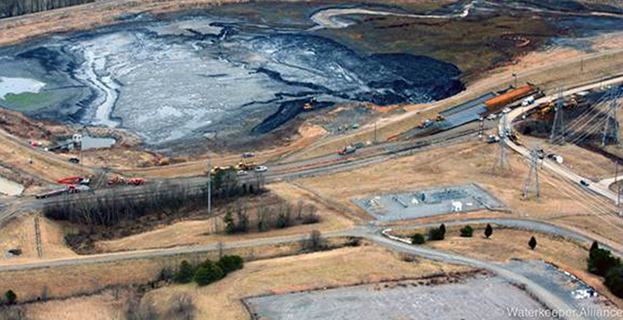
The Kingston, TN, coal ash spill. In 2008, residents all along the Emory River woke up to the tragedy of 1 billion gallons of toxic coal ash that spilled from the Tennessee Valley Authority's Kingston Fossil Plant. The spill covered 300 acres, destroyed homes, poisoned rivers and contaminated coves and residential drinking waters. (TVA)The Kingston coal ash spill in December 2008. (TVA Photo)
EPA’s coal ash rulemaking was triggered by the largest toxic waste spill in U.S. history when a billion gallons of coal ash burst through a dam at the TVA Kingston Fossil Plant in Roane County, Tennessee. While damage to health and the environment had been occurring for decades at hundreds of sites throughout the nation, the headline-making disaster brought a commitment in 2009 from then-Administrator Lisa Jackson to establish federal disposal standards within the year.
But, amazingly, the catastrophic collapse of the TVA dam was not enough to push EPA to complete its rulemaking. Only after Earthjustice and other public health and environmental groups sued did the EPA commit to a deadline for a final rule and break the logjam of delay and dangerous deferral.
This consent decree ends the inexcusable and destructive 30-year delay in establishing rules for safe disposal of the nation’s second largest industrial waste stream. No other industry in this country, save the mining industry, has a license to dump toxic waste in our water at the massive scale enjoyed by our coal-burning power plants. The industry estimates that they have generated 3 billion tons of coal ash since the beginning of the last century. Not an ounce has been subject to disposal regulations that ensure its safe, long-term disposal. This, we hope, will change in 2014.

While the consent decree sets an enforceable deadline for the publication of the coal ash rule, it does not dictate its content. The EPA still has discretion to finalize either of the two proposals it published in June 2010.

The benefits of a strong coal ash rule for our health and environment are immense—and this ruling comes none too soon to protect the air, water and safety of communities living near more than 1,000 massive coal ash impoundments, ponds, dry landfills and other coal ash dumpsites.

[CLICK ON LINK BELOW TO VIEW GRAPHIC]
Known* cases of coal ash contamination and spills:
 

Red icon. Contaminated Site
Green icon. Spill
Black icon. Contaminated Site and Spill
* These cases of documented water contamination are likely to be only a small percentage of the coal ash-contaminated sites in the U.S. Most coal ash landfills and ponds do not conduct monitoring, so the majority of water contamination goes undetected. According to U.S. EPA, there are over 1,000 operating coal ash landfills and ponds and many hundreds of "retired" coal ash disposal sites.
Coal ash and sludge laden with toxic metals, including arsenic, chromium, lead, mercury and selenium, are dumped in unlined and unmonitored lagoons and landfills and stacked stories-high behind earthen dams without proper engineering, inspection or maintenance. In many states, where millions of tons of coal are burned for electricity, there are simply regulations controlling the disposal of this toxic waste. For decades, communities have waited for protection from the waterborne and airborne chemicals that cause cancer, birth defects, neurological injury, and other diseases. The EPA made a very grave error when it failed to establish nationwide protections decades ago. The dumping of toxic ash nationwide has contaminated more than 200 rivers, streams, lakes and sources of underground drinking water.
 
In exchange for significant health, safety and environmental benefits, most power plants will pay a pittance. The EPA estimated that even under the most stringent rule, electricity prices would not rise more than one percent, even if all costs were passed on to the consumer. Both of EPA’s proposed rules, under subtitles C and D, will allow the continued operation of existing coal ash landfills, and both will require the eventual phase out of dangerous and leaking impoundments like the one that failed in Kingston, Tennessee. Those utilities that have managed their coal ash in the most dangerous, antiquated and irresponsible manner will have to make a larger investment to convert their dumping operations to safe practices. For utilities that invested in safer disposal practices, such as lined, engineered and monitored landfills, the cost of the rule will be negligible—even if the EPA regulates coal ash as a special waste under subtitle C.

The EPA’s primary statutory duty under RCRA is clear—to minimize the threat to human health and the environment from the disposal of solid waste. The agency’s final coal ash rule must meet these goals by phasing out dangerous coal ash ponds as soon as possible, establishing an enforceable baseline of engineering and disposal standards applicable in all states that protect both air and water, and establishing federal authority to ensure that such standards are timely instituted and effectively enforced. The coal ash rule must protect the nation’s most vulnerable communities and give all citizens a meaningful role in the siting of disposal facilities. Law, science, and sound public policy dictate that the EPA should finalize a subtitle C rule, regulating coal ash as a “special waste” under RCRA. It remains to be seen, however, whether considerations other than protection of health and the environment will take precedence in this politically charged rulemaking.

For now, we celebrate this historic agreement to finalize the rule by year’s end. A final rule marks a huge step forward for the health and safety of all American communities.


http://earthjustice.org/blog/2014-january/celebrating-an-historic-agreement-on-coal-ash?utm_source=Convio


Wednesday, November 2, 2011

Another Coal Ash Spill

You won't hear about the Destructionist Environmental Policies being perpetrated by the Republican controlled House of Representatives on MSM.

As our Democracy has been bought and sold by Dirty Energy and others, the risk to our drinking water and our environment escalates.

Don't breathe a sigh of relief that you're protected from Coal Ash Spills. There is no protection in Massachusetts!

Check out the photo collage, reminiscent of the TVA spill in Harriman, Tennesee. Pretty disgraceful - and totally avoidable if the right policies were in place to protect water supplies.

Coal Ash Spills in Lake Michigan
—By Kate Sheppard

Check out this photo that Mark Hoffman of the Milwaukee Journal Sentinal snapped on Monday of a dam collapse at a coal ash pond:

Check out these images:
LINK

The Journal Sentinel reports that a large section of a bluff used to contain coal ash at the We Energies Oak Creek Power Plant broke on Monday, dumping ash and dirt into Lake Michigan. As you can see in the photo, a truck and some heavy machinery were also pushed into the lake. One of the first responders in the area noted that the debris "stretched 120 yards long and 50 to 80 yards wide at the bottom." A spokesman for the company told the paper that the dam probably did contain coal ash, but said that they'd stopped dumping it there "several decades ago."

The spill calls to mind the catastrophic dam break at the Tennessee Valley Authority's Kingston Fossil Plant in Harriman, Tennessee, back in December 2008. That spill dumped 1.1 billion gallons of coal slurry, and prompted the Environmental Protection Agency to reconsider how coal waste is handled. Although the EPA was on course to reclassify coal leavings as "hazardous waste" that needed special handling, that rule has been stuck in bureaucratic wrangling for more than two years. So for now, it's still perfectly legal to store coal ash waste in retention ponds that are likely not lined or particularly well maintained.


Another coal ash spill—this time in Lake Michigan
How many more coal ash spills need to happen before Americans are protected by coal ash safeguards? The latest happened Monday in Oak Creek, Wis., at the We Energies Oak Creek Power Plant.

And since the TVA disaster, the industry has been lobbying hard to block the Environmental Protection Agency (EPA) from establishing new protections, arguing that states are doing a fine job regulating coal ash. As a result, communities across the nation remain at risk and unprotected.

Just two weeks ago the industry successfully lobbied the U.S. House of Representatives to pass a bill stripping the EPA of the authority to protect Americans from coal ash.

Monday's collapse on Lake Michigan is particularly troublesome because We Energies has known for years that its management of coal ash at this facility was a threat to human health. Indeed, they have been providing bottled water to neighbors whose wells have been contaminated.


New Lake Michigan Coal Ash Spill Raises Old Concerns

On Monday, a bluff surrounding a Milwaukee, Wisconsin-based power plant collapsed, sending a cascade of debris and coal ash waste from the power plant into Lake Michigan. No injuries were reported by We Energies, the company who owns the power plant, but the environmental assessment will likely be less optimistic. We Energies, a subsidiary of Wisconsin Energy Corporation (NYSE: WEC), has confirmed that the debris that made it into the river likely contained coal ash.

As of Monday afternoon, a “fuel sheen” appeared on the surface of Lake Michigan as a result of the bluff collapse. Cleanup crews from Clean Harbor were contracted by We Energies to help contain the spread of the sheen, and will be deploying about 1,500 feet of boom to help contain the waste on the surface. Shortly after the accident, residents living up to a mile away from the site along the lake were already reporting debris washing onshore.

As we have reported extensively in the past, coal ash contains countless toxic substances, including mercury, hexavalent chromium, arsenic, and cadmium. It has also been reported to be more radioactive as nuclear waste. In spite of these findings, the EPA has yet to issue any firm stance on whether or not coal ash will be regulated as a “toxic waste,” partly due to the fact that the coal industry has unleashed a cadre of lobbyists to Washington to fight to protect their coal ash interests.

The EPA’s delay in issuing a ruling on coal ash has allowed the Republican-controlled Congress to gain the upper hand on the issue. In early fall 2011, the U.S. House of Representatives passed legislation that would prohibit the EPA from regulating coal ash, and preventing them from classifying the substance as “hazardous.” Instead of EPA regulations, the bill would allow states to issue their own standards on coal ash and prevent any federal standards.


The House legislation was put forward by Republican West Virginia Congressman David McKinley, who has received more than $275,000 from the mining industry during his four years in Congress, making them his highest single donor industry, according to the Center for Responsive Politics.

McKinley said that the regulation from the EPA would result in a loss of jobs in the coal industry, yet estimates show that the EPA’s standards would actually create as many as 28,000 new jobs in America.

Less than a week after the House bill passed, the U.S. Senate took up similar legislation sponsored by Republican North Dakota Senators John Hoeven ($147,000 in campaign contributions from the mining industry) and Kent Conrad ($827,000 in campaign contributions from the energy sector.)

Two Democratic Senators, Joe Manchin and Jay Rockefeller from West Virginia also signed on as co-sponsors of the bill. Manchin has received $367,000 from mining interests throughout his career, and Rockefeller has received $288,000 from mining companies.

The Senate bill would enact the same measures as the House bill, although the Democratic majority in the Senate is unlikely to pass the bill, or even bring it to a vote, and President Obama has vowed to veto the bill.

The new spill in Milwaukee could change the tone in Washington regarding the regulation of coal ash, but that will remain to be seen. After all, a disastrous incident in Tennessee nearly three years ago – where 1.7 million cubic yards of coal ash spilled into the environment – hasn’t changed the direction of coal ash legislation.

Tuesday, December 28, 2010

The Massachusetts Coal Ash Myth

Beacon Hill, unable to walk and chew gum at the same time, allowed itself to become so immersed in secret meetings with Gambling Lobbyists that they have failed to act on pressing issues, including that of regulating COAL ASH.

Dirty Coal: Time To Kick Ash! included Massachusetts COAL ASH SITES --

Included in Environmental Terrorism, are the MASSACHUSETTS DIRTY COAL PLANTS listed below. I guess we can't believe we're exempt from having a comparable COAL ASH accident with this much ash hanging around.

BRAYTON POINT 190,000,000 POUNDS

SOMERSET 60,100,000 POUNDS

SALEM HARBOR 140,800,00 POUNDS

WEST SPRINGFIELD 40,000,000 POUNDS

MOUNT TOM 75,200,000 POUNDS

Whether it's MOUNTAINTOP REMOVAL, COAL ASH or AIR POLLUTION, COAL remains the dirtiest energy source, yet industry prevails, thanks to generous contributions.

From MINING --

Coal Mining
This industry provides the biggest source of campaign dollars within the mining industry, and has supported Republicans in each of the past 10 election cycles. Coal companies gave Democrats only 27 percent of their donations in the 2008 cycle.

That was actually a leap from previous cycles. Between 2000 and 2006, the Democrats secured a paltry 12 percent of these companies’ contributions.


From the Institute for Southern Studies,


SPECIAL REPORT: Two years after Tennessee coal ash disaster, still waiting for federal oversight


From COAL'S DIRTY SECRET INDEX


Tons of coal ash generated each year by U.S. coal-fired power plants: 150 million

Gallons of coal ash that spilled from a failed impoundment at TVA's Kingston power plant in Tennessee in 2008: 1 billion

Number of homes that disaster destroyed, damaged: 3, 42

Pounds of toxic pollutants the spill dumped into the nearby Emory and Clinch rivers: 2.66 million

Year that red flags were first raised about the safety of the plant's impoundments: 1985

Number of similar impoundments located nationwide: 584

Number that have been rated as high hazards, meaning a failure like TVA's would likely kill people: 49

Number of proven and suspected environmental damage cases caused by coal ash across the U.S.: more than 100

Chance that people who live near coal ash impoundments and drink from wells will get cancer due to water contamination: 1 in 50

Cubic yards of TVA's spilled coal ash slated to be disposed of in a landfill near Uniontown, Ala.: 3 million

Percent of Uniontown residents who are African-American: 88

Percent of Uniontown residents who live below the poverty line: almost 50

Times by which the arsenic found in runoff from that landfill exceeded the safe drinking water standard: 80

Percent of coal ash generated in the U.S. that is recycled for other uses, such as a substitute for fill dirt in construction projects: about 44

Number of such coal ash fills that have been linked to groundwater contamination in North Carolina: 3

Percentage points by which the average poverty rate of N.C. counties with coal ash fill contamination exceeds the state poverty rate rate: almost 10

Percent of those fill sites in North Carolina that have failed to comply with the state requirement to record the coal ash's presence on the deed: 44

Estimated cubic yards of TVA's spilled coal ash expected to remain in the river after cleanup: 500,000

Number of lawsuits TVA is now facing over the Kingston disaster: more than 50

Estimated bill for the Kingston cleanup, to be paid by TVA's customers: $1.2 billion

Year that Congress exempted coal ash from the federal law governing hazardous waste: 1980

Year that the Environmental Protection Agency first said federal regulations were needed for coal ash: 2000

In the lobbying blitz that ensued, factor by which the electric power industry's estimate of the regulation's cost exceeded the government's: 13

Year when EPA Administrator Lisa Jackson again called for federal regulatory action on coal ash: 2009

In the lobbying blitz that ensued, number of meetings the White House Office of Management and Budget held with industry officials: 30

Number of meetings OMB held with environmental and public health groups: 12

Date that EPA released the first-ever proposed federal regulations for coal ash: 5/2010

Length of comment period that will begin as soon as the regulations are published in the Federal Register, which could happen as soon as next week: 90 days


The Institute for Southern Studies contains an abundance of information worth perusing.

Note to Beacon Hill: Maybe you could pass the Bottle Bill while you're at it! That's a No Brainer wanted by consumers.

Wednesday, February 5, 2014

Media Silence! Another river destroyed by Duke Energy & Dirty Coal!

DIRTY COAL is DIRTY from Mountain Top Removal to Coal Ash!


More than 500 mountains have been leveled, communities detroyed, drinking water contaminated and Dirty Coal doesn't have to clean up its mess.

Yet media remains silent, doesn't inform you of the Environmental Destruction caused.....

This is what Dirty Coal Ash did to Harriman, Tennessee.....


No state has restriction on COAL ASH STORAGE....Massachusetts is NOT safe because of the failure of Beacon Hill to address the issue.

Massachusetts has DIRTY COAL POWER PLANTS that contribute to this problem.

A leak at a power plant in Kingston, TN in 2009 spilled 1 billion gallons of coal ash. (photo: AP)

Up to 82,000 Tons of Toxic Coal Ash Spilled Into North Carolina River

By Joanna M. Foster, ThinkProgress
05 February 14

stormwater pipe under an unlined coal ash pond at a shuttered plant in Eden, North Carolina, burst Sunday afternoon - draining tens of thousands of tons of coal ash into the Dan River.

Duke Energy, which owns the Dan River Steam Station, retired since 2012, estimates that 50,000 to 82,000 tons of coal ash and up to 27 million gallons of water were released from the 27-acre storage pond. The leak has at least temporarily been stopped, while Duke works on a more permanent solution. Coal ash is a toxic waste byproduct from burning coal, usually stored with water in large ponds.
 
The closest community at risk from the spill is Danville, Virginia, which takes its water from the Dan River about six miles downstream of the pond. No water quality issues have been reported so far.
 
"This is the latest, loudest alarm bell yet that Duke should not be storing coal ash in antiquated pits near our state's waterways," Frank Holleman, an attorney for the Southern Environmental Law Center (SELC) told the Charlotte Business Journal.
 
SELC and others have been calling for Duke to remove ash from earthen basins such as the one at Dan River to more secure lined ponds to protect local water sources. Duke has 14 coal-fired power plants in the state, 7 of which have been retired.
 
In addition to air pollution, coal-fired power plants generate millions of tons of waste every year contaminated with toxic metals including lead, mercury, arsenic, chromium, and selenium - more than two-thirds of which is dumped into landfills, storage ponds, or old mines.
 
The Southeast is home to 40 percent of the nation's coal ash impoundments, and according to the EPA contains 21 of the nation's 45 high hazard dams.
 
The nation's most notorious coal ash spill was in 2008 at a plant operated by the Tennessee Valley Authority. Just a few days before Christmas, over 1 billion gallons of coal ash burst through a dam at a storage pond and damaged or destroyed two dozen homes and 300 acres of riverfront property.
 
Late last month, the EPA announced plans to finalize the first-ever federal regulations for the disposal of coal ash by December 19, 2014. The announcement was part of a settlement in a lawsuit brought in 2012, by environmental and public health groups and a Native American tribe.
 
In October, the U.S. District Court for the District of Columbia ruled that the EPA must review and revise its waste regulations under the Resource and Conservation Recovery Act. The EPA has never finalized any federal regulations for the disposal of coal ash - the nation's second-largest industrial waste stream.
 
Duke has also garnered negative publicity recently for saying that they believe the utility is paying its customers too much for the surplus solar energy generated on residential rooftops. Duke currently pays solar customers about 11 cents per kilowatt-hour, under a decade-old net-metering standard.
 
Electricity generated by large-scale solar operations costs the utility just 5 to 7 cents per kilowatt-hour.


The rest from RSN:

Marc Ash | The Knox and Farrow Stories
Woody Allen, Mia Farrow, children Dylan and Ronan, circa late 80's. (photo: David Mcgough/DMI/Time Life Pictures/Getty Images)
Marc Ash, Reader Supported News
Ash writes: "The decision to run the Amanda Knox and Dylan Farrow stories drew a fair amount of readership and a little controversy. The controversy typically began with the question, “Why did RSN chose to run this?”"
READ MORE

Congressman Calls Greenwald a Thief, Greenwald Calls Him a Liar
Spencer Ackerman, Guardian UK
Ackerman reports: "A senior US legislator has accused the former Guardian journalist Glenn Greenwald of illegally selling National Security Agency documents."
READ MORE

Vulnerable Senate Democrats Are in Cross-Hairs of Koch-Backed Group
Matea Gold, The Washington Post
Gold reports: "The group's expansive efforts underscore its ascendancy as a force in American politics and illustrate how the traditional domain of political parties has been overtaken by independent groups."
READ MORE

US Senate Showdown Vote Set to Extend Unemployment Benefits
Reuters
Excerpt: "In a bid to build support, Democrats included a provision to bar those earning more than $1 million a year from drawing unemployment checks."
READ MORE

Fraud in Army Recruiting Bonus Program May Cost Nearly $100 Million
Helene Cooper, The New York Times
Cooper reports: "Criminal investigators for the Army said soldiers, civilians and National Guard recruiters had used the program as a 'bounty' from which they could illegally collect money for recruiting soldiers."
READ MORE

Up to 82,000 Tons of Toxic Coal Ash Spilled Into North Carolina River
Joanna M. Foster, ThinkProgress
Foster reports: "A stormwater pipe under an unlined coal ash pond at a shuttered plant in Eden, North Carolina, burst Sunday afternoon."
READ MORE


FOCUS: Charles Pierce | Snowden Effect, Continued, Shit's Getting Real
Glenn Greenwald. (photo: Salon)
Charles Pierce, Esquire
Pierce writes: "If [Congressman Mike Rogers]'s got evidence that Greenwald is selling these documents to anyone else, Rogers should show us what it is, or he should shut up."
READ MORE


Saturday, July 25, 2015

Climate Progress: House Allows Coal Ash in Groundwater


The Republican-led House of Representatives struck another blow to environmental regulation Wednesday night, passing a bill that will undercut the Environmental Protection Agency’s (EPA) coal ash regulations, opponents said.
Several key provisions in the EPA’s coal ash disposal rule — set to go into effect in October — would be either left to states to enforce or thrown out altogether under H.R. 1734, the “Improving Coal Combustion Residuals Regulation Act.”
“There are very big differences [between the bill and the EPA rule] that have huge impacts on public safety,” Lisa Evans, an attorney with Earthjustice, told ThinkProgress. Among the differences, she said, is the fact that the EPA rule prohibits disposing coal ash waste directly into the water supply, while the House bill does not. In a survey the EPA did of state laws on coal ash, only five of the 25 states surveyed specifically prohibited disposing of coal ash into groundwater, Evans said.
“It makes absolutely no sense,” Evans said of the bill, noting that even household waste can’t be legally disposed into aquifers. “It’s absurd and its unreasonable.”
The bill also delays implementation of coal ash disposal restrictions, allows utilities to avoid publicly posting contamination data, and allows companies to continue dumping coal ash into leaking surface impounds for as many as eight years after contamination is documented.
Coal ash is a byproduct of coal-fired power plants, and often contains toxic chemicals like arsenic, chromium, mercury, and lead. It is also the second-largest form of waste generated in the United States. Coal ash has earned headlines — and increased regulation — in recent years, particularly after a massive spill in the Dan River in North Carolina in 2014.
One of the most common ways companies dispose of coal ash is by storing it in man-made ponds or lagoons, of which there are hundreds across the country. The EPA’s first-ever coal ash rule, which requires all new coal ash pits to be lined and calls for some of the hundreds of old, unlined pits to be cleaned up, was criticized by environmentalists for not reaching far enough when it was released in December.
H.R. 1734 is the latest attempt to put coal ash regulation in the hands of the states, Nat Mund, legislative director for the Southern Environmental Law Center, told ThinkProgress.
“Our states don’t have a good track record of this issue,” Mund said.
Previous iterations of the bill — introduced over the last few years — had been predicated on the EPA’s lack of a coal ash rule, which created uncertainty for utilities, Mund said. “With the rule having been finalized, a lot of that uncertainty disappears,” he pointed out.
Several amendments to the bill were proposed Wednesday, including one by Rep. Frank Pallone (D-NJ) to reinstate the public information component. The EPA rule specifies what information must be available and how it would be posted. Under the Pallone amendment, utilities would have had “to maintain pages on their websites that document their compliance with a wide range of the criteria in the rule, including inspections and groundwater monitoring data,” Pallone said when it was introduced. Under the bill, utilities can sidestep that requirement.
That amendment, as well as others, failed. Pallone noted that amendments were not sufficient for improving the bill, though. “Even if they were all adopted, the bill would still be unnecessary and a dangerous precedent for public health,” he said on the House floor.
The bill, sponsored by Rep. David McKinley (R-WV), passed Wednesday night 258 – 166. One Republican voted against, and 19 Democrats voted in favor of the bill.
“The bottom line is whether we should place our trust in the states or the federal government to manage this waste byproduct. We should be a nation of laws, not one governed by regulations,” McKinley said in a statement following the bill’s passage.
One bright side for the bill’s opponents, though, is that the Obama administration announced this week that if the bill were to make it to the president’s desk — there is already a companion bill in the Senate — he would veto it.
“We were very pleased to see the strong statement from the Obama adminstration,” Earthjustice’s Evans said. “It’s an incredibly important position to take.”


Ugh


The bill undermine's the EPA's attempt to regulate coal ash.
THINKPROGRESS.ORG

Thursday, February 17, 2011

If you live in Massachusetts, a Coal Ash Dump is near you

Attempts to regulate, control, impound or prevent a disaster have been met with well-funded lobbyists and congressional opposition bought and paid for by the Dirty Coal Industry.

If you live in Massachusetts, you're near a
Coal Ash Dump.


Maybe if House Speaker DeLeo weren't so single-mindedly obsessed with meeting behind closed doors with the Gambling Industry and rewarding wealthy investors, he might have time to protect Massachusetts residents against the TVA disaster experienced by residents of Harriman, Tennessee.


It's clear from the intent of Congress, explained below, to protect Big Dirty Polluters, we can't count on the feds:

Southern Republicans launch sneak attack on coal ash regulation through budget bill

The House is expected to vote as early as today on amendments to a budget bill that would take away the Environmental Protection Agency's power to regulate toxic coal ash as a hazardous waste.

Reps. Cliff Stearns (R-Fla.) and David McKinley (R-W.Va.) have offered amendments to a continuing resolution on the budget that would prohibit any funding of an EPA rulemaking on coal ash under Subtitle C of the Resource Conservation and Recovery Act, which regulates hazardous waste.

Last year the EPA released a long-awaited draft rule that proposed regulating coal ash -- the toxic waste produced by coal-burning power plants -- under either RCRA Subtitle C or Subtitle D, which applies to ordinary household waste.

The Subtitle C rules would set federally enforceable minimum standards for coal ash disposal and require the closure of dangerous coal ash ponds like the one that failed catastrophically at a TVA plant in eastern Tennessee back in 2008. However, electric utilities oppose the Subtitle C regulations, citing their expense. They want the EPA to regulate coal ash less strictly under RCRA Subtitle D, which would leave oversight up to the states and allow polluters to continue to dump coal ash in unlined ponds and landfills.

Earthjustice attorney and coal ash expert Lisa Evans writes about the sneak attack on coal ash regulation at her organization's blog:

There is no doubt that these amendments will totally derail the EPA's ability to move forward with the coal ash rulemaking. The amendments will render it impossible for the agency to consider the best science on the toxicity of coal ash.

Evans calls the effort by Stearns and McKinley "a compromise of our health on a grand scale." She is urging citizens to contact their congressional representatives and tell them to leave regulation of coal ash up to EPA.

By Sue Sturgis

Thursday, August 21, 2014

When Dirty Energy Owns Government


Remember when DIRTY COAL pretended COAL IS CLEAN?

DIRTY COAL is cheap because it doesn't have to cleanup its environmental destruction.

[FYI - NC Governor Pat McCrory previously worked for DUKE ENERGY!]


In February, a DUKE ENERGY'S COAL ASH POND spewed About 82,000 tons of coal ash mixed with 27 million gallons of contaminated water.


When you support DEREGULATION candidates because of the phony propaganda they present, this is a disaster that COULD HAVE BEEN PREVENTED!


While MASSACHUSETTS pretends  Environmental Leadership, Beacon Hill has ignored this issue!  Beacon Hill can't even pass the EXPANDED BOTTLE BILL because of Pig Headed Leadership beholden to Lobbyists and Industry.


Unless and until voters inform themselves....this will continue.


NC Lawmakers Approve Plan To Manage Duke Energy's Coal Ash Ponds


Credit Waterkeeper Alliance


82,000 Tons Of Coal Ash Spill From Plant Into North Carolina River


About 82,000 tons of coal ash mixed with 27 million gallons of contaminated water — enough to fill more than 40 Olympic swimming pools — has leaked from a North Carolina power plant and is threatening water supplies across state lines.


Duke Energy, the U.S.'s largest electricity provider, which runs the plant, said Wednesday that hundreds of people using heavy equipment were working day and night to solve the situation.
But the company's statement did not provided a timetable for when the leak will be fixed. And regulators are still trying to work out whether the ash, which can contain toxic chemicals — including lead, arsenic, mercury and radioactive uranium — is a hazard to people or wildlife, The Associated Press reported Thursday.


Unlined and Dangerous: Duke Energy’s 32 Coal Ash Ponds in North Carolina Pose a Threat to Groundwater

Saturday, February 21, 2009

Coal Ash: Dirty Coal's Dirty Little Secret

When the topic of energy is discussed, there is a truism about certain forms of energy being cheaper than renewable energy (wind, solar, geo-thermal, tidal/wave and so on) because of subsidies, hidden preferential treatment, loan guarantees (such as ones being demanded by nuclear), or, as in the case of Dirty Coal, the exemption from the monetary consequences of environmental devastation caused by Mountain Top Removal, air pollution, the slipshod disposal of ash and spills.
.
Of course Dirty Coal is cheap when you can blow up mountains, push the debris into streams, contaminate drinking water, allow ash spills to sterilize ecosystems, allow soot and mercury to foul the air, and generous campaign contributions have assured no corrective action.
.
A BostonGlobe editorial offered --
.
COAL is the cheapest source of electricity. One major reason why is that mining companies and coal-burning utilities have managed to pass many of its health and environmental costs - from the dust miners breathe to greenhouse gases - onto society at large.
.
In Massachusetts, where fly ash from the Salem power plant once contaminated the Lake Wenham water supply of Beverly, ash that is not reused in concrete production or other beneficial applications ends up in lined and covered landfills. Even in this state, though, there is no law mandating safe disposal. A bill co-sponsored by Representatives Lori Ehrlich of Marblehead and Mary Grant of Beverly would do so.
.
Kudos are owed Reps. Ehrlich and Grant for stepping forward for much-needed legislation to protect the Commonwealth from the hazards created by plants such as the coal-burning Salem power plant.
.
The Center for Public Integrity offered a report, Coal Ash: The Hidden Story, that includes a map of Ash Country positioning waste ponds and landfills nationwide. The report is worth the read in its totality.
.
Just as the TVA destroyed Harriman, Tennessee with a massive coal sludge spill on December 22, 2008, ...the U.S. coal industry engages in a massive publicity campaign pitching “clean coal” as a solution to both global warming and energy independence.
.
According to CPI --
.
Each year, power companies generate approximately
.
130 million tons of coal ash

That's --
.
130,000,000 TONS


OMG!


THAT'S


260,000,000,000 POUNDS

If I got my zeroes correct --

TWO HUNDRED SIXTY TRILLION POUNDS


EACH YEAR


In 2000, when efforts were made to regulate coal sludge, Browner sent the draft determination --
.
March 5, 2000, to the OMB for review, which set off a frenzy of lobbying by the utility industry. The White House was inundated with letters from trade organizations such as the Edison Electric Institute and the Utility Solid Waste Activities Group (USWAG) — the industry’s voice on coal-ash disposal — criticizing the draft. One letter, signed by then-USWAG chairman Fred McGuire and 13 other industry representatives, warned that “the high costs of [hazardous] regulation… will ultimately be shared nationwide by employees, taxpayers, ratepayers, investors, and customers.” Another letter, from the presidents of 16 energy companies, blasted the proposal as “over-regulation and an unwarranted intrusion into an area of primary state responsibility.”
.
In other words, don't force us to be environmentally responsible because it will cost too much!
.
Industry refused to take the necessary steps to avoid the December 22, 2008 TVA disaster at Harrimon, Tennessee that devastated the environment.
.
And let's pretend that it's the STATE'S RESPONSIBILITY when 23 states have provisions that prevent them from having laws that are more strict than federal standards.
.
Seventy-seven members of Congress wrote letters to senior officials at the EPA, OMB, and the White House opposing the proposal [TO LABEL COAL-ASH HAZARDOUS]. One letter, signed by 11 representatives, summed up the tone. “[Coal] combustion wastes have long been recognized as posing little if any environmental compliance problems,” it reads. “No one can seriously claim that the states have failed to act responsibly in this area, or that Federal intervention is necessary.” Among the signers was Rep. Nick Rahall of West Virginia, who currently serves as chair of the House Committee on Natural Resources.
.
No one can seriously claim that the states have failed to act responsibly???
.
23 states have provisions that prevent them from enacting laws that are more stringent than federal law. That needs to change, but DIRTY COAL knows those laws.
.
Explain that to the folks in Harrimon, Tennessee whose homes and lives were destroyed. Explain that to the ecosystem that was devastated. And when downstream drinking water is discovered to be contaminated because TVA failed to sequester the coal sludge, explain it away.
.
Remember Rahall? He's the one who has suddenly expressed such great interest in the environmental impact of Cape Wind. You remember Cape Wind? The offshore wind project whose opposition has been mightily funded by DIRTY ENERGY.
.
One analysis commissioned by USWAG pegged the costs as high as $13.8 billion annually.
.
Remember USWAG is Utility Solid Waste Activities Group -- a Coal Industry Group. They're saying that to be environmentally responsible with coal ash disposal is simply too expensive.
.
Industry representatives still argue that the states have adequate regulations. ....

The question isn’t whether we should regulate coal ash,” Roewer [USWAG Spokesperson] argues, “but who should be regulating the materials. We support the state regulations in place today.”
.
There are NO state regulations in place.
.
To hear congressional observers, the drama of the Tennessee spill has shifted the dynamic of the coal-ash debate enough to sway some who once doubted the severity of the problem. Case in point: Congressman Rahall, who so vigorously opposed the hazardous label, but who now remains open to the prospect. “We wouldn’t be opposed to it,” says Jim Zoia, Rahall’s staff director, explaining: “The amount of toxic material has changed with the advances of air-pollution control technologies over the last 20 years… We see coal ash as more of a threat [today].”
Rahall sent a letter dated Feb. 3 to the new EPA administrator, urging the agency to “expeditiously move forward with a rulemaking governing the disposal of coal combustion wastes under the auspices of the Resource Conservation and Recovery Act,” although he does not push for a specific approach.
.
In other words, let's pretend we'll take action to protect the environment, drinking water, and prevent coal ash leakage, but when YOU, the public forget about Harrimon, Tennessee and the potential threat to YOUR community, we'll bury it for another 10 OR 20 years.
.
“The utilities are very well entrenched in Congress,” is how Stant puts it. In 2007 and 2008, according to the Center for Responsive Politics,
power companies donated $16 million to federal lawmakers’ political campaigns — split between Republicans ($8.1 million) and Democrats ($7.9 million) — and
spent $269.6 million on lobbying efforts.
USWAG alone — the industry organ on coal-ash disposal — has reported spending about $360,000 on influencing the EPA, the White House, and both houses over the past nine years. “There may be a lot of citizens who are up in arms about [coal ash],” Stant says, “but we don’t have nearly as much power as [the utilities].”
Industry representatives, for their part, don’t seem especially worried. USWAG’s Roewer says he’s had not one conversation with anyone pushing for hazardous-waste regulations, although he warns that, “if there were a draft [from EPA] saying as much, we’d certainly mount a campaign.” He suspects the agency will at some point propose to follow through on its delayed rulemaking regarding non-hazardous federal guidelines. And “those would still be implemented by the states,” he points out, “which is what we support.”
.
The industry will support state regulations of coal ash that 23 states have no power to regulate?
.
Before we all become potential victims of coal sludge spills, contaminated water and environmental destruction from collapsed dams and mountaintop removal, maybe we should review the campaign contributions of Representatives such as Rahall. Maybe we should support candidates who aren't prostitutes to Dirty Coal.
.
COAL IS DIRTY. There is NO CLEAN COAL.
.
Let's leave this planet better than we inherited it. Let's support alternative energy, phase out dirty coal, and leave a legacy of CLEAN ENERGY.
.

Bill McKibben: I’ll Get Arrested to Stop the Burning of Coal
Cape Wind Opposition & the Power of Koch & Oil