Search This Blog

Translate

Blog Archive

Middleboro Review 2

NEW CONTENT MOVED TO MIDDLEBORO REVIEW 2

Toyota

Since the Dilly, Dally, Delay & Stall Law Firms are adding their billable hours, the Toyota U.S.A. and Route 44 Toyota posts have been separated here:

Route 44 Toyota Sold Me A Lemon


Showing posts with label CAA. Show all posts

Thursday, January 23, 2020

CC News Letter 23 Jan - FAQ on CAA, NPR, NRC


Dear Friend,

FAQ on CAA, NPR, NRC


John Scales Avery announces the publication of a book, which reviews the development of engineering, from ancient times to the present. The book may be freely downloaded and circulated. This book is part of a series on cultural history. 


Kindly support honest journalism to survive. https://countercurrents.org/subscription/

If you think the contents of this news letter are critical for the dignified living and survival of humanity and other species on earth, please forward it to your friends and spread the word. It's time for humanity to come together as one family! You can subscribe to our news letter here http://www.countercurrents.org/news-letter/.

In Solidarity

Binu Mathew
Editor
Countercurrents.org


What Is CAA, NPR, NRC? What Is Its Impact On Indian Citizens?
by Syed Azharuddin


FAQ on CAA, NPR, NRC


Lives In Engineering
by John Scales
Avery


John Scales Avery announces the publication of a book, which reviews the development of engineering, from ancient times to the present. The book may be freely downloaded and circulated. This book is part of a series on cultural history. 


Review: “One World Digital Dictatorship” by Soren Korsgaard – Digital Nightmare
by Dr Gideon Polya


Danish writer Soren Korsgaard (editor of Crime & Power) has written a very long and detailed account entitled “One World Digital Dictatorship” that describes the accelerating movement  by both Western-style democracies and one-party states (notably China) towards world-wide Digital Dictatorship (Digital Imprisonment) involving mass data collection on everyone, mass surveillance, facial recognition-based tracking, crypotocurrency-based cashless societies, and
social credit-based disempowerment.


New government in Lebanon still failing to diffuse protests as many raise slogan: Revolution, Revolution
by Countercurrents Collective


More than three months of political blockade have passed since protests in Lebanon erupted. A new government has sworn-in. Still violent protests continue with call for an end to corruption, economic woes and sectarian politics. Protesters have called for a “Week of Rage”. Protesters on Tuesday chanted “Revolution, Revolution:.


PG&E: Monopoly Power and Disasters by the Rich 1%
Co-Written by Peter Phillips & Tim Ogburn


The Pacific Gas and Electric Company (PG&E) has diverted over $100 million from safety and maintenance programs to executive compensation at the same time it has
caused an average of more than one fire a day for the past six years killing over 100 people.

Co-Written by Peter Phillips & Tim Ogburn
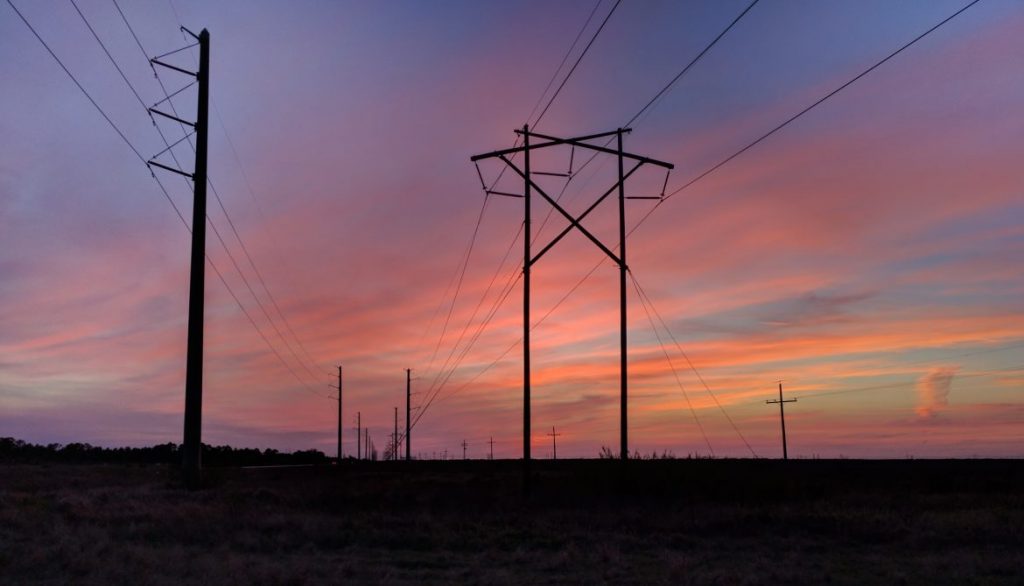
The Pacific Gas and Electric Company (PG&E) has diverted over $100 million from safety and maintenance programs to executive compensation at the same time it has caused an average of more than one fire a day for the past six years killing over 100 people.
PG&E is the largest privately held public utility in the United States. A new research report shows that 91% of PG&E stocks are held by huge international investment management firms, including BlackRock and Vanguard Group. PG&E is an ideal investment for global capital management firms with monopoly control over five million households paying $16 billion for gas and electric in California. The California Public Utility Commission (PUC) has allowed an annual return up to 11%.
Between 2006 and the end of 2017, PG&E made $13.5 billion in net profits. Over those years, they paid nearly $10 billion in dividends to shareholders, but found little money to maintain safety on their electricity lines. Drought turned PG&E’s service area into a tinderbox at the same time money was diverted from maintenance to investor profits.
A 2013 Liberty Consulting report showed that 60% of PG&E’s power lines were at risk of failure due to obsolete equipment and 75% of the lines lacked in-line grounding. Between 2008 and 2015, the CPUC found PG&E late on thousands of repair violations. A 2012 report further revealed that PG&E illegally diverted $100 million from safety to executive compensation and bonuses over a 15-year period.
PG&E has caused over 1,500 fires in the past six years. PG&E electrical equipment has sparked more than a fire a day on average since 2014—more than 400 in 2018—including wildfires that killed more than 100 people.
In October 2017, multiple PG&E linked fires (Tubbs, Nuns, Adobe fires and more) in Northern California scorched more than 245,000 acres, destroyed or damaged more than 8,900 homes, displaced 100,000 people and killed at least 44.
In November, 2018, the PG&E caused Camp fire burned 153,336 acres, killing 86 people, and destroying 18,804 homes, business, and structures. The towns of Paradise and Concow were mostly obliterated. Overall damage was estimated at $16.5 billion.
PG&E has caused some $50 billion in damages from massive fires started by their failed power lines. They filed bankruptcy in January 2019 to try to shelter their assets. PG&E’s 529 million shares went from a high of $70 per share in in 2017 to a low of $3.55 in 2019. Shares are currently trading at $10.55 with zero returns.  At this point PG&E actually owes more in damages then the net worth of the company.
All but two members of the board of director resigned in early 2019, and the CEO was replaced. A new board of directors was elected by an annual stockholders meeting in June of 2019. PG&E now has a board of directors whose primary interest in 2020 is returning PG&E stock values to $50-70 range and returning to annual dividend payments in the 8-11% rate.
The new PG&E management took widespread aggressive action during the fire-season of 2019 shutting down electric power to over 2.5 million people statewide. Nonetheless, a high voltage power line malfunctioned in Sonoma county lead to the Kincade fire that burned 77,758 acres destroying 374 structures, and forced the evacuation 190,000 Sonoma county residents. Estimated damages from this fire are $10.6 billion.
The fourteen new PG&E directors were essentially hand-picked by PG&E’s major stockholder firms like Vanguard Holdings 2019 (47.5 million shares 9.1%) and BlackRock (44.2 million shares 8.5%). A new PG&E Director, Meridee Moore, SF area founder & CEO of $2 billion Watershed Asset Management, is also a board member of BlackRock.
Only three of the new fourteen directors live in PG&E’s service area (four if we count the newly appointed CEO from Tennessee). One board member lives the LA area. The remainder of the board live outside California, including three from Texas, two from the mid-west and the remaining four from New York or east coast states. Pending PG&E Bankruptcy court approval, new directors are slated to receive $400,000 each in annual compensation.
Ten of the new 2020 directors have direct current links with capital investment management firms. The remainder have shown proven loyalty experience on behalf of capital utility investors making the entire PG&E board a solid united group of capital investment protectors, whose primary objective is to return PG&E stock values to pre-2017 highs with a 11% return on investment. They claim that wide-spread blackouts will be needed for up to ten years.
All fourteen PG&E board members are in the upper levels of the 1% richest in the world. As millionaires with elite university educations, the PG&E board holds little empathy for the millions of Californians living paycheck to paycheck burdened with some of the highest utility bills in the country. PG&E shuts off gas and electric to over 250,000 families annually for late payments.
The PG&E 2020 board is in service to transnational investment capital. This creates a perfect storm for the continuing transfer of capital from the 99% to the richest 1% in the world, all with uncertain  blackouts, serious environmental damage, widespread fires, with multiple deaths and injuries.
We need to liquidate PG&E for the criminal damages it has afflicted on California. The “PG&E solution” is to manage PG&E democratically on the basis of human need, rather than private profit. It is time to take a stand for a publicly owned California Gas and Electric Company as the way to reverse the transfer of wealth to the global 1% and provide Californians with safe, low-cost and more renewable energy. All power to the people!
For the full report with all PG&E board names see:  www.projectcensored.org/pge
Peter Phillips, Political Sociologist at Sonoma State University; author Giants: The Global Power Elite, (New York: Seven Stories Press, 2018); past director of Project Censored; co-author/editor of fourteen Censored yearbooks, 1997 to 2011; co-author of Impeach the President, (New York: Seven Stories Press, 2007); and winner of the Dallas Smythe Award from the Union for Democratic Communications.
Tim Ogburn, 20-year manager for the California EPA; founder and co-chair of the Environmental Industry Coalition of the United States in Washington, D.C.; published in numerous technical and trade journals regarding public/private partnerships; International Environmental Technology consultant in India, Philippines, Malaysia, Thailand, Egypt, and Israel; Consultant to USAID, US Department of Commerce, U.S. State Department; and has given Congressional Presentations on the environmental technology industry before Congress.
Originally published in Project Censored


Abiy Ahmed: Nobel Peace laureate who faces unrest at home
by Nizar K Visram


When the 2019 Nobel Peace Prize laureate, Ethiopian Prime Minister Abiy Ahmed, was in Oslo for the award ceremony, eyebrows were raised when he declined to attend any event where he would be asked questions in public. Organizers expected him to meet the international press in keeping with the Nobel tradition, but his spokeswoman cited “pressing domestic issues” and his “humble disposition.”
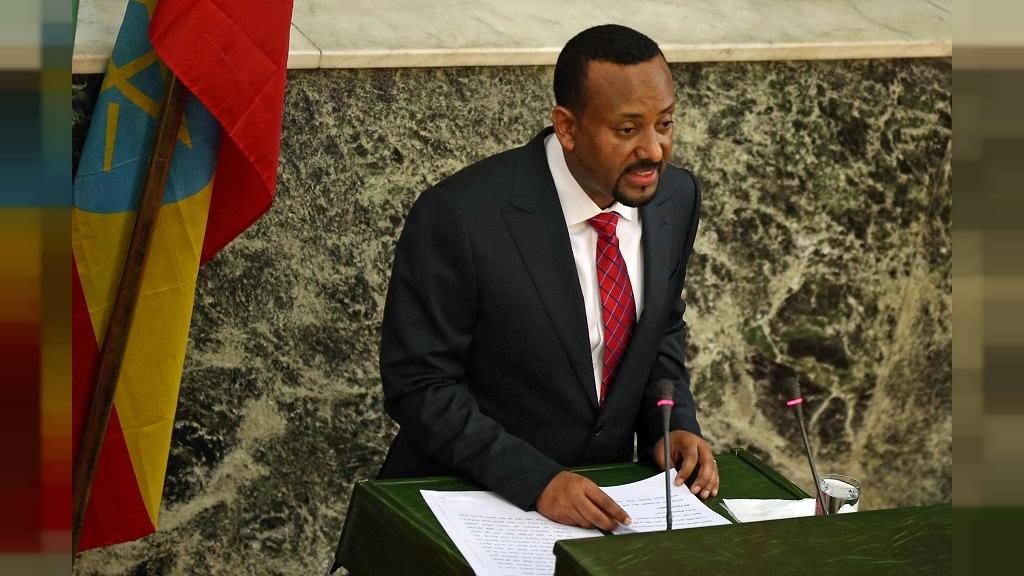
When the 2019 Nobel Peace Prize laureate, Ethiopian Prime Minister Abiy Ahmed, was in Oslo for the award ceremony, eyebrows were raised when he declined to attend any event where he would be asked questions in public. Organizers expected him to meet the international press in keeping with the Nobel tradition, but his spokeswoman cited “pressing domestic issues” and his “humble disposition.”
The secretary of the Nobel committee, Olav Njolstad, called the decision “highly problematic”, noting that a “free press and freedom of expression are essential conditions for a lasting peace in a democracy”. He said the committee would “very much have wanted Abiy to engage with the press during his stay in Oslo”.
Abiy is not the only Nobel laureate that failed to “engage with the press”. The former US president Barrack Obama also declined to meet the press when he accepted the peace prize in 2009. Perhaps they were both avoiding one pertinent question: Was the decision to award them the prize not taken prematurely and hastily?
The Norwegian Nobel Committee said Abiy Ahmed was awarded the prize for his “decisive initiative to resolve the long-running border conflict with neighbouring Eritrea.” It extolled his “efforts to achieve peace and international cooperation.”
Abiy has been lauded for “tearing down the wall” with Eritrea, thus ending two decades of hostility with the neighboring country.  Two months after entering the office, he declared that he would fully accept the terms of a peace agreement with Eritrea.
He flew to Eritrea and hugged President Isaias Afwerki, launching a peace process between the two countries that went to war from 1998 to 2000. More than 80,000 people were killed and hundreds of thousands displaced during the military conflict.
The two leaders then signed a peace deal, establishing diplomatic ties, resuming communication and air travel and lifting border restrictions. Border disputes, however, are not fully resolved. Some border crossings were opened with colorful ceremonies, only to be reclosed.
Immediately after his appointment as head of ruling EPRDF party and prime minister in April 2018, Abiy launched the policy of Medemer  (togetherness or inclusiveness), under which he lifted the state of emergency and put an end to the torture chambers, while firing bigwigs accused of corruption
Abiy also lifted a ban on political parties, released thousands of political prisoners, including journalists and bloggers, and unblocked more than 260 blogs. He also opened the door to exiled political activists, while enacting amnesty laws, repealing repressive NGO and media acts. Ethiopia jumped 40 places in the 2019 World Press Freedom Index compiled by Reporters Without Borders.
Abiy also appointed a gender-balanced cabinet, with 50 percent of women ministers, woman chairperson of the National Election Board, woman head of federal Supreme Court, and the first woman head of state in the country’s modern history.  He appointed a peace and reconciliation commission to deal with past abuses.
Amnesty International acknowledged the reforms undertaken by Abiy’s government but called upon the prime minister to revise the country’s anti-terrorism law to avoid rolling back progress made since he took office.
“The use of Ethiopia’s anti-terrorism proclamation to arbitrarily arrest journalists is completely out of step with reforms witnessed in the country,” Seif Magango, Amnesty’s deputy director for East Africa, said. “This law must be revised to align with international standards and must no longer be used to harass journalists.”
Abiy Ahmed inherited a state that controlled the “commanding heights” of the economy under the “development model” championed by former prime minister, Meles Zenawi. He backed away from Zenawi’s model, leaving the doors open to the Wall Street and its financial institutions.
Within no time, Abiy fell into “chronic foreign currency shortage,” and he resorted to loans and grants from the West and rulers of Saudi Arabia, the United Arab Emirate and Qatar. Soon after Abiy became prime minister he signed a deal for $3 billion with the United Arab Emirate, to “strengthen military cooperation”.
In October 2018, the World Bank approved a total of $1.2 billion for what they call structural adjustment. National Bank of Ethiopia’s Governor, Yinager Dessie said: “They have given us some objectives that have to be met every year for another $1 billion, as the government follows through on its commitment to economic reforms.”
Such funding often goes into unproductive expenditures, saddling the country with audios debt, austerity measures and further IMF and World Bank incursion. This way the country becomes beholden to the global conglomerates.
It wasn’t a bolt from the blue, therefore, when Ethiopians learnt that Abiy was planning a multibillion dollar privatisation of major public enterprises such as Ethio Telecom, Ethiopian Electric, Ethiopian Airlines, and Ethiopian Shipping & Logistics Services Enterprise.
Arrangements are reportedly being made to sell off a 49 per cent stake in Ethio Telecom, the largest telecoms company in Africa, with customer base of 65 million subscribers, and over 22,000 employees. Its annual operating income is $103 mill, with net income of $ 46 mill. The Shipping Enterprise has annual revenue of $ 484 mill.
One state-owned corporation earmarked for privatization is Ethiopian Airlines, the national flag carrier that was launched in 1946 when most of the African nations were under the colonial yoke. Today, its success is taken as a symbol of Ethiopia’s strength. It has a profit of $ 110 mill and revenue of $ 1.5 bill.
It is the largest national airline in Africa and amongst the highly successful public enterprises globally. It is arguably Ethiopia’s most profitable and well-managed public undertaking, with some 110 modern aircraft and over 100 world destinations. Not surprisingly, the airline has clinched several regional and international honours.
Abiy’s policy is divestment of such national treasure, while liberalizing labor law. He is also expected to hand over industrial, tourism, agricultural and mineral sectors. Ethiopia has rich mineral deposits, especially gold whose extraction is contracted to companies from the West and Saudi Arabia.
Besides gold, there are also deposits of platinum, copper, potash, natural gas and tantalum, a corrosion resistant mineral used in electronic components. Other minerals include niobium, cement, salt, gypsum, clay, shale, and soda ash. Not unexpectedly, therefore, foreign firms have their eyes on Ethiopia.
In fact, the US trade delegations are reportedly ready to pounce on the profitable state-owned airline. At the same time, the German development minister complained that his country should not lay back and watch the US and China “take hold of Africa.” German president and industrialists have already visited Addis Ababa to sign a memorandum of understanding between the Volkswagen Group and the Ethiopian Investment Commission.
At the 2019 World Economic Forum in Davos, Abiy declared his commitment to the neoliberal model.  He reaffirmed this in an interview with the Financial Times. The international elites and corporate media have hailed Abiy’s rise to power and his reforms as the dawn of a new era of “freedom and prosperity” for Ethiopia.
Foreign investors have pledged to provide $500 million for two industrial parks, on condition that Ethiopian government reserves a third of the projected 100,000 jobs for refugees. This was approved by Abiy in January 2019, thus supplying refugees to work in the foreign owned enterprises. A local neo-liberal newspaper justified this model by saying: “The one prime opportunity Ethiopia can offer investors is low-cost labor. Taking that away will just drive investment elsewhere”
Thus, the country has the Pizza Hut, where a pizza sells for about US$15, in a society where millions barely survive on less than US$1 per day, while ten tycoons own $25 billion.
Reaping super profit on cheap labor is described as “prime opportunity for investors”. The International Trade Unions Confederation (ITUC) denounced such super exploitation of labor in Ethiopia.
One official “justification” for the rush to sell the assets is that the country may use the proceeds to pay off government-guaranteed debts issued by lenders. Thus, selling sugar factories and the country’s telecommunications monopoly would enable the government to recapitalize state-owned enterprises so they can repay borrowings. This was said by the National Bank Governor.
And head of the National Planning and Development Commission, Fitsum Assefa, said: “With liberalization and privatization, definitely some money will be raised and that will definitely be used to repay the banks – such a move will also help the liquidity”
Abiy Ahmed was appointed prime minister after people revolted against his predecessor. Yet, his own term has not been entirely peaceful. The country has been haunted by ethnic and regional conflicts which have claimed hundreds of lives and seen 3.5 million people displaced since 2015. Since Abiy came to power such conflicts have been on the rise.
According to the Human Rights Watch (HRW), 1.4 million people were displaced in the first half of 2018. That is a global record, the rights group observed. According to the UN report, over two million were displaced, while hundreds were killed.
During protests that erupted in October 2019, Abiy’s spokesperson put the death toll at over 78, with 409 people detained. The dead included 50 from the Oromo ethnic group, the country’s largest, while 20 were from the Amhara group, the second largest. Five of the dead were police officers. This was conceivably the most serious crisis during Abiy’s term in office so far
Ethnic-based unrests that erupted end of 2019 took religious form. Thousands of Muslims across Ethiopia protested the burning of four mosques in the Amhara region.  The December 20 attacks in Motta town, more than 350 kilometers north of Addis Ababa, also targeted Muslim-owned businesses.
Amhara regional officials said they arrested 15 suspects in connection with the attacks. Police commander Jemal Mekonnen told state media the attacks appeared to be triggered by news of a fire that broke out in an Orthodox church a few days earlier.
Ethnic nationalism now stands in the way of Prime Minister Abiy Ahmed’s reforms.  He himself reportedly survived an assassination attempt, while his new book on Medemer was burnt by protesters in eastern Ethiopia. While he was attending Russian-African summit in Sochi, his home was torched
Ethiopian prosecutors have charged five suspects with an attempt to kill Prime Minister Abiy in a grenade attack at a rally in June 2019. The attack killed two people and injured more than 100.
Meanwhile, Abiy is facing mounting criticism from people who accuse him of stifling the press, and issuing the controversial Anti-Terrorism Proclamation, which they say is aimed at repressing dissidents. Amnesty International has cautioned that Ethiopia’s ethnic, linguistic and religious divergences “threaten instability and further human rights abuses”.
Abiy himself admitted that what began as protests against his government has quickly taken ethnic and religious dimension.
(Nizar Visram is Tanzanian writer and commentator. He can be contacted at nizar1941@gmail.com )


On 124th Birth Anniversary Of Subhash Chandra Bose, How Hindutva Gang Back-Stabbed Netaji
by Shamsul Islam


RSS-BJP rulers of India have been trying to show off as great fan of Netaji. But Indians
must know what role ideological parents of today’s RSS/BJP played against Netaji and INA. Hindu Mahasabha and RSS which always had prominent lawyers on their rolls made no attempt to defend the INA accused at Red Fort trials.


Adivasis and Indigenous People in India Condemn the Decision of Adani and Australian Governments on Mining and Displacement
Press Release


We the following Adivasi organisations in India unanimously condemn the decision of the Queensland government to extinguish title of over 1385 hectares in Wangan and Jalingou country in Australia for the proposed Adani coal mine in Queensland’s Galilee Basin. We are shocked to understand that such a decision affecting the indigenous people of Australia was made without even any public announcement.
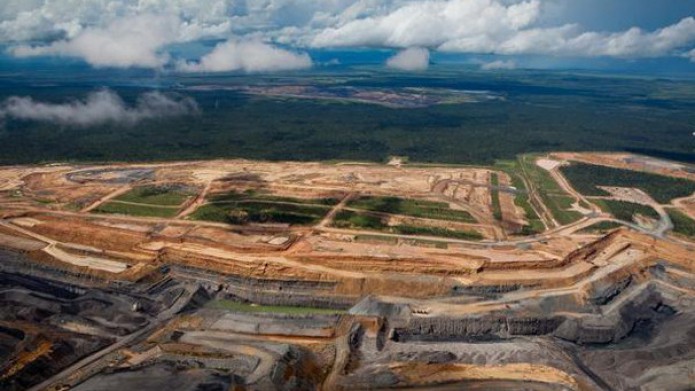
We the following Adivasi organisations in India unanimously condemn the decision of the Queensland government to extinguish title of over 1385 hectares in Wangan and Jalingou country in Australia for the proposed Adani coal mine in Queensland’s Galilee Basin. We are shocked to understand that such a decision affecting the indigenous people of Australia was made without even any public announcement. We note with great pain that an Indian industrialist is responsible for threatening the lives of indigenous people in Australia, removing them from their own traditional lands, for which they had enjoyed their community rights for generations. With Adani stepping into their territories, these indigenous people will become trespassers to their own lands, restricting their involvement even the basic rituals for their ancestors.
What is extremely repulsive is to note that without the subsidies of 4.4 billion dollars from the Australian governments for Adani’s project, the project would become unviable. The Central and State Governments in India are also following the same model. The model is: `Support the rich with money that belongs to people and wipe out the poor’. This model of development economics needs much more sharper public criticism and scrutiny.
We hereby express our heartfelt solidarity to the struggle carried out by the Wangan & Jalingou Council leader Adrian Burragubba and other representatives of the indigenous people in this region. We call upon all organisations of indigenous all over the world to express their solidarity and support to the indigenous people struggling for their basic rights in Australia. Adivasis and indigenous people all over the world is facing such invasions into their lands, causing displacement, human rights violations and environmental destruction. While coordinating the solidarity concerns of adivasis in India on this issue, the India Greens Party (IGP) has called for international solidarity of all like-minded individuals and organisations to generate pressure on Adani and the Australian governments to withdraw their decision causing great harm to environment and indigenous people. The question `Development for whom and at whose cost’ is becoming more and more grave issue, especially when the governments and corporates behave in an utterly irresponsible manner, without the basic concern for the earth, its inhabitants and its environment, said the representatives of the India Greens Party (IGP). The party has also asked for wider dissemination of these issues among all sections of people who are concerned about the future of healthy planet.
1) All India Adivasi Mahasabha
2) National Adivasi Andolan
3) All India Union of Forest Working People
4) Jharkhand Jungle Bachao Andolan, Jharkhand
5) Rajya Moola Adivasi Vedike Karnataka
6) Eruliga Aranyavasi Kshemabrivridhi Sanga, Kanakapura, Karnataka
7) Soliga Abhivraddi Sangha, Chamarajanagar.
8) Jilla Budakattu Krishikara Sangha, Chickkamangalore.
9) Adivasi Art
10) Anti-Jindal & Anti-POSCO Movement, Odisha
11) Budakattu Krishikara Sangha Kodagu.
12) Budakattu Krishikara Sangha ,Periyapatana, Mysore District,
13) Tamilaga Adivasi Amaippukalin Kootamaippu (TAAK)
14) Jharkhand Jungle Bachav Andolan, Jharkhand
15) Jharkhand Indigenous peoples Forum, Jharkhand.
16) Odisha Paramparik Krushak Sangathan (OPKS), Odisha
17) Anamalai Adivasi Movement, Tamil Nadu


Friday, January 17, 2020

CC News Letter 17 Jan - Punjab Becomes The Second State To Pass Resolution Against CAA


Dear Friend,


The Punjab Assembly on Friday passed a resolution by voice vote against the controversial Citizenship Amendment Act, the second state in the country to do so.    The resolution moved by Parliamentary Affairs Minister Brahm Mohindra was passed after over three hours of discussion. While the ruling Congress and main opposition Aam Aadmi Party (AAP) supported the resolution, the BJP opposed it.

Kindly support honest journalism to survive. https://countercurrents.org/subscription/

If you think the contents of this news letter are critical for the dignified living and survival of humanity and other species on earth, please forward it to your friends and spread the word. It's time for humanity to come together as one family! You can subscribe to our news letter here http://www.countercurrents.org/news-letter/.

In Solidarity

Binu Mathew
Editor
Countercurrents.org


Punjab Becomes The Second State To Pass Resolution Against CAA
by Countercurrents Collective


The Punjab Assembly on Friday passed a resolution by voice vote against the controversial Citizenship Amendment Act, the second state in the country to do so.    The resolution moved by Parliamentary Affairs Minister Brahm Mohindra was passed after over three hours of discussion. While the ruling Congress and main opposition Aam Aadmi Party (AAP) supported the resolution, the BJP opposed it.


Satya Nadella is a true Indian-American Hero
by Dr Mike Ghouse


“Microsoft CEO Satya Nadella strongly criticized a new citizenship law that the government of India, one of the company’s largest markets, passed last month. “I think what is happening is sad. … It’s just bad,” Nadella told BuzzFeed News Editor-in-Chief Ben Smith at a Microsoft event in Manhattan on Monday, emphasizing the role that
technology and immigration have played in his life and career.


Dissenting voices:  CAA and NPR-NRC
by Badre Alam Khan


The government must roll back the CAA and stop exercising the NPR-NRC. Instead of doing this irrelevant and anti-constitutional step, present government should think of people’s welfare and address the material deprivations of underprivileged classes by preparing progressive and affirmative actions like the Unemployment National Register (UNR) as suggested by political and social activist Yogendra Yadav.


UK home secretary defends naming Extinction Rebellion as extremist
by Paul Bond


The reaction of Home Secretary Priti Patel to widespread criticism of the move highlights its real aims. She told a radio interviewer that although XR was not a terrorist organisation the government had to
look at “a range of security risks.”

The inclusion of climate activists Extinction Rebellion (XR) by police in a guide to “ideological extremism” marks a serious escalation of the assault on democratic rights.
Although the guide has now been withdrawn, the Conservative government has still defended including XR.
The Guardian reported last week that Counter Terrorism Policing South East (CTPSE) had included XR among extremists requiring reporting to the government’s counter-radicalisation monitoring programme, Prevent.
The reaction of Home Secretary Priti Patel to widespread criticism of the move highlights its real aims. She told a radio interviewer that although XR was not a terrorist organisation the government had to look at “a range of security risks.”
Police arresting an Extinction Rebellion protester last year

XR was listed among organisations that should be reported to Prevent, alongside proscribed far-right groups like National Action and the Islamist al-Muhajiroun, in a 12-page document, “Safeguarding young people and adults from ideological extremism.” The document, produced last November, was marked “official.”
The move immediately followed a mass crackdown by the Metropolitan police on XR protests in London held over a two-week period in October. By October 16, 1,642 people had been arrested with the police then imposing an unprecedented citywide ban on XR protests in the capital.
When asked about the document, CTPSE initially said they would review their guidance to clarify their position on XR. They then acknowledged that XR was not extremist and said the document had been recalled. Anxious about the fallout, CTPSE repeatedly insisted that their concern was “vulnerable people.”
Police measures against the fascist right are always designed to win popular support for repressive legislation that is ultimately aimed at any leftward movement of the working class. The “Safeguarding” document confirms this in spades.
CTPSE said the guide had been produced “at a local level” and circulated to “statutory partners” defined as “Those in regular, direct contact with young people or members of the public. It is also relevant to managers, senior officers and safeguarding leads at all levels of local authorities”
Nine of its 12 pages are devoted to targeted organisations and tendencies. They begin with fascism, but the sequence is revealing: the neo-Nazi National Action and Sonnenkrieg Division; “Extreme Satanism” linked to the far right; Generation Identity and the alt-right more generally; the IS-supporting al-Muhajiroun; XR; animal rights extremism; then a final page on “Internet use.”
This last section covers web use “through browsers, encrypted apps, social media and bespoke software.” It expresses concern that the Internet is “a largely ungoverned space in which users can share or be exposed to extremist material in the form of websites, videos, imagery, documents, posts, and discussions on subject-specific forums.”
Coverage of “What you might see and hear” focuses on circulation of material on encrypted apps and “individuals discussing ideological subjects with strangers on social media or the internet … encouraging people to act on grievances … Obtaining information from unevaluated sources.”
XR is described as a “protest and civil disobedience” campaign “to pressure governments to take action on climate change and species extinction.” The document acknowledges that XR is “non-violent against persons,” but listed as a threat because of an “anti-establishment philosophy that seeks system change.”
XR has advocated various forms of localism in production and political organisation while seeking to bolster the authority of national governments, portraying them as potential allies against global corporations. But even advocacy of “green capitalism” is considered beyond the pale by governments, which recognise the mounting social discontent that lies beneath them.
This document insists on political conformity and the impermissibility of criticising capitalism. It warns, for example, of “people speaking strong or emotive terms about environmental issues like … fracking.”
The release of the police document follows a report last year by the government’s Commission for Countering Extremism which condemned large sections of the “left” as “extremist.” It denounced the way “revolutionary workerist ideas” have fuelled sympathy for “violent extremist tactics.”
These categories are deliberately broad and flexible. The CTPSE document advises looking out for students who “may neglect to attend school” to join protests, reserving particular attention for those who “express admiration for those arrested for protest activity.” Non-violent demonstrations—sit-down protests, graffiti, blockades—are listed as matters of concern.
Much of the official response to the revelation has been to defend the government’s Prevent programme, which forces teachers and other public sector workers to report signs of “radicalisation.” Prevent has been heavily criticised since its introduction in 2003, with human rights groups noting it is “stifling freedom of expression,” breaching children’s right to privacy, and intimidating, victimising and profiling Muslim children.
Last October civil liberties’ organisation Liberty noted that a police database with full access to Prevent records was “being used to monitor and control communities.” It offered information on the political thoughts and beliefs of thousands of people. Retired doctor Lyn Jenkins, for example, who suffers from claustrophobia, was referred to Prevent last year by his local NHS Trust after he discussed managing his condition in the event of arrest at XR protests.
Lord Carlile, the Liberal peer appointed by Theresa May’s government to review Prevent but who subsequently stood down over claims of bias for his previous enthusiastic support for the programme, said of XR they “are not violent terrorists” but “disruptive campaigners.” After making a distinction between “terrorism and protest,” he added that XR was “mostly legitimate protest.”
Carlile, an independent reviewer of terrorism legislation from 2001 to 2011, was defending Prevent and the police’s right to mistaken judgment in “a very difficult area,” where “errors of judgment are going to be made from time to time.” Concern over Prevent’s fate also came from its former head (2010-2015) Sir Peter Fahy. He said that moves like the CTPSE’s risked eroding community confidence in the programme.
Fahy’s remarks immediately triggered Patel’s doubling down. She said Prevent’s work was “based and calibrated upon risk.” Where Fahy had made “one comment,” she was looking at “a range of security risks.”
She was unconcerned that, as she admitted, XR was not a terrorist organisation but “obviously a protest organisation.” Everything “has to be based in terms of risk to the public, security risks, security threats … based on information from the police, and various intelligence that we will receive. That’s the proper thing to do.”
Blairite frontrunner for the Labour leadership, Sir Keir Starmer QC, defended XR’s right to protest, but only within the context of reviewing Prevent, not abolishing it.
Starmer, as director of public prosecutions (DPP) 2010-2013, and head of the Crown Prosecution Service (CPS), played a key role in the persecution and incarceration of WikiLeaks founder Julian Assange after his arrest in 2010. When Sweden was seeking Assange’s extradition on false sexual allegations, the CPS, under the DPP, opposed a lower court decision to release the journalist on bail. Starmer said that the CPS was acting “as agents of the government seeking extradition, in this case the Swedish government. These proceedings are brought as agents of the Swedish government.”
Every section of the establishment is looking to restore confidence in Prevent to legitimise state surveillance of the population. Last year Metropolitan Police Assistant Commissioner Neil Basu, the country’s senior counter-terrorism officer, described Prevent as “badly handled” but vital.
The placing of XR on an extremism list confirms the assessments of the Socialist Equality Party that the state is moving to strengthen its repressive apparatus ahead of major confrontations with the working class. This is the basis for its planned legislation to ban all-out strikes by workers in the “essential” transport sector, paving the way for bans against every section of workers whose role is deemed essential to the functioning of the economy.
Originally published in WSWS.org


Davos 2020 Report: Climate change tops risks for world in 2020
by Countercurrents Collective


The theme for 2020 is sustainable development, under the slogan “Stakeholders for a Cohesive and Sustainable World”. Among its goals this year: how to respond to climate change and protect biodiversity, remove long-term debt, avoid a “technology war”, empower a billion people with skills over the next decade, and build bridges to resolve conflicts in global hotspots.


Challenging the Flawed Premise Behind Pushing GMOs into Indian Agriculture
by Colin Todhunter


A common claim is that genetically modified organisms (GMOs) are essential to agriculture if we are to feed an ever-growing global population. Supporters of genetically
engineered (GE) crops argue that by increasing productivity and yields, this technology will also help boost farmers’ incomes and lift many out of poverty. Although in this article it will be argued that the performance of GE crops to date has been questionable, the main contention is that the pro-GMO lobby, both outside of India and within, has wasted no time in wrenching the issues of hunger and poverty from their political contexts to use notions of ‘helping farmers’ and ‘feeding the world’ as lynchpins of its promotional strategy


On Iran-US Crisis (Part I)
Co-Written by Ashish Kumar Singh & Abhijit Anand


Iran and USA reached on the brink of a war due to the series of events that took place in the beginning of 2020. We are going to give a time-line of the recent events, and then present main points of two academic articles relevant to understand these events in totality. We believe that USA must have
avoided assassinating Iranian army commander Soleimani, and despite the visible peace at present, such acts have future repercussions. We have used published newspaper/website views and news in this write up.
Co-Written by Ashish Kumar Singh & Abhijit Anand

Excellent vivid images of flags for you. With the texture of fabric at 100 percent view.

Iran and USA reached on the brink of a war due to the series of events that took place in the beginning of 2020. We are going to give a time-line of the recent events, and then present main points of two academic articles relevant to understand these events in totality. We believe that USA must have avoided assassinating Iranian army commander Soleimani, and despite the visible peace at present, such acts have future repercussions. We have used published newspaper/website views and news in this write up.
Dec. 27: Kataib Hezbollah, an Iraqi militia backed by Iran, launched rockets at the K1 military base near Kirkuk, which housed U.S. military service members and Iraqi personnel. The attack killed a U.S. civilian contractor and wounded four U.S. service members and two Iraqis.
Dec. 29: The United States responded with airstrikes on Kataib Hezbollah positions in western Iraq and eastern Syria. The strikes, which reportedly killed at least 25 militants, targeted weapons depots and command centers that the group had used to attack U.S. forces and allies.
Dec. 31: Supporters of Kataib Hezbollah stormed the U.S. embassy compound in Baghdad to protest the U.S. airstrikes. The gunmen and demonstrators broke into a reception area inside the front gate but did not reach the main embassy buildings. They chanted “Death to America” and threw rocks and Molotov cocktails at the compound. In a series of tweets, Trump accused Tehran of orchestrating the attack.
Jan. 2: Secretary Esper warned that the United States “will not accept continued attacks against our personnel & forces in the region.” He said that the United States would take “preemptive action” to defend U.S. interests against Iranian plots. “The game has changed,” Esper told reporters during a briefing.
Jan. 3: President Trump ordered an airstrike on a convey of Iranian and Iraqi military leaders leaving Baghdad airport. The drone attack, launched on January 3 (January 2 US. time), killed seven people including General Qassem Soleimani, the head of the IRGC’s elite Qods Force, and Abu Mahdi al Muhandis, a Kataib Hezbollah leader. Muhandis was also the deputy commander of the Popular Mobilization Forces (PMF), an umbrella group of militias formed to fight ISIS. Many PMF militias have received arms, training and funding from Iran.
Jan. 4: Iranian General Gholamali Abuhamzeh said that the IRGC had identified at least 35 U.S. targets that could be hit in retaliatory strikes. He specifically named U.S. warships in the Persian Gulf and the city of Tel Aviv.
Trump warned that the United States had identified 52 targets, including cultural sites, and that Washington would strike if Iran attempted retaliatory attacks on U.S. interests. Trump said that the 52 sites represented the 52 American hostages held by Iranian protestors in the 1979 attack of the U.S. embassy in Tehran.
Jan 6: Hundreds of thousands of Iranians turned out for Soleimani’s funeral in Tehran. Many shouted “Death to America.” Supreme Leader Khamenei wept over the coffin. Soleimani’s successor, Esmail Gha’ani, warned that Iran would take revenge.
Jan. 8: Iran fired more than a dozen missiles at two Iraqi military bases housing U.S. troops in retaliation for the U.S. killing of Soleimani. No U.S. or Iraqi personnel were harmed. Iran was quick to claim responsibility for the attack on U.S. forces. But its foreign minister, Javed Zariff, also emphasized that Tehran did not seek war.
January 9: The U.S. House of Representatives delivered a sharp rebuke to Mr. Trump over his use of U.S. military power in the Middle East. The House approved a measure, relating to the War Powers Resolution of 1973, to restrict his authority to strike Iran without congressional approval.
January 11: Iran admitted it mistakenly shot down a Ukrainian passenger jet. Iranian President Hassan Rouhani called it an “unforgivable mistake.”
In a series of Tweets American President has defended his actions on a regular basis. Many see these events as a diversion from the impeachment hearings, some also argue that it is a tactic of Trump to ensure his second term in the Oval Office.
Below we present the key points two relevant research articles to contextualize our argument.
  1. Thomas, W. (2000). Norms and Security: The Case of International Assassination. International Security,25(1), 105-133. Retrieved from jstor.org/stable/2626775
Page no. 105: The issue of international assassination has emerged in recent years. For instances Britain’s Her Majesty Service plotted to kill Muammar Qaddhafi in 1996, Israel’s bungled 1997 attempt to assassinate an official of the Palestinian opposition group Hamas, the United States, the dual conundrums of an intransigent Saddam Hussein and terrorists such as Osama bin Laden.
Page no. 106: There is a long-standing consensus in the international community that the murder of foreign leaders is a grossly inappropriate means of conducting foreign policy because apart from murder we have options like use of large-scale use of force or crippling economic sanctions.
Page no.108-109: The norm against the assassination of foreign leaders is a relatively recent construction. Such methods of assassination at present seem to have been regarded with approval in ancient and medieval times. But the notable exception in the ancient world was Rome, where a norm emerged stigmatizing the assassination of foreign enemies.
Page no 110: Morgenthau The Republic of Venice, from 1415 to 1525, designed or tried about two hundred assassinations for purposes of its foreign policy that and have documented in its official records. During the 1570s and 1580s alone, Elizabeth was the subject of at least twenty assassination plots supported by foreign powers, and herself employed assassins in Ireland. In 1516 Thomas More praised the use of assassination both as a useful tool of statecraft and as a means of sparing ordinary citizens the hardships of wars for which their leaders were responsible.
Page 111: The attitudes toward assassination began to change dramatically in the early seventeenth century. The assassination of tyrants and religious enemies was also condemned by historians and philosophers. For example Both Hapsburg Emperor Ferdinand II and Philip IV of Spain, declined offers to assassinate Gustav Adolf of Sweden.
Page 112-113: The laws prohibiting the assassinations were also codified in the late 1800s. The first attempts at codification were manuals promulgated by governments to regulate the conduct of their own armies and the most influential was the U.S. Army’s Lieber Code of 1863. Later the customary prohibition on assassination as “treacherous killing” was adopted at the Hague Convention in 1907.  First half of 20th century y failed to overcome the aversion to assassination as a foreign policy too although various instances are there where a foreign government was involved in the assassination of a national leader appears such as 1934 murder of Austrian Chancellor Engelbert Dollfuss was probably ordered by German Chancellor Adolf Hitler but the British government, however, rejected the idea on the grounds that it was “unsportsmanlike”.
Thomas Jefferson wrote in a 1789 letter to James Madison: “Assassination, poison, perjury….’All of these were legitimate principles in the dark ages which intervened between ancient and modern civilizations, but exploded and held in just horror in the eighteenth century.”
In 1806, when British Foreign Secretary Charles Fox was approached with a plan to assassinate Napoleon, Fox not only rejected the offer but arrested the would-be assassin and informed the French foreign minister of the plot.
Page 114-115: In contemporary times, Israel is one of the countries that has gained importance for its willingness to resort to assassination. It is also said that lawful targeting of leaders during wartime is not assassination. When US targeted both Qaddhafi and Saddam, one must wind up saying that the “spillover” stigma against targeting leaders by conventional means is not as strong as the assassination norm itself. It is to be noted that international ethical norms including norms governing the use of force is constituted by two strands i.e. priori moral principles and historically contingent cultural and geopolitical factor.
Page 116: In the early seventeenth century the first strand of a norm against assassination i.e. the principle that treacherous murder is morally wrong existed but was adequate to limit the foreign policy and second strand was added in 1600. Although the killing of French King Henry IV was not a result of international plot but his murder was one of the most important event in the origin of the norm against assassination.
Page 117: Sovereign statehood brought two inter-linked occurrences, one predominantly material and the other predominantly ideational and both these occurrences resulted to the norm against assassination. The material development was the rise of mass army whereas ideational phenomenon was followed by rise of sovereign states.
Page 118: The sovereigns ought not to sacrifice their personal safety and that is why war was the proper activity of the sovereigns as described by one of the commentators. The difference between private persons and their public functions was demarcated by the idea of state as an abstract organization. The prior remain untouched and latter mean legitimate targets and legitimate targets supposed to employ legitimate means. This idea of facet of the ideational structure of sovereign statehood work alongside in cooperation with mass armies and this fortified normative idea that clashes between large masses of men are the best way to settle conflicts. So by 1632, the legitimate means of dealing with foreign adversary was to send army rather than assassinating him.
Page no 119: Both Balthazar Ayala and after him Alberico Gentili denounced assassination as a part of foreign policy but Balthazar Ayala was first influential jurist to criticize assassination. Ayala criticized assassination on the grounds of moral considerations of honor, bravery and bona-fide should be preferred over self-interest and convenience. Gentili also criticized assassination on moral grounds and called assassination as “shameful” and “wicked” practice and said that objectives of war should be achieved by valor means. This consideration of self-interest has two aspects i.e. short-term consequences like revenge and vindication and unintended outcomes as long-term consequences.
Page no. 120: Hugo Grotius has also strictly proscribed assassination in his writings on law of war.  He also suggested that a rule against assassination would prevent persons of eminence from excessive dangers as well as contribute to order. He also asserted that killing was only proper in battlefield.
Page no 121:  A complex combination of material and ideational factors has played crucial role in the rise of the norm against assassinating foreign leaders. On the one hand, the norm reflected the institutional interests of powerful actors in the international system. On the other hand, the norm itself served a legitimizing function, reinforcing institutional changes by providing them with a normative foundation based on natural law principles of justice and honor.
Page no 122: The norm as a vestige of chivalry: The first mention that the norm is a reflection of the emphasis on chivalry found in the laws of war. The view point of censure of condemnation of “treachery” and “perfidy” in international conventions and military manuals as a proof of honor that resists the use of force including assassination. The chivalry had little impact on assassination and in later 1500, its impact had disappeared in other areas as well.
Page no 123: The norm as a reflection of international gentility: It is also argued that the end of religious wars provided some space for gentler era in international relations and norm against assassination was part of this larger change in the pattern of international politics, a product of less violent times and more decorous social customs. But this explanation has been criticized on the grounds of the Napoleonic era and the world wars of the twentieth century during which international system has been consumed by extremely destructive war.
Page no 123-124: The norm as a concession of reality:  The norm against assassination has arisen because states found it worthless to kill troublesome foreign leader. This view has become popular because two reasons. First, leader were so well protected and therefore, it required large expenditure of resources with less chances of success. Second, the death of a single individual has very less impact on state policies. Both reasoning have been criticized by scholars.
Page no 125: The norm as a manifestation of public opinion: The fourth explanation of development of norm against assassination was impact of public opinion. For example, that
the United States is exceptionally averse to assassination because it does not conform to American values of justice and fairness as mentioned by the Church Committee in 1976. This views has been criticized on the ground that norm restricts nondemocratic states, which have little concern for domestic public opinion, as well as democratic state.
Page no 127-128: The norm against assassination of foreign leader is diminishing. The first indication is that lawmakers contemplate assassination as foreign policy option. The second indication is the increasing number of assassinations and attempt to assassinate in international politics during second half of the 20th century. The assassination of Jordanian Prime Minister Hazzah Majali in 1960, assassination of Jordan’s King Hussein, Britain’s conspiracy to kill Qaddhafi in 1996, and United States was willing, if not able, to resort to assassination several times during the Cold War are some examples. The two structural changes in the international system after World War II may be undermining the norm.
Terrorism and unconventional violence: The first and foremost structural change is the high prevalence of non-traditional ways of violence by non-state actors. The increase in terrorism reflects the rejection of rules of international politics because they are unable to follow because the means at their disposal are not receptive to resolving disputes by the large-scale clash of troops.   This refusal to play by the rules, along with the no territorial nature of many groups employing such tactics, places state actors in a difficult position in responding. When states feel threatened states may feel pressured to respond with similar tactics. For example, assassination plot sponsored by U.S. officials against Mexican bandit Pancho Villa during the 1916 Punitive Expedition and in Vietnam the United States responded to the use of terror by the Vietcong with the “Phoenix program,” a counterinsurgency effort that included the assassination of VC figures.
Page no 129-130: The above cited examples suggest that the assassination taboo may not apply as strongly to responses to terrorism. The actions taken by state actors against non-state terrorists undermine the norm as a whole and erode the barriers to the use of assassination in other circumstances.
Modern war and the personal responsibility of leaders: The second structural change that diminishes the norm against assassination is based on World War I and II which brought death, unimaginable hardships and threats of nuclear weapons. The material change were closely related with ideational change. This development struck the basic idea that leaders can and should not be personally held liable for war which was considered as legitimate activity for states.  The structural changes explain that the norm is less internalized by policymakers than it was in previous era and that is why assassination has re-appeared on international relations platforms after an absence of more than 300 years. The commitment to the norms can be inferred by decision of Bush decide against assassination when compared with assassination of Hitler in 1938.
Page no 131-132: If assassination as an instrument of policy is adopted by the government then it would not only be used by the aggrieved countries as an act of retaliation but it will speed up the de-stigmatization of the practice in the international system as a whole.
(Ashish Kumar Singh is a doctoral candidate at the National Research University Higher School of Economics, Moscow, Russia
Abhijit Anand teaches Law at the Glocal University, Saharanpur, Uttar Pradesh, India)


Green Party of St. Louis Endorses Howie Hawkins for President
by Press Release


On August 10-11, 2019 Green Party members in St. Louis joined others from across the state to hear from the leading contenders for the party’s nomination for President: Dennis Lambert, Dario Hunter, David Rolde, and Howie Hawkins. All had a very clear understanding that it would be futile to support a Democrat, because, even though they often use sweet-sounding words, once they are in office their actions have little, if any, difference from Republicans.


The Humanitarian and Environmental Disaster of Trump’s Border Wall
by William deBuys


Wall construction was and remains his foremost campaign pledge: 500 miles of wall by November of 2020, or 450 miles, or whatever the number du jour happens to be. Speaker Nancy Pelosi, the Washington Post, and others have tried to deflate the president’s boasts by asserting that he’s actually built no new wall and his promises are empty.


United States border fence, US/Mexico border, east of Nogales, Arizona, USA, viewed from US side

A new Wild West has taken root not far from Tombstone, Arizona, known to many for its faux-historical reenactments of the old West. We’re talking about a long, skinny territory — a geographic gerrymander — that stretches east across New Mexico and down the Texan Rio Grande to the Gulf of Mexico. It also runs west across hundreds of miles of desert to California and the Pacific Ocean. Like the old Wild West, this one is lawless, save for the law of the gun. But that old West was lawless for want of government. This one is lawless because of it.
The Department of Homeland Security, under authority conferred by Congress, has declared more than 50 federal laws inoperable along sections of the U.S. boundary with Mexico, the better to build the border wall that Donald Trump has promised his “base.” Innumerable state laws and local ordinances have also been swept aside. Predictably, the Endangered Species Act is among the fallen. So are the National Historic Preservation Act, the Wilderness Act, laws restricting air and water pollution, and measures protecting wildlife, landscapes, Native American sacred sites, and even caves and fossils.
The new Wild West of the border wall is an authoritarian dreamscape where the boss man faces no limits and no obligations. It’s as though Marshall Wyatt Earp, reborn as an orange-haired easterner with no knowledge of the actual West, were back in charge, deciding who’s in and who’s out, what goes and what stays.
Prominent on the list of suspended laws is the 1970 National Environmental Policy Act, or NEPA, which, until recently, was the nation’s look-before-you-leap conscience. The environmental analyses and impact statements NEPA requires might not force the government to evaluate whether a palisade of 30-foot-high metal posts — bollards in border wall terminology — were really a better way to control drug smuggling than upgrading inspection facilities at ports of entry, where, by all accounts, the vast majority of illegal substances enter the country. They would, however, require those wall builders to figure out in advance a slew of other gnarly questions like: How will wildlife be affected by a barrier that nothing larger than a kangaroo rat can get through? And how much will pumping scarce local water to make concrete draw down shallow desert aquifers?
The questions get big, fast. One that might look easy but isn’t concerns the flashfloods that stream down desert washes. The uprights of the border wall are to be spaced only four inches apart, which means they’ll catch flood debris the way a colander catches spaghetti.
Let’s get specific. The San Bernardino National Wildlife Refuge abuts the border in the far southeastern corner of Arizona. Black Draw, a gulch running through the middle of the refuge, is normally as dry as a hot sidewalk. When thunderstorms burst over the vast San Bernardino Valley, however, the floodwaters can surge more than 20 feet high.  Imagine a wall of chocolate water sweeping up tree trunks, uprooted bushes, the occasional dead cow, and fence posts snarled in wire. Imagine what happens when that torrent meets a barrier built like a strainer. The junk catches and creates a dam. Water backs up, and pressure builds. If the wall were built like the Hoover Dam, it might hold, but it won’t be and it won’t.
In 2014, a flood in Black Draw swept vehicle barriers aside, scattering pieces downstream. Local ranchers have shown me the pictures. You could say the desert was making a point about how wet it could be. In fact, there’s no mystery about what will happen when such a flood hits a top-heavy palisade. If a NEPA document were to evaluate the border wall, the passage discussing this eventuality might require its writer to invent a term for what a wall becomes when it lies flat on the ground.
On the other hand, if you leave gaps for floods to pass through, then smugglers and — for Donald Trump and his base — people of unacceptably dark skin color might come the other way. Not that they necessarily would. As local residents I talked to attest, active patrols, remote sensing, and improved coordination among law enforcement agencies have reduced illegal crossings in the San Bernardino Valley almost to zero, something current government officials don’t point out but a NEPA document would.
With NEPA out of the picture, the responsible parties only have to claim that they’ll figure out a solution later and, when “later” comes, maybe they’ll have conveniently moved on to other jobs.
Pittsburgh on the Border
Meanwhile, there’s another question that won’t have to be dealt with: How much water will the wall’s construction require? The answer matters in an area where water’s scarce. Again, the San Bernardino National Wildlife Refuge offers a useful vantage point for considering the question.
To get to the refuge, you drive east from the town of Douglas along the Geronimo Trail, an unpaved two-lane country road that earns its name honestly.  Nineteenth-century Apache leader Geronimo surrendered to the U.S. military in the mountains on the horizon just ahead of you. Shortly before you reach the refuge, you top a low rise overlooking what the local assessor initially mistook for a new industrial park.  It was as if a section of Pittsburgh or Youngstown had suddenly sprouted from the desert, with enough mesquite and creosote bush scraped away to accommodate a concrete-batching plant, office trailers, and a massive staging area and machinery yard.
Stacks of steel bollards stand taller than houses, covering the space of a neighborhood. A grid of steel rails for laying out those bollards and welding them into pre-fab wall sections occupies another acre or two, beyond which stacks of completed sections cover yet more acres. In front of those stacks, a few scraps of wall stand vertical but disjointed, like shrines to a metal god — probably practice erections, if you’ll pardon the phrase. Scattered through the site are forklifts, graders, loaders, bulldozers, excavators, pickup trucks, flatbeds, and cranes. Generators and floodlights on wheeled rigs are parked at the margins, ready to illuminate round-the-clock shifts. Close to the batching tower, which may rival the Gadsden Hotel in Douglas as the tallest structure in Cochise County, cement trucks cluster like a litter of puppies.
And more steel keeps arriving. An approaching cloud of dust on the Geronimo Trail signals a line of incoming semis loaded with still more bollards. They pass newly posted signs that say: “Be Aware: Equipment Has the Right of Way” and “Risk Takers Are Accident Makers.”
These details, however, are prelude to the main event. If you look toward Mexico, a half-mile of wall already stands in place, undulating with the hills. Think of it as a dark, linear Steelhenge, a monolith screening the shimmering Sonoran mountains to the south. You can see where the next sections will be raised. Construction has already reached the refuge.
Where the Deer and the Antelope Better Not Play
The surface and subsurface flow of water from nearly the entire San Bernardino Valley converges at the refuge, creating an oasis in the heart of the desert. If this were the Sahara, caravansaries would have stopped by its green pools for thousands of years. As it is, Apaches, Yaquis, Tohono O’odham, and their predecessors have used its waters since time out of mind, as did the Spaniards, Mexicans, and Americans who later strove to take the land from them and from each other. The ponds lie half-hidden amid jungles of reeds.
San Bernardino National Wildlife Refuge is modest as refuges go — only 2,369 acres — but it was once part of the sprawling, 73,240-acre Slaughter Ranch, two-thirds of which lay in Mexico. Next to the refuge, the ranch headquarters, now a historic site, has its own big pond. From that pond or any of those on the refuge, a major-league slugger could knock a baseball out of the country.
Contractors building the wall have drilled three wells along the border and leased a fourth. Tanker trucks constantly shuttle between the wells and the concrete plant. Nobody is saying how much water wall construction will consume. The foundation for the wall will be — what? A yard wide and seven-feet deep? Ten-feet deep? Sorry, that’s privileged information, not for public consumption.
Anyway, the foundation just in this area will run for scores of miles, farther than you can see, and consume enough concrete to build a small town — and concrete requires water. Lots of it.
How much will the pumping deplete local aquifers? Nobody knows because, absent NEPA, nobody has had to figure it out. There’s been no modeling, no serious testing, no reliable calculations. Still, local ranchers would like to know the answer. They depend on wells and water tanks scattered through the desert scrub where their cattle drink.
Good luck to them. And good luck, as well, to the critters for which the refuge is supposed to provide… well, refuge.
I could print a list of the unusual fish, frogs, snails, snakes, and other living things that are found here and almost nowhere else on Earth, not to mention the rare plants, the itinerant mammals (some also rare), and the hundreds of species of birds that use this place. In the desert, reliable water is a kind of miracle that attracts and creates other miracles.
San Bernardino National Wildlife Refuge, you might say, is a cluster of miracles. There are too many to list. And a long list of weird names would take up a lot of space and sound pinheaded. I care a lot about those creatures, but I don’t want to sound like that.
To be honest, I’m almost afraid to learn the names of some of the refuge’s creatures because then it would only hurt all the more if they decline to extinction. The wall will certainly nudge, or maybe shove, many of them in that direction. Nevertheless, I have to mention two of them. Their names suggest a kind of taxonomic poetry, a nature music. They aren’t necessarily the rarest, but they sound the best: Yaqui topminnow. Chiricahua leopard frog. The words fall on the ears like melodies, evoking the mystery of tender life in a harsh land. As members of a species, you and I are as common as coal. In the big biological scheme of things, creatures like these are rubies and sapphires.
Forget Policy, Follow the Metaphor
It’s impossible to understand the wall, at least in the San Bernardino Valley, in terms of policy. As one rancher put it to me over coffee at the Gadsden Hotel, “This [wall] may be needed someplace, but it isn’t needed here.”
If Trump’s wall were really about policy, its advantages and disadvantages would be weighed against other strategies requiring different kinds of investment. But this is the new Wild West, where rational judgment, laws, and procedures only get in the way.
The truth of the wall lies in metaphor. If Chiricahua leopard frog conveys a kind of poetic resonance to people like me, then for millions of others chanting “Build the Wall!” is like hitting a big bass drum. Everybody understands wall! Even if the structure doesn’t actually work in physical space, it works in your mind. It stands between you and everything bad you can imagine. The core truth that unites Trump and his supporters is that he hates who we hate — and the border wall stands for keeping out those unwanted people and all they represent.
This is why the wall can’t coexist with NEPA. Impact statements don’t do imagery. If you really want to crack down on drug smuggling, for example, you’d concentrate your efforts at established ports of entry, where billions of dollars of goods and millions of people cross from one country to the other every day. The bulk of the fentanyl, cocaine, heroin, and other hard drugs entering the U.S. is reportedly concealed among legitimate imports in railroad cars and trucks of every description. Or they get stashed in secret compartments in buses, vans, cars, and pickup trucks. (The U.S. mail is another major conduit.) Currently, it’s estimated that more than $4 billion in new scanners, inspection lanes, and the people to staff them are needed. Making that investment would have infinitely more impact on drug flow than using the same money to install bollards where they aren’t needed and won’t last. There are better ways to handle people, too, but let’s not get distracted from the real story.
Expenditures on wall construction in Fiscal Year 2019 ran to approximately $10 billion. Only a third of that amount was actually appropriated by Congress for border security structures. Delivering the rest of the money required masterful circumventions of constitutional intent.
Here’s one of them: each year Congress appropriates so-called 2808 funds to the Department of Defense for construction projects on military bases, including schools, clinics, roads, and other infrastructure. Such expenditures are restricted to military property and the international border with Mexico isn’t — or wasn’t — a military base. For the Trumpistas, however, not a problem.
In 1907, President Teddy Roosevelt reserved a 60-foot easement from the public domain along the southern border to keep it “free from obstruction as a protection against the smuggling of goods between the United States and Mexico.” Since then, the “Roosevelt easement” has been administered by the Bureau of Land Management, but last year the Trump administration transferred the easement to the Department of Defense, which obligingly assigned it as a real-estate asset to Fort Bliss, Texas.
Voila! Now, the Roosevelt Easement is part of a military base and a tendril of Fort Bliss officially extends into Arizona, New Mexico, and California — but not Texas. (The Lone Star State reserved its public land for itself when it entered the union, so no Roosevelt Easement there.) Technically, border wall construction within the easement now constitutes an improvement to Fort Bliss, enhancing military preparedness, yadda, yadda, yadda. There’s more to it than that, including the president’s formal declaration of a national emergency last February, which enabled certain other steps, but you get the idea. Where there’s a will, there’s an imperial way.
As it happens, however, the Pentagon’s money for funding wall construction across the foot of the San Bernardino refuge itself comes from a different pot: “284” funds, intended for counter-narcotics work. Diverting $2.5 billion of these monies to the border wall was, to say the least, a stretch, so a coalition of humanitarian and environmental groups sued. A district court found in their favor and issued an injunction, halting the use of the funds for construction. A rapid series of appeals went to the Supreme Court and the Supremes said, Hmmm, interesting question, which will take time for the lower courts to resolve; meanwhile, the injunction is lifted. And so funding again flowed like a flash flood. If the courts ultimately decide that the transfer of funds is really not okay, the wall may already have been built. Thank you, Supremes.
Dollars and Nonsense
I forgot to mention something: in addition to suspending more than 50 laws protecting lands, wildlife, and the public interest, the government has also waived many procurement laws and also buried a lot of contract information. This means you and I will have a hard time learning what anything actually costs, even though our tax dollars are paying for it.
Example: the barrier to be built along the edge of the San Bernardino refuge, cutting off its terrestrial wildlife from the Mexican half of its world and quite possibly draining the ponds where some of the planet’s rarest creatures survive, is part of a contract for 63 miles of border wall awarded to Southwest Valley Constructors (SWVC), a subsidiary of Kiewit, a Fortune 500 company with $9 billion in annual sales.
The original May 2019 contract awarded $646 million to SWVC, putting the cost of the refuge wall at $10.25 million per mile, a veritable steal. But you would need to know someone who can log into the relevant government database to discover that the fifth modification of the original contract, signed on August 29th, added another $653 million to the kitty. Now, those 63 miles are going to cost $1.3 billion, or almost $21 million per mile.
And by the way, did I mention that construction will include a power line and floodlights on 60-foot masts to illuminate the wall all night long, every night of the year? I have friends in the San Bernardino Valley who just about weep — and they aren’t weepy people — when they think about the lights on that wall blazing away in what used to be the immense, holy darkness of their formerly unblemished land.
I can get pretty choked up about it myself, but you can be sure that smugglers won’t. Here’s where things get truly weird: believe it or not, darkness is an ally of the U.S. Customs and Border Patrol (CBP). Its people have night vision goggles and its drones and other sensors have infrared detectors. They don’t need light. Flood the border with light and, counter-intuitively, the CBP is blinded, losing an advantage. Whose idea was this? Nobody’s saying, but it seems to have come from, ahem, the highest level. Good thing NEPA doesn’t apply.
Let’s turn up the weirdness a little bit further: out in western Arizona, close to the California line, you come to the Barry M. Goldwater Range (BMGR). Here, young Air Force and Marine pilots learn to strafe and bomb. Migrants have been known to cross the international border at the BMGR but, according to court filings, over the past five years migrants have gotten in the way of only 195 of 255,732 air sorties – less than 0.1%.
An already existing pedestrian barrier along much of the range’s border possibly contributes to this low level of trespass — and the bombs and bullets may help, too. But the decisive factor is undoubtedly the range’s spectacular heat and aridity and the mortally long distances a migrant would have to walk to reach any possible pick-up or rendezvous spot. Nevertheless a second wall, backing up the first, is now slated for construction at BMGR, with a road sandwiched between the two walls, down which CBP patrols will race like hamsters on a flattened wheel.
Let’s just agree, as former Joint Chiefs of Staff Chairman General Joseph Dunford, Jr., did in a memorandum to then-acting Secretary of Defense Patrick Shanahan, that double-walling the BMGR makes no sense in terms of policy. In terms of metaphor, however, double-walling a border where essentially nobody goes is perfectly logical. If the goal is to build miles of wall, costs and benefits be damned, you might as well build them where there’s nobody to get in the way. Build the wall!
And so it is indeed being built, at the cost of violating not just the San Bernardino National Wildlife Refuge, but Cabeza Prieta National Wildlife Refuge, Organ Pipe National Monument, the Lower Rio Grande National Wildlife Refuge, the Santa Ana National Wildlife Refuge, the historic town center of Roma, Texas, and other sublime and exceptional places. One might ask why so much uniqueness and rarity lies along our southern border. The short answer is that the borderlands are the meeting place of biological communities as well as cultures. As Chicano performance artist Guillermo Gómez-Peña puts it, “The border is the juncture, not the edge.”
But an edge is exactly what President Trump’s wall would make it. Wall construction was and remains his foremost campaign pledge: 500 miles of wall by November of 2020, or 450 miles, or whatever the number du jour happens to be. Speaker Nancy Pelosi, the Washington Post, and others have tried to deflate the president’s boasts by asserting that he’s actually built no new wall and his promises are empty.
In their calculations, substituting a 30-foot-tall wall for vehicle barriers is only “replacement” and therefore doesn’t constitute “new” construction. That’s like arguing that mooring an aircraft carrier where a rowboat used to be changes nothing because there’s still just one vessel in the harbor. Such semantic jousting only camouflages the pervasive damage already being done both to people and to the land on the border — and there’s no end in sight. The congressional budget agreement hammered out in December 2019 appropriates another $1.375 billion for wall construction for fiscal year 2020, while removing obstacles to yet more transfers of Pentagon funds. And Trump is not being shy about those transfers.  He evidently plans to divert $7.2 billion more from legitimate Pentagon projects to wall building this year.
The international drug cartels should be thanking us. The wall will not curb their principal business of smuggling and the Trump administration’s new immigration policies have turned what was formerly a minor sideline — kidnapping people for ransom — into a growth industry. Tens of thousands of asylum seekers to whom the U.S. has refused entry are now huddled in cardboard slums in Mexico’s border towns, vulnerable to human predators. Their relatives in the United States — the people they were trying to reach — will beg, borrow, or steal to pay the ransoms that the increasingly busy (and brutal) kidnappers in Mexico demand.
That, however, is just collateral damage in the land of the free. Of course, we treat asylum seekers as though they were an inferior variety of human being. They talk funny. They aren’t like us. And we treat the borderlands and its creatures with the same loyalty we showed the Kurds. After all, we are America. Behind our wall, we are great again.
William deBuys, a TomDispatch regular, is the author of nine books, including The Last Unicorn: A Search for One of Earth’s Rarest Creatures and A Great Aridness: Climate Change and the Future of the American Southwest.
Follow TomDispatch on Twitter and join us on Facebook. Check out the newest Dispatch Books, John Feffer’s new dystopian novel (the second in the Splinterlands series) Frostlands, Beverly Gologorsky’s novel Every Body Has a Story, and Tom Engelhardt’s A Nation Unmade by War, as well as Alfred McCoy’s In the Shadows of the American Century: The Rise and Decline of U.S. Global Power and John Dower’s The Violent American Century: War and Terror Since World War II.
Originally published in TomDispatch.com
Copyright 2020 William deBuys


Applicability of international law for justice: Some remarks on Ukraine International Airlines Flight 752
Co-Written by PunsaraAmarasinghe & Esshan Jayawardane


From a vantage point, the ability for Canada or other affected states to apply international law to seek justice should be mainly understood by examining the current international law measurements covering the civil aircraft.The Convention on
International Civil Aviation16 (Chicago Convention) is the core document regulating international civil aviation.