Search This Blog

Translate

Blog Archive

Middleboro Review 2

NEW CONTENT MOVED TO MIDDLEBORO REVIEW 2

Toyota

Since the Dilly, Dally, Delay & Stall Law Firms are adding their billable hours, the Toyota U.S.A. and Route 44 Toyota posts have been separated here:

Route 44 Toyota Sold Me A Lemon


Showing posts with label coal mining. Show all posts

Thursday, January 23, 2020

CC News Letter 23 Jan - FAQ on CAA, NPR, NRC


Dear Friend,

FAQ on CAA, NPR, NRC


John Scales Avery announces the publication of a book, which reviews the development of engineering, from ancient times to the present. The book may be freely downloaded and circulated. This book is part of a series on cultural history. 


Kindly support honest journalism to survive. https://countercurrents.org/subscription/

If you think the contents of this news letter are critical for the dignified living and survival of humanity and other species on earth, please forward it to your friends and spread the word. It's time for humanity to come together as one family! You can subscribe to our news letter here http://www.countercurrents.org/news-letter/.

In Solidarity

Binu Mathew
Editor
Countercurrents.org


What Is CAA, NPR, NRC? What Is Its Impact On Indian Citizens?
by Syed Azharuddin


FAQ on CAA, NPR, NRC


Lives In Engineering
by John Scales
Avery


John Scales Avery announces the publication of a book, which reviews the development of engineering, from ancient times to the present. The book may be freely downloaded and circulated. This book is part of a series on cultural history. 


Review: “One World Digital Dictatorship” by Soren Korsgaard – Digital Nightmare
by Dr Gideon Polya


Danish writer Soren Korsgaard (editor of Crime & Power) has written a very long and detailed account entitled “One World Digital Dictatorship” that describes the accelerating movement  by both Western-style democracies and one-party states (notably China) towards world-wide Digital Dictatorship (Digital Imprisonment) involving mass data collection on everyone, mass surveillance, facial recognition-based tracking, crypotocurrency-based cashless societies, and
social credit-based disempowerment.


New government in Lebanon still failing to diffuse protests as many raise slogan: Revolution, Revolution
by Countercurrents Collective


More than three months of political blockade have passed since protests in Lebanon erupted. A new government has sworn-in. Still violent protests continue with call for an end to corruption, economic woes and sectarian politics. Protesters have called for a “Week of Rage”. Protesters on Tuesday chanted “Revolution, Revolution:.


PG&E: Monopoly Power and Disasters by the Rich 1%
Co-Written by Peter Phillips & Tim Ogburn


The Pacific Gas and Electric Company (PG&E) has diverted over $100 million from safety and maintenance programs to executive compensation at the same time it has
caused an average of more than one fire a day for the past six years killing over 100 people.

Co-Written by Peter Phillips & Tim Ogburn
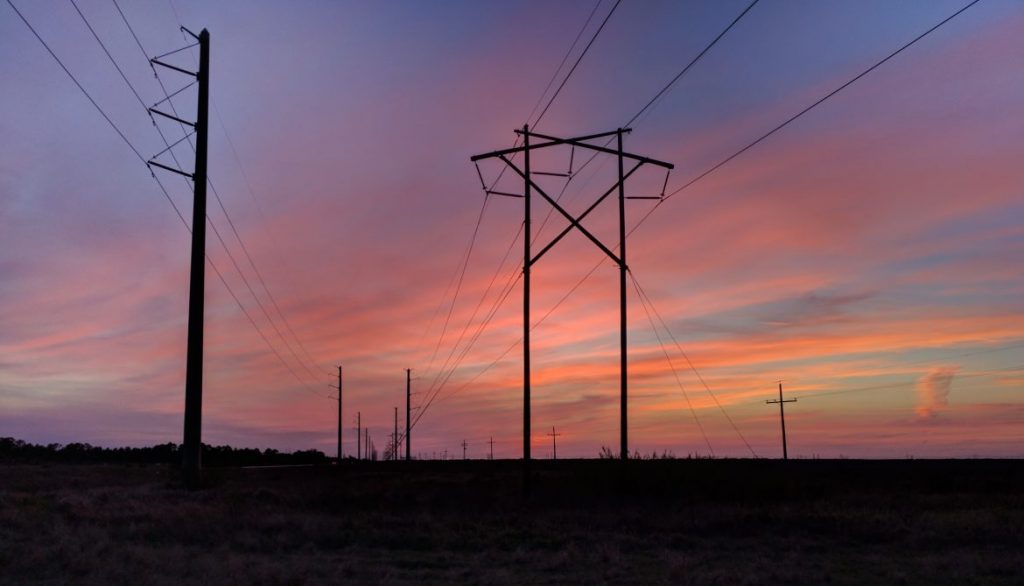
The Pacific Gas and Electric Company (PG&E) has diverted over $100 million from safety and maintenance programs to executive compensation at the same time it has caused an average of more than one fire a day for the past six years killing over 100 people.
PG&E is the largest privately held public utility in the United States. A new research report shows that 91% of PG&E stocks are held by huge international investment management firms, including BlackRock and Vanguard Group. PG&E is an ideal investment for global capital management firms with monopoly control over five million households paying $16 billion for gas and electric in California. The California Public Utility Commission (PUC) has allowed an annual return up to 11%.
Between 2006 and the end of 2017, PG&E made $13.5 billion in net profits. Over those years, they paid nearly $10 billion in dividends to shareholders, but found little money to maintain safety on their electricity lines. Drought turned PG&E’s service area into a tinderbox at the same time money was diverted from maintenance to investor profits.
A 2013 Liberty Consulting report showed that 60% of PG&E’s power lines were at risk of failure due to obsolete equipment and 75% of the lines lacked in-line grounding. Between 2008 and 2015, the CPUC found PG&E late on thousands of repair violations. A 2012 report further revealed that PG&E illegally diverted $100 million from safety to executive compensation and bonuses over a 15-year period.
PG&E has caused over 1,500 fires in the past six years. PG&E electrical equipment has sparked more than a fire a day on average since 2014—more than 400 in 2018—including wildfires that killed more than 100 people.
In October 2017, multiple PG&E linked fires (Tubbs, Nuns, Adobe fires and more) in Northern California scorched more than 245,000 acres, destroyed or damaged more than 8,900 homes, displaced 100,000 people and killed at least 44.
In November, 2018, the PG&E caused Camp fire burned 153,336 acres, killing 86 people, and destroying 18,804 homes, business, and structures. The towns of Paradise and Concow were mostly obliterated. Overall damage was estimated at $16.5 billion.
PG&E has caused some $50 billion in damages from massive fires started by their failed power lines. They filed bankruptcy in January 2019 to try to shelter their assets. PG&E’s 529 million shares went from a high of $70 per share in in 2017 to a low of $3.55 in 2019. Shares are currently trading at $10.55 with zero returns.  At this point PG&E actually owes more in damages then the net worth of the company.
All but two members of the board of director resigned in early 2019, and the CEO was replaced. A new board of directors was elected by an annual stockholders meeting in June of 2019. PG&E now has a board of directors whose primary interest in 2020 is returning PG&E stock values to $50-70 range and returning to annual dividend payments in the 8-11% rate.
The new PG&E management took widespread aggressive action during the fire-season of 2019 shutting down electric power to over 2.5 million people statewide. Nonetheless, a high voltage power line malfunctioned in Sonoma county lead to the Kincade fire that burned 77,758 acres destroying 374 structures, and forced the evacuation 190,000 Sonoma county residents. Estimated damages from this fire are $10.6 billion.
The fourteen new PG&E directors were essentially hand-picked by PG&E’s major stockholder firms like Vanguard Holdings 2019 (47.5 million shares 9.1%) and BlackRock (44.2 million shares 8.5%). A new PG&E Director, Meridee Moore, SF area founder & CEO of $2 billion Watershed Asset Management, is also a board member of BlackRock.
Only three of the new fourteen directors live in PG&E’s service area (four if we count the newly appointed CEO from Tennessee). One board member lives the LA area. The remainder of the board live outside California, including three from Texas, two from the mid-west and the remaining four from New York or east coast states. Pending PG&E Bankruptcy court approval, new directors are slated to receive $400,000 each in annual compensation.
Ten of the new 2020 directors have direct current links with capital investment management firms. The remainder have shown proven loyalty experience on behalf of capital utility investors making the entire PG&E board a solid united group of capital investment protectors, whose primary objective is to return PG&E stock values to pre-2017 highs with a 11% return on investment. They claim that wide-spread blackouts will be needed for up to ten years.
All fourteen PG&E board members are in the upper levels of the 1% richest in the world. As millionaires with elite university educations, the PG&E board holds little empathy for the millions of Californians living paycheck to paycheck burdened with some of the highest utility bills in the country. PG&E shuts off gas and electric to over 250,000 families annually for late payments.
The PG&E 2020 board is in service to transnational investment capital. This creates a perfect storm for the continuing transfer of capital from the 99% to the richest 1% in the world, all with uncertain  blackouts, serious environmental damage, widespread fires, with multiple deaths and injuries.
We need to liquidate PG&E for the criminal damages it has afflicted on California. The “PG&E solution” is to manage PG&E democratically on the basis of human need, rather than private profit. It is time to take a stand for a publicly owned California Gas and Electric Company as the way to reverse the transfer of wealth to the global 1% and provide Californians with safe, low-cost and more renewable energy. All power to the people!
For the full report with all PG&E board names see:  www.projectcensored.org/pge
Peter Phillips, Political Sociologist at Sonoma State University; author Giants: The Global Power Elite, (New York: Seven Stories Press, 2018); past director of Project Censored; co-author/editor of fourteen Censored yearbooks, 1997 to 2011; co-author of Impeach the President, (New York: Seven Stories Press, 2007); and winner of the Dallas Smythe Award from the Union for Democratic Communications.
Tim Ogburn, 20-year manager for the California EPA; founder and co-chair of the Environmental Industry Coalition of the United States in Washington, D.C.; published in numerous technical and trade journals regarding public/private partnerships; International Environmental Technology consultant in India, Philippines, Malaysia, Thailand, Egypt, and Israel; Consultant to USAID, US Department of Commerce, U.S. State Department; and has given Congressional Presentations on the environmental technology industry before Congress.
Originally published in Project Censored


Abiy Ahmed: Nobel Peace laureate who faces unrest at home
by Nizar K Visram


When the 2019 Nobel Peace Prize laureate, Ethiopian Prime Minister Abiy Ahmed, was in Oslo for the award ceremony, eyebrows were raised when he declined to attend any event where he would be asked questions in public. Organizers expected him to meet the international press in keeping with the Nobel tradition, but his spokeswoman cited “pressing domestic issues” and his “humble disposition.”

When the 2019 Nobel Peace Prize laureate, Ethiopian Prime Minister Abiy Ahmed, was in Oslo for the award ceremony, eyebrows were raised when he declined to attend any event where he would be asked questions in public. Organizers expected him to meet the international press in keeping with the Nobel tradition, but his spokeswoman cited “pressing domestic issues” and his “humble disposition.”
The secretary of the Nobel committee, Olav Njolstad, called the decision “highly problematic”, noting that a “free press and freedom of expression are essential conditions for a lasting peace in a democracy”. He said the committee would “very much have wanted Abiy to engage with the press during his stay in Oslo”.
Abiy is not the only Nobel laureate that failed to “engage with the press”. The former US president Barrack Obama also declined to meet the press when he accepted the peace prize in 2009. Perhaps they were both avoiding one pertinent question: Was the decision to award them the prize not taken prematurely and hastily?
The Norwegian Nobel Committee said Abiy Ahmed was awarded the prize for his “decisive initiative to resolve the long-running border conflict with neighbouring Eritrea.” It extolled his “efforts to achieve peace and international cooperation.”
Abiy has been lauded for “tearing down the wall” with Eritrea, thus ending two decades of hostility with the neighboring country.  Two months after entering the office, he declared that he would fully accept the terms of a peace agreement with Eritrea.
He flew to Eritrea and hugged President Isaias Afwerki, launching a peace process between the two countries that went to war from 1998 to 2000. More than 80,000 people were killed and hundreds of thousands displaced during the military conflict.
The two leaders then signed a peace deal, establishing diplomatic ties, resuming communication and air travel and lifting border restrictions. Border disputes, however, are not fully resolved. Some border crossings were opened with colorful ceremonies, only to be reclosed.
Immediately after his appointment as head of ruling EPRDF party and prime minister in April 2018, Abiy launched the policy of Medemer  (togetherness or inclusiveness), under which he lifted the state of emergency and put an end to the torture chambers, while firing bigwigs accused of corruption
Abiy also lifted a ban on political parties, released thousands of political prisoners, including journalists and bloggers, and unblocked more than 260 blogs. He also opened the door to exiled political activists, while enacting amnesty laws, repealing repressive NGO and media acts. Ethiopia jumped 40 places in the 2019 World Press Freedom Index compiled by Reporters Without Borders.
Abiy also appointed a gender-balanced cabinet, with 50 percent of women ministers, woman chairperson of the National Election Board, woman head of federal Supreme Court, and the first woman head of state in the country’s modern history.  He appointed a peace and reconciliation commission to deal with past abuses.
Amnesty International acknowledged the reforms undertaken by Abiy’s government but called upon the prime minister to revise the country’s anti-terrorism law to avoid rolling back progress made since he took office.
“The use of Ethiopia’s anti-terrorism proclamation to arbitrarily arrest journalists is completely out of step with reforms witnessed in the country,” Seif Magango, Amnesty’s deputy director for East Africa, said. “This law must be revised to align with international standards and must no longer be used to harass journalists.”
Abiy Ahmed inherited a state that controlled the “commanding heights” of the economy under the “development model” championed by former prime minister, Meles Zenawi. He backed away from Zenawi’s model, leaving the doors open to the Wall Street and its financial institutions.
Within no time, Abiy fell into “chronic foreign currency shortage,” and he resorted to loans and grants from the West and rulers of Saudi Arabia, the United Arab Emirate and Qatar. Soon after Abiy became prime minister he signed a deal for $3 billion with the United Arab Emirate, to “strengthen military cooperation”.
In October 2018, the World Bank approved a total of $1.2 billion for what they call structural adjustment. National Bank of Ethiopia’s Governor, Yinager Dessie said: “They have given us some objectives that have to be met every year for another $1 billion, as the government follows through on its commitment to economic reforms.”
Such funding often goes into unproductive expenditures, saddling the country with audios debt, austerity measures and further IMF and World Bank incursion. This way the country becomes beholden to the global conglomerates.
It wasn’t a bolt from the blue, therefore, when Ethiopians learnt that Abiy was planning a multibillion dollar privatisation of major public enterprises such as Ethio Telecom, Ethiopian Electric, Ethiopian Airlines, and Ethiopian Shipping & Logistics Services Enterprise.
Arrangements are reportedly being made to sell off a 49 per cent stake in Ethio Telecom, the largest telecoms company in Africa, with customer base of 65 million subscribers, and over 22,000 employees. Its annual operating income is $103 mill, with net income of $ 46 mill. The Shipping Enterprise has annual revenue of $ 484 mill.
One state-owned corporation earmarked for privatization is Ethiopian Airlines, the national flag carrier that was launched in 1946 when most of the African nations were under the colonial yoke. Today, its success is taken as a symbol of Ethiopia’s strength. It has a profit of $ 110 mill and revenue of $ 1.5 bill.
It is the largest national airline in Africa and amongst the highly successful public enterprises globally. It is arguably Ethiopia’s most profitable and well-managed public undertaking, with some 110 modern aircraft and over 100 world destinations. Not surprisingly, the airline has clinched several regional and international honours.
Abiy’s policy is divestment of such national treasure, while liberalizing labor law. He is also expected to hand over industrial, tourism, agricultural and mineral sectors. Ethiopia has rich mineral deposits, especially gold whose extraction is contracted to companies from the West and Saudi Arabia.
Besides gold, there are also deposits of platinum, copper, potash, natural gas and tantalum, a corrosion resistant mineral used in electronic components. Other minerals include niobium, cement, salt, gypsum, clay, shale, and soda ash. Not unexpectedly, therefore, foreign firms have their eyes on Ethiopia.
In fact, the US trade delegations are reportedly ready to pounce on the profitable state-owned airline. At the same time, the German development minister complained that his country should not lay back and watch the US and China “take hold of Africa.” German president and industrialists have already visited Addis Ababa to sign a memorandum of understanding between the Volkswagen Group and the Ethiopian Investment Commission.
At the 2019 World Economic Forum in Davos, Abiy declared his commitment to the neoliberal model.  He reaffirmed this in an interview with the Financial Times. The international elites and corporate media have hailed Abiy’s rise to power and his reforms as the dawn of a new era of “freedom and prosperity” for Ethiopia.
Foreign investors have pledged to provide $500 million for two industrial parks, on condition that Ethiopian government reserves a third of the projected 100,000 jobs for refugees. This was approved by Abiy in January 2019, thus supplying refugees to work in the foreign owned enterprises. A local neo-liberal newspaper justified this model by saying: “The one prime opportunity Ethiopia can offer investors is low-cost labor. Taking that away will just drive investment elsewhere”
Thus, the country has the Pizza Hut, where a pizza sells for about US$15, in a society where millions barely survive on less than US$1 per day, while ten tycoons own $25 billion.
Reaping super profit on cheap labor is described as “prime opportunity for investors”. The International Trade Unions Confederation (ITUC) denounced such super exploitation of labor in Ethiopia.
One official “justification” for the rush to sell the assets is that the country may use the proceeds to pay off government-guaranteed debts issued by lenders. Thus, selling sugar factories and the country’s telecommunications monopoly would enable the government to recapitalize state-owned enterprises so they can repay borrowings. This was said by the National Bank Governor.
And head of the National Planning and Development Commission, Fitsum Assefa, said: “With liberalization and privatization, definitely some money will be raised and that will definitely be used to repay the banks – such a move will also help the liquidity”
Abiy Ahmed was appointed prime minister after people revolted against his predecessor. Yet, his own term has not been entirely peaceful. The country has been haunted by ethnic and regional conflicts which have claimed hundreds of lives and seen 3.5 million people displaced since 2015. Since Abiy came to power such conflicts have been on the rise.
According to the Human Rights Watch (HRW), 1.4 million people were displaced in the first half of 2018. That is a global record, the rights group observed. According to the UN report, over two million were displaced, while hundreds were killed.
During protests that erupted in October 2019, Abiy’s spokesperson put the death toll at over 78, with 409 people detained. The dead included 50 from the Oromo ethnic group, the country’s largest, while 20 were from the Amhara group, the second largest. Five of the dead were police officers. This was conceivably the most serious crisis during Abiy’s term in office so far
Ethnic-based unrests that erupted end of 2019 took religious form. Thousands of Muslims across Ethiopia protested the burning of four mosques in the Amhara region.  The December 20 attacks in Motta town, more than 350 kilometers north of Addis Ababa, also targeted Muslim-owned businesses.
Amhara regional officials said they arrested 15 suspects in connection with the attacks. Police commander Jemal Mekonnen told state media the attacks appeared to be triggered by news of a fire that broke out in an Orthodox church a few days earlier.
Ethnic nationalism now stands in the way of Prime Minister Abiy Ahmed’s reforms.  He himself reportedly survived an assassination attempt, while his new book on Medemer was burnt by protesters in eastern Ethiopia. While he was attending Russian-African summit in Sochi, his home was torched
Ethiopian prosecutors have charged five suspects with an attempt to kill Prime Minister Abiy in a grenade attack at a rally in June 2019. The attack killed two people and injured more than 100.
Meanwhile, Abiy is facing mounting criticism from people who accuse him of stifling the press, and issuing the controversial Anti-Terrorism Proclamation, which they say is aimed at repressing dissidents. Amnesty International has cautioned that Ethiopia’s ethnic, linguistic and religious divergences “threaten instability and further human rights abuses”.
Abiy himself admitted that what began as protests against his government has quickly taken ethnic and religious dimension.
(Nizar Visram is Tanzanian writer and commentator. He can be contacted at nizar1941@gmail.com )


On 124th Birth Anniversary Of Subhash Chandra Bose, How Hindutva Gang Back-Stabbed Netaji
by Shamsul Islam


RSS-BJP rulers of India have been trying to show off as great fan of Netaji. But Indians
must know what role ideological parents of today’s RSS/BJP played against Netaji and INA. Hindu Mahasabha and RSS which always had prominent lawyers on their rolls made no attempt to defend the INA accused at Red Fort trials.


Adivasis and Indigenous People in India Condemn the Decision of Adani and Australian Governments on Mining and Displacement
Press Release


We the following Adivasi organisations in India unanimously condemn the decision of the Queensland government to extinguish title of over 1385 hectares in Wangan and Jalingou country in Australia for the proposed Adani coal mine in Queensland’s Galilee Basin. We are shocked to understand that such a decision affecting the indigenous people of Australia was made without even any public announcement.
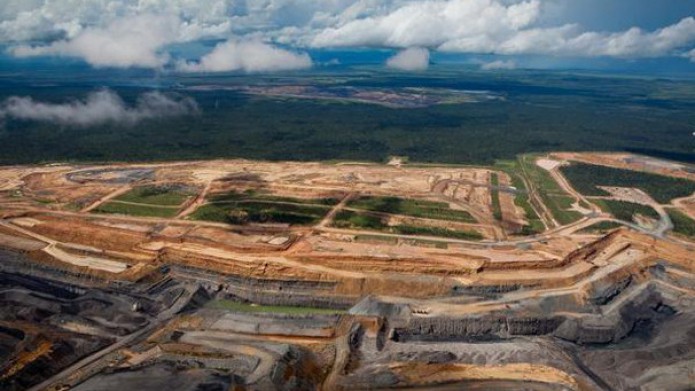
We the following Adivasi organisations in India unanimously condemn the decision of the Queensland government to extinguish title of over 1385 hectares in Wangan and Jalingou country in Australia for the proposed Adani coal mine in Queensland’s Galilee Basin. We are shocked to understand that such a decision affecting the indigenous people of Australia was made without even any public announcement. We note with great pain that an Indian industrialist is responsible for threatening the lives of indigenous people in Australia, removing them from their own traditional lands, for which they had enjoyed their community rights for generations. With Adani stepping into their territories, these indigenous people will become trespassers to their own lands, restricting their involvement even the basic rituals for their ancestors.
What is extremely repulsive is to note that without the subsidies of 4.4 billion dollars from the Australian governments for Adani’s project, the project would become unviable. The Central and State Governments in India are also following the same model. The model is: `Support the rich with money that belongs to people and wipe out the poor’. This model of development economics needs much more sharper public criticism and scrutiny.
We hereby express our heartfelt solidarity to the struggle carried out by the Wangan & Jalingou Council leader Adrian Burragubba and other representatives of the indigenous people in this region. We call upon all organisations of indigenous all over the world to express their solidarity and support to the indigenous people struggling for their basic rights in Australia. Adivasis and indigenous people all over the world is facing such invasions into their lands, causing displacement, human rights violations and environmental destruction. While coordinating the solidarity concerns of adivasis in India on this issue, the India Greens Party (IGP) has called for international solidarity of all like-minded individuals and organisations to generate pressure on Adani and the Australian governments to withdraw their decision causing great harm to environment and indigenous people. The question `Development for whom and at whose cost’ is becoming more and more grave issue, especially when the governments and corporates behave in an utterly irresponsible manner, without the basic concern for the earth, its inhabitants and its environment, said the representatives of the India Greens Party (IGP). The party has also asked for wider dissemination of these issues among all sections of people who are concerned about the future of healthy planet.
1) All India Adivasi Mahasabha
2) National Adivasi Andolan
3) All India Union of Forest Working People
4) Jharkhand Jungle Bachao Andolan, Jharkhand
5) Rajya Moola Adivasi Vedike Karnataka
6) Eruliga Aranyavasi Kshemabrivridhi Sanga, Kanakapura, Karnataka
7) Soliga Abhivraddi Sangha, Chamarajanagar.
8) Jilla Budakattu Krishikara Sangha, Chickkamangalore.
9) Adivasi Art
10) Anti-Jindal & Anti-POSCO Movement, Odisha
11) Budakattu Krishikara Sangha Kodagu.
12) Budakattu Krishikara Sangha ,Periyapatana, Mysore District,
13) Tamilaga Adivasi Amaippukalin Kootamaippu (TAAK)
14) Jharkhand Jungle Bachav Andolan, Jharkhand
15) Jharkhand Indigenous peoples Forum, Jharkhand.
16) Odisha Paramparik Krushak Sangathan (OPKS), Odisha
17) Anamalai Adivasi Movement, Tamil Nadu


Friday, December 23, 2016

RSN: Noam Chomsky: The US Has a History of Supporting Muslim Extremists in the Middle East


It's Live on the HomePage Now: 
Reader Supported News

Sure, I'll make a donation!

Noam Chomsky: The US Has a History of Supporting Muslim Extremists in the Middle East 
Noam Chomsky at Occupy Boston. (photo: Andrew Rusk/Flickr)
Daily Mirror 
Excerpt: "What state power does, and propaganda usually follows, is (to) find what will support a power interest. In these cases imperial policy. If it happens to be radical Islam that's fine. At the same time we might be fighting radical Islam somewhere else." 
READ MORE
Black Family Brutalized by Texas Police When Trying to Report a Man Assaulting Their Child 
Shaun King, New York Daily News 
King writes: "Black folk don't need to create fake videos to expose injustice, the injustice is real all by itself." 
READ MORE
Donald Trump Is Holding a Government Casting Call. He's Seeking 'The Look.' 
Philip Rucker and Karen Tumulty, The Washington Post 
Excerpt: "Donald Trump believes that those who aspire to the most visible spots in his administration should not just be able to do the job, but also look the part." 
READ MORE
Registry Used to Track Arabs and Muslims Dismantled by Obama Administration 
Ed Pilkington, Guardian UK 
Pilkington writes: "The Obama administration is dismantling a discriminatory surveillance system that was used after 9/11 to keep tabs on Arabs and Muslims across the US, in a move that will make it more difficult for president-elect Donald Trump to achieve his goal of introducing a Muslim registry." 
READ MORE
Six Generic Drug Makers Caught in Price-Fixing Conspiracy 
Dan Wright, Shadowproof 
Wright writes: "Last Thursday, attorneys general in 20 states sued six generic drug makers for conspiring to increase prices on generic medications to boost profits." 
READ MORE
White Nationalists Raise Millions With Tax-Exempt Charities 
Michael Kunzelman, Associated Press 
Kunzelman writes: "The federal government has allowed four groups at the forefront of the white nationalist movement to register as charities and raise more than $7.8 million in tax-deductible donations over the past decade." 
READ MORE
New Rule Protecting Waterways From Coal Mining Will Be Early Target of Trump Administration 
Natasha Geiling, ThinkProgress 
Geiling writes: "The Department of the Interior finalized a rule Monday aimed at protecting waterways from coal mining pollution. It's a rule the administration has been working on for nearly all of President Barack Obama's time in office - and it's likely to be one of the first regulation to come under fire when President-elect Donald Trump takes office next month." 
READ MORE

Contribute to RSN
Become a Fan of RSN on Facebook and Twitter

Wednesday, June 17, 2015

Peabody Coal: Another Dirty Energy SCAM!


We can't escape the pollution from Dirty Coal, whether it's coal mines and black lung disease....


Mountain Top Removal and the communities that are destroyed.....


the streams and drinking water that are contaminated, the Dirty Coal Spills, the Dirty Coal Ash Spills.....


the Air Pollution caused by burning Dirty Coal. 

This is the Dirty Brayton Point Coal Burning Power Plant, not closing soon enough: 


Owner reaffirms 2017 closing of Brayton Point plant

Loss of coal-fired facility, one of state’s dirtiest generators, may raise prices


Massachusetts is Down Wind of the nation's Dirty Coal! 

Let's not allow Peabody Coal room to wiggle out of Clean Up costs! 

For additional information: 

Peabody Energy

Please add your name below to stop subsidizing Dirty Peabody Coal:

Don’t let America's largest coal company stick us with its clean-up bill 


Don’t let America's largest coal company stick us with its clean-up bill


Where there’s coal mining, there’s toxic clean up. And coal companies are supposed to pay for it.
But a new investigation by Reuters reveals that America’s largest coal company, Peabody Energy, doesn’t have sufficient funds or insurance to clean up and reclaim its own mines.
If federal coal regulators don’t act, we could get stuck with the bill for billions of dollars in toxic clean-up costs.
Tell the Department of Interior: Don’t let Peabody Energy stick us with its toxic-clean up bill!
The report found that, after posting a $787 million loss in 2014, Peabody no longer qualifies for a policy known as “self-bonding” – in which coal companies are allowed to forgo private clean-up insurance if they possess sufficient financial resources.
This policy is in effect a massive subsidy to the coal industry, allowing them to reap substantial savings over buying insurance on the open market, and trusting that coal companies will act in good faith to clean up their mess in a timely manner.
It’s hard to think of an industry that is less deserving of our trust. The coal industry has already abandoned $4 billion worth of mines still in need of clean-up. And if the four largest coal companies alone were to file for bankruptcy, they would saddle taxpayers with $2.7 billion in mine cleanup costs, and no insurance to defray the costs.
Astonishingly, Peabody is pushing back, saying that it should still qualify for the program. But if federal regulators don’t force them to buy insurance, we’ll be on the hook for their mess if the company continues struggling financially in the face of declining coal prices and demand.
Regulators at the Department of Interior’s Office of Surface Mining and Reclamation and Enforcement are currently reviewing the self-bonding policy. And with the Obama Administration’s recent decision to open up vast new quantities of coal for mining in the Powder River Basin, this is a vital moment to make sure coal companies are held fully accountable
Tell the Department of Interior: If a coal company can’t afford to pay for mine clean-up, that company shouldn’t be allowed to mine.
Thank you for fighting to hold the coal industry accountable.
  1. "The U.S.’s Biggest Coal Company Can’t Pay To Clean Up Its Own Mines," Think Progress, 6/8/15
  2. "Coal giant Peabody faces federal scrutiny over clean-up insurance," Reuters, 6/4/15
  3. "Exclusive: U.S. examining coal cleanup program for shortfalls," Reuters, 4/27/15


86%
We've reached 65,038 of our goal of 75,000.

Sign the petition

Petition to the Department of Interior:
“Strictly enforce clean-up insurance requirements for Peabody energy and other coal companies. Any coal company that can’t pay for its mine clean-up costs should not be allowed to mine, with no exceptions.”
    You'll receive periodic updates on offers and activism opportunities.


    Saturday, December 8, 2012

    Catastrophe in the Making


    Interesting article about Virginia's future environmental destruction in the wake of mountaintop removal  --

    Catastrophe in the Making: Mining for Uranium Could Begin on the East Coast


    Despite public outcry, Virginia could permit mining at one of the world's largest uranium deposits.


    This article was published in partnership with GlobalPossibilities.org.

    We know many of our  tragedies by name; in recent years we have met Andrew, Katrina, Ike, Irene, and most recently, Sandy. They defied our expectations — the lost lives, ruined homes, ransacked communities. There is little comfort looking forward. We’re told to expect more storms, and worse ones. It’s hard to imagine how bad things could get, but then, not everyone has to imagine. Some people may remember Camille.

    Hurricane Camille hit the Mississippi Gulf coast on Aug. 17,1969, thrashing communities with a tidal storm surge nearly three stories high and winds of up to 200 miles an hour. Or so experts think — it’s hard to say, since the storm destroyed all of the wind recording instruments in the region. When the storm had moved on, many homes were underwater or on fire, and 143 people in Alabama, Mississippi and Louisiana were dead. But Camille wasn’t done.

    As the storm moved north, it grew weaker until August 19, when what was left of Camille collided with another system of wet air by the Blue Ridge Mountains. The result was a storm of immense magnitude that took rural Nelson County, Virginia, completely by surprise. Stefan Bechtel explains in his book Roar of the Heavens , small communities in the mountains of central Virginia were inundated with “one of the heaviest rainfalls ever recorded on earth” — in some areas an estimated 31 inches of rain fell in less than eight hours.

    “Humans, animals, trees, boulders, houses, cars, barns, and everything else were swept away in a fast-moving slurry, a kind of deadly earth-lava that buried everything in its path,” Bechtel writes. Birds drowned in the trees, people struggling to stay alive had to cover their mouths from the rain to breathe, homes floated away or were crushed by debris. An estimated 2,000 years of erosion of the mountains took place in one night. As rivers rose, flash-flooding occurred all over Virginia, and in Nelson County alone 153 people died, many of their bodies never recovered.

    This storm event was known as “probable maximum precipitation.” Thomas Leahy has recently come to learn a lot about PMP storms, and he’s read all about Camille’s wrath on Nelson County. Leahy is director of Public Utilities for the city of Virginia Beach. His interest was piqued in 2007 when he heard about plans to build a uranium mine and mill just south of Nelson County in Pittsylvania County, Virginia. An intake valve for one of Virginia Beach’s main sources of drinking water sits downstream from Pittsylvania County. What would happen to our water, he wondered, if there was a uranium mine and mill in the path of a PMP storm?

    Using computer modeling, Virginia Beach spent $400,000 to find out . After all, we’re living in a world of extreme weather and it turns out these massive rain and flooding events aren’t 1,000-year storms but have been mapped by the USGS over the last 100 years across the U.S. Their findings reveal a cluster of PMP storms along the Appalachian mountain range, including in the mid-Atlantic region where three of the five most intense storms took place. Two in Virginia, the 1969 storm in Nelson County, and a 1995 storm in Madison County -- just north of Nelson – where 30 inches of rain fell in 14 hours. Smethport, Pennsylvania was hit in 1942.

    Extreme Energy

    It’s not just weather that’s gotten extreme. So has extraction for fossil fuels. The battle over hydraulic fracturing, or fracking, for shale gas has gripped the East Coast. Due to the state's geology, fracking has had minimal impacts in Virginia, but those in nearby West Virginia, Pennsylvania and Ohio can’t say the same. New York and North Carolina are both mulling decisions on whether to allow fracking. Appalachian states like West Virginia have also long endured coal mining, but in recent decades have faced increasing threats from an even more extreme form of mining -— mountaintop removal mining, in which the tops of mountains are blown to bits by explosives and the “waste” rock dumped into mountain streams and valleys.

    As extractive industries grow in the East, Virginians have realized their state may be the bullseye of yet another energy industry — nuclear power. Large deposits of uranium were discovered in the state in 1979. Throughout the 1970s, employees of the Canadian company Marline Uranium drove all over Virginia with Geiger counters, hoping to hit a uranium jackpot. They struck nuclear gold by Coles Hill, just outside the town of Chatham, Virginia — an area of the state known as Southside, less than 25 miles from the North Carolina border.

    But just as they made their big discovery, nuclear energy was thrust into national headlines as a partial meltdown occurred at Three Mile Island. Growing public concern about nuclear energy, plummeting prices for uranium and a moratorium on uranium mining in Virginia, enacted by the state’s General Assembly in 1982, ultimately sent Marline packing.

    What Marline walked away from was indeed mammoth — the Coles Hill deposit is estimated at 119 million pounds of uranium worth about $10 billion. It may be the largest find in the U.S. and one of the 10 biggest globally. But uranium mining is all about economics and in 2005 the price of uranium rose high enough that there was renewed interest in Coles Hill; this time from the owner of the land himself, Walter Coles, whose family owns a 750-acre farm where the uranium was found. In 2007 Coles announced the formation of Virginia Uranium Inc. (VUI) and set off to persuade the Virginia Assembly to lift the uranium moratorium so his company could begin mining.

    Public Concern

    Chatham, Virginia is a rural town struggling to thrive in the post-tobacco and post-textile heyday. The downtown is a modest collection of a few intersecting roads, brick and stone storefronts, a library, and a courthouse. The government seat for Pittsylvania County, the economy is kept afloat by two boarding schools, the all-girls Chatham Hall and the all-boys Hargrave Military Academy. Agriculture continues to dominate in the adjacent bucolic countryside.

    Downtown Chatham, Virginia. (Photo by Tara Lohan)

    The town is not down and out, but it is in the early stages of economic re-invention. As such, it's the kind of place where someone offering jobs is likely to be pretty popular. But Chatham residents are no fools, either. The folks who live there and in surrounding communities in the Roanoke River watershed have been doing their homework on uranium mining. Even though VUI has promised jobs, residents have found ample reason to be concerned.

    Our country’s history of uranium mining has been something of a horror story. The first boom in uranium mining came in the '50s in response to our growing nuclear weapons arsenal. A second boom happened in the '70s when many nuclear power plants came online. These booms were followed by busts as uranium prices dropped; when the market bottomed out, mining companies took off, creating an epidemic of abandoned mines. Poor or non-existent regulations, including allowing radioactive waste to be dumped into unlined pits, has left a legacy of toxic pollution and poisoned communities in the West, many on tribal and federal lands. (There are 520 abandoned uranium mines on Navajo land alone.) American taxpayers have been stuck with cleanup bills in the billions of dollars.

    Today, uranium mining proponents say regulations are better and new technology makes the work safer. But it is still a massive industrial process that leaves behind radioactive waste forever. You can’t see uranium in the rock the way you can see a coal seam — to get to the good stuff, the rock needs to be pulled from the earth by underground or open pit mines and then crushed. After the mining comes the milling process, in which chemicals are used to separate the uranium. The uranium is then dried and becomes the valuable commodity known as “yellowcake.”

    But the waste or "tailings" of crushed rock, water and chemicals is problematic, still containing 85 percent of its radioactivity, including radium and thorium. Tailings are usually put in lined impoundments that are stored above or below ground (also known as below grade) for, well, all of eternity. In that time, the liners are not supposed to rip.

    Rose Ellen O’Connor reported for DC Bureau that Virginia Uranium plans to store some of the waste underground and put the rest back in the mine. “Virginia Uranium spokesman Patrick Wales has said the holding compartments will be state-of-the-art, lined with rock, clay and tough synthetic strong enough to prevent leaching,” O’Connor wrote.

    Cale Jaffe, an attorney for the Southern Environmental Law Center, isn't convinced that the waste can be stored below grade because of the area’s high water table. Another concern is that the tailings impoundments aren’t capped until they are filled (they can be up to 40 acres in size), a process that could take months or even years, so if heavy rains or storms occur beforehand, there is opportunity for a catastrophic spill.

    Before a tailings impoundment can be capped, all the water needs to be drained from it and it needs to be completely dry, so there is no chance that water could eventually leak out of the impoundment.

    “It seems to me it would be impossible to dry out a tailings impoundment in Virginia where you have more precipitation than evaporation,” said Sarah Fields, program director of the Utah-based organization Uranium Watch. “I don’t know how Virginia Uranium could get around that technical detail.”

    The amount of waste will also be massive. “This mine site is a large deposit but they don’t mention that while the size of ore body is large, the grade of ore is poor,” Jaffe said. “The average grade is 0.06 percent, which means that 99.94 percent is other stuff. To get the 63 million pounds of yellowcake they want to get out they have to manage 28.9 million tons of waste. VUI talks about energy independence for Virginia, but yellowcake will get shipped to an out-of-state enrichment facility. Our prize is the waste. It is really a question of Virginia being the uranium waste disposal capital of the East Coast.”

    Where will all the waste go? An economic assessment prepared for Virginia Uranium by two engineering firms in June 2012 said, “Tailings planned for surface disposal, employing regulatory guidelines, shows that there is currently inadequate surface disposal acreage within the current surface land control area.”

    Significant Hurdles

    After VUI began pushing for the moratorium to be lifted, the public pushed back. The resulting compromise was that the Virginia Coal and Energy Commission authorized a study (paid for by VUI to the tune of $1.4 million) from the National Academy of Sciences. “It had buy-in from all sides,” said Jaffe. “There were experts from all sides and public comments and an independent peer review committee.” The intention of the study wasn’t to provide a recommendation for whether the moratorium should be lifted, but to offer evidence for the public and for legislators to draw their own conclusions.

    One of the biggest red flags point out that almost all uranium mining has taken place in arid parts of the country, but in rainy Virginia, the report found, “federal agencies have limited experience applying laws and regulations in positive water balance situations.”

    Again, an issue of more rain than evaporation. There are also other concerns; the Southern Environmental Law Center found that in the last century, Virginia “has been hit by at least 78 category-strength hurricanes ... In 2011, at least 37 tornadoes were recorded in Virginia, including one in Halifax County about 20 miles from the Coles Hill site. And in August 2011, an earthquake of 5.8 rocked Virginia; its epicenter was just 125 miles from Coles Hill.”

    Then there is the issue of the tailings that will remain after the milling process and pose a contamination hazard for thousands of years, even with modern technological improvements. The “long-term risks remain poorly defined” the report said, and failings “could lead to significant human health and environmental effects.”

    The report noted that there are some serious health risks from silica dust, diesel exhaust and radon decay that have been linked to cancer. Workers are most at risk, but the surrounding public could be exposed to cancer-causing chemicals as dust blows from the site or wastewater leaks. And it is possible for the contaminants to enter the food chain, too.

    Ultimately, the study concluded that if Virginia does decide to lift the moratorium it will face "steep hurdles" to ensure that the environment, public health, and workers are safe.

    Focus on Water

    Coles Hill sits on the Bannister River, a tributary of the Roanoke River, which travels over 400 miles from the Blue Ridge Mountains through Virginia, dipping into North Carolina, and finally reaching the ocean at the Outer Banks. In 2011, the proposed uranium mine earned the Roanoke a spot on American Rivers’ annual list of the most endangered waterways in the country. "The potential health impacts of exposure to uranium and mining chemicals are well-documented, and include cancer, birth defects, hormone disruption, and damage to vital organs," the organization said. "Developing a uranium industry in Virginia is considered especially risky because of the region’s high rainfall and frequently severe hurricanes and storms."

    While the Roanoke doesn’t flow through Virginia Beach, it is impounded in Lake Gaston, from which the city pumps water — and that water is mixed with other sources to supply Virginia Beach and neighboring communities like Norfolk and Chesapeake. Virginia Beach found through its computer modeling that a major failure of even just one above-ground waste impoundment would be bad news for their community — even though they’re hundreds of miles downstream.

    The water column will eventually clear, said Public Utilities director Thomas Leahy, although Virginia Beach would have to stop pumping water from one of its main sources for up to two years.

    The toxic sediments that fall out of the water column could affect plants and bottom-dwelling fish for perhaps hundreds of years. If the city had to stop pumping, Leahy says it would be “a bad time for a year or two with severe economic issues” as well as a public relations nightmare.

    If the impoundments are put below grade he says, and there is a failure the effects would be more in the immediate environment. “Surface water would be protected at the expense of groundwater.” But Leahy says there is no guarantee that below grade impoundments will be feasible. “The Marline company said the water table was too high for below grade impoundments and so did the engineering study,” Leahy said. “In Virginia, all landfills are above ground because of water contamination.”
    As a result of the study, the Virginia Beach City Council opposes lifting the moratorium. The AP reported that, “The Virginia Association of Counties and the Virginia Municipal League have endorsed legislative positions seeking to keep the ban” as well.

    “Regardless of what anyone says, if you run a mining operation there will be releases,” Leahy said. “Most of that would be a local issue. Our concern is more of the catastrophic accident.”

    But there are many close to Coles Hill who are concerned about the local impacts, as well as the 1.2 million people who get their drinking water from the Roanoke and Bannister rivers.

    Olga Kolotushkina's family owns a home 12 miles from the Coles Hill site. She said, “There is a small risk but huge consequence if there is a catastrophic event of rain and flooding — everything will be washed down. But another risk is the long-term chronic degradation of water. What is going to be the cumulative impact?”

    A site-specific study commissioned last year by the Roanoke River Basin Association found that 250 private wells could be at risk in just a two-mile radius from the Coles Hills site. Water contamination could result from leaking mill tailings, but could also come from water that would need to be drained from the mine and stored on-site before being treated and released. “Such a project would cause long-term, chronic degradation of water quality and increase water competition in the region,” the report found.

    "Virginia Uranium says it will mine safely, just as BP said it would drill safely," attorney Cale Jaffe told the Roanoke Times. "The lesson here is that things do not always go according to plan, and we should not be playing high-stakes roulette with a waterway.”

    But sometimes it isn't the catastrophic accident that is most damaging, but slow leaks from cracks in impoundments, said Jaffe. Writing for the Richmond Times Dispatch, Jaffe elaborated:
    In Colorado, a Cotter Corp. mill has been leaking for years, despite repeated efforts to address the problem. The mill was declared a Superfund site in the 1980s, but a 2004 report found it continued to release "millions of gallons of leachate into the environment each year." Cleanup was estimated to cost up to $500 million.
    Accidents continue to this day. As recently as 2006, flooding overwhelmed a uranium mine site in Saskatchewan, Canada. According to a nuclear-industry publication, that flood raised "questions for some analysts about whether [the mining company] could devise plans to prevent future floods."
    Closer to home, uranium was extracted in Florida as a byproduct of phosphate mining. In 1997, a spill at one Florida phosphate mine released 50 million gallons of wastewater, poisoning 35 miles of the Alafia River and killing up to 3 million fish. The cleanup of a second spill from the same company cost state taxpayers $144 million.
    Robert G. Burnely, a former director of Virginia’s Department of Environmental Quality, says the state doesn’t have the experience or the know-how to effectively regulate uranium mining. Not only that, it simply doesn't have the money. "Virginia consistently spends less than 1 percent of its total annual budget on environmental protection," he wrote in an op-ed for the Danville Register & Bee.

    "A fair conclusion to be drawn from this statistic is that the environment has not been a high priority for the legislature ...The forced triage of regulatory duties means that agencies must often rely on industry self-reporting — a prospect that should be unthinkable for an industry as risky as uranium mining and waste disposal."

    Political Climate

    Whether Virginia embraces uranium mining will likely be decided in the next year by the General Assembly. Most people thought it would come to a vote during the beginning of 2012; the National Academy of Sciences study was completed in December 2011 and it was thought to hold all the information legislators would need to make educated decisions about whether to vote yes or no on lifting the moratorium. But instead, Virginia’s governor Bob McDonnell asked the legislature to wait until he could form a task force to examine the issue. Proponents of keeping the ban cried foul, believing that the governor’s handpicked Uranium Working Group and the private consulting firm he hired were tasked with drafting uranium-mining regulations for the General Assembly and not fact-finding about the potential hazards — which were already well documented.

    The governor has declared his intentions to make “Virginia the energy capital of the East Coast.” He has said, “Energy is the lifeblood of our nation's economic growth. More energy means more jobs and we need to use all of our domestic energy resources.”

    Does this mean Gov. McDonnell is willing to use his political muscle to lift the ban? It’s not clear, but Virginia Uranium and its lobbyists are working hard — and may be seeking an alternate strategy instead of a straight vote on the ban. O’Connor reported for DC Bureau, "Whitt Clement, head of the state government relations team at Hunton & Williams and one of 19 lobbyists employed by Virginia Uranium, told a closed-door meeting of Virginia business leaders in Williamsburg last month that the company is working on legislation that would authorize state agencies to draft regulations to govern mining rather than voting directly on the project."

    The Uranium Working Group’s findings were released just this week and it was news that State Senator John Watkins would be introducing legislation during the 2013 session to lift the moratorium. In a news release on December 3 he said, “I have made a request to Legislative Services for legislation that adheres to the principles outlined by the UWG (Uranium Working Group) and intend to be the patron of such a bill.”

    If Virginia does vote to lift the moratorium it would only be for uranium mining – the milling would be overseen by the Nuclear Regulatory Committee, unless Virginia applies to be an “agreement state” and take over the monitoring of milling. In either case, Virginia Uranium would have many more hoops to jump through before its project could be approved by state and federal regulators.

    A Matter of Economics

    At a public meeting convened by the Nuclear Regulatory Commission and the Uranium Working Group in Chatham during August, longtime resident Eloise Nenon told the audience she’s been fighting uranium mining in Virginia for 52 years. She started the first area organization with six women sitting around her dining room table. She believes that most of what would be mined in Virginia would be headed overseas; she said China is the primary market for Virginia’s uranium.

    Signs displayed at the August UWG meeting in Chatham, Virginia. (Photo by Tara Lohan)

    The U.S. imports about 90 percent of the uranium that is used in nuclear reactors, leaving many people to point to uranium mining in Virginia as a key to energy independence. But, as with fossil fuels such as coal, gas and oil, just because they are mined or drilled in the U.S., doesn’t mean they’ll be burned here. The energy industry operates on the global market, as Scott Harper reported for the Virginia Pilot:
    Dominion Virginia Power, the state’s largest electric utility, operates the North Anna and Surry stations. Asked about possible uranium mining in the state, a corporate spokesman was ambivalent.
    “We are trading in the world market for fuel and able to secure uranium at competitive prices to help keep our costs down for our customers,” Jim Norvelle, a Dominion spokesman, said in a statement. “It’s hard to know right now whether having a uranium mine in Virginia would be economic for us.”
    During the Chatham meeting, resident Ian Kelly said he believes it’s best to know where one’s energy comes from, even if it’s eventually shipped overseas, and he likened it to the farm-to-table movement of local foods. It’s a sentiment similar to what Walter Coles himself has offered. He told the New York Times, “The country needs uranium. We need it for our ships, we need it for our nuclear power utilities. It’s better that we exploit our own natural resources as opposed to importing it.”

    Virginia Uranium has hoped the “local” aspect of the operation will gain support for the project and the company, which despite being founded by Coles and another area resident is not really a mom-and-pop business, but a Canadian-owned corporation now part of Anthem Resources Incorporated.

    “Behind Virginia Uranium Inc. is a complex web of Canadian corporations, including an executive from the former Canadian company that failed in the 1980s to win approval for uranium mining,” O’Connor reported at DC Bureau.

    VUI (which did not respond to requests to be interviewed for this story) says that “a full-scale mining and milling operation at Coles Hill will support over 1,000 jobs for the 35-year life span of the mine, generate $5 billion in revenue for Virginia companies, and generate $112 million in state and local taxes.” Virginia Business puts the number at 325 full-time jobs with salaries between $50,000 to $70,000.

    The jobs angle has gained the company some support in the region, but not from everyone. Other business leaders have a different vision for jumpstarting the area’s economy, including the Alliance for Progress in Southern Virginia, a “pro-economic development coalition of businesses farmers, community leaders, property owners” that is against lifting the ban.

    Virginia Business interviewed Chatham business owner Ben Davenport Jr., a group member who is also past rector of the Virginia Tech Board of Visitors and a past chairman of the Virginia Chamber of Commerce. Davenport believes the uranium mine would threaten area businesses, particularly the boarding schools.

    “I guess we’re being asked to take the risk not knowing the outcome [of uranium mining] while knowing on the other hand the penalty if one or both [schools] were to fail,” he said. “I’m on the board of Hargrave, and we say, ‘If you’ve got to explain that [uranium mining is] not a problem, you’ve already lost.’ All at once we’re no longer this quiet little Southern town … now it’s a town that is a mining town… [We also] have a vibrant agricultural economy that’s actually on the upswing. Do the farmers feel threatened? Yes. If, in fact, somehow their product gets stigmatized, it could be devastating to them.”
    The Virginia Farm Bureau has recently come out in support of keeping the moratorium and Olga Kolotushkina says she believes the schools don’t stand a chance if uranium mining and milling is green-lighted. “The main concern is the stigma — for agriculture and for Chatham Hall and Hargrave Academy,” she said. “There is no doubt — no one would risk their children’s health. I have two little kids. I’ve invested so much money, blood, sweat, and time in this house that I wouldn’t be able to sell, but I also wouldn’t want to bring my girls there.”

    Kolotushkina said in recent years there has been a growth in organic farming and wineries, and further downstream in North Carolina the region is dependent on tourism from the Roanoke River.
    Some wonder if the economy will be sacrificed for an unstable industry. In April 2003 the price of uranium was selling for $10 a pound. By June 2007 the price had skyrocketed to $136 a pound, but two years later it had fallen to less than $42. It has gone up and down since and is now around $45. At what point does it no longer become a profitable enterprise for VUI?

    In the larger economic picture, is it ever profitable for the American people? “All such large-scale uranium projects involve trade-offs, usually some short-term jobs, etc. in exchange for long-term impacts (environmental, socioeconomic, etc.), most of which are paid by future generations,” concluded Robert Moran in his site-specific assessment of Coles Hill. “Thus, many of the long-term costs will be subsidized by the public.”

    Ultimately, it will fall on the American taxpayers. “You have mining there and those tailings impoundments will be there forever and have to be under government control forever,” Uranium Watch's Sarah Fields said.
    And for what gain?

    The fate of nuclear energy still seems in limbo as countries like Germany and Japan are swearing off it. In the U.S. the story is more complicated. The average age of our reactors is an elderly 32 years, but in February the OK was given to build the first new nuclear reactor in the country in 30 years.

    The nuclear industry generally seems one catastrophe away from collapse, and yet the industry clings to life in the U.S. only because of the generous will of taxpayers. What happens if the nuclear lobby falls out of favor in Washington due to public pressure or shifting economics?

    Crossroads

    In many ways, Virginia may be indicative of where our country’s energy future is headed. The state has dabbled in wind energy, but its attempts thus far are dwarfed by gas drilling, neighboring states’ fracking operations and mountaintop removal coal mines. If Governor McDonnell has his way, residents will also begin to see drilling in their coastal waters. Despite the best science indicating that the ramifications of climate change mean our energy policies are paving a road to a dead-end, we continue to drive full speed ahead. Proponents of the uranium mine echo similar sentiments as the pro-fracking and coal contingents — it’s about jobs and energy independence, they say.

    But opponents see rural towns being turned into industrial zones. They fear not just for existing jobs, but are concerned for the air, water, food, quality of life, their health, and their homes. They worry about what will be sacrificed at the expense of an industry that will take what it wants, sell it for the highest price wherever that may be, and move on.

    As fracking has spread throughout the East, some worry that the Coles Hill mine could be the first of many uranium mines in the East Coast.

    “Geologists suspect that the Coles Hill deposit is not isolated,” writes Andrew Rice for the New Republic. “Scientists argue about the origins of the ore, but it’s most likely a remnant of the same ancient tectonic processes that created the Triassic Basins--meaning that there could be similar deposits up and down the East Coast. Robert Bodnar, a geochemistry professor at Virginia Tech, has spent the last two years studying how the uranium got to Coles Hill. ‘I think there’s a very high probability that there are other deposits of the same size, same grade, as Coles Hill located in the eastern United States,’ he told me.”

    In an email to the Associated Press, Susan Hall of the U.S Geologic Survey wrote, “A common scenario in mineral exploration is that a large discovery such as Coles Hill is followed by an influx of exploration companies who comb the countryside and discover additional deposits.”

    In the coming months, Virginia legislators will decide the fate of uranium mining in their state, but the vote may well be a harbinger for our energy future.

    Tara Lohan is a senior editor at AlterNet and editor of the new book Water Matters: Why We Need to Act Now to Save Our Most Critical Resource. You can follow her on Twitter @TaraLohan.


    http://www.alternet.org/environment/catastrophe-making-mining-uranium-could-begin-east-coast?paging=off