TOYOTA settled the lawsuit regarding the Saylor family for $10 MILLION with a CONFIDENTIALITY AGREEMENT that the dealership got removed when they were blamed by TOYOTA.
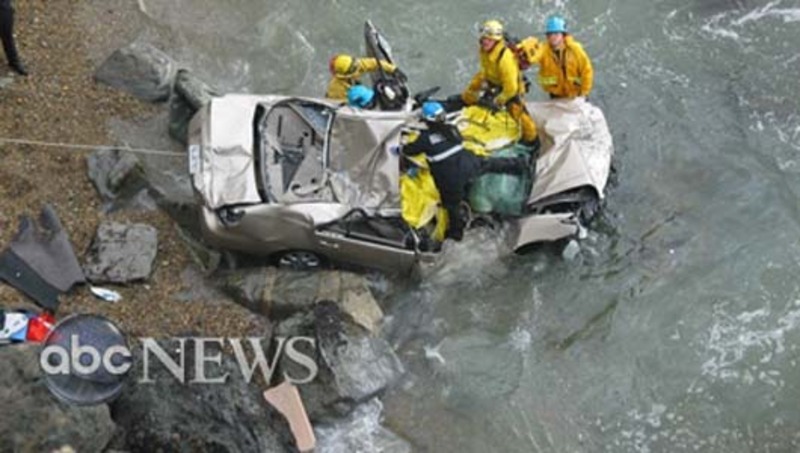
When THE LEMON LADY'S BRAKES FAILED, the defense was "NO COMPUTER ERROR MESSAGE!"
If TOYOTA didn't program their software properly to record ERROR MESSAGES, who's fault is that?
If TOYOTA can't get it right now, how can we trust them?
Toyota and Lexus are #1 in cases of sudden unintended acceleration and FORD is #2. The current unintended acceleration plaguing newer vehicles is the electronically-induced type. The engine throttle control systems depend on computer software to command them. Sometimes glitches occur...like in some of your other electronic devices...which can cause the command to be different than what you desire. The evidence of the glitch is often undetectable after the vehicle is restarted. Unfortunately, the EDR (black box) is not always accurate as shown by expert Dr. Antony Anderson in his analysis of a 2012 Toyota Highlander. The EDR results indicated the driver was not braking when she was doing so. The EDR results are inconsistent.
In other words: NO CUMPUTER ERROR MESSAGE!
The key to avoiding a horrific crash during a SUA event is whether or not the vehicle has an effective fail-safe in the event a glitch occurs. If it does not, as in the case of the glitch-prone Toyota ETCS-i, then the vehicle may become a runaway with an ineffective means to stop it. Unfortunately, the safety standards aren't as strict in automobiles as they are in airplanes. Some manufacturers have more effective fail-safes than others. In the case of Toyota, an embedded software expert, Michael Barr (see Oklahoma Bookout vs. Toyota court case involving a 2005 Camry) found that an electronic glitch could induce a SUA event. Another expert, Dr. Henning Leidecker, found that a SUA event could also be triggered by "tin whisker" formation, particularly in 2002-2006 Toyota Camry vehicles.
SUA events have been DEADLY for vehicle occupants as well as pedestrians and people in storefronts, buildings, and even homes. The numbers of such crashes are ever-increasing with the advent of the very complex ELECTRONIC throttle control systems.
With the increase in such serious vehicle crashes, there is a concerted effort to show driver "pedal misapplication" or a "medical condition" or some other reason for the incident...anything other than a vehicle defect. Investigators aren't scrutinizing the buggy electronic throttle control software or other conditions that can elicit a terrifying sudden unintended acceleration incident. They usually just examine the *mechanical* causes which tend to be just red herrings in these cases. Investigators simply don't have the expertise to find such electronic glitches. In fact, the staff at the NHTSA, National Highway Traffic Safety Administration, do not have this very specialized training!
Think of it...the next step in electronically-controlled vehicles seems to be so-called "self-driving cars." Do YOU want to be in a such a vehicle when there is no evidence that strict safety standards, particularly in the throttle control system's software, have been adhered to? Will you just BLINDLY trust the automaker (criminally-investigated and nearly-prosecuted Toyota and soon-to-be GM and others?) to come through for you and your family's safety *on its own*?
A recently published Huffington Post article by Jonathan Handel,
How Do We Know Driverless Cars Are Safe? Google Says 'Trust Us'
Posted: 07/01/2014 7:23 pm EDT Updated: 07/02/2014 1:48 pm EDT speaks to
these very issues and poses tough questions about Google's "driverless"
vehicles. Educate yourself carefully before you put your faith in automakers who
have knowingly lied to their customers and the government for decades. Study the
issue of vehicle electronic sudden unintended acceleration and ask WHY we aren't
seeing it addressed publicly. WHY is blame placed on the driver with little more
than speculation about which pedal was used or with little more than an
assumption on medical condition. This is being done *even when the drivers
steadfastly cite a VEHICLE PROBLEM as the cause of the crash. Absence of proof
is not proof of absence of a serious ELECTRONIC computer glitch or other
electronically-caused
SUA.
Charlene Blake




As a Scientist and engineer, I'm surprised about the spin that this subject has taken, or more properly, that has been given to, in order to favor or protect someone interests. There is at least one high quality,rigorous and properly formatted study of the known (for decades) phenomena of Tin Whisker growth in circuits. This study concludes that there is a possibility of 140/1,000,000 of these whiskers to produce a failure, which is significant given the quantity of vehicles.
The study is titled: Tin whisker analysis of Toyota’s electronic throttle controls by Bhanu Sood, Michael Osterman and Michael Pecht,
Center for Advanced Life Cycle Engineering, University of Maryland, College Park, Maryland, USA.
Why the government agencies have concluded this failure mechanism was not the root of the uncommanded acelerations is simply not clear to me. the study shows very clear microphotographs of the tin whiskers, and its redaction and methodology is impeccable. I've heard comments on two different groups of scientists of NASA giving their opinions on this subject, but I haven't read them yet. Regardless, this NYT article don't even mention this possibility with the appropriate importance and significance it has.
So... before ruling out electronic failures (both hardware and sofware related) government officials should work more professionally to find the thruth. Amclaussen.
Your point is valid, but if had another make of car, you would be saying exactly the same, just to that make. The industry produces a lot of defective designs, most of them minor go unnoticed; from time to time, a big one attracts the attention of the media. Remember the Ford-Firestone case: people lost lives and these companies battled each other for years, ending a previous relation. You correctly saythe information is not as quick to find. Sometime it is not freely available, but can be found talking to shops that see these errors daily. Manufacturers have their own "Code of Un-ethics", more or less the same across all them: first; deny any knowledge that a problem exists, make the owner believe his problem is not common, make him responible for it (was its fault for not following a maintenance program at the dealer-expensive). If the defect IS real, reduce the image that it is widespread. Try to charge the repair, making it appear as an "out of warranty". If all fails, make a deal & pretend it never happened. I'm a DIY person that enjoys auto repair as a hobby, I've above average knowledge of autos and a number of tools. I've heard many complaints from friends and people about design failures, material failures, factory goofes etc. I've seen MANY from ALL makes of cars. They are showing weaknesses and their ways to save money, they all fail, ones more than others, but all of them. Owners need to find the problem, and put the blame where it belongs.