Search This Blog

Translate

Blog Archive

Middleboro Review 2

NEW CONTENT MOVED TO MIDDLEBORO REVIEW 2

Toyota

Since the Dilly, Dally, Delay & Stall Law Firms are adding their billable hours, the Toyota U.S.A. and Route 44 Toyota posts have been separated here:

Route 44 Toyota Sold Me A Lemon


Showing posts with label Barbara Schwartz. Show all posts

Wednesday, March 12, 2014

Toyota, Where Are Ya? Your Customers Are Dyin'!


New findings include defective software that contains bugs, and -- in the 2005 Camry -- an electronic throttle control system with inadequate safety architecture, whose design created a single point of failure with no redundancy in place.

At this point, EE Times does not have access to the 800-page report, which concluded that misbehavior by Toyota's electronic throttle control system was a cause of unintended acceleration, filed by Michael Barr, CTO of Barr Group. Barr also served as an expert witness in Oklahoma.
(The full report is in the hands of several lawyers. A redacted version of the report was filed in US District Court in Santa Ana, Calif., in St. John v Toyota on April 12, 2013, according to Barr.)

FROM: What Toyota Did



Toyota Camry L4 case: the single bit flip that killed

Junko Yoshida, EETimes
October 28, 2013

MADISON, Wis. — Could bad code kill a person? It could, and it apparently did.

The Bookout v Toyota Motor Corp. case, which blamed sudden acceleration in a Toyota Camry for a wrongful death, touches the issue directly.

This case -- one of several hundred contending that Toyota's vehicles inadvertently accelerated -- was the first in which a jury heard the plaintiffs' attorneys supporting their argument with extensive testimony from embedded systems experts. That testimony focused on Toyota's electronic throttle control system -- specifically, its source code.

The plaintiffs' attorneys closed their argument by saying that the electronics throttle control system caused the sudden acceleration of a 2005 Camry in a September 2007 accident that killed one woman and seriously injured another on an Oklahoma highway off-ramp. It wasn't loose floor mats, a sticky pedal, or driver error.

An Oklahoma judge announced that a settlement to avoid punitive damages had been reached Thursday evening. This was announced shortly after an Oklahoma County jury found Toyota liable for the crash and awarded $1.5 million of compensation to Jean Bookout, the driver, who was injured in the crash, and $1.5 million to the family of Barbara Schwarz, who died.

During the trial, embedded systems experts who reviewed Toyota's electronic throttle source code testified that they found Toyota's source code defective, and that it contains bugs -- including bugs that can cause unintended acceleration.

"We've demonstrated how as little as a single bit flip can cause the driver to lose control of the engine speed in real cars due to software malfunction that is not reliably detected by any fail-safe," Michael Barr, CTO and co-founder of Barr Group, told us in an exclusive interview. Barr served as an expert witness in this case.

A core group of seven experts, including four from Barr Group, analyzed the Toyota case. Their analysis ultimately resulted in Barr's 800-plus-page report.

In Toyota's own view, though, the automaker had been already exonerated when the National Highway Traffic Safety Administration closed its probe of Toyota models in February 2011. The NHTSA decision came after NASA investigated Toyota's electronic throttle control system and found no electronic causes of unintended acceleration during a 10-month review.

But not everyone in the embedded systems industry thinks NASA had enough time to come up with a complete report. Perhaps more significantly, in its report, NASA itself did not rule out the possibility of software having caused unintended acceleration.

The group of seven experts was given the task of picking up where the NASA investigation left off.
To read more of this article, go to “What NASA didn’t have time to do.

Other resources on Embedded.com on this topic include:
Total recall,” by Jack Ganssle
Unintended acceleration,” by Ron Wilson
Unintended acceleration and other embedded software bugs,” by Michael Barr
Toyota’s accelerator stuck on a software bug,” by Michael Barr
Firmware forensics: best practices in embedded software,” by Michael Barr, and,
Safety-critical software – more not less certification ahead.”



Behind the scenes, Toyota played hardball with critics. A public relations manager named Masami Doi had spelled out the approach in a December email. "There are at most around 10 people who are the sources of negative tone communications. If they can be suppressed, I think we will be able to manage it somehow. Like you said, let's go with an intention of destroying each individual person's ability to oppose us, one by one…."
– David Hechler, Is Toyota Telling The Truth About Sudden Acceleration (emphasis supplied)

According to this story, some of the NASA scientists who worked on the February 2011 report that DOT Secretary Ray LaHood proclaimed an exoneration of Toyota electronics were so disturbed by the way they were forced to “investigate,” they refused to sign the final product.

IN PRETTY SIMPLE TERMS FROM THE BARR GROUP: PDF

OTHER COMMENTS FROM: Beasley Allen



Thursday, February 27, 2014

The Courage to Uncover TOYOTA's lies......

Betsy Benjaminson uncovered the tangled web of lies contained in TOYOTA's own documents, dispelling  TOYOTA's public denials.....


Ms. Benjaminson paid a steep personal price for DOING THE RIGHT THING and saving lives!


We will never know the injuries and lives saved because of Ms. Benjaminson's heroism...what we do know is what TOYOTA destroyed.....


Below is an interview on Israeli television, Ms Benjaminson's comments are in English:

http://flix.tapuz.co.il/v/watch-4352876-.html


Consumers owe a great debt to Ms. Benjaminson for her conscience and her courage in stepping forward and revealing TOYOTA's lies.


Wednesday, November 13, 2013

What Toyota Did

Below is an article about the TOYOTA SOFTWARE DEFECTS.

Let's remember that TOYOTA'S LIES and DECEPTION caused injuries and deaths in the most horrifying ways, destroying families.

Instead of correcting software errors or adding protection, TOYOTA U.S.A. with the complicity of NASA and/or NHTSA multiplied the human toll.


EE Times Community Weighs In on Toyota Case

11/7/2013 08:25 AM EST


MADISON, Wis. — Toyota's unintended acceleration case, recently tried in Oklahoma and resulting in a jury verdict that found Toyota liable, exposed key discoveries by embedded systems experts who had access to Toyota's "electronic throttle" source code.
 
New findings include defective software that contains bugs, and -- in the 2005 Camry -- an electronic throttle control system with inadequate safety architecture, whose design created a single point of failure with no redundancy in place.

At this point, EE Times does not have access to the 800-page report, which concluded that misbehavior by Toyota's electronic throttle control system was a cause of unintended acceleration, filed by Michael Barr, CTO of Barr Group. Barr also served as an expert witness in Oklahoma.
(The full report is in the hands of several lawyers. A redacted version of the report was filed in US District Court in Santa Ana, Calif., in St. John v Toyota on April 12, 2013, according to Barr.)
But based on the court transcript of the Oklahoma trial and interviews with experts, EE Times has reconstructed what the jury heard.

EE Times has posted a series of stories examining technical issues. They included a bit flip caused by memory corruption; the death of "Task X," which ultimately caused loss of throttle control and also a disablement of a number of the fail-safes; what components were (or were not) inside Camry's electronic control module; and what the regimen of vehicle testing ultimately found.

As a result, expert witness testimony during the Oklahoma trial -- now in public record, thus published by EE Times -- has opened the door to lively debate among EE Times community members.

Our readers discussed:
  • Their own struggle with "probabilities" (software can never be 100 percent free of bugs, and there are ways to mitigate errors, but how far they must go to lower that probability)
  • Compliance with software programming and automotive electronics standards
  • Whether today's complex automotive software needs a peer review
  • What roles NHTSA should play in the future
  • Inadequate design and testing done by Toyota engineers
  • Black boxes in cars
  • The driver's responsibility

They also discussed the safety of the emerging self-driving cars, especially after hearing about the faulty software in the Toyota case.

Many EE Times readers are engineers engaged in designing systems or chips -- safety critical or not. EE Times readers took Toyota's unintended acceleration case to heart. After all, Toyota's failures, pointed out by the expert witnesses, aren't just Toyota's problems. Its failures are, to a degree, very relevant to all the hard choices engineers make when designing software and hardware architecture for their systems.

EE Times offers a summary of what EE Times community members have learned, argued, and suggested on the EE Times forum on Toyota's unintended acceleration case.

All about probabilities?

The issue of probabilities came up often in a number of threads on the Toyota case at our forum. How often does an error happen? Assuming such an error (e.g., bit flip) happens so rarely, our readers asked a legitimate question: How low is low enough when it comes to the probability of failures? As engineers dealing in probabilities every day, they're concerned about the implications for future design of critical safety systems.

Frank Eory
Suppose that the engineers carefully SEU (considered single event upsets), and included fairly powerful ECC (error-correcting code) to guard against its ill effects. Perhaps they even considered how much higher the SEU rate might be in a high-altitude city during peak solar flare activity. Is that enough? As I mentioned above, we're still dealing with probabilities that can never be zero.

I am in no way trying to defend buggy software or buggy hardware, I'm just asking, how far does one have to go, and will it ever be far enough?

 
LarryM99
I've worked around control software for nuclear devices, which obviously operate by a different set of rules than just about any other. One interesting safeguard is testing within the body of critical functions to ensure that the function was entered at the top, rather than as a random jump into the body of the code (potentially the kind of error that could result from cosmic rays)…

…If you look at modern automotive control systems they are beginning to introduce redundant voting controls. This is an effective way of effectively eliminating this type of error, be it from hardware or software.

 
sixscrews
… as I said before, there are millions of vehicles on the road with this defective software. The loss of control condition is not occurring very often or we would be seeing a lot of Camrys in the ditch or being hauled to the scrapyard.

Still, it CAN happen -- 'under what conditions?' is, perhaps, a question that cannot be answered. And maybe that points to the core of the issue -- the software that controls safety-critical systems must be deterministic, that is, it must do action Z in case Y in time t +/- tx where tx << t. Clearly the Toyota engine control software does not conform to this requirement. Why are we, as a society, letting Toyota off the hook here? Because it doesn't happen very often?
…It seems to me that Mr. Barr's work represents that unequivocal data -- this CAN happen and, as engineers, we all know that what CAN happen WILL happen sooner or later.

So, what is to be done?


Re: What happened at NASA? B. Benjaminson 11/12/2013 8:15:12 AM
The problem was not NASA. The problem was NHTSA.

The inside story goes as follows. I have heard the same narrative from three people, each in a very good position to know what really happened.

*************************************************************

NASA's efforts were sabotaged by certain known individuals within NHTSA from the start. After weeks of delay, the NASA scientists were given banker's boxes of random, unlabeled parts from Camrys that had not experienced any UA events. They were given '2 or 3' documents out of the tens of thousands Toyota produced for the govt. No engineering drawings. Then, just as they were getting started with their analysis and started finding questionable software design practices and tin whiskers, the guys from NHTSA seized the materials and told NASA the investigation was over.

There were witnesses to these events. Will they come forward publicly?

This is an issue that should be investigated by the U.S. Dept. of Transportation's Inspector General.

*************************************************************

From this and from much other direct evidence that I have, it seems pretty clear that NHTSA and Toyota were way too cozy, to put it mildly, and the public has suffered.

Since then, the NHTSA official who presided over this affair, Ron Medford, has left NHTSA and is now in the "safety director" of the self-driving car project at Google that features a Prius. Hmmm.

Betsy


Tuesday, November 12, 2013

Toyota LIES: “reckless disregard of the rights”.....

How many more innocent people will TOYOTA U.S.A.  terrorize, injure or kill before they correct their problems?


Toyota Sudden Unintended Acceleration lawsuit ends in landmark verdict

posted on:
November 5, 2013
author:
Jere L. Beasley


Our law firm tried the first sudden acceleration lawsuit last month against Toyota involving the Camry’s electronic throttle control system. An Oklahoma City jury returned a multi-million dollar verdict after a three-week trial in favor of Jean Bookout and the family of Barbara Schwarz. Mrs. Bookout was seriously injured and Barbara Schwarz was killed when the Bookout’s 2005 Toyota Camry surged out of control and crashed. Mrs. Bookout and the Schwarz estate sued Toyota Motor Corp. and Toyota Motor Sales in an Oklahoma state court. Defects in the car’s electronic throttle control system (ETCS) were directly responsible for the Camry’s sudden acceleration and resulting crash.
 
We proved at trial that the software that controlled the ETCS was defectively designed and failed to conform to industry standards. Moreover, the jury was convinced that Toyota was fully aware of problems with the system, but concealed them from the National Highway Traffic Safety Administration (NHTSA), the public and its customers. After the introduction of the ETCS in 2001, NHTSA put Toyota on notice of a 400 percent increase by 2004 of unintended acceleration (UA) claims involving the Camry. In searching its own database, when using the term “surge,” Toyota found 60,000 claims. But in reporting to NHTSA, Toyota removed the search term “surge” and only used the term “mat,” which resulted in only 124 claims being reported to the government agency.
 
This was a deliberate move on Toyota’s part and was designed to hide a known defect.
 
Internal emails showed that Toyota employees worked extremely hard to “coach” NHTSA to use Toyota’s language when completing unintended acceleration investigations. Toyota contained the escalating UA claims by convincing NHTSA that the claims were caused by loose all-weather floor mats or a sticky pedal defect related to pedals provided by one supplier. James Lentz, president of Toyota’s U.S. based company, told Congress in 2010 that floor mats and sticky pedals were not related to 70 percent of the unintended acceleration claims. In its investigation, Congress also determined that floor mat recalls and sticky pedal recalls only addressed 16 percent of the UA claims.
 
Although NASA investigated Toyota’s software, Toyota withheld certain important software source code from NASA and misrepresented the existence of vital memory protection characteristics of the Camry throttle control system.
 
Toyota denied that the ETCS was defective and argued that Mrs. Bookout accidentally pressed the accelerator instead of the brake pedal. But Toyota could never explain why the Bookout vehicle left a 150-foot skid mark from a locked right rear tire prior to impact. Mrs. Bookout had first applied the service brakes and then pulled the parking brake, but she couldn’t stop the car. Toyota’s own litigation testing proved the vehicle should have stopped before its impact with a dirt bank if everything was functioning properly.
 
The jury found the Toyota software defective and answered a question on the verdict form finding that Toyota acted in “reckless disregard of the rights” of Plaintiffs. The software in the Toyota Camry that controlled the ETCS was poorly designed and did not conform to industry standards. This was the first personal injury and wrongful death case to go to trial that blamed the Toyota UA problems on electronic throttle control defects.
 
Toyota’s conduct from the time the ETCS was designed has been shameful. This jury had the courage to let Toyota and the public know that Toyota was reckless and that the automaker had covered up a known defect in the ETCS. Hopefully, Toyota will recall all of their questionable vehicles and install a computer system in its vehicles that will be safe.
 
The jury returned a landmark verdict for the Plaintiffs in the first phase of the trial, and we were all was set to proceed to the second phase to determine the amount of punitive damages to be awarded.
 
But after the compensatory damages verdict, Toyota’s lawyers approached us and requested a settlement. We were able to resolve the entire case for a confidential amount for both Mrs. Bookout and the Schwarz estate.
 
Safety advocates have long contended that the UA problem is related to a defect in Toyota’s electronic throttle control software. Our firm was one of the first in the country to file a lawsuit against Toyota alleging that sudden unintended acceleration caused a personal injury and wrongful death. We were the first to take Toyota to trial on that issue. Hopefully, this result will cause Toyota to make safety a real priority in the design and manufacturing of vehicles.
 
Judge Patricia G. Parrish presided over the three-week trial. The following lawyers from our firm tried this landmark case: Jere L. Beasley, Cole Portis, Graham Esdale and Ben Baker. Larry Tawwater of The Tawwater Law Firm in Oklahoma City, and Paul Martin from Ponca City, Okla., were also involved with us in this extremely important case.
 
Interestingly, after the judge announced to the jury that the case had been settled, the jurors asked if they could stay around and discuss the trial. For more than two hours, Judge Parrish, the 12 jurors and our lawyers had a very good discussion about the case. It was obvious that this jury was ready to punish Toyota for its conduct and cover-up. We all learned a great deal by listening to the jurors’ assessment of the case.


Saturday, October 26, 2013

Toyota was aware of the issue but hid it from the public.

Each of these cases represents people who were injured, lives destroyed, people killed because of TOYOTA.

Oklahoma Jury Finds Toyota Liable For Sudden Acceleration Fault; Awards $3M In Damages

on October 25 2013


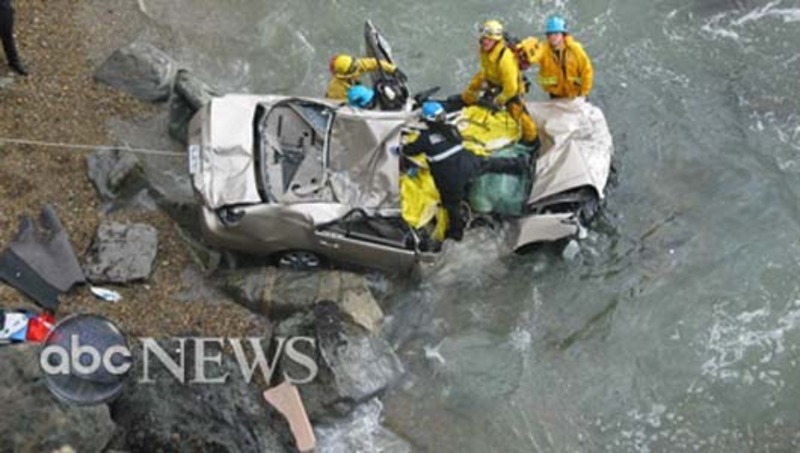
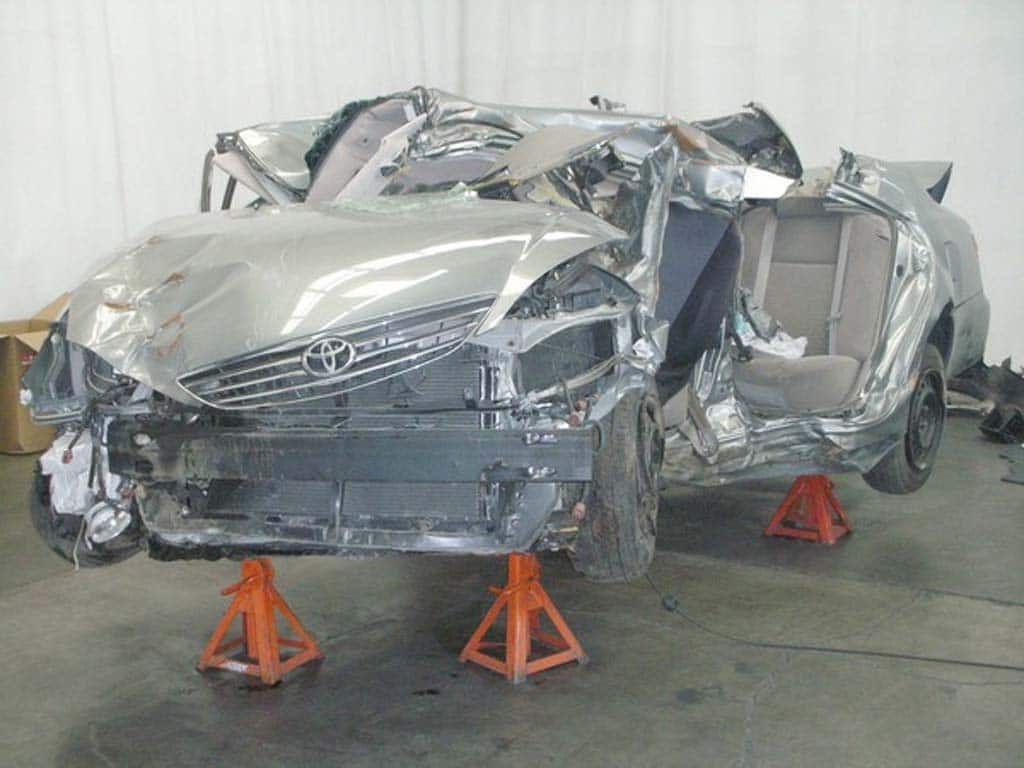
An accident picture provided by the lawyers representing the family of Guadalupe Alberto, of the wreckage of a 2005 Toyota Camry following an April 19, 2008 crash in Flint, Mich., which killed Guadalupe Alberto. The crash was the focus of one of many lawsuits against Toyota over the safety of its vehicles. Reuters/Alberto family/Handout


In a landmark decision of sorts, an Oklahoma City jury found that electronic defects in a Toyota Camry led to its sudden acceleration and eventual crash in 2007, and awarded $1.5 million in damages each to the injured driver and the family of the deceased passenger.

The verdict was handed down late on Thursday and marks the first time that a jury was convinced by arguments that malfunctioning electronics caused a Toyota vehicle to speed up without the driver’s involvement, the Los Angeles Times reported.

Jean Bookout, 82, was driving the 2005 Camry when it sped through an intersection and crashed into an embankment, injuring her and killing Barbara Schwarz, 70, in September 2007 in Eufaula, Okla., according to reports.

The jury awarded $1.5 million in monetary damages each to Bookout and Schwarz’s family. It also decided that the automaker acted with “reckless disregard” for the rights of others, setting the stage for the next phase of the trial -- to determine punitive damages -- scheduled to begin Friday, according to the Associated Press.

A spokesman for Toyota (NYSE:TM) confirmed the verdict but declined to comment during an ongoing case, according to the LATimes, and attorneys for the plaintiffs also declined comment.

In court, lawyers for Bookout and Schwarz’s family had argued that the vehicle accelerated unexpectedly because of a defect in the car’s electronic throttle-control system, AP reported, adding that Bookout’s lawyer, Cole Portis, said that Toyota was aware of the issue but hid it from the public.

[DOCUMENTS INDICATE TOYOTA KNEW ABOUT THE PROBLEM IN 2002 AND REFUSED TO CORRECT IT.]


“We believe Toyota’s conduct from the time the electronic throttle-control system was developed has been shameful,” Portis told jurors. “It’s a big deal, because if it doesn’t work right, people get killed.”


Toyota, which has successfully defended itself in court in three prior trials, has denied the allegations, the LATimes reported.

However, the automaker also agreed, in 2012, to a settlement worth more than $1 billion to resolve hundreds of lawsuits following the company’s recall of millions of vehicles because of sudden acceleration problems, AP reported, adding that the settlement did not include those suing over wrongful death and injury.


http://www.ibtimes.com/oklahoma-jury-finds-toyota-liable-sudden-acceleration-fault-awards-3m-damages-1441202


Jury hits Toyota with $3-million verdict in sudden acceleration death case


Toyota lost a $3-million judgment in an Oklahoma sudden acceleration lawsuit. (Uli Deck / European Pressphoto Agency)


October 24, 2013, 5:08 p.m.
An Oklahoma City jury has found that electronic defects in a Toyota Motor Corp. vehicle caused it to accelerate out of control and crash into a wall, killing a passenger and seriously injuring the driver.

The verdict, handed down late Thursday, requires Toyota to pay a total of $3 million in compensatory damages to Jean Bookout and the family of the deceased passenger, Barbara Schwarz. They were the sole occupants of a 2005 Camry that crashed in Eufaula, Okla., in September 2007.

The jury will award punitive damages in the case as well, based on its finding that Toyota's actions were in "reckless disregard" of others. Deliberations on the second set of damages will begin on Friday.

A Toyota spokesman confirmed the verdict but said the company could not comment while the case is ongoing. Attorneys for the plaintiffs also declined to comment.

The decision marks the first time a jury was convinced by arguments that faulty electronics -- in this case those involving the Camry's electronic throttle system -- could cause a Toyota vehicle to accelerate uncommanded.

The automaker has vigorously denied such allegations and has successfully defended itself in court in three prior trials.

Earlier this month, it was cleared of responsibility in a Los Angeles court case involving an Uplands, Calif., woman who died when her Camry accelerated to more than 100 miles per hour before crashing.

But plaintiff attorneys in the Oklahoma case claimed that Toyota had long been aware of problems in the electronic throttle system in Camrys and did not move to correct them. As a result, they argued, Bookout, then 76 years old, could not prevent her sedan from accelerating through an intersection and crashing into an embankment.

The Times first reported on the Bookout accident in 2009 as part of its coverage of the Toyota sudden acceleration issue.

“This certainly changes the momentum,” said Carl Tobias, a product liability expert and law professor at the University of Richmond.

The ruling “has to be a real concern for Toyota,” Tobias said. “They have maintained all along that there wasn’t a problem.”

The ruling also is noteworthy because it comes from a jury in Oklahoma, a state not known as particularly friendly to plaintiffs in such lawsuits, he said.

Tobias said it will take about a dozen rulings before a trend emerges and Toyota is ready to enter into serious settlement negotiations with other plaintiffs filing similar lawsuits.

Nonetheless, with the punitive damages ruling still to come down in the Oklahoma case, “this isn’t good news for Toyota,” he said.

Toyota still faces hundreds of other sudden acceleration lawsuits, many of which will probably make similar arguments. The next trial, involving a Georgia woman who accelerated into a schoolyard, is set to begin in federal court in Santa Ana next month.

ALSO:
Jury clears Toyota in wrongful death suit
Toyota trial opens in suit over fatal crash
Runaway Toyota cases ignored
Follow Bensinger on Twitter (@kenbensinger) and Facebook
Follow Hirsch on Twitter (@LATimesJerry), Facebook and Google+

http://www.latimes.com/business/autos/la-fi-hy-toyota-sudden-acceleration-verdict-20131024,0,6974251.story#axzz2ipx0JzwX


Tuesday, March 26, 2013

I was wrong!

In the wake of the public relations scandal surrounding Toyota's Sudden Acceleration defect that killed innocent victims, you might believe that Toyota was responsive, but you're wrong!

I was wrong!

Instead of addressing and correcting the BRAKE FAILURE of my Toyota, Route 44 Toyota reported:

NO COMPUTER ERROR MESSAGE

How can I drive a car with NO BRAKES??


Toyota owner: My brakes failed


A victim of an accident caused by her Toyota's brake failure recounts her ordeal and its aftermath.


Toyota Quietly Settles Lawsuit With San Diego's Saylor Family, Following Deadly .....


Lawsuit filed in Toyota unintended acceleration case


PR Newswire2010-07-06: Congressional committee says Toyota and NHTSA overlooked critical evidence of defects in the electronic throttle control systems on Toyota vehicles at least as far back as 2004... more »

PR Newswire2010-07-06

PR Newswire2010-05-14


http://article.wn.com/view/2010/07/06/Beasley_Allen_Attorney_Graham_Esdale_Travels_to_DC_Hearings_/#/related_news


Relatives mourn the death of Chris Lastrella and his family in a fatal car accident after the accelerator pedal jammed.


James Sikes, whose 2008 Toyota Prius accelerated suddenly on a California interstate Monday, reaching 94 MPH before he was able to bring it under control with the help of the California Highway Patrol, said the cause of the incident was a "stuck" accelerator.

According to Sikes, he held on to his steering wheel and tried to pull the accelerator pedal back with his right hand. "I thought it was maybe stuck," he said. "Somehow the pedal was stuck. But it wasn't stuck on anything that was visible."

Toyota has issued separate recalls to fix floor mats and "sticky" accelerator pedals. The 2008 Prius is covered by the floor mat recall, but not the accelerator recall. It uses a different accelerator pedal than the cars that allegedly have "sticky" pedals.

Sikes said that he also checked his floor mat during the incident, and the mat was "perfect."


There's more to the story that amateurs don't understand and engineers haven't solved.

Please consider carefully before you risk your life and the lives of those you love.