Search This Blog

Translate

Blog Archive

Middleboro Review 2

NEW CONTENT MOVED TO MIDDLEBORO REVIEW 2

Toyota

Since the Dilly, Dally, Delay & Stall Law Firms are adding their billable hours, the Toyota U.S.A. and Route 44 Toyota posts have been separated here:

Route 44 Toyota Sold Me A Lemon


Showing posts with label carbon footprint. Show all posts

Monday, December 31, 2018

Is the Michael Cohen 'Prague' Story True?


Reader Supported News
30 December 18 PM
It's Live on the HomePage Now:
Reader Supported News

Sure, I'll make a donation!

Is the Michael Cohen 'Prague' Story True? 
Michael Cohen walks out of federal court, Thursday, Nov. 29, 2018, in New York. (photo: Julie Jacobson/AP)
Jonathan Alter and Maxwell Tani, The Daily Beast
Excerpt: "If the McClatchy story is true, it has huge implications for Donald Trump's survival in the presidency. But that's a major if; unlike many other scoops about the Mueller probe, no other outlet has been able to confirm McClatchy's reporting."
READ MORE

'My family left Somalia in 1991 and spent four years in a refugee camp in Kenya': Ilhan Omar. (photo: Kerem Yucel/AFP/Getty Images)

Ilhan Omar | My Election Victory Represents a Rejection of Donald Trump
Ilhan Omar, Guardian UK
Omar writes: "To know that I will now be serving in the United States government, the first Somali-American to do so, is a clear message of optimism for kids around the world."
READ MORE

Paul Manafort. (photo: Getty Images)

Russian Ex-Spy Pressured Manafort Over Debts to an Oligarch
Simon Shuster, Time
Shuster writes: "A months-long investigation by TIME, however, found that Boyarkin, a former arms dealer with a high forehead and a very low profile, was a key link between a senior member of the Trump campaign and a powerful ally of Russian President Vladimir Putin."
READ MORE

The Capitol was nearly empty last week amid stalled negotiations between the White House and Democrats in Congress on reopening the federal government. (photo: Erin Schaff/NYT)

Federal Government Advises Furloughed Workers to Barter for Their Rent
Peter Wade, Rolling Stone
Wade writes: "Federal workers are currently entering their seventh day without any pay, and OPM is advising them to contact creditors to negotiate lower payments until the shutdown ends and their pay is restored but tells them to 'contact a personal attorney' for personal financial advice. How workers will pay for that attorney when they are not collecting a salary, however, the agency did not say."
READ MORE

A hooded man holds a laptop computer as cyber code is projected on him in this illustration picture taken on May 13, 2017. (image: Kacper Pempel/Reuters)

Cyber Attack Hits US Newspaper Distribution
Jim Finkle, Reuters
Finkle writes: "A cyber attack caused major printing and delivery disruptions on Saturday at the Los Angeles Times and other major U.S. newspapers, including ones owned by Tribune Publishing Co (TPCO.O) such as the Chicago Tribune and Baltimore Sun."
READ MORE

Jair Bolsonaro. (photo: Evaristo SA/Getty Images)

Brazil Moving Its Embassy in Israel to Jerusalem Matter of 'When, Not If': Source
Gabriel Stargardter, Reuters
Stargardter writes: "Israeli Prime Minister Benjamin Netanyahu said on Sunday that Brazil's President-elect Jair Bolsonaro told him that it was a matter of 'when, not if' he moves his country's embassy in Israel to Jerusalem from Tel Aviv."
READ MORE

A Boeing 737-800 of low-cost airline Norwegian flying near Oslo airport in Gardermoen. (photo: Kyrre Lien/AFP/Getty Images)

Flying Is Bad for the Environment, Here Are Some Tips to Make It Less Carbon-Intensive
Elizabeth Weise, USA Today
Weise writes: "Here's something to ponder as you think about making your New Year's resolutions: There's something you could skip just one or two times a year that could reduce your carbon footprint by as much as 10 to 20 percent."
READ MORE


Update My Monthly Donation


Wednesday, March 12, 2014

Tuesday, February 4, 2014

Those were the days my friends.......


Unbelievable.

(Well, not really for Big Oil.)
Those were the days my friends..
 
 
Thanks for posting The Other 98%From a recent issue of The New Yorker


Last week the The Huffington Post asked: is it cool to wear fur again? Joe Namath's display pretty much gives us our answer. But it's the power of celebrity, even in the form of an elderly football star, that is driving the current boom in fur fashion. The furrier that sold Namath his coat says that his "phone is ringing off the hook" (w new customers) since the Super Bowl.

How celebrity culture is fueling the fur boom, record fur prices, and of course the trapping industry...:

http://huff.to/1aY37S6

Photo: Reuters

‪#‎Nofur‬
See More


3 Cheers for all the folks fighting the dirty Keystone XL pipeline. ‪#‎NoKXL


Friday, January 24, 2014

Dirty tar sands fuel is headed for Massachusetts


A new NRDC report finds Massachusetts poised to import dirty tar sands gas

A flood of dirty fuel into the Bay State would undercut its efforts to reduce carbon pollution


“This report is an urgent wake-up call, one that we must heed in order avoid wiping out recent gains in reducing transportation sector carbon pollution.” - Sue Reid

Dirty tar sands fuel is headed for Massachusetts

By Sue Reid, Conservation Law Foundation

Massachusetts motorists will soon be filling their tanks with gas increasingly derived from dirty Canadian tar sands oil, says a new report from the Natural Resources Defense Council.

A flood of dirty fuel into Massachusetts would also undercut its efforts to reduce carbon pollution.

The NRDC report found that under current plans, tar sands-derived gasoline supplies in 11 Northeast and Mid-Atlantic states (including Massachusetts) would soar from less than one percent in 2012 to 11.5 percent of the total by 2020, due to increased imports from Canadian refineries, fresh supplies of refined tar sands fuels from Gulf Coast refineries, and quantities from East Coast refineries that would obtain tar sands crude via rail and barge.

An influx of carbon-intensive fuels into Massachusetts and the rest of the region, which in 2012 were virtually tar sands free, will hurt the efforts to combat climate change, which has already caused billions of dollars in damage, according to the report, “What’s in Your Tank? Northeast and Mid-Atlantic States Need to Reject Tar Sands and Support Clean Fuels.”

“This report is an urgent wake-up call, one that Massachusetts must heed in order avoid wiping out recent gains in reducing transportation sector carbon pollution,” noted Sue Reid, Massachusetts Director of the Conservation Law Foundation, which co-sponsored the report. “Tar sands-derived gas poses a direct threat to the Commonwealth’s transportation energy mix and our clean energy future.”
Massachusetts has a state action plan and legal requirements under the state’s Global Warming Solutions Act to cut dangerous carbon pollution, which is the major driver of climate change. By adopting federal “clean cars” standards and investing in public transportation, Massachusetts has begun reducing carbon pollution in the transportation sector. But these important carbon savings would be squandered by using gasoline from tar sands, which emits 17 percent more carbon pollution than conventional gasoline measured on a life-cycle basis.

Dirty gasoline supplies in the Northeast and Mid-Atlantic are set to rise significantly, unless states take steps to keep out high-carbon fuel,” said Danielle Droitsch, NRDC Canada Project Director. “By

2015 the volume of tar sands-derived fuel in the Northeast could grow sixfold, compared to 2012. This shows how important it is to move as quickly as possible to clean energy of all types.”

The new Gulf Coast Pipeline, which will bring tar sands crude from Cushing, Oklahoma, to refineries on the Gulf Coast, makes it even more urgent for communities and policy-makers to take action to keep tar sands out of the region, she said.

If the controversial Keystone XL pipeline for tar sands oil from Canada to the United States is approved by President Obama, the region’s share of gasoline from tar-sands crude could rise even further, according to the report.

The report said that state leaders, with the support of citizens and local communities, need to take steps to clean up transportation.

"Bay Staters deserve to know what's in their fuel tanks. The first step is to track where the fuel is coming from and how damaging it is to our health and the climate,” said Craig Altemose, Executive Director of Better Future Project. “The second step is to make sure we as a state are discouraging the dirtiest fuels like tar sands from entering our marketplace to begin with."

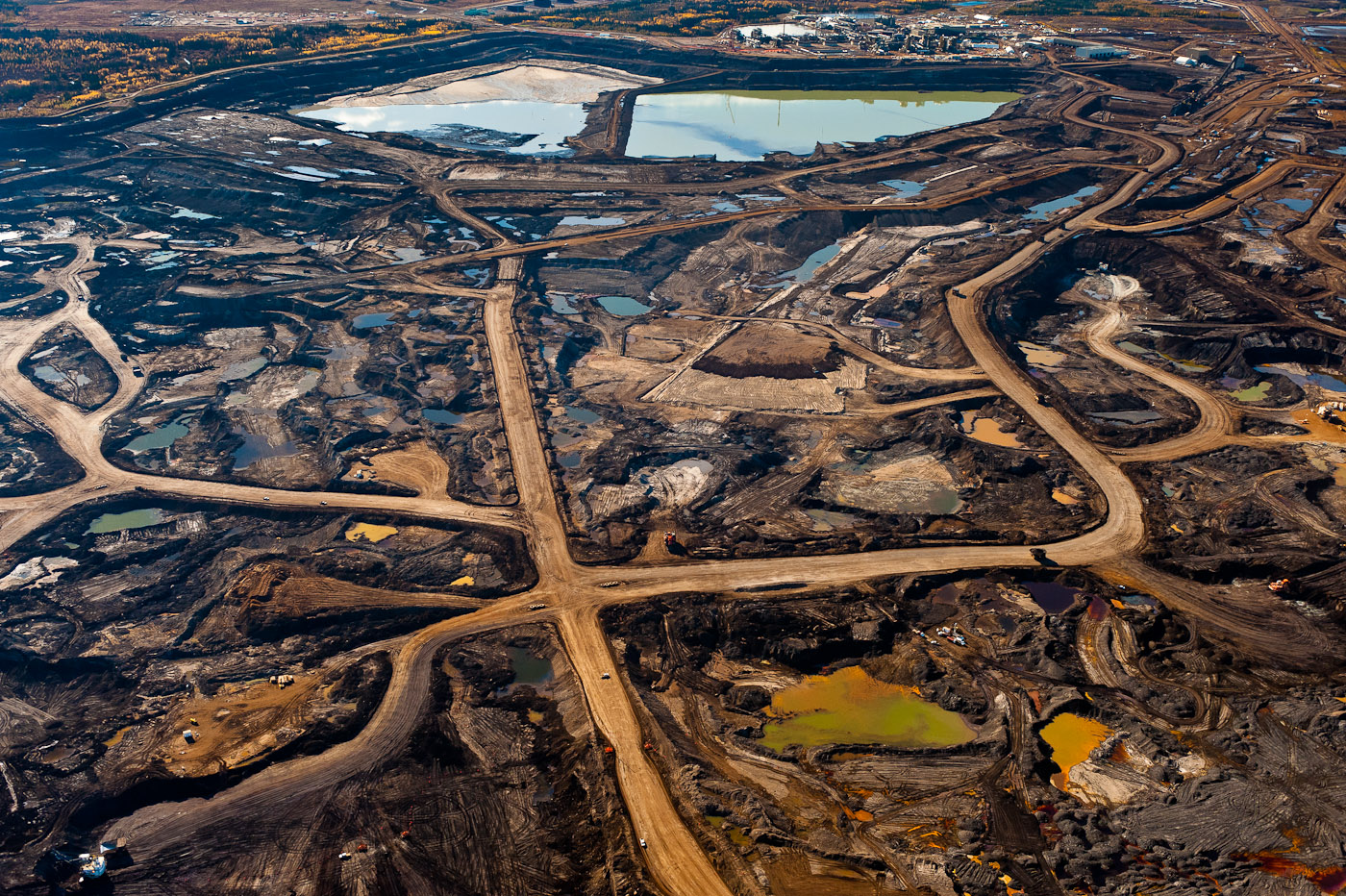
The extraction and refining of oil from Alberta’s vast tar sands region, an area the size of Florida, is an energy-intensive process that destroys carbon-trapping forest lands and emits 81 percent more carbon pollution than conventional oil extraction and refining. NRDC and others oppose Keystone XL, which would carry Alberta’s tar sands oil through the heartland of America to Gulf Coast refineries, in part because it would enable a vast expansion in tar sands production.

As NRDC has explained, Keystone XL is primarily an oil export pipeline, but some portion of its refined products would flow to the East Coast.

If dirty tar sands gasoline becomes a major share of supplies in the Northeast and Mid-Atlantic, that would add millions more tons of carbon pollution to the atmosphere each year—just as the region is aiming to cut such pollution under the landmark Regional Greenhouse Gas Initiative, a nine-state pact, including Massachusetts, to combat climate change by reducing carbon pollution from power plants, according to the report.

Hurricanes Sandy and Irene—the type of extreme weather that will become more frequent with climate change—have already wreaked billions of dollars of damage in the Northeast and Mid-Atlantic states.

The report also underscores the importance of promoting a wide variety of low-carbon and no-carbon transportation alternatives, from cleaner fuels to buses and rail, bike lanes and pedestrian-friendly planning.
---

The Natural Resources Defense Council (NRDC) is an international nonprofit environmental organization with more than 1.4 million members and online activists. Since 1970, our lawyers, scientists, and other environmental specialists have worked to protect the world's natural resources, public health, and the environment. NRDC has offices in New York City, Washington, D.C., Los Angeles, San Francisco, Chicago, Bozeman, MT, and Beijing. Visit us at www.nrdc.org, and follow us on Twitter @NRDC.

Conservation Law Foundation (CLF) protects New England’s environment for the benefit of all people. Using the law, science and the market, CLF creates solutions that conserve our natural resources, build healthy communities, and sustain a vibrant economy region-wide. Founded in 1966, CLF is a nonprofit, member-supported organization with offices in Maine, Massachusetts, New Hampshire, Rhode Island and Vermont. See a list of all the recent CLF stories here.

Tuesday, December 17, 2013

It's your future.....

How simple is this environmental destruction?


It couldn't be much simpler than Bill McKibben explained.....if you care, please read the Rolling Stone's article:

350.org co-founder Bill McKibben just published an article in Rolling Stone about President Obama and the Keystone XL tar sands pipeline that I hope you can take some time today to read.

It’s an important reflection on President Obama’s climate legacy thus far, and essential reading as we all prepare for the home stretch of the fight against Keystone XL. You can read it here, and after you do please give your feedback on what our next steps to stop the pipeline should be:


It comes down to this: The President’s actions speak louder than his words. And it’s time for our actions to speak louder too.

In this article, Bill starts a conversation that needs your input.

For the past two years we’ve been pushing President Obama to reject Keystone XL based on the strength of his climate promises: though infrequent, when he speaks about climate change the President can do so with clarity and moral force.

But as time has gone on, those words have been undermined by actions like supporting the southern leg of Keystone XL, cheerleading fracking wells and auctioning off huge chunks of the west to the coal industry. In response to these things, our movement has pushed itself to new heights: from the Tar Sands Blockade taking to the trees of Texas to resist the southern leg of Keystone XL, to courageous actions against fracking nationwide and a unified front against coal exports across the West.

Now we need to push ourselves a little further. Since the President’s climate speech this summer where he laid out a climate test for Keystone XL — “the net effects of the pipeline’s impact on our climate will be absolutely critical to determining whether this project is allowed to go forward” — a series of revelations have raised alarms.

Despite the weighty evidence that Keystone XL is the key to unlocking the tar sands, we’ve learned that big oil got to hand-pick the companies in charge of the first Keystone review — a review that concluded (unconvincingly) that the pipeline wouldn’t impact the climate. Today we found out that one of those companies is a dues-paying member of 5 big oil front groups pushing to approve Keystone. At the same time, the President is keeping a key aide who opposes Keystone XL from having any input on the pipeline.

Bill’s article clearly addresses the President’s record on the big climate issues of his two terms, and lays down a challenge to us, the grassroots climate movement, to push the President harder than ever.

In 2014, 350.org will be taking up that challenge. But to do so, we need to chart a course together. After you read Bill’s article, I hope you can offer your feedback on what we can do together next year to put the pressure on President Obama like never before.

350.org’s power lies entirely in the collective strength of our grassroots network -- your input and ideas will shape what comes next.

Can you take some time to read Bill McKibben’s article on the President and the pipeline?

Click here to read the article


Some ideas are already in the works, others are dreams on the horizon. Between now and the start of 2014 we need to look within ourselves and decide what kind of courage we are willing to show to stop Keystone XL and keep the fossil fuels in the ground, where they can’t do any more harm to our climate and communities.

For the past two years, this movement has risen to every challenge with grace and courage. As the President’s decision approaches, I know that we will rise again.

Many thanks,

Duncan


Obama and Climate Change: The Real Story


The president has said the right things about climate change – and has taken some positive steps. But we're drilling for more oil and digging up more carbon than ever


December 17, 2013 9:00 AM ET

Two years ago, on a gorgeous November day, 12,000 activists surrounded the White House to protest the proposed Keystone XL pipeline. Signs we carried featured quotes from Barack Obama in 2008: "Time to end the tyranny of oil"; "In my administration, the rise of the oceans will begin to slow."


Our hope was that we could inspire him to keep those promises. Even then, there were plenty of cynics who said Obama and his insiders were too closely tied to the fossil-fuel industry to take climate change seriously. But in the two years since, it's looked more and more like they were right – that in our hope for action we were willing ourselves to overlook the black-and-white proof of how he really feels.

If you want to understand how people will remember the Obama climate legacy, a few facts tell the tale: By the time Obama leaves office, the U.S. will pass Saudi Arabia as the planet's biggest oil producer and Russia as the world's biggest producer of oil and gas combined. In the same years, even as we've begun to burn less coal at home, our coal exports have climbed to record highs. We are, despite slight declines in our domestic emissions, a global-warming machine: At the moment when physics tell us we should be jamming on the carbon brakes, America is revving the engine.


You could argue that private industry, not the White House, has driven that boom, and in part you'd be right. But that's not what Obama himself would say. Here's Obama speaking in Cushing, Oklahoma, last year, in a speech that historians will quote many generations hence. It is to energy what Mitt Romney's secretly taped talk about the 47 percent was to inequality. Except that Obama was out in public, boasting for all the world to hear:

"Over the last three years, I've directed my administration to open up millions of acres for gas and oil exploration across 23 different states. We're opening up more than 75 percent of our potential oil resources offshore. We've quad­rupled the number of operating rigs to a record high. We've added enough new oil and gas pipeline to encircle the Earth, and then some. . . . In fact, the problem . . . is that we're actually producing so much oil and gas . . . that we don't have enough pipeline capacity to transport all of it where it needs to go."

Actually, of course, "the problem" is that climate change is spiraling out of control. Under Obama we've had the warmest year in American history – 2012 – featuring a summer so hot that corn couldn't grow across much of the richest farmland on the planet. We've seen the lowest barometric pressure ever recorded north of Cape Hatteras, North Carolina, and the largest wind field ever measured, both from Hurricane Sandy. We've watched the Arctic melt, losing three quarters of its summer sea ice. We've seen some of the largest fires ever recorded in the mountains of California, Colorado and New Mexico. And not just here, of course – his term has seen unprecedented drought and flood around the world. The typhoon that just hit the Philippines, according to some meteorologists, had higher wind speeds at landfall than any we've ever seen. When the world looks back at the Obama years half a century from now, one doubts they'll remember the health care website; one imagines they'll study how the most powerful government on Earth reacted to the sudden, clear onset of climate change.


And what they'll see is a president who got some stuff done, emphasis on "some." In his first term, Obama used the stimulus money to promote green technology, and he won agreement from Detroit for higher automobile mileage standards; in his second term, he's fighting for EPA regulations on new coal-fired power plants. These steps are important – and they also illustrate the kind of fights the Obama administration has been willing to take on: ones where the other side is weak. The increased mileage standards came at a moment when D.C. owned Detroit – they were essentially a condition of the auto bailouts. And the battle against new coal-fired power plants was really fought and won by environmentalists. Over the past few years, the Sierra Club and a passel of local groups managed to beat back plans for more than 100 new power plants. The new EPA rules – an architecture designed in part by the Natural Resources Defense Council – will ratify the rout and drive a stake through the heart of new coal. But it's also a mopping-up action.

Obama loyalists argue that these are as much as you could expect from a president saddled with the worst Congress in living memory. But that didn't mean that the president had to make the problem worse, which he's done with stunning regularity. Consider:

• Just days before the BP explosion, the White House opened much of the offshore U.S. to new oil drilling. ("Oil rigs today generally don't cause spills," he said by way of explanation. "They are technologically very advanced.")

• In 2012, with the greatest Arctic melt on record under way, his administration gave Shell Oil the green light to drill in Alaska's Beaufort Sea. ("Our pioneering spirit is naturally drawn to this region, for the economic opportunities it presents," the president said.)

• This past August, as the largest forest fire in the history of the Sierra Nevadas was burning in Yosemite National Park, where John Muir invented modern environmentalism, the Bureau of Land Management decided to auction 316 million tons of taxpayer-owned coal in Wyoming's Powder River basin. According to the Center for American Progress, the emissions from that sale will equal the carbon produced from 109 million cars.


Even on questions you'd think would be open-and-shut, the administration has waffled. In November, for instance, the EPA allowed Kentucky to weaken a crucial regulation, making it easier for mountaintop-removal coal mining to continue. As the Sierra Club's Bruce Nilles said, "It's dismaying that the Obama administration approved something even worse than what the Bush administration proposed."

All these steps are particularly toxic because we've learned something else about global warming during the Obama years: Most of the coal and gas and oil that's underground has to stay there if we're going to slow climate change.

Though the Copenhagen climate conference in 2009 was unquestionably the great foreign-policy failure of Obama's first term, producing no targets or timetables or deals, the world's leaders all signed a letter pledging that they would keep the earth's temperature from rising more than two degrees Celsius. This is not an ambitious goal (the one degree we've raised the temperature already has melted the Arctic, so we're fools to find out what two will do), but at least it is something solid to which Obama and others are committed. To reach that two-degree goal, say organizations such as the Carbon Tracker Initiative, the World Bank, the International Energy Agency, the Intergovernmental Panel on Climate Change, HSBC and just about everyone else who's looked at the question, we'd need to leave undisturbed between two-thirds and four-fifths of the planet's reserves of coal, gas and oil.

The Powder River Basin would have been a great place to start, especially since activists, long before the administration did anything, have driven down domestic demand for coal by preventing new power plants. But as the "Truth Team" on barack obama.com puts it, "building a clean future for coal is an integral part of President Obama's plan to develop every available source of American energy."

And where will the coal we don't need ourselves end up? Overseas, at record levels: the Netherlands, the U.K., China, South Korea. And when it gets there, it slows the move to cleaner forms of energy. All told, in 2012, U.S. coal exports were the equivalent of putting 55 million new cars on the road. If we don't burn our coal and instead sell it to someone else, the planet doesn't care; the atmosphere has no borders.

As the administration's backers consistently point out, America has cut its own carbon emissions by 12 percent in the past five years, and we may meet our announced national goal of a 17 percent reduction by decade's end. We've built lots of new solar panels and wind towers in the past five years (though way below the pace set by nations like Germany). In any event, building more renewable energy is not a useful task if you're also digging more carbon energy – it's like eating a pan of Weight Watchers brownies after you've already gobbled a quart of Ben and Jerry's.

Let's lay aside the fact that climate scientists have long since decided these targets are too timid and that we'd have to cut much more deeply to get ahead of global warming. All this new carbon drilling, digging and burning the White House has approved will add up to enough to negate the administration's actual achievements: The coal from the Powder River Basin alone, as the commentator Dave Roberts pointed out in Grist, would "undo all of Obama's other climate work."

The perfect example of this folly is the Keystone XL pipeline stretching south from the tar sands of Canada – the one we were protesting that November day. The tar sands are absurdly dirty: To even get oil to flow out of the muck you need to heat it up with huge quantities of natural gas, making it a double-dip climate dis­aster. More important, these millions of untouched acres just beneath the Arctic Circle make up one of the biggest pools of carbon on Earth. If those fields get fully developed, as NASA's recently retired senior climate scientist James Hansen pointed out, it will be "game over" for the climate.

Obama has all the authority he needs to block any pipelines that cross the border to the U.S. And were he to shut down Keystone XL, say analysts, it would dramatically slow tar-sands expansion plans in the region. But soon after taking office, he approved the first, small Keystone pipeline, apparently without any qualms. And no one doubts that if a major campaign hadn't appeared, he would have approved the much larger Keystone XL without a peep – even though the oil that will flow through that one pipe will produce almost as much carbon as he was theoretically saving with his new auto-mileage law.

But the fight to shut down the pipeline sparked a grassroots movement that has changed the culture of environmentalism – but not, so far, the culture of the White House. For me, the most telling moment came a month or two ago when it emerged that the president's former communications director, Anita Dunn, had taken a contract to flack for the pipeline.

The reason for fighting Keystone all along was not just to block further expansion of the tar sands – though that's required, given the amount of carbon contained in that expanse of Alberta. We also hoped that doing the right thing would jump-start Washington in the direction of real climate action. Instead, the effort necessary to hold off this one pipeline has kept environmentalists distracted as Obama has opened the Arctic and sold off the Powder River Basin, as he's fracked and drilled. It kept us quiet as both he and Mitt Romney spent the whole 2012 campaign studiously ignoring climate change.


We're supposed to be thrilled when Obama says something, anything, about global warming – he gave a fine speech this past June. "The question," he told a Georgetown University audience, is "whether we will have the courage to act before it's too late. And how we answer will have a profound impact on the world that we leave behind not just to you, but to your children and to your grandchildren. As a president, as a father and as an American, I'm here to say we need to act." Inspiring stuff, but then in October, when activists pressed him about Keystone at a Boston gathering, he said, "We had the climate-change rally back in the summer." Oh.

In fact, that unwillingness to talk regularly about climate change may be the greatest mistake the president has made. An account in Politico last month described his chief of staff dressing down Nobel laureate and then-Energy Secretary Steven Chu in 2009 for daring to tell an audience in Trinidad that island nations were in severe danger from rising seas. Rahm Emanuel called his deputy Jim Messina to say, "If you don't kill Chu, I'm going to." On the plane home, Messina told Chu, "How, exactly, was this fucking on message?" It's rarely been on message for Obama, despite the rising damage. His government spent about as much last year responding to Sandy and to the Midwest drought as it did on education, but you wouldn't know it from his actions.

Which doesn't mean anyone's given up – the president's inaction has actually helped to spur a real movement. Some of it is aimed at Washington, and involves backing the few good things the administration has done. At the moment, for instance, most green groups are rallying support for the new EPA coal regulations.

Mostly, though, people are working around the administration, and with increasing success. Obama's plan to auction Powder River Basin coal has so far failed – there aren't any bidders, in large part because citizens in Washington state and Oregon have fought the proposed ports that would make it cheap to ship all that coal to Asia. Obama has backed fracking to the hilt – but in state after state, voters have begun to limit and restrict the technology. Environmentalists are also taking the fight directly to Big Oil: In October, an Oxford University study said that the year-old fight for divestment from stock in fos­sil-fuel companies is the fastest-growing corporate campaign in history.

None of that cures the sting of Obama's policies nor takes away the need to push him hard. Should he do the right thing on Keystone XL, a decision expected sometime in the next six months, he'll at least be able to tell other world leaders, "See, I've stopped a big project on climate grounds." That could, if he used real diplomatic pressure, help restart the international talks he has let lapse. He's got a few chances left to show some leadership.

But even on this one highly contested pipeline, he's already given the oil industry half of what it wanted. That day in Oklahoma when he boasted about encircling the Earth with pipelines, he also announced his support for the southern leg of Keystone, from Oklahoma to the Gulf. Not just his support: He was directing his administration to "cut through the red tape, break through the bureaucratic hurdles and make this project a priority, to go ahead and get it done."

It has: Despite brave opposition from groups like Tar Sands Blockade, Keystone South is now 95 percent complete, and the administration is in court seeking to beat back the last challenges from landowners along the way. The president went ahead and got it done. If only he'd apply that kind of muscle to stopping climate change.

This story is from the December 19th, 2013 - January 2nd, 2014 issue of Rolling Stone.


Read more: http://www.rollingstone.com/politics/news/obama-and-climate-change-the-real-story-20131217page=3#ixzz2nmMIOsZx
Follow us: @rollingstone on Twitter | RollingStone on Facebook

Friday, November 15, 2013

"Civilization might not survive the next 100 years"

It doesn't require great intelligence to figure out how perilous our future is. 

Clean energy is now less in cost than Dirty Energy! This is simply a No Brainer!


Wed Nov 13, 2013 at 06:21 AM PST

Al Gore: "Civilization might not survive the next 100 years"


Al Gore is sounding the alarm. He says we've reached a point where the very survival of our civilization is at risk. But he's optimistic that we can turn things around if we make the changes necessary both as a society and as individuals.

The societal change he's proposing is nothing less then a "Occupy Democracy Movement" as our democracy has been hacked by money representing special interests.

He talks about serious political reform and a web-driven social movement. He thinks the only open communication reformers can utilize to organize is the web.

Al Gore gets it. Both environmentally and politically. I must say, even as someone who delves into the climate news daily; it's unnerving to hear Gore talk about end times in only 100 years.


http://www.dailykos.com/story/2013/11/13/1253397/-Al-Gore-Civilization-might-not-survive-the-next-100-years?detail=facebook#

Sunday, August 11, 2013

Wasted Tax Dollars!

If you deny the environmental costs, consider the wasted municipal costs of SOLID WASTE DISPOSAL and LANDFILLS that add to property taxes.

Wouldn't those tax dollars be better spent providing needed services, not filling LANDFILLS? Why waste TAX DOLLARS?  


Daily Kos
In 2012, the average American drank 30.8 gallons of bottled water, with bottled water sales topping $11.8 BILLION.

Please consider using refillable water bottles whenever possible.

Thanks to Give a Shit about Nature for the image.

Monday, July 1, 2013

125 DEGREES?

When will the U.S. lead? When we will be convinced that we need to reduce our carbon production?

The West Coast of the US just sweltered through an epic heatwave, with temps cracking 125 F/51 C

Heat isn't just uncomfortable. Extreme heat can quickly turn deadly for the elderly or medically vulnerable.

This is the face of climate change. Click LIKE if you agree that our leaders need to put our health before polluters profits and get to work.

http://edition.cnn.com/2013/06/28/us/southwest-heat/index.html

Friday, May 3, 2013

The most horrifying global statistic: No Planet B: The Global CO2cide 400 ppm Milestone

This is the greatest single threat to the planet --

No Planet B: The Global CO2cide 400 ppm Milestone
By Andrew Glikson

http://www.countercurrents.org/glikson030513.pdf

On the 29 April, 2013, NOAA recorded a CO2 level of 399.50 ppm, signifying a return to atmosphere conditions of the Pliocene (5.2 – 2.6 million years ago). This followed a rise from 394.45 ppm to 397.34 ppm (March 2012 – 2013) at a rate of 2.89 ppm per year, unprecedented in the recorded geological history of the last 65 million years

Sunday, April 21, 2013

Time is running out!

Great article!

fossil fuel
 
prevprev/next

Time is running out for our future on this planet, but the human race isn't going down without a fight.

In recent years, a bold new wave of environmental activists has stepped up to stop the fossil fuel industry before it's too late. This movement "has no great charismatic leader and no central organization," writes Bill McKibben in his latest Rolling Stone feature, "The Fossil Fuel Resistance."

"It battles on a thousand fronts. But taken together, it's now big enough to matter, and it's growing fast."

Meet the leaders of the new green revolution – from college students to reverends to high-finance investors.


Read more: http://www.rollingstone.com/politics/lists/the-fossil-fuel-resistance-meet-the-new-green-heroes-20130411#ixzz2R658sVFN

Follow us: @rollingstone on Twitter | RollingStone on Facebook

Saturday, April 20, 2013

Happy Earth Day!

Check back - more will be added.

Just TWO days left to comment on Keystone XL, and we're almost at our goal of one million comments. Don't forget to submit your comment here: http://bit.ly/Yz8PU9
Progressive Democrats of America updated their cover photo. — with Mike Hersh.
 
 
The Idealist's photo.
Heads up!
Photo


Celebrate Earth Day »

Don't aggravate yourself. These green tips from NRDC's Simple Steps are worth the effort.
15 Tips That Really Make a Difference »


3 of my favorites from the list and easy to do  --

Avoid Waste: Recycle
Cost: $0
For every trash can of waste you put outside for the trash collector, about 70 trash cans of waste are used in order to create that trash. To reduce the amount of waste you produce, buy products in returnable and recyclable containers and recycle as much as you can. The energy saved from recycling a single aluminum can will operate a television for three hours! If your community doesn’t provide containers for recycling, designate a bin in your garage for recyclables to make it easy for you and your family to recycle things like the newspaper and aluminum cans.
TDG Editor note: Also check out Amazing Products Made from Recycled Materials.

Stop Buying Bottled Water
Cost: $14.98 for aluminum water bottle
Did you know that it takes 26 bottles of water to produce the plastic container for a one-liter bottle of water, and that doing so pollutes 25 liters of groundwater? Don’t leave a trail of plastic water bottles in your wake! Stop buying bottled water. Use reusable water bottles instead made from materials like stainless steel or aluminum that are not likely to degrade over time. If you choose a plastic water bottle, check the number on the bottom first: Plastics numbered 3, 6 and 7 could pose a health threat to you, so look for plastics numbered 1, 2, 4 or 5.

Stop Receiving Unwanted Catalogs
Cost: $0
Each year, 19 billion catalogs are mailed to American consumers. All those catalogs require more than 53 million trees and 56 billion gallons of wastewater to produce -- and many of us don't even know how we got on so many mailing lists! So grab that stack of catalogs piling up on your coffee table and clear out the clutter. Visit CatalogChoice.org to put a stop to unwanted catalogs. Within 10 weeks, your mailbox will be empty of unwanted catalogs. A less cluttered mailbox means less pollution, less waste and less of the pollution that causes global warming.

http://www.thedailygreen.com/environmental-news/latest/green-new-years-resolutions-10109?src=nl&mag=tdg&list=nl_dgr_got_tip_041613_earth-day-tips#slide-5

Friday, April 19, 2013

Do the Math


We have exceeded the tipping point of Global Warming and the best we can hope for is to avert calamity.


This weekend, we're trying something we've never done before: a nationwide movie premier.

In just 42 minutes, "Do The Math: The Movie" tells the story of the growing climate movement, from the new fossil fuel divestment campaign to the fight against the Keystone XL pipeline. Check out the preview here to get a sneak peek.

Like everything we do at 350.org, we need people power to make this work. We want this to be the springboard for the big plans we're making for the summer and beyond, which is why we hope to fill hundreds of living rooms and libraries accross the country for this film. You don't need to go far to see the movie, since there's at least one screening near you. Check it out:


Event Title: Do the Math on Climate Change

Venue: UMass Dartmouth - Campus Center AUD 007 below main auditorium

Location: North Dartmouth, MA

Start Time: Sunday, April 21, 7:00 PM


Event Title: Do the Math Movie about Climate Change by 350.org

Venue: Sanctuary

Location: Marshfield, MA

Start Time: Sunday, April 21, 7:00 PM


Event Title: Do The Math on Climate Change - Movie showing from 350.org

Venue: Old Ship Church Parish House

Location: Hingham, MA

Start Time: Sunday, April 21, 7:00 PM


Most of the screenings will be happening on Sunday, April 21st -- it's the night before Earth Day, so we're calling this "Earth Night". After the movie, many local events will tune into a live-streamed panel discussion online to hear inspiring stories from leaders in the climate movement.

It should be fantastic event -- a chance to see an inspiring film, link up with local climate activists, and get fired up for the road ahead.

Hope you can join us,

Anna Goldstein for the team at 350.org

P.S. You can also check out the full map of Do the Math screenings by clicking here, and you can learn more at 350.org/math


350.org is building a global movement to solve the climate crisis. Connect with us on Facebook and Twitter, and sign up for email alerts. You can help power our work by getting involved locally, sharing your story, and donating here.