Search This Blog

Translate

Blog Archive

Middleboro Review 2

NEW CONTENT MOVED TO MIDDLEBORO REVIEW 2

Toyota

Since the Dilly, Dally, Delay & Stall Law Firms are adding their billable hours, the Toyota U.S.A. and Route 44 Toyota posts have been separated here:

Route 44 Toyota Sold Me A Lemon


Showing posts with label plastic bottles. Show all posts

Tuesday, October 29, 2019

Sandwich backs $20M for active living center, library work Voters also bar town purchase of single-use plastic bottles.


Sandwich backs $20M for active living center, library work


By Geoff Spillane
Posted Oct 29, 2019

Voters also bar town purchase of single-use plastic bottles.
SANDWICH — Special town meeting on Monday approved spending $20 million for construction of a new Center for Active Living on Quaker Meetinghouse Road and renovations to the public library on Main Street.
The projects, included in the same article, will not affect the town’s tax rate and will be paid for through two new revenue sources: a payment-in-lieu-of-taxes agreement for Canal Generating LLC’s Unit 3 and the new short-term rental tax.
The Center for Active Living will include a large multipurpose space that can be partitioned for smaller uses. It also will feature game rooms, a kitchen facility and a community gym that will be outfitted with pickleball courts and an elevated walking track, among other features. The project will cost about $16.5 million, and the library renovations about $3.5 million.
Sandwich also became the seventh Cape Cod town to prohibit municipal purchase of single-use water (or other beverage) plastic bottles and the sale of the bottles on town property. The petition article passed by unanimous vote.
A full house of more than 900 voters attended the meeting, dispatching of the 11-article warrant in about 3½ hours.
Voters also approved disposition by sale of the Forestdale Fire Station building on Route 130 and the expenditure of $340,000 for a new ambulance and related equipment.
They also approved spending Community Preservation Act funds on two projects: $51,000 to support Latham Centers Inc. in construction of housing for four disabled adults to age in place and $47,438 for the construction and maintenance of a disc golf course at the town’s Oak Crest Cove property on Quaker Meetinghouse Road.
The meeting started more than a half-hour late to accommodate voters waiting to check in.


Thursday, June 29, 2017

RSN: A Million Bottles a Minute: World's Plastic Binge 'As Dangerous as Climate Change'


The article below deserves to stand alone for its urgency.


Reader Supported News
29 June 17 AM
It's Live on the HomePage Now: 
Reader Supported News

Sure, I'll make a donation!


A Million Bottles a Minute: World's Plastic Binge 'As Dangerous as Climate Change' 
Sandra Laville and Matthew Taylor, Guardian UK 
Excerpt: "A million plastic bottles are bought around the world every minute and the number will jump another 20% by 2021, creating an environmental crisis some campaigners predict will be as serious as climate change." 
READ MORE
A worker sorts plastic bottles at a recycling center on the outskirts of Wuhan, Hubei province in China. (photo: Jie Zhao/Getty)

Annual consumption of plastic bottles is set to top half a trillion by 2021, far outstripping recycling efforts and jeopardising oceans, coastlines and other environments

 million plastic bottles are bought around the world every minute and the number will jump another 20% by 2021, creating an environmental crisis some campaigners predict will be as serious as climate change.
New figures obtained by the Guardian reveal the surge in usage of plastic bottles, more than half a trillion of which will be sold annually by the end of the decade.
The demand, equivalent to about 20,000 bottles being bought every second, is driven by an apparently insatiable desire for bottled water and the spread of a western, urbanised “on the go” culture to China and the Asia Pacific region.
More than 480bn plastic drinking bottles were sold in 2016 across the world, up from about 300bn a decade ago. If placed end to end, they would extend more than halfway to the sun. By 2021 this will increase to 583.3bn, according to the most up-to-date estimates from Euromonitor International’s global packaging trends report.
Most plastic bottles used for soft drinks and water are made from polyethylene terephthalate (Pet), which is highly recyclable. But as their use soars across the globe, efforts to collect and recycle the bottles to keep them from polluting the oceans, are failing to keep up.
Fewer than half of the bottles bought in 2016 were collected for recycling and just 7% of those collected were turned into new bottles. Instead most plastic bottles produced end up in landfill or in the ocean.
Between 5m and 13m tonnes of plastic leaks into the world’s oceans each year to be ingested by sea birds, fish and other organisms, and by 2050 the ocean will contain more plastic by weight than fish, according to research by the Ellen MacArthur Foundation.
Experts warn that some of it is already finding its way into the human food chain.
Scientists at Ghent University in Belgium recently calculated people who eat seafood ingest up to 11,000 tiny pieces of plastic every year. Last August, the results of a study by Plymouth University reported plastic was found in a third of UK-caught fish, including cod, haddock, mackerel and shellfish. Last year, the European Food Safety Authority called for urgent research, citing increasing concern for human health and food safety “given the potential for microplastic pollution in edible tissues of commercial fish”.
Dame Ellen MacArthur, the round the world yachtswoman, now campaigns to promote a circular economy in which plastic bottles are reused, refilled and recycled rather than used once and thrown away.
“Shifting to a real circular economy for plastics is a massive opportunity to close the loop, save billions of dollars, and decouple plastics production from fossil fuel consumption,” she said.
Hugo Tagholm, of the marine conservation and campaigning group Surfers Against Sewage, said the figures were devastating. “The plastic pollution crisis rivals the threat of climate change as it pollutes every natural system and an increasing number of organisms on planet Earth.
“Current science shows that plastics cannot be usefully assimilated into the food chain. Where they are ingested they carry toxins that work their way on to our dinner plates.” Surfers Against Sewage are campaigning for a refundable deposit scheme to be introduced in the UK as a way of encouraging reuse.
Tagholm added: “Whilst the production of throwaway plastics has grown dramatically over the last 20 years, the systems to contain, control, reuse and recycle them just haven’t kept pace.”
In the UK 38.5m plastic bottles are used every day – only just over half make it to recycling, while more than 16m are put into landfill, burnt or leak into the environment and oceans each day.
“Plastic production is set to double in the next 20 years and quadruple by 2050 so the time to act is now,” said Tagholm.
There has been growing concern about the impact of plastics pollution in oceans around the world. Last month scientists found nearly 18 tonnes of plastic on one of the world’s most remote islands, an uninhabited coral atoll in the South Pacific.
(photo: The Guardian)
Another study of remote Arctic beaches found they were also heavily polluted with plastic, despite small local populations. And earlier this week scientists warned that plastic bottles and other packaging are overrunning some of the UK’s most beautiful beaches and remote coastline, endangering wildlife from basking sharks to puffins.
The majority of plastic bottles used across the globe are for drinking water, , according to Rosemary Downey, head of packaging at Euromonitor and one of the world’s experts in plastic bottle production.
China is responsible for most of the increase in demand. The Chinese public’s consumption of bottled water accounted for nearly a quarter of global demand, she said.
“It is a critical country to understand when examining global sales of plastic Pet bottles, and China’s requirement for plastic bottles continues to expand,” said Downey.
In 2015, consumers in China purchased 68.4bn bottles of water and in 2016 this increased to 73.8bn bottles, up 5.4bn.
Major drinks brands produce the greatest numbers of plastic bottles. Coca-Cola produces more than 100bn throwaway plastic bottles every year – or 3,400 a second, according to analysis carried out by Greenpeace after the company refused to publicly disclose its global plastic usage. The top six drinks companies in the world use a combined average of just 6.6% of recycled Pet in their products, according to Greenpeace. A third have no targets to increase their use of recycled plastic and none are aiming to use 100% across their global production.
Plastic drinking bottles could be made out of 100% recycled plastic, known as RPet – and campaigners are pressing big drinks companies to radically increase the amount of recycled plastic in their bottles. But brands are hostile to using RPet for cosmetic reasons because they want their products in shiny, clear plastic, according to Steve Morgan, of Recoup in the UK.
In evidence to a House of Commons committee, the British Plastics Federation (BPF), a plastics trade body, admitted that making bottles out of 100% recycled plastic used 75% less energy than creating virgin plastic bottles. But the BPF said that brands should not be forced to increase the recycled content of bottles. “The recycled content ... can be up to 100%, however this is a decision made by brands based on a variety of factors,” said Philip Law, director general of the BPF.
The industry is also resisting any taxes or charges to reduce demand for single-use plastic bottles – like the 5p charge on plastic bags that is credited with reducing plastic bag use by 80%.
Coca Cola said it was still considering requests from Greenpeace to publish its global plastics usage. A spokeswoman said: “Globally, we continue to increase the use of recycled plastic in countries where it is feasible and permitted. We continue to increase the use of RPet in markets where it is feasible and approved for regulatory food-grade use – 44 countries of the more than 200 we operate in.”
She agreed plastic bottles could be made out of 100 percent recycled plastic but there was nowhere near enough high quality food grade plastic available on the scale that was needed to increase the quantity of rPET to that level.
“So if we are to increase the amount of recycled plastic in our bottles even further then a new approach is needed to create a circular economy for plastic bottles,” she said.
Greenpeace said the big six drinks companies had to do more to increase the recycled content of their plastic bottles. “During Greenpeace’s recent expedition exploring plastic pollution on remote Scottish coastlines, we found plastic bottles nearly everywhere we went,” said Louisa Casson, oceans campaigner for Greenpeace.
“It’s clear that the soft drinks industry needs to reduce its plastic footprint.”


Contribute to RSN
Become a Fan of RSN on Facebook and Twitter
Update My Monthly Donation


RSN: Robert Reich | It's Time for Medicare for All


Reader Supported News
29 June 17 AM
It's Live on the HomePage Now: 
Reader Supported News

Sure, I'll make a donation!

Robert Reich | It's Time for Medicare for All 
Robert Reich. (photo: Getty) 
Robert Reich, Robert Reich's Blog 
Reich writes: "This political reality is already playing out in Congress, as many Democrats move toward Medicare for All. Most House Democrats are co-sponsoring a Medicare for All bill there." 
READ MORE
Trump's Only Slightly Reduced Muslim Ban to Go Into Effect Today 
Matthew Lee, Associated Press 
Lee writes: "The Trump administration is putting new criteria in place Thursday for visa applicants from six mostly Muslim nations and all refugees, requiring a close family or business tie to the United States. The move comes after the Supreme Court partially restored President Donald Trump's executive order that was widely criticized as a ban on Muslims." 
READ MORE
Trump Holds Trump Fundraiser at Trump Hotel - Benefiting Trump 
Ben Brody, Bloomberg 
Brody writes: "President Donald Trump plans to kick off his 2020 re-election fundraising with a $35,000-a-plate event at his Washington hotel Wednesday, a gathering that stands to benefit his business as well as his political aims." 
READ MORE
Gorsuch Is the New Scalia, Just as Trump Promised 
Richard L. Hasen, The Los Angeles Times 
Hasen writes: "Whatever else comes of the Donald J. Trump presidency, already he has perfectly fulfilled one campaign pledge in a way that will affect the entire United States for a generation or more: putting another Antonin Scalia on the Supreme Court." 
READ MORE
Border Patrol's Crackdown on Aid Camp in Arizona Desert Will Result in Deaths for Migrants and Refugees 
Anika Wasserman, The Boston Globe 
Wasserman writes: "Southern Arizona is experiencing record temperatures. Last week, it reached a high of 115 degrees for three days in a row. Despite this heat, every day hundreds of people fleeing poverty and violence in Central America and Mexico begin a long, treacherous journey across the US-Mexico border." 
READ MORE
The Trump Administration Pledges to Block Any Appointment of Palestinian Official to Senior UN Post 
The Times of Israel 
Excerpt: "US Ambassador to the United Nations Nikki Haley indicated she would block any appointment of a Palestinian official to a senior role at the UN because Washington 'does not recognize Palestine' as an independent state." 
READ MORE
A Million Bottles a Minute: World's Plastic Binge 'As Dangerous as Climate Change' 
Sandra Laville and Matthew Taylor, Guardian UK 
Excerpt: "A million plastic bottles are bought around the world every minute and the number will jump another 20% by 2021, creating an environmental crisis some campaigners predict will be as serious as climate change." 
READ MORE

Contribute to RSN
Become a Fan of RSN on Facebook and Twitter
Update My Monthly Donation


Saturday, April 22, 2017

Celebrate EARTH DAY! Do something to reduce your Carbon Foot Print


Add something to your life that's simple and workable  - ELIMINATE PLASTIC BAGS, BUY SOME LED BULBS, RECYCLE, REDUCE YOUR DIRTY ENERGY CONSUMPTION......

Need a new appliance? 
Buy the most energy efficient and pocket the savings. 


Celebrate EARTH DAY!  Do something for the planet! 


Saturday, November 14, 2015

CapeCodToday: SHNS: Local plastic bans feted at State House, Plastic bans in 27 MA towns, including 7 towns on Cape Cod & Nantucket


Local plastic bans feted at State House

Plastic bans in 27 MA towns, including 7 towns on Cape Cod & Nantucket
- See more at: http://www.capecodtoday.com/article/2015/11/13/227002-Local-plastic-bans-feted-State-House#sthash.6Q7ybw41.dpuf


Hoping that bans on plastic bags and Styrofoam containers could one day be in place statewide, environmentalists on Thursday celebrated varied plastic bans in place in 27 cities and towns.
Plastic grocery bags, plastic water bottles and Styrofoam containers extract a toll on the environment, including sea life, according to Ellen Curren, of Women Working for Oceans.
"It litters our parks. It clogs our drains. It ends up in the ocean and then it ends up in us," Curren said. "I'm just going to repeat that: Plastic ends up in us."
According to Clint Richmond, who helped lead a plastic bag ban in Brookline, the 16 municipalities banning single-use plastic bags cover 7 percent of the population.
Michelle Gottlieb, an elected member of Marblehead Board of Health, which helped push bans on plastic bags and polystyrene, acknowledged that "there's no doubt that paper bags cost more than those single-use plastic bags, but our goal that we're working towards is that people are taking fewer bags to help offset that cost."
Marblehead's ban went into effect in May 2015.
Several representatives of cities and towns that had banned plastic bags, bottles and polystyrene containers received citations at an event at the State House's Grand Staircase on Thursday afternoon.
The municipalities banning bags are Barnstable, Brookline, Cambridge, Concord, Falmouth, Great Barrington, Harwich, Manchester-by-the-Sea, Marblehead, Nantucket, Newburyport, Newton, Northampton, Provincetown, Truro, Wellfleet, and Williamstown, some of which have banned polystyrene and single-serve water bottles as well. The cities and towns banning polystyrene, but not plastic bags, are Amherst, Pittsfield, Somerville, and South Hadley.
A bill seeking to ban plastic bags statewide had a hearing in June before the Committee on the Environment, Natural Resources and Agriculture.
- See more at: http://www.capecodtoday.com/article/2015/11/13/227002-Local-plastic-bans-feted-State-House#sthash.6Q7ybw41.dpuf


Monday, September 15, 2014

A NO BRAINER: YES! ON Question 2: Bottle Bill Follies!


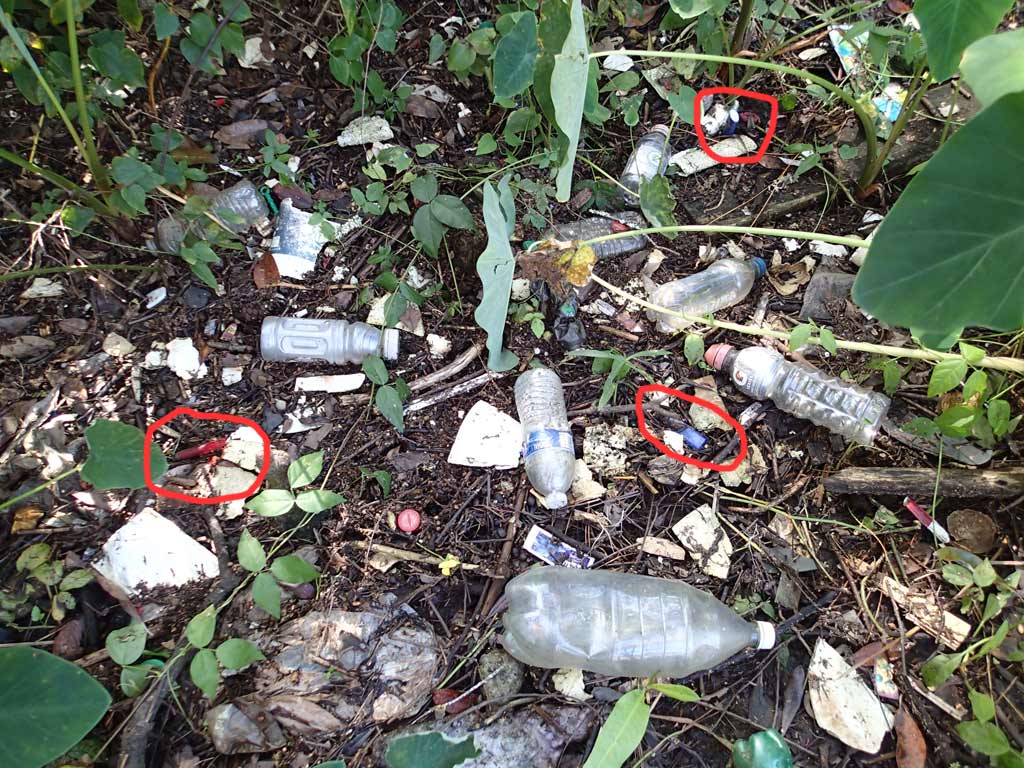
The volume of PLASTIC CONTAINERS tossed in Massachusetts:


Contrary to the hysteria, the SKY will NOT fall by expanding the BOTTLE BILL! 


Life is simple!


We can't make every JERK be responsible for his own litter, but we can INCENTIVIZE it to make it worthwhile to retrieve.


As Massachusetts taxpayers, we can reduce the MUNICIPAL DISPOSAL COSTS to our communities by removing this volume.


Bottle bill foes hope you buy in

Sunday, September 29, 2013

Between the Lines: Bottle Bill Massholes

The time is long overdue......the Bottle Bill needs to be expanded!

Between the Lines: Bottle Bill Massholes

If Mainers can afford a nickel deposit, why can’t we?


Tuesday, September 24, 2013

 
Last week I spent a few days in central Maine, where I took my golden retriever for some training.
 
While I had a great time with a bunch of my hunting buddies—both the two- and four-legged varieties—I also absorbed an extra dose of the kind of regional hazing that flatlanders can expect whenever they get friendly with the locals.
 
The worst of it came when I accidentally tossed a plastic water bottle purchased in Massachusetts into a cardboard box at a Maine rod and gun club. A sign on the box asked folks to donate their nickel deposit bottles and cans to benefit the club.
 
I wasn’t born in Maine; though both sides of my family have been there for hundreds of years, even if I were to take up full-time residency, I’ll never really be a Mainer. That’s OK, because nowadays Maine is filled with people “from away.” In the new, global economy, a lot of the old, popular knocks on out-of-staters and tourists have softened or disappeared altogether.
 
But one thing hasn’t changed: Mainers still have a native distrust of people from Massachusetts. If anything, the antipathy may be getting worse. It probably has something to do with the vestigial memory that Maine was once part of the Massachusetts Bay Colony. As Mainers like to say, Massachusetts used to own Maine and seems to be busy buying the state back—“one piece at a time.”
 
Whether we bring a slew of unrealistic expectations or just our shitty driving habits to Maine, we’ve collectively gained a very poor reputation. Hence the nickname “Massholes.”
 
That’s just what my buddies called me when I came out of my truck with a handful of empty bottles.
 
Some of them had contained fizzy liquid, the nickel deposit on which can be redeemed in Maine. But a few Poland Springs water bottles had sneaked into my pile. Sadly, each one had its label bordered in bright red, the mark of a non-deposit bottle from Massachusetts.
 
“Can’t throw that in there, ya Masshole!” And so forth.
 
With a petition drive underway to get an expanded bottle bill on the 2014 ballot, Bay State lawmakers last week held yet another round of hearings on the idea. The pols have been holding such hearings for decades, but inevitably side with bottlers and retailers, who say the deposit is like a tax.
 
No, it isn’t. The deposit is 100 percent refundable. And, contrary to industry hype, an expanded bottle bill won’t slow the sales of water and juice any more than it slowed the sale of beer and soda. Nor is this a pet idea of the left. Hell, even my gun-toting, pro-business, big government-bashing buddies from Maine support it.
 
Let’s not be Massholes. Let’s get in line with the rest of New England and do the right thing. Let’s expand the bottle bill.•


Sunday, August 11, 2013

Wasted Tax Dollars!

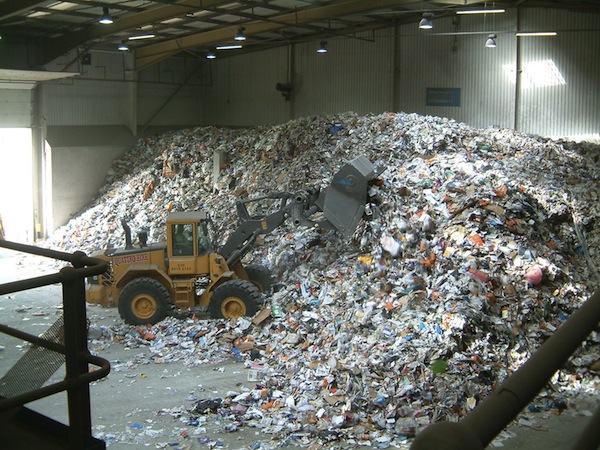
If you deny the environmental costs, consider the wasted municipal costs of SOLID WASTE DISPOSAL and LANDFILLS that add to property taxes.

Wouldn't those tax dollars be better spent providing needed services, not filling LANDFILLS? Why waste TAX DOLLARS?  


Daily Kos
In 2012, the average American drank 30.8 gallons of bottled water, with bottled water sales topping $11.8 BILLION.

Please consider using refillable water bottles whenever possible.

Thanks to Give a Shit about Nature for the image.