Search This Blog

Translate

Blog Archive

Middleboro Review 2

NEW CONTENT MOVED TO MIDDLEBORO REVIEW 2

Toyota

Since the Dilly, Dally, Delay & Stall Law Firms are adding their billable hours, the Toyota U.S.A. and Route 44 Toyota posts have been separated here:

Route 44 Toyota Sold Me A Lemon


Showing posts with label Toyota's defective design. Show all posts

Friday, June 9, 2017

TOYOTA: "....sufficient evidence from which a jury could find that the 1996 Camry contained a design defect..."


Additional information available on the right side of this page. 


HMG: 8th Circuit Issues Unanimous Decision In Toyota Unintended Acceleration Case

Information contained on this page is provided by an independent third-party content provider. Frankly and this Site make no warranties or representations in connection therewith. If you are affiliated with this page and would like it removed please contact pressreleases@franklyinc.com
SOURCE Hilliard Munoz Gonzales LLP
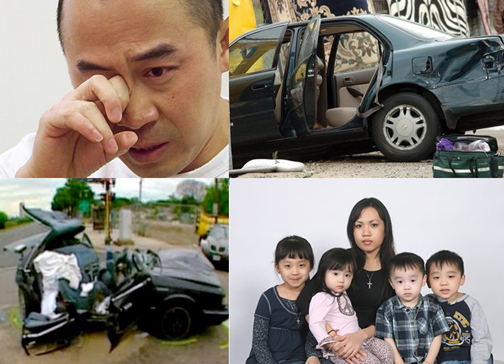
CORPUS CHRISTI, Texas, June 9, 2017 /PRNewswire/ -- Today, the 8th Circuit issued an order affirming the jury's award in a case involving a defective Toyota Camry which resulted in the death of three individuals and a man spending nearly three years in prison for a crime he did not commit.
On August 5, 2010, Koua Fong Lee, a Hmong immigrant, was released from prison after serving two and a half years of an eight-year prison sentence, wrongfully convicted of criminal vehicular homicide. Mr. Lee and his family were involved in a car accident on June 10, 2006 after a trip home from a family celebration at church turned deadly. Upon exiting the highway onboard his 1996 Toyota Camry, Mr. Lee's brakes failed, causing a violent rear-end collision that led to the death of three passengers in another vehicle and seriously injured two others. Mr. Lee's vehicle experienced sudden unintended acceleration caused by a design defect in Toyota's fleet. While Toyota had kept consumers and the public in the dark about prior incidents of sudden unintended acceleration, Mr. Lee was nonetheless forced to spend over two years in prison, until a new trial was granted to prove that Toyota's design defect was the true cause of the deadly accident. Upon this showing the State had no other recourse but to drop all charges against Mr. Lee.
In February 2015, in a subsequent civil trial, a jury found that Toyota was liable for design defects and awarded a total of $11.4 million-the single largest verdict against Toyota for sudden unintended acceleration.
In an effort to avoid the multi-million-dollar award, in March of 2015 Toyota asked the Court to declare that the Toyota Camry involved in the accident did not have a design defect or to grant the automaker a new trial- alleging there was no evidence presented at trial to support the finding that the accident was caused by a design defect.
In June of 2015, the trial judge, Judge Montgomery, issued an order stating, "The jury deliberated for five days before reaching its unanimous verdict.  The Court is convinced the jury discharged their duties diligently and with care.  The verdict did not result in a miscarriage of justice warranting a new trial."  Toyota appealed that decision to the 8th Circuit.
One of the primary issues on appeal was the admissibility of evidence of other similar incidents. The 8th Circuit held that: "We decline to require a series of mini-trials on the causation of Other Similar Incidents' evidence in order for the evidence to be admissible when, as here, the record demonstrates that the circumstances surrounding these Other Similar Incidents were substantially similar to the incident at issue."  The Court concluded, "The plaintiffs presented sufficient evidence from which a jury could find that the 1996 Camry contained a design defect."
"The 8th Circuit opinion is well reasoned and thoughtful, sounding in strong legal precedent," said Bob Hilliard, who took on Toyota to remedy Mr. Lee's unjust conviction and who continues to fight on his behalf. "Koua and his family are finally able to begin to see the end of this Toyota-created nightmare. At every step of this case Toyota has refused to accept its clear responsibility, it has determined it would rather allow its own customers to be killed and injured, and then dishonor itself and tarnish its own image for almost a decade by denying this defect. Regardless of the justice that has now finally found its way to the Lee family, hopefully, Toyota will change its shameful conduct and game plan it relied on in this case and in the future will carefully consider its corporate responsibility when a defect kills and injures."
ABOUT HMG     http://www.hmglawfirm.com/
Hilliard Muñoz Gonzales LLP (HMG) specializes in mass torts, personal injury, product liability, commercial and business litigation, and wrongful death. Hilliard Muñoz Gonzales LLP has been successfully representing clients in the United States and Mexico since 1986. Bob Hilliard obtained the Largest Verdict in the country in 2012 and the #1 verdict in Texas in 2013.

HMG: 8th Circuit Issues Unanimous Decision In Toyota
Unintended Acceleration Case
NEWS PROVIDED BY
Hilliard Munoz Gonzales LLP
11:14 ET
CORPUS CHRISTI, Texas, June 9, 2017 /PRNewswire



Wednesday, February 4, 2015

"How can you trust Toyota?"


When Justice Isn’t Justice: Jury Finds Toyota Guilty of Design Defect in ’96 Camry But Only 60% At Fault


And then there's the WHISTLE BLOWER that TOYOTA is trying to silence....do you wonder WHY?


Bob Hilliard's good question: "How can you trust Toyota?"


Doesn't there seem to be an increasing erosion of TOYOTA BRAND CREDIBILITY?


The Jury got part of it right!


JUST MY OPINION .... AT THE MOMENT!


Tuesday, February 3, 2015

TOYOTA: $11 MILLION!


Star Tribune (@StarTribune)
BREAKING: Toyota found "60%” responsible for fatal crash. strib.mn/1F38ny8


Toyota found '60%' responsible, to pay $11M

  • Article by: RANDY FURST , Star Tribune
  • Updated: February 3, 2015 - 5:00 PM
Camry driver Koua Fong Lee found 40 percent responsible by jury after four days of deliberation.


The jury in the Toyota liability trial found the automaker 60 percent responsible for a 2006 crash that caused the deaths of three people and sent a St. Paul man to prison for more than two years.
 
Toyota is ordered to pay about $11 million in damages to crash victims.
 
The six-man, six-woman jury said a design defect was partly responsible for the crash. Jurors have been deliberating since Wednesday in a lawsuit brought by Koua Fong Lee, driver of the 1996 Toyota Camry that raced up an interstate exit ramp and crashed into a car stopped at the end.
 
Lee was found 40 percent responsible. At a press conference on the snowy federal courthouse plaza in Minneapolis after the verdict, Lee said his life will never be the same.
 
Lee and other plaintiffs argued that his car experienced unintended acceleration due to a defect in the throttle system.
 
Lee testified that the car sped up suddenly as he was exiting Interstate 94 in St. Paul. His Camry rear-ended a 1995 Oldsmobile Ciera at the top of the eastbound exit ramp at Snelling Avenue, instantly killing the Ciera’s driver, Javis Trice-Adams, and his 9-year-old son. A 6-year-old daughter died a year later of her injuries, and another daughter was seriously injured.
 
Attorneys for Toyota maintained that Lee accidentally put his foot on the gas pedal instead of the brakes and that the Camry accelerator system had no defects.
 
Lee was convicted of criminal vehicular homicide and sentenced to eight years in prison in 2008. A massive recall of newer Toyota models because of sudden acceleration, starting in the fall of 2009, prompted attorneys to reopen Lee’s case, and Ramsey County prosecutors dismissed the charges against him in 2010.
 
Lee and four family members who were passengers in the Camry joined forces with family members of those in the Oldsmobile in a lawsuit against Toyota.
 
Jurors listened to lengthy testimony on how the accelerator system operated and heard from experts on both sides who conducted tests and drew opposite conclusions as to whether Toyota or Lee were responsible for the crash.

Bob Hilliard, Lee’s attorney, surprised Toyota lawyers by centering his closing arguments around his contention that each time Lee tapped the gas pedal, the accelerator stuck at increasingly higher speeds as he drove up the long exit ramp. He pumped the brakes several times, losing the vacuum in the brake system, Hilliard said.
 
Hilliard put three other drivers on the stand who testified about unintended acceleration in their Camrys.
 
Toyota’s attorneys said their own tests showed no problem of sticking accelerators and their examination of the brakes showed they were in good working order.
 
The Lee family bought the Camry four months before the accident and it was driven mostly by his wife, so he had less familiarity with the gas pedal and brakes, David Graves, Toyota attorney argued.
 
He said Lee panicked when he saw a line of cars stopped at the traffic light at Snelling and Concordia, and hit the accelerator rather than the brakes.
 
If they found Toyota responsible for the accident, U.S. District Judge Ann Montgomery told jurors, they had an opportunity to award money to Lee and his family, who were passengers in his Camry, for bodily harm and emotional suffering including Lee, his wife, Panghoua it is one word on the jury form Moua, his daughter Jemee Lee, his father, Nhia Koua Lee, and his brother Nong Lee.
 
Jurors could also award funds for bodily harm, emotional distress and future bodily harm and distress to Jassmine Adams, who was a passenger in the Oldsmobile; Bridgette Tice and Carolyn Trice, mother and grandmother of Devyn Bolton, who died a year later at age 7; and Bolton’s grandfather, Quincy Adams, who suffered a brain injury and now walks with a cane.


http://www.startribune.com/local/stpaul/290700041.html?page=all&prepage=1&c=y#continue


Friday, January 30, 2015

Reminders of PINTO'S EXPLODING GAS TANK! There is NO Excuse!


Edmunds points out that the TOYOTA FIRE RISK RECALL is NOT on the NHTSA web site.

CURIOUS!


Instead of making TOYOTAS safer, we're going backwards!


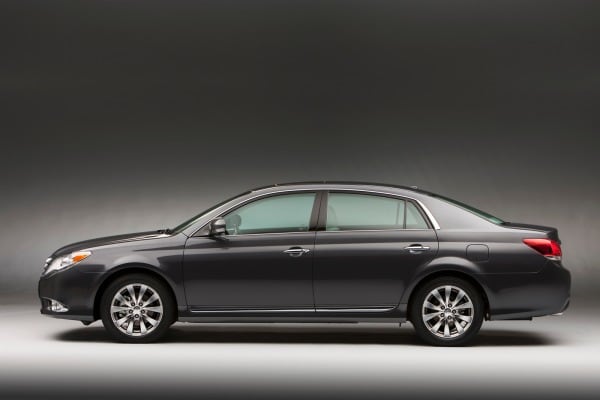
2011-'12 Toyota Avalon Recalled for Fire Risk


2012 Toyota Avalon Picture

The 2011-'12 Toyota Avalon sedan is being recalled due to a fire risk. | January 29, 2015


Thursday, January 29, 2015

Families testify that Toyota crash has left powerful emotional scars


Families testify that Toyota crash has left powerful emotional scars


by: RANDY FURST, Star Tribune

January 21, 2015

Judge Ann Montgomery twice called brief halts in a day of emotional testimony.


In riveting testimony interrupted by tears and sobs, members of two families described Tuesday how their lives had been ravaged by a fatal automobile crash that they blame on an out-of-control Toyota Camry that struck an Oldsmobile Ciera in St. Paul in 2006.
 
Jurors in the federal trial heard testimony from Carolyn Trice, a grandmother who lost her son and two grandchildren who were in the Ciera. The accident upended relationships and shattered her family, she said.

“Our family is no family like it used to be,” a visibly distraught Trice said.

No one died in the 1996 Camry that was driven by Koua Fong Lee, but his wife testified that she worried she’d lose them in another crash.

“There are many times that I want to walk away from my family, I want to walk away from my children, I want to walk away from my husband,” said Pang Houa Moua, Lee’s wife, dabbing her eyes with tissues. She said she loved them but she wondered every morning, “how are we going to get through today, or can I make it home today, and I feel I am going insane.”
 
The emotional testimony caused U.S. District Judge Ann Montgomery to call a brief recess in her Minneapolis federal courtroom so that Trice, who appeared close to breaking down, could gather herself.

Montgomery called another 10-minute recess after Moua ended her direct testimony and before cross-examination began.

The two families, one black, the other Hmong, whose lives dramatically intersected on June 10, 2006, have united in a single lawsuit against Toyota. The accident occurred at the top of the Snelling Avenue exit ramp from eastbound Interstate 94.

The families are seeking damages for pain and suffering and infliction of emotional distress, in addition to reimbursement for medical costs that exceed $1 million.

Their lawyers argue that the Camry had a built-in defect that caused two nylon pulleys to overheat and stick together, causing the vehicle to accelerate even as Lee desperately pumped the brakes in an unsuccessful attempt to stop the car.

The two families’ lawyers are expected to rest their case on Wednesday after a counselor for Moua testifies, then attorneys for Toyota will begin their defense.

They are expected to pre­sent expert testimony to support their claim that the Camry’s engine was soundly built, there was no defect and the crash occurred because Lee panicked and inadvertently pressed the accelerator instead of the brakes.

Earlier Tuesday, Nhia Koua Lee, Lee’s father, testified he was seated behind his son in the Camry and heard him yelling in the Hmong language that the brakes were not working.

Then, he said, the vehicle crashed. “I was so scared,” he said. He woke in the hospital, unable to move.

“I thought we were going to die,” said Moua, who was also in the Toyota and recalled her husband shouting that the brakes had failed. When the car stopped, she said, her daughter was screaming and her father-in-law was unconscious.

She said her husband’s demeanor has dramatically changed in the years since the accident. “He used to be very positive,” she said. “ … I can see he is not the same person anymore.”
 
She said he wakes up crying after nightmares. While he has tried to be a strong support figure for the family, “I can see that he’s not.”

During cross-examination, Bard Borkon, a Toyota attorney, did not ask Moua about her personal concerns, but had her acknowledge that when she had driven the Camry before the accident, the car’s brakes and accelerator worked properly.

Devyn Bolton, Trice’s granddaughter, who died at age 7 from injuries suffered in the accident, was “a sweetheart” who was athletic and friendly, said Trice. “She would light up everybody’s life.”
Trice said the far-flung family used to gather regularly for holidays, but has not done so since the crash.

“Family get-togethers aren’t family get-togethers,” she said. “My grandkids, they don’t like to stay at home. They don’t like to be around each other.”
 
Trial testimony is expected to wind up early next week.


http://www.startribune.com/local/stpaul/289248901.html?page=all&prepage=1&c=y#continue


Startling approach in Toyota crash case's closing catches automaker off-guard


Startling approach in Toyota crash case's closing catches automaker off-guard

  • Article by: RANDY FURST , Star Tribune
  • Updated: January 29, 2015 - 6:24 AM
In an 11th-hour bombshell, the attorney for the driver unveiled his theory for what caused a Camry to speed up in 2006: Each time the gas pedal was pressed, the car kept on accelerating.


In an 11th-hour bombshell in the federal case against Toyota Motor Co. on Wednesday, the attorney for the driver suing the carmaker unveiled his new theory for what caused a 2006 fatal crash.
 
Toyota’s attorneys appeared to be caught off guard. Since the car company delivered its closing arguments first, it had no chance to rebut.
 
Jury deliberations began Wednesday afternoon and will resume Thursday.
 
Driver Koua Fong Lee lost control of his 1996 Camry, said his attorney Bob Hilliard, because each time he tapped the gas pedal on the long exit ramp off eastbound Interstate 94 at Snelling Avenue, the car accelerated.
 
Lee’s Camry got stuck at higher and higher speeds, Hilliard said, so when Lee pumped the brakes he was unable to stop and he rear-ended an Oldsmobile Ciera stopped at a red light. The driver of the Oldsmobile and his 9-year-old son were killed instantly. The driver’s 6-year-old daughter was badly injured and died a year later.
 
Hilliard based his case on the testimony of his automotive consultant, John Stilson, who spoke only briefly during the trial about the scenario laid out by Hilliard in his summation. If the system is stuck and the pedal is pushed further, “it will keep binding,” Stilson testified, demonstrating a model of the accelerator device to jurors. “If you push further, it will stay there.”
 
Nylon pulleys attached to the accelerator overheated because of where they sat near the engine, Stilson said in court, and the heat caused them to bind.
 
None of Toyota’s witnesses spoke to the gas-pedal issue as described by Hilliard during the three-week trial in Minneapolis.
 
Instead, they argued that if in fact the accelerator became stuck, it stayed at that level and tests showed that applying the brakes would override the accelerator, rapidly slowing the Camry.
 
“It would slow down the vehicle,” said Lee Carr, president of Carr Engineering, in testimony on Tuesday.
 
In attorney David Graves’ closing argument for Toyota, he said that Stilson never explained how the Camry got to full throttle.
 
Asked after the trial was adjourned Wednesday why he held back his key points until closing arguments, Hilliard said, “I’m not responsible for spoon-feeding Toyota on how to defend its case.
 
It’s their responsibility to pay attention to how the evidence is entered, and listen to the witnesses.”
 
Toyota’s attorneys appeared upset by Hilliard’s closing. Graves, who gave the closing argument for Toyota, rose several times to raise objections, saying Hilliard was misrepresenting testimony, including Hilliard’s interpretation of a document. A Toyota spokesman said attorneys would have no comment on Hilliard’s closing argument.
 
What happened at the Toyota trial was unusual, said Cooper Ashley, a Minneapolis attorney who handles product liability cases.
 
“It’s rare that you have some primary theory of liability or defense theory, and get through an entire trial without somebody from the opposing counsel taking a shot at it,” Ashley said.
 
It is also unclear whether the jurors, who never focused on that aspect before, will embrace it, he said.
 
“It’s a risk that they may think that it should have been developed more fully during the trial,” he said. “The positive is you have a key piece of evidence that goes unrebutted by the defense.”
 
Hilliard buttressed his case by citing three other drivers who testified during the trial that they had experienced unexplained acceleration.
 
Hilliard argued that Toyota spent millions to make the case that Lee was at fault, while drivers for his side were paid nothing to testify.
 
Graves said in his closing argument that Toyota “is a corporate citizen and spent money” to defend itself. “It’s not cheap to run these tests,” he said.
 
Graves said Stilson had run four tests showing that the accelerator pulleys got stuck, but he insisted that Stilson ran the tests improperly. In the one test that Stilson conducted correctly, Graves said, the pulleys did not stick.
 
“There is no evidence that this was a defective design,” said Graves. He noted that the previous owner of Lee’s Camry testified that he drove the vehicle for years without any problems.
 
He also said Lee hit the gas instead of the brakes, and he highlighted Lee’s testimony at his 2007 criminal trial, where Lee said that he drove a truck and that driving the Camry was different.
 
“When I drive the truck and go to the Camry, I have to look down and see where the gas and brake is, so I can get used to it,” Lee testified.

Lee, convicted of criminal vehicular homicide, faced an eight-year sentence, and spent more than two years in prison before his attorneys gathered evidence of other 1996 Camrys that had unintended acceleration. Susan Gaertner, then the Ramsey County attorney, decided to not hold a new trial, but instead let Lee go free.
 
In seeking damages, the jury was instructed by U.S. District Judge Ann Montgomery on Wednesday not to take the conviction or prison sentence into account if it decides to award damages, because Toyota was not involved in the criminal case and was not responsible for Lee going to prison.
 
Also in closing arguments, attorneys Bill Markovits and Anne Brockland, representing members of the families and people who were inside the Oldsmobile, made emotional pleas to the jury that they should be awarded damages to be paid by Toyota.


Friday, January 16, 2015

Toyota Lies about Plastic Pulleys that caused Deaths!


The people were killed because of TOYOTA'S Defective Design:


And TOYOTA LIES? [see comments below]


Trudy Baltazar authored this book to document the fight of strangers to free Koua Fong Lee:


Ms. Baltazar is in the courtroom documenting the trial against TOYOTA and has been commenting elsewhere.


Update of courtroom activity on Thurs., 1-15-15
 
A toyota employee gave a deposition on 12-4-14 (they showed the dep in court for us all to see) stating heat tests were conducted on these 2 plastic pulleys which have been proven to be defective when exposed to a certain degree & amount of heat.
 
The pulleys are part of the throttle body and they control the accelerator cable. When the upper pulley is working properly, the pulley will release the accelerator cable when one takes their foot off the gas. I think I mentioned yesterday the expert mech engr who heated the pulleys to 165 deg and the top pulley that the accelerator cable goes into binds up against the metal bracket it’s up against and won't release the accelerator cable. It appears the pulley gets stuck to the metal bracket/plate.
It took ~7 mins for the pulley to cool down and release the accelerator cable. Well in the toyota deposition, this employee of 40+ yrs stated that they had heat tests done on these pulleys for 8 days @ 248 deg F. This expert for the plaintiff’s used a hair dryer for 30 mins and got the pulley to heat up to 165 deg and the pulley wouldn't function properly at that temp. Well 3 weeks before toyota employee gave the deposition, they learned that the heat tests on the plastic pulleys had NEVER been conducted!
 
Three weeks later this toyota employee swore in a deposition that the tests were done. In cross examination, the toyota lawyer asked the expert John Stilson, "did you take the 1996 Camry for a drive and hook up monitoring equipment to the pulleys and the metal bracket to see in real life situation if the pulleys were heating up due to real driving time? Expert's answer, "no, because I wanted to follow toyota test specification". cross examination ended not too long after that.
 
Turns out it’s in toyota’s own 1996 Camry owner’s manual that (paraphrasing here) ‘If you need to conduct a test to see if a part is malfunctioning due to heat, use a hair dryer’ and they even show a picture of a hair dryer.