Janine Jackson interviewed Sriram Madhusoodanan about climate justice for the August 2, 2019, episode of CounterSpin. This is a lightly edited transcript. MP3 Link Janine Jackson: Climate disruption presents a test for corporate news media: Will they act on the understanding that a conversation that doesn’t acknowledge that unprecedented measures need to be taken is an irresponsibly detached conversation? Will they vigorously expose the corporate actors, the fossil fuel companies and their executives, who continue to dissimulate and deny? Or will they go on giving those that profit from harm-causing industries pride of place in the conversation about how to mitigate that harm?
Corporate media’s response to some promising state-level developments in climate action is not itself very promising. Our next guest will explain work you might not know about, being done to push fossil fuel companies out of the way of climate justice solutions. Sriram Madhusoodanan is deputy campaigns director at the group Corporate Accountability; he joins us now by phone from Washington, DC. Welcome to CounterSpin, Sriram Madhusoodanan. Sriram Madhusoodanan: Thank you so much, Janine; glad to be here. JJ: I was alluding to the Supreme Court decision earlier this year that cleared the way for Massachusetts Attorney General Maura Healey to pursue her investigation of Exxon Mobil—about what it knew about climate change and when it knew it, essentially. It was on the wires, AP and Reuters, but it didn’t get the kind of major attention you would hope.
But before you talk about that, the background for such an investigation, the need for it, is that the fossil fuel industry is just vigorous in doing whatever it takes to resist change. They’re really quite aggressive and proactive, you might say.
Sriram Madhusoodanan: “There are very real solutions to addressing the climate crisis, and they’re being deployed by people around the world.”
SM: Absolutely. I think this is the story we’ve seen play out over decades, really, when we now see the internal documents that have come to light, for example, showing that Exxon, as far back as the 1960s, really knew the extent to which climate change was going to be the path that we were on, the modern kind of climate disruption that we’re seeing, almost a climate disaster happening every week, I believe, according to a recent UN report.
So it is very telling that this is the path the fossil fuel industry has been on for so long, and when faced with a choice of doing the better thing, in terms of advancing a just transition, or choosing a path of climate denial and political manipulation, the industry quite simply chose to protect the billions and billions of dollars a year in its own profit. JJ: And this was part of that: Massachusetts Attorney General Maura Healey was investigating Exxon Mobil. So, as part of their strategy, theysuedher. And that’s the case that the Supreme Court refused to hear? SM: That’s right, yes. So the Supreme Court really refused to hear Exxon’s bid for dismissal on the Massachusetts AG case. And just to back up for a second, Exxon has really fought tooth and nail against every move to hold it legally liable, countersuing up a storm, not just with the Massachusetts attorney general investigation, but a number of different instances. And this is quite simply a tactic of delay and intimidation, and an attempt to use their considerable resources to delay, distract and fundamentally to obstruct this process. JJ: Healey said that she thought the Supreme Court ruling might put an end to what she called Exxon’s “scorched earth campaign” to block these kinds of investigations.
As you’re intimating, this ruling, it’s heartening, not only for Massachusetts, though; Massachusetts is not alone in this sort of investigation. SM: Absolutely. This is a big win for other states, cities and communities who want to hold Exxon accountable. We have an ongoing investigation and lawsuit from Attorney General James, now, in New York state. And there are a number of cities that are taking the fossil fuel industry to court. And this decision really does clear the way for Healy’s investigation into what Exxon has known for over 50 years about climate change, and brings us one step closer to finding out exactly what they knew, and what they did to cover it up . JJ: So it’s having some echo effect, in some sense. It was a state attorney general that brought the big lawsuit, or one of them, that became the biggest lawsuit against big tobacco, was it not? SM: Yes, and there’s absolutely a number of parallels to the history we saw with attorney general investigations into the tobacco industry. One, for example, is that, as we saw with the tobacco AG investigations, part of the settlement in the US, particularly from Minnesota’s state attorney general, was to bring to light and release a trove of internal documents that really illustrated the true story of what the industry had been doing to cover up what it knew about the addictive nature of nicotine and cigarettes.
And similarly, we can see, really, to what extent Exxon and others hid from the public the causes and severity of the climate crisis. And I think, more importantly, when those tobacco documents were released, and the truth of what the industry did was revealed, it really ushered in a whole new era of accountability and legislation to hold the industry accountable.
And at the international level, at the UN, at the state and local level here in the US, people are similarly demanding accountability for the fossil fuel industry. And this is exactly the kinds of investigation and moves to hold the industry accountable and liable for its actions that we need in this moment. JJ: Yeah, documents make things harder to deny, even if they’re things that seem like they’re going on in broad daylight anyway. Documentation is always important.
And fossil fuel companies are kind of a big PR operation; they do their own research, they offer these “market-based” solutions. And for corporate media, that’s enough cover — you know, “Oh, this didn’t come from BP, it came from the ‘Energy Futures Institute,’” or whatever horse hockey — to present that as a valid position in a debate: “Some people say, X, Y or Z.”
And I kind of wonder what it will take for extractive industry to be presented that way in the media, instead of this kind of credulity that we see. I feel like media have to take a turn, in the same way that it did with tobacco, in terms of the way it presents these corporate actors. SM: Yeah, I think you’re absolutely right there. Media have an incredibly important role to play in telling the story. And it shouldn’t be understated, we cannot talk about climate change enough. And it’s important that when we talk about it, we tell the story in the right way.
So to, one, foreground the fact that the industry has known about the severity of climate change for decades. I mentioned as far back as the 1960s, but a recent document came to light, within this initial trove of documents from Exxon, that showed that in the 1980s, they knew, and had predicted with a fair degree of accuracy, what the concentration of CO2 in the atmosphere would be in 2019.
And that’s just astounding, to think that before I was born, for example, that Exxon had known exactly what it was doing if it kept on this path of extractive economy and of climate disruption. And so media have an absolutely critical role to play in foregrounding who was responsible, and that where we are today, in a moment of upheaval and climate disruption, was also a deliberate choice on the part of a number of incredibly powerful entities, corporations and CEOs at the helms of those entities as well. JJ: Yeah, you can’t keep bringing these folks forward as credible actors, once you know that dissimulation has been part of their modus operandi, it seems to me. It should affect the way they’re treated as sources on the stories. SM: Absolutely, absolutely. And then to take it one step further, to really address and to have a much more skeptical eye to the trade associations, which you mentioned earlier, that are driving their agenda, seemingly under the guise of being nonprofits or acting in the public interest, simply putting forth “innovative solutions,” when, in fact, they were set up for very intentional purposes by the industry to advance an industry-driven agenda, and to feed these false, market-based solutions that, at the end of the day, don’t do anything to actually shift the industry’s business model, which is fundamentally at odds with the direction we need to go as a collective species on this planet, if we’re going to weather the storm, so to say.
under today’s global power structures, the people who will be the most affected are the same ones who are currently experiencing the harshest effects of climate change.
No wonder then, that women, communities of color, communities in the global South, youth, low-income communities and Indigenous communities around the world have been developing just climate solutions that will address this crisis. What we need now is to move the fossil fuel industry and its backers out of the way so these solutions can be implemented.
There really isn’t a scientific, or even an environmental, response to climate disruption that is not a political response to current relationships of power, is there, really? SM: You know, that’s absolutely right. And I think it’s a really critical point to bear, that there are very real solutions to addressing the climate crisis, and they’re being deployed by people around the world and in the US most impacted by this crisis today. Solutions like energy democracy, agroecological practices, ecological restoration to recover natural carbon sinks. And you imagine where we could be today in implementing these kinds of climate solutions if the industry had not for so long really stood in the way. It’s damning when you think about it from that perspective. But absolutely, what’s needed in this moment is for the industry to get out of the way, and for us to make sure that these real solutions that are already being deployed in communities around the world are given the center of focus and the scale that they need in order to really be the focus of a global response to this crisis. JJ: We’ve been speaking with Sriram Madhusoodanan, deputy campaigns director at the group Corporate Accountability. You can find their work online at CorporateAccountability.org. Sriram Madhusoodanan, thanks so much for joining us this week on CounterSpin. SM: Thank you.
FAIR/Fairness & Accuracy In Reporting
124 W. 30th Street, Suite 201
New York NY 10001
USA
This week on CounterSpin: The harms of climate disruption are already terrible and will only get worse, and despite what appears to be some people’s magical thinking, no one will be unaffected. What’s more, the drivers of climate disruption are known, and it isn’t people who leave the lights on. What’s missing is a public and media dialog that features fossil fuel industries and their leaders accurately, as roadblocks to the climate justice solutions we desperately need. While federal inaction and even regression is distressing, some state attorneys general are pushing forward for accountability. We’ll talk about that movement with Sriram Madhusoodanan, deputy campaigns director with the group Corporate Accountability. MP3 Link
(cc photo: Perimeander)
Also on the show: Warren Kanders has resigned from the board of New York’s Whitney Museum—a “casualty to the social justice mob,” as one account had it; or, for others, a victory for those who prefer their art without a side order of complicity with the manufacture of tear gas and high velocity ammunition. A few months ago, CounterSpin spoke with Amin Husain, core organizer with the group Decolonize This Place, on the forefront of activism around cultural institutions. We’ll revisit that conversation today. MP3 Link
FAIR/Fairness & Accuracy In Reporting
124 W. 30th Street, Suite 201
New York NY 10001
USA
Today, we have a lot to celebrate. We saved health care for 23 million people – and for our whole country. We’ve won another important battle, but this fight is far from over: Republican leaders are right now working to gut Medicaid through the budget process now underway. We’re going to keep up that winning pressure until health care is a public good, available and affordable for every person in our country.
GOP in Disarray
Obamacare repeal plan looks dead in the Senate. Vox:“The last-ditch Senate attempt to repeal Obamacare with a two-year delay to replace the law appears doomed, just 14 hours after Senate Majority Leader Mitch McConnell proposed it. Three Republican senators said Tuesday they would not vote to start debate for a repeal plan that does not include any replacement provisions. That is enough to block the bill from moving forward. It was the only option left to McConnell, after four Senate Republicans came out against the repeal-and-replace plan that McConnell had been carefully crafting for two months.”
Let Obamacare fail – Trump’s new plan. Reuters:“President Donald Trump has said the new Republican healthcare policy should be to allow the current law to collapse. ‘I’m not going to own it,’ Mr Trump told reporters of Obamacare, ‘I can tell you the Republicans are not going to own it.’ Support for the Republican Senate bill fell apart on Monday when two more senators said they could not back it. Senate Democratic leader Chuck Schumer said Mr Trump was “playing a dangerous game” with the US healthcare system. ‘He is actively, actively trying to undermine the healthcare system in this country using millions of Americans as political pawns in a cynical game’, Mr Schumer said on Tuesday.
After healthcare failure, Republicans face similar divisions on tax reform. Reuters:“Republicans in Congress unveiled a fiscal 2018 budget plan as a first step to major U.S. tax reform on Tuesday, only to face the same divisions between conservatives and moderates that helped killed their efforts to replace Obamacare. The $4 trillion spending blueprint, released by the House of Representatives budget committee, could become a new flashpoint for Republican in-fighting because it links future tax cuts for businesses and individuals with $203 billion in mandatory spending cuts that would reduce benefits for the poor.
Warren’s Warning
Warren warns GOP may still dismantle Obamacare. The Hill:“Sen. Elizabeth Warren (D-Mass.) said Tuesday she isn’t declaring victory over the collapse of the Senate Republican healthcare bill, pointing to the GOP’s long history of working to repeal key provisions of ObamaCare. ‘I’m not doing a touchdown dance over health care today. This zombie bill has come back from the dead over [and] over again,’ Warren wrote.”
Trump Tally
What has changed in six months under Trump. Dallas Daily News:“Trump’s first six months have been defined by his often angry and tasteless tweets, his ham-handed efforts to denigrate and undercut the multiple investigations into Russian influence in the 2016 election and the stalemated legislative battle to repeal and replace Obamacare. But Trump is right in saying he has significantly influenced government and the nation’s image – though much of his impact has been negative.”
What Progressives Want Now
Progressive Groups Push Democrats to Back #PeoplesPlatform. Common Dreams:“On Tuesday, dozens of organizations—including Our Revolution, National Nurses United, and Fight for 15—announced the launch of a new initiative titled “The Summer for Progress,” during which activists across the country will pressure Democratic lawmakers to embrace ‘a bold, progressive agenda.’ This agenda, called the People’s Platform, includes legislation that would make public colleges tuition free, establish automatic voter registration, raise the federal minimum wage to $15 an hour, and transform the American healthcare system into one that guarantees insurance to all.”
She Should Run aims for 250k women candidates by 2030. CNN:“She Should Run, an organization created in 2011 with the goal of recruiting and training women to run for public office, launched a new campaign Tuesday called “250kBy2030.” The organization’s goal is to encourage 250,000 women to run for US office by 2030. As of 2017, less than 25% of those offices are held by women.”
More from OurFuture.org:
The Lessons of Love Canal. George Goehl, LeeAnn Hall:“In 1978 in Love Canal, Lois Gibbs forged a new model for activism focused on the human cost of environmental destruction and grassroots power to change it. Forty years later, we’re at another crossroads. Together with the community groups that Gibbs and her colleagues at CHEJ have been nurturing – spanning the country, with reach in the south, rural areas, and the working-class communities and communities of color – we will forge the path toward climate justice.”
Progressive Breakfast is a daily morning email highlighting news stories of interest to activists. Progressive Breakfast and OurFuture.org are projects of People's Action. more »
WHY ARE YOU HERE? Why have you chosen to be and stay here with Reader Supported News? It means something to you, no? This organization is underfunded … Because 1% of the subscribers can’t bring themselves to respond to the fundraising appeals!? That’s crazy. “Be here”, we need you. / Marc Ash, Founder Reader Supported News
FOCUS: Rebecca Solnit | One Magical Politician Won't Stop Climate Change. It's Up to All of Us. Rebecca Solnit, Guardian UK Solnit writes: "But it's not the belief of the majority or the work of elected officials that will change the world. It will be action, most likely the actions of a minority, as it usually has been." READ MORE
MATCHING THE
SMALLER DONORS: Many have given what they can afford during this fund-raising
drive. There have been a few larger donors who have stepped up as well. Thank
you! It would mean a great deal if there were someone out there who could
provide a more substantial contribution. Call it matching funds or something of
that nature. For your consideration. / Marc Ash - Founder, Reader Supported
News
Glenn
Greenwald | Iranians Are Much Talked About on Sunday Morning TV, but Never Heard
From Glenn Greenwald, The
Intercept Greenwald writes: "Sunday
morning news television is where Washington sets its media agenda for the week
and, more importantly, defines its narrow range of conventional, acceptable
viewpoints." READ
MORE
FBI Launches
Investigation Into California Police Beating teleSUR Excerpt: "U.S. police are under the spotlight once more
over the cruel beating of a 30 year-old man." READ
MORE
VIDEO: NBA
Guard Sefolosha's Leg Broken in Arrest by NYPD Des Bieler, The Washington
Post Bieler writes: "Atlanta's Thabo
Sefolosha literally added a major injury to the insult of being photographed
doing a 'perp walk' following his arrest Wednesday morning." READ
MORE
Cops Have Been
Setting Up Suspects With False Testimony for Decades Frank Serpico, Politico Serpico writes: "I call it 'testi-lying.' It
has been a regular practice in police forces across the United States, at least
since I served on the NYPD: official testimony that is made part of a police
after-action report but is a pure lie, an invention." READ
MORE
Americans Have
Yet to Grasp the Horrific Magnitude of the 'War on Terror' Lauren Carasik, Al Jazeera
America Carasik writes: "New report
documents unspeakable humanitarian and political toll." READ
MORE
More Than 100
Environmental Groups Urge Hillary to Oppose Fracking Timothy Cama, The Hill Cama writes: "More than 100 environmental
groups are pressuring former Secretary of State Hillary Clinton to oppose
hydraulic fracturing, days before her expected presidential campaign
announcement." READ
MORE
Tim
DeChristopher | Lead, Don't Follow on Climate Justice Tim DeChristopher, Harvard DeChristopher writes: "Recently, there has
been a growing discussion of climate change as a moral issue, both in academia
and in religious communities." READ
MORE
TRUTH: WE
SERVE NO ONE WITHOUT A BUDGET: Whatever we are doing to help, whatever we have
done in the past, whatever we will do in the future - all of it requires a
budget. We do more with what limited funding we have than any other news
provider on the planet. Get behind this. / Marc Ash, Founder Reader Supported
News
Robert Parry |
A Neocon Admits the Plan to Bomb Iran Robert Parry, Consortium
News Parry writes: "Not exactly known
for truthfulness, U.S. neocons have been trying to reassure the American people
that sinking a negotiated deal with Iran to limit its nuclear program would be a
painless proposition." READ
MORE
Obama Snubs
Netanyahu and Criticizes Israeli PM's 'Divisive Rhetoric' Paul Lewis and Alan Yuhas,
Guardian UK Excerpt: "The White House
has made clear its dismay at Binyamin Netanyahu's sweeping victory in the
Israeli elections with a stinging rebuke of the 'divisive rhetoric' used by the
Israeli leader in the closing stages of the election." READ
MORE
Homan Square:
Politicians Push DoJ to Investigate 'Gestapo Tactics' at Secret Police
Site Zach
Stafford, Guardian UK Stafford writes:
"Citing what he likened to 'CIA or Gestapo tactics', Boykin joined officials and
human-rights groups from the nation's capital to the west side of Chicago in
calling for a federal investigation into the secretive site." READ
MORE
Outrage as
Black Honor Student Brutally Beaten by Police at UVA TeleSUR Excerpt: "'(A) mass of University students bore witness
to the officer's animalistic, insensitive, and brute handling of Martese. He was
left with his blood splattered on the pavement of University Avenue,' a
statement by the Black Studnet Alliance read." READ
MORE
Ex-Wife
Insists Nisman Was Killed Over Misappropriated Money TeleSUR Excerpt: "The allegations Wednesday that late Argentine
prosecutor Alberto Nisman was diverting money from the investigation unit
examining the 1994 bombing of the AMIA Jewish cultural center have raised more
questions about the prosecutor's untimely death." READ
MORE
Bill McKibben:
Capitalism and the Climate Justice Movement Trish Kahle, Jacobin Excerpt: "They're beginning to put the fossil
fuel industry on the defensive. Every month we slow down their expansion is
another month for renewable energy to get cheaper and more ubiquitous. Time is
not on their side." READ
MORE
Obama to Seek
40 Percent Cut in Federal Greenhouse Gases Timothy Cama, The Hill Cama writes: "President Obama signed an
executive order Thursday to cut the federal government's greenhouse gas
emissions 40 percent over the next decade. The effort will save taxpayers as
much as $18 billion due to energy savings, the White House said." READ
MORE
As
progress at the UN climate summit in Lima, Peru has been reported as "slow" by
many observers so far, green campaigners on Friday called on world governments
participating in the talks to end their continued dependence on outdated fossil
fuel- and nuclear-powered energy systems and urged investment and policies
geared toward building clean, sustainable, community-based energy
solutions
Another Climate Change Summit: Don't Give Up By Kumi
Naidoo
Many
have simply lost faith in global climate negotiations summits such as the COP 20
which started in Lima, Peru this week. But while the process has not delivered
the climate action we need, I would argue that this year key things have changed
and that we must continue to demand from our politicians that they listen and
act and, by that, safeguard the future of next and current generations on this
planet
Protests Continue Over Decision Not To Charge Cop Who killed
Eric Garner By WSWS
Anger and
protests continued in New York City and in other US cities for a third day
yesterday, following this week’s announcement that the police officer who killed
43-year-old Eric Garner in Staten Island in July would face no
charges
The Use And Abuse Of British Muslims By Dan Glazebrook
Using
the spectre of ‘ISIS terrorism' as cover, David Cameron is pushing through the
latest chapter in the British state's ongoing crackdown on civil liberties. But
he is doing nothing to stop the terrorism he has helped to create
The
Pro-GMO Lobby: Anti-Science And A Politically Motivated Agenda By Colin
Todhunter
The
pro-GMO lobby claims that there is a scientific consensus on the safety of GM
food and therefore the GMO debate is over. It claims that GMOs guarantee higher
yields and less pesticide/herbicide use. The claim is also made that GM
agriculture has no adverse impact on soil, the nutritional value and health of
crops or biodiversity. The industry and its supporters claim that the
‘scientific community' believes GMOs can only have positive effects and point to
research to back this up. These claims are bogus
As we
read Ulysses on Bloomsday every June 16th (or we should if we don't) I think
that every December 7th should not only commemorate the Great Law of 1682 that
banned war in Pennsylvania but also mark Pearl Harbor, not by celebrating the
state of permawar that has existed for 73 years, but by reading The Golden Age
by Gore Vidal and marking with a certain Joycean irony the golden age of
anti-isolationist imperial mass-killing that has encompassed the lives of every
U.S. citizen under the age of 73
On The 22nd Anniversary of
Destruction of Babri Mosque Assert Your Right To A Democratic And Secular
Society By People's Alliance for Democracy and Secularism
December
6, 1992 must count as the darkest day in the history independent India. While
the crowds mobilized by organisations of the RSS destroyed Babri Mosque under a
planned conspiracy, the institutions of the Indian state, elected state and
central governments, police and judiciary stood by as mute spectators. This was
the culmination of a prolonged campaign of communal hatred and violence.
Thousands of Indian citizens were killed in riots during the run-up to, and
after the demolition of Babri Masjid. Yet the nature of our society and politics
is such that not only the perpetrators these crimes have gone unpunished, they
in fact have reaped rich political dividend
As Operation Green Hunt
Extends To Engulf The Western Ghats, What Do We Stand To Lose? By JNU Forum
Against War on People
As the
eyes of the corporates and the Indian state have fixed themselves on this
region, preparations have also began to dispossess those adivasis who seem to
come in the way way of ‘development’. While such measures would inevitably and
justifiably be resisted by those adivasi people fighting in defense of their
life, livelihood & dignity, the state is extending its war on people into
these regions
We The “Peaceniks” Will Always Prefer Talks Over War
With Pakistan By Devika Mittal
When
the peaceniks advocate for dialogue, they are not defending Pakistan. They are
defending talks. They are defending meaningful and fruitful talks. It is
important that talks should happen, with an agenda and after the talks, the full
report should be made public. Both narratives should be presented. If the talks
are not being meaningful, the solution is not to disrupt talks but to make them
meaningful. Disruption of talks will not lead us to peace. We need to work to
end this conflict, not to sustain it. We don’t want war with Pakistan not
because we love Pakistan but because we love India. Talking about peace is not
an easy thing. Talking about war is easy and ofcourse, profitable!
Recently,
Jammu and Kashmir government faced a financial crunch that forced the state
government to borrow from open market to meet its day-to-day expenses. It is
believed that the government functioning has taken a hit in the state and work
on the development front has suffered as the coffers went dry
Silver
Linings In Rolling Stone Rape Fiasco By David Swanson
Individually,
victims and assailants need restorative justice. Those guilty need to be brought
to understand and regret their victims' pain and suffering, and to work to make
it up to them to the extent possible. Victims need to be brought to understand
that they are not to blame, that their community supports them, and that those
responsible are sorry for what they've done. None of that comes out of an
ancient British system of adversarial justice, an unprecedented epidemic of U.S.
mass incarceration, or journalism that doesn't bother to get more than one side
of a story
Fattening Pennsylvania Fog With The Blues By Charles
Orloski
Her
music bites and sticks, and the wild man who aimed cross-bow on Wilkes-Barre
Public Square is under arrest! Alexis P. Suter can show the flying drone
machines how real musical rage will eventually catch-up, overcome
For the past few weeks in the Philippines,
we’ve gotten a devastating glimpse into what a climate changed future looks
like.
In the past two days, we've gotten to see the
other side of the storm — the networks of people, coming together to support
each other in new and ever-stronger ways.
All across the world, people converged in
their communities for vigils to reflect on the impacts of Typhoon Haiyan, and
called on world leaders to take action for climate justice to honor the many
lives lost to the storm.
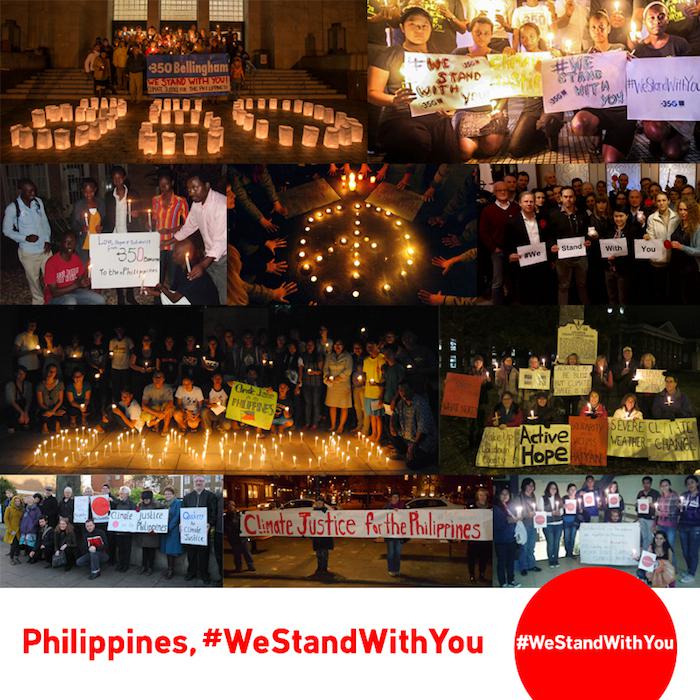
Here are just a few pictures from these
events:
photos from (top left to bottom right)
Bellingham WA, Fiji, Burundi, Serbia, Sweden, Philippines, Leesberg VA, London,
Huddersfield UK, and
Bolivia
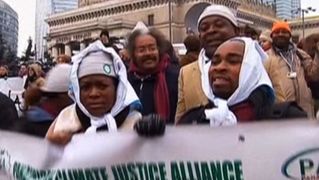
And here in Warsaw, Poland, hundreds of people walked out of the UN climate
talks that had been taken over by corporate polluters and backsliding
governments. Many of them were carrying red dots that said “We Stand With You” —
a simple phrase that emerged as a global symbol of solidarity with the
Philippines after Typhoon Haiyan.
To join this global outpouring of solidarity, take a couple minutes
to make and share your own photo with a red dot here: westandwithyou.tumblr.com/submit
I know this show of support is making an impact, because here’s the note I
got from Zeph, 350’s fearless coordinator in the Philippines:
"Rebuilding my country will take a long time, but
the stories and pictures of people standing in solidarity around the world shows
me that the world has not forgotten the climate victims, and that a movement is
uniting to rise to this global challenge."
Sharing a solidarity photo is one way to show
we’re standing together. Another is to support the very immediate needs of
grassroots relief efforts. Our friends at 350 Pilipinas are helping to
get food and supplies to people in need -- please donate to support this work
here: brigadakalikasan.serverthepeople.com/
Until we rein in the use of fossil fuels, this is what will keep happening,
at an ever faster rate. So we hold vigils to mourn, we share photos to show our
solidarity, and we rise in the morning awake and ready to build a movement
strong enough to create a new world.
That movement is growing everywhere -- including the Philippines, where
activists continue their efforts to block the construction of new coal-fired
power plants and build resiliency in their communities to adapt to the reality
of climate change.
In the US, the movement to divest from fossil fuels is growing in size and
courage. We're also preparing to step up our work to stop Keystone XL as the
President nears his final decision, and finding new ways to fight fracking
across the US.
The fossil fuel industry is everywhere, but so are we. And
every time we get a glimpse of a our world being ravaged by climate change, it
makes us sadder but also stronger -- because it reminds us at the most gut level
just what the stakes really are.
Heavy as that may be, we will carry it in our hearts in the fights to
come.
More than 600,000 standing with the Philippines. And we just let UN climate leaders know about it.
This afternoon, civil society groups joined 350.org, Avaaz and Filipino climate negotiator Yeb Saño at the UN Climate Talks to deliver the message that Typhoon Haiyan is a climate wake-up call.
A climate justice call has been delivered. Time for #climatejustice to be served....
LIKE and SHARE if you stand with the Philippines and want our leaders to take decisive action in Warsaw.
Organizers of the U.N. climate talks in
Warsaw, Poland, are facing criticism for accepting corporate sponsorships from
major car manufacturers, oil companies, steel manufacturers and coal ... Read More →
We
are broadcasting from Warsaw, Poland, where the U.N. climate summit, known as
COP 19, has just entered its second week. On Saturday, thousands of protesters
marched in Warsaw ... Read More →
The
"Arctic 30" are back in court today in Russia where they have been held for two
months after being detained in a direct action against Russia's first Arctic
offshore oil rig. State prosecutors ... Read More →
Ten
days after Typhoon Haiyan struck the Philippines, the United Nations says some
four million people have been displaced, up from 900,000 last week. The toll of
the dead or missing stands at ... Read More →
As it plays host to the U.N. climate summit in
Warsaw, the Polish government has released a report saying coal will remain the
country's best energy option up to 2060. The nation is also ... Read More →
Mary Robinson, former president of Ireland, speaks to RTCC about climate justice, the UN, and why climate skeptics make her angry
Pic: Flickr / Open Government Partnership
Climate justice is a phrase which eludes a neat definition.
Morally laden and politically controversial, it is used interchangeably to discuss the law, politics and ethics of climate change. Even the most seasoned negotiators may find themselves promoting one of its many meanings over another.
For Mary Robinson, these various meanings are not disconnected concepts, but a jigsaw of related ideas that together create a comprehensive picture of how best to tackle one of the world's greatest problems: “When we're talking about climate change, the issue of justice starts with injustice,” she says.
A barrister, a politician, and a top official in the UN, Robinson, now 69, remains best known as the first female president of Ireland – a largely ceremonial role she occupied between 1990 and 1997 through which she strove to influence through the “moral authority” it bestowed on her.
She admits that moral leadership continues to fascinate her, and is something she continues to exercise since became a member of the Elders in 2007, a group of global leaders, brought together by Nelson Mandela, who work together to provide guidance on peace making and human rights.
The Justice Department's disclosure that it
had secretly subpoenaed phone records from the Associated Press has prompted a
wave of comparisons between President Obama and ... Read More →
A Pentagon official predicted Thursday the
war against al-Qaeda and its affiliates could last up to 20 more years. The
comment came during a Senate hearing revisiting the Authorization for Use ... Read More →
We turn now to climate justice activist Tim
DeChristopher, who was released last month after 21 months in federal custody.
DeChristopher was convicted of interfering with a public auction ... Read More →
Mary Robinson has long been a hero of mine, changing the Theocracy in which she grew up both from the inside and the outside.
Her fascinating interview and recitation of significant changes brought about under her tutelage reminds of the costs of Theocracy.
Many in this country wrongly believe that their particular religious beliefs must be intertwined with our governance.
As Mary Robinson highlights, when religion becomes entangled, time stands still, government ceases to progress or recognize the need for change.
Our wise Founding Fathers studied the Theocracies in Europe and assured us of Separation with good cause. While they assured a 'christian' nation with a small 'c' based on Christian values, they recognized the flaws and threats. Thus, the US evolved as a wondrous melting pot that struggles to adjust, but lacks the imposition of Church imposed laws.
Who can imagine: divorce prohibitions: illegality of contraception? women lacking standing in courts of law? and much else.
This highlights why Public Broadcasting is important.
Thursday, March 14, 2013 Mary Robinson: Bearing Witness And Giving Voice
Former Irish President Mary Robinson answers reporters’ questions in Seoul, South Korea, following a trip to North Korea in April 2011. (Lee Jin-man/AP)
In her career as a lawyer and a lawmaker, Mary Robinson has tried to advance the cause of human rights, especially for women.
Growing up Catholic in Ireland she became a lawyer so she could fight for a woman’s right to – among other things – have access to contraceptives, because they were illegal to buy or sell at time.
She was eventually elected to the Irish Senate and served very symbolically as Ireland’s first woman president.
After stepping down from the presidency, Robinson was the United Nations High Commissioner For Human Rights. Today she heads the Mary Robinson Foundation – Climate Justice.
They are begging us, you see, in their wordless way, To do something, to speak on their behalf Or at least not to close the door again.
—Derek Mahon, “A Disused Shed in Co. Wexford”
Throughout my time in office I had to think constantly about how a small and underfunded office could make an impact on advancing human rights and holding governments to account where there was wide- scale impunity. I realised that I could play a significant role by being close to the victims, bringing out their accounts, which was why so much of my time as high commissioner was spent travelling to many of the most troubled regions of the planet, where people’s rights were being violated and they longed for somebody to alert the world to what was happening to them.
In all, I made 115 trips to more than seventy countries during five years, almost always with the idea of helping to amplify the voices of victims, helping them to feel that somebody was listening. It brought home to me the power of the act of bearing witness. This was something I had en- countered when I visited Somalia as president of Ireland. The act of witnessing is neither easy nor as forthcoming as might be expected. We turn away so often. I did not want to let that happen. Even though I held a UN title, I had nothing tangible to offer victims who were expressing their direct witness of torture, how their families had been killed, how they had been deprived of their land, their homes. They needed our action, not our tears; our practical, downright, problem-solving help, and not our wordless horror. Yet I felt that to listen, bear witness, and respect the humanity of those I was listening to, and report back to a jaded world, was a start. I wanted to nurture a sense that the United Nations understood that these voices mattered.
There are some visits that stay in my mind because they illustrate perfectly the different facets of the work my colleagues and I were doing, and the kind of human rights violations we were dealing with.
In early 1999, world attention focused on the conflict in Kosovo, and the huge exodus of refugees driven out to different countries, especially Albania. In May the Swiss government put at my disposal a small plane to visit countries of the region and draw attention to the plight of victims and to the human rights violations being perpetrated by Serbian forces. Over a few days, we travelled to Albania, Croatia, Bosnia-Herzegovina, and into Serbia itself by road from Zagreb. My two most vivid memories involve Kosovar refugees in Tirana, Albania, and ordinary Serbian civilians in Niš, who had just endured NATO cluster bombing of their housing estate.
Visiting the makeshift camp in Tirana, crowded with Kosovar refugees still traumatised after fleeing violence and savagery by Serbian forces in Kosovo, I listened to some of the worst stories while sitting in small tents that housed about fifteen people, seeing the fear still in the eyes of the children. My human rights officers were compiling initial evidence from witnesses that could be helpful to the International Criminal Tribunal for the Former Yugoslavia in the event that leaders such as Slobodan Milošević were indicted. At one stage a colleague suggested I come to a field behind the tents where a teacher was instructing a class. We watched as the children, sitting on the grass, repeated the teacher’s words; they had no pens or paper. When she finished, we were introduced. She spoke good English, had been a teacher in Pristina, and had volunteered to teach the children in the camp. “This is what I do; it helps me to cope.” She brought me to meet her elderly parents, sharing a tent with two other families, and described their escape from their home in Pristina, how they had watched it burn as they drove away.
The following day, my colleagues and I were in Belgrade meeting the foreign minister and other officials to raise serious concerns about human rights. President Milošević refused to meet me, perhaps because, a few days before, I had met with the prosecutor of the International Criminal Court, Louise Arbour, in Sarajevo. Milošević may have feared that Arbour had given me an indictment to serve on him. Indeed, within a matter of weeks, and despite political pressure from some sources, an indictment for his arrest was issued. Though, as we now know, tracking him down took years.
My colleagues were keen that I travel to the city of Niš to meet the mayor, who had, at great personal risk, been in contact with our office to report human rights violations. With a Serbian military escort, we set off by road, a journey of about two hours. We saw flashes of bombing in the distance. Shortly afterwards our small convoy was stopped and we were informed that NATO forces had just bombed part of Niš. I feared we would have to abandon the visit. We waited, and then suddenly we were rushed at some speed to a suburb, where we saw the immediate aftermath of the cluster bombs NATO planes had dropped. No one in that suburb had been killed, but several people were injured; a man invited me into his room in a high-rise block of flats that had suffered a direct hit and showed me a live, unexploded cluster bomb on the window ledge. As I came back down I was told the mayor had arrived, and we had a brief, tense meeting, where he quickly updated me and then left; he was clearly worried about being seen with me.
Our convoy returned to Belgrade before nightfall. There had been much emphasis by NATO forces on how targeted bombing was, hitting only military targets. I had seen for myself that this was not always the case.